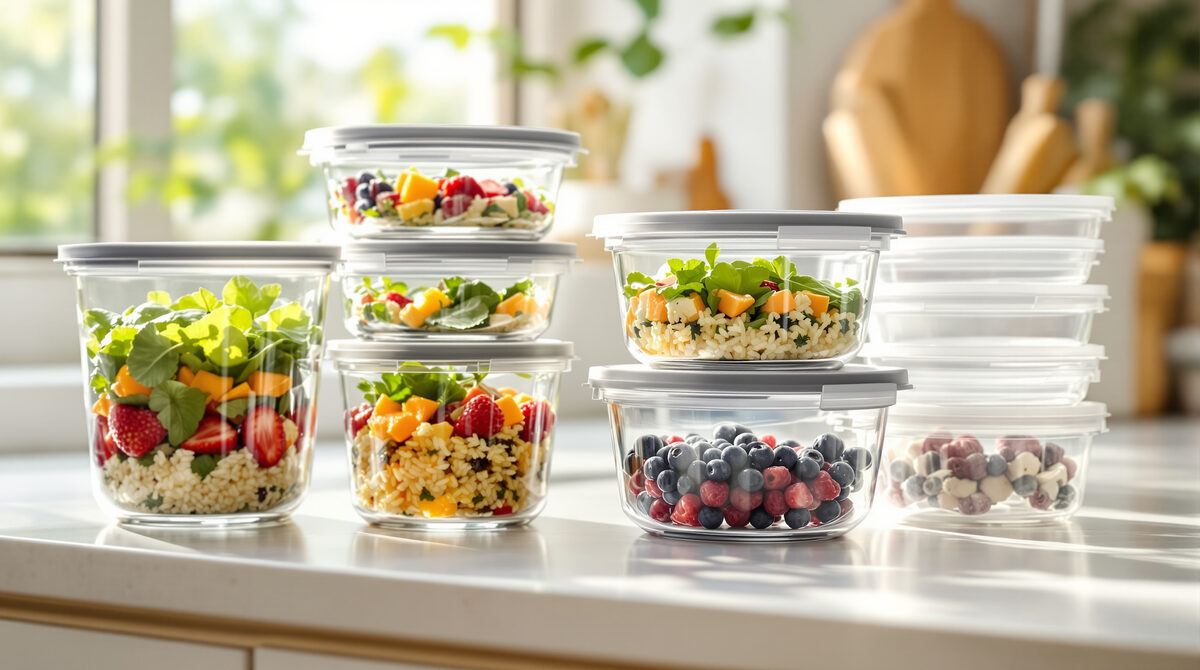
Glass is the safer choice for food storage, and the gap is widest when heat is involved. Glass is chemically inert — it does not leach plasticizers or shed microplastics into your food, even when you microwave or freeze it. Plastic containers can migrate chemicals like BPA and phthalates into food, and lab testing shows microwaving plastic releases millions of microplastic and nanoplastic particles. Plastic still wins on weight and shatter-resistance, so the honest answer is: store and reheat in glass (or platinum silicone), and keep plastic for cold, dry, lightweight jobs. Our top picks below are the Glasslock Oven-Safe Set and Pyrex Simply Store for glass, and Stasher bags for a flexible, no-shatter alternative.
“Glass or plastic?” is the single most common question people ask when they start cleaning up their kitchen — and for good reason. The container you store and reheat food in is one of the most direct ways plastic ends up inside your body. Unlike a far-off factory or a city pipe, this is a daily choice you fully control.
The short version: glass is inert, plastic is not. Glass is made of fused silica — it does not soften, react, or release particles at any temperature a kitchen reaches. Plastic is a petroleum-derived polymer held together with additives, and both the polymer and the additives can migrate into food, especially under heat, acidity, fat, and age. But plastic is lighter, cheaper, and won’t shatter on a tile floor, which is why it never fully disappears. This guide walks through exactly what leaches, when it matters, and which real containers to buy.
Is glass or plastic safer for food storage?
Glass is safer. It is chemically inert, so nothing migrates from the container into your food at fridge, freezer, microwave, or oven temperatures. Plastic containers can leach additives such as BPA and phthalates and shed microplastic particles, and that transfer accelerates with heat, fat, acidity, scratches, and age — exactly the conditions everyday storage creates.
The core difference is material chemistry. Glass is fused silica: a stable, non-porous solid that does not react with food or soften when heated. Food-grade plastic is a long-chain polymer — polypropylene (#5), polyethylene (#2 and #4), or in older containers polycarbonate (#7) — blended with plasticizers, stabilizers, and colorants that are not chemically bonded to the polymer. Because those additives float freely within the plastic, they can slowly migrate into whatever the container holds. This is why “BPA-free” alone is not a clean bill of health: a container can drop BPA and still use a replacement bisphenol or phthalate that behaves similarly.
For a closely related comparison that looks specifically at flexible storage, see our guide to silicone vs. plastic food containers, which breaks down how much each material actually leaches.
What actually leaches from plastic food containers?
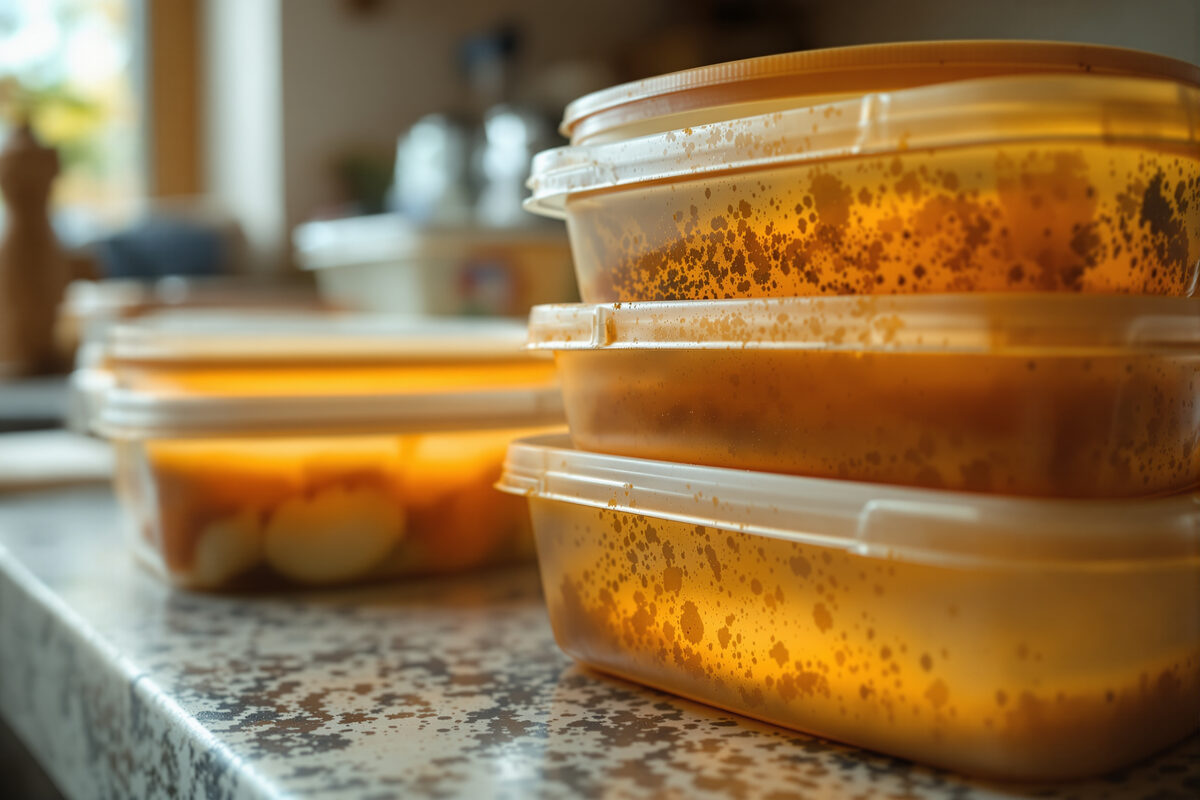
Three things migrate from plastic into food: additive chemicals like bisphenols and phthalates, the microplastic and nanoplastic particles the surface sheds, and — in older or damaged containers — breakdown products of the polymer itself. How much transfers depends on temperature, how fatty or acidic the food is, and the container’s condition.
Bisphenols (BPA and its substitutes). BPA is used to harden plastics and has been measured in the urine of the vast majority of people tested. The U.S. National Institute of Environmental Health Sciences notes that the primary route of human exposure to BPA is through the diet, including food that has contacted BPA-containing containers. “BPA-free” replacements such as BPS and BPF are structurally similar and not proven safer.
Phthalates. These plasticizers make plastics flexible and are not bound to the polymer, so they migrate readily into fatty foods. The U.S. Food and Drug Administration continues to review phthalates used in food-contact applications because of their ability to leach. Warmth and oil both increase the amount that ends up in your meal.
Microplastics and nanoplastics. This is the newest and most striking finding. The 2023 Environmental Science & Technology study referenced above measured particles directly and found that heating plastic containers — the ordinary act of microwaving leftovers — released them in the millions. Acidic foods and repeated dishwasher cycles that roughen the surface add to the shedding over a container’s life. Food packaging is already a documented source of these particles; see microplastics in food packaging for the wider picture.
When does plastic leaching matter most?
Leaching is not constant — it spikes under specific conditions. Heat is the biggest lever: microwaving, pouring in hot food, or running plastic through a hot dishwasher drive migration far higher than cold storage does. Fat and acid pull more chemicals out, and a scratched, cloudy, or warped container sheds more than a new one.
In practice, that means the riskiest everyday habit is reheating last night’s dinner in the same plastic tub it was stored in. If you never put plastic near heat and only use it for dry, cold, or short-term storage, the exposure is much lower. That is the logic behind the simplest rule in this whole topic: never microwave in plastic, and never pour anything hot into it. If you want a container that handles the fridge-to-microwave trip in one piece, glass or platinum silicone is the answer.
Does glass have any real downsides?
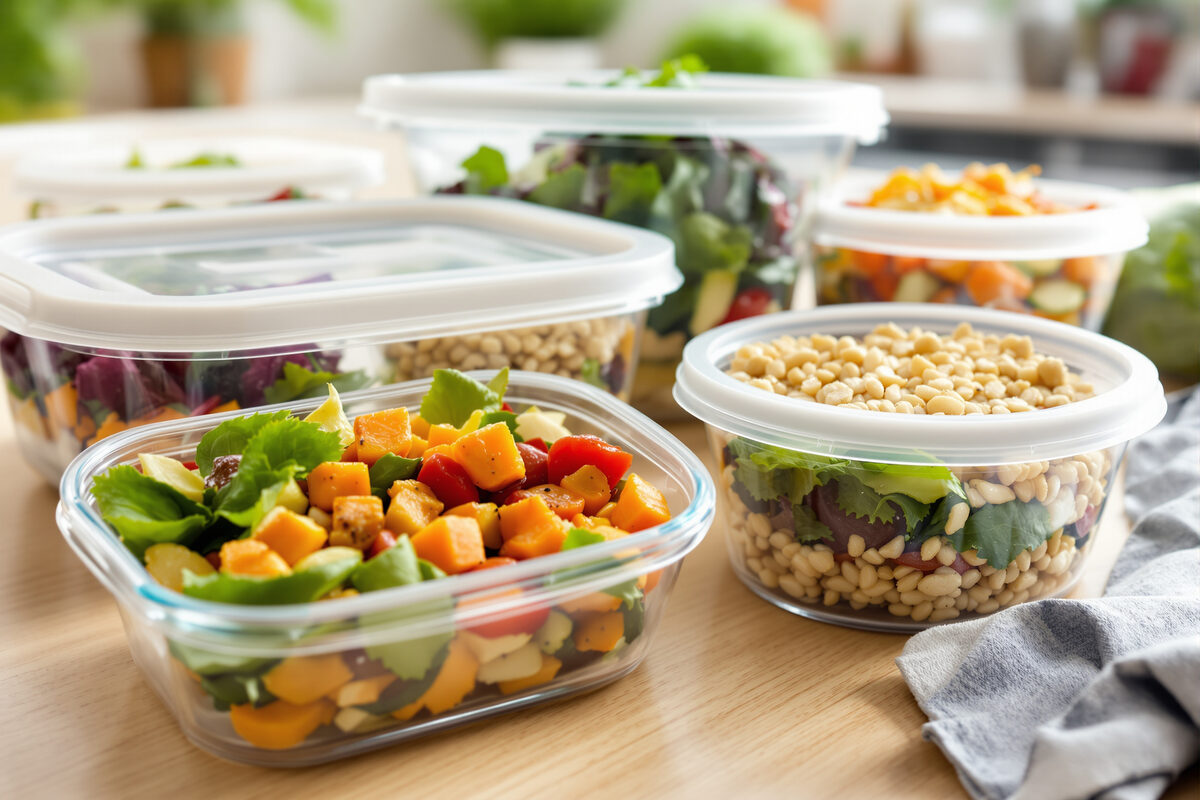
Yes — glass is heavier, it can shatter if dropped on a hard floor, and almost every glass set still ships with a plastic lid. None of these undo its safety advantage, but they are worth planning around so you buy the right thing and use it correctly.
The weight matters most for a packed lunch carried by foot or bike; a borosilicate glass container with food can be noticeably heavier than a plastic one. Shattering is a genuine risk in a busy kitchen or around young kids, though tempered and borosilicate glass resist thermal shock and chipping far better than ordinary glass. And the lid is the honest caveat on nearly every “glass” container: the body is glass, but the lid is plastic. The fix is simple — store food below the rim, snap the lid on only for cold storage, and always remove it before heating. Where shatter-resistance or flexibility matters, platinum silicone (like the Stasher and Zip Top picks below) gives you a no-glass, no-hard-plastic option.
Which glass and plastic-free containers should you buy?
These six picks cover the real jobs a plastic container does — reheating leftovers, meal-prep, lunch, freezing, and sandwich-bag duty — without the leaching. Four are glass and two are platinum-cured silicone (the flexible, shatter-proof alternative). Every one is a real, currently-sold product with a verified photo; prices move daily, so each links to its live Amazon listing. For an even deeper glass-only lineup, see our best glass food storage containers guide.
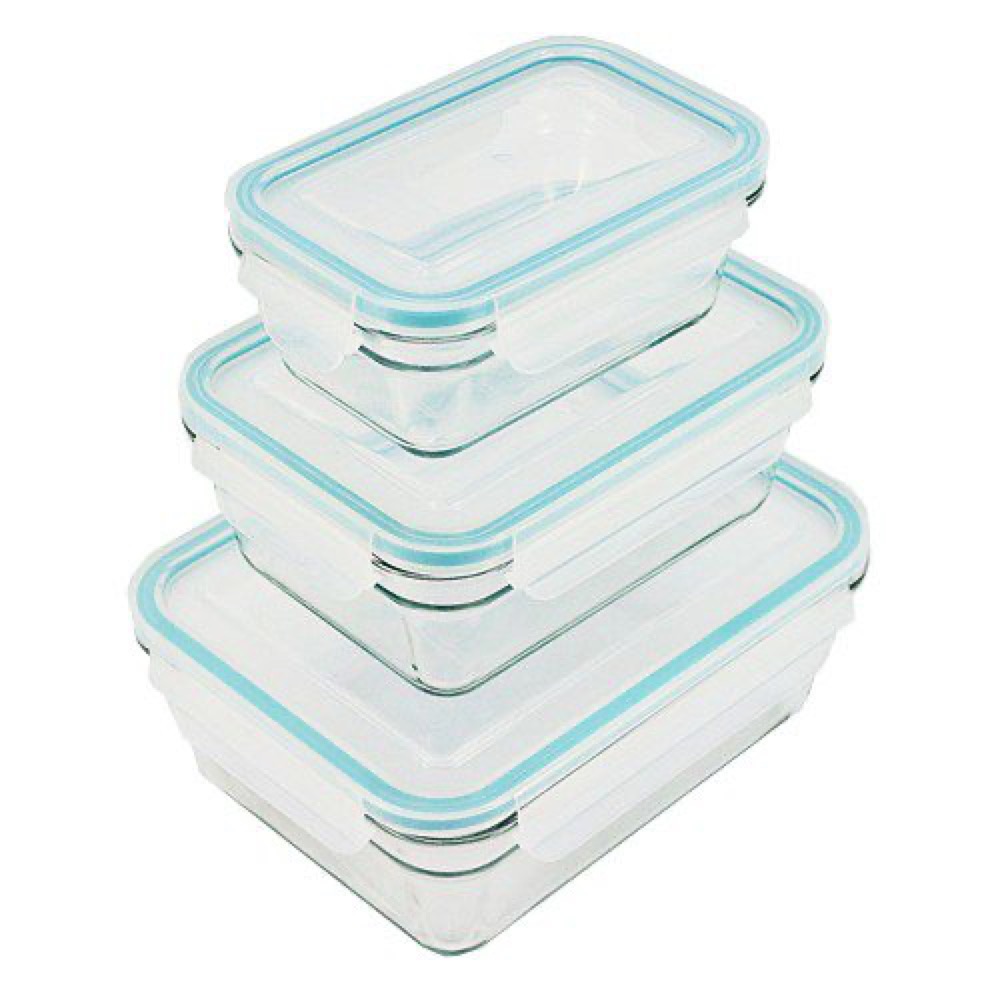
1. Glasslock Oven Safe Container Set (3-Pack) — Best for Reheating Leftovers
 Best for Reheating
Reheat last night's leftovers in the same container you stored them in — no bag, no plastic wrap, no transfer.
Why it's safe: Hot food sits on inert tempered glass, which doesn't soften or shed at microwave temperatures. The silicone gasket only touches the rim.
Check Today's Price on Amazon →Amazon prices change daily — tap to see today's price and any active discount.
- Free delivery & returns for Prime members
- Sold & shipped by Amazon
2. Pyrex Simply Store — Best Value Glass
 Best Value Glass
Simply Store is unglamorous and does the one thing that matters here: it takes the reheat out of plastic. The bowls nest, go into the microwave or oven without the lid, and single replacements are easy to find. As with all glass sets, the lid is plastic — treat it as a cold-storage cover and never heat it.
A full set of reheat-ready glass in one box, with single pieces easy to replace.
Why it's safe: Glass doesn't soften, leach or shed at cooking temperatures, so there's no polymer between your food and the heat once the lid is off.
Check Today's Price on Amazon →Amazon prices change daily — tap to see today's price and any active discount.
- Free delivery & returns for Prime members
- Sold & shipped by Amazon
3. Bentgo Glass Lunch Container — Best for Microwaving at Work
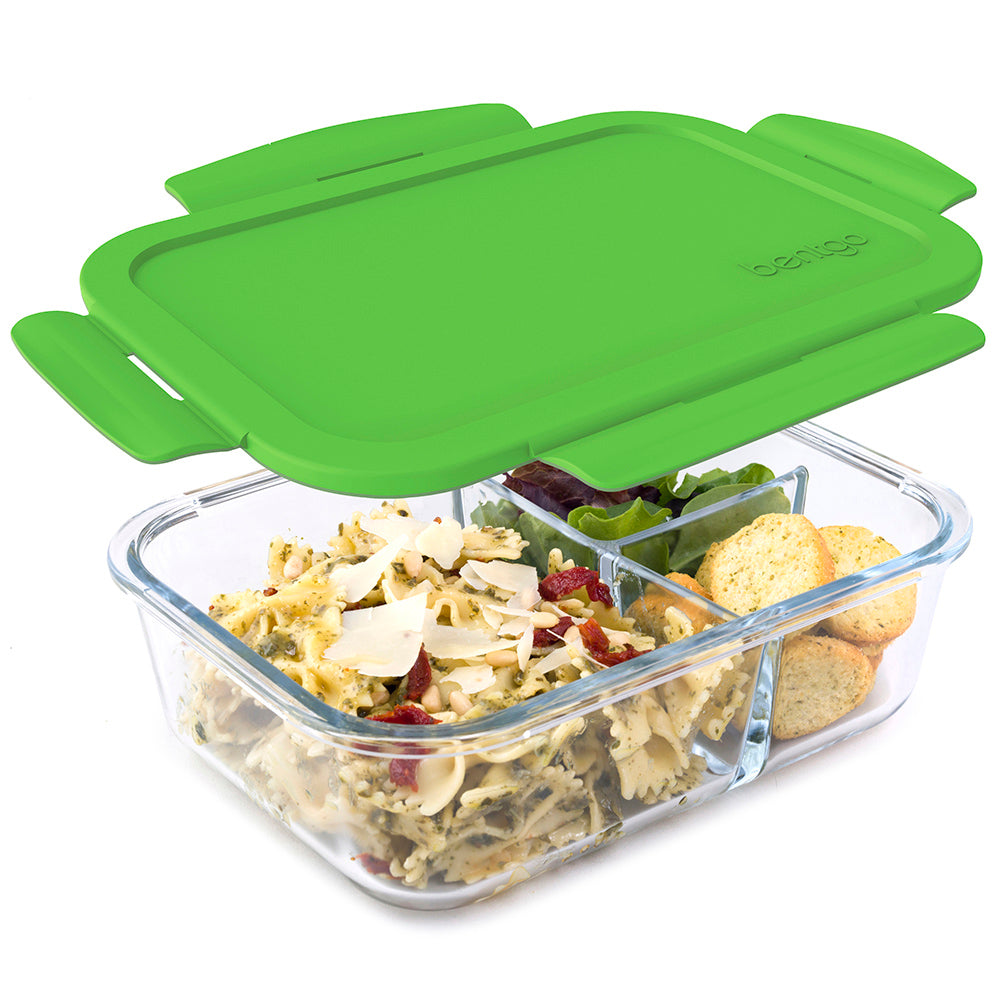 Best for Microwaving
Take the lid off and microwave straight from the fridge — your reheated lunch sits on inert glass, not the plastic that sheds billions of nanoplastics when heated.
Why it's safe: The food-contact body is borosilicate glass — chemically inert and thermal-shock resistant, so reheating releases nothing into your food. The silicone gasket only seals the rim, never sitting in the food.
Check Today's Price on Amazon →Amazon prices change daily — tap to see today's price and any active discount.
- Free delivery & returns for Prime members
- Sold & shipped by Amazon
- Thousands of verified reviews
For a deeper look at reheat-safe lunch gear, see our guide to the best non-toxic lunch containers for adults.
4. Stasher Reusable Silicone Bag Starter Kit — Best Freezer-to-Microwave Bag
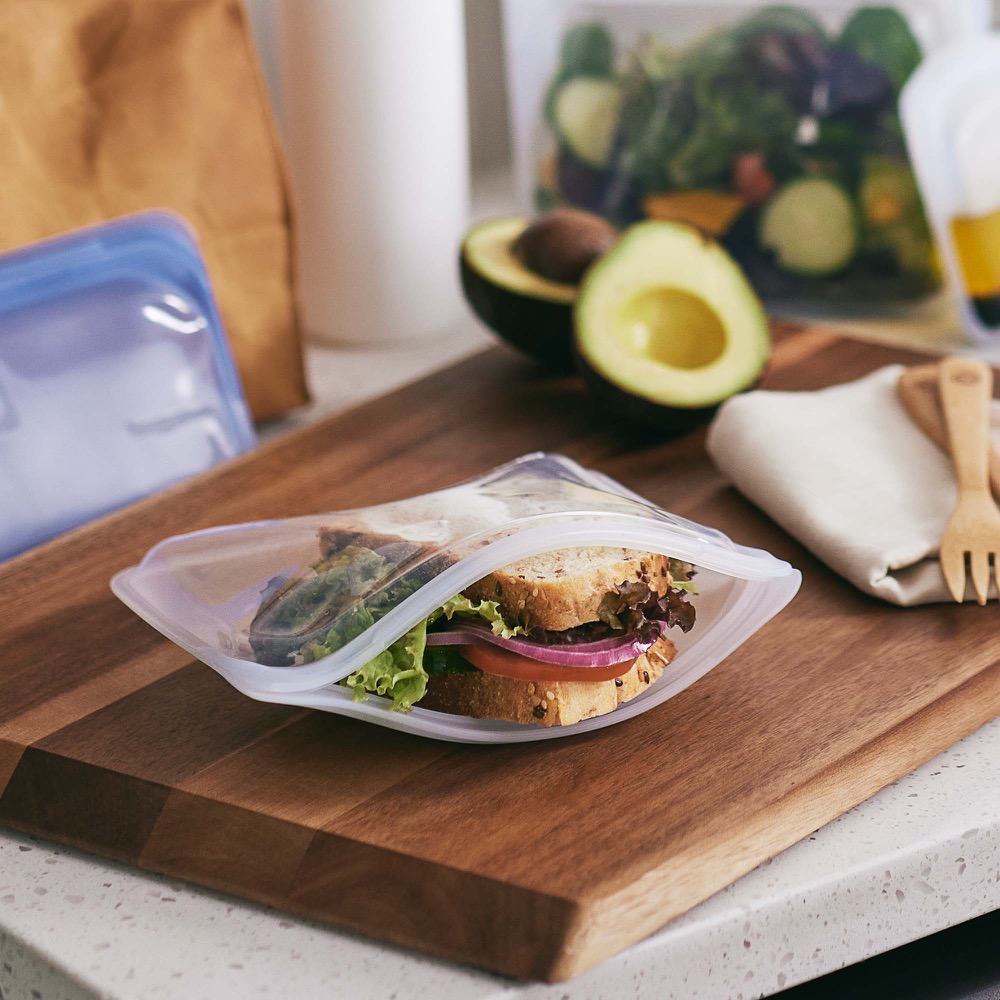 Best Bag Format
Silicone is a cured silicon-and-oxygen material, not a thermoplastic film, so it doesn't soften near boiling the way polyethylene does. Stasher rates its bags from -70°F in the freezer to a 425°F oven, which means a freezer-to-microwave meal can stay in one bag without living at the edge of its rating. The starter kit covers the everyday sizes, so a whole box of disposable bags retires in one purchase.
Freeze, thaw and reheat in the same bag, with a heat rating that isn't 18 degrees from boiling.
Why it's safe: Platinum-cured silicone with no plastic, PVC, BPA, lead, latex, phthalates or PFAS, rated well above any microwave reheating temperature.
Check Today's Price on Amazon →Amazon prices change daily — tap to see today's price and any active discount.
- Free delivery & returns for Prime members
- Sold & shipped by Amazon
5. Stasher Sandwich Silicone Bag — Best Direct Zip-Lock Replacement
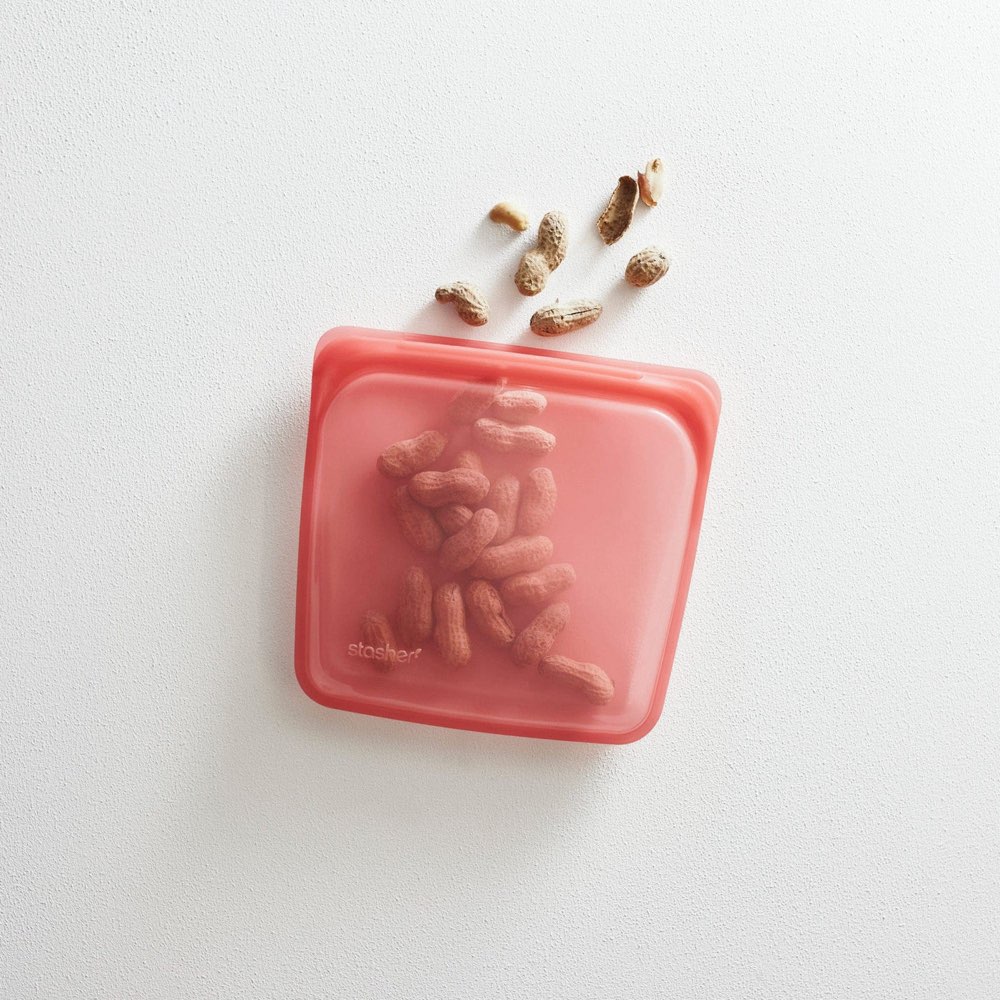 Best Bag Swap
Stasher invented the silicone storage bag and still makes the best one. The pinch-seal — two interlocking silicone ridges you press together — creates an airtight, liquid-tight seal that holds up over hundreds of uses, with no zipper mechanism to break or plastic slider to crack. Across the range it is platinum food-grade silicone, rated to 400°F, freezer safe to -70°F, and dishwasher safe. For the full lineup, see our guide to the best silicone food storage bags.
One bag that handles the lunchbox, the freezer, and the sous vide bath — replacing hundreds of disposable plastic zip-locks over its life.
Why it's safe: Made entirely from 100% food-grade platinum silicone with no BPA, BPS, or phthalates — it is chemically inert and sheds no microplastics, even with warm or fatty food.
Check Today's Price on Amazon →Amazon prices change daily — tap to see today's price and any active discount.
- Free delivery & returns for Prime members
- Sold & shipped by Amazon
- Tens of thousands of verified reviews
6. Zip Top Silicone Containers (Dish Set) — Best Self-Standing Set
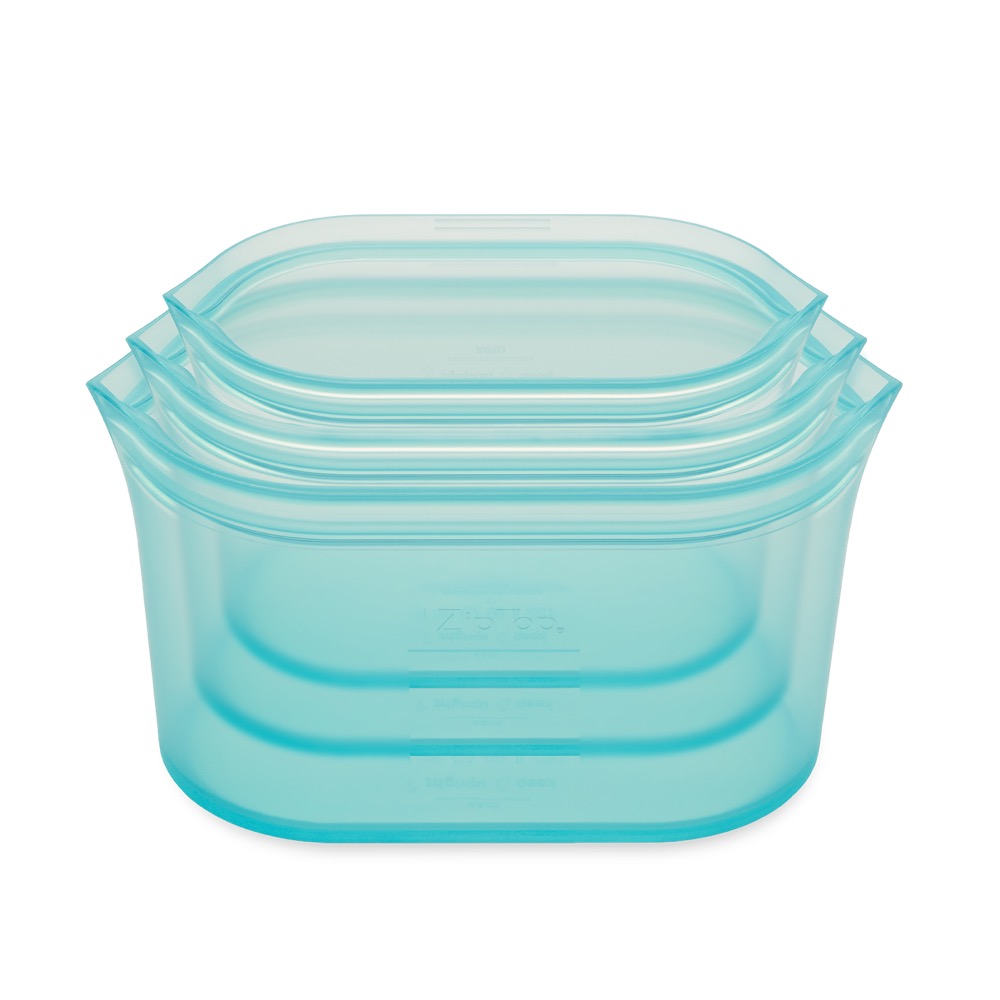 Best Self-Standing Set
Zip Top's design is its own category: 100% platinum-silicone containers that stand upright, stay open while you fill them, then zip shut along the top. There's no plastic frame or zipper insert — it's a single piece of silicone, so there's nothing to harbor chemicals or break down. The dish set includes small, medium, and large (16, 24, and 32 oz) and goes in the dishwasher, microwave, and freezer.
Meal-prep without a stack of plastic tubs. One-piece silicone dishes stand up, zip shut, and rinse clean — nothing leaching into tomorrow's lunch.
Why it's safe: A single piece of 100% platinum-cured silicone, made in the USA — no plastic, PVC, BPA, or PFAS, and no separate lid to off-gas.
Check Today's Price on Amazon →Amazon prices change daily — tap to see today's price and any active discount.
- Free delivery & returns for Prime members
- Sold & shipped by Amazon
How do I switch from plastic to glass without wasting money?
You don’t need to replace everything at once. The highest-impact move is cheap and immediate: stop heating food in plastic today, using dishes you already own. From there, swap in glass gradually, starting with the containers you reheat in most, and retire old plastic as it scratches or stains.
A sensible order: first, buy one glass set for leftovers and reheating (the Glasslock or Pyrex above). Second, add a glass lunch container if you reheat at work. Third, replace disposable bags with platinum silicone. Keep a few sound plastic containers for dry pantry goods, craft supplies, or cold items you’ll never microwave — there’s no need to throw out functional plastic if you simply keep it away from heat and acid. And toss any plastic that is cracked, warped, cloudy, or stained: a degraded surface is the one that sheds the most. For a room-by-room plan, our guide on how to reduce microplastics in your body puts this swap in context with the others that matter.
The bottom line: glass vs. plastic
For safety, glass wins clearly. It is inert, it never leaches plasticizers or sheds microplastics into food, and it handles heat without changing — which is exactly where plastic fails. Plastic’s advantages are real but narrow: it’s lighter, cheaper, and won’t shatter, which makes it fine for cold, dry, short-term storage as long as it never meets heat.
So the practical rule isn’t “throw out all plastic” — it’s “never let plastic meet heat or hold your reheated meal.” Store and reheat in glass or platinum silicone, keep sound plastic for pantry duty, and replace anything scratched or stained. Do that and you remove one of the most direct, repeatable sources of plastic exposure in your day — without spending much to get there.
Want the Full Home Protection Guide?
Food containers are one piece of the puzzle. The Complete Plasticproof Guide covers every microplastic exposure source in your home — kitchen, nursery, bathroom, bedroom — with 80+ product recommendations backed by 47+ studies.
Frequently Asked Questions
Glass is safer. It is chemically inert, so it does not leach additives or shed microplastics into food at any kitchen temperature. Plastic containers can migrate BPA, phthalates, and microplastic particles into food, and that transfer rises sharply with heat, fat, acidity, and wear. For storing and especially reheating, glass is the clear choice.
Yes. A 2023 study in Environmental Science & Technology measured up to 4.2 million microplastic and 2.1 billion nanoplastic particles released per square centimeter from plastic containers during three minutes of microwaving. Heat is the single biggest driver of plastic shedding and leaching, which is why you should always reheat in glass or platinum silicone, never plastic.
Not necessarily. “BPA-free” only means the specific chemical BPA is absent. Many containers replace it with closely related bisphenols (BPS, BPF) or still contain phthalate plasticizers, which can leach and behave similarly. Removing one named chemical does not make plastic inert. Glass and platinum silicone avoid the whole category.
Yes, with the plastic lid removed. Tempered and borosilicate glass containers like Glasslock, Pyrex Simply Store, and Bentgo Glass are microwave- and oven-safe (check each brand’s temperature rating). Always take the lid off before heating, avoid sudden extreme temperature swings, and let the glass come up to temperature rather than going straight from freezer to a hot oven.
No. The priority is simply to stop heating food in plastic and to retire any container that is scratched, cloudy, warped, or stained, since a degraded surface sheds the most. Sound plastic is fine for dry pantry goods or cold, short-term storage. Swap in glass for the items you reheat most, and phase out the rest over time.
Platinum-cured, food-grade silicone (used in Stasher and Zip Top products) is a strong middle ground: it is flexible and shatter-proof like plastic but chemically inert and heat-stable like glass, with no BPA, phthalates, or PFAS. It is the best option when you want something you can freeze, microwave, and drop without worrying about leaching or breakage.
Sources
- Hussain KA, et al. “Assessing the Release of Microplastics and Nanoplastics from Plastic Containers and Reusable Food Pouches.” Environmental Science & Technology, 2023. pubs.acs.org (up to 4.2M microplastic / 2.1B nanoplastic particles released on microwaving)
- National Institute of Environmental Health Sciences (NIEHS). “Bisphenol A (BPA).” niehs.nih.gov (diet is the primary route of human BPA exposure)
- U.S. Food and Drug Administration. “Phthalates in Food Packaging and Food Contact Applications.” fda.gov