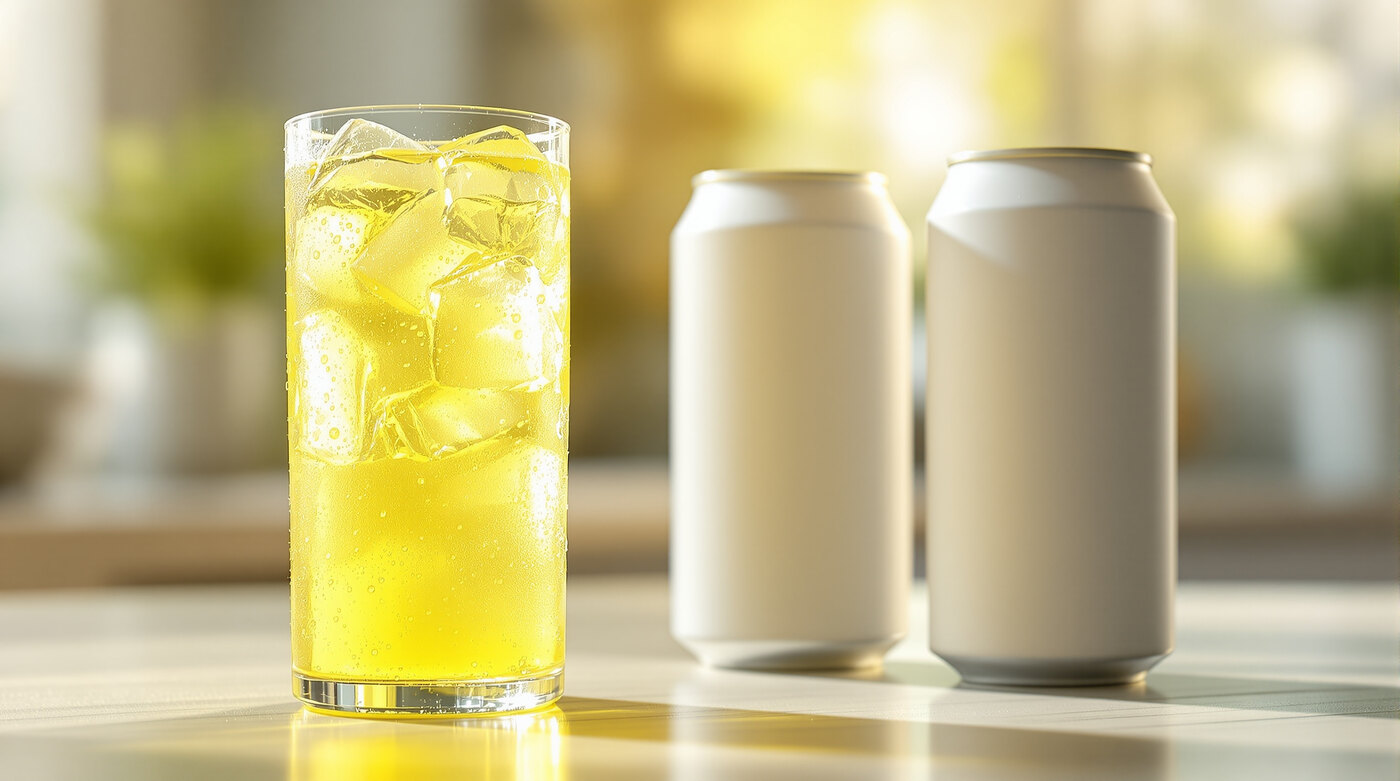
Energy drinks do contain microplastics — and the source is the packaging, not the caffeine. Unlike a lot of foods that have never been tested directly, energy drinks have been: a 2020 study in Science of the Total Environment sampled 57 beverages across 27 brands — energy drinks, soft drinks, cold tea and beer — and detected microplastics in 48 of them, at up to about 28 particles per liter. The particles were fibers and fragments of polyamide, ABS and PET — the polymers of plastic bottles, lined cans and the synthetic fibers shed into the air during bottling. The acidic, carbonated liquid sitting against that plastic for months is what pulls particles loose. Keep it in proportion — one can is small next to the water you drink all day — but swapping energy drinks for a drink you make yourself removes the packaging, the plastic, and usually the sugar in one move.
Energy drinks are one of the fastest-growing beverage categories on earth, and the question is a fair one: if microplastics are turning up in bottled water, beer and sea salt, what about a drink that lives its whole life inside a PET bottle or a lined aluminum can? With energy drinks we don't have to guess from a mechanism — researchers have put the actual liquid under a microscope and counted. The honest answer points squarely at the container and the bottling line, not the ingredients.
This guide walks through what the studies actually measured, where the particles come from, whether cans are any better than bottles, why the acidity matters, and whether the amounts are worth worrying about (the honest answer is calmer than the headlines) — plus the swaps that cut your exposure most. It sits alongside what we've found for soda, sparkling water and wine, where the same packaging story keeps repeating.
The bottom line up front: the microplastics in energy drinks come from the plastic bottle, the lined can and airborne fibers during bottling — not the caffeine or sugar — and the strong acidity plus months of storage is what drives the shedding. The fix isn't a “safer” brand; it's cutting the habit: make cold brew or green tea at home, or carry filtered water in a glass or steel bottle, and you remove the packaging entirely. And keep it in proportion — one can is small next to the steadiest source, the tap water you drink all day. For the bigger picture, see microplastics in water bottles, microplastics in food packaging, and the room-by-room kitchen plastic detox guide.
Do energy drinks have microplastics, and how much?
Yes — and unusually for this kind of question, we're not inferring it from a mechanism. Energy drinks have been tested directly. In 2020, researchers publishing in Science of the Total Environment ran what they called the first study of its kind on the microplastic contamination of soft drinks, energy drinks and cold tea: 57 beverage samples across 27 brands, energy drinks and beer included. Using microscopy and polymer identification, they detected microplastics in 48 of the 57 samples, at concentrations ranging from none detected up to about 28 particles per liter. The particles were a mix of fibers and fragments, roughly 0.1 to 3 mm across.
The polymers are the tell. The team identified polyamide, poly(ester-amide), acrylonitrile-butadiene-styrene (ABS) and poly(ethylene-terephthalate) (PET) — the exact plastics used in bottles, caps, can linings and the synthetic textiles that shed fibers into factory air. In other words, the plastic didn't come from the drink; it came from the materials around it. A separate 2023 study of nonalcoholic beverages bought in northern Italy found microplastics in every soft drink and cold tea it sampled, which makes a packaged-drink source unlikely to be a quirk of one country or one bottling plant. That puts energy drinks in the same picture as the other packaged drinks we've looked at, from soda to bottled drinks of every kind — the liquid is largely innocent; the packaging is the story.
Where do the microplastics in energy drinks come from?
From the packaging and the bottling environment — not the ingredients. An energy drink spends its whole life against plastic: PET bottles are plastic through and through, and the aluminum cans that look like bare metal are lined on the inside with a thin plastic or epoxy coating so the acidic liquid never touches the metal. The polymers researchers recover from the liquid — PET, polyamide, ABS — match those container materials, plus the synthetic fibers that drift off clothing and equipment into factory air and settle into the drink as it's filled. The caffeine, taurine, sugar and B-vitamins carry essentially no plastic of their own.
The part people assume is inert is the storage. A sealed bottle on a shelf isn't a neutral pause — it's months of an acidic, carbonated liquid pressing against a plastic surface, which is exactly the slow-leaching condition that pulls particles loose. It's the same “the drink is fine, it's the plastic it sits in” pattern we see across bottled water left in heat, acidic liquids stored in plastic and food packaging generally. The table below sorts out where the plastic in a typical energy drink actually originates.
| Source | What Happens | Contribution |
|---|---|---|
| The PET plastic bottle | An acidic, carbonated drink sits against a plastic bottle wall and cap for months — the prolonged-contact condition that sheds PET particles into the liquid | Major (bottled formats) |
| The lined aluminum can | Cans aren't plastic-free: a thin plastic or epoxy coating lines the inside so the acidic drink never meets bare metal — and that lining is itself a plastic surface in contact with the liquid | Major (canned formats) |
| Acidity & carbonation | Citric acid and carbonation put most energy drinks around pH 2.5–3.5; an aggressive, acidic liquid accelerates leaching and shedding from any plastic it touches | Multiplier on the above |
| Airborne fibers at bottling | Synthetic textile fibers shed into factory air and settle into the drink during filling — the polyamide and poly(ester-amide) fibers studies recover point here | Contributing |
| Heat & long storage | Warmth speeds leaching, so a bottle left in a hot car or a warehouse accumulates more than one kept cold and drunk fresh | Multiplier (if stored warm) |
| The caffeine, sugar & taurine | The active ingredients and flavorings carry negligible plastic themselves — the particles trace to the container and the bottling line | Negligible |
Are canned energy drinks safer than bottled?
Less than you'd hope. The instinct is that an aluminum can must be cleaner than a plastic bottle — metal, not plastic. But the inside of a drinks can is coated with a thin plastic or epoxy lining precisely so an acidic, corrosive liquid never touches bare aluminum, so a can is not a plastic-free container; it's a plastic-lined one. Studies have recovered microplastics from beverages in both formats, which means the honest takeaway isn't to hunt for a “safer” package — it's that both put an acidic drink against plastic, and the material of the wall matters less than the acidity and the months of storage.
Acidity is the multiplier that makes energy drinks a worse case than plain water, and it's also why heat is the habit to avoid — a bottle or can left warm leaches faster than one kept cold. The same “the liquid is fine, it's the plastic it sits in” logic sits behind why we warn about leaving a plastic bottle in a hot car at all. If you want to actually remove the packaging from the equation, the move is a glass bottle or a drink you make yourself — which is where the real difference shows up.
"Energy drinks don't get their microplastics from the caffeine — they get them from an acidic liquid sitting in a plastic bottle or a lined can for months. A can isn't plastic-free; the only plastic-free container is glass or the drink you make yourself."
Are energy drinks still okay to drink?
On the microplastics alone, an occasional energy drink is not something to panic about — and proportion is the reason. One can is a single packaged-drink serving; the measured load is small next to the tap water you drink from morning to night. Nothing in the research is a reason to treat a single energy drink as dangerous on microplastic grounds. The stronger case for cutting them has always been the sugar, the caffeine load and the acidity — and the useful point here is that swapping the drink takes the plastic down at the same time.
So the takeaway isn't “energy drinks are secretly toxic” — it's that the plastic part is real, measured, and easiest to remove by changing the habit rather than the brand. That mirrors a theme across this site, and one of the most common microplastics myths: a scary-sounding source isn't the same as a proven risk, the way a reassuring label like “BPA-free” doesn't automatically mean safe. The dependable move isn't a frantic ban; it's replacing the packaged drink with one you make yourself and cleaning up the bigger, steadier source — the water you drink all day.
Are the microplastics in energy drinks dangerous?
Here's where honesty matters most. The studies that found microplastics in energy drinks were designed to measure how many particles are present and what polymers they are — not to test what those particles do once they're inside a person. On the narrow question of harm, the research doesn't have a verdict, and no one should read one into it. A single can is also small next to overall exposure. The accurate framing is: exposure is measured, harm is unproven.
A widely cited 2019 analysis in Environmental Science & Technology estimated the average person already swallows tens of thousands of microplastic particles a year from food and drink combined, with tap and bottled water a large driver; an energy drink is a small line item within that total. What we do know more broadly is that microplastics are increasingly detected throughout the human body — in blood, organs, and even the brain — so trimming avoidable sources is sensible even while the particle-harm question stays open. Energy drinks are one of the easiest to trim, and the water you drink all day is the one worth trimming first.
You don't need a plastic scare to act on this one. The fix is a habit, not a panic: make cold brew or green tea at home, carry filtered water in a glass or steel bottle, and keep any energy drinks you do buy out of the heat. Then spend the rest of your effort on the bigger, more constant sources in our kitchen plastic detox guide, starting with the water you drink all day.
How do you reduce the microplastics from energy drinks?
Because the meaningful source is the packaging, the fixes are about the container, not willpower. Replace the energy-drink habit rather than the brand: cold brew coffee, matcha or green tea you make at home gives you the caffeine without a plastic bottle or lined can, and usually without the sugar. If you do buy them, keep them cold and drink them fresh — heat and long storage are what accelerate leaching, so a bottle baking in a hot car is the worst case. Decant into a glass if you're sipping over a long stretch rather than drinking from warm plastic. These moves handle the part of the problem you actually control.
The highest-leverage move, though, isn't about energy drinks at all — it's the water you drink all day. Filter your tap water and carry it, because that steady intake is a far bigger and more constant microplastic source than an occasional can, and it's the one you can genuinely clean: a pitcher certified under NSF/ANSI 401 or built around a rated membrane pore size cuts particle counts sharply. See our guide to the best water filter pitchers for microplastics and the broader water filter roundup. Then carry that filtered water in a glass or stainless steel bottle instead of reaching for a packaged drink, and you've closed off the sources that actually add up. The picks below are the simplest, longest-lasting ways to do all of that.
Fix the sources that actually matter
Swapping an energy drink for a drink you make yourself removes the plastic packaging entirely — but the water you drink all day is the bigger, steadier source. Start where it counts: filter your tap water and carry it in glass or steel instead of a bottle.
The swaps that cut the most plastic around energy drinks
There's no “microplastic-free” energy drink to buy — every brand ships in a PET bottle or a plastic-lined can. The real levers are replacing the packaged drink with one you make yourself and cleaning up the bigger daily source, the water you drink all day. So instead of padding this out with products that don't exist, here are the real, currently-sold tools that address the sources you actually control: certified water filters for the water you drink, plus glass and stainless bottles and inert storage to carry homemade drinks instead of reaching for a can. Prices and availability change, so check current listings.
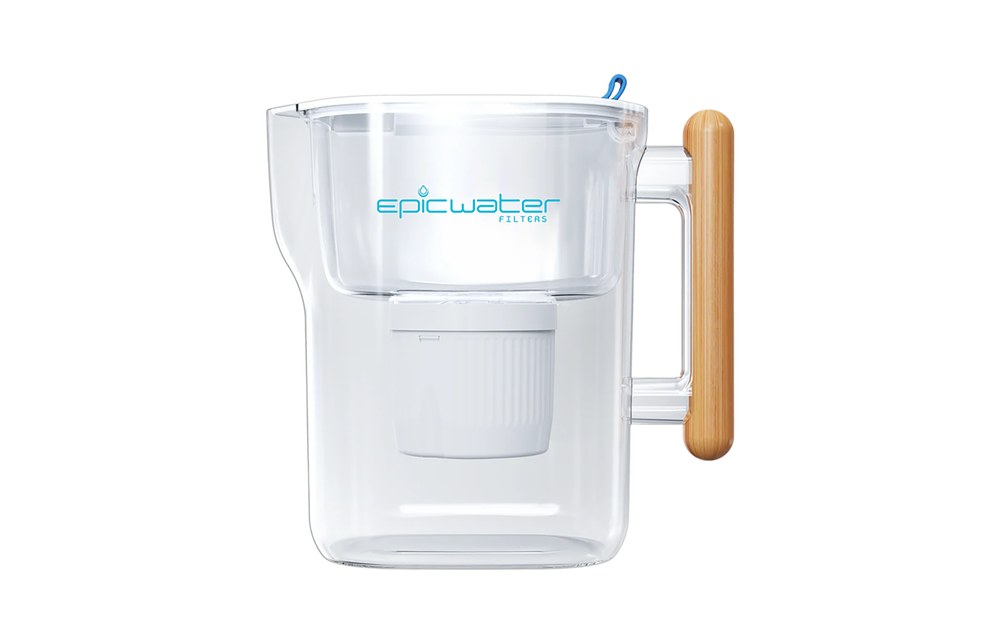
1. Epic Pure Water Filter Pitcher — Best Overall for Microplastics
 Best Overall
Reviewers point to published independent lab data and a filter rated around 150 gallons, far longer than a Brita, as the reasons they trust it, and several describe the slow, deliberate drip as reassuring rather than annoying. The honest downsides: owners report the filtration is genuinely slow and not the pick if you want a glass of water in a hurry, and third-party complaints mention cracked plastic, flip-top lids that stick, and water that spills or leaks from the lid when you pour a full pitcher.
The clearest evidence on this list: Epic posts its independent lab results publicly, so you can see the 99.9% microplastic-removal data instead of trusting a slogan on the box.
Why it's safe: The hollow fiber membrane physically blocks microplastic particles down to ~1 micron, while the carbon stage handles chlorine, lead, and PFAS — all in a BPA-free Tritan body.
Check Today’s Price on Amazon →Amazon prices change daily — tap to see today's price and any active discount.
- Free delivery & returns for Prime members
- Sold & shipped by Amazon
- Thousands of verified reviews
The water you drink all day — the glass you fill at the tap, the bottle you refill instead of buying a canned drink — is usually a bigger and steadier microplastic source than an occasional energy drink, and it’s the input you control most tightly, which makes a good filter the highest-leverage swap on this list. The Epic Pure is the clearest choice: its dual-stage design uses a hollow fiber membrane as the primary microplastic barrier, and Epic publishes the independent lab results to back the 99.9% removal claim — transparency most competitors don’t match.
2. Waterdrop Chubby 10-Cup Pitcher — Best Filter Life
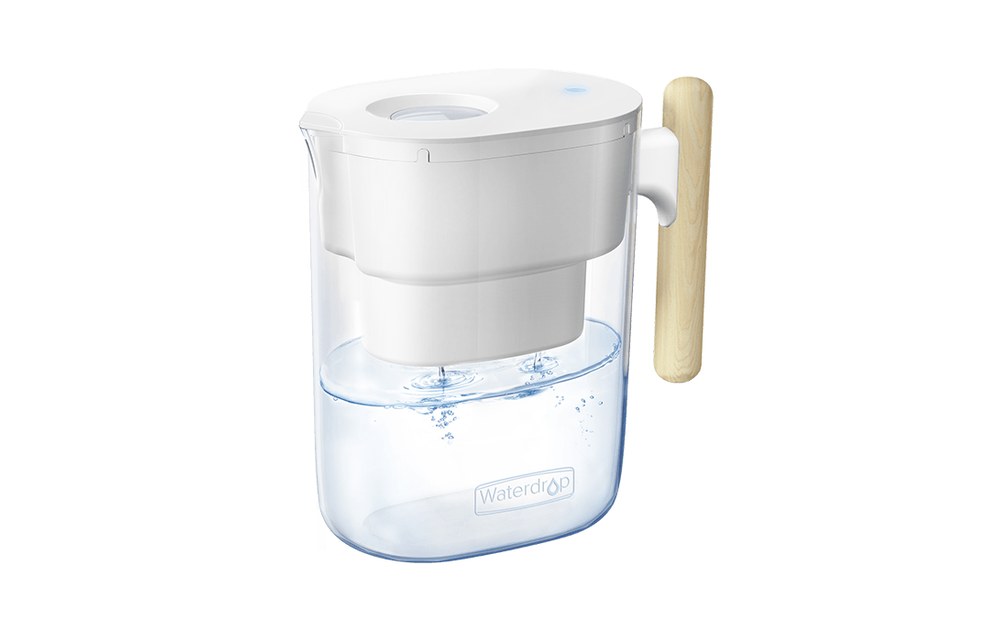 Best Filter Life
Owners like the look and the long 200-gallon filter life, and roughly 80 percent of reviews land positive, with the common praise being clean-tasting water at a low cost per gallon. The honest gripes: several owners warn the handle can feel loose or strain under a full pitcher, so they lift with two hands; some report the pour spills if you tip too fast; and the change-filter indicator light draws complaints for not lighting or not staying lit.
A membrane blocks particles by pore size rather than by claim list, and its 200-gallon filter runs about 4 to 5 months — the lowest ongoing cost on the list.
Why it's safe: A hollow fiber membrane is a physical barrier to particles, while the carbon composite handles chlorine, heavy metals, and PFAS — all in a BPA/BPS-free body.
Check Today’s Price on Amazon →Amazon prices change daily — tap to see today's price and any active discount.
- Free delivery & returns for Prime members
- Sold & shipped by Amazon
- Thousands of verified reviews
If you’re replacing packaged drinks with filtered water, you’ll run water through a filter constantly — so filter life matters, and the Waterdrop Chubby leads on it: a hollow fiber membrane on Waterdrop’s own published lab data, plus 200 gallons per filter (about 4–5 months for most households). The "filter while you pour" design works just like a familiar counter pitcher, but with a membrane that’s actually tested for microplastics.
3. Aquagear Water Filter Pitcher — Best Value
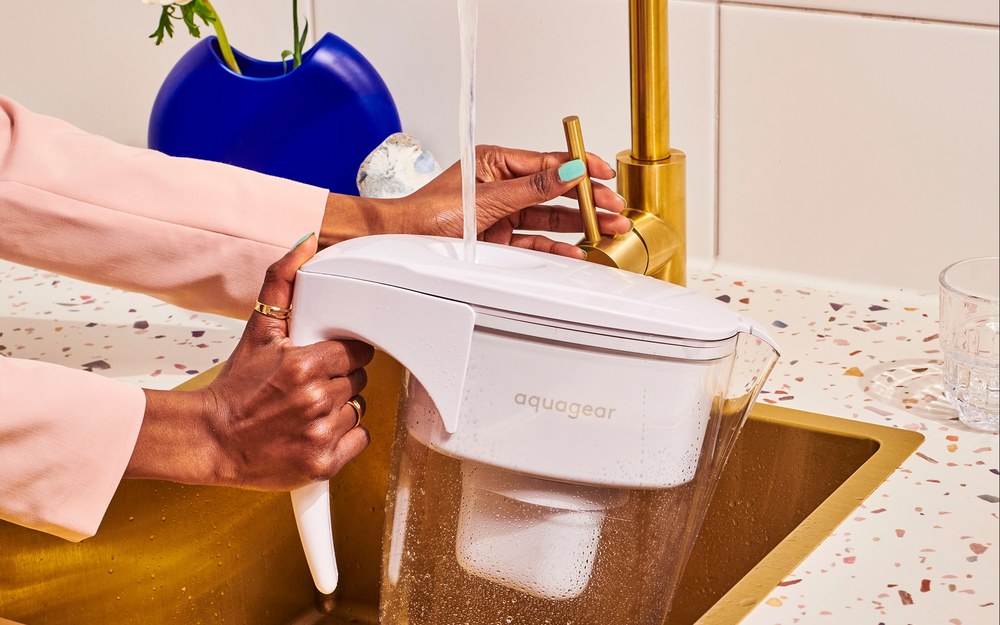 Best Value
Owners choose it for broad contaminant removal and clean taste, and some lab testing found it did not clog. The honest downsides: the most repeated complaint is slow filtration, described by one reviewer as a mixed bag between people waiting minutes and people waiting hours, and it can worsen as the filter ages; and the design draws gripes, with the pour-spout cover popping out and spraying water and a lid that fits poorly and can pop off mid-pour.
Change the filter half as often as most pitchers — 150 gallons per cartridge means fewer replacements, lower annual cost, and less to remember.
Why it's safe: A 5-stage filter with a sub-micron membrane stage captures microplastics, lead, fluoride, and chlorine, in a BPA-free body with USA-made filter media.
Check Today’s Price on Amazon →Amazon prices change daily — tap to see today's price and any active discount.
- Free delivery & returns for Prime members
- Sold & shipped by Amazon
- Thousands of verified reviews
The Aquagear costs more upfront but its 150-gallon filter life means lower annual replacement costs than most competitors, and the pitcher body is guaranteed for life. It uses a 5-stage filter with a sub-micron membrane stage that targets microplastics, heavy metals, and fluoride — a good fit for households that would rather clean up their daily water than fuss over an occasional can.
4. Lifefactory Glass Bottle 22oz — Best Glass Bottle
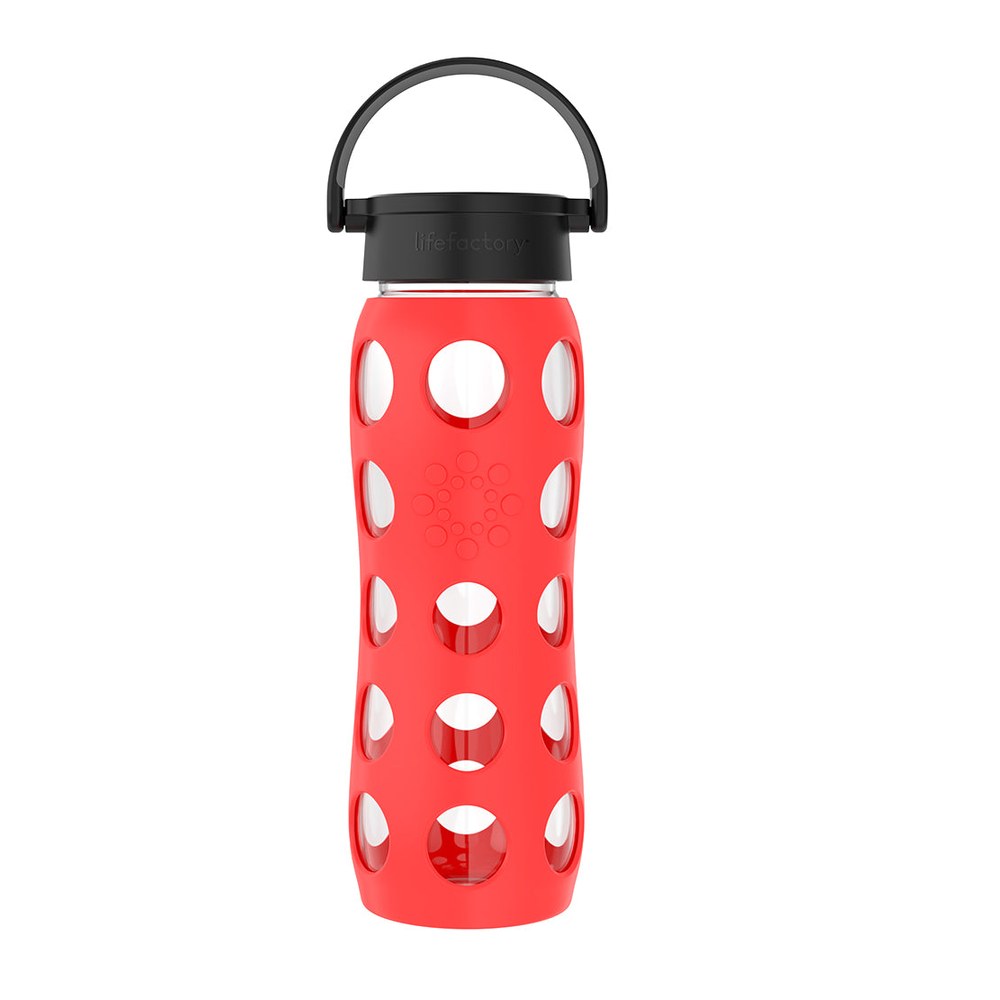 Best Glass Bottle
An occasional energy drink is a small source; the water you drink all day is the steady one — and this is how you carry the clean version instead of reaching for a canned drink. It’s made from borosilicate glass, the same material used in laboratory glassware, which is thermally stable, chemically inert, and completely free of BPA, BPS, and any polymer contact with your drink. It imparts no taste, so water tastes like water. The protective silicone sleeve adds grip and guards against shattering.
The screw cap contains a small polypropylene component — the only plastic in the system, and it sits at the exterior closure rather than the drink surface. Rinse it like any cap and it stays a non-issue. Dishwasher-safe, and sturdy enough for daily desk-and-bag use.
Owners love that water tastes clean with no plastic aftertaste and that the silicone sleeve makes the glass easy to grip and survive the occasional drop. The honest downsides: it’s heavier than a plastic or steel bottle, the glass can still break if dropped on a hard edge, and some reviewers find the flip-cap spout narrow or report the cap can leak if not fully closed.
Carry the filtered water you made at home instead of buying bottled — no plastic contact, no leaching, and it cleans up in the dishwasher.
Why it's safe: Borosilicate glass is completely inert — it never leaches, never sheds microplastics, and imparts no taste. The only plastic is a small cap component at the exterior closure, not the drink surface.
Check Today’s Price on Amazon →Amazon prices change daily — tap to see today's price and any active discount.
- Free delivery & returns for Prime members
- Sold & shipped by Amazon
- Thousands of verified reviews
An occasional energy drink is worth managing, but water is the source you touch most. Carrying filtered water in a reusable glass or stainless steel bottle — or a dedicated filtered water bottle — gives you grab-and-go hydration without the PET — no shedding, no leaching, no plastic aftertaste — so the canned or bottled drink stops being the default. Glass is also exactly what you want to decant an acidic drink into, so it never sits against a shedding plastic surface.
5. Glasslock Oven Safe Container Set (3-Pack) — Best Glass Storage
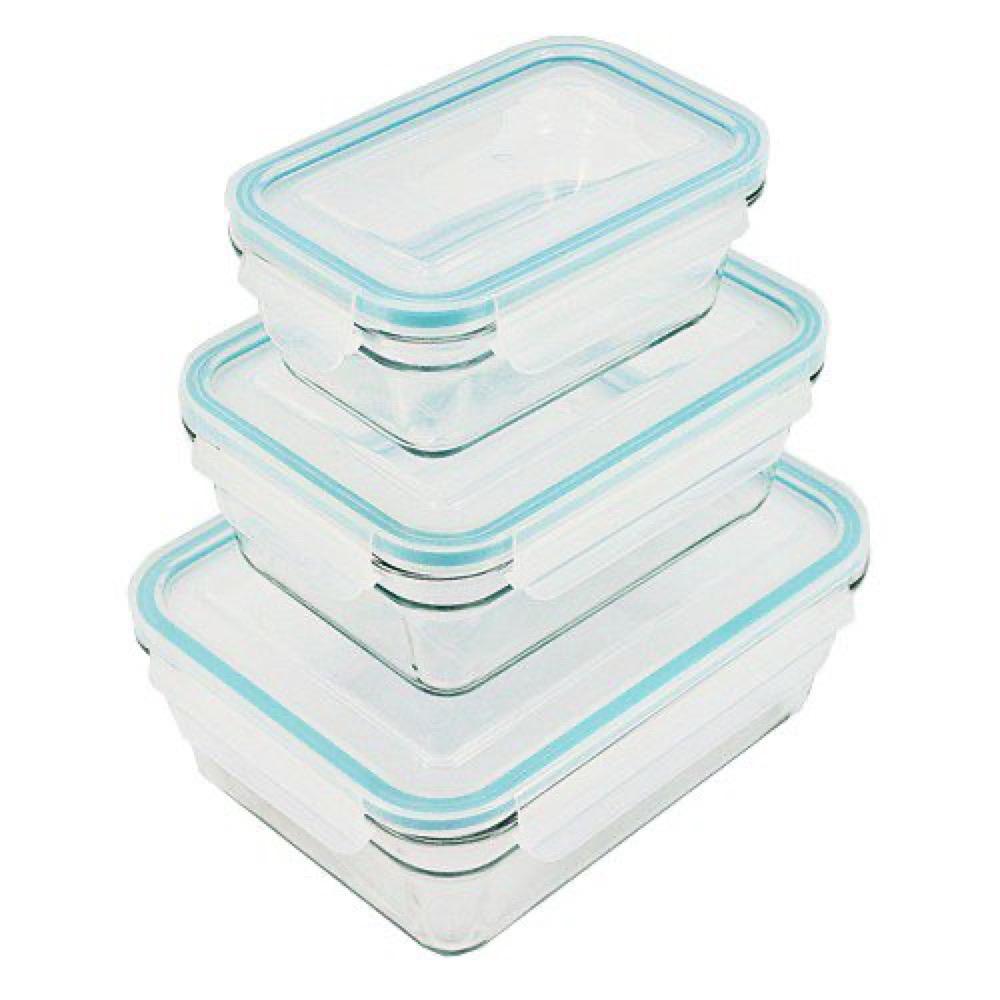 Best Glass Storage
Longtime owners like that the glass bodies are oven-, microwave-, and freezer-safe and that the snap-lock lids seal tight. The honest downsides run through the lids, not the glass: reviewers report cracked lids, snapped locking tabs, and mold building up in the rubber gaskets if they are not dried well. Some buyers also received sets with a locking piece missing, and several flag slow, hard-to-reach customer service when they needed a replacement part.
Three stackable glass containers in one box — enough to store a week of leftovers and prepped ingredients without a single plastic tub.
Why it's safe: Your food sits on inert tempered glass, not plastic — so warm, acidic, watery foods can’t leach or pick up shed particles. The BPA-free lids seal with a food-grade silicone gasket that only touches the rim.
Check Today's Price on Amazon →Amazon prices change daily — tap to see today's price and any active discount.
- Free delivery & returns for Prime members
- Sold & shipped by Amazon
- Thousands of verified reviews
Glass storage is the direct fix for keeping acidic and watery foods off plastic: store leftovers and prepped ingredients in inert glass instead of plastic tubs or cling wrap, keep acidic foods and homemade drinks in glass, and reheat with the lids off so warm food never sits against plastic. Acidic and watery foods are exactly the ones you least want held in plastic, and at roughly ten dollars per container this is the cheapest way to retire your plastic food tubs in one purchase.
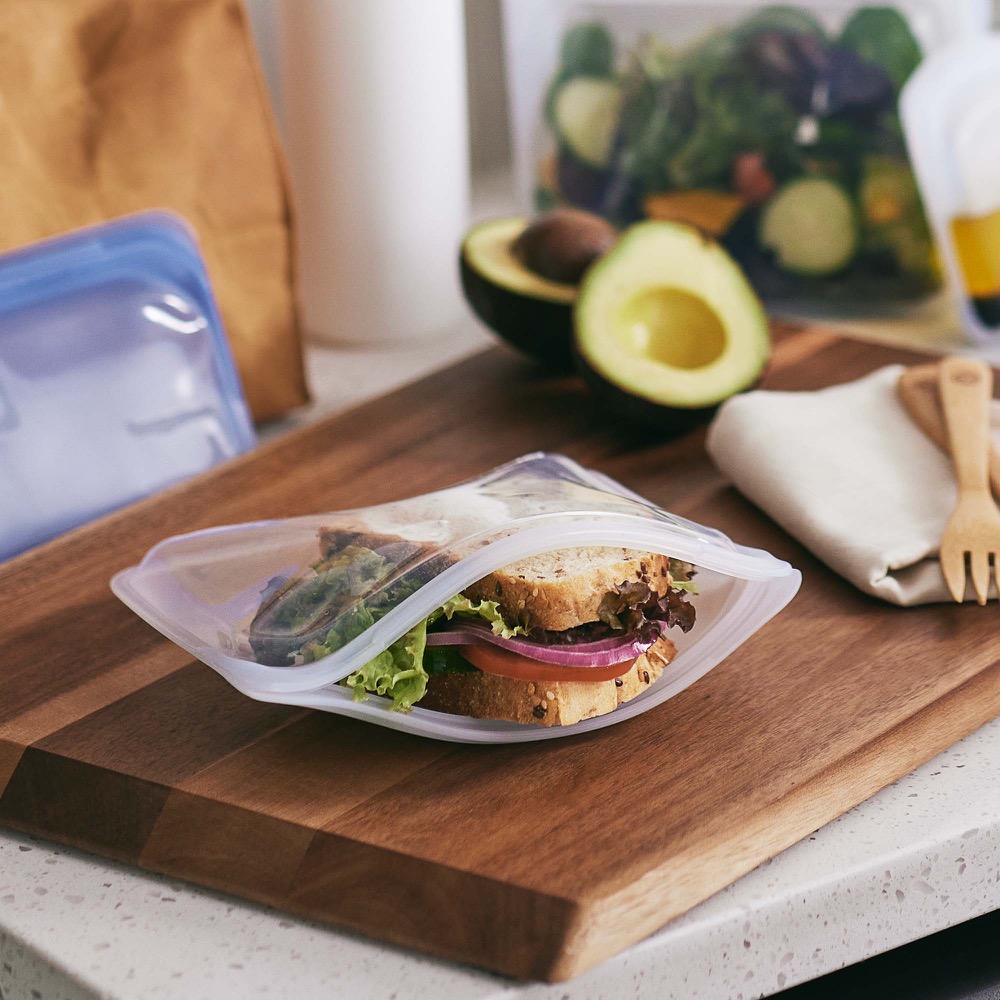
6. Stasher Reusable Silicone Bag Starter Kit — Best Silicone Bag
 Best Silicone Bag
For freezing food in portions, stashing leftovers you won't finish in time, or anything you’d reach for a plastic bag — Stasher’s platinum-cured silicone is the upgrade: sturdier than any disposable bag and free of the chemicals that migrate from plastic. The patented Pinch-Loc seal is genuinely airtight and leakproof, so it keeps food from drying out.
It’s freezer safe to -70°F and goes straight to the microwave or a 425°F oven. The starter kit covers the everyday sizes — sandwich, snack, and stand-up half-gallon — so you can retire a whole box of single-use bags in one purchase.
Owners like that the platinum silicone bags go from freezer to microwave and replace throwaway plastic for years. The honest gripes: smell and stain retention come up often, with reviewers noting garlic and strong odors linger even after washing; the pinch-lock seal can be fiddly to open and close; and the seams are slow to dry, which can invite mildew if you do not air them out.
Store prepped produce, snacks, and batch-cooked food in airtight silicone instead of plastic film — then thaw and reheat in the same bag, no transfer needed.
Why it's safe: Platinum-cured silicone — the highest-purity, chemically inert grade — with no plastic, PVC, BPA, lead, latex, phthalates, or PFAS.
Check Today's Price on Amazon →Amazon prices change daily — tap to see today's price and any active discount.
- Free delivery & returns for Prime members
- Sold & shipped by Amazon
- Tens of thousands of verified reviews
Freezing homemade cold brew in portions, chilling leftovers, and stashing prepped produce are exactly the jobs people reach for flimsy plastic bags to do. A multi-size platinum-silicone kit replaces the whole box at once, seals airtight, and handles the freezer-to-microwave trip without the shedding of a thin plastic bag. For the full lineup, see our guide to the best silicone food storage bags.
Want the Full Home Protection Guide?
A can of energy drink is one plastic touchpoint among dozens in a typical kitchen. The Complete Plasticproof Guide covers every room — kitchen, nursery, bathroom, bedroom — with 80+ product recommendations backed by 47+ studies.
The honest verdict
Do energy drinks have microplastics? Yes — and this is one of the cases where we're not guessing from a mechanism. A 2020 Science of the Total Environment study tested 57 beverages across 27 brands, energy drinks included, and found microplastics in 48 of them, at up to about 28 particles per liter, as fibers and fragments of PET, polyamide and ABS; a 2023 Italian study found microplastics in every soft drink and cold tea it tested, so the packaged-drink pathway holds across markets. The crucial detail is where they come from: not the caffeine or sugar — the plastic bottle, the lined aluminum can, and the synthetic fibers that settle into the drink during bottling, with the acidity and the months of storage pulling them loose. The measured per-serving load is small and the harm question is unproven, so the accurate takeaway is proportion, not alarm — and the fact that the thing that drives it, the packaging, is one you can simply opt out of.
The practical response is easy, because the culprit is the container. Replace the energy-drink habit rather than the brand: make cold brew or green tea at home, or carry filtered water in a glass or steel bottle, and the packaging disappears from the equation. If you do buy them, keep them cold and out of the heat, and decant into a glass to drink. Keep it in proportion, too — one can is a small line item next to overall exposure. And above all, filter the tap water you drink, since the water going through your body all day is the bigger, more constant source and the one you can genuinely make cleaner. You don't need a plastic scare to act on this one — a homemade drink and a filter handle most of it.
Cut the plastic that actually adds up
A can of energy drink is small next to the water you drink all day. A certified filter and a glass or steel bottle make clean water your easy default — and retire the packaged drink for good.
Frequently Asked Questions
Yes — energy drinks have been directly tested, and microplastics turned up. A 2020 study in Science of the Total Environment sampled 57 beverages across 27 brands, including energy drinks, soft drinks, cold tea and beer, and found microplastics in 48 of them, at up to about 28 particles per liter. The particles were fibers and fragments of polyamide, ABS and PET — polymers that trace to the packaging and to airborne contamination during bottling, not to the caffeine or sugar. A separate 2023 study of nonalcoholic beverages in Italy found microplastics in every soft drink and cold tea it sampled, so the packaged-drink pathway isn't limited to one brand or one country.
Mostly the packaging and the bottling line, not the drink. Energy drinks ship in PET plastic bottles or aluminum cans lined with a thin plastic (epoxy) coating, and the polymers researchers identify in the liquid — PET, polyamide, ABS — match those materials plus synthetic fibers shed from the air during manufacturing. The caffeine, taurine, sugar and B-vitamins carry essentially no plastic themselves. The liquid picks it up from the surface it sits against and the environment it's filled in.
Not clearly. An aluminum can looks like metal, but the inside is lined with a thin plastic or epoxy coating so the acidic drink never touches bare metal — so a can is not a plastic-free container. PET bottles and lined cans both put an acidic liquid against a plastic surface for months. Studies have found microplastics in beverages from both formats, so the honest answer is that the container matters less than the acidity and the storage time, and the real plastic-free move is a glass bottle or a drink you make yourself.
It's a plausible accelerant. Energy drinks are strongly acidic — citric acid plus carbonation puts most of them around pH 2.5 to 3.5 — and an aggressive, acidic liquid in long contact with plastic or a plastic-lined surface is exactly the condition that drives leaching and shedding, the same reason acidic foods and sodas are flagged. Add months of warehouse and shelf storage, sometimes in heat, and you have a liquid that sits on plastic far longer and more corrosively than a glass of water ever does.
Drink fewer of them, and don't let the ones you do drink sit in heat — a bottle left in a hot car accelerates leaching. The bigger win is to replace the energy-drink habit rather than the brand: cold brew or green tea you make at home, or filtered water in a glass or steel bottle, removes the plastic packaging entirely and usually the excess sugar too. And filter the tap water you drink all day, since that steady intake is a far larger microplastic source than an occasional can.
The studies measured how many particles are present and what polymers they are — not what those particles do once they're inside a person — so on the narrow question of harm there is no verdict, and no one should read one into it. A widely cited 2019 analysis estimated the average person already swallows tens of thousands of microplastic particles a year from food, drink and air combined. An energy drink is a small line item within that total; it's worth cutting mostly because the sugar, caffeine and plastic all come down together when you swap it, not because one can is dangerous.
Sources
- Shruti VC, Pérez-Guevara F, Elizalde-Martínez I, Kutralam-Muniasamy G. "First study of its kind on the microplastic contamination of soft drinks, cold tea and energy drinks." Science of the Total Environment, 2020;726:138580. (Sampled 57 beverages across 27 brands, energy drinks and beer included; detected microplastics in 48 of 57 at up to about 28 particles/L, as fibers and fragments of polyamide, poly(ester-amide), ABS and PET — the direct evidence that energy drinks carry packaging-derived microplastics.)
- Crosta A, Parolini M, De Felice B. "Microplastics Contamination in Nonalcoholic Beverages from the Italian Market." International Journal of Environmental Research and Public Health, 2023;20(5):4122. (Found microplastics in every soft drink and cold tea sampled in northern Italy, corroborating that packaged nonalcoholic beverages broadly carry them.)
- Cox KD, Covernton GA, Davies HL, et al. "Human Consumption of Microplastics." Environmental Science & Technology, 2019;53(12):7068–7074. (Estimated tens of thousands of microplastic particles consumed per person per year from food and drink combined — the exposure context a single energy drink sits within.)
- Kosuth M, Mason SA, Wattenberg EV. "Anthropogenic contamination of tap water, beer, and sea salt." PLOS ONE, 2018;13(4):e0194970. (Found microplastic particles across everyday foods, drinks and tap water — evidence that the water you drink all day is itself a baseline microplastic source worth filtering.)