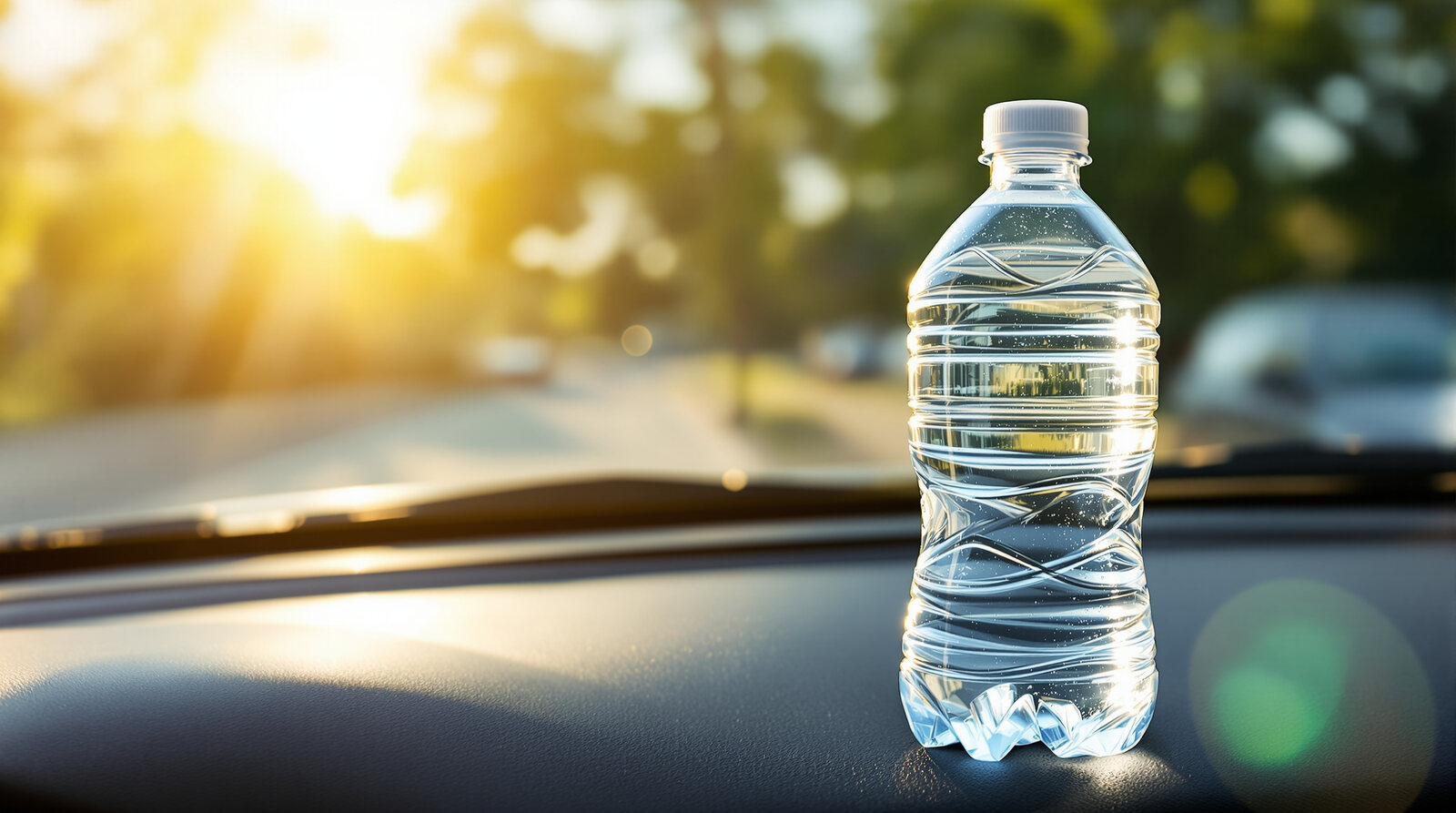
Drinking from a plastic bottle that spent a few hours in a hot car is low-risk as a one-off, but heat is not harmless: it speeds up how fast a PET bottle leaches its antimony catalyst and sheds microplastic particles into the water. A parked car can reach 130–170°F inside — hot enough to accelerate that slow chemistry and give the water a plasticky taste. What is not true is the viral claim that hot-car (or frozen) bottles cause cancer through dioxins; plastic water bottles contain no dioxins. The sensible rules: do not store cases of water in a hot car for weeks, never reuse a single-use bottle that has been heat-cycled, and for a car you drive every day, carry a stainless steel bottle instead.
It is one of the most common summer worries: the water bottle has been riding on the dashboard all afternoon, the plastic feels soft and warm, and the water tastes faintly of… plastic. So is it actually dangerous, or is this another health scare that ran ahead of the science? The honest answer sits in the middle, and it depends far more on how long and how hot than on the single bottle in your cupholder.
This guide walks through what heat really does to a plastic water bottle, how hot a parked car gets, whether the cancer rumor holds up, where BPA does and does not come into it, what the microplastics research shows, and what to carry instead. It takes the same evidence-first approach as our looks at whether it is safe to reuse plastic water bottles and how dangerous microplastics really are — a real exposure, honestly bounded by what the data supports.
The short version: a bottle you left in the car this morning and drink this afternoon is a low-risk one-off; heat mainly speeds up antimony leaching and microplastic shedding and makes the water taste off. The dioxin-cancer email is a myth. Don’t store water in a hot car for days, don’t refill heat-cycled single-use bottles, and switch to stainless steel or glass for the car.
What does heat actually do to a plastic water bottle?
A single-use water bottle is almost always PET — polyethylene terephthalate, the plastic stamped with recycling code 1. PET is a stable, food-safe plastic at room temperature, which is why it is the world’s default for bottled drinks. Heat does not suddenly turn it toxic. What heat does is speed up the slow chemistry that is already happening very gradually: migration of substances out of the plastic and into the water.
The main one is antimony. PET is manufactured using an antimony-based catalyst (antimony trioxide), and tiny traces of it are left in the finished bottle. Antimony leaches into the water over time, and the rate rises with temperature. A well-cited 2008 study in Water Research measured antimony release from PET bottled water and found it stayed low at room temperature but climbed sharply once bottles were held at elevated temperatures — around 60 °C and above — with concentrations increasing the longer and hotter the water was stored. Later research on reused and heat-exposed bottles reached the same conclusion: temperature is the single biggest driver of what PET gives up, which is why the same concern runs through reusing disposable water bottles.
The honest framing matters here. For a bottle warmed for a few hours, antimony typically stays below the U.S. EPA drinking-water limit of 6 micrograms per liter. The concern is not a single warm bottle; it is prolonged, repeated high heat — a case of water left in a trunk across a hot summer, or the same bottle refilled and re-baked again and again — which pushes the slow migration of antimony and plastic particles higher than it ever needs to be.
This is the same lesson that runs through the rest of our coverage, from reusing plastic water bottles to how much plastic ends up in bottled water: the exposure is real but gradual, and heat is the lever that makes it worse. Keep the plastic cool and you blunt almost all of it.
How hot does a parked car really get?
Hotter than most people guess, and fast. On a day that is only 80 to 90 °F outside, the air inside a closed, parked car can climb to roughly 130 to 172 °F (55 to 78 °C) within an hour, and dark surfaces like the dashboard run hotter still. Cracking a window barely changes it. This is the same physics behind the warnings never to leave a child or pet in a car — and it is exactly the temperature range where the antimony-leaching studies measured a jump in migration from PET.
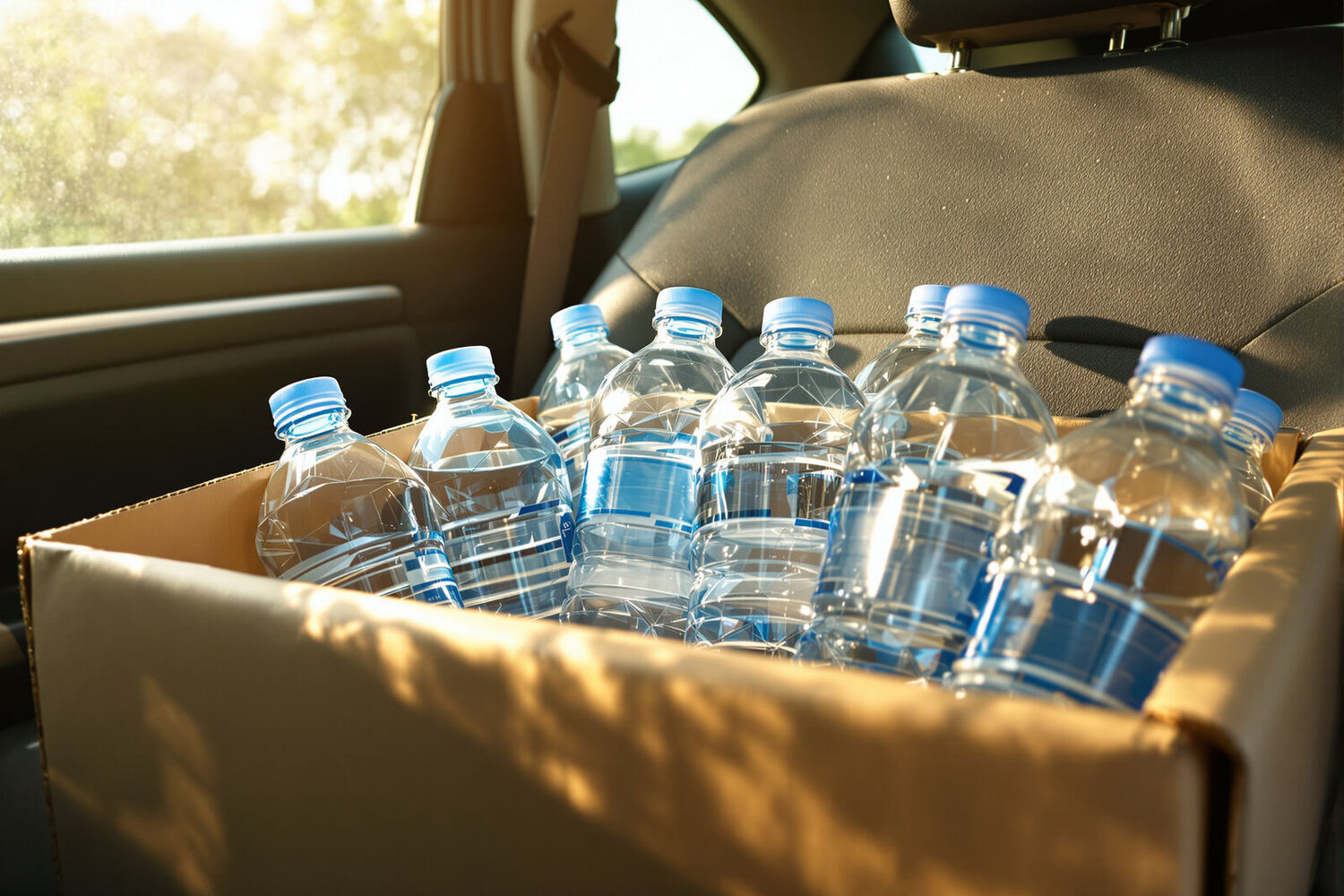
That distinction — a few hours versus weeks — is the whole story. A bottle that heats up on your commute and gets drunk the same day sees one brief warm spell. A flat of water bought in bulk and left in the trunk through July gets heated, cooled overnight, and re-heated day after day, and each cycle nudges antimony and shed plastic particles a little higher. The temperature a car reaches is alarming; the duration and repetition are what actually matter.
One warm bottle is a non-event. The risk builds when all three stack up: high heat, long storage, and refilling a thin single-use bottle that was never built for it. If you keep water in the car, don’t let a case live in the trunk for weeks, and swap to an insulated stainless steel bottle you refill from clean water at home.
Can a hot-car water bottle give you cancer? The dioxin myth
This is the claim that sends the question viral every summer, and it is false. A chain email that has circulated for two decades — sometimes attributed to a celebrity, sometimes to “a recent study” — warns that heating (or freezing) a plastic water bottle releases cancer-causing dioxins into the water. It is not true. Dioxins are a family of pollutants formed mainly by high-temperature combustion, like burning trash; they are not an ingredient in PET water bottles, and nothing about leaving a bottle in a warm car creates them. Johns Hopkins researchers publicly debunked the rumor, noting plainly that there are no dioxins in plastic bottles and that freezing them does not release dioxins either.
So the cancer-by-dioxin story is a myth — but that does not mean “nothing happens,” and it is worth being precise about the one chemical people often raise next: BPA. Bisphenol A is a genuine endocrine-disrupting concern, but it is not in disposable water bottles. Single-use bottles are PET (code 1), which contains no BPA. BPA belonged to hard, clear polycarbonate bottles (recycling code 7) — the old rigid reusable kind — and heat really does speed BPA migration from those. If you own an old polycarbonate bottle, that is the one to keep out of a hot car; a PET disposable or a stainless steel bottle has no BPA to give. For the wider picture on why “BPA-free” labels can still hide similar chemicals, see why BPA-free doesn’t mean safe and microplastics and your hormones.
What about microplastics and nanoplastics from the heat?
This is the part of the hot-car question with the most momentum behind it. Even unheated, bottled water is already a surprisingly large source of plastic particles: a 2024 study in PNAS used a new laser-imaging method to count roughly 240,000 plastic particles per liter of bottled water, around 90% of them nanoplastics small enough to cross into the bloodstream — about 100 times more than earlier estimates. Those particles come from the bottle and cap themselves.
Heat, UV sunlight through the windshield, and the physical flexing of a soft bottle all accelerate that shedding — the same three forces a hot car delivers in abundance. There is no precise “particles from a hot-car bottle” number yet, so it would be dishonest to invent one, but the direction is not in doubt: a bottle cooked and squeezed on a dashboard sheds more than one kept cool in a cupboard. For the wider picture, see whether bottled water has microplastics and how to reduce microplastics in your body.
What should you do with a bottle that’s been in a hot car — and what to carry instead?
For a single bottle warmed on today’s drive, the practical answer is simple: if it still tastes and smells normal, drinking it is fine, and going thirsty is the worse choice. Trust your senses — a strong plastic taste or off smell means more has leached, so tip it out. Where the rules tighten is for bottles that have sat hot for a long time, or that you plan to keep refilling.
A few habits remove almost all of the concern:
- Don’t keep a case of bottled water in the car. The trunk or back seat is the one place water gets cooked and re-cooked for weeks. Store bulk water indoors, somewhere cool and dark, and bring out only what you’ll drink that day.
- Never refill a single-use bottle that’s been heat-cycled. Thin PET bottles are built for one fill. Reusing one that has baked and been handled repeatedly means more shedding and more places for bacteria — see reusing plastic water bottles.
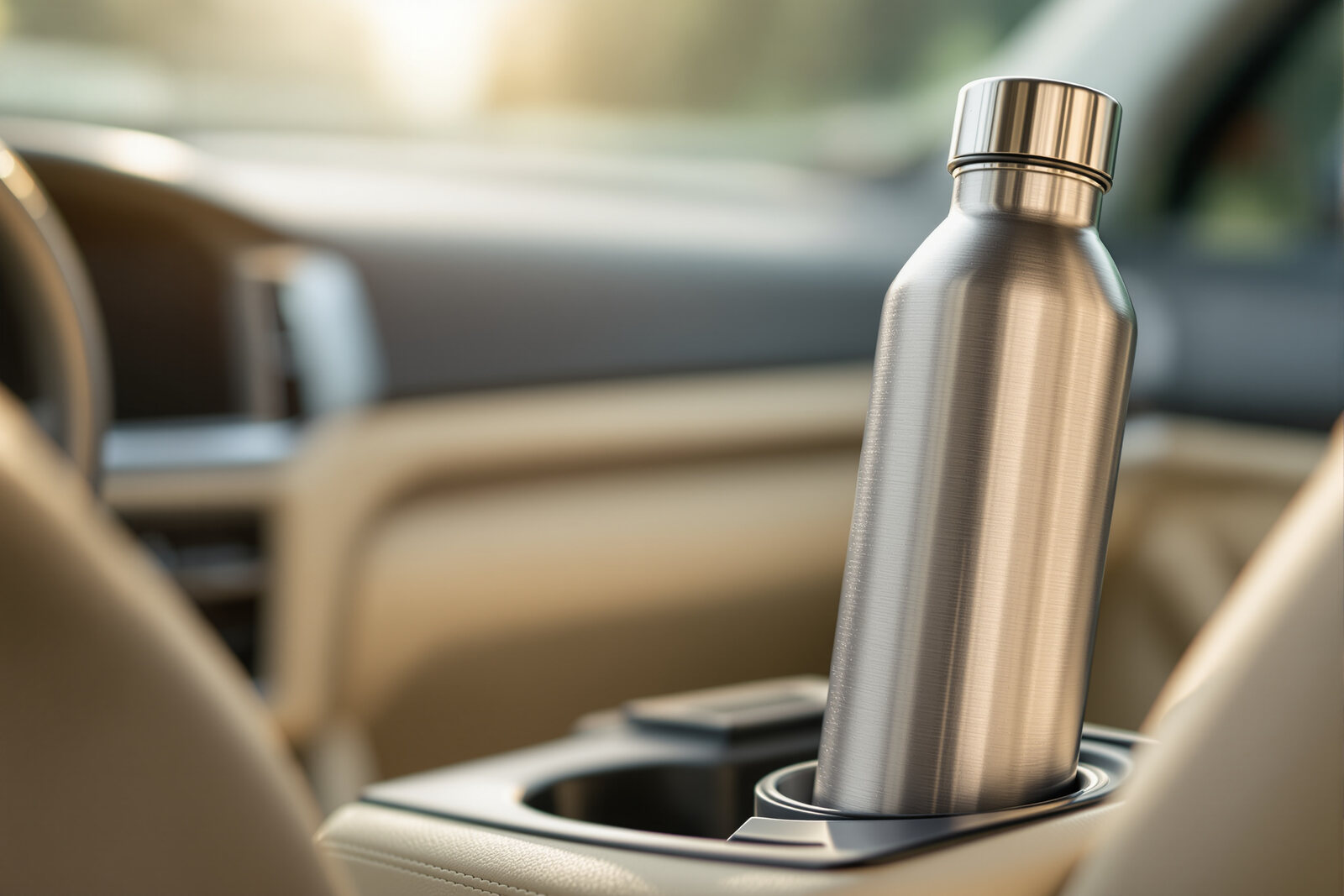
- Carry an insulated stainless steel bottle. Food-grade 18/8 steel is inert — no antimony, no BPA, no microplastic shedding — and a double-wall vacuum design keeps water cold in a hot car. Our best stainless steel water bottles guide ranks the plastic-free options.
- Or a glass bottle where it’s practical. Glass is equally inert and leaches nothing; a silicone sleeve handles the drops. Compare the two in stainless steel vs. glass.
- Want it filtered too? A filtered water bottle lets you refill from any tap and skip single-use plastic altogether — the cheapest long-run fix for the car.
None of this calls for panic over one warm bottle. It is the same measured approach we take across the site: deal with the heat-and-repeat cases first, and the rare warm sip takes care of itself. For the whole-day version, see how to reduce microplastics in your body.
The bottom line: is water from a hot car safe to drink?
For a one-off, yes — a bottle that warmed up on your drive and still tastes normal is a low-risk sip, and staying hydrated matters more than a trace of antimony. What heat genuinely does is speed up the slow leaching of antimony and the shedding of microplastics from a PET bottle, and a parked car reaches temperatures well into the range where that acceleration shows up. The viral dioxin-cancer warning is a myth, and BPA is not a factor for disposable PET bottles at all.
So the honest rules are simple: don’t store water in a hot car for days or weeks, don’t refill a thin single-use bottle that has been heat-cycled, tip out any water that tastes strongly of plastic, and for a car you drive every day, carry a stainless steel or glass bottle that leaches nothing and keeps water cool. For the bigger picture, read whether bottled water has microplastics and how dangerous microplastics really are.
Trade the single-use bottle for good
A hot-car bottle is really a nudge toward one easy swap. An insulated steel or glass bottle leaches nothing, keeps water cold on the worst summer day, and pays for itself in a few weeks of not buying plastic.
Frequently Asked Questions
For a one-off — a bottle you left in the car this morning and drink that afternoon — the risk is low, and dehydration is the bigger danger if it is the only water you have. What rises with heat is slow chemistry: a warm PET bottle leaches its antimony catalyst faster and sheds more microplastic particles, and the water often tastes plasticky. The habit to avoid is drinking water that has baked in a hot car for days or weeks, or reusing single-use bottles that have been heat-cycled.
No — not through the mechanism the viral emails claim. The widely shared story that heat (or freezing) makes plastic bottles release cancer-causing dioxins is false: PET water bottles do not contain dioxins, and neither heating nor freezing creates them. Johns Hopkins researchers publicly debunked that myth. The real, much smaller issue with a hot bottle is increased chemical migration of antimony and more microplastic shedding, not dioxins.
Heat speeds up migration. PET plastic is made using an antimony-based catalyst, and studies show antimony leaches into the water faster as temperature climbs — slow at room temperature, noticeably faster at 60 °C and above. Heat, sunlight and squeezing also increase how many microplastic and nanoplastic particles shed from the bottle. The plastic does not turn toxic, but the longer and hotter it sits, the more it gives up into the water.
Much hotter than it is outside. On an 80 to 90 °F day, a parked car’s interior can climb to roughly 130 to 172 °F (55 to 78 °C) within an hour, and dark dashboards get hotter still. That range sits squarely in the temperatures where antimony-leaching studies measured accelerated migration from PET, which is why a bottle on the dashboard is a worse place to store water than a cool cupboard at home.
Usually not for disposable bottles. Single-use water bottles are made of PET (recycling code 1), which contains no BPA, so there is no BPA to leach even when hot. BPA was used in hard, clear polycarbonate (code 7) reusable bottles, and heat does accelerate BPA migration from those. If you have an old polycarbonate bottle, that is the one to keep out of a hot car; a modern PET disposable or a stainless steel bottle has no BPA concern.
An insulated stainless steel bottle or a glass bottle. Food-grade 18/8 stainless steel is inert — it does not leach plastic chemicals or shed microplastics, and a double-wall vacuum design also keeps water cool in a hot car. Glass is equally inert where it is practical. Both are the reusable swaps worth making for a car you use daily, instead of letting single-use PET bottles heat-cycle again and again.
Sources
- Westerhoff P, Prapaipong P, Shock E, Hillaireau A. "Antimony leaching from polyethylene terephthalate (PET) plastic used for bottled drinking water." Water Research, 2008;42(3):551–556, doi.org/10.1016/j.watres.2008.01.015. Measured antimony migrating from PET bottled water, with release staying low at room temperature but increasing markedly as storage temperature and time rose.
- Qian N, Gao X, Lang X, et al. "Rapid single-particle chemical imaging of nanoplastics by SRS microscopy." Proceedings of the National Academy of Sciences, 2024;121(3):e2300582121, doi.org/10.1073/pnas.2300582121. Counted roughly 240,000 plastic particles per liter of bottled water, about 90% of them nanoplastics, shed from the PET bottle and cap.
- Johns Hopkins Medicine. "Microwaving Food in Plastic: Dangerous or Not?" hopkinsmedicine.org. Johns Hopkins explanation that heat accelerates chemical migration from plastic, and that the long-running internet claim linking heated or frozen plastic bottles to dioxins is not supported — plastic bottles do not contain dioxins.
- U.S. Environmental Protection Agency. "National Primary Drinking Water Regulations," epa.gov. Lists the enforceable maximum contaminant level for antimony in drinking water (6 micrograms per liter), the benchmark heat-driven leaching is measured against.
- Null Family Foundation / National Weather Service heat-safety guidance on vehicle interior temperatures, which document a closed parked car reaching roughly 130–172 °F (55–78 °C) within an hour on an 80–90 °F day — the basis for the “never leave a child or pet in a car” warnings and for how hot stored water gets.