To make coffee without plastic, drink it from your own stainless steel or ceramic cup, brew it through a paper filter in a glass or porcelain dripper, boil the water in a steel or glass kettle, and never let hot coffee sit or reheat in plastic. The biggest single source is the cup: a 2021 IIT Kharagpur study in the Journal of Hazardous Materials measured about 25,000 microplastic particles released into 100 mL of hot water in 15 minutes from a plastic-lined paper cup. Plastic drip bags came second, at more than 10,000 particles per cup in a 2023 Food Chemistry test.
The coffee itself is not the main problem. When University of Birmingham researchers tested 155 drinks bought in the UK, hot coffee averaged 43 microplastic particles per liter. That's a real number, but a modest one. The big numbers in the research come from the plastic the coffee touches on the way to your mouth: the lining of a paper cup, a nylon or polypropylene drip bag, a plastic kettle, a pod, a lid. Hot water and time are what make those surfaces shed.
That's good news, because you control the equipment. This guide ranks seven changes by how much plastic each one removes from contact with hot coffee, based on the published studies that actually measured it. Most of them cost nothing. Two of them are a one-time purchase that lasts for years.
The bottom line up front: the cup matters most, the brewer second and the kettle third. If you only change one thing, stop drinking hot coffee out of disposable cups. For what is in the coffee itself, see does coffee have microplastics; for the cups on their own, do paper cups have microplastics.
Where does the plastic in a cup of coffee come from?
Mostly from the hot plastic the coffee touches, not from the beans. In the Birmingham study (Al-Mansoori, Harrad and Abdallah, Science of the Total Environment, 2025), polypropylene, the plastic used in cups, lids, pods and kettles, was the most common polymer found across all the drinks, followed by polystyrene, PET and polyethylene. The authors traced a large share of what they measured to plastic packaging, and found hot drinks carried significantly more particles than cold ones.
Every lab that has heated plastic finds the same pattern: heat plus contact time equals particles. That's why a takeaway cup, which holds coffee at 60 to 90°C for as long as it takes you to drink it, outranks everything else on this list.
What the coffee studies measured
| Study | What was tested | What it measured |
|---|---|---|
| Ranjan, Joseph & Goel, IIT Kharagpur, J. Hazard. Mater. 2021 | Plastic-lined disposable paper cups, 85–90°C water, 15 minutes | About 25,000 micron-sized particles per 100 mL cup, plus about 102 million sub-micron particles per mL |
| Zangmeister et al., NIST, Environ. Sci. Technol. 2022 | Polyethylene-lined hot-drink cups, 100°C water, 20 minutes | Trillions of nanoparticles per liter, mostly 30–80 nm |
| Okoffo et al., University of Queensland, ACS Food Sci. Technol. 2026 | PLA-lined vs polyethylene-lined paper cups, hot liquid | About 4.3 million nanoparticles per mL (PLA) vs 2.7 million (polyethylene); about 12 times the particle mass from PLA |
| Wang et al., Food Chemistry 2023 | Plastic drip coffee bags from 8 brands, 95°C, 5 minutes | More than 10,000 particles per cup from a single bag |
| Akbulut et al., Uskudar University, Foods 2024 | Single-use PP, PS, EPS and PE-coated paper cups, 4–80°C, up to 20 minutes | 126.6 to 1,420 particles per liter; highest in PP cups at 50°C after 20 minutes; pre-washing cut counts 52–65% |
| Al-Mansoori, Harrad & Abdallah, University of Birmingham, Sci. Total Environ. 2025 | 155 hot and cold drinks from the UK market | Hot coffee 43 particles per liter; iced coffee 37; hot drinks significantly higher than cold |
| Gune, Schultz & Martin, Food Chemistry 2026 | 15 instant and 15 ground coffees | 1.433 particles per gram in instant vs 0.343 in ground |
One honest caution about this table: the labs used different instruments and counted different particle sizes, which is why the numbers range from dozens per liter to trillions. Compare the rows within a study, not across studies. What every row agrees on is the direction: hotter and longer means more.
How do you make coffee without plastic? 7 swaps ranked by impact
Ranked by how much hot plastic each change removes from your coffee, from the swap that matters most to the habits that round it out.
| Rank | Swap | The evidence behind it | Cost |
|---|---|---|---|
| 1 | Your own steel or ceramic cup, not a lined takeaway cup | About 25,000 particles per 100 mL in 15 minutes from a lined paper cup | One travel mug |
| 2 | Paper filter in glass or porcelain, not a plastic drip bag | More than 10,000 particles per cup from one drip bag | One dripper |
| 3 | Boil water in steel or glass, not a plastic kettle | Polypropylene shed up to 16.2 million particles per liter in hot-water tests | One kettle |
| 4 | Don't let hot coffee sit in plastic | Release rose with time and temperature in every cup study | Free |
| 5 | Reheat in a ceramic mug | Microwaving was the worst use of plastic food containers tested | Free |
| 6 | Ground coffee over instant | About 4 times more particles per gram in instant | Free to low |
| 7 | Rinse any plastic part you keep before first use | Pre-washing cut cup counts by 52–65% | Free |
1. Drink from your own stainless steel or ceramic cup, not a lined takeaway cup
Paper coffee cups hold liquid because they are lined with a thin plastic film, usually polyethylene. Researchers at IIT Kharagpur poured 85 to 90°C water into those cups for 15 minutes and counted about 25,000 micron-sized plastic particles released into a single 100 mL cup, plus roughly 102 million smaller sub-micron particles per milliliter (Ranjan, Joseph and Goel, Journal of Hazardous Materials, 2021; PubMed 33091697). At the National Institute of Standards and Technology, Christopher Zangmeister's team held polyethylene-lined cups at 100°C for 20 minutes and measured trillions of nanoparticles per liter (Environmental Science & Technology, 2022).
All-plastic cups are not the escape either. A Griffith University team tested 400 cups collected in Brisbane at iced-coffee (5°C) and hot-coffee (60°C) temperatures and found that for all-plastic cups, hot liquid raised microplastic release by about 33% (Journal of Hazardous Materials: Plastics). A stainless steel travel mug with no interior liner, or a ceramic mug for coffee “for here,” removes the lining from the equation entirely. Most coffee shops will fill your own cup if you ask.
Are compostable coffee cups better?
Not for microplastics, according to the most direct test so far. Many “compostable” cups swap the polyethylene lining for PLA, a plastic made from plants. A University of Queensland team led by Elvis Okoffo found PLA-lined cups released about 4.3 million nanoparticles per milliliter of hot liquid, compared with 2.7 million for polyethylene-lined cups, and about 12 times the total particle mass (ACS Food Science & Technology, 2026; University of Queensland summary). Plant-based is still plastic once it's a film on hot coffee. A reusable cup beats both.
2. Brew through paper in glass or porcelain, not a plastic drip bag
Single-serve drip bags, the kind that hang over the rim of a mug, are made of a plastic or synthetic mesh that sits in near-boiling water for minutes. Wang and colleagues tested drip bags made of polyethylene, polypropylene, polyester and rayon from eight brands and found a single bag steeped at 95°C for 5 minutes could release more than 10,000 microplastic particles into one cup of coffee (Food Chemistry, 2023; PubMed 36848832). Rayon made up over 80% of what was released, which matters because rayon is often marketed as a “natural” fiber.
A glass pour-over like the Chemex or a porcelain cone like the Melitta does the same job with only a paper filter touching the coffee. Plastic single-serve pods raise the same question, and the evidence there is thinner than headlines suggest; we break down what is and isn't proven in K-cups and microplastics: 6 myths, and if you keep a pod machine, the steel options are in the best reusable K-cup pods. The full brewer comparison is in the best plastic-free coffee maker.
3. Boil the water in stainless steel or glass, not a plastic kettle
The water for coffee is the hottest thing in your kitchen, and many electric kettles have polypropylene bodies or interior parts. Trinity College Dublin's study of polypropylene baby bottles measured up to 16.2 million particles per liter during normal hot-water preparation (Li et al., Nature Food, 2020), and the team's own summary reports release rising from about 600,000 particles per liter at 25°C to as much as 55 million at 95°C.
The same group then ran a 100-day test on plastic kettles (Shi et al., Journal of Hazardous Materials, 2022). It found that minerals in real tap water build a thin scale film inside the kettle, and after 40 days that film cut microplastic release by more than 89%. That means a brand-new plastic kettle is at its worst, and every descaling resets it. A stainless steel or glass kettle avoids the whole cycle. More on kettles in do electric kettles have microplastics.
4. Don't let hot coffee sit in plastic
Time matters as much as temperature. In a 2024 study of single-use beverage cups (Akbulut et al., Foods, 2024), counts ranged from 126.6 particles per liter in polyethylene-coated paper cups at 4°C with no wait to 1,420 per liter in polypropylene cups at 50°C after 20 minutes. If you do end up with a disposable cup, drink it rather than nursing it for an hour, and don't leave coffee standing in a plastic carafe, thermos liner or brew reservoir.
5. Reheat coffee in a ceramic mug, never a plastic or paper cup
Reheating a half-finished takeaway cup in the microwave combines the two worst conditions: heat and a plastic surface. A University of Nebraska–Lincoln study found microwaving released more particles than any other use of plastic food containers, up to 4.22 million microplastics per square centimeter in 3 minutes (Hussain et al., Environmental Science & Technology, 2023). Pour the coffee into a ceramic mug first. The wider routine is in how to microwave food without microplastics.
6. Choose ground coffee over instant
This is the one swap about the coffee itself. A 2026 study that analyzed 15 instant and 15 ground coffees found 1.433 microplastics per gram in instant and 0.343 per gram in ground, about four times as many (Gune, Schultz and Martin, Food Chemistry, 2026). The polymers differed too: polypropylene led in instant coffee, polyurethane in ground, pointing to different entry points during processing. The authors estimated the total at about 422 particles a year from coffee alone, which is small next to the cup numbers above. So this ranks below the equipment swaps.
7. Rinse any plastic part you keep before its first use
Not everyone will replace a coffee maker tomorrow. If a plastic carafe lid, brew basket or reservoir stays, rinse new parts well before using them. In the Foods cup study, pre-washing cut microplastic counts by 52 to 65%. It's a partial fix, but it costs nothing. Retire plastic parts that have gone cloudy or scratched, since worn surfaces shed more.
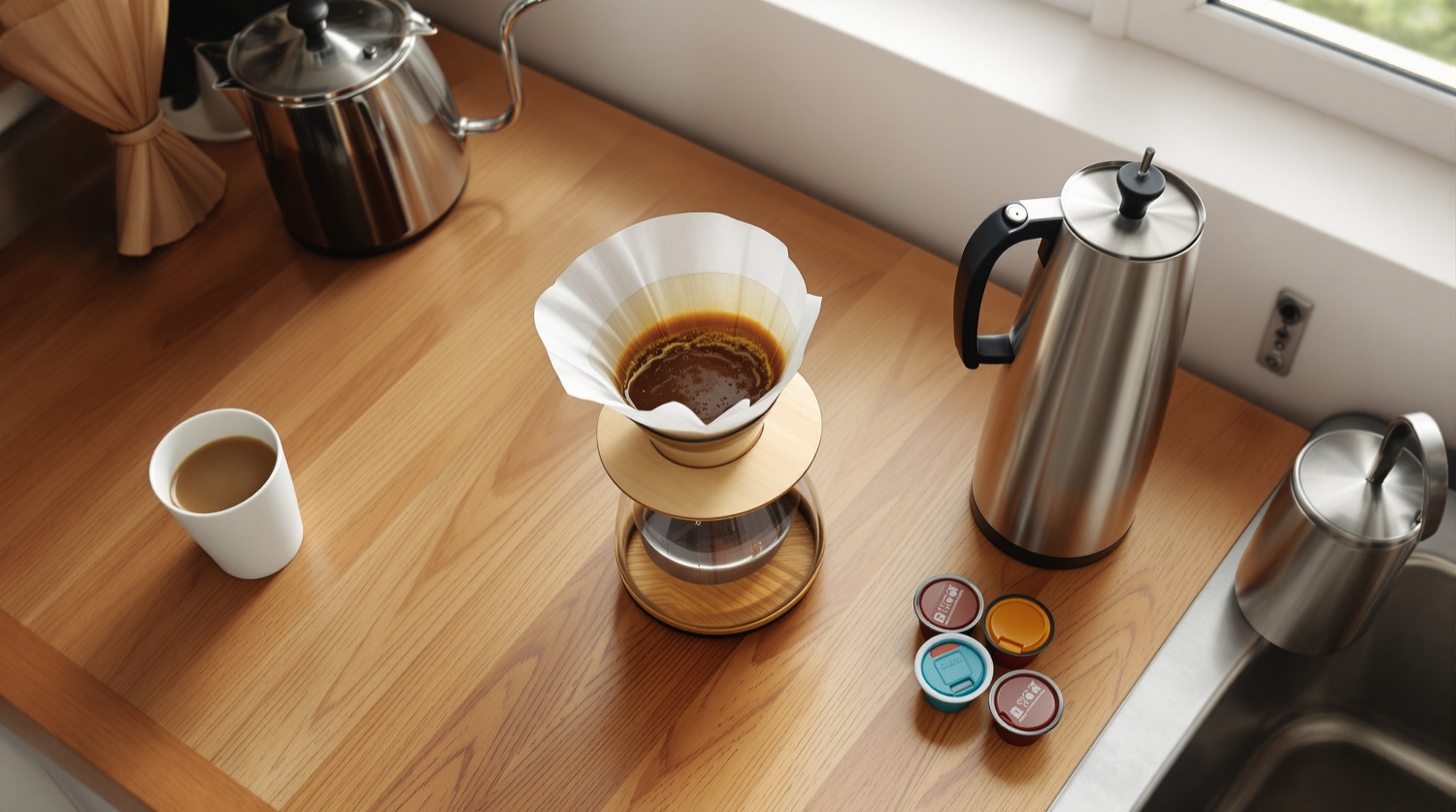
"The beans are not the big source. The hot plastic the coffee touches on the way to your mouth is."
Is iced coffee lower in microplastics than hot coffee?
Slightly, in the data so far. The Birmingham study measured an average of 43 particles per liter in hot coffee and 37 in iced coffee, and hot drinks were significantly higher across all the drinks tested. The Griffith cup study found the same direction: about 33% more release from all-plastic cups at 60°C than at 5°C. Iced coffee is usually served in a plastic cup with a plastic straw, though, so the cup swap still applies. See the best plastic-free straws if that's your daily drink.
Is it worth replacing a plastic coffee maker you already own?
Replace the parts that touch the hottest water first. Nobody has published a study measuring particle release from complete drip coffee makers, so there's no number to quote for your specific machine. What the kettle and bottle studies show is that hot water on polypropylene sheds particles, and that new plastic sheds the most. If your machine has a plastic hot-water path, a glass pour-over or French press is an inexpensive way to take it out of the routine. If you love the machine, keep it, rinse new parts, and focus on swaps 1 and 2, which have the strongest evidence.
Take the hot plastic out of your coffee
An unlined steel travel mug and a glass or porcelain brewer handle the two biggest sources on this list.
The tools for making coffee without plastic
These are real, currently sold products for swaps 1 to 3, the three that matter most. Prices change, so check the current listing.
1. Hydro Flask Standard Mouth 21oz — Best Travel Cup
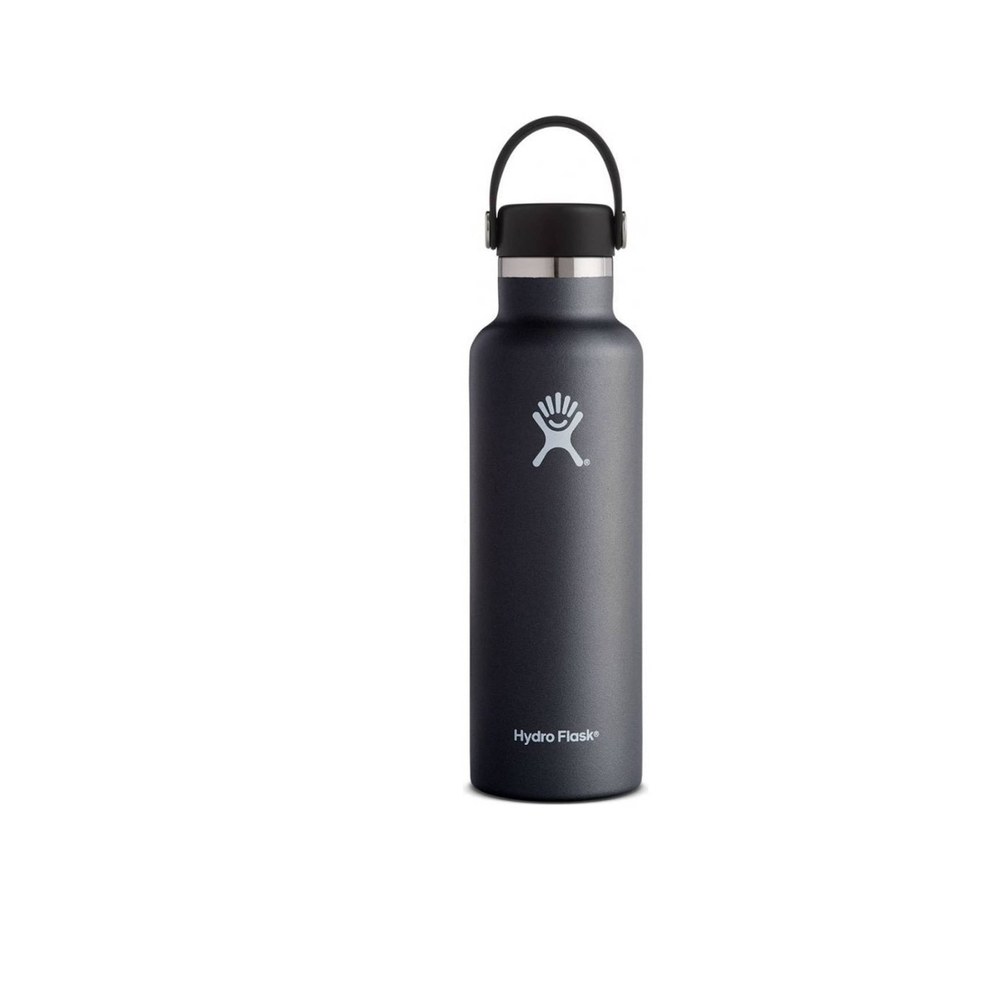 Best Travel Cup
One cup replaces hundreds of lined disposable cups a year.
Why it's safe: Hot coffee sits on bare 18/8 stainless steel, which has no lining to shed.
Check Today's Price on Amazon →Amazon prices change daily — tap to see today's price and any active discount.
- Free delivery & returns for Prime members
- Sold & shipped by Amazon
2. Chemex Classic Pour-Over Glass Coffeemaker (6-Cup) — Best Glass Brewer
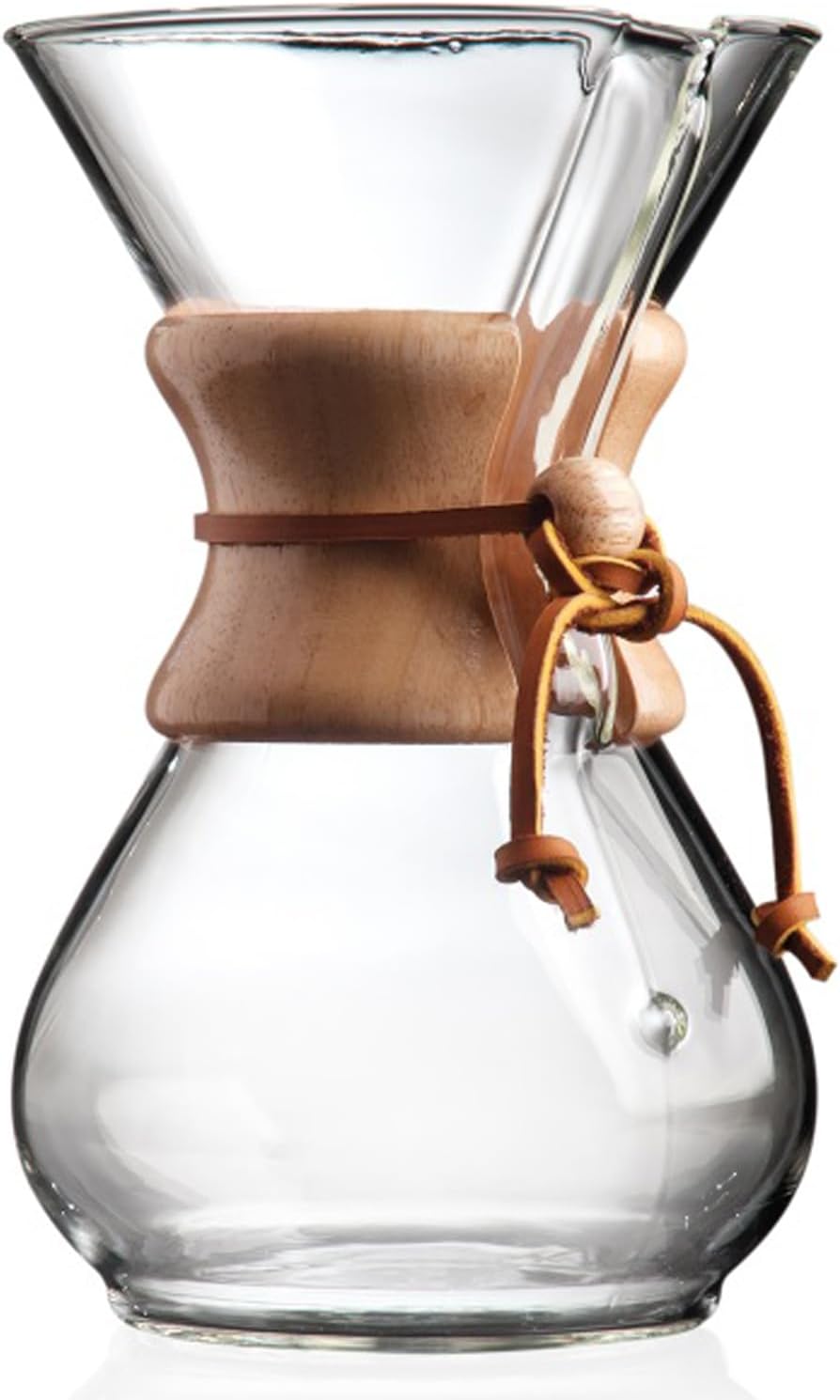 Best Glass Brewer
A full pot of coffee where the only thing touching it is glass and paper.
Why it's safe: Glass contains no plastic, so it cannot shed microplastics into hot coffee.
Check Today's Price on Amazon →Amazon prices change daily — tap to see today's price and any active discount.
- Free delivery & returns for Prime members
- Sold & shipped by Amazon
3. Melitta No. 2 Porcelain Pour-Over Coffee Brewer — Best Single Cup
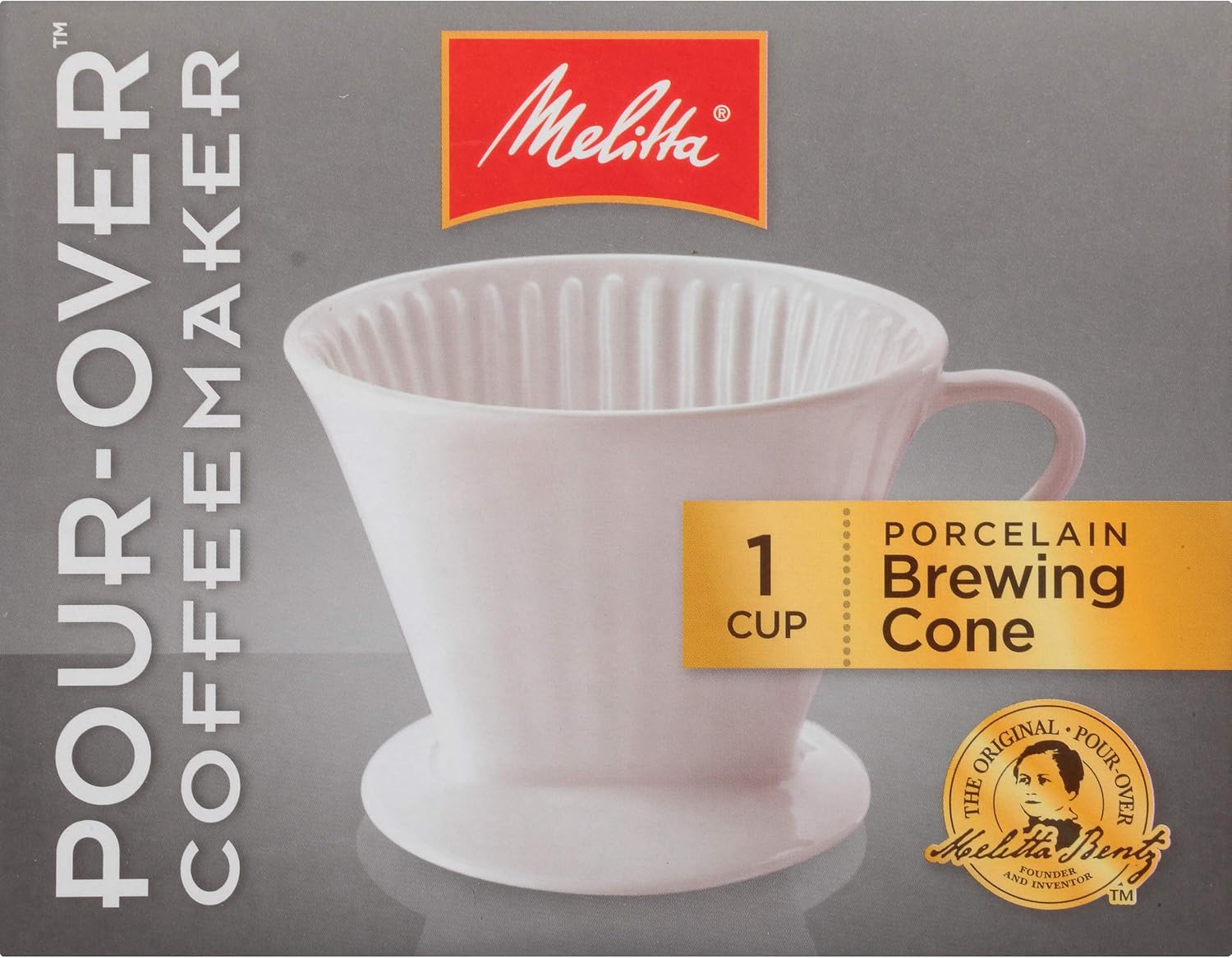 Best Single Cup
One cup at a time, with porcelain and paper as the only things the coffee touches.
Why it's safe: Porcelain is fired ceramic with no plastic in it.
Check Today's Price on Amazon →Amazon prices change daily — tap to see today's price and any active discount.
- Free delivery & returns for Prime members
- Sold & shipped by Amazon
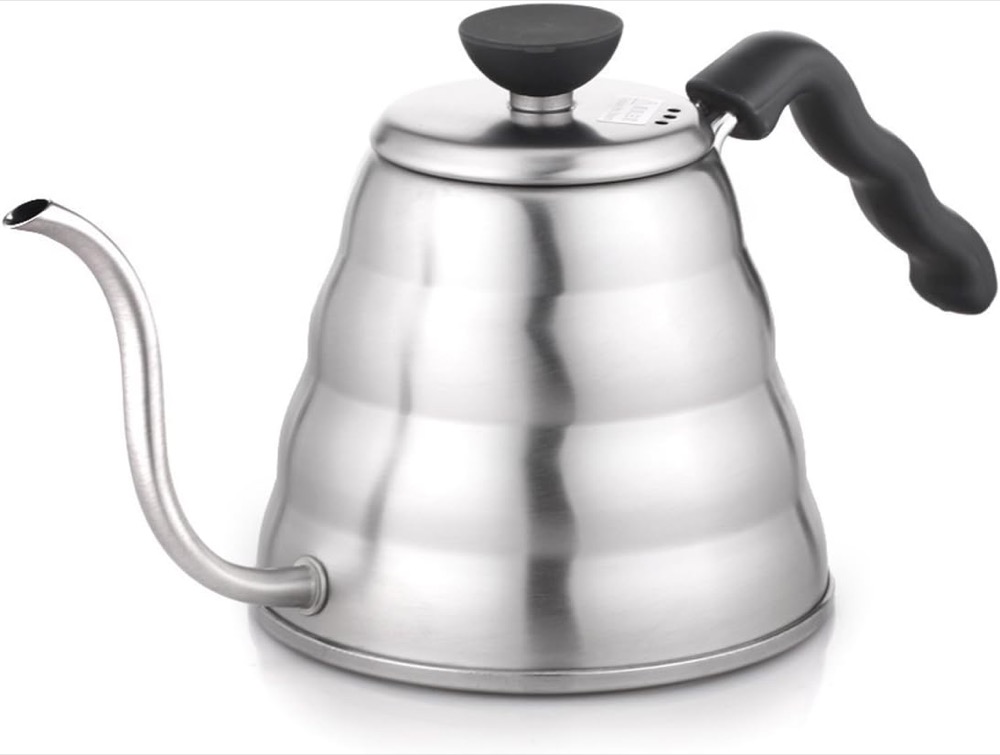
4. Hario V60 Buono Stovetop Gooseneck Kettle (1.2 L) — Best Kettle
 Best Kettle
Boils water on the stove with nothing plastic touching it.
Why it's safe: The water touches only stainless steel, with no plastic body or scale film to strip away.
Check Today's Price on Amazon →Amazon prices change daily — tap to see today's price and any active discount.
- Free delivery & returns for Prime members
- Sold & shipped by Amazon
Prefer an electric kettle? Our best non-toxic electric kettle guide covers glass and stainless models, and the best stovetop tea kettles covers the rest.
Want the Full Home Protection Guide?
Coffee is one plastic touchpoint among dozens in a typical kitchen. The Complete Plasticproof Guide covers every room, with 80+ product recommendations backed by 47+ studies.
The honest verdict
The coffee itself carries a modest load, about 43 particles per liter of hot coffee in the largest market survey. The large numbers come from hot plastic: about 25,000 particles from a lined paper cup in 15 minutes, more than 10,000 from a single plastic drip bag, and millions per liter from hot polypropylene. What science has not settled is how much harm those particles do in a person, and no study yet links a coffee habit to a health outcome through microplastics.
You don't need that answer to act, because the fixes are cheap and permanent. Bring your own steel or ceramic cup, brew through paper in glass or porcelain, boil water in steel or glass, and never reheat in plastic. Those four habits remove nearly every point where hot coffee meets plastic. For the rest of the kitchen, start with the kitchen plastic detox guide.
Frequently Asked Questions
Drink from your own stainless steel or ceramic cup instead of a lined takeaway cup, brew through a paper filter in a glass or porcelain dripper instead of a plastic drip bag or pod, boil the water in a stainless steel or glass kettle, and never reheat coffee in a plastic or paper cup. A 2021 IIT Kharagpur study in the Journal of Hazardous Materials found a plastic-lined paper cup released about 25,000 microplastic particles into 100 mL of hot water in 15 minutes.
Yes. Paper cups are lined with a thin plastic film, usually polyethylene. Ranjan, Joseph and Goel (Journal of Hazardous Materials, 2021) measured about 25,000 micron-sized particles released into 100 mL of 85 to 90 degree Celsius water in 15 minutes, plus about 102 million sub-micron particles per milliliter.
Not by this measure. A 2026 University of Queensland study in ACS Food Science and Technology found cups lined with PLA, the plant-based plastic used in many compostable cups, released about 4.3 million nanoparticles per milliliter of hot liquid versus 2.7 million for polyethylene-lined cups, and about 12 times the particle mass.
Slightly, in the studies so far. A 2025 University of Birmingham analysis in Science of the Total Environment measured an average of 43 microplastics per liter in hot coffee and 37 per liter in iced coffee from the UK market, and found hot drinks significantly higher than cold ones.
Plastic drip bags do release them. Wang and colleagues (Food Chemistry, 2023) tested drip bags from eight brands and found a single plastic coffee bag steeped at 95 degrees Celsius for 5 minutes could release more than 10,000 microplastic particles into a cup.
In the one direct comparison, yes. A 2026 Food Chemistry study of 15 samples of each found 1.433 microplastics per gram in instant coffee and 0.343 per gram in ground coffee, about four times as many per gram.
Sources
- Ranjan VP, Joseph A, Goel S. "Microplastics and other harmful substances released from disposable paper cups into hot water." Journal of Hazardous Materials, 2021. PubMed 33091697. (IIT Kharagpur; 85–90°C water, 15 minutes; about 25,000 micron-sized particles per 100 mL; 102 ± 21.1 million sub-micron particles per mL.)
- Zangmeister CD, Radney JG, Benkstein KD, Kalanyan B. "Common Single-Use Consumer Plastic Products Release Trillions of Sub-100 nm Nanoparticles per Liter into Water during Normal Use." Environmental Science & Technology, 2022. (NIST; polyethylene-lined cups at 100°C for 20 minutes; particles mostly 30–80 nm.)
- Okoffo E, et al. ACS Food Science & Technology, 2026; University of Queensland, "Takeaway cups release microplastics into your coffee." (About 4.3 million nanoparticles per mL from PLA-lined cups vs 2.7 million from PE-lined; about 12-fold particle mass.)
- Griffith University. Journal of Hazardous Materials: Plastics, reported January 2026. (400 cups from Brisbane tested at 5°C and 60°C; about 33% more release from all-plastic cups in hot liquid.)
- Wang HP, Huang XH, Chen JN, Dong M, Zhang YY, Qin L. "Pouring hot water through drip bags releases thousands of microplastics into coffee." Food Chemistry, 2023. PubMed 36848832. (Eight brands; 95°C, 5 minutes; more than 10,000 particles per cup; rayon over 80% of released particles.)
- Akbulut S, et al. "Microplastic Release from Single-Use Plastic Beverage Cups." Foods, 2024;13(10):1564. (Uskudar University; 126.6 to 1,420 particles per liter; highest in PP cups at 50°C after 20 minutes; pre-washing reduced counts 52–65%.)
- Al-Mansoori M, Harrad S, Abdallah MA. "Synthetic microplastics in hot and cold beverages from the UK market: Comprehensive assessment of human exposure via total beverage intake." Science of the Total Environment, 2025. (University of Birmingham; 155 drinks; hot coffee 43 ± 14 and iced coffee 37 ± 6 particles per liter.)
- Li D, Shi Y, Yang L, et al. "Microplastic release from the degradation of polypropylene feeding bottles during infant formula preparation." Nature Food, 2020. (Trinity College Dublin; up to 16,200,000 particles per liter.) See also the Trinity summary.
- Shi Y, Li D, Xiao L, et al. "The influence of drinking water constituents on the level of microplastic release from plastic kettles." Journal of Hazardous Materials, 2022. (100-day kettle study; mineral films cut release by more than 89% after 40 days.)
- Hussain KA, et al. "Assessing the Release of Microplastics and Nanoplastics from Plastic Containers and Reusable Food Pouches." Environmental Science & Technology, 2023. (University of Nebraska–Lincoln; up to 4.22 million microplastics per cm² in 3 minutes of microwaving.)
- Gune R, Schultz AG, Martin A. "Microplastic exposure through coffee consumption: evidence from instant and ground brewed coffee." Food Chemistry, 2026. (1.433 ± 1.116 particles per gram in instant vs 0.343 ± 0.231 in ground; about 422 particles per year from coffee.)