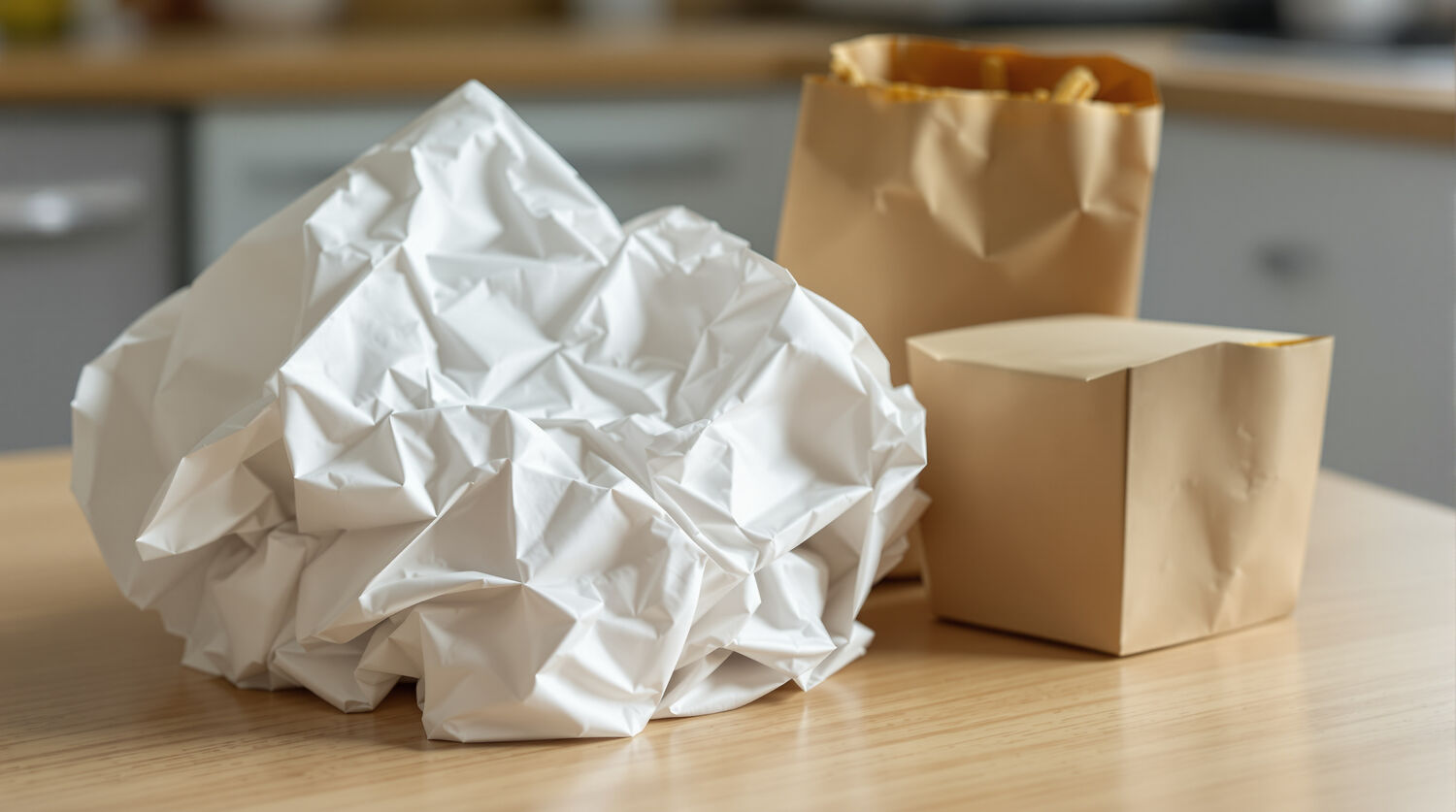
Fast food wrappers have long contained PFAS — the “forever chemicals” used to grease-proof paper packaging. A 2017 study in Environmental Science & Technology Letters tested U.S. fast-food packaging and found fluorine, a PFAS marker, in about 46% of food-contact papers — 56% of dessert and bread wrappers and 38% of burger and sandwich wrappers — and detected targeted PFAS in every one of the 20 samples run with a sensitive method. The chemicals were added on purpose so grease and moisture wouldn't soak through, and when hot, fatty food sits against a treated wrapper, some of them migrate into the food. The FDA did not complete an industry phase-out of grease-proofing PFAS on paper food packaging until 2024, so the wrappers people ate off for years carried them. A single meal is a small dose, but PFAS persist and add up — so the fix is to get your food off disposable grease-proof packaging and onto glass or stainless steel.
A fast food wrapper has one job most people never think about: keep a greasy, saucy, dripping meal from soaking through the paper before you've finished it. For decades, the chemistry that pulled that off was a family of fluorinated compounds — PFAS, the same “forever chemicals” now showing up in blood tests and drinking-water headlines. They were sprayed and coated onto paper and molded fiber precisely because nothing repels oil and water quite like them. The interesting part of the research isn't that the wrapper worked. It's that the thing making it work didn't always stay in the wrapper.
This guide walks through what the testing actually found — how much U.S. fast-food packaging carried a PFAS marker, which items were worst, and how the chemicals move from paper into food — what the FDA's 2024 phase-out did and didn't change, whether a single wrapped meal is worth worrying about (the honest answer is calmer than the headlines), and the handful of cheap, durable swaps that take your food off disposable packaging for good.
The bottom line up front: PFAS were added to grease-proof fast food wrappers, pastry bags, molded-fiber bowls and fry cartons, and testing found a PFAS marker in roughly half of U.S. fast-food packaging; heat and grease help those chemicals migrate into the food. A 2024 FDA phase-out removed the main intentional source going forward, but it was voluntary and recent, so disposable grease-proof packaging is still best treated as possibly treated. The fix you control: transfer takeout out of the wrapper and onto glass or stainless at home, bring your own containers, and filter your drinking water. For the bigger picture, see our guides to PFAS in paper plates, PFAS in microwave popcorn bags, and the room-by-room kitchen plastic detox guide.
Do fast food wrappers have PFAS, and how much is treated?
Yes, and the proportion is higher than most people expect. The landmark measurement is a 2017 study in Environmental Science & Technology Letters, which collected more than 400 samples of U.S. fast-food packaging and screened them for fluorine — the chemical signature of PFAS. Fluorine turned up in about 46% of food-contact papers and 20% of paperboards, concentrated in the grease-fighting categories: 56% of dessert and bread wrappers and 38% of sandwich and burger wrappers tested positive. When the researchers ran 20 samples through a sensitive targeted method, they detected specific PFAS compounds in every single one.
Why fast food specifically? Because the whole design problem of takeout paper is oil and moisture, and PFAS were the cheapest, most effective way to solve it — coat the paper so a greasy burger or a wet pastry slides off instead of soaking through. The same chemistry that keeps a wrapper from turning translucent with grease is the chemistry now flagged as a health concern. Independent retail testing echoed the study: in Consumer Reports' 2022 analysis of 118 packaging products from two dozen chains, more than half showed detectable PFAS, with molded-fiber bowls and paper wrappers among the highest.
Which fast food packaging is most likely to have PFAS?
The grease-fighters, almost always. PFAS were applied where oil and moisture resistance mattered most, so the risk tracks the job the packaging does rather than the restaurant's name. Molded-fiber bowls and clamshells, paper wrappers for burgers and sandwiches, pastry and cookie bags, microwave popcorn bags, and the paperboard used for fries and bakery items were the categories that most often tested positive. Plastic cups and lids, aluminum foil, and plain uncoated paper were far less likely to be treated, because they already resist grease without a coating.
This is the same “the food is fine, it's the packaging” pattern that runs across paper plates, parchment paper, paper straws and food packaging generally — the thing touching your food, not the food itself, is where the chemistry hides. The table below sorts common takeout items by how likely they are to carry PFAS.
| Packaging | Why | PFAS Likelihood |
|---|---|---|
| Molded-fiber bowls & clamshells | The “compostable” pressed-fiber containers used for salads, grain bowls and hot entrees were among the most-treated in retail testing — fiber needs a coating to hold a wet, oily meal | High |
| Grease-proof wrappers & pastry bags | Burger, sandwich, dessert and bread wrappers were the top-testing paper categories in the 2017 study (38–56% positive) | High |
| Fry cartons & paperboard boxes | Paperboard for fries, bakery and sides is coated to resist oil soak-through | Moderate–high |
| Microwave popcorn bags | The inner lining was a classic PFAS application, and heat drives migration | Moderate–high |
| Plastic cups, lids, foil, plain paper | Already grease-resistant or non-absorbent, so they rarely needed a PFAS treatment | Low |
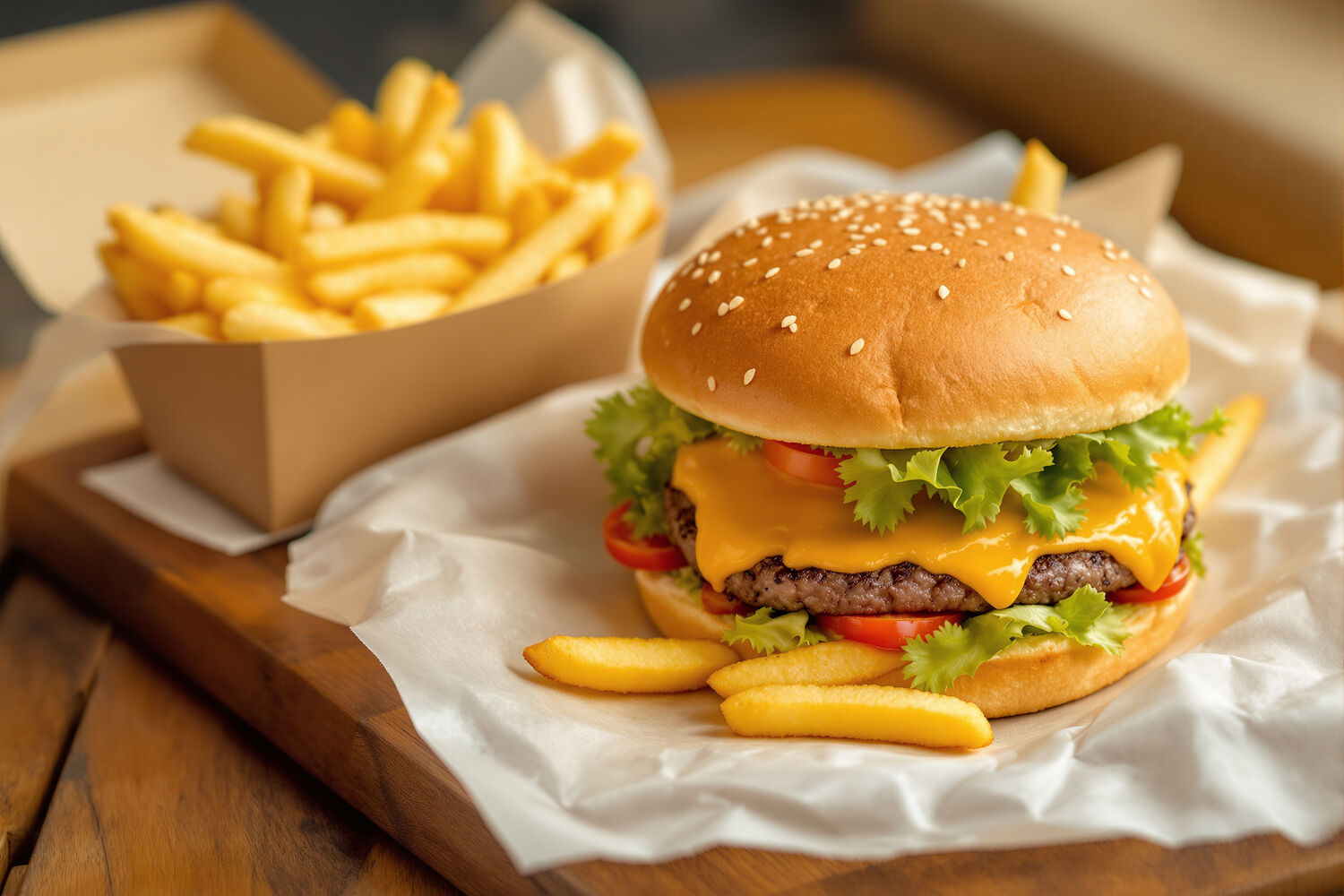
How do PFAS get from a wrapper into your food?
By migration — and this is the part that matters, because a chemical locked permanently in the paper wouldn't reach you. PFAS are applied as a surface treatment, not chemically bonded into the fiber, so when food sits against a treated wrapper the compounds can move from the packaging into the food. Two conditions speed that transfer, and fast food supplies both at once: heat and fat. A warm burger in a grease-proof wrapper, or hot fries pressed into a coated carton, is close to the worst case — exactly the combination packaging researchers use to measure migration in the lab.
From the food, the PFAS are simply swallowed. The reason that matters more than the dose from any one meal is persistence: PFAS are called “forever chemicals” because they resist the normal breakdown that clears most contaminants, so repeated small exposures accumulate in the body over years rather than washing out. That's the same reason PFAS keep turning up in blood and tap water — a little at a time, from many sources, that the body struggles to shed.
"The chemistry that keeps grease from soaking through a wrapper is the same chemistry that doesn't stay in the wrapper. Heat and fat pull it into the food — and once it's in you, it doesn't leave in a hurry."
Did the 2024 FDA phase-out get PFAS out of fast food packaging?
Largely, going forward — but with real caveats. In February 2024 the FDA announced that grease-proofing substances containing PFAS were no longer being sold for use on paper and paperboard food packaging in the United States. It was the completion of a voluntary phase-out the agency had negotiated with manufacturers, and it removes the main intentional source of PFAS from new food wrappers.
Three things keep it from being a clean “problem solved.” It was voluntary and recent, so it does not reach back to pull packaging already in the supply chain, and imported packaging may not follow the same rules. It covers the grease-proofing agents specifically — PFAS are a class of thousands of compounds, and “no detectable PFAS” is hard to prove. And a decade of wrappers already did their job. The honest posture for disposable, grease-resistant food packaging is still to treat it as possibly treated and get your food off it — which, conveniently, is also the move that handles plastic and microplastics from packaging at the same time.
Are the PFAS in fast food packaging dangerous?
PFAS are a genuinely studied class with real health concerns — and at the same time, a single wrapped meal is a small dose, and both things are true. The U.S. EPA notes that current research links exposure to certain PFAS with effects on the liver, immune system, cholesterol, and developmental and reproductive health, and emphasizes that these chemicals are persistent and build up in people and the environment over time. That is why regulators moved on food packaging at all.
But context keeps this calm. Your biggest PFAS exposures are usually drinking water and long-term dietary sources, not one lunch in a treated wrapper; packaging is one contributor among several that include water, some cookware, stain- and water-resistant textiles, and household dust. So the useful response is not to panic over a single burger — it's to trim the avoidable, repeated exposures you control, the same logic we apply to microplastics throughout the body. Packaging you can swap out permanently is one of the easiest of those to fix.
One wrapped meal won't hurt you, and you can't audit every carton a restaurant uses. What you can do is stop re-exposing yourself: transfer takeout out of grease-proof packaging and onto glass or stainless at home, don't reheat food in disposable wrappers or containers, and clean up the bigger steady source by filtering your drinking water. Handle those and you've removed most of the PFAS and microplastic exposure that's actually in your hands — see the room-by-room kitchen plastic detox guide.
How do you avoid PFAS from food packaging?
Because the exposure comes from food sitting against treated disposable packaging, the fixes are about the surface your food touches — not giving up takeout. Transfer takeout onto a plate or into glass as soon as you get home rather than eating out of the wrapper, and never reheat food in a disposable wrapper, bag or molded-fiber bowl. Bring your own stainless steel or glass containers for leftovers, packed lunches and restaurant doggie bags, so the thing holding your food is inert. Wrap food in beeswax cloth or store it in silicone instead of coated paper at home, and skip microwave popcorn bags in favor of loose kernels in a pot or a glass bowl. These cost almost nothing after the first purchase and handle the part of the problem you actually control.
The other high-leverage move isn't about packaging at all — it's the water you drink every day, since tap water is one of the most common PFAS routes into the body. Filter your drinking water with a system rated for PFAS reduction (reverse osmosis and certain activated-carbon filters are the effective options), and you close off a bigger, steadier source than any wrapper. See our guide to the best PFAS water filters and the broader water filter roundup, and keep leftovers in glass instead of disposable packaging. The picks below are the simplest, longest-lasting ways to get your food off disposable grease-proof packaging for good.
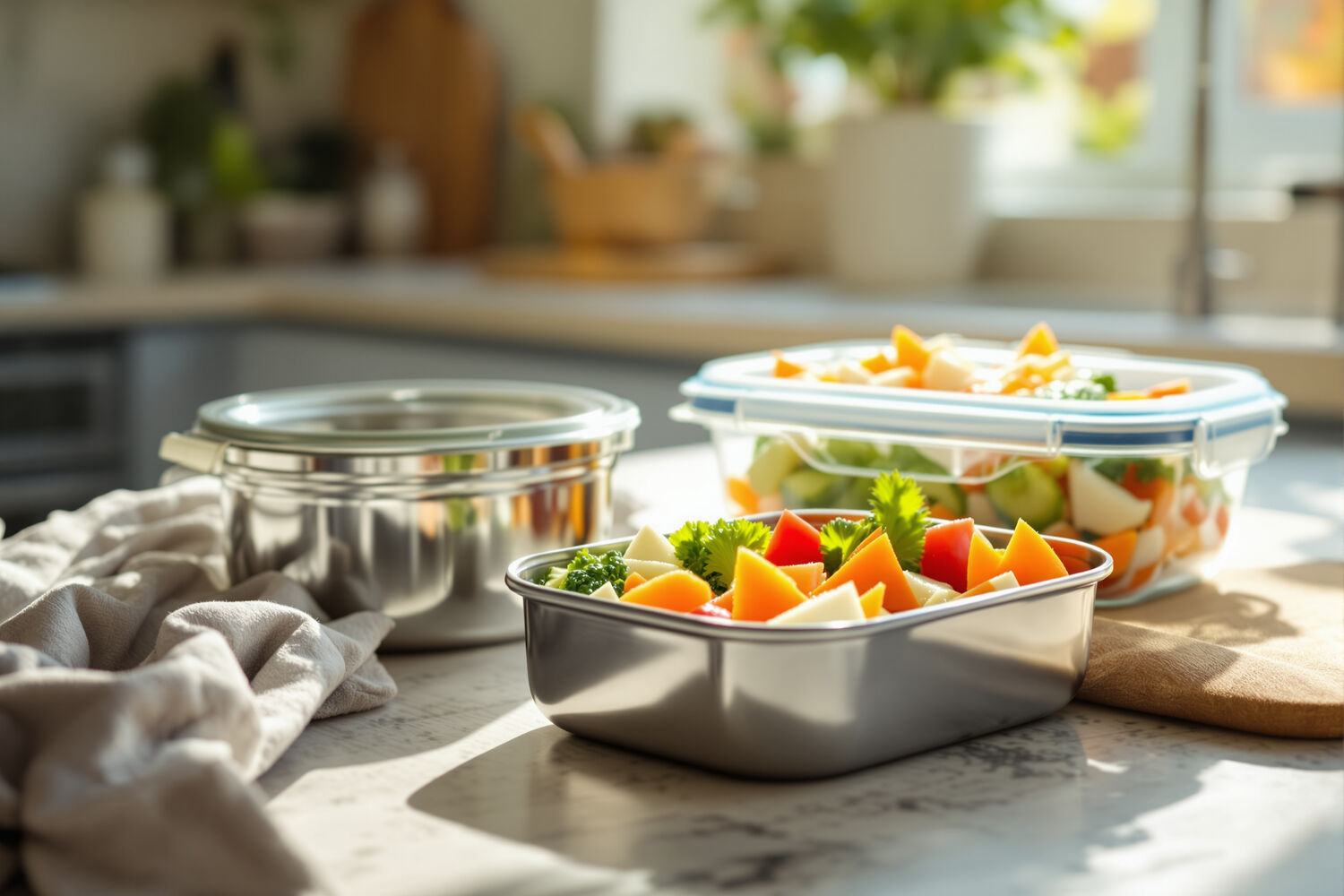
Get your food off disposable packaging
The 2024 phase-out helps going forward, but the move that protects you now is simple: stop eating off grease-proof wrappers and cartons. Bring your own glass and stainless containers, and filter the water you drink all day.
The best reusable containers to keep food off PFAS packaging
You can't inspect a restaurant's wrappers, but you can control what your food touches once it's home and what you carry it in — and that's where the exposure you actually own gets handled. The real levers are inert surfaces: stainless steel and glass containers for takeout, leftovers and packed lunches, plus beeswax and silicone to replace coated paper. Here are the real, currently-sold tools that do it, each one a bare-metal or glass food-contact surface with no grease-proof coating. Prices and availability change, so check current listings.
1. ECOlunchbox Three-in-One Stainless Steel Bento — Best Overall for Takeout
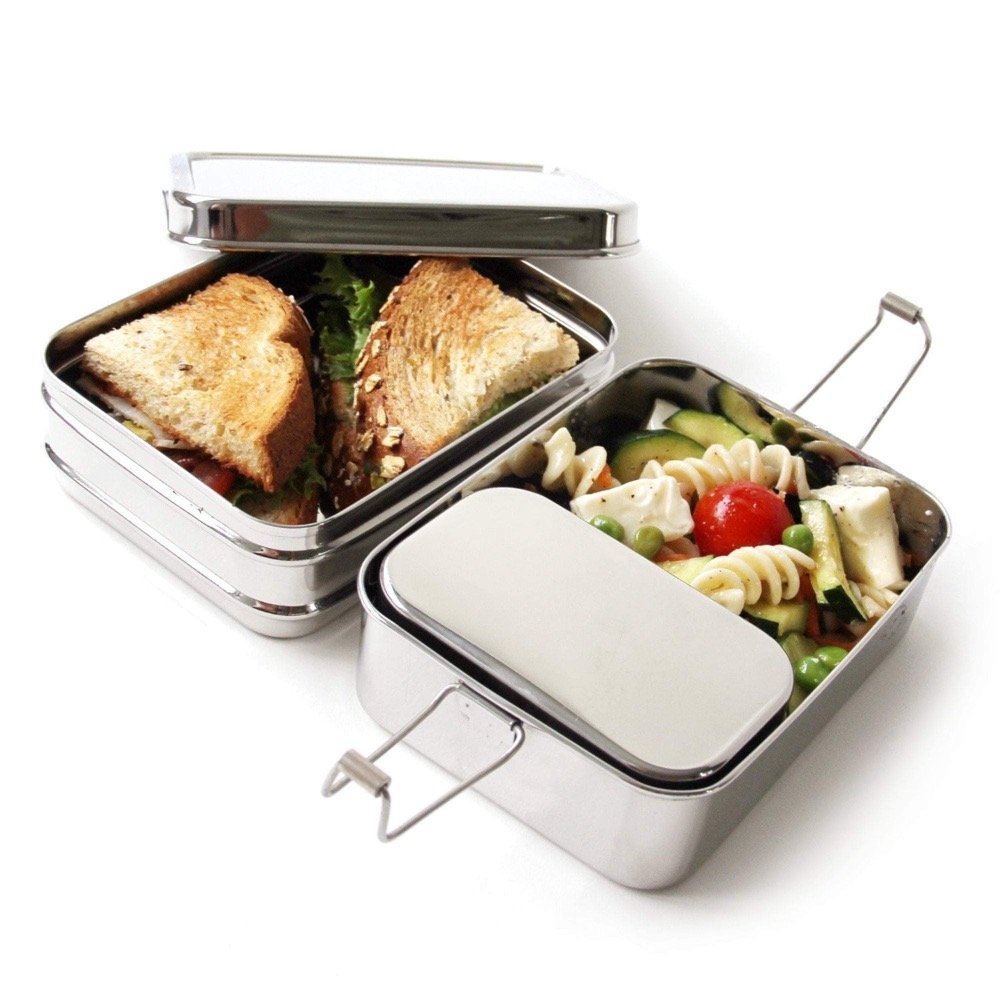 Best Overall
Owners like that this one is genuinely plastic-free — no gaskets, no synthetic liner — and that the three pieces nest together, wipe clean, and go in the dishwasher. It suits dry and damp foods like cut fruit, hummus and thick sauces. The honest downside is the one ECOlunchbox states plainly on the box: it is "not leak-proof." Because there are no silicone or plastic gaskets, one buyer said it "leaks any amount of liquid" into a backpack, and another returned the set after learning it would not seal, so pack it with dry foods only or expect spills.
One oval body holds three nesting tins — carry a sandwich, a side, and a snack with nothing but bare stainless steel between you and your food, no coated paper anywhere.
Why it's safe: Every food-contact surface is inert 18/8-style stainless steel — no grease-proof coating, no plastic to leach, and no silicone gasket touching the food at all.
Check Today’s Price on Amazon →Amazon prices change daily — tap to see today's price and any active discount.
- Free delivery & returns for Prime members
- Sold & shipped by Amazon
- Thousands of verified reviews
The single most effective anti-PFAS habit is to stop eating off disposable packaging — and a bare stainless bento makes that automatic. Pack your lunch in it instead of grabbing wrapped food, or decant takeout into it at home, and every meal lands on inert metal with no grease-proof coating to migrate from. Because it's 100% stainless with no gaskets or latches, there's literally nothing on the food-contact surface to treat. The trade-off is that it isn't leak-proof, so it shines for sandwiches, salads and dry sides rather than soupy foods.
2. LunchBots Large Trio Stainless Steel — Best Compartments
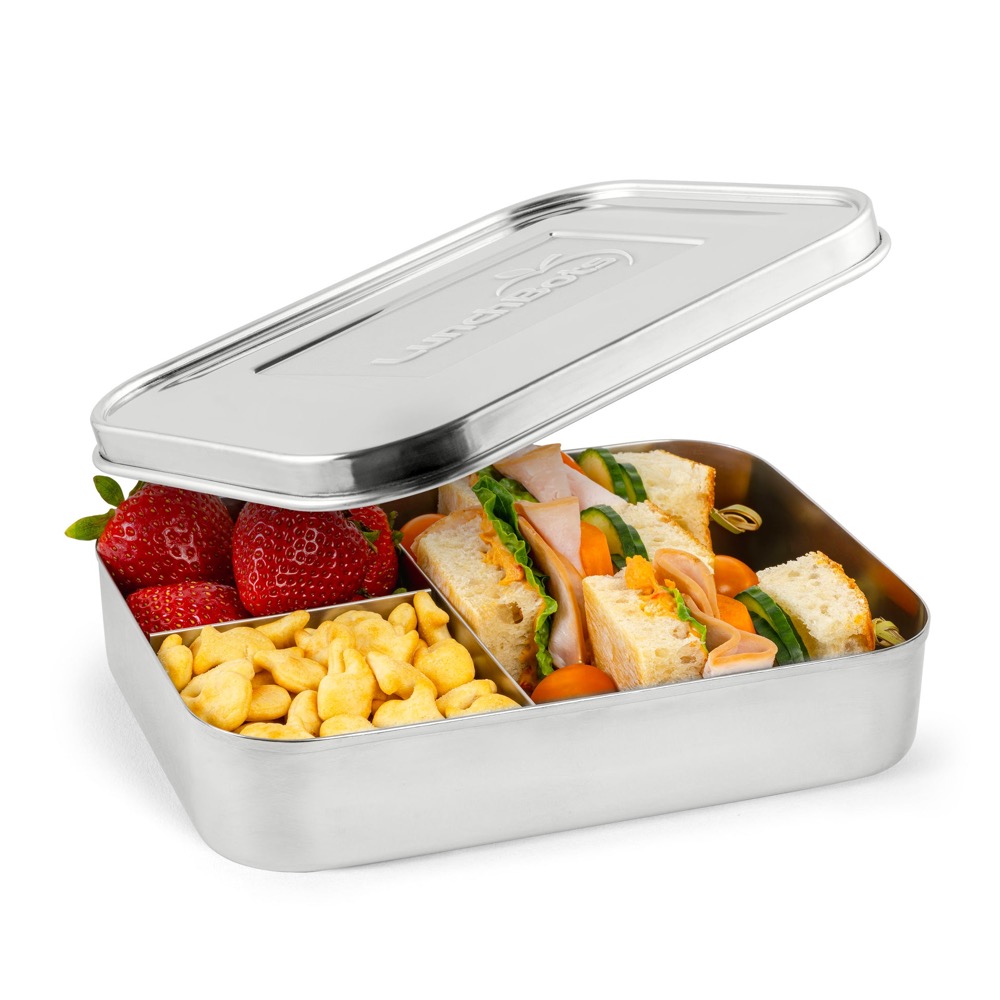 Best Compartments
LunchBots earns its reputation for durability — owners report dropping the all-steel box repeatedly and getting "a few scratches but no dents," and they praise the roomy compartments and how easily it cleans. The honest downside is sealing: it is "not leak proof," and the three compartments are not liquid-tight from each other, so even freshly washed raspberries or a damp side can "leak into the other compartments" and leave crackers soggy. Pack dry foods, keep it flat in a bag, and know you are paying a premium price for the build quality.
Keep a sandwich and two sides from touching all day — the dividers are part of the steel body, so nothing slides loose in your bag and nothing sits on coated paper.
Why it's safe: Built entirely from food-grade 18/8 stainless steel with no plastic and no grease-proof coating in the food path — BPA-free and phthalate-free by design, with nothing to migrate into fatty food.
Check Today’s Price on Amazon →Amazon prices change daily — tap to see today's price and any active discount.
- Free delivery & returns for Prime members
- Sold & shipped by Amazon
- Thousands of verified reviews
If your takeout usually arrives as a burger-plus-fries-plus-side split across two or three treated cartons, the LunchBots Large Trio is the all-metal answer: three welded stainless compartments keep the components separated the way the packaging did, but on inert steel with no grease-proof coating. It's the sturdiest pick here — owners drop it for years — so it's the one to keep in the bag for restaurant leftovers and daily packed lunches alike.
3. Bentgo Glass Lunch Container — Best for Reheating
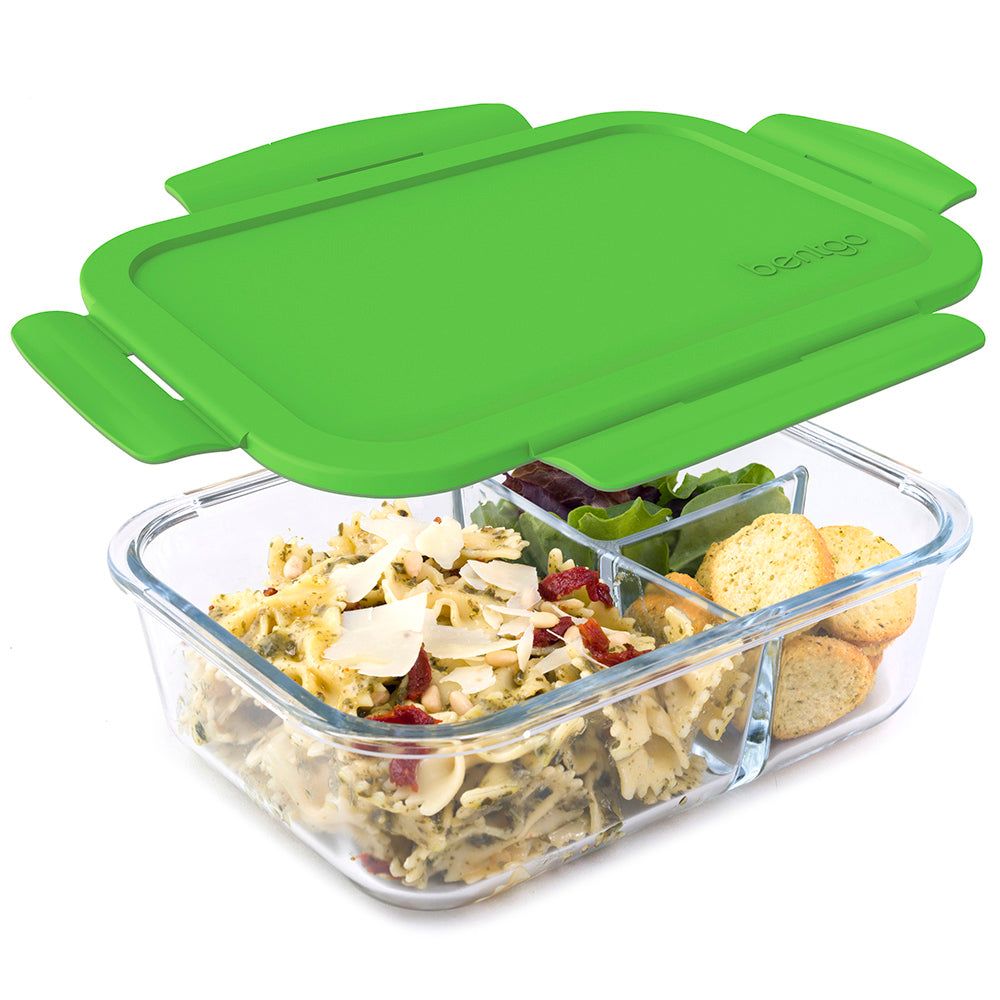 Best for Reheating
Buyers who want a real seal favor the Bentgo Glass — the four-side snap-lock lid is "leak proof" when latched, the compartments are spacious, and the glass base is oven-safe. The honest downsides show up in daily carrying: the thick glass is "heavy and bulky," which several reviewers found awkward to tote alongside a laptop and a drink; the plastic latches are a weak point, with one owner reporting they "broke within a week"; and a few buyers reported the glass itself cracking after a handful of uses, leaving shards in the box. It seals well but demands careful handling.
Take the lid off and microwave takeout straight from the fridge — your reheated meal sits on inert glass, not a grease-proof wrapper or molded-fiber bowl that releases more when hot.
Why it's safe: The food-contact body is borosilicate glass — chemically inert and thermal-shock resistant, so reheating releases nothing into your food. The silicone gasket only seals the rim, never sitting in the food.
Check Today’s Price on Amazon →Amazon prices change daily — tap to see today's price and any active discount.
- Free delivery & returns for Prime members
- Sold & shipped by Amazon
- Thousands of verified reviews
Reheating is the single worst thing you can do with grease-proof packaging — heat is exactly what drives PFAS migration — so the fix is to never microwave food in its wrapper, bag or molded-fiber bowl. The Bentgo Glass is the office answer: carry your lunch in it, pop the lid, and reheat on inert borosilicate glass that releases nothing. It's heavier than steel, but it's the pick for anyone who warms up takeout or leftovers at a desk.
4. Bee's Wrap Assorted 3-Pack — Best Reusable Wrap
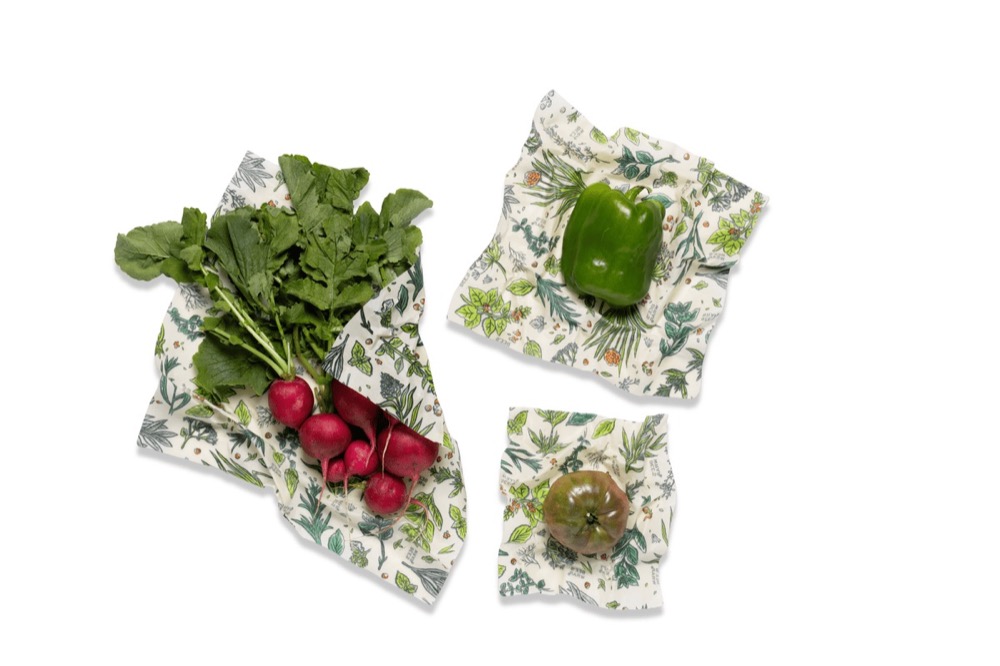 Best Reusable Wrap
GOTS-certified organic cotton infused with sustainably sourced beeswax, organic jojoba oil, and tree resin. Three sizes (S, M, L) cover everything from a lemon half to a bowl of leftovers. The warmth of your hands molds the wrap to any shape, and the natural tackiness holds a seal. Lasts 8–12 months with proper care. Fully compostable at end of life. Bee's Wrap is a certified B Corp based in Vermont — the original mainstream beeswax wrap brand.
Where a sandwich or a pastry would otherwise go into a coated paper wrapper, this is the reusable alternative — organic cotton and wax instead of a grease-proof chemical treatment. It is not for raw meat or hot food, but for cheese, bread, produce, sandwiches and covering a bowl, it replaces both plastic cling wrap and treated deli paper at once.
Bee's Wrap is the category benchmark, and owners praise how it keeps produce, cheese, and bread fresh, saying "the cheese is as fresh as when I purchased it," that "They are strong, sticky (but not on your hands)," and that it has a "very minimal wax smell compared to other brands." The honest downsides: some had "trouble getting it to stick" and note the wax coating thins over months, it does not seal as tightly as plastic wrap so "Washing them isn't the most convenient thing in the world," and it stains with oily foods and is not for hot food or raw meat.
Replace coated deli paper and hundreds of feet of plastic cling wrap with three reusable wraps that mold to any shape with the warmth of your hands.
Why it's safe: Just organic cotton, beeswax, jojoba oil, and tree resin — no PVC, no plasticizers, no phthalates, and no PFAS grease-proofing to migrate into fatty or warm food the way treated paper does.
Check Today’s Price on Amazon →Amazon prices change daily — tap to see today's price and any active discount.
- Free delivery & returns for Prime members
- America's #1-rated beeswax wrap brand
- Thousands of verified reviews
The place most people still reach for coated paper at home is wrapping a sandwich or covering a bowl — and beeswax wrap is the direct swap. For the full lineup of reusable wraps and what each is best at, see our guide to the best non-toxic food wraps. Pair it with glass storage below and you've retired both cling film and treated deli paper from your kitchen.
5. Glasslock Oven Safe Container Set (3-Pack) — Best Glass Storage
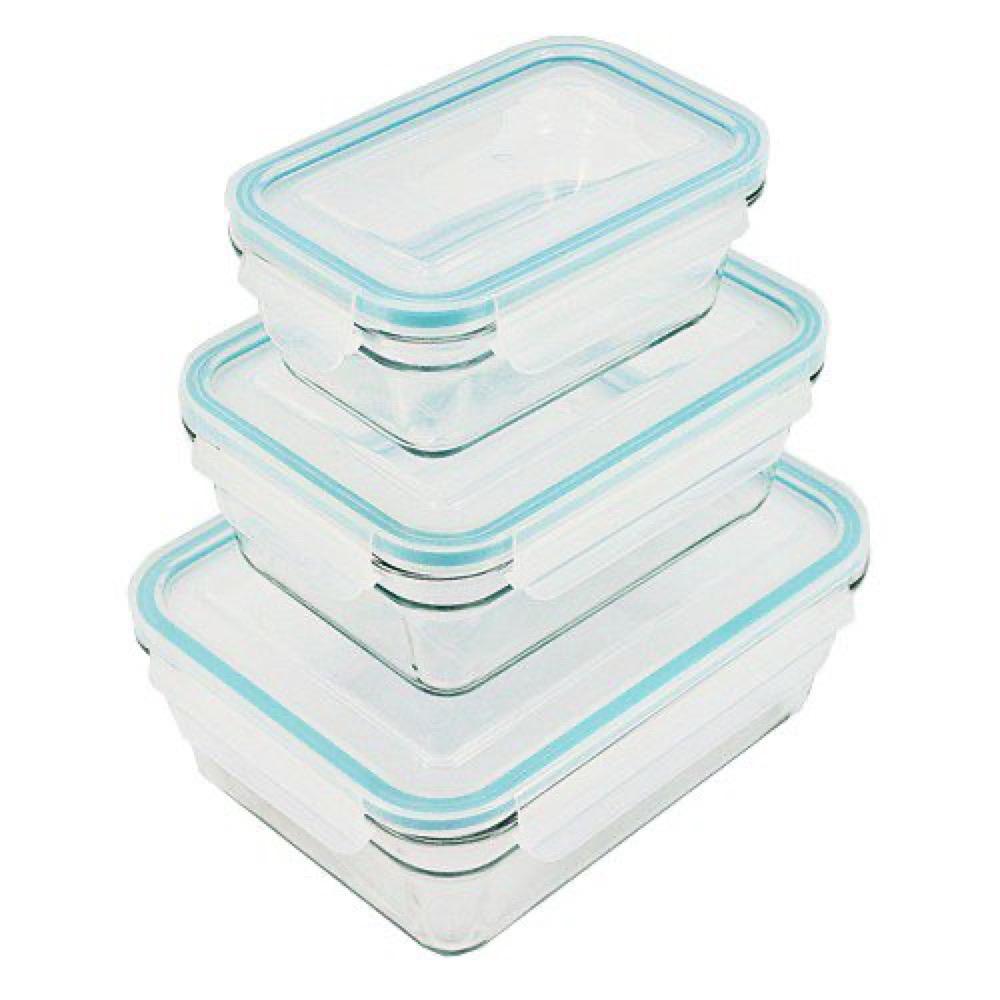 Best Glass Storage
Longtime owners like that the glass bodies are oven-, microwave-, and freezer-safe and that the snap-lock lids seal tight. The honest downsides run through the lids, not the glass: reviewers report cracked lids, snapped locking tabs, and mold building up in the rubber gaskets if they are not dried well. Some buyers also received sets with a locking piece missing, and several flag slow, hard-to-reach customer service when they needed a replacement part.
Three stackable glass containers in one box — enough to store a week of leftovers and prepped ingredients without a single plastic tub.
Why it's safe: Your food sits on inert tempered glass, not plastic — so warm, acidic, watery foods can’t leach or pick up shed particles. The BPA-free lids seal with a food-grade silicone gasket that only touches the rim.
Check Today's Price on Amazon →Amazon prices change daily — tap to see today's price and any active discount.
- Free delivery & returns for Prime members
- Sold & shipped by Amazon
- Thousands of verified reviews
Glass storage is the direct fix for keeping food off disposable packaging at home: empty takeout out of its grease-proof wrappers and cartons into inert glass the moment it's home, store leftovers in glass instead of the container it arrived in, and reheat with the lids off so warm food never sits against plastic or coated paper. At roughly ten dollars per container this is the cheapest way to retire your plastic food tubs — and your pile of saved takeout containers — in one purchase.
6. Stasher Reusable Silicone Bag Starter Kit — Best Silicone Bag
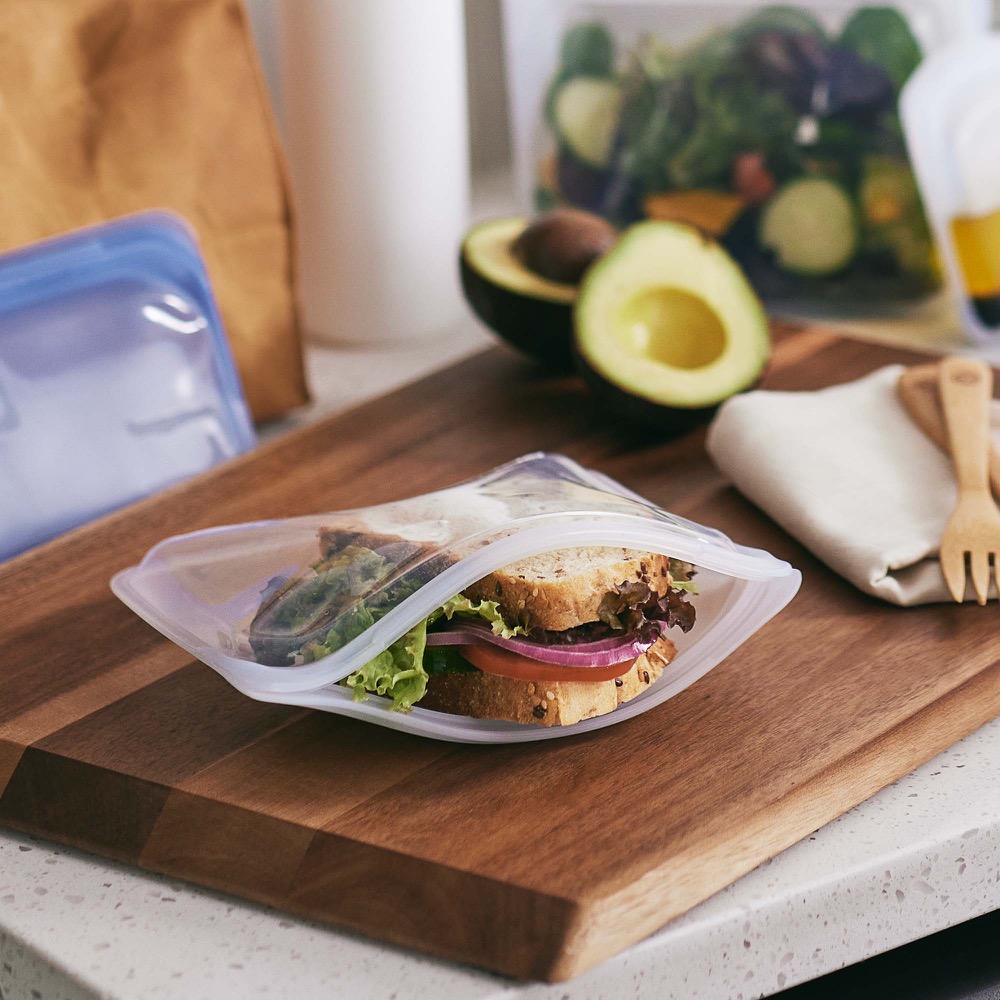 Best Silicone Bag
For freezing food in portions, stashing leftovers you won't finish in time, or anything you’d reach for a plastic bag — Stasher’s platinum-cured silicone is the upgrade: sturdier than any disposable bag and free of the chemicals that migrate from plastic. The patented Pinch-Loc seal is genuinely airtight and leakproof, so it keeps food from drying out.
It’s freezer safe to -70°F and goes straight to the microwave or a 425°F oven. The starter kit covers the everyday sizes — sandwich, snack, and stand-up half-gallon — so you can retire a whole box of single-use bags in one purchase.
Owners like that the platinum silicone bags go from freezer to microwave and replace throwaway plastic for years. The honest gripes: smell and stain retention come up often, with reviewers noting garlic and strong odors linger even after washing; the pinch-lock seal can be fiddly to open and close; and the seams are slow to dry, which can invite mildew if you do not air them out.
Store prepped produce, snacks, and batch-cooked food in airtight silicone instead of plastic film — then thaw and reheat in the same bag, no transfer needed.
Why it's safe: Platinum-cured silicone — the highest-purity, chemically inert grade — with no plastic, PVC, BPA, lead, latex, phthalates, or PFAS.
Check Today's Price on Amazon →Amazon prices change daily — tap to see today's price and any active discount.
- Free delivery & returns for Prime members
- Sold & shipped by Amazon
- Tens of thousands of verified reviews
Packing snacks, freezing batch-cooked food, and stashing prepped produce are exactly the jobs people reach for flimsy bags or grease-proof paper to do. A multi-size platinum-silicone kit replaces the whole box at once, seals airtight, and goes from freezer to microwave to dishwasher — an inert surface with no PFAS coating. For the full lineup, see our guide to the best silicone food storage bags.
Want the Full Home Protection Guide?
A PFAS-treated takeout wrapper is one chemical touchpoint among dozens in a typical kitchen. The Complete Plasticproof Guide covers every room — kitchen, nursery, bathroom, bedroom — with 80+ product recommendations backed by 47+ studies.
The honest verdict
Do fast food wrappers have PFAS? For years, many did — a 2017 study found a PFAS marker in about 46% of U.S. fast-food contact papers, with burger, sandwich and dessert wrappers the worst, and targeted PFAS in every sample it tested directly. The chemicals were added on purpose to grease-proof the paper, and because they're a surface treatment rather than something bound into the fiber, heat and fat pull some of them into the food. The FDA didn't complete an industry phase-out of grease-proofing PFAS until 2024, so this was a real, decades-long exposure — not a scare invented last week.
But the accurate takeaway is proportion, not alarm. One wrapped meal is a small dose; what matters is that PFAS persist and accumulate, so repeated exposure across packaging, water and other sources is the real issue — and packaging is one of the easiest to fix permanently. The 2024 phase-out helps going forward, but it was voluntary and recent, so disposable grease-proof packaging is still best treated as possibly treated. The practical response is entirely in your hands: get your food off the wrapper and onto glass or stainless at home, never reheat in disposable packaging, bring your own containers, and filter the water you drink all day. Do that and you've removed most of the exposure you actually control.
Cut the PFAS that actually adds up
One wrapped burger is small next to the PFAS in your drinking water and your repeated use of disposable packaging. A PFAS-rated filter and inert glass and stainless containers make clean water and coating-free food your easy default.
Frequently Asked Questions
Many have, and for years most did. A 2017 study in Environmental Science & Technology Letters tested U.S. fast-food packaging and found fluorine — a marker for PFAS "forever chemicals" — in about 46% of food-contact papers, including 56% of dessert and bread wrappers and 38% of sandwich and burger wrappers, and detected targeted PFAS in every one of the 20 samples analyzed with a sensitive method. PFAS were added on purpose, to make greasy, wet food slide off the paper instead of soaking through. The FDA did not complete an industry phase-out of the grease-proofing PFAS used on paper food packaging until 2024, so the wrappers people ate off for decades carried them.
The grease-fighters. Molded fiber bowls, paper wrappers for burgers and sandwiches, pastry and dessert bags, microwave popcorn bags, and the paperboard used for fries and bakery items were the categories that most often tested positive, because PFAS were applied specifically to repel oil and moisture. Plastic cups and lids, foil, and plain uncoated paper were far less likely to be treated. In Consumer Reports' 2022 testing of 118 packaging products, over half showed detectable PFAS, with molded-fiber and paper items among the highest.
They migrate. PFAS are not bound permanently into the paper, so when a hot, greasy, or acidic food sits against a treated wrapper, some of the chemicals move from the packaging into the food — and heat and fat both speed that transfer. That is why a warm burger in a grease-proof wrapper or fries in a treated carton is a more effective delivery route than a dry, cold item. From the food, PFAS are swallowed, and because they are extraordinarily persistent, they build up in the body over time rather than clearing quickly.
Much less than before. In February 2024 the FDA announced that grease-proofing substances containing PFAS were no longer being sold for use on paper and paperboard food packaging in the U.S., the result of a voluntary phase-out with manufacturers. That removes the main intentional source going forward. But it was voluntary and recent, it does not pull already-distributed stock or imported packaging, and PFAS are a class of thousands of chemicals, so testing cannot guarantee zero. The safest assumption for disposable food packaging is still "treat it as possibly treated," especially for grease-resistant paper.
PFAS are a well-studied class with real health concerns, though a single wrapper is a small dose. The EPA notes that exposure to certain PFAS has been linked in research to effects on the liver, immune system, cholesterol, and developmental and reproductive outcomes, and that these chemicals persist and accumulate in the body. A single meal in a treated wrapper is a small contribution, but PFAS add up across water, packaging, cookware, textiles, and dust — so the sensible move is to trim the avoidable, repeated sources rather than panic over one lunch.
Get your food out of disposable grease-proof packaging and onto inert surfaces. Transfer takeout into glass or stainless steel at home rather than eating from the wrapper or reheating in it, bring your own stainless or glass containers for leftovers and packed lunches, and wrap food in beeswax cloth or store it in silicone instead of coated paper. Skip microwave popcorn bags in favor of loose kernels. And filter your drinking water, since tap water is another common PFAS route — together those swaps remove most of the everyday, repeated exposure you actually control.
Sources
- Schaider LA, Balan SA, Blum A, et al. "Fluorinated Compounds in U.S. Fast Food Packaging." Environmental Science & Technology Letters, 2017;4(3):105–111. (Screened more than 400 U.S. fast-food packaging samples; fluorine — a PFAS marker — found in ~46% of food-contact papers and ~20% of paperboards, with 56% of dessert/bread wrappers and 38% of sandwich/burger wrappers positive, and targeted PFAS detected in all 20 samples analyzed by a sensitive method.)
- U.S. Food & Drug Administration. "Market Phase-Out of Grease-Proofing Substances Containing PFAS" (FDA constituent update, February 28, 2024). (The FDA announced that grease-proofing substances containing PFAS are no longer sold for use on paper and paperboard food packaging in the U.S., completing a voluntary industry phase-out.)
- U.S. Environmental Protection Agency. "Our Current Understanding of the Human Health and Environmental Risks of PFAS." (Summarizes research linking certain PFAS exposures with effects on the liver, immune system, cholesterol, and developmental and reproductive health, and notes PFAS persist and accumulate in people and the environment.)
- Consumer Reports. "Dangerous PFAS Chemicals Are in Your Food Packaging" (March 2022). (Independent testing of 118 packaging products from two dozen U.S. restaurant and grocery chains; more than half showed detectable PFAS, with molded-fiber bowls and paper wrappers among the highest.)