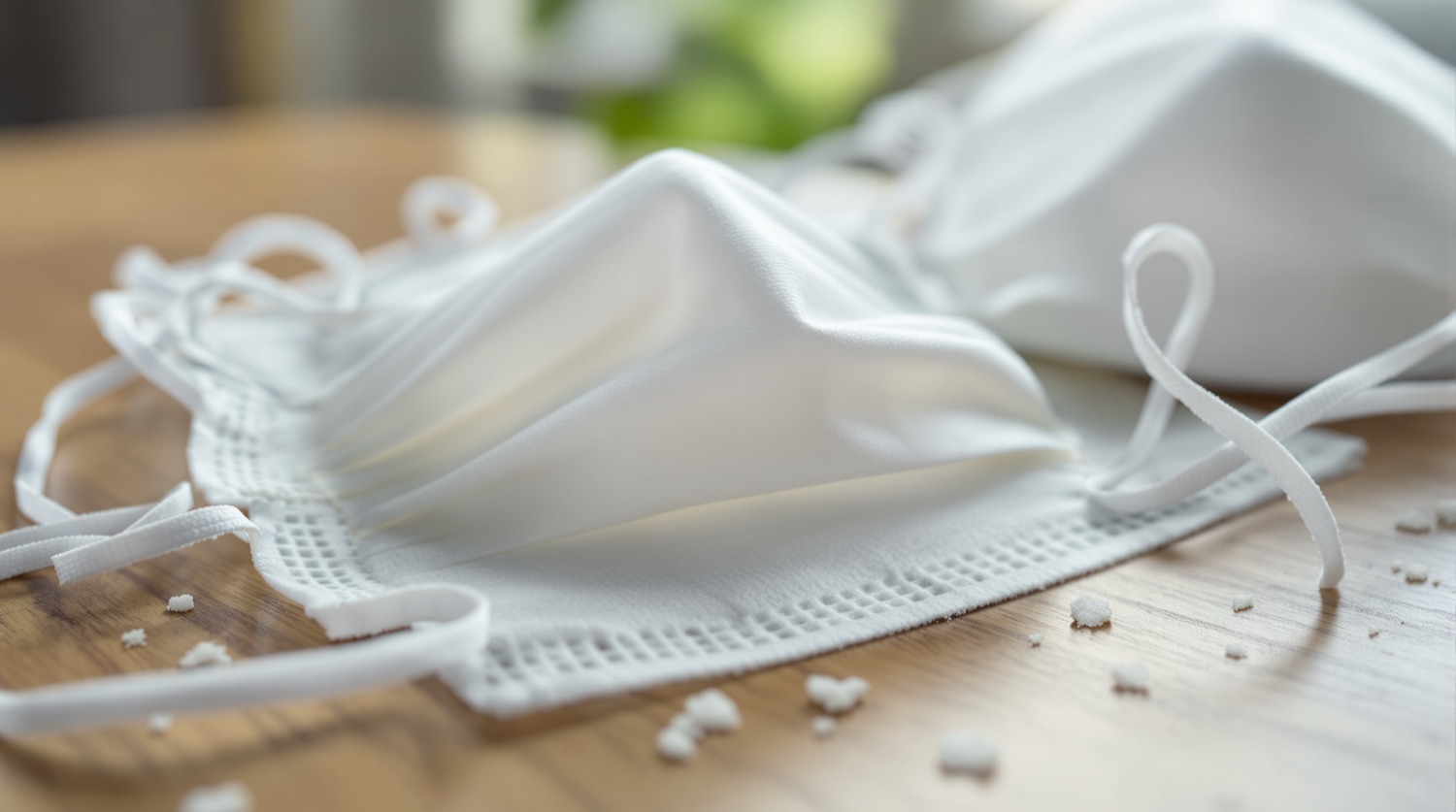
Disposable face masks do shed microplastics, but a fresh one worn for under 4 hours still cuts the plastic you breathe. In a 2021 Journal of Hazardous Materials study (Li et al.), a pump pulled air through seven mask types: every mask reduced the microplastics reaching the "wearer" compared with no mask when used under 4 hours, and the N95 let through about 25 times fewer spherical particles than no mask over 720 hours. A second 2021 study of 18 brands in Environmental Pollution (Chen et al.) found masks worn for a day released 1,246.62 particles each versus 183.00 for new ones. Wear an N95 when you need a mask, swap it every few hours, and never spray it with alcohol to reuse it.
Masks became a daily object for billions of people in 2020, and almost all of the disposable ones are made of the same plastic as yogurt cups and bottle caps: polypropylene. The surgical masks and N95 respirators studied in this research are built from melt-blown and spun-bonded polypropylene layers, and the N95 has five of them. Plastic fabric that rubs, flexes, gets damp from your breath and sits a centimeter from your airway is exactly the setup that raises the microplastic question.
Researchers took it seriously, and the answer they found is more useful than "yes" or "no." It comes down to which mask, how long you wear it, and whether you have been cleaning and reusing it. This guide walks through the three lab studies with real numbers, what they can and cannot tell you, and how it fits with what we know about microplastics in human lungs and the much bigger source most people never think about, the air inside their own home.
The bottom line up front: a mask is a small, controllable microplastic source, and used correctly it is a net reduction, because it also filters the plastic particles already floating in the air. The shedding problem shows up with long wear, reuse and disinfection. If you are worried about breathing plastic at home, where you spend most of your hours, a HEPA air purifier and a HEPA vacuum do far more than anything you wear on your face.
Do face masks shed microplastics?
They do. The most direct test is a 2021 study in the Journal of Hazardous Materials by Lu Li, Xiaoli Zhao, Zhouyang Li and Kang Song of the Institute of Hydrobiology at the Chinese Academy of Sciences. They clamped seven kinds of mask (an N95 respirator, two surgical masks, a cotton mask, a "fashion" mask, a nonwoven mask and an activated-carbon mask) over a suction cup and ran a vacuum pump at 15 liters per minute, roughly the airflow of a resting adult. Everything that passed through or broke off the mask landed on a filter membrane, where the team counted it under a microscope and checked typical particles with Raman and infrared spectroscopy. A blank run with no mask measured what was already in the room air.
The tests were deliberately not run in a clean lab; the authors wanted a realistic setting. That matters, because it means each count is a mix of two things: plastic from the room that the mask failed to stop, plus plastic that came off the mask itself. The comparison with the no-mask run is what tells you whether the mask helped or hurt.
How many microplastics come through each type of mask?
The table below reproduces the study's own counts for two particle shapes at the shortest and longest test times. Fiber-shaped particles are the ones most likely to come from the mask fabric; spherical particles mostly come from the air. Lower is better.
| Mask type | Fibers, 2 h | Fibers, 720 h | Spherical, 2 h | Spherical, 720 h |
|---|---|---|---|---|
| No mask (baseline) | 172 | 1,835 | 3,918 | 1,121,316 |
| N95 respirator | 25 | 1,521 | 1,695 | 44,853 |
| Surgical mask A | 38 | 1,913 | 1,808 | 140,069 |
| Nonwoven mask | 47 | 2,134 | 2,152 | 169,316 |
| Fashion mask | 69 | 2,576 | 3,110 | 597,980 |
| Cotton mask | 92 | 2,824 | 2,241 | 302,242 |
| Surgical mask B | 112 | 3,180 | 3,090 | 523,791 |
| Activated-carbon mask | 153 | 3,984 | 2,212 | 181,017 |
Source: Li L, Zhao X, Li Z, Song K, Journal of Hazardous Materials, 2021, Tables 1 and 2. Counts are particles collected on the membrane during simulated breathing, not particles measured inside a person.
Two patterns jump out. First, at 2 hours every single mask beat the no-mask baseline on both shapes. Second, by 720 hours (a full month of nonstop breathing, far beyond any sensible use) five of the seven masks had let through more fiber-shaped particles than breathing with no mask, while the N95 was still below it. The authors' summary line: "all masks generally reduced exposure when used under their supposed time (<4 h)."
Is wearing a mask worse than not wearing one?
Not if you use it the way it is meant to be used. The same study states that "wearing low-quality masks for longer than 4 h can pose higher fiber-like microplastic inhalation risk than not wearing a mask," which is a warning about long wear, not about masks. On spherical particles, the larger share of what was counted, every mask stayed below the no-mask level at every time point, because it was filtering room air the whole time.
Put plainly: a fresh mask worn for a few hours is a net reduction in the plastic that reaches your airway. A cheap mask worn all day, every day, can turn into a source of fibers. The authors' own practical recommendation was to wear a mask for 2 to 4 hours and then change it.
Which face mask sheds the least microplastics?
The N95 respirator, by a wide margin. It had the lowest fiber count and the lowest spherical count of all seven masks, and it was the only one still under the no-mask fiber level after 720 hours. The paper's conclusion: "N95 exhibited good performance in reducing spherical- and fiber-like microplastic inhalation compared with the other masks and no mask even after undergoing different disinfection treatments."
The reason is construction. The N95 tested was five layers of polypropylene (spun-bonded outer and inner layers around three melt-blown filter layers), so the fabric that touches your face is backed by dense filter media that catches what comes loose. The worst performers on fibers were the activated-carbon mask and one of the two surgical masks, which the authors linked to manufacturing materials such as polypropylene and polyethylene. Notice that "cotton" did not mean "plastic-free" in practice: the cotton mask still passed more fibers than the N95 at every point, partly because it filters room air far less well.
Do used masks shed more microplastics than new ones?
Yes, roughly six to eight times more. A 2021 study in Environmental Pollution by Xianchuan Chen, Xiaofei Chen, Qian Liu, Qichao Zhao, Xiong Xiong and Chenxi Wu bought disposable masks from 18 brands, including medical surgical masks and N95s. Half were tested new; the other half were worn by staff and students at the researchers' institute for one normal day. Each mask was then shaken in 200 milliliters of deionized water at 120 rpm for 24 hours, and the released particles were filtered out, counted and identified with Raman spectroscopy.
- New masks: 183.00 ± 78.42 particles per mask (ranging from 159.80 to 222.17 by type).
- Masks worn for one day: 1,246.62 ± 403.50 particles per mask, 6.0 to 8.1 times more than new.
- Shape: fibers made up more than 70% of everything released.
- Brand and type: "no significant differences of release were found among different types" of disposable mask.
This study measured release into water, so it is mainly about masks as litter and in the laundry, not about breathing. But it answers the question every reuser has: one day of wear (breath moisture, folding, stuffing it in a pocket, taking it on and off) loosens the fabric enough to multiply what comes off it. That lines up with the breathing study's finding that shedding climbs with wear time.
Does disinfecting a mask to reuse it make it shed more?
Yes. Li and colleagues treated each mask type five ways before re-running the breathing test: 30 minutes of UV light, a spray of alcohol on both sides then air drying, 15 minutes of hot air from a blower, a gentle wash under running water then indoor drying, and 3 hours of noon sunlight at 35°C. Their conclusion: "All the investigated disinfection processes led to varying extents of microplastic inner structure damage, increasing the risk of microplastic inhalation."
| Reuse treatment | What the study found |
|---|---|
| Alcohol spray | "Caused the heaviest damage to the masks' structures, particularly for N95." Avoid. |
| Hot-air blower | Large jumps in fiber release on several masks, including the N95 and nonwoven mask. |
| UV light | "A relatively weak effect on fiber-like microplastic inhalation." |
| Sunlight | "The lowest effect on surgical masks." |
| Gentle wash, air dry | "The gentlest method for treating masks for reuse." |
One important limit: the study did not test whether any of these methods killed viruses, and the authors say so. So this table tells you what reuse does to the plastic, not whether a reused mask still protects you from infection. The clean answer for plastic exposure is a fresh mask.
How small are the particles masks release?
Much smaller than a visible fiber. A 2021 study in the Journal of Hazardous Materials by Silvia Morgana, Barbara Casentini and Stefano Amalfitano of Italy's National Research Council cut up surgical masks in water and ran a kitchen chopper blade through them for 1 to 120 seconds to simulate the rough handling a discarded mask gets in the environment. A single mask released from 2.6 × 10³ fibers longer than 100 micrometers (after 1 second) up to 2.8 × 10⁴ (after 120 seconds), averaging 1.7 millimeters long. Counted down to 0.1 micrometer with flow cytometry, the total ran from 7.6 × 10⁸ to 3.9 × 10¹⁰ particles per mask, and about 79% of them were between 0.1 and 0.5 micrometers.
That is a torture test, not breathing, so do not read those billions as what you inhale. Its value is showing that mask fabric breaks down into particles in the nanoplastic range, far too small to see, once it is abraded. It is also the strongest argument for never tossing a used mask on the ground or in a drain.
Can microplastics from masks end up in your lungs?
Plastic particles do reach deep lung tissue, but no study has traced them to masks. In a 2022 Science of the Total Environment study (Jenner et al.), researchers at Hull York Medical School found microplastics in lung tissue from 11 of 13 living surgical patients, and polypropylene and PET were the most common types. Polypropylene is the mask polymer, but it is also in carpets, upholstery, packaging and clothing, so the finding cannot be pinned on face masks.
What the evidence does support is proportion. Indoor air and household dust carry a steady load of synthetic fibers from textiles and furniture, around the clock, whether or not you wear a mask. We cover that in detail in microplastics in household dust and microplastics and asthma. A mask worn for a few hours on a commute is a small, short exposure next to the air you breathe at home for 15 hours a day.
How do you wear a mask without breathing more plastic?
The studies point to four simple rules. None of them mean skipping a mask when you need one.
- Choose an N95 when you need real protection. It shed the least and filtered the most in the breathing study, and stayed below the no-mask level even after a month of simulated use.
- Change it every 2 to 4 hours of wear. Under 4 hours, every mask tested was a net reduction. Long wear is what turns a cheap mask into a fiber source.
- Do not reuse a disposable mask, and never spray it with alcohol. One day of wear multiplied shedding six- to eightfold, and alcohol did the most damage of any reuse method.
- Bin it, do not drop it. Abraded mask fabric breaks into billions of nano-sized particles, which is a waterway problem long after it stops being your problem.
The bigger source is the air at home
You wear a mask for hours. You breathe the air in your home all day and night.
What actually cuts the microplastics you breathe at home?
There is no "microplastic-free" disposable mask to buy, so we are not going to pretend one exists. The lever that does the most for airborne plastic is cleaning the air in the rooms where you spend your time. A True HEPA filter is rated to capture 99.97% of particles at 0.3 microns, which covers the fiber and fragment sizes counted in the mask studies above. These are two of the purifiers from our full air purifier comparison. Prices change, so check current listings.
1. Levoit Core 400S — Best for a Bedroom
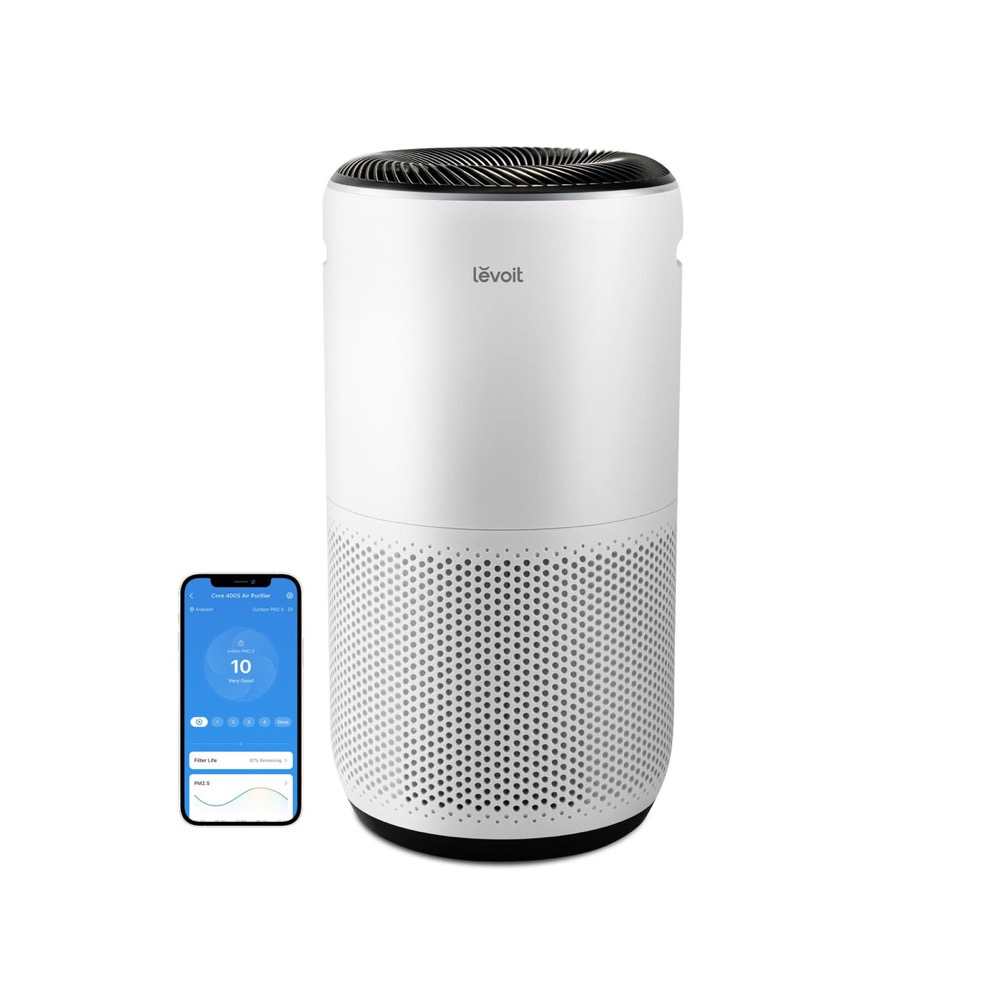 Best for a Bedroom
Running a HEPA purifier through the night cleans the air you breathe for the longest stretch of your day, with nothing on your face.
Check Today’s Price on Amazon →Amazon prices change daily. Tap to see today's price.
2. Coway Airmega 400 — Best for Open Living Spaces
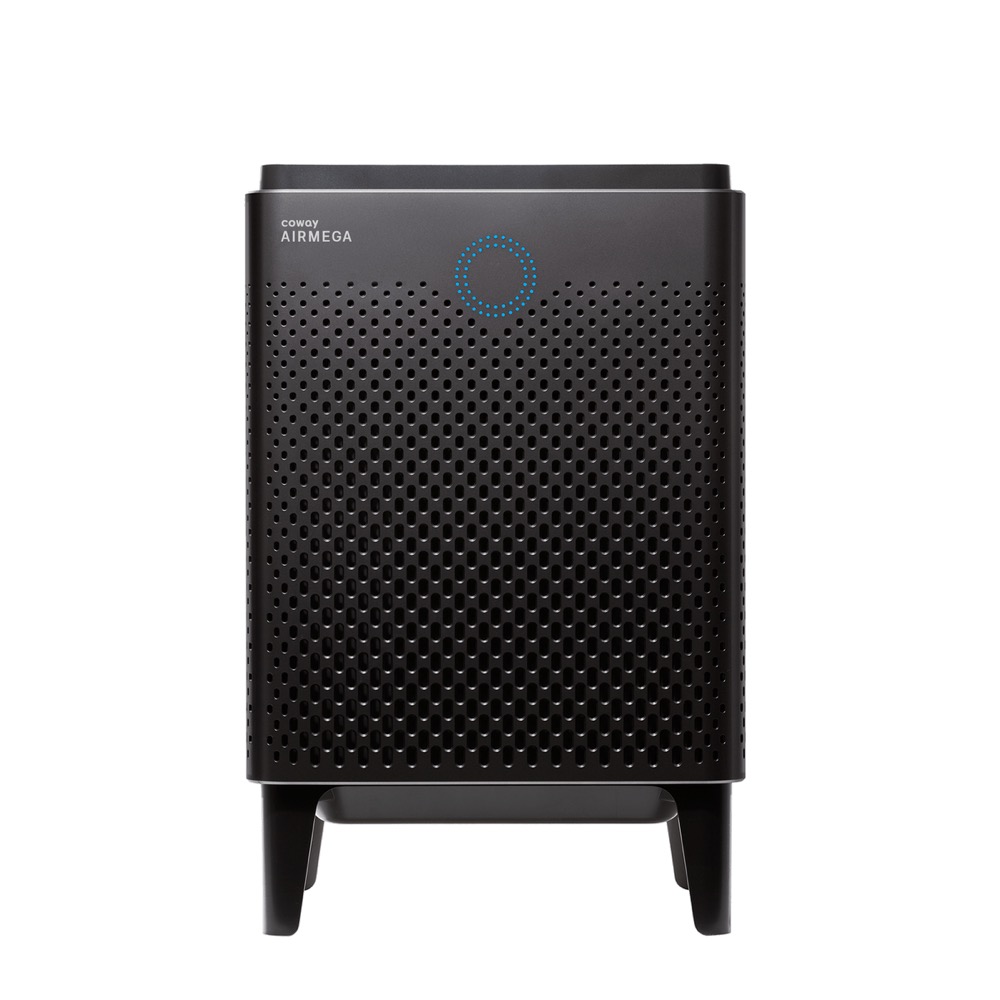 Best for Large Rooms
Covers an open-plan space that a single small purifier cannot keep up with.
Check Today’s Price on Amazon →Amazon prices change daily. Tap to see today's price.
The honest verdict
Face masks do shed microplastics, and the research is clear on when it matters: long wear, reuse and disinfection. A fresh mask worn for a few hours is a net reduction in the plastic reaching your airway, and an N95 is the best of the lot. Use one when you need one, swap it on schedule, throw it away properly, and put your real effort into the air at home, which is where most of your breathing happens. For the wider picture, see where microplastics come from and how to reduce microplastics in your body.
Frequently Asked Questions
Disposable masks are made of polypropylene plastic, and lab studies show they release microplastic fibers and fragments. In a 2021 Journal of Hazardous Materials study that pulled air through seven mask types with a pump, every mask still reduced the total microplastics reaching the wearer compared with no mask when worn under 4 hours. The shedding becomes a problem with long wear, reuse and disinfection, not with a fresh mask worn for a few hours.
The N95 respirator. In the 2021 Li et al. breathing-simulation study, the N95 let through the fewest fiber-shaped and spherical particles of all seven masks tested, at every time point. After 720 hours of simulated breathing it collected 44,853 spherical particles versus 1,121,316 with no mask, about 25 times fewer. Its five layers of polypropylene hold together better than thinner surgical, cotton, fashion or activated-carbon masks.
Not when you wear it as intended. The 2021 study found all masks generally reduced exposure when used for under 4 hours. Wearing a low-quality mask for longer than 4 hours could let through more fiber-shaped microplastics than no mask at all, so the fix is to change it, not to skip it. The N95 stayed below the no-mask level throughout.
Yes, much more. A 2021 Environmental Pollution study tested masks from 18 brands. New masks released 183.00 particles each when shaken in water for 24 hours; masks worn for one day released 1,246.62 particles each, 6.0 to 8.1 times more. Fibers made up more than 70% of what came off.
Every disinfection method tested in the 2021 Li et al. study damaged the mask fabric and raised microplastic inhalation risk. Spraying alcohol did the most damage, especially to N95s. Gentle washing and air drying was the mildest method, and UV had a relatively weak effect on fiber release. None of the methods were tested for killing viruses, so the safest rule for plastic exposure is a fresh mask rather than a cleaned one.
Sources
- Li L, Zhao X, Li Z, Song K. "COVID-19: Performance study of microplastic inhalation risk posed by wearing masks." Journal of Hazardous Materials, 2021;411:124955. Full text on PubMed Central. (Breathing simulation of seven mask types from 2 to 720 hours, plus five disinfection treatments; source of the particle counts in both tables.)
- Chen X, Chen X, Liu Q, Zhao Q, Xiong X, Wu C. "Used disposable face masks are significant sources of microplastics to environment." Environmental Pollution, 2021;285:117485. Full text on PubMed Central. (18 brands; new masks released 183.00 particles each, masks worn for one day released 1,246.62.)
- Morgana S, Casentini B, Amalfitano S. "Uncovering the release of micro/nanoplastics from disposable face masks at times of COVID-19." Journal of Hazardous Materials, 2021;419:126507. Full text on PubMed Central. (Shear test in water; fibers and nano-sized particles counted per mask.)
- Jenner LC, Rotchell JM, Bennett RT, et al. "Detection of microplastics in human lung tissue using μFTIR spectroscopy." Science of the Total Environment, 2022;831:154907. (Microplastics found in lung tissue from 11 of 13 patients; polypropylene and PET most common.)