The material decides it, and the label frequently will not tell you which material you bought. When the Ecology Center's Healthy Stuff Lab analyzed the composition of 11 yoga mats in 2019, three came back as PVC — and two of those three were sold not as PVC but as “PER,” an invented material name. A mat marketed as recycled wetsuits contained phthalates plus antimony at several thousand parts per million. Mats built from natural rubber, cork and polyurethane did not carry those findings. Meanwhile the federal phthalate ban at 16 CFR part 1307 covers children's toys and child care articles only — an adult yoga mat is outside it entirely.
A yoga mat is an unusual consumer product. Most plastic in a house is touched briefly, from a distance, or through food. A mat is pressed against bare skin, under body weight, in a warm room, while the person on it is deliberately breathing as deeply as they can. If any plastic object in a home deserves to have its composition checked, it is this one.
And yet almost no independent testing exists. The single substantial public dataset is the Ecology Center's Healthy Stuff Lab panel from August 2019, which bought 11 mats off the shelf and analyzed what they were actually made of rather than what the packaging claimed. That report is the backbone of this page, and where it runs out, we say so instead of filling the gap with a guess.
The bottom line up front: “eco-friendly” on a yoga mat listing is not a material and carries no testing behind it. Two of the three PVC mats in the only published panel were marketed with green language. The fix is not a brand, it is a material word you can verify — natural rubber, cork, or jute — and a refusal to accept any name you cannot look up. Related reading: our ranked non-toxic yoga mat picks, microplastics in indoor air, and toxic chemicals in mattresses, the other surface you spend hours on.
Are yoga mats toxic?
Some are and some are not, and the dividing line is the polymer, not the price or the marketing. The mats that raised real findings in testing were the ones built on polyvinyl chloride — PVC, the plastic that needs a softening additive to be flexible at all — and one novelty mat made from recycled neoprene wetsuits. The mats built from natural tree rubber, cork and polyurethane did not.
That sounds simple. The complication is that you often cannot tell which one is in your hands. Two of the three PVC mats in the 2019 panel were not labeled PVC.
What did lab testing of real yoga mats actually find?
The Ecology Center's Healthy Stuff Lab bought 11 mats in 2019 and ran composition analysis on each. Here is what came back, by mat.
| Mat | Labeled as | What the lab found |
|---|---|---|
| Ajna Natural Jute | “Organic jute and PER” | Largely PVC, plasticized with DOTP |
| Aurorae Synergy 2-in-1 | “PER” | Largely PVC, plasticized with DOTP |
| GAIAM Premium 6mm | PVC (accurately labeled) | PVC, plasticized with DOTP |
| Suga Recycled Wetsuit | Recycled wetsuits | Polyurethanes and rubbers containing phthalates; antimony at several thousand ppm |
| ISHA TPE | “TPE” | EVA copolymer (PEVA) — the lab called it a better choice than PVC |
| Six others, including Jade, Manduka eKO Lite, Liforme, Lululemon and Tranquil Yogi Cork | Natural rubber, cork, polyurethane | Polyisoprene (natural rubber), polyurethane, or combinations with cork or nylon layers |
Three findings in that table are worth pulling out, because they are the ones that change what you buy.
The plasticizer in all three PVC mats was DOTP, also written DEHT — dioctyl terephthalate. This is good news with an asterisk. DOTP is a substitute brought in to replace the classic phthalates, and the lab described it as a likely safer one. It is also newer, with a thinner toxicology record behind it, which is a different statement from “safe.” And the Ecology Center was explicit that the absence of phthalates does not mean the material poses no hazard: PVC carries its own chlorine chemistry through manufacture and disposal regardless of which softener goes into it.
The recycled-wetsuit mat was the worst result in the panel, which is the opposite of what its positioning implies. It contained phthalates — the specific compounds were not identified — and antimony at several thousand parts per million, most likely antimony trioxide used as a flame retardant. “Made from recycled material” describes where a material came from. It says nothing about what is in it, and recycled feedstock can carry forward additives nobody chose.
A mat sold as TPE was not TPE. The ISHA mat tested as EVA copolymer, which the lab considered a better option than PVC — but the gap between the label and the lab is the point. Material names on this product category are not reliable.
Is a PER yoga mat the same thing as PVC?
In every tested case so far, yes. “Polymer environmental resin” is not a polymer with a chemical definition, an industry standard, or a specification you can look up. It is a phrase. The Ecology Center said so without hedging: the name “tells us nothing about its composition. It sounded like greenwashing, and our test results appear to confirm that.”
This is the single most actionable thing on this page. If a mat listing names a material you cannot find a definition for — PER, “eco-PVC,” “eco resin,” “environmentally friendly material” — treat it as PVC until the brand tells you the actual polymer in plain words. Brands that use natural rubber say natural rubber, because it costs more and they want the credit for it.
Does hot yoga make a PVC mat release more?
Temperature is the lever, and the effect is not subtle. Sang-Hee Jo and colleagues, publishing in Environmental Research in 2018, placed five PVC consumer goods — vinyl flooring, wallcovering, a child's toy, an edge protector, and a yoga mat — into a small chamber system and measured the phthalates coming off them into the air at three temperatures. They identified 11 separate phthalate compounds across the five products.
| Chamber temperature | Real-world equivalent | Emission flux, highest-emitting product (µg/m²/h) |
|---|---|---|
| 25°C (77°F) | An ordinary room | 0.40 |
| 40°C (104°F) | A hot-yoga studio | 9.65 — about 24× higher |
| 90°C (194°F) | A car dashboard in summer sun | 75.7 — about 189× higher |
Two honest caveats on that table, because they matter. The figures above are the study's highest-emitting item, a PVC edge protector, not the yoga mat specifically — the paper reports the mat as one of the five products tested but we are not going to invent a mat-specific number it did not publish. And the absolute quantities are small: even the 90°C figure is micrograms per square meter per hour. What the data establishes is the shape of the relationship, and that shape is steep. A PVC mat in a 104°F room is not behaving like a PVC mat in a 72°F living room, and a mat left rolled in a hot car is in a different regime again.
If you practice hot yoga on a PVC mat, this is the finding that should move you. If you practice in a normal room, it is a reason to prefer a different material over time rather than to throw anything away today.
Is there a health link to PVC in the home?
The most relevant pooled evidence is older and not about mats, but it is about living with PVC surfaces. Jouni Jaakkola and Terttu Knight published a systematic review and meta-analysis in Environmental Health Perspectives in 2008 that pulled together 27 human studies and 14 laboratory toxicology studies. For children living in homes with PVC surface materials, they reported a summary odds ratio of 1.55 for asthma (95% confidence interval 1.18–2.05, from four studies) and 1.32 for allergies (95% CI 1.09–1.60, from three studies).
In plain terms: children in those homes were about 55% more likely to have asthma and about 32% more likely to have allergies, and because both confidence ranges sit entirely above 1.0, the association is unlikely to be chance. What this does not establish is cause, or that a yoga mat does it — PVC flooring covers a whole room and a mat covers two square meters for an hour a day. It is context for why PVC in living space is treated as a question worth asking, not proof about your mat.
Do yoga mats shed microplastics you breathe in?
Nobody has measured this, and we are not going to pretend somebody has. There is no published study of microplastic shedding from a yoga mat under use. Any page that gives you a particles-per-session number for a mat made it up.
What is measured is the room the mat sits in. Nadia Yakovenko and colleagues, publishing in PLOS ONE in 2025, sampled inhalable airborne microplastics indoors and found a median of 528 particles per cubic meter in homes, with car cabins far higher at 2,238. From those concentrations they estimated adults inhale on the order of 68,000 particles a day in the 1 to 10 micrometer range — the fraction small enough to reach deep lung tissue.
A synthetic mat abraded by hands, feet and body weight in a warm room is a plausible contributor to an indoor load like that. Plausible is the correct word, and it is where the evidence stops. We have a separate page on what has actually been measured in indoor air, and a guide to air purifiers for airborne particles if that is the piece you want to act on.
Why doesn't the phthalate ban cover yoga mats?
Because the law was written for children, and nothing extended it afterward. Section 108 of the Consumer Product Safety Improvement Act, codified at 15 U.S.C. § 2057c and 16 CFR part 1307, permanently bans eight phthalates — DEHP, DBP, BBP, DINP, DIBP, DPENP, DHEXP and DCHP — above 0.1% by weight. The scope is children's toys for ages 12 and under and child care articles for children aged 3 and under. That is the whole list.
An adult yoga mat is neither. There is no federal phthalate limit on it, no required disclosure of its plasticizer, and no obligation on a brand to name the polymer accurately. That regulatory gap is the real reason a lab had to buy 11 mats and open them up to find out what they were — and the reason the answer surprised people.
Which yoga mat material is actually safest?
Rank the materials by what question remains open about each, rather than by how they are marketed.
| Material | Needs a plasticizer? | What the testing showed | The honest catch |
|---|---|---|---|
| Natural tree rubber (polyisoprene) | No | No plasticizer or antimony findings in the panel | It is latex — not for a latex allergy. Heavy, and smells of rubber for a few days. |
| Cork over a rubber base | No | Cork mats were among the clean results | The base is usually still rubber, so the latex caveat follows it. |
| Jute | No | — (the “jute” mat tested was PVC-backed) | Often a jute surface bonded to a PVC body. Check the backing, not the top. |
| TPE / EVA copolymer | No | Called a better choice than PVC by the lab | Still a synthetic polymer, and the one mat labeled TPE was something else. Thin independent record. |
| PVC, including anything sold as “PER” | Yes, always | DOTP in all three tested; chlorine chemistry regardless of softener | No federal phthalate limit applies. Emission climbs steeply with heat. |
| Recycled neoprene / wetsuit | Varies | Phthalates plus antimony at several thousand ppm | Recycled describes origin, not contents. The worst result in the panel. |
Composition findings are from the Ecology Center Healthy Stuff Lab 2019 panel of 11 mats; dashes mean that material was not separately characterized in the panel. Nothing here is a measurement of your specific mat.
What to use instead of a PVC mat
You do not need to replace a mat you already own tomorrow, and nothing above says you do. But when the current one wears out — or if you practice hot yoga on PVC, which is the one case the temperature data actually argues against — these are three we already recommend in our full ranked non-toxic yoga mat guide, chosen here for the specific problem on this page. Prices change daily, so check the current listing.
1. Jade Harmony Professional — Natural Rubber, Best Overall
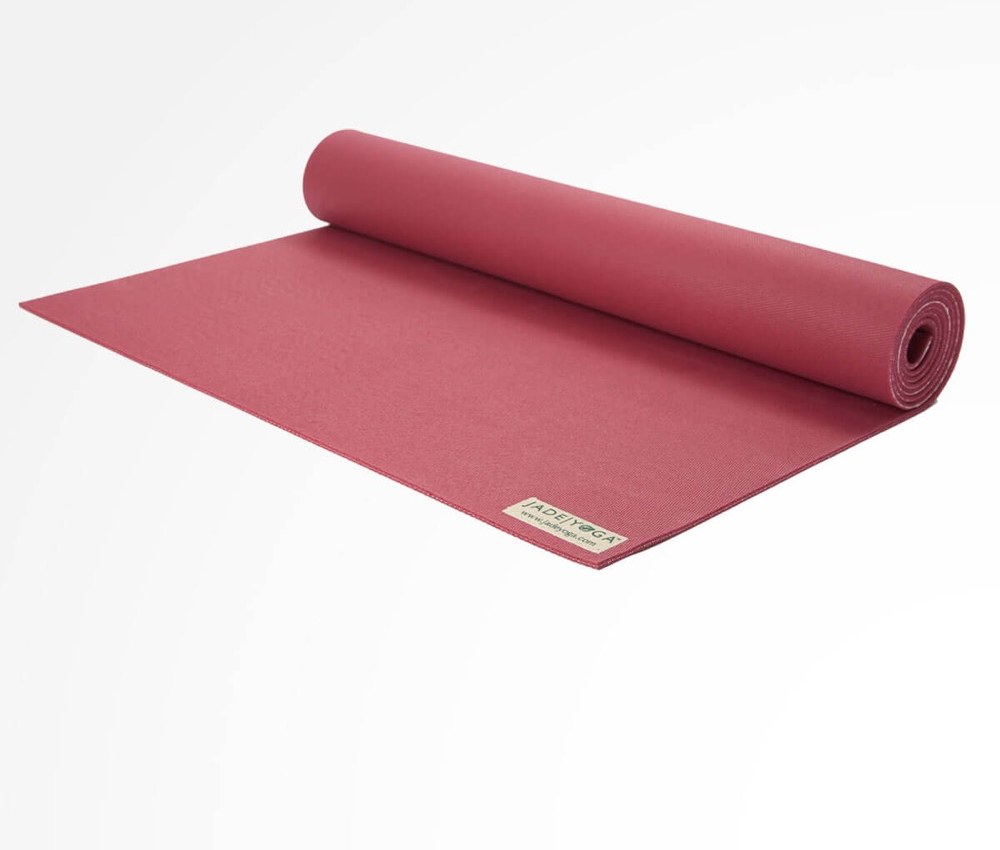 Best Overall
You breathe inches from this surface for an hour at a time — this is the one place a material upgrade is felt directly.
Why it's safe: Natural rubber tapped from trees, with no PVC and no plasticizer in the formulation, so there is no softener chemistry to ask about.
Check Today’s Price on Amazon →Amazon prices change daily — tap to see today's price and any active discount.
2. Yoloha Original Cork — Best for Hot Yoga
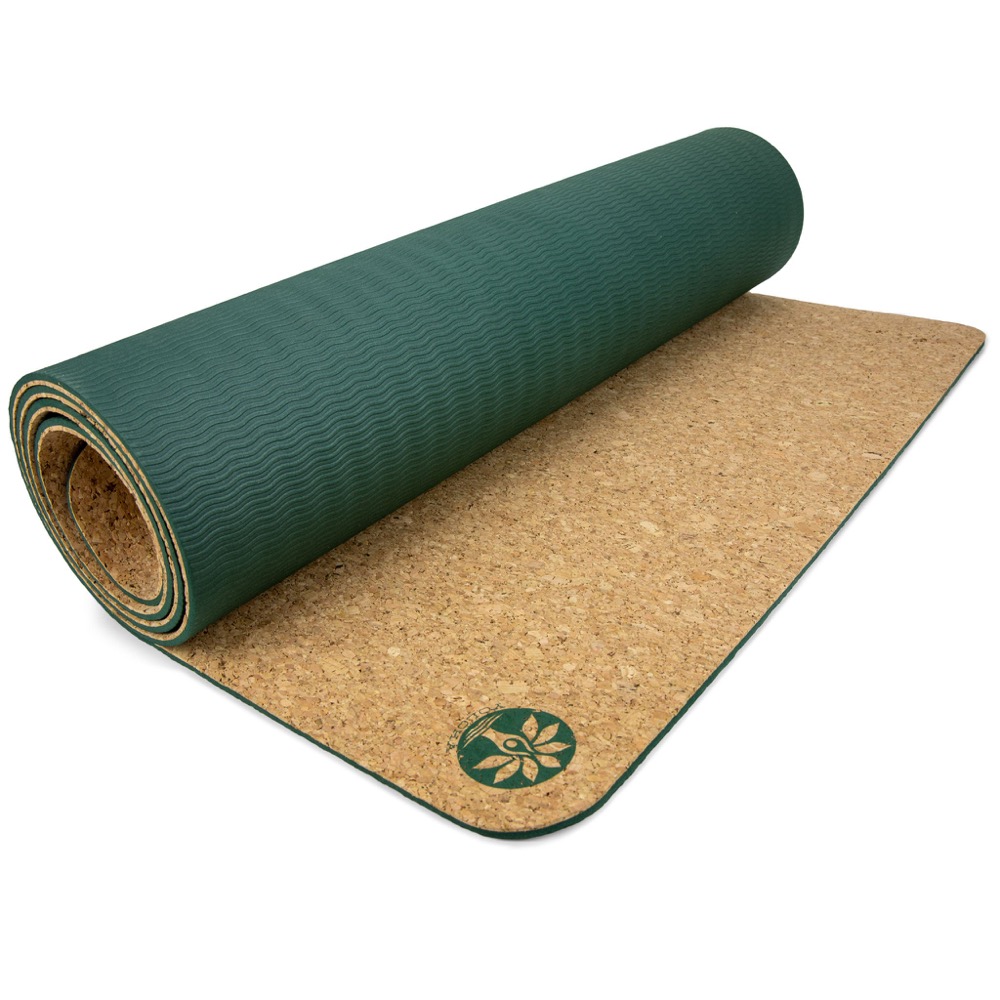 Best for Hot Yoga
If you practice in a heated room, this is the material change the temperature evidence actually supports.
Why it's safe: Cork is tree bark and the base is tree rubber. Neither requires a softening additive, so there is no plasticizer in the build at all.
Check Today’s Price on Amazon →Amazon prices change daily — tap to see today's price and any active discount.
3. Manduka eKO Superlite — Best for Travel
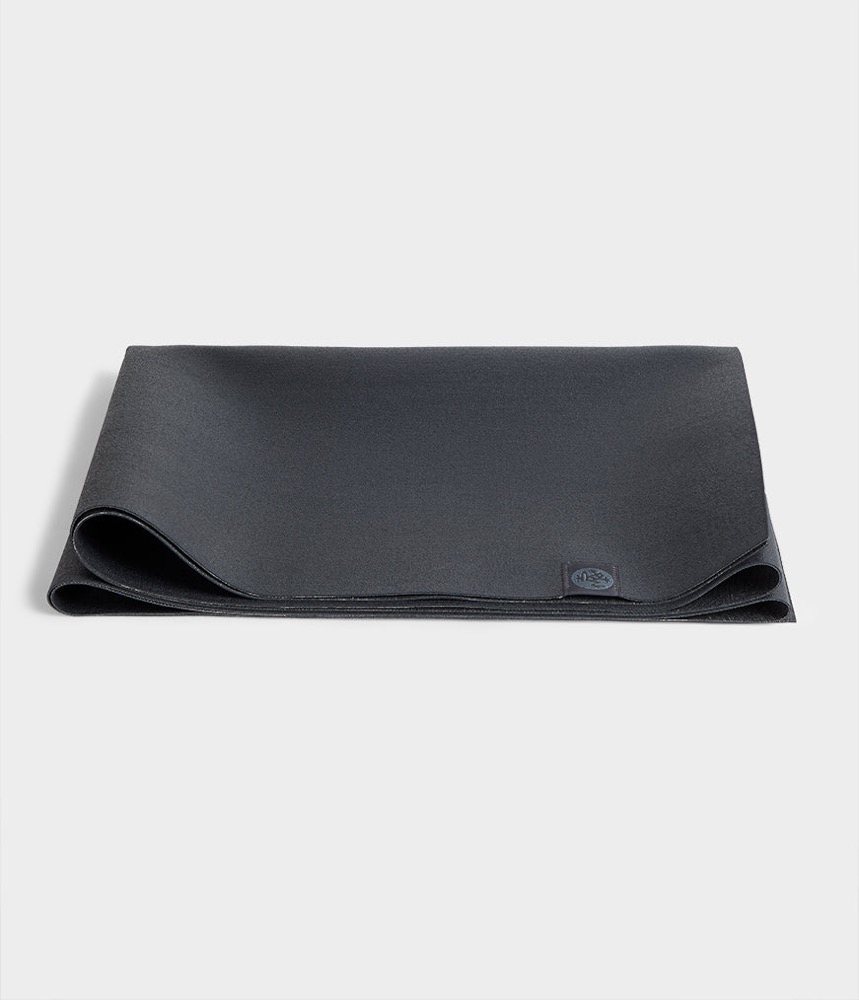 Best for Travel
The mat you did not choose is the one you know least about. This one weighs 2.2 lbs and ends that problem.
Why it's safe: Natural tree rubber with water-based inks, free of PVC and of the plasticizers PVC requires.
Check Today’s Price on Amazon →Amazon prices change daily — tap to see today's price and any active discount.
The honest verdict
So, are yoga mats toxic? As a category, no — and the question is poorly aimed. The 11-mat panel splits cleanly into two groups: mats whose material needs a chemical additive to work, and mats whose material does not. PVC is in the first group and always will be, because flexibility is not a property it has on its own. Natural rubber and cork are in the second, because they already bend.
What the testing actually exposed is not a poison, it is an information failure. Two of three PVC mats were sold under a name invented to avoid saying PVC. A mat labeled TPE was EVA. The mat with the greenest story in the panel — recycled wetsuits — returned the worst findings in it. And no rule requires any of that to be stated accurately, because the phthalate ban stops at children's products and nobody ever wrote one for the thing adults lie down on.
Which makes the move a cheap one. Do not replace a working mat out of alarm. Do insist, on the next one, on a material word you can verify — natural rubber, cork, jute over a stated backing — and walk away from any listing whose material you cannot look up. If you practice hot, move that purchase up the list: 104°F is the one condition the emission data treats as genuinely different, and it is the condition a hot-yoga room is designed to produce.
The bigger source is probably your tap
A mat is two square meters for an hour a day. Drinking water is every day, all day, for everyone in the house — and unlike a mat, it is something you can filter.
Frequently Asked Questions
It depends entirely on the material, and the label often will not tell you which one you bought. When the Ecology Center's Healthy Stuff Lab analyzed 11 mats in 2019, three turned out to be PVC — including two sold under the invented name “polymer environmental resin,” or PER, which is not a material at all. A mat made from recycled wetsuits contained phthalates and antimony at several thousand parts per million. Mats made of natural rubber, cork and polyurethane did not show those hazards. Material, not brand positioning, is what separates the two groups.
In the mats that have been tested, yes. “Polymer environmental resin” is a marketing term, not a polymer with a definition, and the Ecology Center called it out directly: the name “tells us nothing about its composition. It sounded like greenwashing, and our test results appear to confirm that.” Both PER mats in the 2019 panel — the Ajna Natural Jute and the Aurorae Synergy 2-in-1 — came back as largely PVC. If a listing names a material you cannot look up, treat it as PVC until the brand says otherwise in plain words.
Heat is the single biggest lever on release. Jo and colleagues, publishing in Environmental Research in 2018, put five PVC consumer goods including a yoga mat into a small chamber and measured airborne phthalates at 25, 40 and 90°C. For the highest-emitting product the flux rose from 0.40 to 9.65 to 75.7 micrograms per square meter per hour — a roughly 24-fold jump between room temperature and 40°C, which is about 104°F, the temperature of a hot-yoga room. The absolute amounts are small; the slope is what matters.
No study has measured shedding from a yoga mat specifically, and anyone who gives you a number for it is guessing. What is measured is the room: Yakovenko and colleagues reported a median of 528 inhalable microplastic particles per cubic meter in homes in PLOS ONE in 2025, and estimated adults inhale on the order of 68,000 particles a day in the 1 to 10 micrometer range. A synthetic mat abraded by hands and feet for an hour is a plausible contributor to that indoor load, but plausible is not measured, and we will not pretend otherwise.
Because the law was written for children's products and nothing else. Section 108 of the Consumer Product Safety Improvement Act, codified at 16 CFR part 1307, bans eight phthalates above 0.1% — but only in children's toys for ages 12 and under and child care articles for children 3 and under. An adult yoga mat falls outside that scope entirely, so there is no federal phthalate limit on the surface your face is six inches from, and no requirement to disclose which plasticizer was used.
Natural tree rubber and cork are the two that come with no plasticizer question at all, because neither needs a plasticizer to stay flexible. In the Ecology Center panel the mats built from polyisoprene — natural rubber — cork and polyurethane did not carry the hazards found in the PVC and recycled-wetsuit mats. The practical catch is latex: natural rubber is a latex material, so anyone with a latex allergy should choose cork with a non-latex backing or ask the brand directly.
Sources
- Ecology Center Healthy Stuff Lab. “Yoga Mats Testing 2019.” Published 6 August 2019. (Composition analysis of 11 mats purchased in 2019; three PVC mats — Ajna Natural Jute, Aurorae Synergy 2-in-1 and GAIAM Premium 6mm — all plasticized with DOTP; the Suga recycled-wetsuit mat contained phthalates and antimony at several thousand ppm; an ISHA mat labeled TPE tested as EVA copolymer; “polymer environmental resin” described as apparent greenwashing.)
- Jo SH, Lee MH, Kim KH, Kumar P. “Characterization and flux assessment of airborne phthalates released from polyvinyl chloride consumer goods.” Environmental Research, 2018;165:81–90. (Five PVC products including a yoga mat tested in a small chamber at 25, 40 and 90°C; 11 phthalate compounds identified; emission flux for the highest-emitting product 0.40, 9.65 and 75.7 µg/m²/h at the three temperatures.)
- Jaakkola JJK, Knight TL. “The Role of Exposure to Phthalates from Polyvinyl Chloride Products in the Development of Asthma and Allergies: A Systematic Review and Meta-analysis.” Environmental Health Perspectives, 2008;116(7):845–853. doi:10.1289/ehp.10846. (27 human and 14 laboratory toxicology studies; PVC surface materials in the home associated with asthma in children, summary odds ratio 1.55, 95% CI 1.18–2.05, and with allergies, OR 1.32, 95% CI 1.09–1.60.)
- Yakovenko N, Pérez-Serrano L, Segur T, et al. “Human exposure to PM10 microplastics in indoor air.” PLOS ONE, 2025;20(7):e0328011. (Median 528 microplastic particles per cubic meter in residential indoor air and 2,238 in car cabins; estimated adult inhalation on the order of 68,000 particles per day in the 1–10 µm fraction.)
- US Consumer Product Safety Commission. “Phthalates Business Guidance & Small Entity Compliance Guide.” (Section 108 of the CPSIA, 15 U.S.C. § 2057c and 16 CFR part 1307: eight phthalates — DEHP, DBP, BBP, DINP, DIBP, DPENP, DHEXP, DCHP — prohibited above 0.1% in children's toys for ages 12 and under and child care articles for children 3 and under; the ban does not extend to adult products.)