Twenty-one semivolatile chemicals were detected in sixteen new children’s mattresses bought from major North American retailers and analyzed by researchers at the University of Toronto, published in Environmental Science & Technology in 2025. They fell into four families: ortho-phthalate plasticizers, organophosphate ester flame retardants, benzophenone UV filters and salicylates. One mattress cover held di-n-butyl phthalate at 0.22% by weight, above the Canadian regulatory ceiling of 0.1% for children’s mattresses; five more exceeded 0.1% for phthalates that are capped in children’s toys but not in beds. One mattress contained TCEP — a flame retardant prohibited in Canada since 2014 — at 9,000 mg/kg in its foam. The finding that matters most for a parent is not the inventory but the conditions: 12 compounds were emitted at room temperature, 20 at a child’s body temperature of 37.5 °C, and all 21 once 7.5 kg of body weight was applied. A mattress tested cold and empty is not the mattress a child sleeps on.
Almost everything written about chemicals in mattresses has one weakness in common: it tests the mattress sitting still, at room temperature, with nothing on it. That is a reasonable way to check a product against a regulation and a poor way to describe what a child is exposed to. A sleeping four-year-old is a warm, heavy object lying on a compressible foam slab for half of every day, and both the warmth and the weight change the chemistry of what comes off the surface.
Two papers published in 2025 by a group at the University of Toronto, led by Samira Vaezafshar with Miriam Diamond’s laboratory, closed that gap from both ends. One bought new mattresses and measured them under realistic sleeping conditions. The other went into twenty-five real family bedrooms and sampled the air both around the room and in the narrow layer of air immediately surrounding a sleeping child. Read together, they give the clearest picture yet of what a bed actually emits, and they are specific enough to act on.
The bottom line up front: the chemicals here are plasticizers and flame retardants that were mixed into the plastic rather than bonded to it, so they migrate out over the life of the product — faster when warm, faster still under weight. Nothing in either study says a mattress must be thrown out today. What the data does support is the cheap end of the fix: wash the bedding often, keep the bed clear, and when a mattress is genuinely due for replacement, buy one whose materials never needed the additives. If you are at that point, our guides to the best non-toxic mattresses and the best non-toxic baby mattresses are the practical companions to this page, and the organic cotton sheets guide covers the barrier layer.
What chemicals are in mattresses?
Four families, added for four different jobs. The study is “Are Sleeping Children Exposed to Plasticizers, Flame Retardants, and UV-Filters from Their Mattresses?” by Vaezafshar, Wolk, Simpson, Akhbarizadeh, Blum, Jantunen and Diamond, in Environmental Science & Technology, volume 59, issue 16, pages 7909–7918, 2025. Sixteen new children’s mattresses were bought at ordinary retail, their covers and foam cores analyzed separately, and the cover polymers identified by infrared spectroscopy. Twenty-one compounds were detected across the set.
| Chemical family | Why it is in a mattress | Examples detected | Where it sat |
|---|---|---|---|
| Ortho-phthalates | Plasticizers — they keep a waterproof cover soft and flexible instead of stiff | DnBP, DiBP, BzBP, DEHP, DnOP, DiNP | Mostly the cover |
| Organophosphate esters | Flame retardants, added to foam to meet flammability rules | TCEP, TCPP, TDCiPP, TEHP, TBOEP, TPhP | Foam core and cover |
| Benzophenones | UV filters that stop dyes and polymers fading or degrading in light | BP, BP-3, BP-8 | Cover |
| Salicylates | Also UV absorbers, used alongside or instead of benzophenones | 2-EH-salicylate, phenyl salicylate, methyl salicylate | Cover |
One result in that table deserves emphasis, because it disposes of the most common shopping heuristic. The researchers found no consistent relationship between the cover’s polymer type and what was in it — rigid PVC covers were not reliably worse than flexible polypropylene-polyethylene ones. You cannot read the risk off the material name on the tag.
How much was actually in them?
Enough, in several cases, to cross a legal line. Canada caps di-n-butyl phthalate in children’s mattresses at 0.1% by weight. These are the measurements that stand out from the sixteen:
| Chemical | Highest measured | Regulatory position |
|---|---|---|
| DnBP (phthalate) | 0.22% — 2,200 mg/kg in one cover | Over the 0.1% Canadian limit for children’s mattresses |
| DiNP (phthalate) | 0.27% — 2,700 mg/kg in one cover | Capped in children’s toys; not capped in mattresses |
| DiBP (phthalate) | 0.24% — 2,400 mg/kg in one cover | Capped in children’s toys; not capped in mattresses |
| DnOP (phthalate) | 1,700 mg/kg in one cover | Capped in children’s toys; not capped in mattresses |
| TCEP (flame retardant) | 9,000 mg/kg in one foam core | Prohibited in Canada since 2014 |
| TEHP (flame retardant) | 31,000 mg/kg — about 3% by weight of one foam | The highest single concentration in the study |
| TBOEP (flame retardant) | 22,000 mg/kg in one cover | Detected in 88% of the mattresses tested |
Five of the sixteen mattresses carried organophosphate flame retardants at between 1% and 3% of their weight. The authors made a pointed observation about that: Canada’s flammability standard for these products can be met without adding them at all, so in those five cases the chemistry was not doing a job the law required. And the TCEP result is the one that says most about oversight, since the compound has been off-limits in Canada for a decade and turned up at a level the paper described as higher than all previously published data.
There is a second, quieter finding worth knowing before you shop. The team bought two mattresses of the same brand and model roughly two years apart. The 2021 sample had a PEVA cover and the highest DnBP reading in the study; the 2024 sample had a polypropylene cover, no detectable DnBP — and more DiNP. The market moved off one phthalate and onto another. A certification checked once is not a guarantee about the box that arrives.
Why does a sleeping child get a bigger dose?
Because heat and pressure both drive emission, and a child supplies both for ten hours at a stretch. Eight of the mattresses were put through a three-stage emission test using passive samplers on the surface: room temperature; a child’s body temperature of 37.5 °C; and body temperature with 7.5 kg of weight applied to compress the foam the way a sleeping body does.
| Test condition | Compounds emitted | Median TCPP emission |
|---|---|---|
| Room temperature, no weight | 12 of 45 measured | 74 pg/cm²/h |
| Body temperature (37.5 °C) | 20 | 380 pg/cm²/h |
| Body temperature plus 7.5 kg weight | 21 | — |
The individual jumps are larger than the headline. TCPP emissions rose roughly five-fold when the surface was simply warmed. TBOEP went from below the detection limit with no weight on the mattress to a median of 460 pg/cm²/h once weight was applied, and its detection frequency went from three of the eight mattresses to all eight. DiNP was detectable coming off one mattress in eight at room temperature and four in eight under heat and weight, with the median rising from below detection to 360 pg/cm²/h.
That is the practical lesson of the whole paper. A mattress that emits almost nothing in a warehouse can emit all twenty-one compounds under a warm, sleeping child. Any test or claim that does not say what temperature and load it used is describing a different object.
Is the air over the bed worse than the rest of the room?
It measured worse, in real homes. The companion paper — “Young Children’s Exposure to Chemicals of Concern in Their Sleeping Environment: An In-Home Study,” Vaezafshar, Wolk, Arrandale, Sühring, Phipps, Jantunen and Diamond, Environmental Science & Technology Letters, volume 12, issue 5, pages 468–475, 2025 — put passive samplers into 25 bedrooms of children aged 6 months to 4 years in Toronto and Ottawa, and sampled three places at once: the general bedroom air, the thin layer of air immediately around the sleeping child, and the mattress surface.
| Sampling location | Compounds detected (of 51 targeted) |
|---|---|
| General bedroom air | 28 |
| Air immediately around the sleeping child | 31 |
| Mattress surface | 30 |
Concentrations in the sleeping layer exceeded those in the room air around it, which the authors read as elevated exposure during sleep, with mattresses identified as a source of specific phthalates and organophosphate esters. Diethyl phthalate and benzophenone were the two detected most often. Older mattresses showed higher concentrations of certain phthalates — a reminder that this is a slow release over years, not an off-gassing event that finishes in the first week.
Are these microplastics?
No, and it is worth being precise about it, because the two get run together constantly. A microplastic is a solid fragment of plastic. Everything measured in these two studies is a semivolatile chemical that was blended into a plastic rather than chemically bonded to it, which is exactly why it can leave: it was never part of the polymer chain. Phthalates and organophosphate esters migrate out of foam and film into air, dust and skin over the product’s life.
So this is a plastic-related exposure that travels a different road, and the countermeasures differ too. A HEPA filter catches particles; it does not remove a gas-phase plasticizer. Washing fabric and reducing the number of treated soft objects in the room does more here than filtration alone. Synthetic bedding and covers can also shed polyester fibers into household dust — a genuine issue we cover in microplastics in indoor air and microplastics in clothing — but fiber shedding is not what these papers measured, and we are not going to imply it was.
Do adult mattresses have the same problem?
Unknown from these studies, and we will not pretend otherwise: both papers tested children’s mattresses, and neither sampled an adult bed. What can be said honestly is that the materials are the same family — polyurethane foam cores, plasticized waterproof or quilted covers, the same flame-retardant chemistry meeting the same flammability standards — and that the two drivers the study identified, body heat and body weight, are larger in an adult, not smaller. An adult also sleeps on the same mattress for far more years than a toddler does.
That is a reasonable inference, not a measurement, and the difference matters. If someone tells you a specific number of chemicals comes off an adult mattress, ask which study measured it.
What actually reduces the exposure
The researchers’ own recommendations are unglamorous and cost almost nothing, which is usually the sign of good advice. In rough order of effect for the effort:
- Wash bedding and sleepwear frequently. Clean fabric is a physical barrier between the child and the mattress surface, and washing removes compounds that have already accumulated in it. This was the team’s first suggestion.
- Clear the bed. Every surplus pillow, blanket and stuffed toy is another treated textile that absorbs these compounds and re-releases them into the small volume of air the child actually breathes. Keep what is used and remove the rest.
- Prefer undyed or neutral fabrics. UV filters such as benzophenones are added largely to protect dyes and polymers from light. Fewer dyes means less reason for them to be there.
- Let a new mattress breathe before it goes into the room. Emission is highest when a product is new and warm. Unwrapping it in a ventilated space for a few days does not solve the long tail, but it moves the steepest part of the curve out of the bedroom.
- When it is genuinely time to replace, buy the source out. A mattress built from materials that do not require plasticizers or added flame retardants — organic latex, organic cotton and wool over coils — removes the chemistry instead of managing it. Wool is the relevant detail: it passes flammability requirements on its own, which is how these beds avoid added retardants.
What we would not do is replace a serviceable mattress on the strength of these papers alone. The first four steps are free or nearly free and address the exposure route the study actually measured.
Mattresses built without the additives
These are the four picks from our existing mattress research that are relevant to this specific problem — beds whose construction avoids the plasticizer and flame-retardant chemistry the Toronto studies measured, rather than beds that simply market themselves as clean. Ratings shown are the verified buyer ratings on their listings; prices move constantly, so we do not print them.
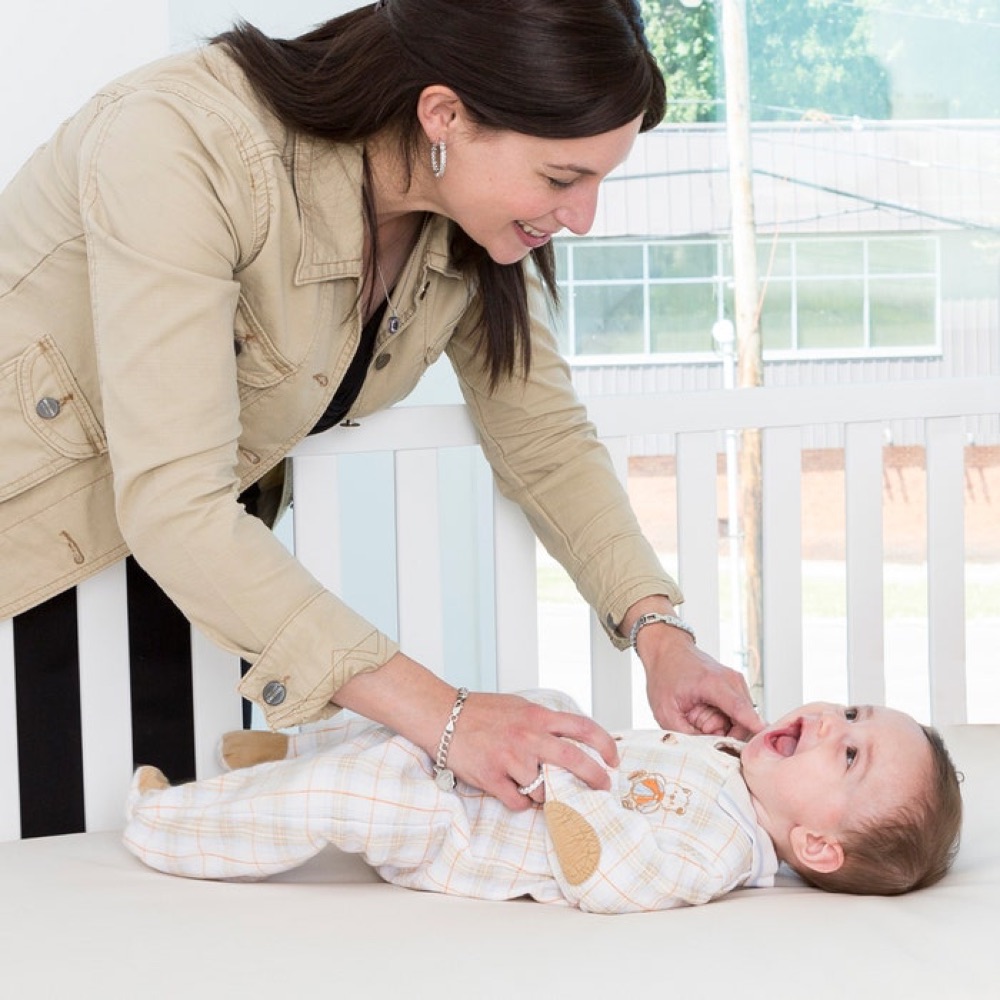 Best for a Crib
Waterproof where a baby needs it, without the soft plasticized film that produced the study’s worst phthalate numbers.
Why it fits this problem: organic cotton over a coil core with a food-grade polyethylene waterproof layer, and no added flame-retardant chemistry.
Check Today’s Price on Amazon →Amazon prices change daily — tap to see today’s price and any active discount.
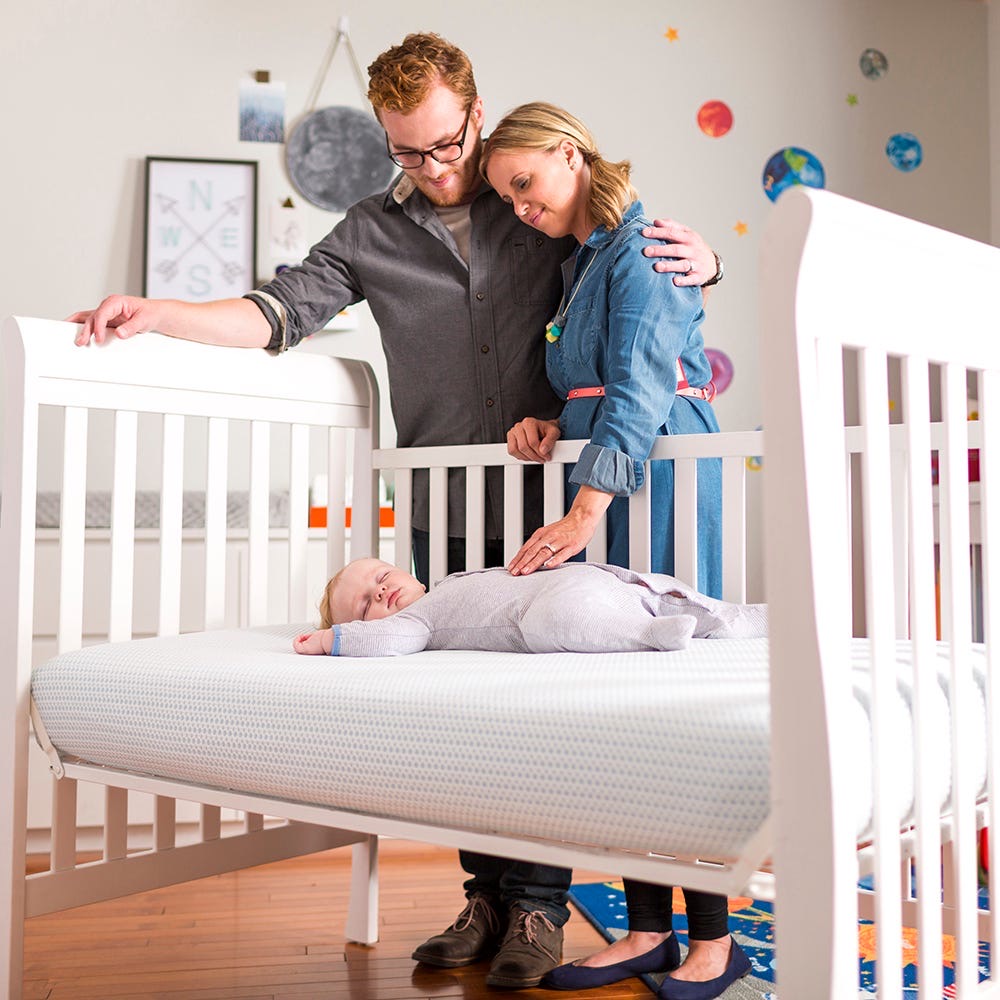 Best Value
The surface a child actually touches goes in the wash — the barrier the researchers recommended, built into the mattress.
Why it fits this problem: no PVC cover, food-grade waterproofing, and a top layer that can be laundered rather than only wiped.
Check Today’s Price on Amazon →Amazon prices change daily — tap to see today’s price and any active discount.
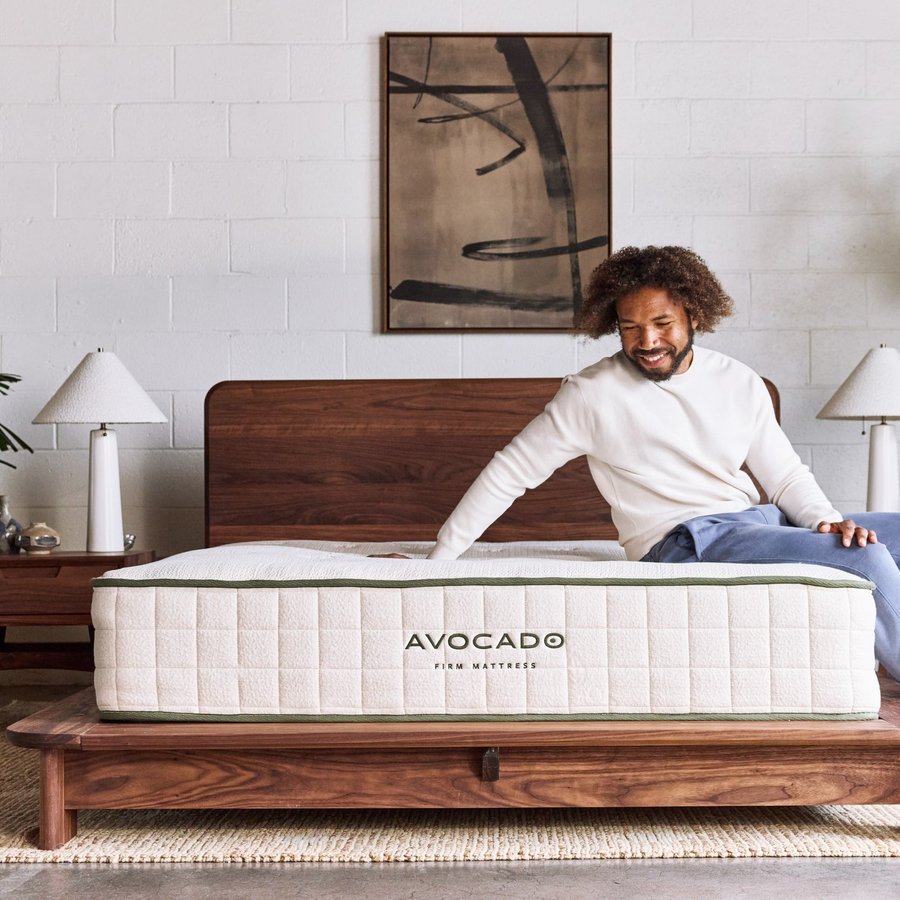 Best Adult Bed
Wool passes the flammability standard on its own, so the chemistry the study found at 1–3% by weight never has to be added.
Why it fits this problem: certified organic latex, cotton and wool over coils, with no polyurethane foam core and no added flame-retardant treatment.
Check Today’s Price on Amazon →Amazon prices change daily — tap to see today’s price and any active discount.
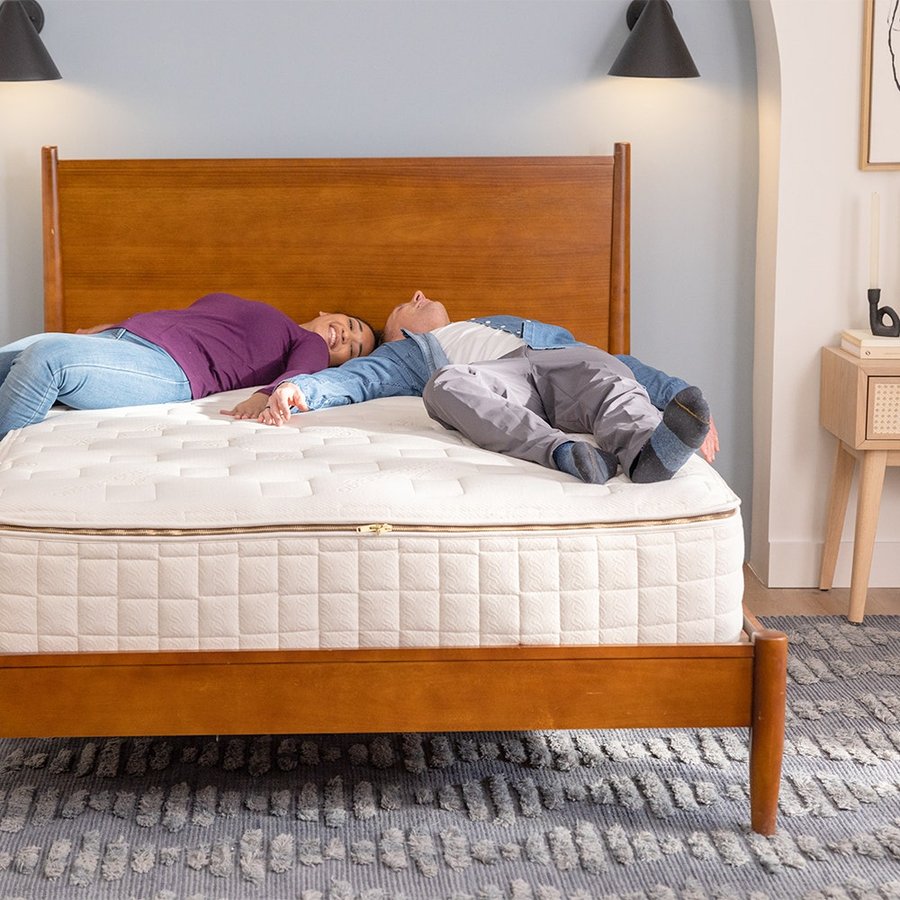 Best Customizable
A mattress you repair rather than replace — relevant here because the study found older mattresses carrying higher phthalate loads.
Why it fits this problem: organic cotton and wool over encased coils, no added flame-retardant chemistry, and individually replaceable comfort layers.
Check Today’s Price on Amazon →Amazon prices change daily — tap to see today’s price and any active discount.
The honest verdict
Sixteen mattresses is a small sample, they were bought in Canada, and neither paper measured a health outcome in a single child. Those are real limits and we will state them plainly rather than bury them. What the studies do establish is narrower and harder to argue with: these compounds are present in new children’s mattresses at percent-level concentrations, several exceed limits that already exist for other children’s products, one is outright prohibited, and emission rises substantially under exactly the conditions a child creates. The authors’ conclusion was a call for stricter regulation and better manufacturer oversight, not a call to panic, and that is the right reading.
For a household, the proportionate response is the cheap end first. Wash the bedding, clear the bed, skip the dyed novelty sheets. Replace the mattress on its own schedule, and when that day comes, spend the money on construction that never needed the additives — which is the same advice our non-toxic mattress guide reaches from the product side, and which pairs with the organic cotton sheets guide for the barrier layer and the bedroom air purifier guide for the particles filtration genuinely does catch.
The bedroom is the room you spend most hours in
Frequently Asked Questions
In the 2025 University of Toronto analysis of 16 new children's mattresses, 21 semivolatile organic compounds were detected across four classes: ortho-phthalate plasticizers (including DnBP, DiBP, DEHP, DnOP and DiNP), organophosphate ester flame retardants (including TCEP, TCPP, TDCiPP, TEHP and TBOEP), benzophenone UV filters and salicylates. Phthalates soften the plastic cover, flame retardants are added to foam, and UV filters and salicylates are used to stop dyes and polymers degrading in light.
Yes, and the effect is large. The researchers tested eight mattresses three ways: at room temperature, at a child's body temperature of 37.5 degrees C, and at body temperature with 7.5 kg of weight applied. Twelve of the 45 compounds measured were emitted at room temperature, 20 at body temperature, and all 21 under heat plus weight. Median TCPP emissions rose from 74 to 380 picograms per square centimeter per hour once the surface was warmed - roughly a five-fold increase.
It measured worse. In the companion study, passive samplers were placed in 25 real bedrooms of children aged 6 months to 4 years in Toronto and Ottawa. Twenty-eight of 51 target compounds were found in the general bedroom air, 31 in the sleeping microenvironment immediately around the child, and 30 in the mattresses themselves. The authors reported that concentrations in the sleeping microenvironment exceeded bedroom air concentrations, which they read as elevated exposure during sleep.
No, and the distinction matters. Microplastics are solid fragments of plastic. The compounds measured in these mattress studies are semivolatile chemicals that were mixed into the plastic rather than bonded to it, so they slowly migrate out of the foam and cover into the air and dust. They are a plastic-related exposure that travels a different route. Synthetic bedding and mattress covers can shed polyester fibers as well, but fiber shedding is not what these two papers measured.
One exceeded a hard limit. The Canadian regulatory ceiling for di-n-butyl phthalate in children's mattresses is 0.1% by weight, and one cover measured 0.22%. Five more exceeded 0.1% for DiBP, DnOP or DiNP, which are capped in children's toys but not in mattresses. One mattress contained TCEP, a flame retardant prohibited in Canada since 2014, at 9,000 mg/kg in the foam - a level the authors noted was higher than all previously published data.
The researchers' own advice was practical rather than alarming: wash bedding and sleepwear often, because clean fabric acts as a physical barrier between the child and the mattress surface; keep the bed clear of surplus pillows, blankets and stuffed toys, each of which holds and re-releases these compounds; and prefer undyed or neutral fabrics, since UV filters are added to protect dyes. When the mattress itself is being replaced, choosing one made from materials that do not need plasticizers or added flame retardants removes the source rather than managing it.
Sources
- Vaezafshar, S., Wolk, S., Simpson, K., Akhbarizadeh, R., Blum, A., Jantunen, L.M., Diamond, M.L. (2025). “Are Sleeping Children Exposed to Plasticizers, Flame Retardants, and UV-Filters from Their Mattresses?” Environmental Science & Technology 59(16): 7909–7918. doi.org/10.1021/acs.est.5c03560 — also full text on PubMed Central.
- Vaezafshar, S., Wolk, S., Arrandale, V.H., Sühring, R., Phipps, E., Jantunen, L.M., Diamond, M.L. (2025). “Young Children’s Exposure to Chemicals of Concern in Their Sleeping Environment: An In-Home Study.” Environmental Science & Technology Letters 12(5): 468–475. doi.org/10.1021/acs.estlett.5c00051 — also full text on PubMed Central.
- Environmental Working Group (2025). “Two new studies find harmful chemicals in children’s bedrooms and mattresses.” ewg.org