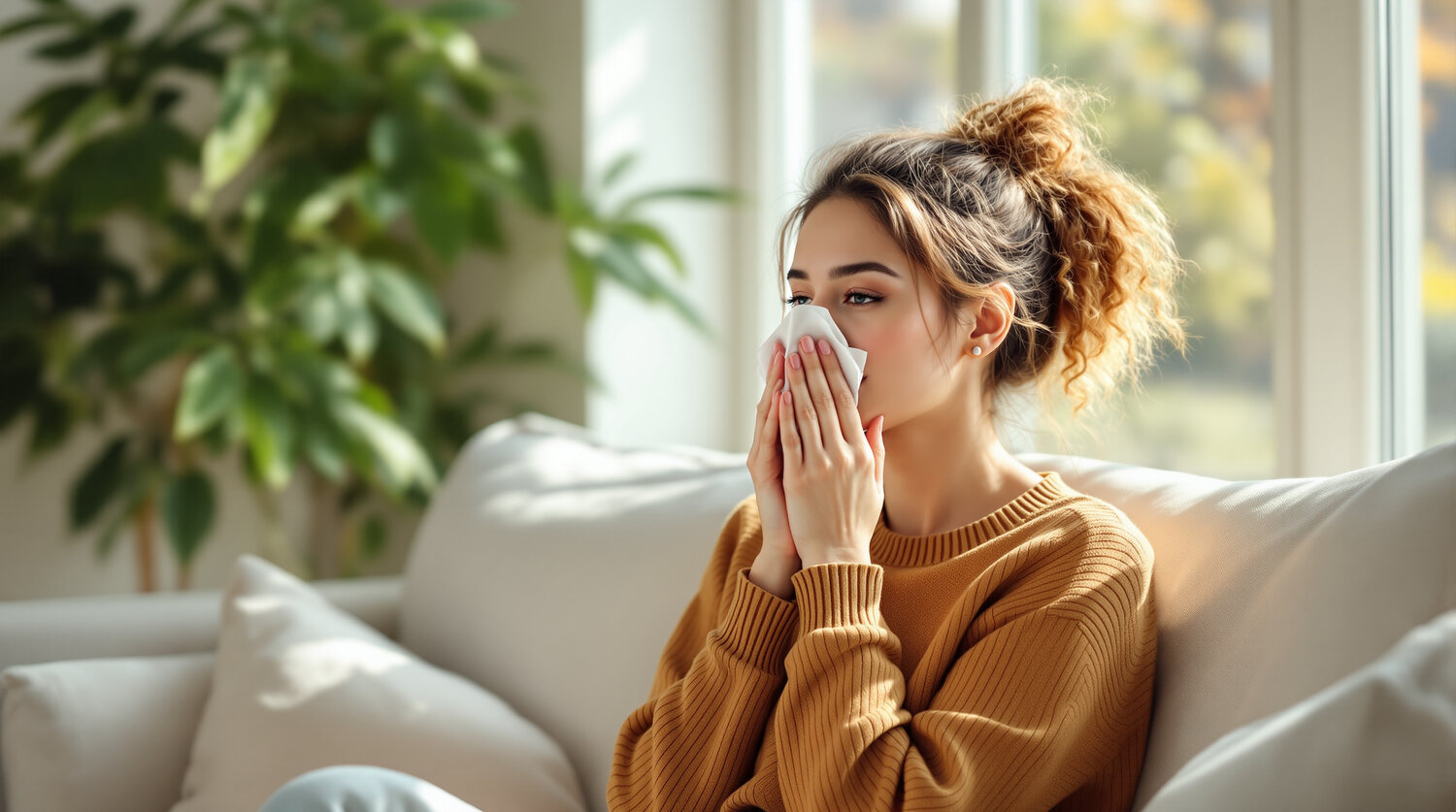
Microplastics are inhaled and swallowed every day and reach human tissues, and in the lab they can switch on the immune and inflammatory pathways behind allergic reactions — but there is no proof that everyday exposure causes allergies. The strongest human signal is occupational: workers breathing high levels of synthetic fibre develop airway inflammation, and allergy-prone (atopic) individuals appear most susceptible. Animal studies show microplastics can worsen allergic airway inflammation, and decades of air-pollution research show inhaled particles aggravate allergies in general. What that adds up to in 2026 is a credible, actively studied link — not proof that plastic particles are causing allergies in a given person. None of it is a reason to panic, but it does make a few focused changes worthwhile: a true-HEPA air purifier in the bedroom, fewer synthetic textiles, and regular vacuuming cut most of your controllable exposure — and the same steps remove the pollen, dust and dander that are bigger, better-proven allergy triggers.
"Microplastics and allergies" is a fast-rising search, and for a fair reason: allergic conditions affect hundreds of millions of people and have been rising for decades, they are shaped by what we breathe, eat and touch, and a brand-new, near-universal exposure feeding into them is a genuinely important question. It is also one of the easiest topics to over-read, because "activates an inflammatory pathway in a dish" quietly becomes "microplastics are giving you allergies" as the claim travels across the internet.
This guide lays out what the science actually shows, and — just as importantly — what it does not. The goal is to separate the established findings (particles are inhaled and swallowed, reach human tissue, and can trigger immune and inflammatory responses in the lab) from the still-emerging leap (that ordinary household exposure causes or worsens allergies in the general population). It is the same evidence-first approach we take in microplastics and the immune system and microplastics and inflammation, applied to allergy itself.
The bottom line up front: the evidence that microplastics are inhaled, swallowed and reach human tissue is solid, the mechanism for immune activation is biologically plausible, the occupational evidence that high-dose fibre exposure inflames the airways is real, and animal studies that particles worsen allergic inflammation are consistent — but "microplastics are causing your allergies" is not an established human fact. Because most inhaled particles come from indoor air, you can cut a lot of your exposure with a short list of changes, which we lay out below and in how to avoid microplastics.
Can microplastics cause allergies?
There is no proof that everyday microplastic exposure causes allergies, and anyone who tells you otherwise is ahead of the science. What the evidence does support is narrower and still worth taking seriously: the particles are inhaled and swallowed, they reach human tissue, they can activate immune and inflammatory pathways in the lab, and in certain workplaces high-dose fibre exposure clearly inflames the airways. That is a plausible, actively studied link — not a demonstrated cause of the allergies people develop at home.
The distinction matters, because "allergy" and "inflammation" are not the same claim. Showing that a particle switches on an inflammatory sensor in a dish, or that factory workers breathing clouds of synthetic fibre develop airway disease, is real and important — but it is a different thing from showing that the much lower levels in an ordinary living room cause hay fever, eczema or a food allergy in the general population. We take the same evidence-first view in microplastics and the immune system.
How could microplastics affect your immune system?
By being treated as foreign particles. When micro- and nanoplastics get into the body, immune cells can take them up and react, and laboratory studies show the particles can switch on the NLRP3 inflammasome — a molecular alarm that drives the release of pro-inflammatory signals. That same inflammatory machinery sits upstream of many allergic responses, which is why the mechanism is plausible.
A 2023 review examined exactly this pathway, concluding that micro- and nanoplastic particles can activate the NLRP3 inflammasome and provoke pro-inflammatory cytokine release, while cautioning that studies directly mapping the pathway are still relatively rare (Busch et al., Frontiers in Immunology, 2023). There is a second route that matters for allergy: barrier disruption. A review of immunotoxicity found that in animals, nano- and microplastics can impair the gut's inflammatory balance and disrupt epithelial permeability (Hirt & Body-Malapel, Particle and Fibre Toxicology, 2020). A leakier gut or airway lining is one of the conditions that makes allergic sensitisation more likely in the first place — the body meets more of the outside world than it should. For how this fits the bigger picture, see microplastics and inflammation.
How do microplastics get into your body?
You breathe them in and you swallow them. Synthetic clothing, carpets, upholstery and household dust constantly shed tiny plastic fibres that become airborne, and indoor air generally carries more of them than outdoor air because a home is an enclosed box full of plastic textiles. Air sampled at the breathing zone, right where you draw breath, confirms the particles are in the air you take in (Vianello et al., Environment International, 2019).
Those inhaled particles do not just pass through. In 2021, researchers recovered microplastics from human lung tissue taken during surgery (Amato-Lourenço et al., Journal of Hazardous Materials, 2021), and in 2022 a UK team found microplastics in 11 of 13 lung-tissue samples, including in the deep lower regions of the lung where the airways are smallest and most reactive (Jenner et al., Science of the Total Environment, 2022). That is the pivotal point for allergy: the particles are not a theoretical exposure — they physically reach the airway and gut tissues where allergic inflammation plays out. For where that household load comes from, see microplastics in indoor air and microplastics in household dust.

What does the research actually show about allergies?
Several strands of evidence point the same direction without closing the case. The strongest in humans is occupational. Long before "microplastics" was a household word, doctors documented that workers in synthetic-textile and flocking plants — breathing high concentrations of nylon, polyester and acrylic fibre — developed coughing, breathlessness and airway inflammation. A 2018 review pulled this history together, concluding that inhaled plastic fibres can provoke airway and interstitial inflammatory responses, and that susceptible individuals may be most at risk (Prata, Environmental Pollution, 2018).
The second strand is mechanistic. The World Health Organization's 2022 review concluded that the health effects of inhaled particles are assumed, by analogy with other insoluble particles, to include oxidative stress and an inflammatory response — biologically plausible, but not yet demonstrated for plastics at real-world doses (WHO, 2022). The third strand is animal work: controlled studies find that polystyrene and fibrous microplastics can intensify allergic airway inflammation, mucus production and airway reactivity in mice, with the effect strongest for smaller particles and when combined with a known allergen. Those are deliberately high exposures, not proof for a person, but they are consistent and they move in one direction — and "atopic" (allergy-prone) animals and people are exactly who the signals cluster around.
Can microplastics make existing allergies or asthma worse?
This is where the concern is most reasonable. We already know, from decades of air-quality research, that inhaling fine particulate matter aggravates allergic airway disease: the US Environmental Protection Agency lists worsened asthma, more attacks and reduced lung function among the documented effects of breathing airborne particles (US EPA, Particulate Matter Pollution). Microplastics are simply another kind of inhalable particle — often fibrous, sometimes carrying chemical additives — added on top of that established burden.
That framing keeps the claim honest in both directions. It is credible that airborne microplastics add to the particle load an already-sensitised airway has to cope with, because that is what particles do. It is not established that microplastics specifically are a major, independent driver of allergic disease, because no study has isolated them from everything else in the air and measured their effect in people. The right conclusion is neither "plastic is giving everyone allergies" nor "it's irrelevant" — it is that reducing airborne particles is sensible, and microplastics are part of what you reduce. If you have allergic asthma, pair this with microplastics and asthma.
Be wary of products or posts that promise to "detox microplastics," "cure plastic-driven allergies," or measure your personal "microplastic allergy level." There is no validated test for that and no proven detox. If you have allergies or asthma, your antihistamine, inhaler, action plan and doctor come first — cutting exposure is a low-cost addition on top of real treatment, never a replacement for it.
Can microplastics cause skin allergies or contact reactions?
Here the clearest risk is not the plastic particle itself but the chemical additives it can carry. Certain dyes, bisphenols and plasticisers used in synthetic materials are recognised contact allergens and can provoke irritation or allergic contact dermatitis in sensitive people. Synthetic fabrics also trap heat and moisture against the skin, which can aggravate eczema — a mechanical and chemical effect, not proof that plastic particles themselves breach healthy skin.
So the honest read on skin is narrower than the headlines: there is no good evidence that microplastic particles cause allergies by passing through intact skin, but the additives and the fabric behaviour are real, familiar triggers for people prone to dermatitis. The sensible focus is reducing contact with the additives and favouring breathable natural fibres next to the skin — the same move that helps with airborne exposure. More on fabric choices is in microplastics in clothing and the best organic alternatives.
Who should pay the most attention?
If you are already atopic — hay fever, eczema, allergic asthma or food allergies — or you are caring for an allergy-prone child, the case for lowering exposure is strongest. Not because the particles are proven to worsen your condition, but because the early signals cluster in exactly the airways and immune pathways you are already managing, and reducing a plausible irritant is a low-cost, low-risk addition. Children matter especially: they breathe faster, spend more time close to the floor where dust settles, and have developing immune systems, which is why microplastics in children is worth reading too.
People with heavy indoor exposure — a home full of synthetic carpet and upholstery, a lot of drying synthetic laundry, or a dusty workspace — also have more to gain from a few changes. The biggest difference between two otherwise similar homes is usually ventilation and textiles, not luck: a well-aired home with a running air purifier and mostly natural fibres carries a far lighter particle load than a sealed, synthetic, rarely-vacuumed one.
How can you reduce microplastic exposure if you have allergies?
You cannot reach zero, and you do not need to. The aim is to cut the big, controllable part of what you breathe and swallow, with changes that fit real life. Because most inhaled particles come from indoor air, start there — then handle the particles you swallow as a second front.
- Run a true-HEPA air purifier where you sleep. Airborne microplastic fibres sit in the size range HEPA is built to capture, and the same filter removes the pollen, dust and dander that trigger most allergies; see the best air purifiers for allergies and for dust.
- Vacuum and damp-dust regularly. Use a vacuum with a HEPA filter and wipe surfaces with a damp cloth rather than dry-dusting, which just launches particles and allergens back into the air — the mechanics are covered in microplastics in household dust.
- Favour natural fibres over synthetics. Cotton, wool and linen clothing, bedding and rugs shed far less plastic fibre than polyester and acrylic, and breathe better against allergy-prone skin; see microplastics in clothing and the best organic alternatives.
- Ventilate, especially when it is dusty. Open windows when you vacuum, cook or dry laundry indoors; fresh air dilutes the particle and allergen load the fastest and costs nothing.
- Handle the particles you swallow too. Filter your tap water with one of the best water filters for microplastics, don't heat food in plastic, and store food in glass — the full plan is in how to avoid microplastics.
The honest verdict
Microplastics and allergies are genuinely connected in the science — and the pieces of that link stand on different footing. That the particles are inhaled, swallowed and reach human tissue is well established; that they can switch on immune and inflammatory pathways in the lab is documented; that high-dose occupational fibre exposure inflames the airways is well documented; that microplastics worsen allergic inflammation in animals is consistent. What is not established is that ordinary household exposure causes or meaningfully worsens allergies in the general population. That combination argues for prudent, low-cost prevention now, not panic and not dismissal.
If you do just a few things, make them the highest-payoff ones: a true-HEPA purifier in the bedroom, fewer synthetic textiles, and regular vacuuming and ventilation. They cut the particles that actually reach your airways — and because they also remove ordinary allergy triggers like pollen, dust and dander, they are worth doing whether or not the microplastic link is ever proven to drive disease. For the full picture, see microplastics in the human body.
Clear the air you actually breathe
You can't reach zero, but you can remove most of your indoor exposure. These guides show the devices and swaps that matter most — starting with your bedroom air and your textiles.
Frequently Asked Questions
There is no proof that everyday microplastic exposure causes allergies in the general population. What the evidence does show is biologically plausible and worth taking seriously: microplastics are inhaled and swallowed, they reach human tissues, and in the lab they can activate the same immune and inflammatory pathways that drive allergic reactions, including the NLRP3 inflammasome. The strongest human signal is occupational, where workers breathing high levels of synthetic fibre develop airway inflammation, and atopic or allergy-prone individuals appear most susceptible. As of 2026 that adds up to a credible, actively studied link, not established proof that plastic particles cause allergies in a given person.
In laboratory and animal studies, micro- and nanoplastic particles can be taken up by immune cells and trigger an inflammatory response, including activation of the NLRP3 inflammasome and release of pro-inflammatory cytokines. They can also disrupt the epithelial barrier in the gut and airways, and a leakier barrier is one of the conditions that makes allergic sensitisation more likely. These are mostly high-dose cell and animal findings rather than proof for people at ordinary exposures, but they are consistent and they point one direction.
Possibly, and this is where the concern is most reasonable. Decades of air-pollution research show inhaled particulate matter aggravates allergic airway disease, and microplastics are a type of inhalable particle. Animal studies find that polystyrene and fibrous microplastics can intensify allergic airway inflammation, mucus production and airway reactivity, especially alongside a known allergen. These are animal doses, not proof for humans, but they justify reducing exposure as a precaution if you already have allergies or asthma.
The clearest skin risk is not the plastic particle itself but the chemical additives it can carry, such as certain dyes, bisphenols and plasticisers, which are recognised contact allergens and can provoke irritation or allergic contact dermatitis in sensitive people. Synthetic fabrics also trap heat and moisture, which can worsen eczema. There is no good evidence that microplastic particles cause skin allergies through intact skin on their own, so the sensible focus is on reducing contact with the additives and choosing breathable natural fibres.
A true-HEPA air purifier is the single most useful device, because airborne microplastic fibres fall in the particle-size range a HEPA filter is built to capture, and the same filtration also removes the pollen, dust and dander that trigger most allergies. Pair it with simple habits: vacuum with a HEPA vacuum, cut synthetic textiles and soft furnishings where you can, ventilate when cooking, and keep humidity moderate. None of this needs to be extreme to meaningfully lower the particle load in the room you spend the most time in.
Focus on indoor air, where most inhaled particles come from: run a true-HEPA air purifier in your bedroom, vacuum and damp-dust regularly, choose natural-fibre clothing and bedding over synthetics, and ventilate the home. Because you also swallow microplastics, filter your tap water, avoid heating food in plastic, and store food in glass. These few changes remove most of a person's controllable exposure without a plastic-free home, and they also cut the ordinary allergens that are a bigger, better-proven trigger.
Sources
- World Health Organization. "Dietary and inhalation exposure to nano- and microplastic particles and potential implications for human health," 2022, who.int. Concludes that nano- and microplastics are widespread in air, water and food, and that the health effects of inhaled particles are assumed, by analogy with other insoluble particles, to include oxidative stress and an inflammatory response — while noting the available data are of limited use for a full risk assessment.
- Busch M, et al. "NLRP3 inflammasome as a sensor of micro- and nanoplastics immunotoxicity." Frontiers in Immunology, 2023, ncbi.nlm.nih.gov/pmc/articles/PMC10151538. Reviews how micro- and nanoplastic particles can activate the NLRP3 inflammasome and drive pro-inflammatory cytokine release, while noting that studies directly delineating this pathway remain relatively rare.
- Hirt N, Body-Malapel M. "Immunotoxicity and intestinal effects of nano- and microplastics: a review of the literature." Particle and Fibre Toxicology, 2020;17:57, ncbi.nlm.nih.gov/pmc/articles/PMC7661204. Reviews animal studies showing nano- and microplastics can impair the gut's oxidative and inflammatory balance, disrupt epithelial permeability and alter immune balance, while noting that human-relevant evidence is still scarce.
- Prata JC. "Airborne microplastics: Consequences to human health?" Environmental Pollution, 2018;234:115–126, pubmed.ncbi.nlm.nih.gov/29172041. Reviews the respiratory evidence, noting that workers exposed to high levels of airborne synthetic fibres developed dyspnoea from airway and interstitial inflammatory responses, and that susceptible individuals may be most at risk even at lower environmental concentrations.
- Jenner LC, et al. "Detection of microplastics in human lung tissue using μFTIR spectroscopy." Science of the Total Environment, 2022;831:154907, doi.org/10.1016/j.scitotenv.2022.154907. Found microplastics in 11 of 13 human lung-tissue samples, including polypropylene and PET fibres in the lower regions of the lung, confirming that inhaled particles reach deep lung tissue.
- Vianello A, et al. "Simulating human exposure to indoor airborne microplastics using a Breathing Thermal Manikin." Environment International, 2019;130:104883, doi.org/10.1016/j.envint.2019.105314. Measured microplastics in the breathing zone of indoor air, showing that people inhale airborne microplastic particles in ordinary indoor settings.
- Amato-Lourenço LF, et al. "Presence of airborne microplastics in human lung tissue." Journal of Hazardous Materials, 2021;416:126124, pubmed.ncbi.nlm.nih.gov/34492918. Detected microplastic particles and fibres in human lung-tissue samples obtained during surgery, demonstrating that inhaled microplastics lodge in the respiratory tract.
- US Environmental Protection Agency. "Health and Environmental Effects of Particulate Matter (PM)," epa.gov. Documents that inhaling fine particulate matter aggravates asthma and allergic airway disease, triggers attacks and reduces lung function — the established air-pollution context into which airborne microplastics add another inhalable particle.