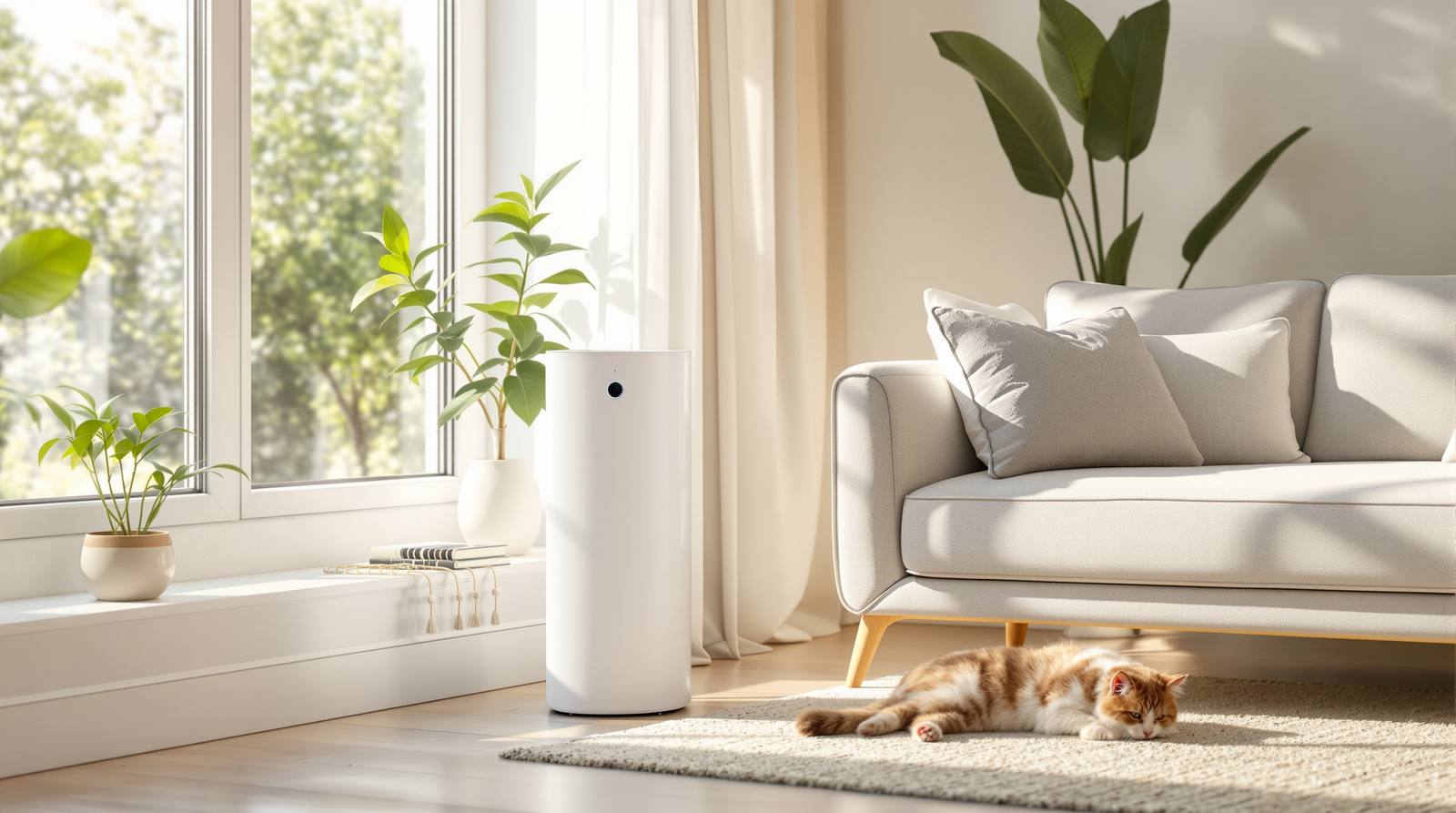
A True HEPA air purifier is the most reliable way to lower airborne allergens at home. HEPA captures at least 99.97% of particles down to 0.3 microns — the size range of pollen, dust-mite debris, mold spores and pet dander — and the US EPA confirms that HEPA cleaners measurably reduce indoor allergens. What decides whether one actually eases your symptoms is sizing: a Clean Air Delivery Rate (CADR) matched to your room so it manages four to five air changes per hour. Our best overall pick is the medical-grade IQAir HealthPro Plus; for a shedding pet the Blueair Blue Pure 211+ Auto has a washable pre-filter for hair; on a budget, the near-silent Levoit Core 400S is the best bedroom unit. Skip ozone "air cleaners", which the EPA warns can irritate the lungs.
More than a quarter of US adults deal with a seasonal allergy, and for most of them the worst exposure happens indoors — where pollen tracks in on clothes and pets, dust mites live in bedding, mold grows in damp corners, and dander from a cat or dog stays airborne for hours. Because Americans spend roughly 90% of their time inside, cleaning the air in the rooms where you sleep and relax is one of the highest-leverage things an allergy sufferer can do. A good air purifier does not replace vacuuming or washing bedding, but it removes a large share of what those chores leave behind.
Here's the spec that trips up most buyers: it isn't the fancy sensor or the app — it's whether the unit uses a genuine True HEPA filter and whether it moves enough air for your room. A True HEPA filter is what physically traps allergens; a "HEPA-type" or "99% at 2 microns" filter lets the finest, most irritating particles through. And even a perfect filter does nothing if the fan can't cycle your room's whole volume of air several times an hour. That's why our ranking is built around HEPA grade and CADR, not marketing headlines.
Compare all 5 picks
Every pick side by side — tap a name to jump to the full review, or check today's price.
| Pick | Rating | Why it wins | |
|---|---|---|---|
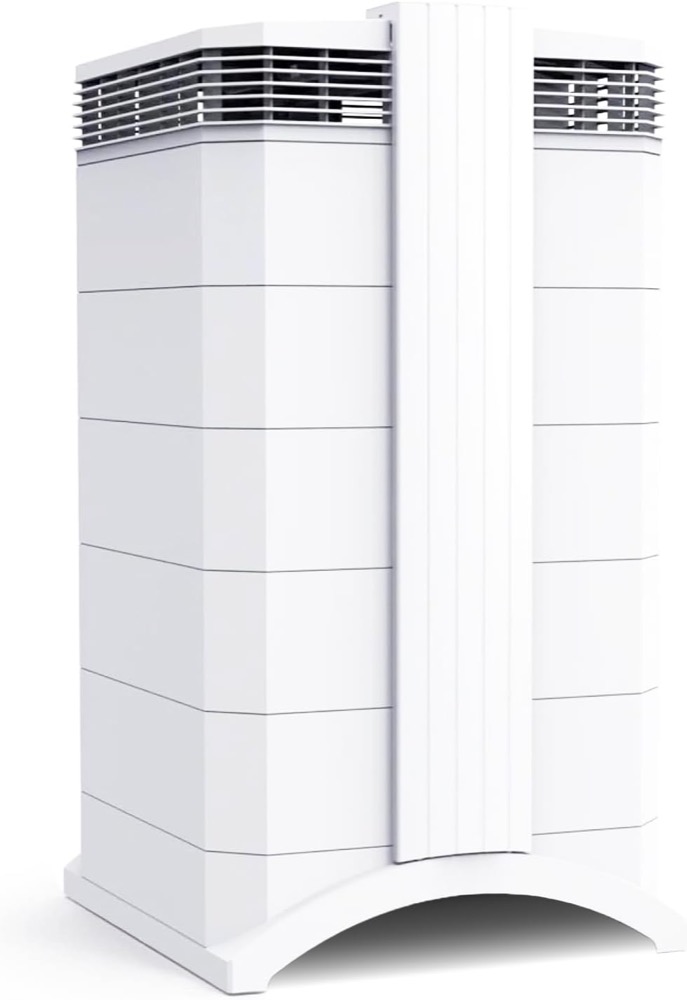 Best OverallIQAir HealthPro Plus |
4.6out of 5 | HyperHEPA 0.003µmMedical-Grade |
Check price → |
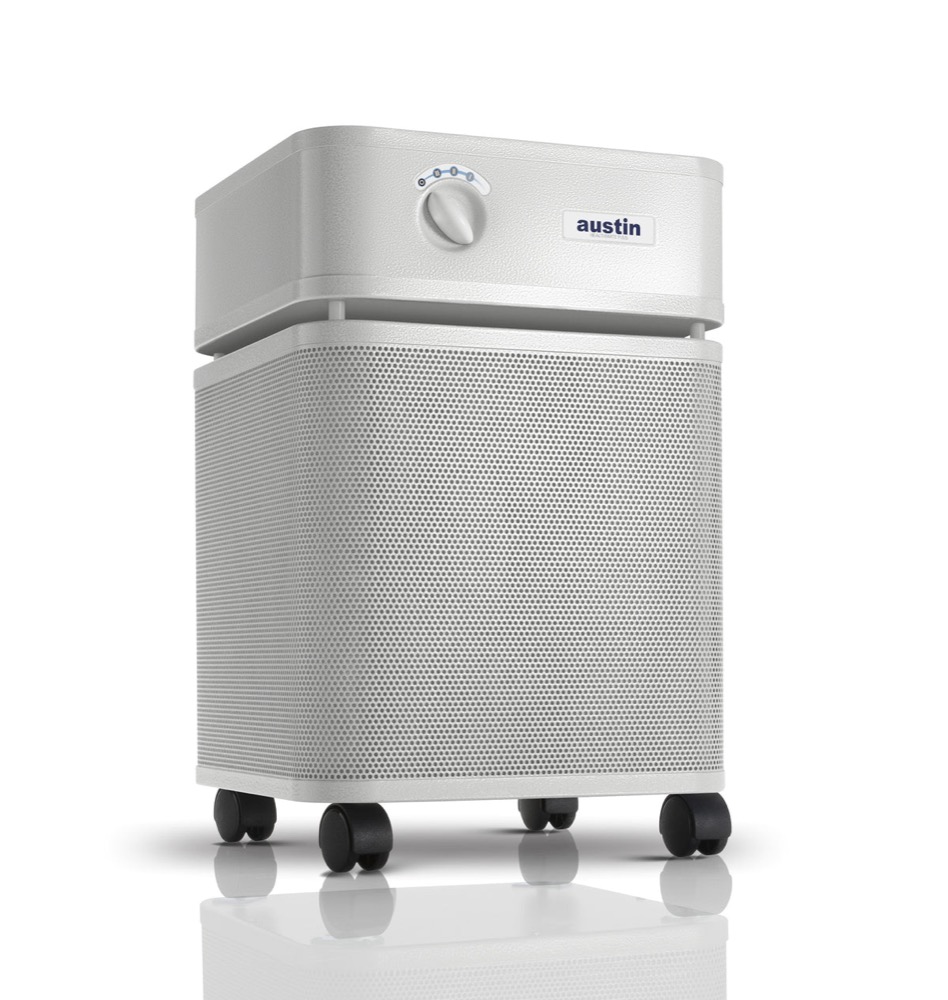 Best for Pet OdorAustin Air HealthMate Plus |
4.8out of 5 | True HEPA 0.3µm15 lb Carbon + KI |
Check price → |
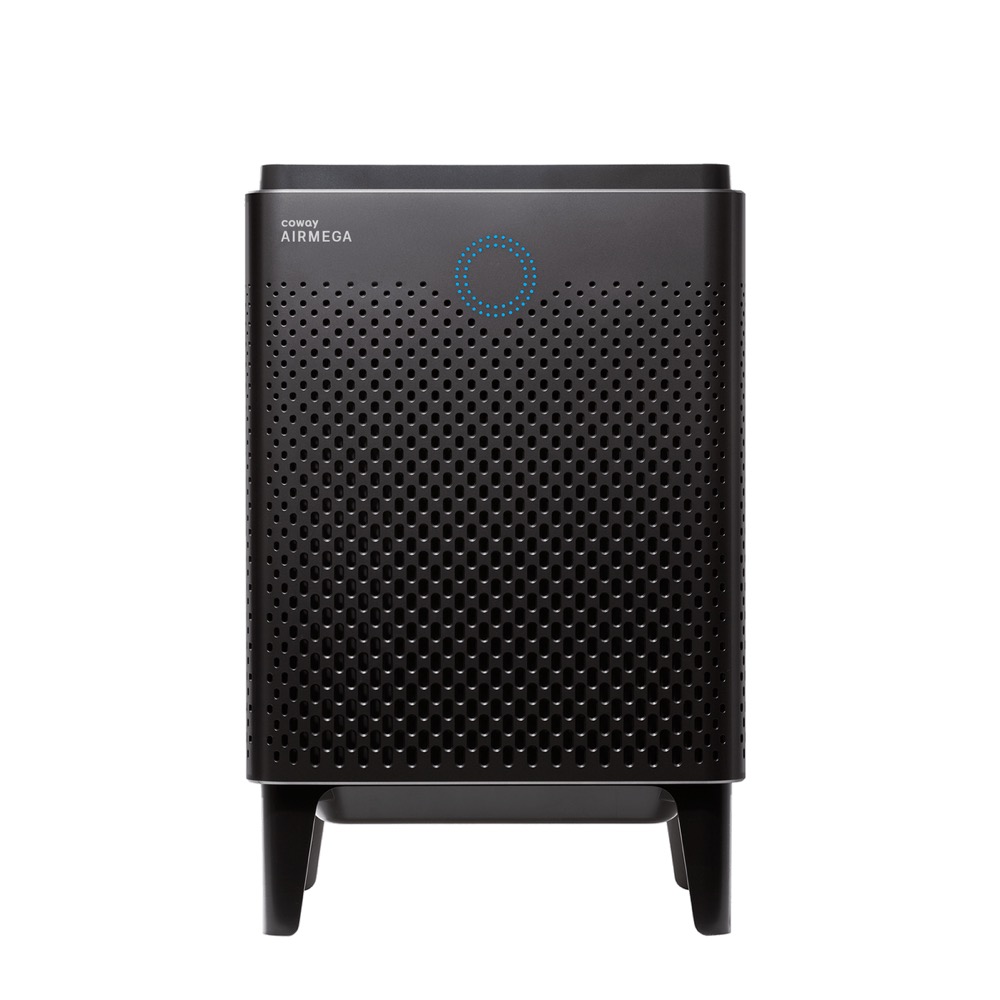 Best for Large RoomsCoway Airmega 400 |
4.4out of 5 | High CADRDual True HEPA |
Check price → |
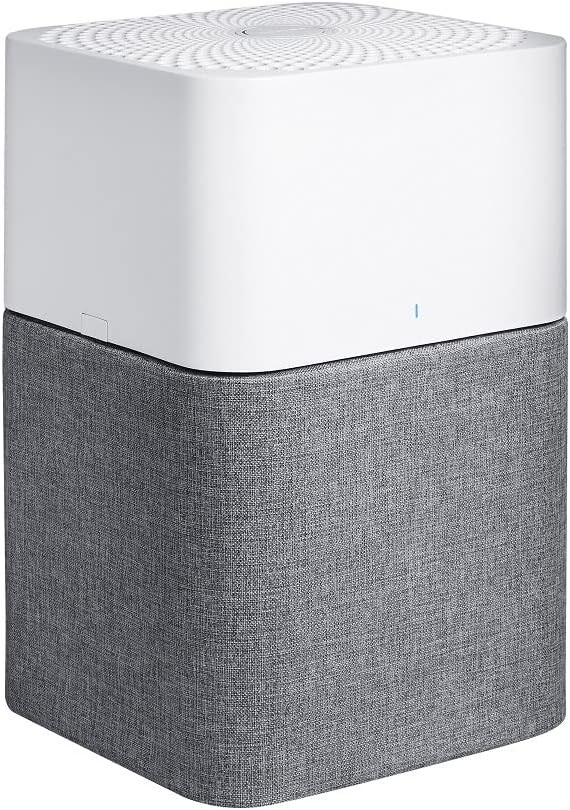 Best for Pet HomesBlueair Blue Pure 211+ Auto |
4.4out of 5 | HEPASilent 0.1µmEnergy Star |
Check price → |
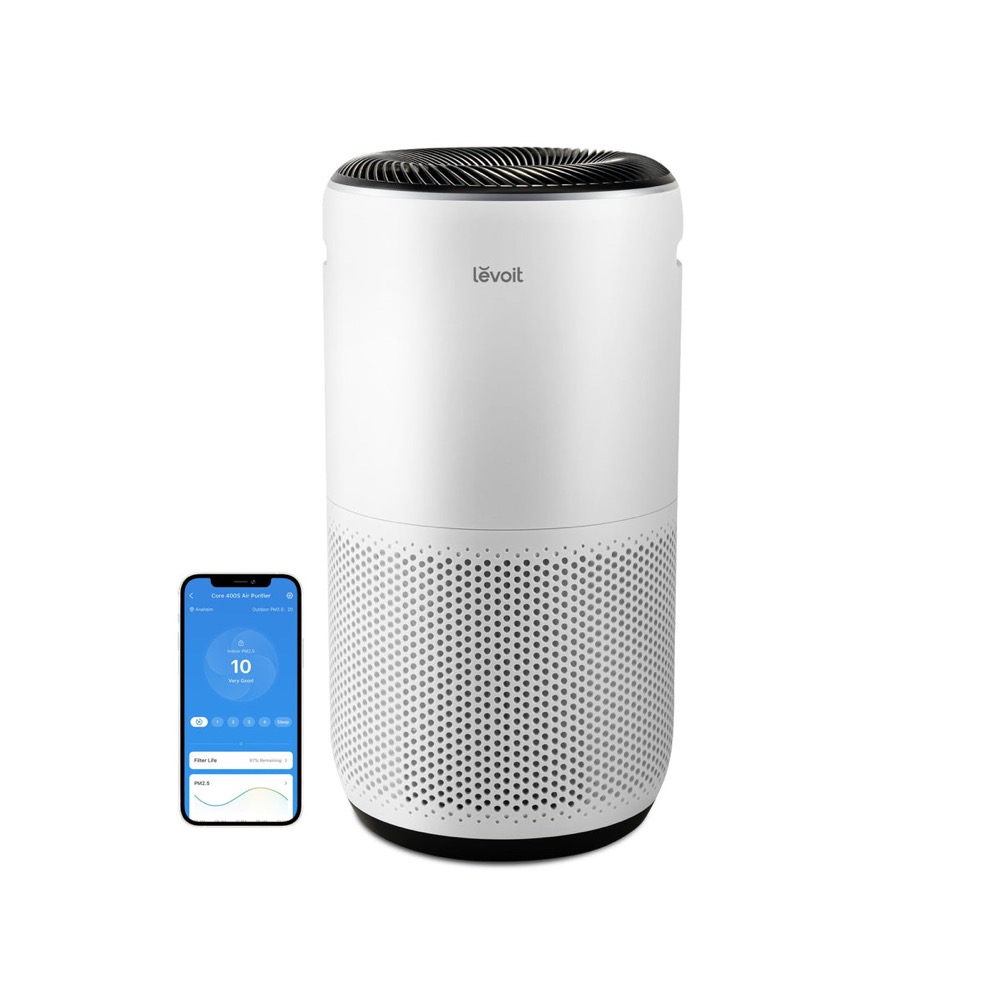 Best BudgetLevoit Core 400S |
4.6out of 5 | True HEPA H13Carbon Layer |
Check price → |
How to Read the Two Specs That Actually Matter
Two numbers determine whether a purifier does anything for your allergies: the filter grade and the clean-air delivery rate. Get those right and the rest — apps, colors, sleep timers — is just convenience.
Filter grade: insist on True HEPA (often labeled H13). True HEPA is independently tested to trap at least 99.97% of particles at 0.3 microns, which is the hardest size to catch and the range that includes fine dander and mold spores. Watch for weasel words: "HEPA-type," "HEPA-like," or "99% at 2.0 microns" filters skip the exact fine-particle range that keeps allergy sufferers reacting. A carbon layer is a useful bonus for pet and litter odor, but the HEPA stage is what removes the allergen itself.
Clean Air Delivery Rate (CADR): this is how fast the unit filters air, and it has to match your room. Allergy and asthma specialists recommend at least four to five air changes per hour — the purifier cycling the room's entire volume of air four or five times every hour. A rough rule: pick a particle/pollen CADR (in cubic feet per minute) of at least two-thirds of the room's square footage, then size up so you can run it on a lower, quieter setting. An underpowered unit in a big room is the single most common reason a purifier "doesn't seem to help."
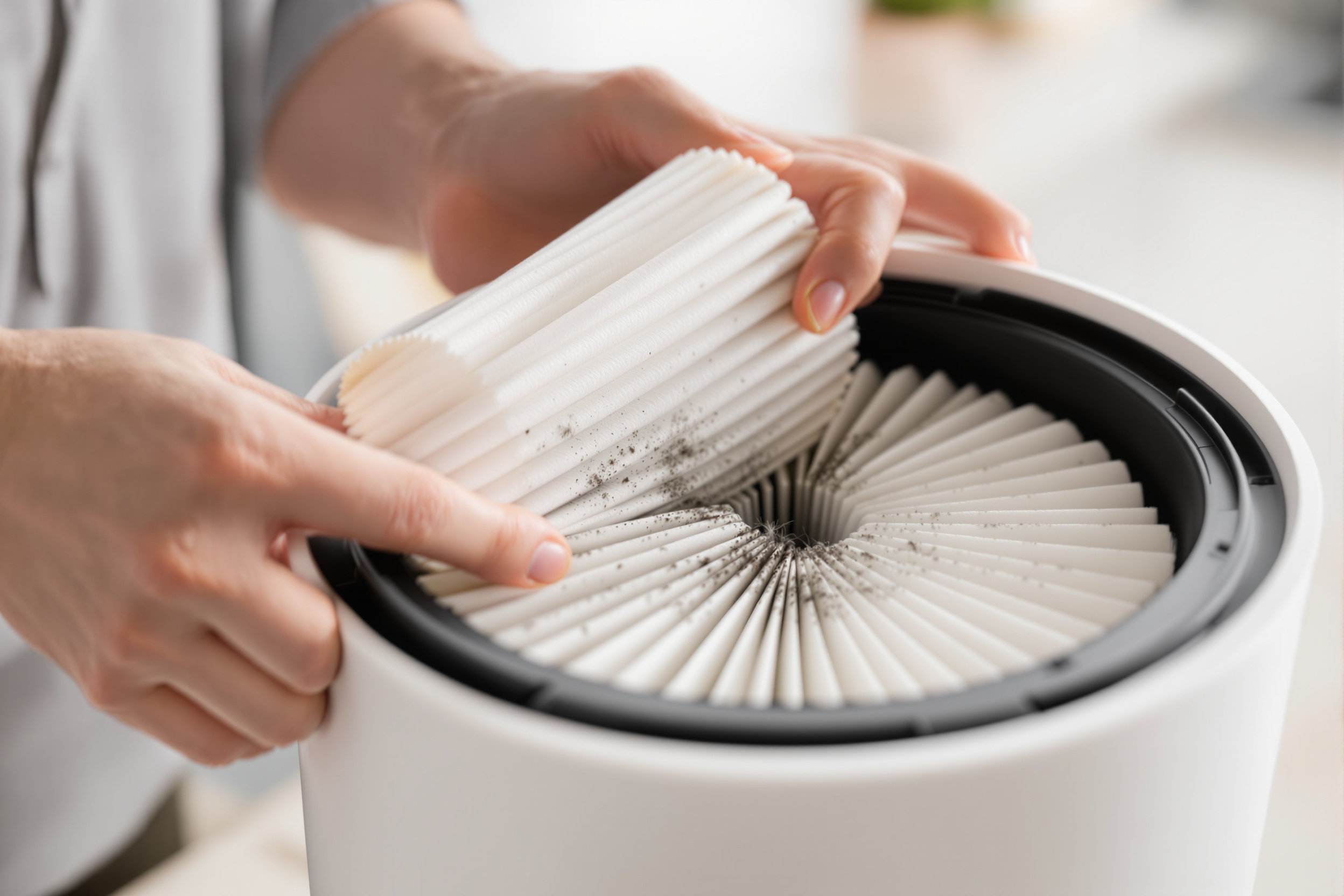
"HEPA-type" filters sound the same but skip the certified 0.3-micron test, letting the finest allergens through. Ionizers charge particles so they settle on surfaces instead of removing them — and many emit trace ozone. Ozone generators are the worst option: ozone is a lung irritant, especially for anyone with asthma, and the US EPA warns against using them in occupied spaces. And an undersized unit, even a great one, can't help if it can't turn the room's air over enough times an hour.
The five purifiers below all use genuine True HEPA filtration, and they're ranked for real-world allergy relief — starting with the best all-round unit, then the strongest pet-odor and largest-room picks, and down to the best budget bedroom option. If your worry is airborne plastic fibers specifically, our best air purifier for microplastics guide ranks these same units on that; if you also fight paint fumes or new-furniture off-gassing, see our best air purifier for VOCs and off-gassing; and if a damp basement or musty room is the real issue, our best air purifier for mold guide ranks these same units for capturing spores and odor; and if the room you care most about is where you sleep, our best air purifier for a bedroom ranks these same picks for quiet overnight use. Either way, cleaner indoor air is one of the highest-leverage changes you can make for long-term health.
The 5 Best Air Purifiers for Allergies, Pets & Dust in 2026
#1 — IQAir HealthPro Plus — Best Overall
Best Overall
"Worth every penny" is the phrase that keeps appearing in owner threads — usually from people who have run the same unit continuously for 6, 10, even 15 years and call it the only true buy-it-for-life option in the category. The most common real-world report is relief you can feel: chronic allergy and asthma symptoms fading within days, one owner going "from a sore throat to clear breathing in 1 day." The consistent gripes match the ones we flagged — the upfront and filter costs sting, it needs the louder mid-to-high speeds to do its best work, and nobody calls it pretty. Owners buy it anyway, and then often buy a second for the bedroom.
HyperHEPA catches the ultrafine dander and mold fragments a standard filter lets slip through, and the sealed housing means every bit of air really goes through the filter instead of leaking around it.
Why it works for allergies: HyperHEPA media is tested down to 0.003 microns and the whole airway is gasketed shut, so pollen, dust-mite debris, mold spores and pet dander are trapped rather than recirculated — all mechanical, with no ozone-generating ionizer.
Check Today’s Price on Amazon →Amazon prices change daily — tap to see today's price and any active discount.
- Free delivery & returns for Prime members
- Sold & shipped by Amazon
- Thousands of verified reviews
Most air purifiers advertise a HEPA rating and leave it there. The IQAir HealthPro Plus goes further with HyperHEPA, a denser medium tested to capture particles down to 0.003 microns — a hundred times smaller than the 0.3-micron cutoff that defines standard HEPA. For allergy and asthma sufferers that matters, because the most inflammatory fragments of pet dander, mold and pollen are far smaller than a whole grain, and a sealed housing makes sure the air can't sneak around the filter.
The Swiss-made system runs a 4-stage process: a pre-filter for large debris and pet hair, a carbon stage for everyday odor, and the HyperHEPA filter for the fine allergens. It's the unit hospitals, clean rooms, and allergy specialists standardize on, and it's built to run continuously for years — which is what you want, since allergen levels rebound the moment a purifier switches off.
The trade-off is price and upkeep. At roughly $900 it's the most expensive purifier here, and its filters are premium too. If your allergies are mild or you're outfitting several rooms, a cheaper True HEPA unit will do most of the job. But when someone in the home has asthma or reacts hard to dander and pollen, nothing else on this list filters as thoroughly.
Best for: Severe allergies and asthma, households with a strong reaction to pet dander or mold, sensitive individuals who want the most thorough filtration made, and anyone who wants one premium do-it-all unit for the main living space or bedroom.
#2 — Austin Air HealthMate Plus — Best for Pet Odor
Best for Pet Odor
Austin owners talk in decades — "ran like a champ for six years non stop," "still working after 19 years." What they say it does that others can't: actually clear pet and household odor, not just mask it. Multi-cat and dog owners credit the 15 pounds of activated carbon with making the house stop smelling like animals, while allergy sufferers notice the dander load drop. The 5-year filter is how nearly every owner justifies the upfront price. The fair warnings: it is loud on high (think box fan), and it is a heavy steel drum on casters with zero smart features — though long-term owners count the no-electronics simplicity as exactly why it refuses to die.
The 15-pound carbon bed is the whole point for pet owners — with that much media, it keeps adsorbing litter-box and wet-dog odor long after a thin carbon mat would be saturated, while the HEPA stage handles the dander itself.
Why it works for pet allergies: Medical-grade True HEPA traps the fine dander that carries cat and dog allergens, and a deep granular-carbon bed adsorbs the odor — no ozone, and no plastic touching the airstream.
Check Today’s Price on Amazon →Amazon prices change daily — tap to see today's price and any active discount.
- Free delivery & returns for Prime members
- Sold & shipped by Amazon
- Thousands of verified reviews
Pet allergies are two problems in one: the dander that makes you react, and the odor that makes the house smell lived-in. The Austin Air HealthMate Plus is the rare unit that takes both seriously. Its 60 sq ft of medical-grade True HEPA traps the fine dander that carries the Fel d 1 and Can f 1 proteins behind cat and dog allergies, while 15 pounds of granular activated carbon and potassium-iodide-impregnated carbon — the deepest odor bed in this guide — adsorbs litter-box, wet-dog and general household smell instead of covering it up.
A deeper carbon bed also lasts far longer before it saturates. The filter is rated for 5 years, so it keeps working long after the thin carbon layer in a cheaper unit would have stopped. Upfront it runs $595–$715 with a ~$250 filter every five years — a total cost of ownership that often undercuts budget units needing $50–$100 filters twice a year.
It's deliberately low-tech: a powder-coated steel drum on casters, made in Buffalo, New York, with no smart app and no plastic in the air path. It's loud on high and heavy to move, but if you share your home with pets and want the dander and the odor handled by one machine that runs for years, nothing here does it better.
Best for: Multi-pet households, cat and dog dander plus litter-box or wet-dog odor, chemically sensitive individuals, and anyone who wants medical-grade filtration with the deepest odor-adsorbing carbon bed available.
#3 — Coway Airmega 400 — Best for Large Rooms
Best for Large Rooms
"Built like a tank" is the phrase owners reach for. The pattern in long-term threads: people run it 24 hours a day for five-plus years and report it has held up without complaint. Day to day, the auto sensor is what they actually talk about: it kicks itself into high gear the moment cooking, dusting or vacuuming spikes the particle count, then settles back down on its own. Allergy sufferers with big open living rooms single it out as the one unit that could actually keep up. Two honest notes that recur in reviews: official replacement filters aren't cheap (many owners use compatible third-party filters for far less), and almost everyone advises buying on sale rather than at full retail.
One unit covers an open floor plan, and the LED ring turns red the moment pollen or dust climbs — then the fan ramps itself up to bring the count back down.
Why it works in big rooms: Dual True HEPA layers trap pollen, dust and dander down to 0.3 microns, and the high CADR moves enough air to cycle a large room several times an hour — pure mechanical filtration, no ozone.
Check Today’s Price on Amazon →Amazon prices change daily — tap to see today's price and any active discount.
- Free delivery & returns for Prime members
- Sold & shipped by Amazon
- Thousands of verified reviews
The reason a purifier "doesn't seem to help" in a large room almost always comes down to throughput — how fast it can pull the whole room's air through its filter. The Coway Airmega 400 has one of the highest clean-air delivery rates in the category and covers 1,560 square feet, so it can actually hit the recommended four to five air changes per hour in a great room or open kitchen-living space where smaller units just trickle. Dual filters — one on each side — each pair a True HEPA layer with activated carbon for everyday odor.
The built-in sensor makes it easy to live with: the color-coded ring goes red the instant a dusty chore or an open door spikes the particle count, and auto mode ramps the fan to match. Eco mode then shuts the fan off once the air is clean again. For allergy sufferers, that means it works hardest exactly when you stir up the most dust and dander — vacuuming, changing the bed, or brushing the dog.
Filter replacement runs roughly $80–$100 for a pair of combined HEPA/carbon filters about once a year; many owners fit third-party filters for less. It's more compact than its coverage suggests, which is why it's the go-to for a single large living area rather than a string of small bedroom units.
Best for: Large or open-plan living spaces, households that generate a lot of dust and dander, anyone who wants the fastest room turnover here, and homes that want a sensor doing the work automatically.
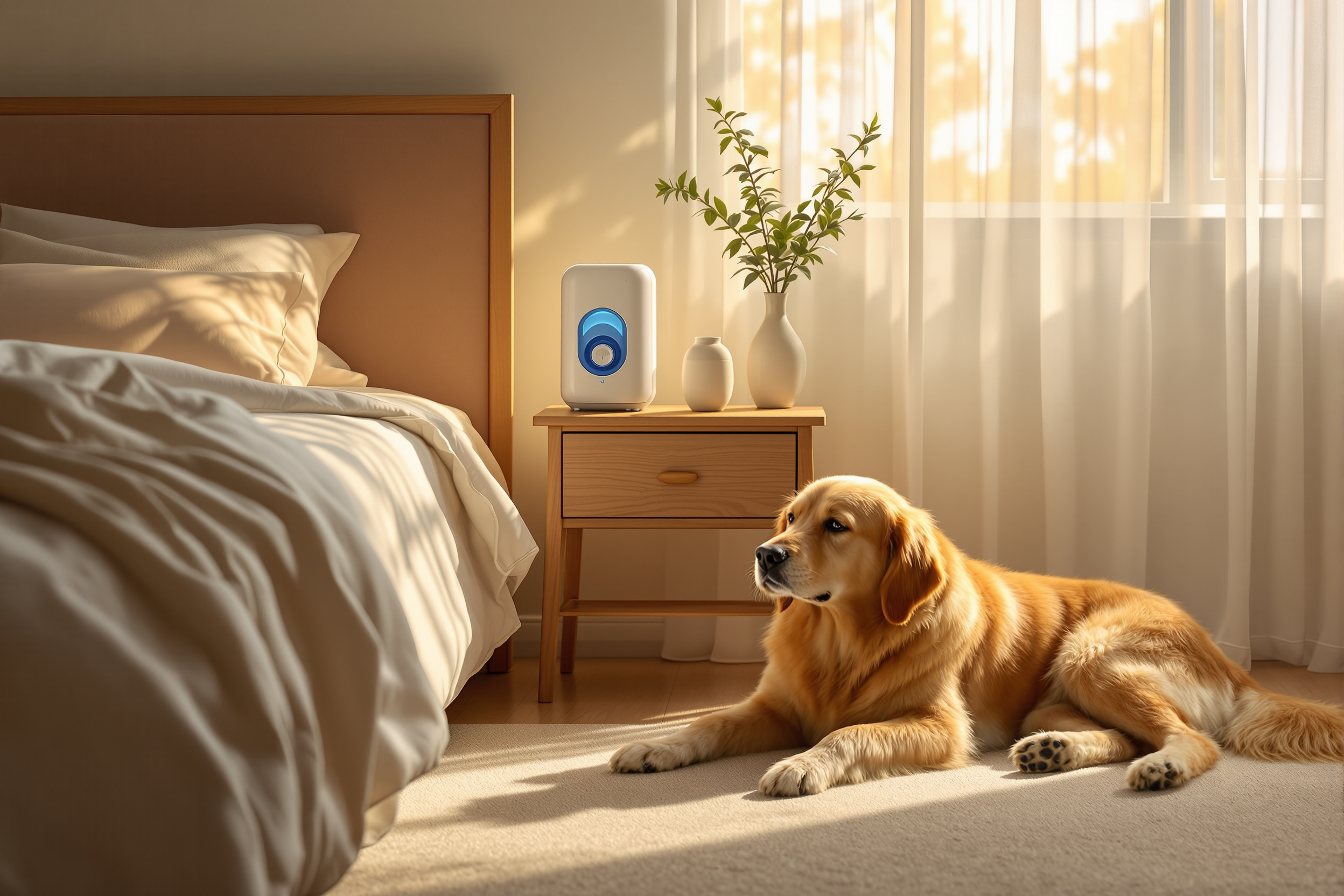
#4 — Blueair Blue Pure 211+ Auto — Best for Pet Homes
Best for Pet Homes
In long-term reviews the 211+ reads like the appliance you forget is there: one button, quiet on the lower speeds, and still running after seven years in some households. What owners mention most is pets — dander and odor clearing within the hour, and the tell-tale sign it's working: "If I do not have mine on, I can smell my dogs and everything feels dirty." Pet owners treat the washable fabric pre-filter as the star feature, vacuuming a coat of dog hair off it weekly while the main filter stays clean. The fair warnings from reviews: the top speed is genuinely loud (most people live on low or medium), and replacement filters are not cheap.
The washable pre-filter grabs shed hair and big dust so the expensive filter isn't clogged in a month — then it senses a dander or dust spike and ramps up on its own before settling back to a quiet whisper.
Why it works for pets: HEPASilent filtration captures fine dander down to 0.1 microns, the washable pre-filter handles the hair, and the carbon layer takes on odor — all mechanical, with no ozone-producing ionizer.
Check Today’s Price on Amazon →Amazon prices change daily — tap to see today's price and any active discount.
- Free delivery & returns for Prime members
- Sold & shipped by Amazon
- Thousands of verified reviews
Homes with a dog or cat have a filter-clogging problem before they have an allergen problem: loose hair. The Blueair Blue Pure 211+ Auto solves it with a washable fabric pre-filter that wraps the unit and catches shed hair and large dust — you vacuum or rinse it instead of paying for a new filter every few weeks. Behind it, HEPASilent filtration captures 99.97% of particles down to 0.1 microns, so the fine dander that actually triggers pet allergies gets caught too. It covers 540 square feet for a mid-range price and barely sips electricity.
The honest caveat: its carbon layer is lighter than the Austin Air's 15-pound bed, so for heavy litter-box odor the Austin still wins. For most pet households, though, the pre-filter plus HEPASilent combination is exactly right — the auto sensor ramps the fan when dander or dust climbs, then settles back to a near-silent hum, and the washable pre-filter comes in several colors so the unit reads as furniture rather than a medical device.
Running costs are among the lowest here, which matters when the whole point is leaving it on. Since dust mites and settled dander concentrate in the bedroom — where a low-shed, non-toxic mattress, an affordable natural-fiber wool or latex mattress topper over your current one, and washable organic cotton sheets in place of synthetic ones, also help — a second smaller unit by the bed pairs naturally with this one in the living room.
Best for: Homes with shedding cats or dogs, pet dander and hair, large living areas, and anyone who wants quiet, low-cost, big-room coverage with a reusable pre-filter that cuts running costs.
#5 — Levoit Core 400S — Best Budget
Best Budget
Levoit owners talk about sleep more than specs. The near-silent sleep mode is why this unit ends up in bedrooms — and why people who start with one often add another for each bedroom. The most repeated reports: noticeably less dust, and allergy sufferers waking up clearer with less morning congestion. The honest downsides from reviews: a minority of owners notice a faint high-pitched whine on the lowest speeds, the WiFi app can be flaky about staying connected, and fresh replacement filters can smell plasticky for a day or two until they air out.
At 24dB on low it's quieter than a whisper, so it earns a spot right by the bed — filtering pollen and dander out of the air you breathe for eight hours a night without paying premium money.
Why it works for allergies: A True HEPA H13 filter captures fine pollen, dust and dander down to 0.3 microns, and the laser sensor auto-adjusts the fan — no ozone, and you can watch the particle count drop live in the app after you make the bed or the dog jumps up.
Check Today’s Price on Amazon →Amazon prices change daily — tap to see today's price and any active discount.
- Free delivery & returns for Prime members
- Sold & shipped by Amazon
- Thousands of verified reviews
If you're not sure how much purifier you need, start here. The Levoit Core 400S delivers a genuine True HEPA H13 filter — the same grade hospitals use — with an activated-carbon layer bundled in, for $180–$220, less than a quarter of the IQAir's price. For pollen, dust and pet dander in a bedroom or small living room, that H13 filter does the core allergy job as well as units costing three times more; the difference at the top of the market is coverage, sealing and carbon depth, not the fundamental filtration.
What separates it from cheap competitors is the laser particle sensor. Instead of a basic dust sensor, it counts actual particle concentrations in real time and adjusts the fan to match — and you can watch the number climb when you shake out the sheets, then drop back down. WiFi lets you schedule it to ramp up before pollen-heavy afternoons and settle into quiet mode overnight.
At its lowest setting it runs at just 24 decibels, quieter than a whisper, which is why so many allergy sufferers buy one per bedroom. Just match it to the room — its 403 sq ft rating is plenty for a bedroom but underpowered for a great room, where the Coway is the better call. As a first purifier or a per-room unit, it's the best value on the list.
Best for: First-time buyers, bedrooms and small living rooms, seasonal pollen and everyday dust, tech-savvy households, and anyone adding a quiet, affordable unit to each bedroom.
What Won't Help Your Allergies
Knowing what to skip saves the most money. These popular options do little or nothing for airborne allergens:
- "HEPA-type" and "HEPA-like" filters: They sound identical but skip the certified 99.97%-at-0.3-micron test, letting the finest dander and mold fragments through. Only a filter labeled True HEPA or H13/H14 is worth buying for allergies.
- Ionizers (ionic purifiers): These charge particles so they settle on nearby surfaces instead of being removed — so the allergen re-suspends the moment you sit down or the pet walks by. Many also emit trace ozone, which irritates the airways of anyone with asthma.
- Ozone generators: Marketed as "air cleaners," but ozone is a lung irritant that makes asthma and allergy symptoms worse, not better. The US EPA explicitly warns against using them in occupied spaces.
- An undersized unit: A great filter in too large a room can't manage enough air changes per hour to matter. Match the CADR to the square footage — a small bedroom purifier will not clean an open-plan living room.
- A purifier as your only fix: It cleans the air but not your mattress, carpet or sofa. Pair it with washing bedding weekly in hot water, vacuuming with a HEPA vacuum, and dust-mite covers to actually cut the source.
The bottom line: for allergies, ignore the app and the color options and look for two things — a genuine True HEPA filter and a CADR sized for your room. Then run it continuously, because allergen levels rebound within hours of switching it off.
Comparison Table: At a Glance
| Purifier | Filtration | Room Size | Noise Level | Price |
|---|---|---|---|---|
| IQAir HealthPro Plus | HyperHEPA 0.003µm + carbon | 1,125 sq ft | 22–59 dB | $$$ |
| Austin Air HealthMate+ | Medical HEPA + 15 lb carbon | 1,500 sq ft | 35–65 dB | $$$ |
| Coway Airmega 400 | Dual True HEPA + carbon | 1,560 sq ft | 22–52 dB | $$$ |
| Blueair 211+ Auto | HEPASilent + washable pre-filter | 540 sq ft | 23–56 dB | $$ |
| Levoit Core 400S | True HEPA H13 + carbon | 403 sq ft | 24–52 dB | $ |
Price tiers: $ = budget · $$ = mid-range · $$$ = premium. Tap any “Check Today’s Price” button for the live Amazon price.
Our Pick by Situation
- Severe allergies or asthma in the home: IQAir HealthPro Plus ($900) — medical-grade HyperHEPA and a sealed housing capture the finest allergens nothing else here reaches.
- Shedding cat or dog: Blueair Blue Pure 211+ Auto ($300) — the washable fabric pre-filter grabs hair so the HEPA lasts, with high CADR for a living room.
- Pet odor plus dander: Austin Air HealthMate Plus ($595–$715) — medical HEPA for dander and the deepest carbon bed here for litter-box and wet-dog smell.
- Big open-plan living room: Coway Airmega 400 ($450–$550) — the highest throughput here, enough to actually cycle 1,560 sq ft several times an hour.
- Bedroom on a budget: Levoit Core 400S ($180–$220) — genuine H13 True HEPA, a 24dB sleep mode and cheap filters; buy one per bedroom.
- Seasonal pollen / hay fever: Levoit Core 400S in the bedroom, or the Coway Airmega 400 if your main living space is large and open.
- One do-everything premium unit: IQAir HealthPro Plus ($900) — the most thorough filtration made, in one machine you keep for a decade.
"For allergies, the spec that predicts real-world relief isn't the app or the sensor — it's a True HEPA filter sized to turn your room's air over four or five times an hour. An underpowered unit in a big room is the number-one reason a purifier 'doesn't seem to help.'"
How We Evaluated These Purifiers
Because this is an allergy and pet guide, we weighted particle capture and airflow first and everything else second:
- Filter grade: Does it use genuine True HEPA (H13), independently rated to trap 99.97% of particles at 0.3 microns? "HEPA-type" filters were disqualified — they skip the exact fine-particle range that keeps allergy sufferers reacting.
- CADR and room coverage: Can it deliver four to five air changes per hour in a real room? We favored units whose Clean Air Delivery Rate is honestly matched to their stated square footage.
- Pet features: A washable or replaceable pre-filter for hair, and an activated-carbon stage for litter-box and wet-dog odor — the things that separate a pet purifier from a plain one.
- Noise on the useful setting: A bedroom unit has to be quiet enough to sleep next to. We looked at the decibel level on the speed that actually delivers the needed air changes, not just the silent lowest speed.
- Total cost of ownership: Upfront price plus filter replacement over five years, since a purifier only helps while it runs — and it only runs if the filters are affordable to replace.
We excluded ozone generators, ionizer-only units, and PECO/photocatalytic "no-filter" gadgets, none of which reliably remove allergens and some of which irritate the airways. An air purifier is one layer; washing bedding, vacuuming with a HEPA vacuum, and dust-mite covers cut the source it can't reach.
Want the Full Home Protection Guide?
Air filtration is one piece of the puzzle. The Complete Plasticproof Guide covers every room — kitchen, nursery, bathroom, bedroom — with 47+ peer-reviewed studies and 80+ product recommendations.
Frequently Asked Questions
Yes, when the purifier uses a True HEPA filter and is sized for the room. HEPA captures at least 99.97% of particles down to 0.3 microns, which covers pollen, dust-mite debris, mold spores, and pet dander. Controlled studies and the EPA both find HEPA purifiers measurably lower airborne allergen levels, and many allergy sufferers report fewer nighttime symptoms once one runs in the bedroom. It is not a cure — you still have to control the sources — but it removes a large share of what you would otherwise breathe.
For pet homes you want three things: True HEPA to trap the fine dander that carries the Fel d 1 and Can f 1 allergens, a washable or replaceable pre-filter to catch loose hair before it clogs the HEPA, and an activated-carbon stage for litter-box and wet-dog odor. High CADR matters too, because dander stays airborne for hours. The Blueair Blue Pure 211+ Auto (washable fabric pre-filter, high CADR for large rooms) and the Austin Air HealthMate Plus (heavy carbon for odor plus HEPA) are the strongest pet picks in this guide.
Aim for at least four to five air changes per hour (ACH) in the room where you spend the most time, usually the bedroom. ACH is how many times the purifier can filter the room's full volume of air in an hour, and allergy and asthma experts recommend four or more for meaningful symptom relief. To hit it, match the unit's Clean Air Delivery Rate (CADR) to your room size: a rough rule is a CADR in cubic feet per minute of at least two-thirds of the room's square footage, then round up so you can run it on a lower, quieter setting.
Yes — allergens settle and re-suspend constantly, so a purifier only keeps the air clear while it runs. Leave it on continuously, using auto mode or a low overnight setting to save energy and stay quiet. Placement matters: put it in the bedroom where you spend eight hours breathing, keep it a few feet from walls and furniture so air can circulate, and avoid ozone-generating "ionic" cleaners, which the EPA warns can irritate the lungs and do little for allergens.
Sources
- US EPA. "Guide to Air Cleaners in the Home." (HEPA effectiveness on allergens, CADR, filter types.)
- US EPA. "Air Cleaners, HVAC Filters, and Coronavirus (and allergens)." (True HEPA capture at 0.3 microns; air changes per hour.)
- CDC / National Center for Health Statistics. "Allergies and Hay Fever." (≈25.7% of US adults had a seasonal allergy, 2021.)
- US EPA. "Ozone Generators That Are Sold as Air Cleaners." (Why ozone worsens indoor air.)
- US EPA. "Indoor Air Quality — Report on the Environment." (Americans spend ~90% of time indoors.)
- Asthma and Allergy Foundation of America. "Allergy Facts and Figures." (Indoor allergens: dust mites, pet dander, mold.)
Protect Every Room in Your Home
From the kitchen to the nursery to the bedroom — the Complete Plasticproof Guide covers every swap that matters, backed by 47+ studies.