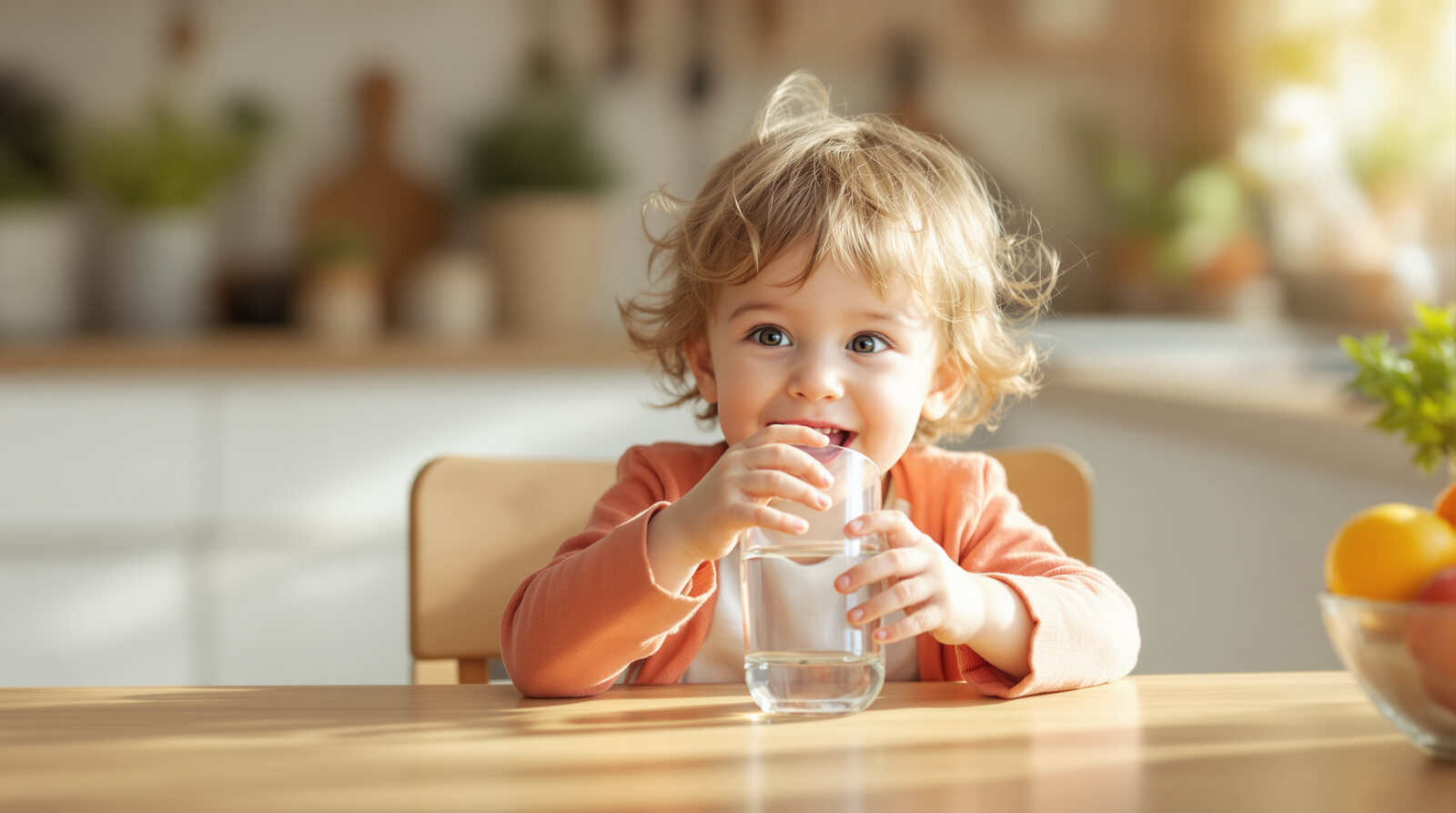
Children are exposed to more microplastics than adults relative to body weight, and the exposure lands during a sensitive developmental window — which is why it is worth taking seriously even though direct harm in kids is not yet proven. Particles have been measured in infant stool at more than ten times adult levels, in human breast milk, and in placental tissue, and polypropylene baby bottles can shed millions of particles per liter during hot-water formula prep. The reassuring part: a few focused changes — glass or steel bottles, no heating food in plastic, filtered water and less household dust — remove most of a child's controllable exposure without a plastic-free home.
If you are a parent, "microplastics in children" is a far more anxious search than the same question about adults — and that instinct is reasonable. A child's body is smaller, still developing, and takes in more food, water and air per kilogram than yours does. When researchers started looking, they found these particles exactly where parents least want them: in baby food, in breast milk, and in the stool of newborns.
This guide lays out what the science actually shows, and — just as importantly — what it doesn't. The goal is not to frighten you into a plastic panic, but to separate the established findings (children really are exposed more, and particles reach them early) from the still-unproven ones (that this causes specific harm to a specific child). It is the same evidence-first approach we take in how dangerous are microplastics, applied to the people most worth protecting.
The bottom line up front: the exposure is real and starts early, the biology is a legitimate reason for caution, but proof of disease in children does not yet exist. Because kids' exposure is concentrated in a few predictable places — bottles, heated food, drinking water and floor dust — parents can cut most of it with a short list of swaps, which we lay out below and in how to avoid microplastics.
Are children more exposed to microplastics than adults?
Yes — and the gap is measurable. Pound for pound, a child eats, drinks and breathes more than an adult, so the same contaminated water or food delivers a bigger relative dose. Add the toddler habits adults have grown out of — crawling on floors, mouthing toys, constant hand-to-mouth contact — and children collect particles from routes most adults barely touch.
The clearest evidence is a 2021 study in Environmental Science & Technology Letters that measured microplastics in the stool of infants and adults. Infant stool carried more than ten times the concentration of polyethylene terephthalate (PET) microplastics found in adults (Zhang et al., 2021). For context on how much everyone takes in, a widely cited analysis put adult intake at roughly 39,000–52,000 particles a year from food, rising with inhaled air (Cox et al., 2019) — and children clear that bar faster relative to their size.
Where do kids actually get microplastics from?
Exposure is not spread evenly across a hundred sources — it clusters in a handful that are easy to name. For most children the biggest routes are the bottle or cup they drink from, food that has been heated or stored in plastic, the drinking water they're given, and the dust on the floors where they play. Toys and synthetic clothing add smaller amounts.
That concentration is genuinely good news, because it means a few targeted changes do most of the work. You do not have to audit every object in the house; you have to fix the four or five that actually move the number. The same logic drives our broader playbook in how to avoid microplastics and the room-by-room approach in the plastic-free nursery guide.
What does the baby-bottle research actually show?
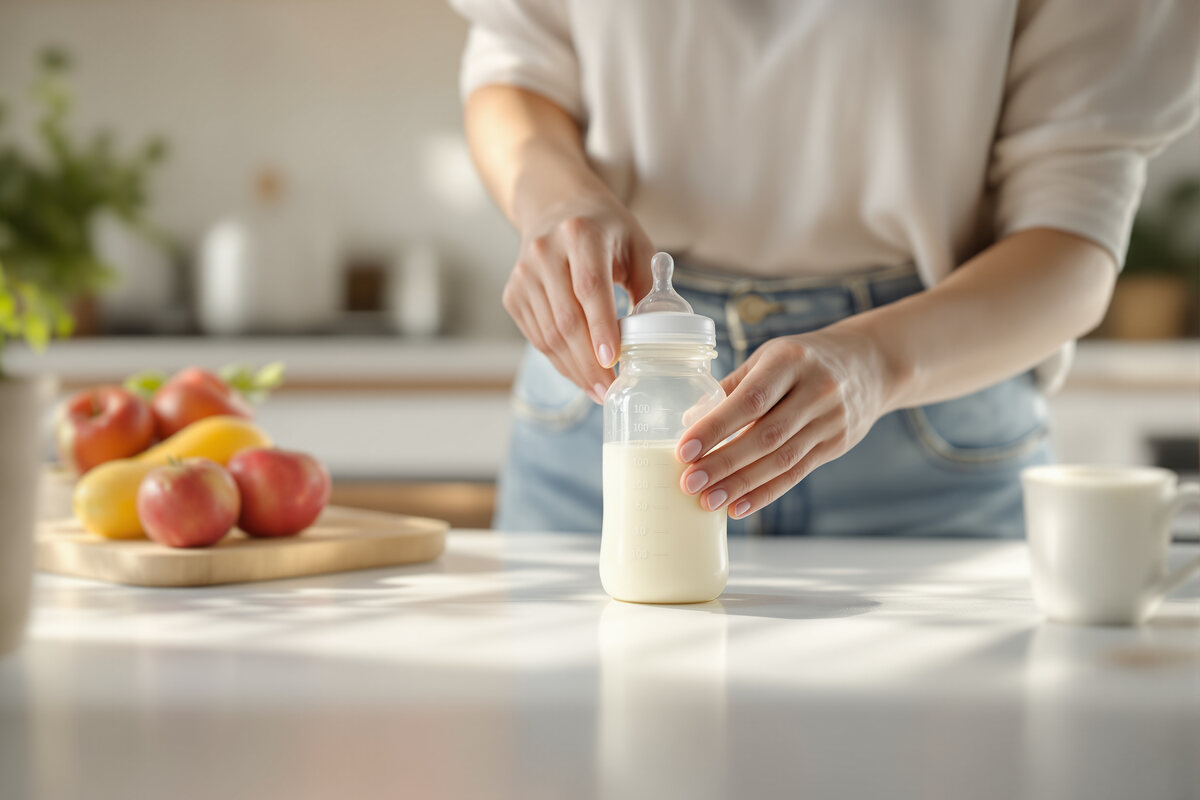
This is the single most striking finding for parents. In a 2020 study in Nature Food, researchers prepared infant formula in polypropylene feeding bottles following standard guidelines and found the bottles released microplastics in large numbers — up to about 16 million particles per liter — with hotter water and sterilization driving the highest release (Li et al., 2020).
Two things keep this in perspective. First, the health significance of those particles is still unknown — a high count is not the same as proven harm. Second, the same researchers showed the release can be cut sharply with small changes: sterilize the bottle, then cool boiled water in a non-plastic container and rinse the bottle with that cooled water before adding room-temperature formula. Better still, a glass or stainless steel bottle sidesteps the problem entirely. For the formula itself, see does baby formula have microplastics and use a filter made for formula prep.
Pouring boiling water directly into a plastic bottle, then shaking vigorously, is the exact combination — heat plus agitation plus plastic — that maximizes particle release. If you use a plastic bottle, let water cool first and never microwave it.
Can microplastics harm a child's development?
Honestly: it is plausible and worth guarding against, but it has not been proven in children. The concern is less the inert particle and more its chemical company. Many plastics are made with phthalates and bisphenols — endocrine-disrupting additives that can mimic or block hormones at low doses — and a child's developing brain, hormone system and reproductive tract are more sensitive to that interference than an adult's.
Animal studies back up the caution: rodents exposed early show neuroinflammation, altered behavior and metabolic changes. But jumping from a dosed rat to a human toddler is exactly the leap the evidence does not yet support, and reputable researchers say so plainly. The World Health Organization's review of microplastics in drinking water concluded the particles are widespread but that health-risk evidence remains limited and more research is needed (WHO, 2019). Caution during a sensitive window is wise; certainty of harm is not yet on the table.
Are microplastics found in babies before birth?
Yes, which is one reason the topic feels so urgent. Microplastics have been detected in human placental tissue, meaning particles can reach a baby during pregnancy (Ragusa et al., 2021), a finding we cover in microplastics in the placenta and microplastics during pregnancy. After birth, a 2022 study found microplastics in 26 of 34 human breast-milk samples (Ragusa et al., 2022).
It is important to read that breast-milk finding correctly. It is not a reason to stop breastfeeding — the documented benefits of breast milk clearly outweigh an uncertain, early-stage concern, and that is the consistent expert view. The practical takeaway is to reduce a parent's own plastic exposure where it's easy, not to change feeding decisions over a particle count whose health meaning is still unknown. More context lives in microplastics in breast milk.
Which children are most at risk?
Risk concentrates in the youngest and the most heavily exposed. Newborns and infants top the list: their organs are still forming, they feed frequently, and bottle-feeding plus floor time stacks several exposure routes at once. Premature and low-birth-weight babies warrant extra care simply because their systems are more fragile.
Beyond age, the biggest difference between two similar children is usually habit, not biology. A child given mostly bottled water, fed reheated food from plastic containers, and raised in a home full of synthetic dust takes in far more than a child whose family has made a few swaps. That is the hopeful part: the largest risk factor is also the most fixable one.
How can parents reduce their child's microplastic exposure?
You cannot reach zero, and you do not need to. The aim is to remove the big, controllable exposures with changes that fit real family life. Target the bottle, the way you heat food, the water, and the dust — in that order — and you have covered most of what matters.
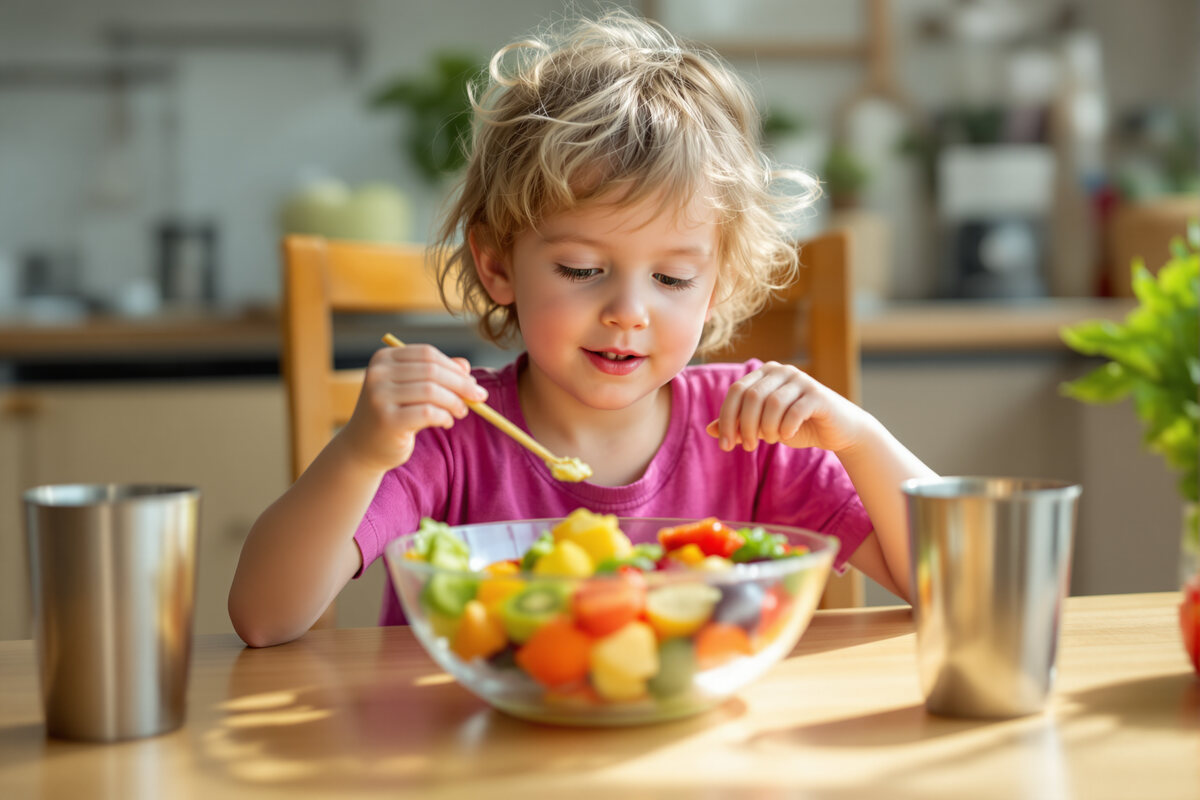
- Switch bottles and cups to glass or stainless steel. It removes the single biggest infant exposure route; see the safest baby bottles and microplastic-free sippy cups.
- Never heat food or milk in plastic. No microwaving plastic containers, no boiling water poured straight into a plastic bottle — heat is what drives particle release.
- Filter the tap water you serve. A good filter beats bottled water, which carries its own particle load; start with the best water filters for microplastics.
- Store food in glass. Move leftovers and snacks into glass containers instead of plastic tubs and bags.
- Keep dust down. Regular HEPA vacuuming and damp-mopping lower the floor dust young children breathe and touch most.
The honest verdict
Microplastics in children are a real, early-starting exposure and a legitimate reason for sensible caution — not a proven cause of childhood disease. The evidence that kids are exposed more, and exposed sooner, is solid; the evidence that it harms a specific child at everyday levels is still being built. That combination argues for prudent, low-cost prevention now rather than either panic or dismissal.
If you do just a few things, make them the ones with the highest payoff: a non-plastic bottle, no heating food in plastic, and filtered water. Those three cover the routes that actually deliver the most particles to a small body — and none of them asks you to live in a plastic-free house.
Protect the exposures you can actually control
You can't reach zero, but you can remove most of your child's exposure. These guides show the swaps that matter most — starting with the bottle and the water.
Frequently Asked Questions
Yes, relative to their body weight. Infants and young children eat, drink and breathe more per kilogram than adults, spend more time on the floor where plastic dust settles, and mouth toys and hands. One 2021 study measured more than ten times the concentration of PET microplastics in infant stool than in adult stool, which fits the higher per-kilogram intake.
Polypropylene bottles can. A 2020 Nature Food study found that preparing formula in polypropylene feeding bottles with hot water released up to about 16 million microplastic particles per liter, with daily infant exposure estimated in the millions of particles in many regions. Cooling boiled water in a non-plastic container and rinsing the sterilized bottle with cooled water sharply cut release — and glass or stainless steel bottles avoid the issue entirely.
It has not been proven in children, but it is taken seriously because the exposure lands during a vulnerable window. Microplastics carry endocrine-disrupting additives such as phthalates and bisphenols, and a developing brain, hormone system and gut are more sensitive to such chemicals than an adult's. Animal studies show developmental and behavioral effects, while direct human evidence in children is still limited and being studied.
Yes. Microplastics have been detected in human placenta tissue and in human breast milk, meaning exposure can begin before a baby is born and continue through feeding. The amounts are small and the health effects are not yet established, but the findings are why pregnancy and infancy are treated as the periods where reducing exposure matters most.
Focus on the biggest routes: use glass or stainless steel bottles and cups, never microwave or heat food and milk in plastic, filter tap water instead of serving bottled water, choose whole foods over heavily packaged processed ones, and keep floors and dust down with regular HEPA vacuuming and damp-mopping. These few changes remove most of a child's controllable exposure without needing a perfectly plastic-free home.
No. Experts are clear that the well-documented benefits of breastfeeding outweigh the uncertain, early-stage concern about microplastics found in breast milk. The practical response is to reduce a mother's own plastic exposure where easy — filtered water, less plastic food contact — not to stop breastfeeding, which remains strongly recommended.
Sources
- Li D, Shi Y, Yang L, et al. "Microplastic release from the degradation of polypropylene feeding bottles during infant formula preparation." Nature Food, 2020;1:746–754, doi.org/10.1038/s43016-020-00171-y. Polypropylene bottles released up to ~16.2 million microplastic particles per liter during hot-water formula prep.
- Zhang J, Wang L, Trasande L, Kannan K. "Occurrence of Polyethylene Terephthalate and Polycarbonate Microplastics in Infant and Adult Feces." Environmental Science & Technology Letters, 2021;8(11):989–994, pubs.acs.org/doi/10.1021/acs.estlett.1c00559. PET microplastics measured more than 10× higher in infant stool than adult stool.
- Ragusa A, Svelato A, Santacroce C, et al. "Plasticenta: First evidence of microplastics in human placenta." Environment International, 2021;146:106274, doi.org/10.1016/j.envint.2020.106274. Microplastics detected in human placental tissue.
- Ragusa A, Notarstefano V, Svelato A, et al. "Raman Microspectroscopy Detection and Characterisation of Microplastics in Human Breastmilk." Polymers, 2022;14(13):2700, doi.org/10.3390/polym14132700. Microplastics found in 26 of 34 human breast-milk samples.
- Cox KD, Covernton GA, Davies HL, Dower JF, Juanes F, Dudas SE. "Human Consumption of Microplastics." Environmental Science & Technology, 2019;53(12):7068–7074, pubs.acs.org/doi/10.1021/acs.est.9b01517. Estimated adult intake of 39,000–52,000 particles/year from food, more with inhalation.
- World Health Organization. "Microplastics in Drinking-Water." WHO, 2019, who.int/publications/i/item/9789241516198. Microplastics widespread in drinking water; health-risk evidence limited, more research needed.