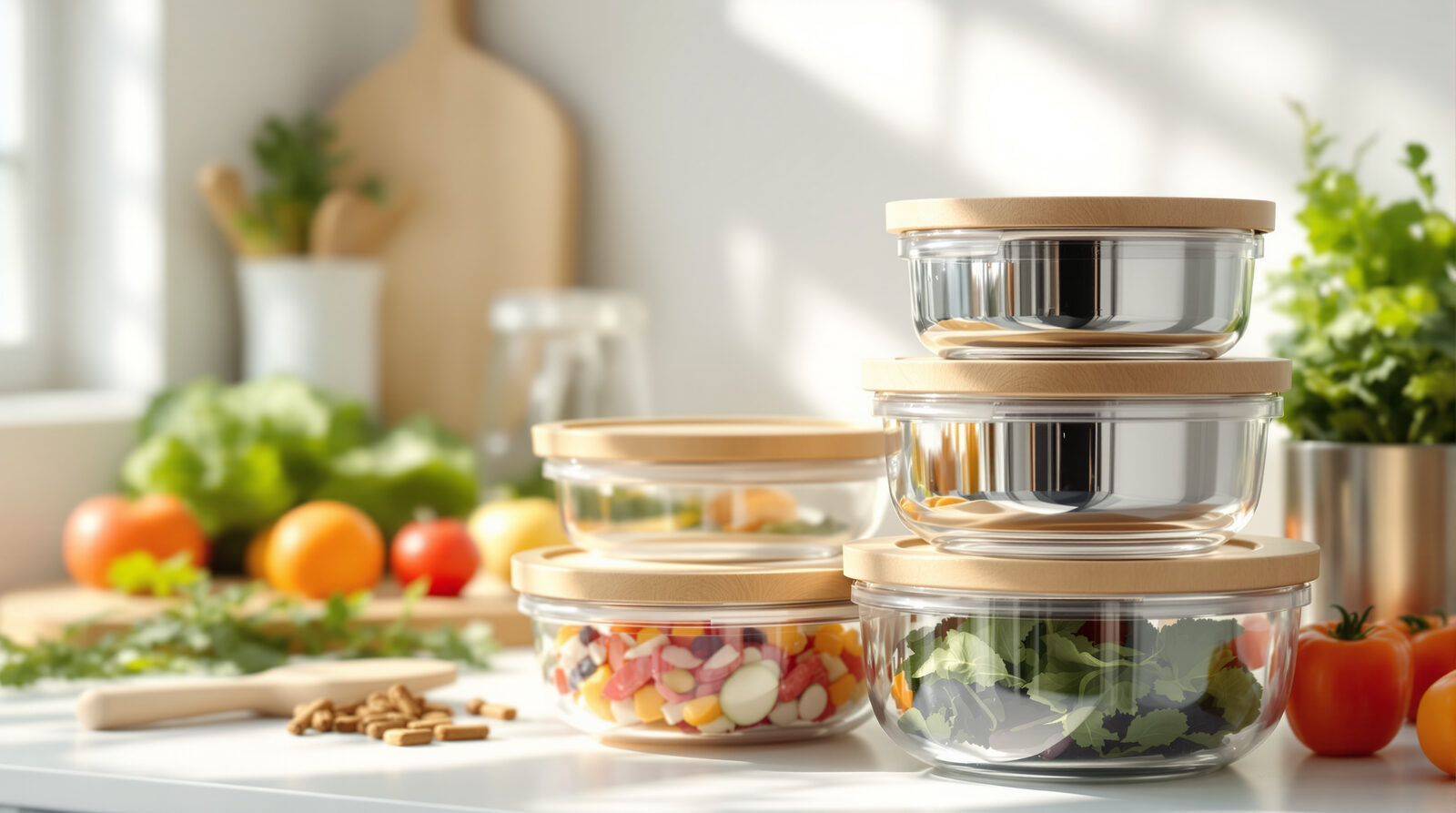
Tupperware sold today is BPA-free, but whether it is "safe" depends almost entirely on how you use it. Like all plastic, Tupperware and other plastic food containers can shed microplastics and leach trace chemicals into food — and heat, scratches, age, and oily or acidic foods all increase it. Cold food in an undamaged container is low-risk. Microwaving, scratched or cloudy containers, and anything made before 2010 are where the concern climbs. The reliable fix is simple: keep plastic away from heat and move anything hot or greasy into glass or stainless steel.
"Is Tupperware safe?" is one of the most-searched kitchen questions there is, and it usually hides two different worries: Is the brand safe, and is plastic food storage safe at all. The two answers are not the same. Tupperware the company reformulated its materials years ago, so a new set is not the BPA problem people remember from the 2000s. But the broader question — what plastic does to the food stored and reheated in it — has a more nuanced, research-backed answer.
This guide separates the brand from the material, walks through what studies have actually measured about microplastics and chemical leaching from plastic containers, flags the handful of situations where the risk genuinely rises, and lays out the glass and stainless swaps that remove the problem for a few dollars. For the specific question of reheating, see our deep dive on whether it is safe to microwave Tupperware.
Is Tupperware safe to use?
For cold or room-temperature food in an undamaged container, Tupperware is reasonably safe to use. The concern is never the logo on the lid — it is the material underneath. Every plastic container can shed microscopic particles and release small amounts of chemical additives, and how much depends on heat, wear, and what you store in it. Use it thoughtlessly and the exposure rises; use it carefully and it stays low.
Think of plastic food storage as safe-with-conditions rather than safe-or-dangerous. A new Tupperware box holding dry crackers or cut vegetables in the fridge is doing almost nothing worrying. The same box, scratched and cloudy, holding tomato sauce that gets microwaved in it, is a very different situation. The rest of this page is really about telling those two cases apart — and the good news is that the high-risk uses are exactly the ones easiest to avoid.
Does Tupperware contain BPA or other harmful chemicals?
Tupperware states that it removed BPA (bisphenol A) from the materials of items it sells in the United States and Canada as of March 2010. So a Tupperware set bought new in the last decade is BPA-free. The lingering worry comes from two directions: older containers, and the limits of the "BPA-free" label itself.
Vintage Tupperware — the avocado-green bowls from a parent's kitchen, or anything made before 2010 — may contain BPA in some pieces, which is a good reason to retire heirloom plastic from active food use even if it is sentimental. And "BPA-free" is not the same as "chemical-free." Some of the substitute plasticizers that replaced BPA, such as other bisphenols, are still being studied, and no label change alters the fact that the plastic polymer itself can slough off microscopic particles. BPA was one specific problem; it was never the whole story of what migrates out of warm, worn plastic.
Does plastic Tupperware leach microplastics into your food?
Yes — plastic food containers release microplastics into what they hold, and researchers have measured it directly. A study of consumer plastic food containers and disposable cups found that these everyday items shed microplastic particles into the food and liquid inside them, with the amount influenced by temperature and how the plastic was handled (Fadare et al., 2020, Chemosphere). The particles come off the container surface itself, not from anything you put in.
The three things that make shedding worse are the three things a storage container routinely meets: heat, which softens the surface and speeds release; physical wear — the scratches, scuffs and cloudiness that build up from stacking, stirring, and the dishwasher; and fatty or acidic foods, which lift particles and additives off the plastic far more effectively than plain water. A separate analysis of take-out containers found microplastics in 100% of those tested, a reminder that plastic shedding into food is the rule, not a rare defect (Du et al., 2020, Journal of Hazardous Materials). These particles are among the routes by which microplastics end up in the human body.
Is it safe to microwave Tupperware?
Microwaving is the single worst thing you can do to any plastic container, Tupperware included, and it is the one habit worth breaking today. Heat is what turns a trickle of particles into a flood: a 2023 study heated plastic food containers and estimated that a single square centimeter of container could release millions of microplastic particles and billions of nanoplastic particles into food in just a few minutes (Hussain et al., 2023, Environmental Science & Technology).
The trap is the "microwave-safe" label, which does not mean what shoppers assume. It certifies only that the container will not warp, melt, or crack in the microwave — it is a durability rating, not a safety one, and says nothing about particles entering the food. The same applies to pouring very hot soup or sauce straight into a plastic box: the heat does the work with or without a microwave. The fix costs nothing — tip the food onto a ceramic plate or into a glass dish first. Our full breakdown lives at is it safe to microwave Tupperware.
If you remember one thing from this page, make it this: heat and plastic do not mix. A "microwave-safe" stamp means the box survives the microwave, not that your food does. Move anything hot or being reheated onto ceramic or into glass first. Removing that one habit removes most of the avoidable exposure from plastic food storage for free.
When should you throw out old plastic containers?
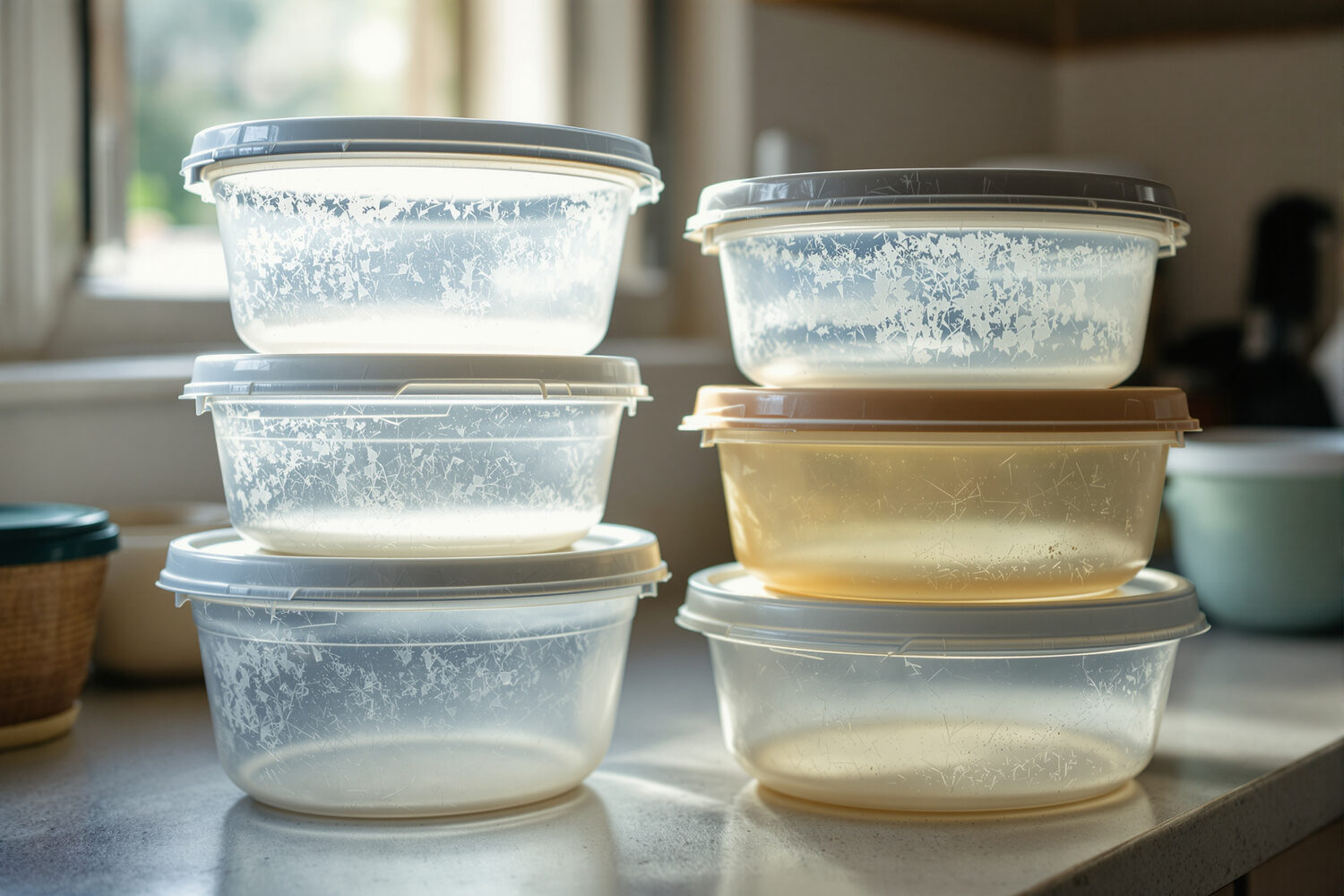
A plastic container earns its retirement the moment it starts to break down, because a degraded surface sheds far more than a smooth one. Replace any container that is scratched, gouged, cloudy, warped, stained, or smells of old food no matter how many washes it gets. Those are all signs the plastic is physically breaking apart at the surface — exactly where particles come from.
- Scratches and scuffs. Knife marks and abrasion from stacking or scrubbing create fresh raw edges that release particles into food.
- Cloudiness or a filmy haze. Clear plastic going milky is the surface crazing and degrading — it will never be "clean" again.
- Warping or melting marks. A container that has been through a too-hot dishwasher cycle or held boiling food has already been heat-stressed.
- Persistent stains or odors. Tomato-orange tint and garlic smell that survive washing mean oils and pigments have penetrated the plastic.
- Anything older than you can remember buying. Pre-2010 pieces may predate the BPA phase-out; retire them from food use.
There is no need to throw out a whole kitchen in a panic. Replace the worst offenders first — the containers you reheat in and the ones holding oily leftovers — and switch those to glass or steel. That targets the exposure that actually matters without a wasteful purge.
How to use plastic containers more safely (if you keep them)
Not everyone is going to replace every container at once, and that is fine. If plastic stays in your rotation, a few habits keep the exposure low without buying anything:
- Never heat it. No microwave, no dishwasher top rack near the heating element, no hot food poured straight in. Let food cool before it goes into plastic.
- Keep plastic for dry and cold foods. Crackers, nuts, cut fruit, and leftovers headed to the fridge are low-risk uses; hot, oily, and acidic foods are not.
- Hand-wash gently. Skip abrasive scrubbers and very hot dishwasher cycles that scratch and heat-stress the surface.
- Retire damaged pieces promptly. A scratched or cloudy container is done — it sheds the most, and it is the cheapest thing in the kitchen to replace.
- Reheat on glass or ceramic, always. Store in whatever you like, but move food out of plastic before it ever meets heat.
For a room-by-room plan to cut plastic across the whole kitchen, see our kitchen plastic detox guide, and for the wider picture on which packaged foods carry the most, our roundup of which foods have the most microplastics.
The safest alternatives to Tupperware
The goal is simple: get an inert, non-plastic surface between your food and any heat. Glass and stainless steel do not soften, leach, or shed microplastics at food or reheating temperatures, and food-grade silicone replaces disposable plastic bags. These are picks we recommend across the site, chosen here as direct, durable Tupperware replacements. Prices and availability change, so tap through for the current listing. For more options, compare our guides to glass food storage containers and glass vs. plastic storage.
 Best Overall
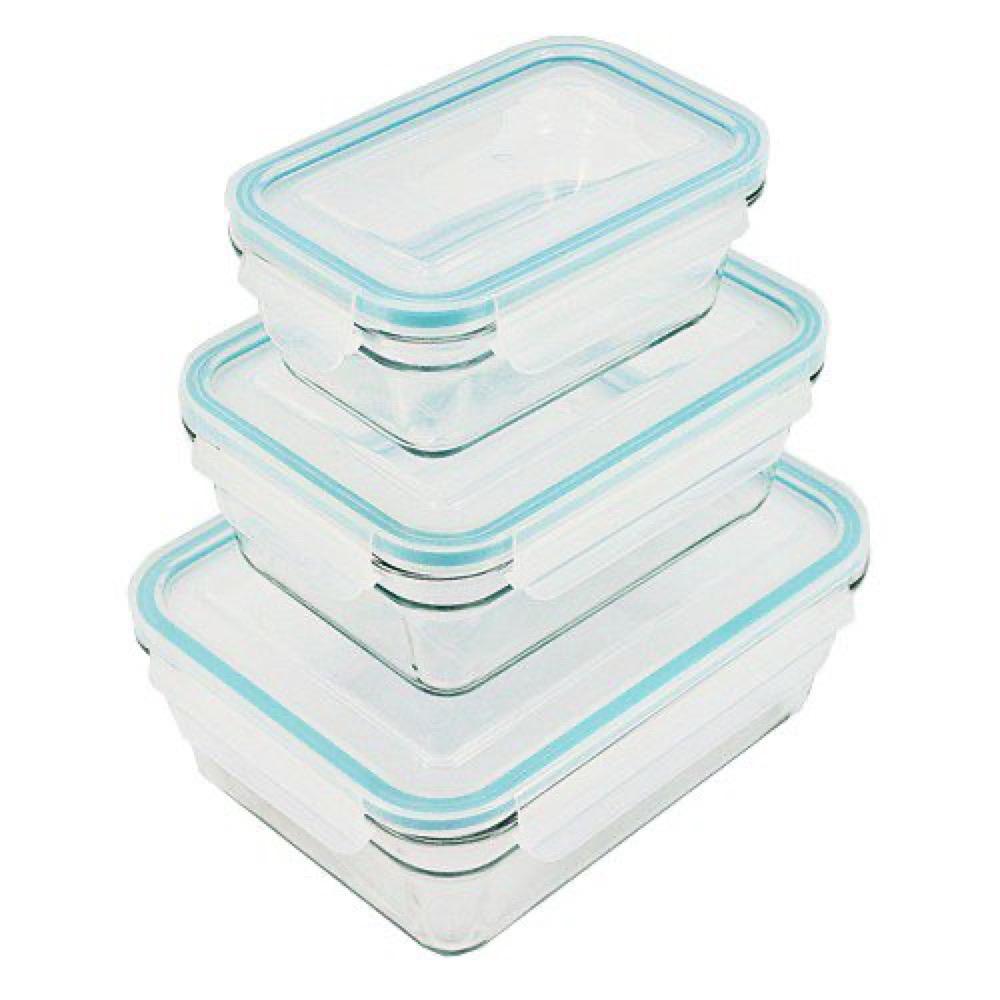
Glasslock's tempered glass containers earn praise for lids that owners find "more durable and leak-proof" than Pyrex, and the glass is oven-safe. The honest downsides are the lids and long-term wear: buyers report the plastic "side lock-down wings" snapping off and the gasket seals tearing or growing mold in the groove over time; nesting the lids in the dishwasher can chip "short narrow shards" off the underside of the glass rims; and several reviewers found replacement parts hard to get and customer service slow to respond. Hand-dry the gaskets and do not stack the lids while washing.
Three stackable glass containers in one box — enough that there is always one clean, with snap-lock lids that actually seal soups and sauces.
Why it's safe: Food sits on inert tempered glass, not plastic — so reheating releases nothing. The BPA-free lids seal with a food-grade silicone gasket that only touches the rim.
Check Today’s Price on Amazon →✓ Ships free with Prime · Free returns · Amazon A-to-z purchase guarantee (on eligible items)
- Free delivery & returns for Prime members
- Sold & shipped by Amazon
- Thousands of verified reviews
 Best Value
A full set of reheat-ready glass in one box, with single pieces easy to replace.
Why it's safe: Glass doesn't soften, leach or shed at cooking temperatures, so there's no polymer between your food and the heat once the lid is off.
Check Today’s Price on Amazon →✓ Ships free with Prime · Free returns · Amazon A-to-z purchase guarantee (on eligible items)
- Free delivery & returns for Prime members
- Sold & shipped by Amazon
 Best for Reheating
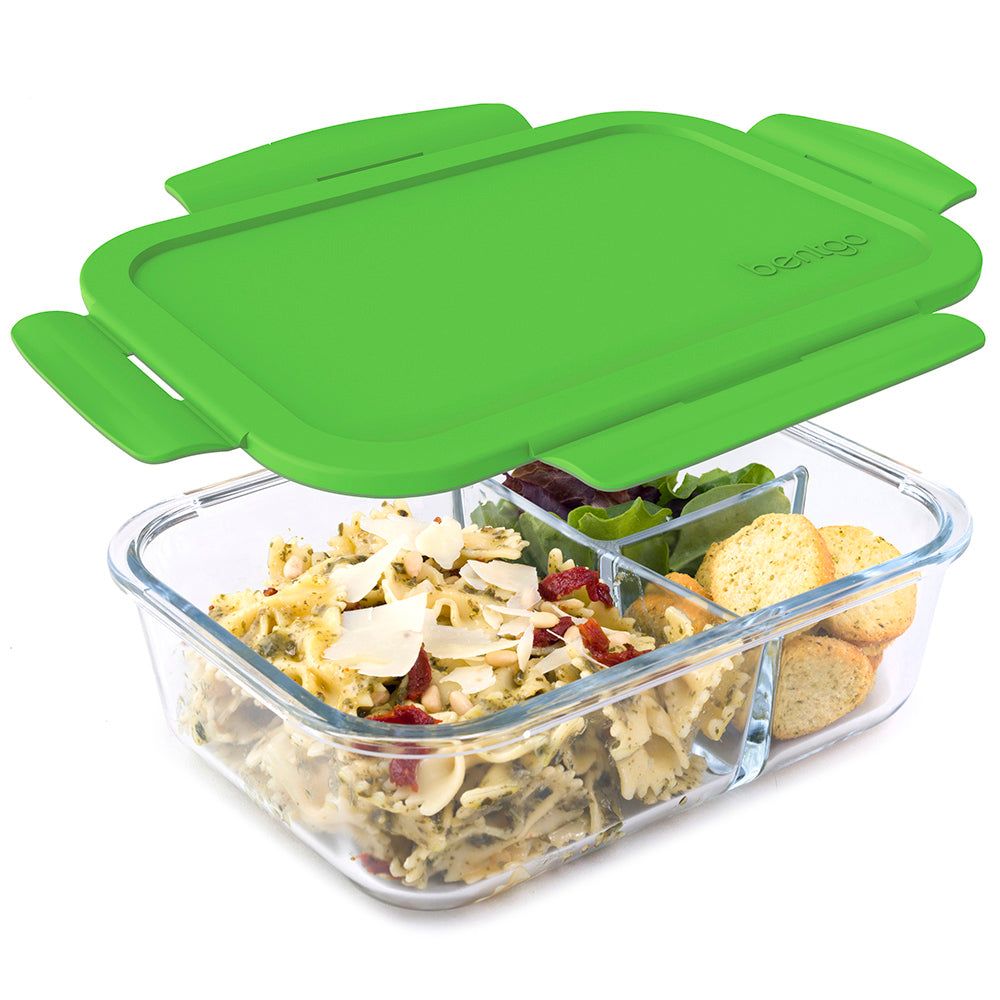
Buyers who want a real seal favor the Bentgo Glass — the four-side snap-lock lid is "leak proof" when latched, the compartments are spacious, and the glass base is oven-safe. The honest downsides show up in daily carrying: the thick glass is "heavy and bulky," which several reviewers found awkward to tote alongside a laptop and a drink; the plastic latches are a weak point, with one owner reporting they "broke within a week"; and a few buyers reported the glass itself cracking after a handful of uses, leaving shards in the box. It seals well but demands careful handling.
Store the leftovers, snap the lid, and reheat straight from the fridge the next day — your food sits on inert glass, not the plastic that sheds most when heated.
Why it's safe: The food-contact body is borosilicate glass — chemically inert and thermal-shock resistant, so reheating releases nothing into your food. The silicone gasket only seals the rim, never sitting in the food.
Check Today’s Price on Amazon →✓ Ships free with Prime · Free returns · Amazon A-to-z purchase guarantee (on eligible items)
- Free delivery & returns for Prime members
- Sold & shipped by Amazon
- Thousands of verified reviews
 Best Plastic-Free
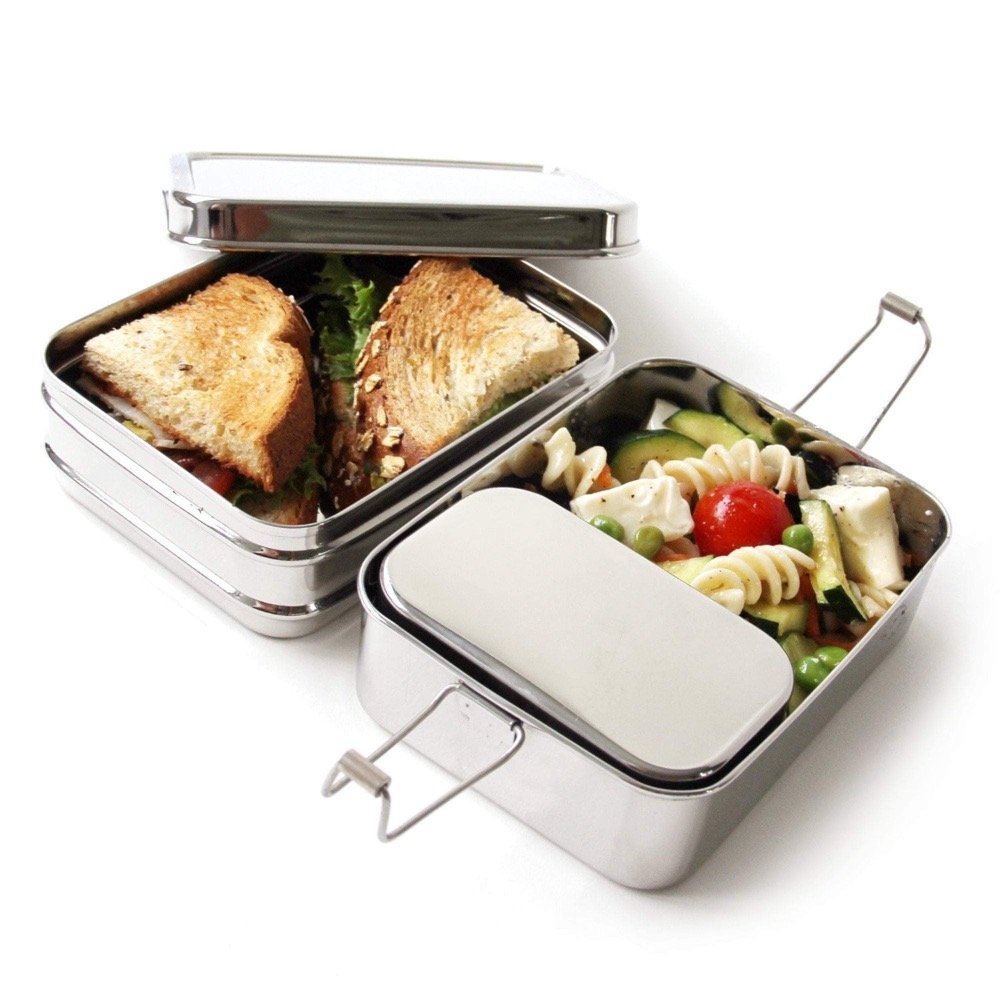
Owners like that this one is genuinely plastic-free — no gaskets, no synthetic liner — and that the three pieces nest together, wipe clean, and go in the dishwasher. It suits dry and damp foods like cut fruit, hummus and thick sauces. The honest downside is the one ECOlunchbox states plainly on the box: it is "not leak-proof." Because there are no silicone or plastic gaskets, one buyer said it "leaks any amount of liquid" into a backpack, and another returned the set after learning it would not seal, so pack it with dry foods only or expect spills.
A nesting steel set with nothing but bare stainless between you and the food — the purist's plastic-free lunch box.
Why it's safe: Every food-contact surface is inert 18/8-style stainless steel — no plastic to leach microplastics, BPA, or phthalates, and no silicone gasket touching the food at all.
Check Today’s Price on Amazon →✓ Ships free with Prime · Free returns · Amazon A-to-z purchase guarantee (on eligible items)
- Free delivery & returns for Prime members
- Sold & shipped by Amazon
- Thousands of verified reviews
 Best for Big Portions
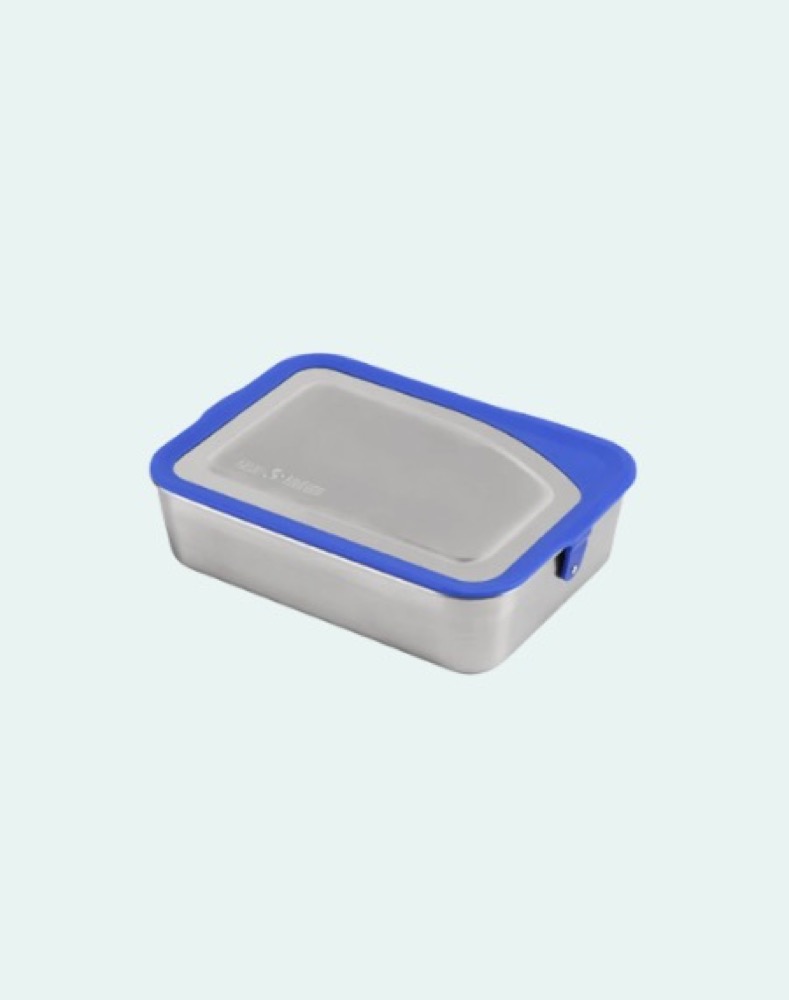
Owners rate the Klean Kanteen food box as "truly leak proof when the lid is fastened" — the silicone lid plus snap-and-lock tabs hold a strong seal, and the whole box is plastic-free. It is built to protect a full meal on the go. The honest downsides: the stainless build makes it heavy, which is the complaint reviewers raise most; it costs more than most steel boxes; and the seal only works if you follow the routine — "burp" the flexible lid corner while pressing down and engage both snap tabs — so a quick, careless close can still let liquid escape.
Fits a full-size dinner without bulk — the 34oz box solves the "stainless containers run small" problem most adults hit.
Why it's safe: The body is inert 18/8 stainless steel with no plastic touching food. The lid's leakproof seal comes from a food-grade silicone rim, not a plastic liner that could leach.
Check Today’s Price on Amazon →✓ Ships free with Prime · Free returns · Amazon A-to-z purchase guarantee (on eligible items)
- Free delivery & returns for Prime members
- Sold & shipped by Amazon
- Thousands of verified reviews
 Best for Freezing
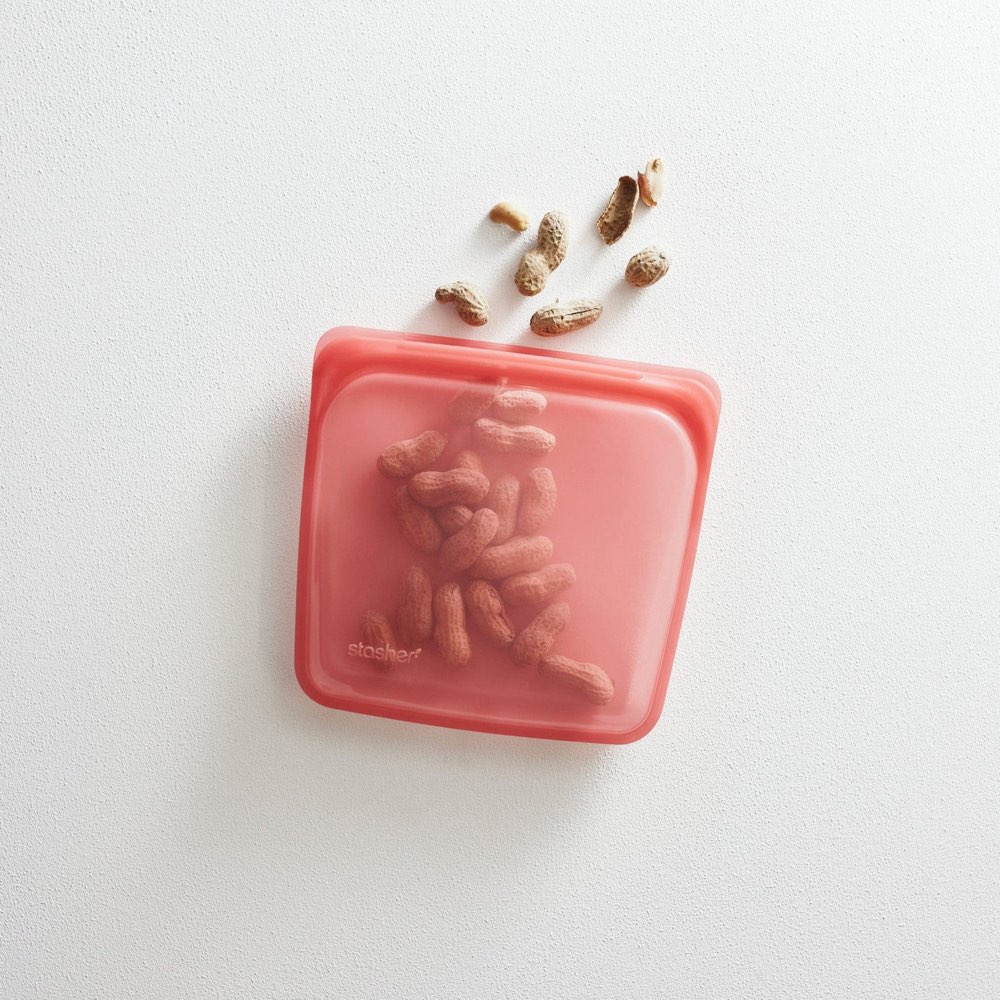
Owners keep coming back to the seal and freezer performance, describing the "thickest silicone and airtight seal" as what makes these best for protecting frozen goods from freezer burn, and they lean on them for lunches and travel because they lie flat, pass airport security, and stay leakproof once the seal is locked, with many saying "I'm never buying a Ziploc bag again." The honest downsides: the press seal has to be pinched shut rather than swiped, so it feels stubborn, reviewers flag that "the inside takes a while to dry" and that "many ridges in the seal that harbor food" make hand-washing a chore, and at about $20 each they sit among the priciest.
A reusable silicone bag that handles leftovers, the freezer, and the sous vide bath — replacing hundreds of disposable plastic bags over its life.
Why it's safe: Made entirely from 100% food-grade platinum silicone with no BPA, BPS, or phthalates — it's chemically inert and sheds no microplastics, even with warm or fatty food.
Check Today’s Price on Amazon →✓ Ships free with Prime · Free returns · Amazon A-to-z purchase guarantee (on eligible items)
- Free delivery & returns for Prime members
- Sold & shipped by Amazon
- Tens of thousands of verified reviews
Frequently asked questions
Tupperware sold today is made without BPA, and for cold or room-temperature food in an undamaged container the risk is low. The concern is the material, not the brand: like all plastic it can shed microplastics and leach trace chemicals, and heat, scratches, age, and oily or acidic foods all increase that. Used carefully it is reasonably safe; microwaved, scratched, or decades old, it is not where you want hot food.
Tupperware says it stopped using BPA in the materials of items sold in the U.S. and Canada as of March 2010, so containers bought new in the last decade are BPA-free. Older, pre-2010 pieces may contain BPA and are best retired from food use. BPA-free is not chemical-free, though — some substitute plasticizers are still being studied, and the plastic itself can still shed microplastics.
Yes. Research on consumer plastic food containers has shown they release microplastic particles into the food and liquid they hold, and the amount rises with heat, wear, and fatty or acidic contents. A 2023 study estimated that microwaving a plastic container could release millions of microplastic and billions of nanoplastic particles from a single square centimeter in minutes. Move food onto glass before reheating.
Microwaving is the worst thing you can do to any plastic container. A "microwave-safe" label only means the container will not warp or melt — it does not mean it releases no particles. Heat is what turns a handful of microplastics into millions, so transfer food onto ceramic or into glass first and never microwave the container it was stored in. See is it safe to microwave Tupperware.
Glass and stainless steel are safest because they are chemically inert — they do not soften, leach, or shed microplastics at food or reheating temperatures. Tempered or borosilicate glass lets you store and microwave in the same dish (lid off), stainless steel is unbreakable for lunches, and food-grade silicone bags replace disposable plastic. Any of these removes plastic from the hot, food-contact surface that matters most.
Sources
- Fadare OO, Wan B, Guo LH, Zhao L. "Microplastics from consumer plastic food containers: Are we consuming it?" Chemosphere, 2020. doi.org/10.1016/j.chemosphere.2020.126787
- Hussain KA, et al. "Assessing the Release of Microplastics and Nanoplastics from Plastic Containers and Reusable Food Pouches." Environmental Science & Technology, 2023. pubs.acs.org/doi/10.1021/acs.est.3c01942
- Du F, Cai H, Zhang Q, Chen Q, Shi H. "Microplastics in take-out food containers." Journal of Hazardous Materials, 2020. doi.org/10.1016/j.jhazmat.2020.122969