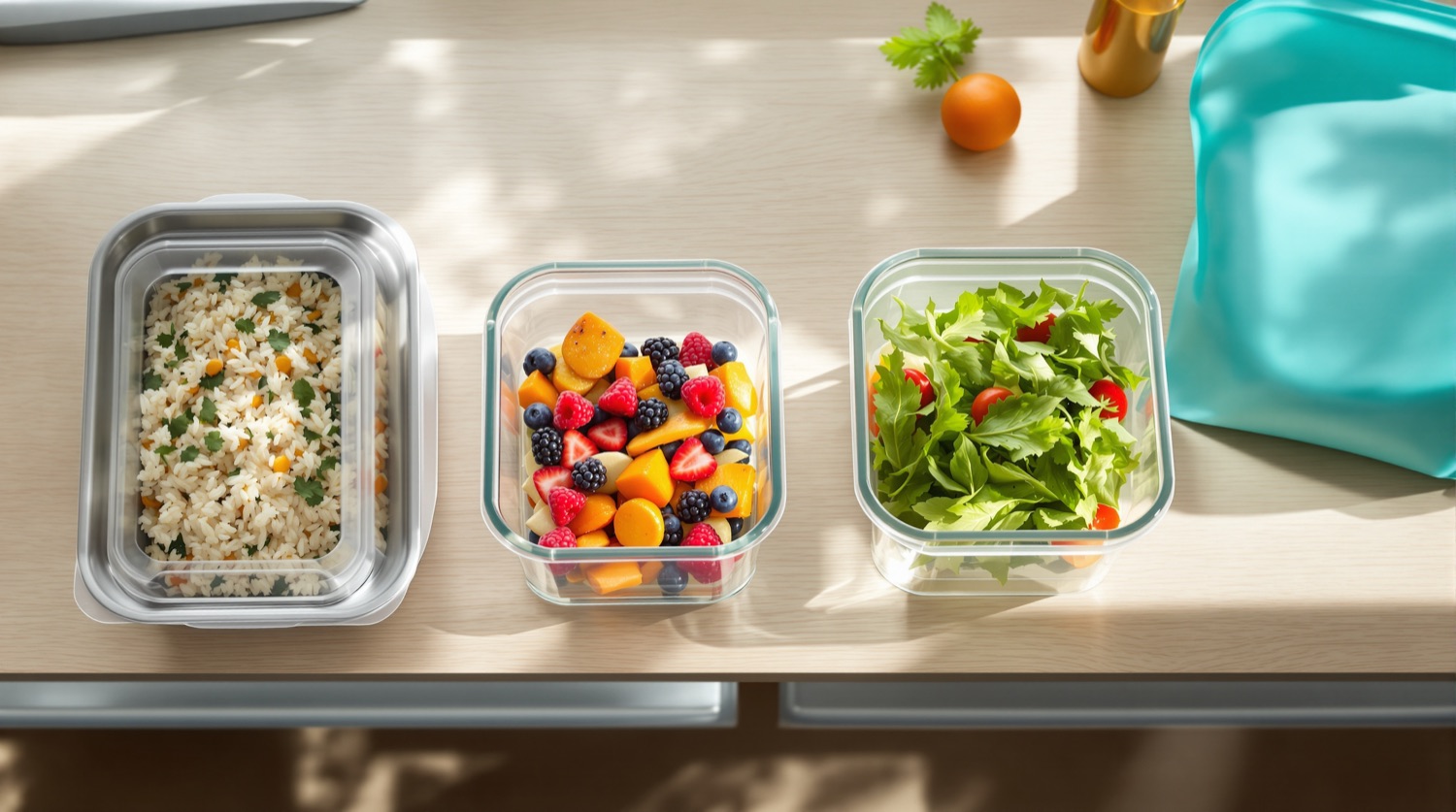
The best non-toxic food storage container in 2026 is the Pyrex Simply Store tempered glass set — food sits on inert glass, the bowls nest, and the set costs roughly what the plastic tubs it replaces cost. The number that turns this from a preference into a decision: a 2023 University of Nebraska–Lincoln study in Environmental Science & Technology measured up to 4.22 million microplastic and 2.11 billion nanoplastic particles released from a single square centimeter of plastic surface in three minutes of microwaving — and the containers tested were labeled microwave-safe. Below: six containers in glass, stainless steel and silicone, the measured evidence for and against each material, and the detail nobody puts in a headline, which is that five of these six still have a plastic lid.
Food storage is the one kitchen purchase almost nobody researches. A set of tubs arrives, the lids get lost one at a time, the survivors go in the microwave because they are there, and the whole thing quietly runs for a decade. It is the most repeated food-contact decision in the house and it is usually made once, by accident.
What has changed is that the microwave step — the convenient one, the one everybody does — now has real measurements behind it. Not a vague warning about chemicals: a particle count, from a named university, in a named journal. That number is worth five minutes. So is the part of this category the marketing skips, which is that “plastic-free” nearly always means “plastic-free except the lid.”
How much plastic actually gets into food from a container?
More than people expect from heating, and more than people expect from simply leaving food in the fridge. The study that put real figures on this is Hussain, Romanova, Okur, Zhang and colleagues, “Assessing the Release of Microplastics and Nanoplastics from Plastic Containers and Reusable Food Pouches: Implications for Human Health,” published in Environmental Science & Technology in 2023 (volume 57, pages 9782–9792), doi 10.1021/acs.est.3c01942, indexed at PubMed 37343248. The team at the University of Nebraska–Lincoln bought three baby-food containers at a local grocery store — two polypropylene jars labeled microwave-safe under US Food and Drug Administration rules, and one reusable polyethylene food pouch — and put them through the things a household actually does to a container: microwaving, refrigerating, and leaving them on a shelf. Deionized water and 3% acetic acid stood in for ordinary and acidic foods.
| What Hussain et al. (2023) measured | Figure |
|---|---|
| Food simulants used | DI water, 3% acetic acid |
| Usage scenario with the highest release | Microwave heating |
| Microplastics released per cm² in 3 min of microwaving | up to 4.22 million |
| Nanoplastics released per cm² in 3 min of microwaving | up to 2.11 billion |
| Refrigeration or room-temperature storage over 6 months | millions to billions of particles |
| Material that released more | Polyethylene pouch > polypropylene jar |
| Highest modeled daily intake — infants, microwaved water | 20.3 ng/kg·day |
| Highest modeled daily intake — toddlers, microwaved dairy | 22.1 ng/kg·day |
| Human kidney cell (HEK293T) death at 1,000 µg/mL, 72 h | 77.18% |
Two lines in that table deserve to be read slowly. The first is “microwave-safe”. Both polypropylene jars carried that designation, and they are the containers that produced those counts. The label is about whether the container survives the heat — whether it warps, melts or deforms — not about whether particles move out of it. We wrote about the same gap in whether it is safe to microwave Tupperware, and it is the most useful single idea on this page.
The second is the storage line. Refrigeration and room-temperature storage for more than six months also released millions to billions of particles. Heat is the accelerant, but it is not the only mechanism; time against a polymer surface does its own work. That is why the fix is the container rather than the habit.
And the honest limit: the cell-viability result at the bottom of that table was an in vitro experiment — kidney cells in a dish exposed to extracted particles at 1,000 micrograms per milliliter. It is a signal that these particles are not biologically inert. It is not a dose anyone eats, and it should not be read as one.
Is the health risk actually proven?
No — and a page that left this out would be selling you something. The World Health Organization took the whole published literature up to December 2021 and assessed it in a 2022 report, Dietary and inhalation exposure to nano- and microplastic particles and potential implications for human health. What came out of that review was not a risk number. It was, in the WHO’s own framing, a set of identified research needs and a defined scope of future work “to address current uncertainties” — covering the polymers themselves, the monomers they are built from, the additives mixed in, and the contaminants that stick to a particle once it is in the environment.
Hold both things at once. A laboratory can count particles coming off a container into a food simulant, and the Nebraska numbers above are real measurements. Nobody has yet shown what that does to a person eating normally over a lifetime. The reason to swap anyway is not that harm is proven — it is that a glass bowl costs about the same as a plastic one, lasts longer, and removes the question entirely. That is a cheap hedge against an open question, which is a different argument from a health scare, and a more durable one.
Glass, stainless steel or silicone — which is actually best?
Each of the three has a measured weakness, and none of them is the one people assume. Here is the whole comparison in one place before the picks.
| Material | Measured concern | Microwave | The honest catch |
|---|---|---|---|
| Tempered glass | None measured in food-contact use | Yes, lid off | Heavy, breakable, and the lid is plastic on almost every set sold |
| 18/8 stainless steel | Nickel and chromium during long acidic cooking (Kamerud 2013) | No | Cannot be microwaved, rarely leak-proof, and you cannot see inside |
| Platinum silicone | Cyclic siloxanes migrating at baking heat (Zhu 2025) | Yes | Seals are the weak point; oven use is the part with real measurements against it |
| Polypropylene (#5) tub | Microplastics and nanoplastics, most of all when microwaved (Hussain 2023) | Released the most particles | Cheap, light, unbreakable — and the material the study was actually about |
Glass has the cleanest record and the worst ergonomics. It is inert, it does not stain or hold smell, and it goes from fridge to oven. It also weighs more than everything else here and it breaks. Our longer head-to-head sits at glass vs plastic food storage containers, and the glass-only ranking is at the best glass food storage containers.
Stainless steel is the only genuinely plastic-free option, lid included, which is why it is on this list at all. The thing people cite against it is real but narrow: Kamerud, Hobbie and Anderson, writing in the Journal of Agricultural and Food Chemistry in 2013 (volume 61, pages 9495–9501, doi 10.1021/jf402400v, PubMed 23984718), simmered commercial tomato sauces in stainless steel and measured nickel up to 26-fold higher and chromium up to 7-fold higher after six hours of cooking, with the largest increases from new steel and leaching stabilizing after about the sixth cooking cycle. That is six hours of hot acid in a saucepan. It is not leftovers in a fridge, and it should not be quoted as though it were.
Silicone is the one the category oversells. It is excellent in a freezer and fine in a microwave, and the claim that it is completely inert does not survive contact with the most recent measurement. Zhu, Wawrzynczak, Niu and colleagues at Health Canada, publishing in the Journal of Hazardous Materials in 2025 (volume 497, article 139591, doi 10.1016/j.jhazmat.2025.139591), examined 25 silicone bakeware products and found total cyclic siloxanes ranging from 680 to 4,300 micrograms per gram of product. Baking for 60 minutes at 177°C with a fatty food simulant put an average of 105 micrograms per gram of those compounds into the simulant, and pushed the one-hour average in indoor air to 646 micrograms per cubic meter before it fell away quickly afterwards. Repeated baking reduced both, which suggests the siloxanes deplete. On a per-body-weight basis, young children had the highest modeled exposure. None of that describes a container sitting in a fridge — but it is why we rank silicone third of the three and say so out loud. The fuller version is in is silicone safe for food.
Compare all 6 picks
Every pick side by side — tap a name to jump to the full review, or check today’s price.
| Pick | Food-contact material | Lid & heat | |
|---|---|---|---|
 Best OverallPyrex Simply Store |
Tempered glass | Plastic snap lidMicrowave, lid off |
Check price → |
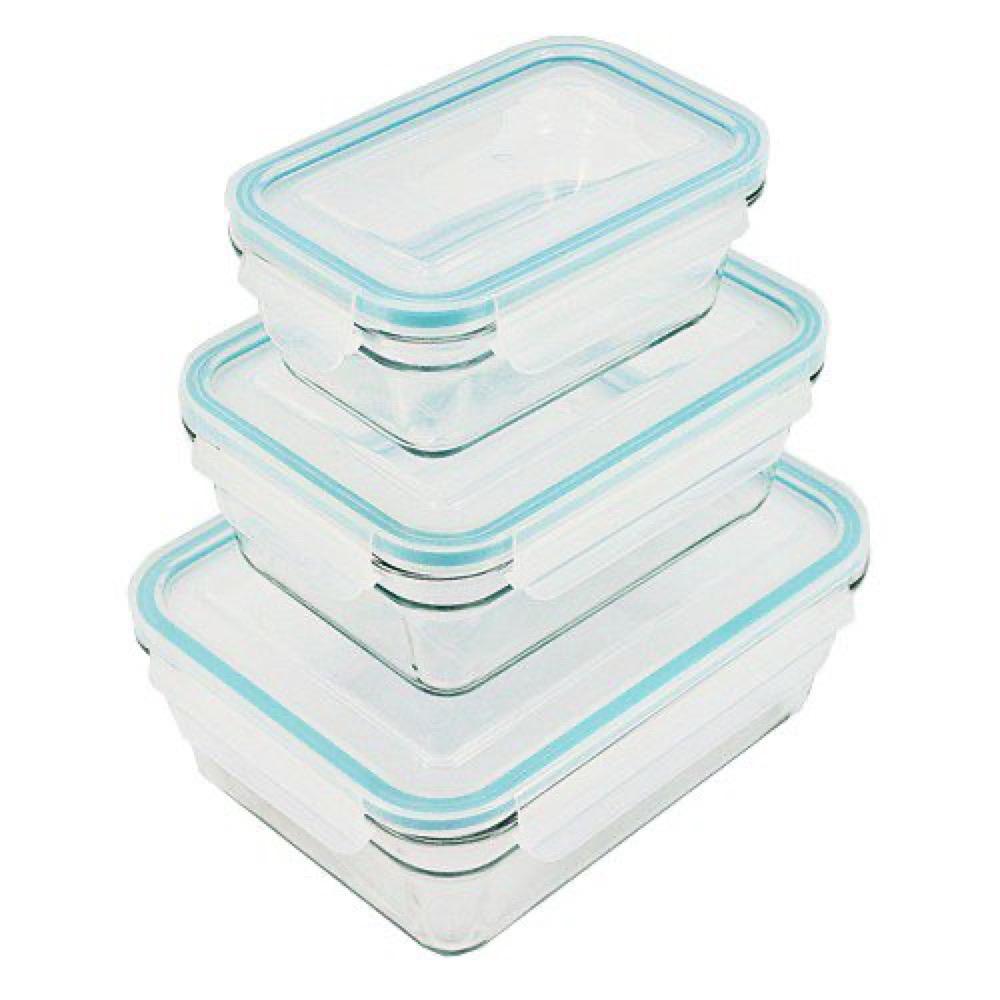 Best for ReheatingGlasslock Oven Safe |
Tempered glass | Latching plastic lidOven safe, lid off |
Check price → |
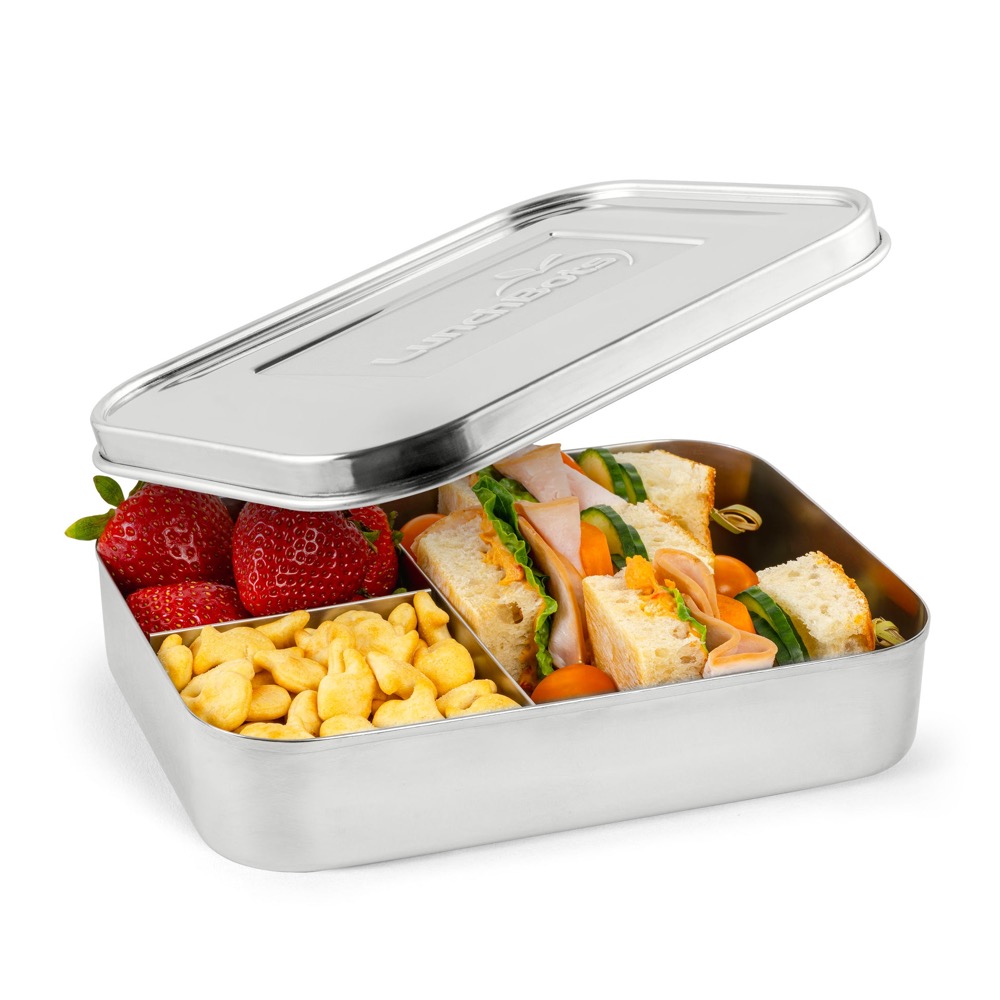 Best All-MetalLunchBots Large Trio |
18/8 stainless | Stainless lidNo microwave |
Check price → |
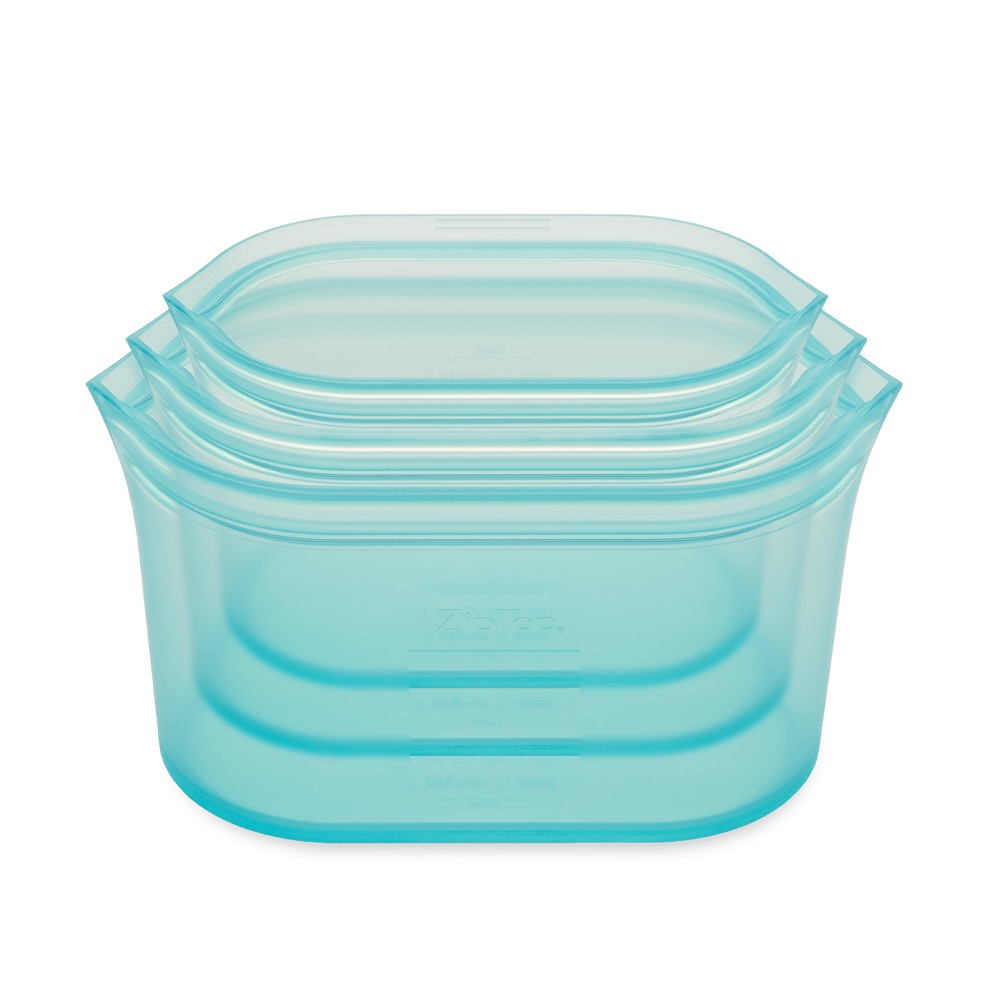 Best With No Plastic LidZip Top Silicone |
Platinum silicone | No lid, one pieceMicrowave, freezer |
Check price → |
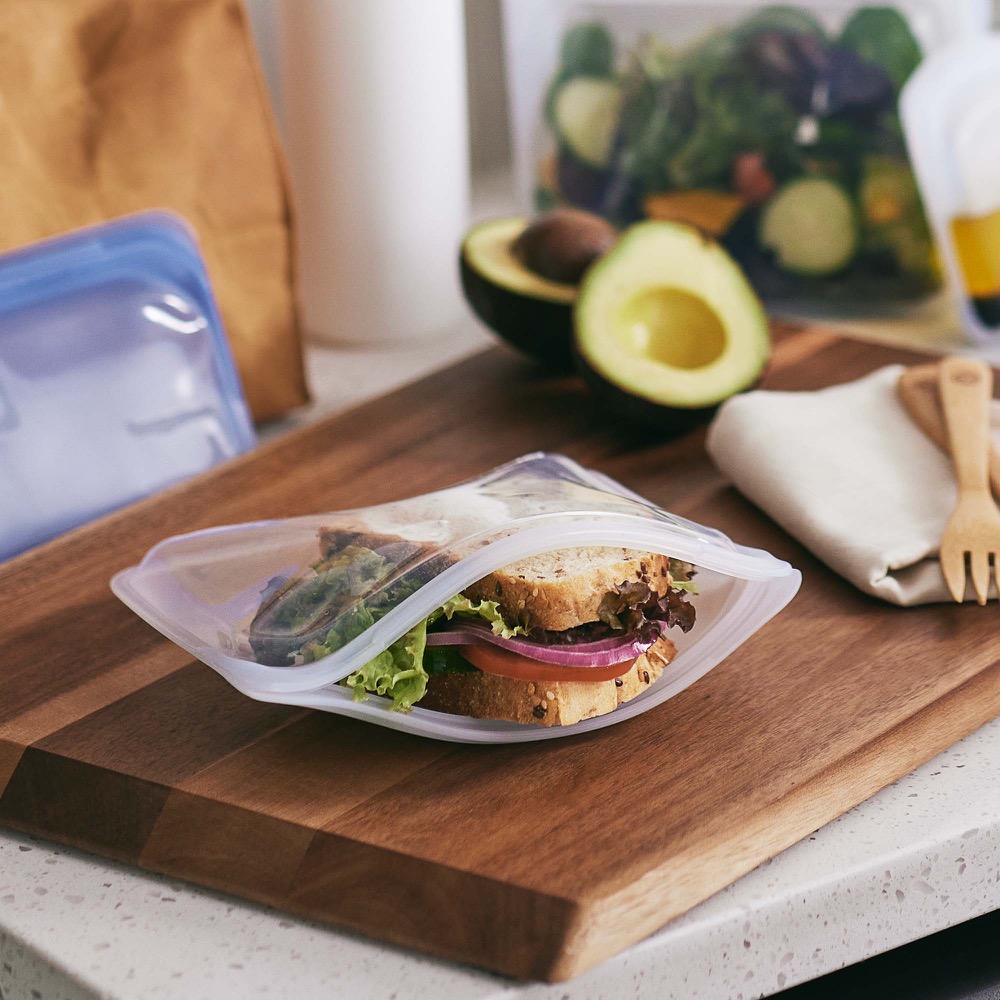 Best Bag ReplacementStasher Silicone Bags |
Platinum silicone | Molded sealOven to 425°F |
Check price → |
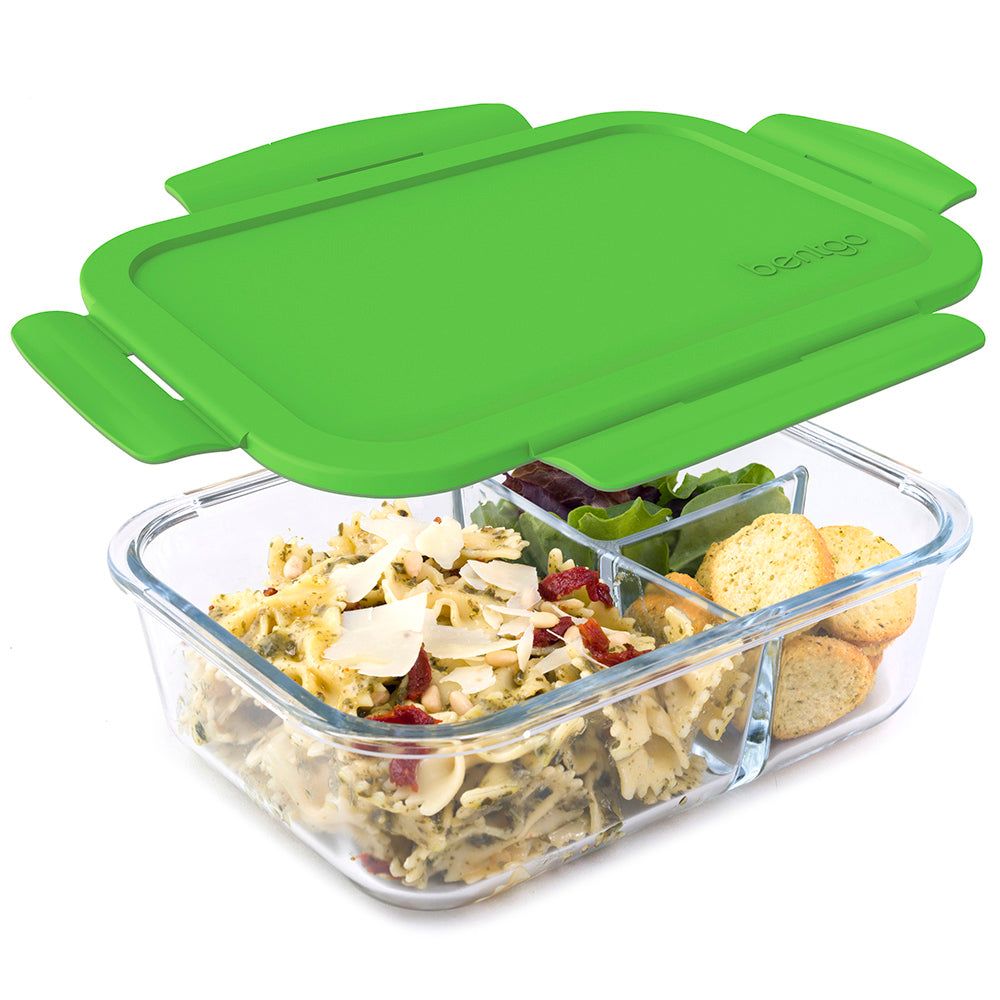 Best for Packed LunchesBentgo Glass Box |
Borosilicate glass | Snap lid, gasketMicrowave, lid off |
Check price → |
Where is the plastic still hiding in a “plastic-free” container?
In the lid, almost every time. It is worth being precise about this, because it is the one claim in this category that gets routinely stretched, and the one a buyer can check in a photograph.
A glass container is a glass bowl with a plastic lid. Pyrex, Glasslock, Bentgo and essentially every glass set at a normal price use a polypropylene closure, usually with a silicone gasket. A glass lid with a reliable seal exists, costs considerably more, and seals less well. So the right way to read “plastic-free glass storage” is: the food sits on glass, and the plastic is a cover that comes off before heat.
That geometry is the whole argument, and it is a good one. The release measured in the Nebraska study came from hot food in contact with a polymer surface. A lid sitting above cold leftovers in a fridge is not that. Calling such a set “plastic-free” is imprecise; calling the swap pointless because the lid is plastic is more wrong, and it is the objection that keeps people in plastic tubs.
Two of the picks here genuinely have no plastic lid. The LunchBots Large Trio has a stainless lid, so there is no polymer in the product at all. The Zip Top dishes have no separate lid, because the container and its closure are one molded piece of silicone. If the lid is what bothers you — and it is a reasonable thing to be bothered by — those are the two to look at. For the rest, the honest framing is less plastic against food, not no plastic in the house. The same logic runs through our kitchen plastic detox guide and our pick of the best silicone food storage bags.
The 6 Best Non-Toxic Food Storage Containers in 2026
#1 — Pyrex Simply Store Glass Storage Set — Best Overall
Best Overall
A whole set of reheat-ready glass for roughly the price of a plastic set, with replacements easy to buy one at a time.
Why it’s best for plastic exposure: Food is stored and reheated on inert glass, so there is no polymer surface for heat or oil to pull particles out of.
Check Today’s Price on Amazon →Amazon prices change daily — tap to see today's price and any active discount.
- Free delivery & returns for Prime members
- Sold & shipped by Amazon
- Nesting bowls, replaceable pieces
The honest trade-offs. Glass is heavy and it breaks — a dropped bowl is a dustpan job, not a dented tub. The lids are plastic, so this is not a plastic-free purchase; it is a plastic-off-the-food purchase, which is a different and more defensible claim. And the snap lids are the first part to warp after enough dishwasher cycles, which is why replaceable pieces matter more here than the badge on the box.
Best for: The household replacing a whole drawer of plastic tubs at once on a normal budget.
#2 — Glasslock Oven Safe Container Set (3-Pack) — Best for Reheating
Best for Reheating
Store it, then reheat it in the same dish with the lid off, so a meal never meets a hot plastic surface.
Why it’s best for plastic exposure: Tempered glass is inert at cooking temperatures, and the only plastic in the product sits on the lid rather than under the food.
Check Today’s Price on Amazon →Amazon prices change daily — tap to see today's price and any active discount.
- Free delivery & returns for Prime members
- Latching lids with silicone gaskets
- Glass body rated for the oven
The honest trade-offs. The lids are polypropylene — the same family of plastic as the containers this guide is arguing against — and they are only out of the argument because they sit above the food and come off before heat. The latches are also the failure point: they are the part that cracks, and a lid is harder to replace than a bowl. And no glass is immune to thermal shock, so let a frozen container stand while the oven preheats rather than putting it into an already-hot oven.
Best for: Anyone who batch-cooks on Sunday and reheats all week, who wants one dish for both jobs.
#3 — LunchBots Large Trio Stainless Steel Container — Best All-Metal
Best All-Metal
One container with no plastic component whatsoever, and a steel body that survives being dropped on a tile floor.
Why it’s best for plastic exposure: There is no polymer anywhere in the food path, so nothing can shed particles into the food, hot or cold.
Check Today’s Price on Amazon →Amazon prices change daily — tap to see today's price and any active discount.
- Free delivery & returns for Prime members
- 18/8 stainless, lid included
- Welded compartments, no loose inserts
The honest trade-offs, and they are real. It cannot go in a microwave, so reheating means moving food to a plate. Owners are blunt that it is not leak-proof and the compartments are not liquid-tight from each other, so wet fruit will find the crackers. You also cannot see what is inside. And steel is not chemically inert in the way glass is — see the nickel and chromium section above, which matters for long acidic cooking rather than for storing leftovers, but is worth knowing if you have a nickel sensitivity.
Best for: Packed lunches, and anyone who wants zero plastic rather than less plastic.
#4 — Zip Top Silicone Containers (Dish Set) — Best With No Plastic Lid
Best With No Plastic Lid
Nothing to lose, nothing to warp, and no plastic lid to make an exception for.
Why it’s best for plastic exposure: The whole container is one piece of platinum-cured silicone, so there is no polypropylene or polyethylene anywhere in it.
Check Today’s Price on Amazon →Amazon prices change daily — tap to see today's price and any active discount.
- Free delivery & returns for Prime members
- Made in the USA
- One-piece silicone, no plastic zipper
The honest trade-offs. The seal is the weak point — owners report that it is not airtight, that liquids escape if a container tips, and that fine granules work their way out of the zip. Capacity is modest for the price. And silicone is not nothing: a 2025 study in the Journal of Hazardous Materials measured cyclic siloxanes migrating out of silicone bakeware during baking, covered in the material section above. Fridge and freezer use sits a long way from those conditions, but “silicone is inert” is a stronger claim than the evidence supports.
Best for: Portioned leftovers and meal prep, and anyone who has lost one lid too many.
#5 — Stasher Reusable Silicone Bag Starter Kit — Best Bag Replacement
Best Bag Replacement
Freeze, thaw and reheat in the same bag, with a heat rating that is not sitting just under boiling.
Why it’s best for plastic exposure: Platinum-cured silicone is not a thermoplastic film, so it does not soften or abrade the way a polyethylene zip bag does.
Check Today’s Price on Amazon →Amazon prices change daily — tap to see today's price and any active discount.
- Free delivery & returns for Prime members
- Molded seal, no plastic zipper strip
- Rated -70°F to 425°F
The honest trade-offs. They are expensive per bag, they take up real drawer space because they do not lie flat when full, and garlic and chili will haunt one for weeks no matter how it is washed. Drying the inside is genuinely annoying. And as with every silicone product here, the siloxane migration measured in silicone bakeware at 177°C is a reason to keep oven use occasional rather than routine.
Best for: Freezing portions, marinating, and anyone whose real habit is a bag rather than a box.
#6 — Bentgo Glass Lunch Container — Best for Packed Lunches
Best for Packed Lunches
Reheat lunch at the office in glass instead of eating out of the plastic box it was packed in.
Why it’s best for plastic exposure: Both the body and the internal divider are glass, so hot food has no plastic surface to sit against.
Check Today’s Price on Amazon →Amazon prices change daily — tap to see today's price and any active discount.
- Free delivery & returns for Prime members
- Glass divider rather than a plastic insert
- Lid removes for microwave and oven
The honest trade-offs, straight from owners. It is heavy and bulky in a bag, the lid can need real force to close and can seal itself shut after heating, and some report the glass chipping more easily than expected. Watery foods can cross between the inner compartments even when the outer lid holds. And the 450°F oven figure is a manufacturer claim, not a laboratory result.
Best for: Desk lunches, school runs and anyone who reheats somewhere other than their own kitchen.
How we evaluated these
We did not run our own laboratory test and we will not imply that we did. What we did is narrower and checkable. We started from the published measurements that exist for each material — the Nebraska particle-release study for plastic, the Health Canada siloxane study for silicone, the Oregon State nickel and chromium work for stainless steel — and used them to rank the materials first, which is the decision that actually matters, rather than ranking brands against each other on vibes. Every pick then had to meet three requirements: the food-contact surface is glass, steel or silicone rather than a thermoplastic; the heat rating comes from the manufacturer’s own published specification and is marked as a manufacturer claim where it is one; and we name the material of the lid, every time, including when naming it undercuts the “plastic-free” framing the product is sold under. Product photographs are the manufacturers’ own listing images, and the owner-reported downsides in the trade-off paragraphs come from verified buyer reviews rather than from our imagination. Where the evidence is thinner than the category pretends — cell-culture results that are not a dietary dose, a cookware study quoted as though it were a storage study, a WHO review that stops short of a risk figure — we have put it in the body rather than in a footnote. If you are working through the rest of the kitchen, the companion lists are non-toxic lunch containers for adults and non-toxic kitchen utensils.
Frequently Asked Questions
The Pyrex Simply Store tempered glass set, for the unglamorous reason that it is cheap enough to replace a whole drawer of plastic tubs at once. Food sits on inert glass, the bowls nest so the set survives in a real kitchen, and the bowl goes in the microwave or the oven once the lid is off — which is the step the research actually points at. If your objection is plastic rather than heat, the all-metal pick is the LunchBots Large Trio: 18/8 stainless with a stainless lid, and no polymer anywhere in the product.
The most precise figures published come from Hussain and colleagues at the University of Nebraska–Lincoln, writing in Environmental Science & Technology in 2023. Testing baby-food containers bought at a grocery store, they found some containers released as many as 4.22 million microplastic and 2.11 billion nanoplastic particles from a single square centimeter of plastic surface within three minutes of microwaving. Refrigeration and room-temperature storage for more than six months also released millions to billions of particles. The polyethylene food pouch released more than the polypropylene containers did.
Not in the sense most people read it. The two polypropylene baby-food jars in the Nebraska study were labeled microwave-safe under US Food and Drug Administration rules, and they are the containers that produced the figures above. The label is about whether the container survives the heat — whether it warps, melts or fails — not about whether particles move into the food. That distinction is the single most useful thing to take from this page.
Much less than a plastic bowl would be, and this is the honest answer rather than the marketing one. Five of the six picks here have a plastic or part-plastic closure, because a glass lid with a reliable seal barely exists at a normal price. What matters is geometry: the lid sits above the food, it is not a heating surface, and it comes off before the microwave or oven. A container sold as plastic-free with a polypropylene lid is not lying so much as being imprecise, and we would rather name the part than repeat the claim.
For the fridge and the freezer the case is strong, and at baking temperatures it is weaker than the category admits. Zhu and colleagues, publishing in the Journal of Hazardous Materials in 2025, measured total cyclic siloxanes at 680 to 4,300 micrograms per gram across 25 silicone bakeware products, and found an average of 105 micrograms per gram of those compounds in a fatty food simulant after one hour of baking at 177°C. Repeated baking reduced migration, suggesting the siloxanes deplete over time. Cold storage is a long way from those conditions — but “silicone is completely inert” is a stronger claim than the measurements support.
Over long, hot, acidic cooking, yes. Over fridge storage, there is no evidence that it matters. Kamerud, Hobbie and Anderson, in the Journal of Agricultural and Food Chemistry in 2013, simmered tomato sauce in stainless steel and found nickel concentrations up to 26-fold higher and chromium up to 7-fold higher after six hours, with leaching highest from new steel and stabilizing after about six cooking cycles. That is a cookware finding about hours of simmering acid, not a storage finding about leftovers in the fridge. It is worth knowing if you have a diagnosed nickel sensitivity, and otherwise it is not the reason to choose or avoid a steel box.
No, and a page that implied otherwise would be selling you something. The World Health Organization assembled and reviewed the published data up to December 2021 in its 2022 report Dietary and inhalation exposure to nano- and microplastic particles and potential implications for human health, and what it produced at the end was a list of research needs “to address current uncertainties” rather than a risk figure. Laboratory work can measure particles coming off a container into a food simulant; what that does to a person eating normally over a lifetime has not been established. Swapping a container is cheap and permanent, which is why it is a reasonable thing to do under uncertainty — not because the harm is proven.
Sources cited
- Hussain, K. A., Romanova, S., Okur, I., Zhang, D., Kuebler, J., Huang, X., Wang, B., Fernandez-Ballester, L., Lu, Y., Schubert, M., & Li, Y. (2023). “Assessing the Release of Microplastics and Nanoplastics from Plastic Containers and Reusable Food Pouches: Implications for Human Health.” Environmental Science & Technology, 57(26), 9782–9792. doi 10.1021/acs.est.3c01942 — PubMed 37343248.
- Zhu, J., Wawrzynczak, A., Niu, J., Chan, W. Y., Vivas, M., Das, D., Tourangeau, J., Zhang, G., Cao, X.-L., & Feng, Y.-L. (2025). “Silicone bakeware as a source of human exposure to cyclic siloxanes via inhalation and baked food consumption.” Journal of Hazardous Materials, 497, 139591. doi 10.1016/j.jhazmat.2025.139591.
- Kamerud, K. L., Hobbie, K. A., & Anderson, K. A. (2013). “Stainless Steel Leaches Nickel and Chromium into Foods During Cooking.” Journal of Agricultural and Food Chemistry, 61, 9495–9501. doi 10.1021/jf402400v — PubMed 23984718.
- World Health Organization (2022). Dietary and inhalation exposure to nano- and microplastic particles and potential implications for human health. WHO publication 9789240054608.
- Materials, capacities, heat ratings and lid construction: each manufacturer’s own published specification and Amazon listing, read November 4, 2026.
Protect Every Room in Your Home
From the kitchen to the nursery to the bathroom — the Complete Plasticproof Guide covers every swap that matters, backed by 47+ studies.