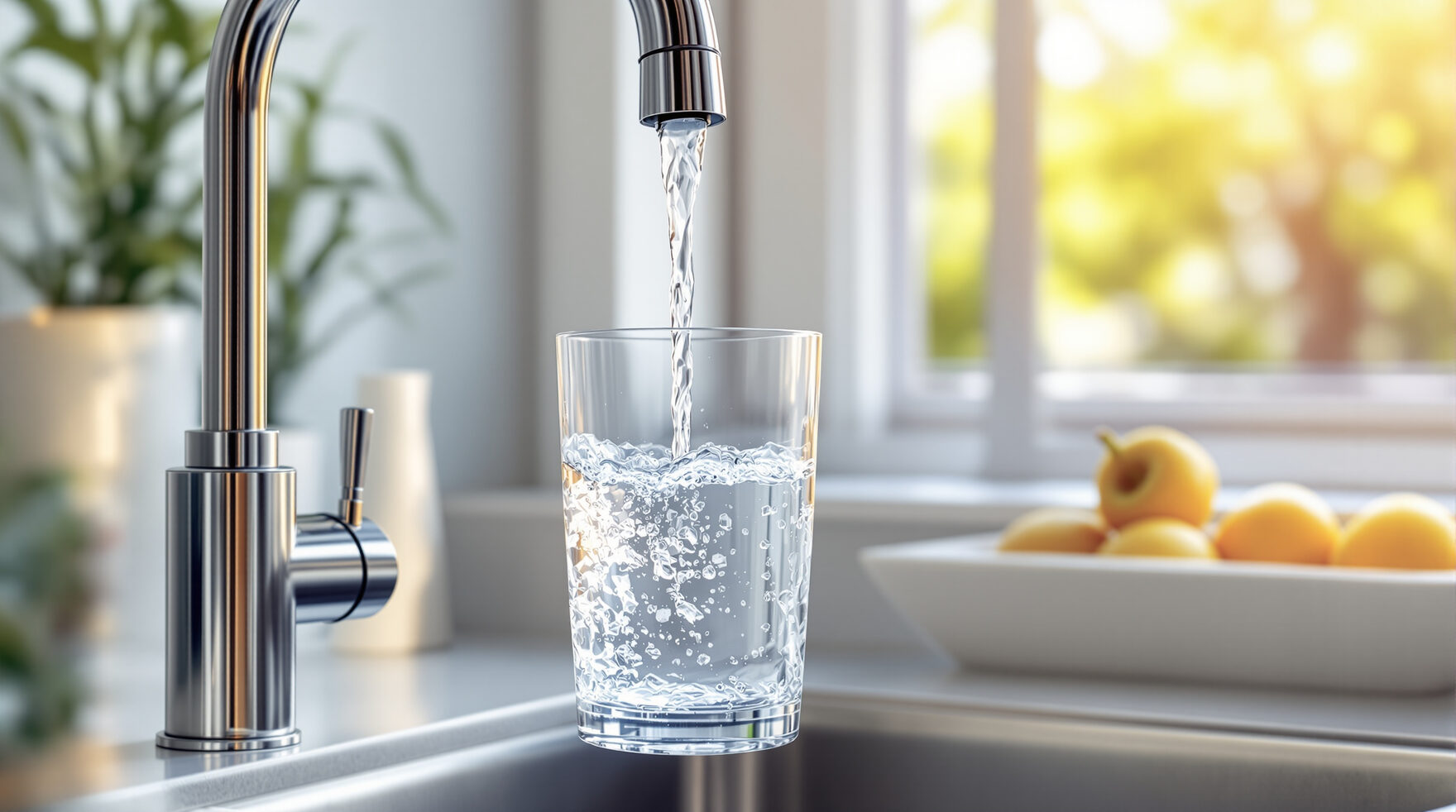
Most tap water does contain microplastics. The largest global survey to date detected microplastic particles in 81% of tap water samples across 14 countries, and the World Health Organization confirms micro- and nanoplastics are widespread in drinking water. The reassuring part is that tap water generally carries far fewer particles than bottled water — roughly 4,000 particles a year for a tap-only drinker versus about 90,000 for a bottled-only drinker — and the WHO's review concluded the levels measured in drinking water are not a proven health hazard, though the science is still young. If you want to lower your exposure, a reverse-osmosis system or a quality carbon-block or certified pitcher filter removes most of the microplastics in tap water.
"Does tap water have microplastics" is one of the first questions people ask once they learn these particles have been found in human blood, lungs and even the placenta. Water is the obvious place to start, because it is one of the largest and most controllable sources of what you take in — and because the answer decides whether switching to bottled water actually helps (it usually does not).
This guide walks through what the testing actually measures: how often microplastics turn up in tap water, how many particles are typically present, how tap compares with bottled, where the particles come from, whether the levels are dangerous, and the filters that remove them. It takes the same evidence-first approach as is tap water safe to drink and bottled water vs tap water.
The short version: yes, microplastics turn up in most tap water — but usually at low levels, and far below what is found in bottled water. The WHO says the measured amounts are not a known health risk, while flagging that research is still limited. The reliable way to reduce them is a good water filter, not switching to bottled.
Does tap water have microplastics?
For most people, yes. The single biggest study to look at this — a 2018 survey led by researchers at the University of Minnesota and the State University of New York, working with Orb Media — analyzed 159 tap water samples from 14 countries on five continents and found microplastic particles in 81% of them (Kosuth, Mason & Wattenberg, PLOS ONE, 2018). The United States had one of the highest contamination rates at about 94% of samples. The particles were mostly tiny fibers, the kind that shed from synthetic clothing, carpets and other textiles into the environment and the water supply.
Since then, the World Health Organization's 2019 report on microplastics in drinking-water reviewed the evidence and reached the same basic conclusion: micro- and nanoplastics are present in tap water, bottled water and the freshwater sources they come from, essentially everywhere anyone has looked. So the honest answer to "does tap water have microplastics" is that it almost always does — but, as the next sections show, usually at far lower levels than bottled water, and at concentrations the WHO does not consider a proven health risk.
How many microplastics are in tap water?
The amount varies widely by location, pipes and testing method, but the numbers are generally low. The 2018 global study measured an average of about 5.45 microplastic particles per liter of tap water, with most individual samples in the low single digits to low tens of particles per liter. For context, that is a tiny fraction of what the same kinds of studies find in bottled water. Levels differ from city to city, so your own tap may be higher or lower than that average.
The headline-grabbing numbers you have probably seen — like "240,000 plastic particles per liter" — come from a 2024 study of bottled water, not tap. Using a new laser-imaging technique that can count the smallest nanoplastics, researchers at Columbia University found roughly 240,000 particles per liter in popular bottled water brands, far more than older methods detected (Qian et al., PNAS, 2024). That study is a reminder that counts depend heavily on how small a particle the instrument can see — and that bottled water, not tap, is where the extreme numbers show up.
Does tap water or bottled water have more microplastics?
Bottled water has far more — which surprises people who switch to bottled hoping to avoid plastic. A widely cited 2019 analysis of total microplastic intake estimated that someone who drinks only bottled water takes in roughly 90,000 microplastic particles a year from water alone, compared with about 4,000 particles a year for someone who drinks only tap (Cox et al., Environmental Science & Technology, 2019). That is more than a twentyfold difference.
The reason is the packaging itself. Bottled water sits in plastic for weeks or months, and the bottle and cap shed particles into the water — more so when the bottle gets warm in a car or a delivery truck, or when it is squeezed, reused or refilled. Tap water skips all of that. So if your goal is fewer microplastics, filtered tap water is usually both cheaper and lower in particles than bottled. We break the comparison down further in bottled water vs tap water microplastics.
Where do the microplastics in tap water come from?
They enter the water long before it reaches your glass. Most of the particles are synthetic fibers and fragments that wash into rivers, lakes and groundwater from laundry wastewater, tire dust, industrial runoff and the slow breakdown of plastic litter in the environment. Because these are the sources that feed public water supplies, microplastics show up in the raw water that treatment plants start with — which is why the 2018 global study found them on every continent it sampled.
Water-treatment plants remove a large share of microplastics, especially the bigger particles, through the same filtration and settling steps that clean up other debris — but they are not designed to catch the smallest fragments, so some get through. A little more can be picked up on the last leg of the journey, from aging pipes and plumbing. Heating or storing water in plastic adds particles too, which is one reason we recommend never boiling or storing water in plastic containers.
Are the microplastics in tap water dangerous?
Based on the evidence we have today, the levels found in tap water are not considered a proven health hazard. When the World Health Organization reviewed the research, it concluded that microplastics in drinking water do not appear to pose a risk to human health at the concentrations currently measured — while being clear that the science is still limited, especially for the smallest nanoplastics that older methods could not detect, and that more and better research is needed. In other words: not an emergency, but a sensible thing to reduce.
That measured, honest framing matters, because the topic attracts scary headlines and products that overpromise. The particles are real and worth lowering where it is cheap and easy to do so — chiefly by filtering your water and not drinking from plastic bottles — but the current data do not support panic, and they do not support paying for a "detox." For the broader picture on what the particles may and may not do, see how dangerous are microplastics.
Bottled water carries far more microplastics than tap — roughly 22 times more per year of drinking — so swapping your tap for bottled usually increases your exposure while costing more and creating plastic waste. If you want fewer particles, filter your tap water instead.
How do you remove microplastics from tap water?
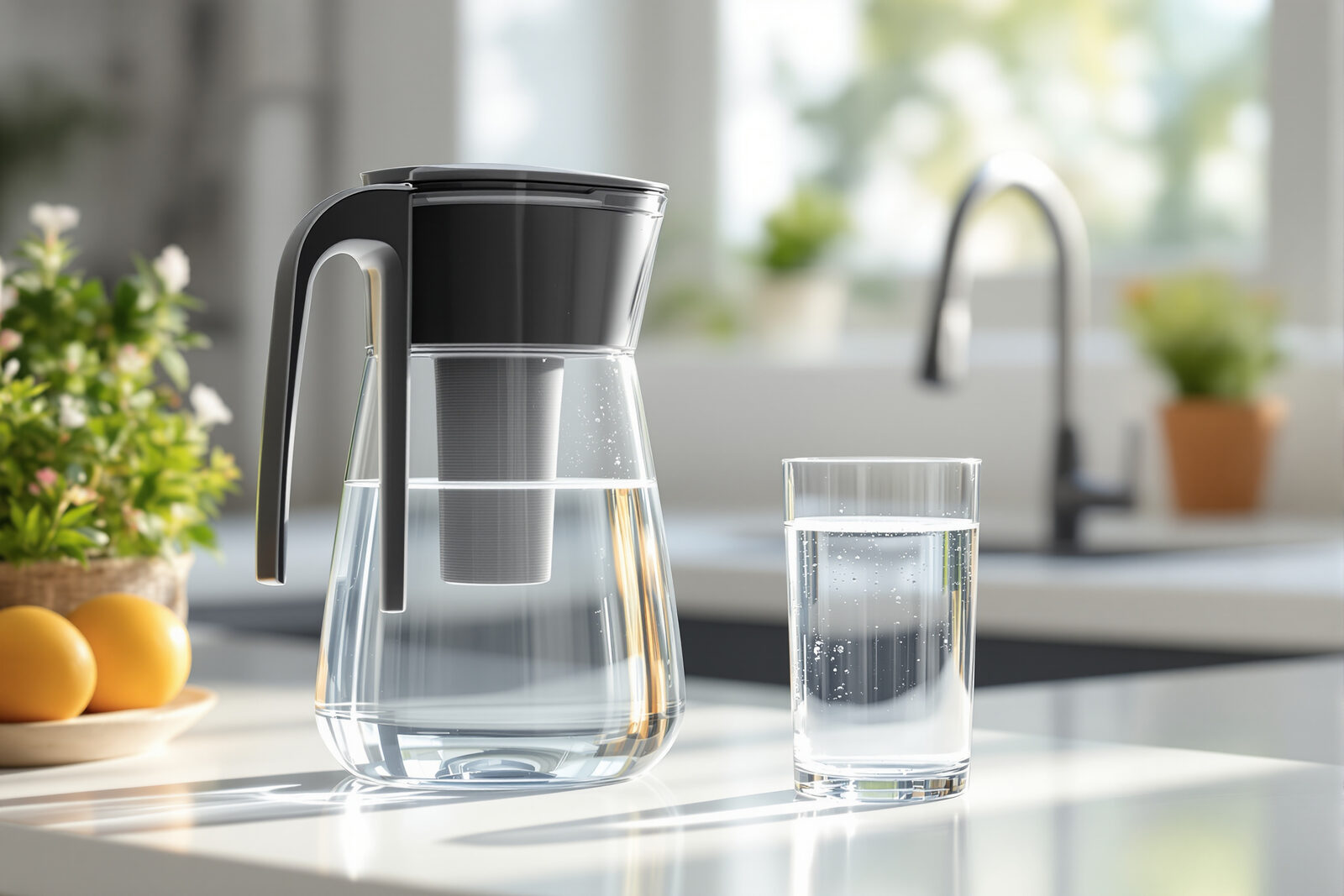
A good filter is the reliable fix, because microplastic particles are physically large compared with the dissolved contaminants a filter normally has to catch — so a filter fine enough to improve taste and cut chlorine will usually strip out most of the plastic too. The question is which type, and how it is rated. Here are the options, from most thorough to simplest, with a filter guide for each.
- Reverse osmosis removes the most. An RO system forces water through a membrane with openings far smaller than any microplastic, capturing essentially all of them along with many dissolved contaminants. See the best reverse-osmosis systems.
- Carbon-block filters catch most particles. A dense carbon-block cartridge rated to roughly one micron traps the large majority of microplastics while also cutting chlorine and taste issues — a great balance of cost and performance. Compare picks in the best water filters for microplastics.
- Certified pitchers and faucet filters help. Many pitcher and faucet-mounted filters reduce microplastics; look for a tight micron rating rather than a basic taste-only cartridge. Our best water filter pitchers for microplastics guide flags which ones qualify, and does Brita remove microplastics covers a common question.
- Boiling helps only in hard water. Boiling hard water makes limescale form and trap particles, which you then strain out — useful, but inconsistent and no substitute for a filter. See does boiling water remove microplastics.
- Skip bottled, store in glass or steel. Don't trade tap for bottled, and keep your filtered water in glass or stainless steel rather than plastic so it doesn't pick particles back up. More swaps in how to remove microplastics from water.
The bottom line: does tap water have microplastics?
Yes — most tap water contains microplastics, with the largest global study detecting them in 81% of samples, and the WHO confirming they are present in drinking water essentially everywhere. But the two facts that matter most are reassuring: the levels in tap water are low compared with bottled water, and health authorities do not consider those levels a proven risk at current exposures, even as they call for more research.
So the practical takeaway is simple. There is no reason to panic, and switching to bottled water is the wrong move — it adds far more particles than it removes. If you want to lower the microplastics in your drinking water, filter it: a reverse-osmosis system or a quality carbon-block or certified pitcher filter removes most of them, cheaply and for good. Start with the best water filters for microplastics, and see is tap water safe to drink for the bigger picture on what else is in your water.
Remove the microplastics, keep the tap water
Don't switch to bottled — filter instead. These guides show which filters actually remove microplastics, from pitchers to reverse osmosis.
Frequently Asked Questions
Usually, yes. The largest global survey of tap water, published in 2018, detected microplastic particles in 81% of samples across 14 countries, and the World Health Organization's 2019 review confirmed that micro- and nanoplastics are widespread in drinking water worldwide. The good news is that tap water generally contains far fewer particles than bottled water, and the levels measured in tap water have not been shown to cause harm at current exposures. A quality water filter removes most of what is there.
It varies a lot by location and testing method, but the 2018 global study found an average of about 5.45 microplastic particles per liter of tap water, with the United States and other countries sampled showing detection rates around 94%. Those numbers are small compared with bottled water, which a 2024 study measured at roughly 240,000 plastic particles per liter once nanoplastics were counted. Treatment plants remove a large share of particles, but not all of them.
Bottled water has far more. Research estimates a person drinking only bottled water takes in roughly 90,000 microplastic particles a year from water, versus about 4,000 for someone drinking only tap. Bottled water picks up extra particles from the plastic bottle and cap, especially when bottles are warmed or reused. For most people, filtered tap water is both cheaper and lower in microplastics than bottled.
Based on current evidence, the levels in tap water are not considered a proven health hazard. The World Health Organization reviewed the data and concluded that microplastics in drinking water do not appear to pose a health risk at measured concentrations, while stressing that the science is still limited and more research is needed, especially on the smallest nanoplastics. Reducing intake is a sensible precaution rather than an emergency.
Yes, good ones remove most of them. Reverse osmosis systems and quality carbon-block filters capture the large majority of microplastic particles because the particles are far bigger than the contaminants these filters are designed to catch. Many certified pitcher and faucet filters also reduce microplastics. A filter rated to roughly one micron or finer, or a reverse osmosis system, is the most reliable choice for lowering microplastics in your drinking water.
Boiling does not remove microplastics on its own, but in hard water it can help. Research found that boiling hard tap water causes limescale to form and trap a large share of microplastic particles, which you can then remove by pouring the water through a simple filter after it cools. In soft water the effect is much smaller. Boiling also will not remove dissolved chemicals, so a proper filter is still the dependable fix.
Sources
- Kosuth M, Mason SA, Wattenberg EV. "Anthropogenic contamination of tap water, beer, and sea salt." PLOS ONE, 2018;13(4):e0194970, doi.org/10.1371/journal.pone.0194970. The largest global survey of tap water for microplastics: 159 samples from 14 countries, with particles found in 81% of samples (about 94% in the United States) and an overall average of roughly 5.45 particles per liter — most of them synthetic fibers.
- World Health Organization. "Microplastics in drinking-water," 2019, who.int. Reviews the evidence on micro- and nanoplastics in tap and bottled water and concludes that, based on the limited data available, microplastics in drinking water do not appear to pose a health risk at current levels — while calling for more and better research, especially on the smallest particles.
- Cox KD, Covernton GA, Davies HL, Dower JF, Juanes F, Dudas SE. "Human Consumption of Microplastics." Environmental Science & Technology, 2019;53(12):7068–7074, doi.org/10.1021/acs.est.9b01517. Estimates that drinking only bottled water adds about 90,000 microplastic particles a year versus roughly 4,000 for tap water — a more than twentyfold difference driven by the plastic packaging.
- Qian N, Gao X, Lang X, Deng H, Bratu TM, Chen Q, Stapleton P, Yan B, Min W. "Rapid single-particle chemical imaging of nanoplastics by SRS microscopy." Proceedings of the National Academy of Sciences (PNAS), 2024;121(3):e2300582121, doi.org/10.1073/pnas.2300582121. Using a new nanoplastic-counting technique, found roughly 240,000 plastic particles per liter in popular bottled waters — far more than older methods detected, and far more than is typically found in tap water.
- Yu Z, Li Z, Zeng EY. "Drinking Boiled Tap Water Reduces Human Intake of Nanoplastics and Microplastics." Environmental Science & Technology Letters, 2024;11(3):273–279, doi.org/10.1021/acs.estlett.4c00081. Found that boiling hard tap water causes limescale to form and encapsulate a large share of nano- and microplastic particles, which can then be removed by filtering the cooled water; the effect is much smaller in soft water.