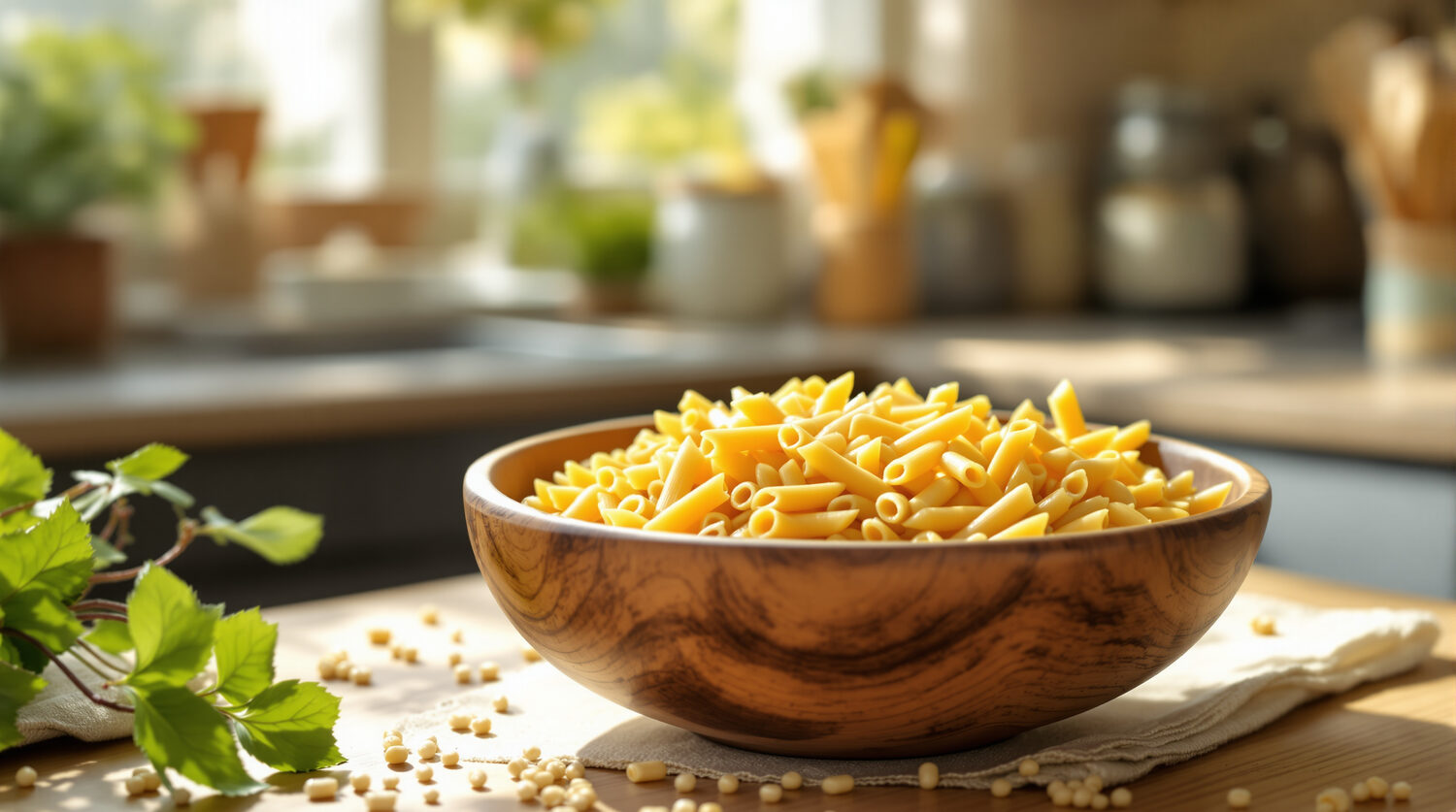
Almost certainly yes — but the plastic mostly comes from how pasta is processed and cooked, not from the wheat. No published study has counted the microplastics in a finished bowl of cooked pasta. What we do know is that every dry staple like it that has been tested — rice, flour, sugar and table salt — contains microplastics, picked up during milling, drying and packaging. Then you boil pasta in several quarts of tap water (a measured microplastic source), usually add salt, and drain it hot through a plastic colander. Each step is a small, real plastic touchpoint. So pasta itself is a modest source, and the biggest levers are the water you boil it in and the plastic it touches afterward — not giving up pasta.
Pasta sits in an interesting spot in the microplastics story. Most foods pick up plastic from a single obvious place — a bottle, a can liner, a sheet of cling wrap. Pasta collects tiny amounts from a whole chain of small steps instead: the wheat is milled and dried in industrial facilities, poured into a box or bag, boiled in tap water, salted, drained, plated, and often stored as leftovers. None of those steps adds much on its own, but together they are why the honest answer is not a simple “no.”
This guide walks through what the research can and cannot tell us — where the particles come from, whether dried, fresh or instant pasta differs, whether boiling and draining add plastic, and whether any of it is worth worrying about (the honest answer is calmer than the headlines) — plus the practical, genuinely useful ways to cut your overall intake without giving up a food that is in half the dinners you cook.
The bottom line up front: pasta almost certainly carries small amounts of microplastics, but they come from processing, packaging and — most of all — the tap water you boil it in, not the wheat. So the fix is not a special brand of pasta; it is filtering your cooking water, draining with a metal colander, and storing leftovers in glass. Keep it in proportion, too: one bowl of pasta is tiny next to the water you drink all day. For the wider picture, see microplastics in rice, which foods have the most microplastics, and what microplastics do in the human body.
Does pasta have microplastics, and where do they come from?
Almost certainly, though no one has counted the particles in a cooked bowl yet. The plastic in pasta does not come from the wheat — it is picked up along the way: milling and drying in industrial plants, packaging, and above all the tap water you boil it in. Here is each source, in order of how much it actually matters.
The grain and its processing. Pasta starts as milled wheat, and milled grains are a measured microplastic source. A 2021 study in the Journal of Hazardous Materials that examined store-bought rice found microplastics in every sample — on the order of a few milligrams of plastic per 100 grams of uncooked rice, rising sharply for instant rice sold in plastic cups. Pasta is the same kind of product: a dry, milled grain processed on industrial equipment and poured into packaging, picking up airborne fibers and packaging particles along the way. Flour, sugar and table salt — the other dry pantry staples — have all tested positive for the same reason. See our breakdown of microplastics in rice for the closest measured analog.
The cooking water — the big one. Here is the part most people miss. A single pot of pasta uses four to six quarts of water, and tap water carries microplastics almost everywhere it has been tested. A 2018 study in PLOS ONE that sampled tap water, beer and sea salt found plastic particles in the majority of tap-water samples worldwide. When you boil pasta, the noodles soak up and cling to that water, and whatever particles it carried drain onto your plate with them. For most households the cooking water is the single largest microplastic source in a bowl of pasta — and, conveniently, the easiest one to fix. It is the same reason we keep pointing readers to whether tap water is safe to drink.
Is fresh, dried, or instant pasta worse for microplastics?
They differ, but less than you would think — and none of the differences is the main event. Dried boxed pasta, fresh refrigerated pasta and instant cup pasta each pick up plastic a little differently, mostly from their packaging and preparation rather than the dough. Here is how they compare, from lowest to highest likely load.
| Pasta Type | How It's Made & Prepared | Likely Microplastic Load |
|---|---|---|
| Dried boxed pasta | Milled, dried and boxed (cardboard, often with a plastic window); boiled in tap water and drained | Low–moderate (mostly from the cooking water) |
| Fresh refrigerated pasta | Sold in a sealed plastic tray or film, shorter shelf life; boiled briefly | Low–moderate (packaging contact) |
| Whole-grain & specialty | Same milling and drying, usually bagged in plastic | Low–moderate |
| Instant / cup pasta | Steeped in hot water inside a plastic or foam cup | Highest (hot water + plastic cup) |
The standout is instant or cup pasta — the same setup as instant noodles, where boiling water is poured into a plastic or foam cup and left to steep. Hot water pulls far more particles out of plastic than cold does, so that cup is the one real outlier. For everything else, the packaging difference is minor next to the factor they all share: the tap water they are cooked in.
Does boiling and draining pasta add microplastics?
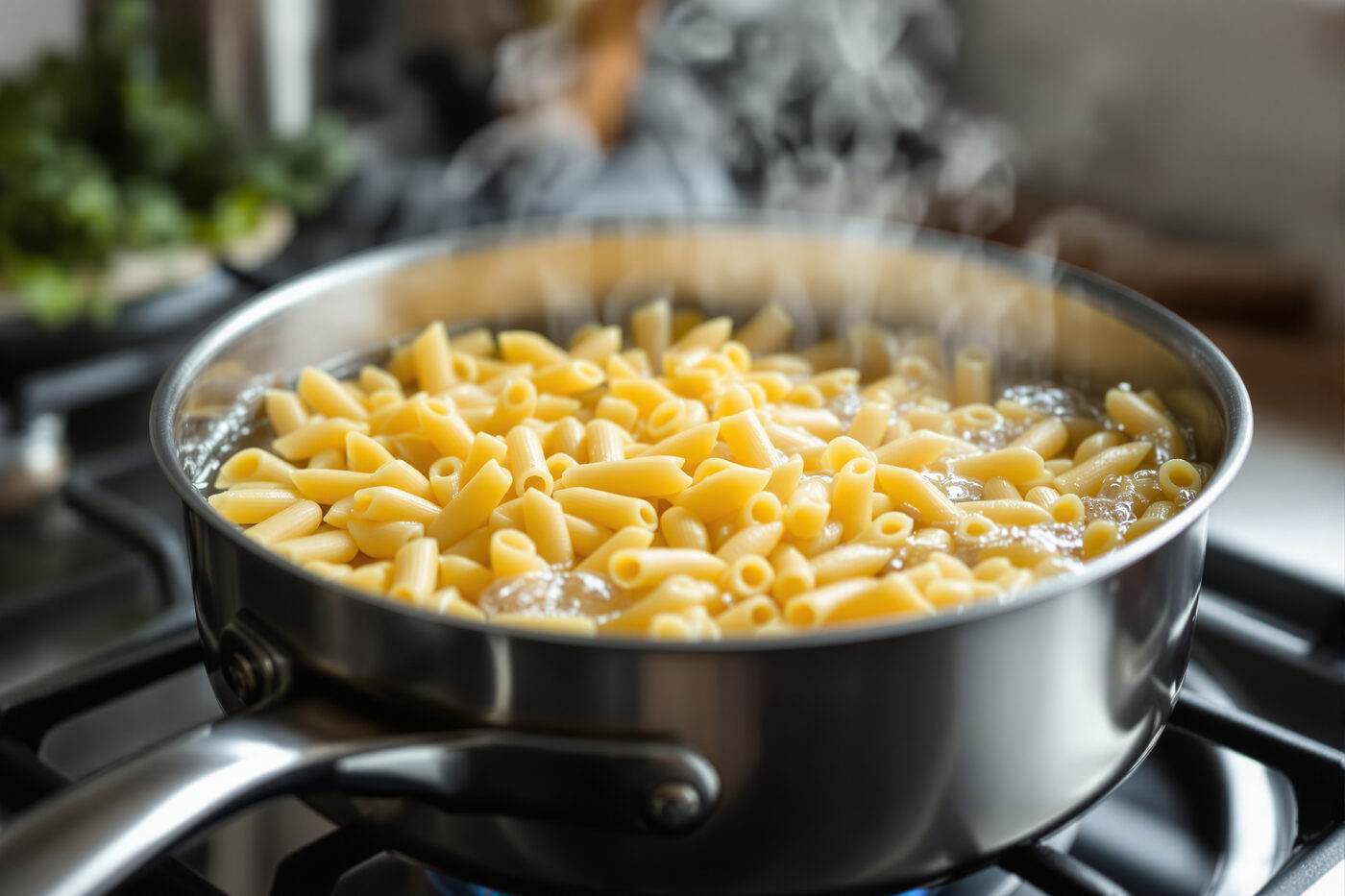
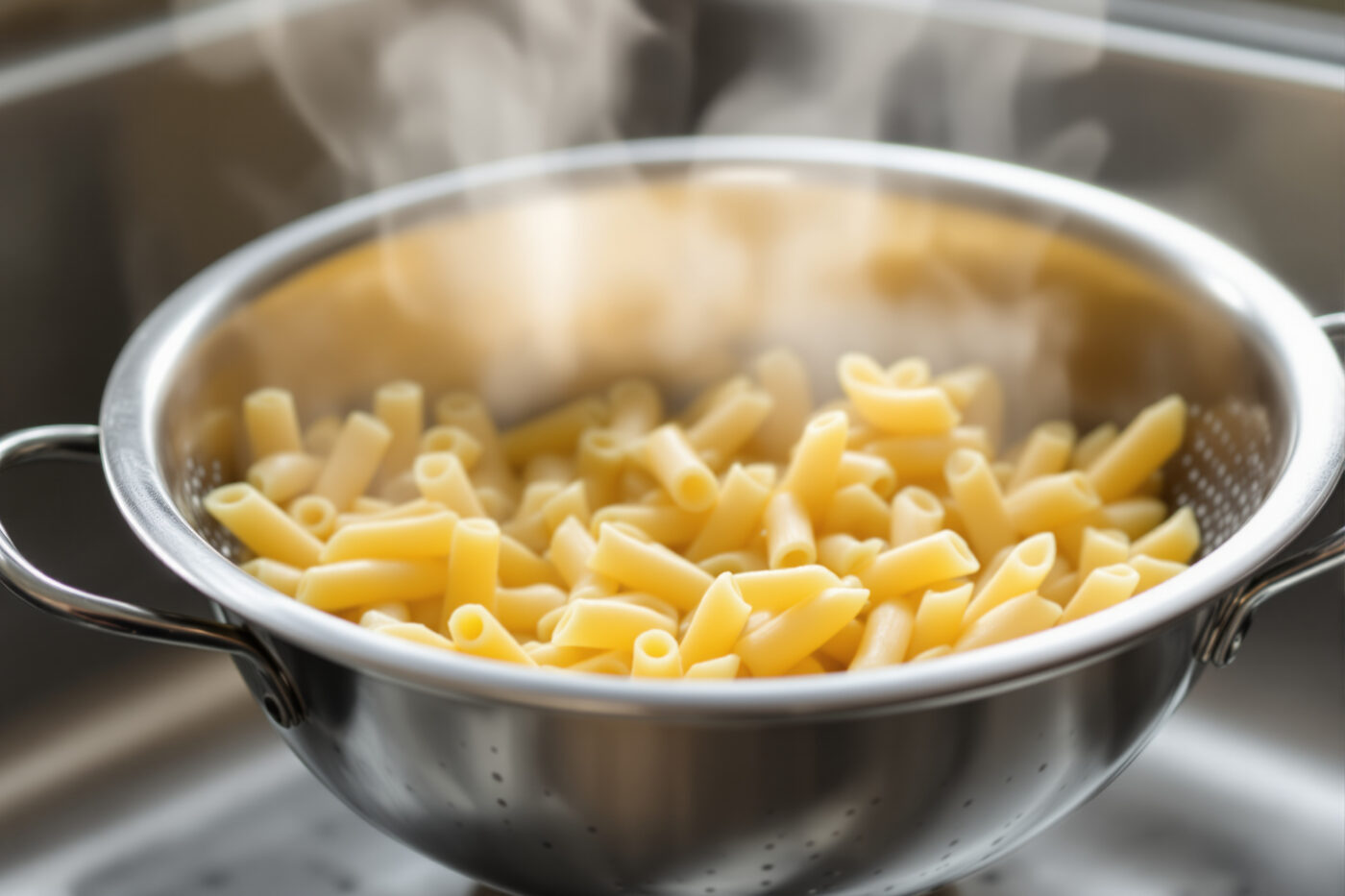
Yes, but through the water and your equipment, not the heat itself. Boiling does not manufacture plastic. What it does is concentrate whatever the cooking water carried and pull extra particles out of any plastic the hot pasta touches on its way to the plate.
Two things happen when you cook and drain pasta. First, the noodles absorb and carry the cooking water, so the microplastics in several quarts of tap water end up coating a much smaller volume of food. Second, hot food shedding plastic is a real effect: research on disposable cups found that filling them with hot water released thousands of microplastic particles within minutes, far more than cold water would. A plastic colander, slotted spoon, or storage container that meets just-drained pasta is briefly doing the same thing.
None of this is dramatic, but it points straight at the fix. Filter the water you boil pasta in, drain with a stainless-steel colander instead of a plastic one, stir with a wood or metal spoon, and do not tip screaming-hot pasta into a plastic tub to cool. Those swaps cost nothing and remove most of the kitchen-side plastic — far more effectively than hunting for a “cleaner” box of pasta. The same logic runs through our guide to how to remove microplastics from water.
"The plastic in pasta does not come from the wheat — it comes from the tap water you boil it in and the plastic your hot pasta touches. Fix those two, and you have handled almost all of it."
Are the microplastics in pasta dangerous?
This is where proportion matters most. Pasta very likely contains small amounts of microplastics — but “contains” is not “harms,” and the amounts involved are tiny next to your total daily exposure. No study has linked the microplastic levels in everyday foods like pasta to disease in the people who eat them.
The honest picture: microplastics are now found throughout the human body — in blood, stool, and even the brain — and researchers are still working out what, if anything, that means for health. A widely cited 2019 estimate in Environmental Science & Technology put total human intake in the tens of thousands of particles a year from food, drink and air combined. A bowl of pasta is a rounding error against that total, and what little it contributes is dominated by the cooking water rather than the food. That is reassuring, not alarming.
So the response is not to drop pasta — a cheap, filling, genuinely useful food — from your diet. It is to trim the avoidable plastic around it while the science matures, and to spend most of your effort on the bigger, steadier sources you actually control. The same proportion-over-panic logic runs through the most common microplastics myths and why a label like “BPA-free” does not automatically mean safe.
Pasta is a cheap, filling staple that does not need to come off your plate. The honest goal is to cut the avoidable plastic around it — filter your cooking water, use metal and glass tools — and put most of your energy into the bigger, steadier sources in our kitchen plastic detox guide, above all the tap water you drink and cook with all day.
How do you reduce the microplastics from pasta?
Because almost all of it comes from the water and the plasticware, the fixes are simple and cheap. You do not need a special pasta — you need cleaner cooking water and non-plastic tools. Here are the moves that actually matter, in order.
Cook with filtered water. This is the big one. The four to six quarts you boil pasta in is the single largest microplastic source in the bowl, and it is the one you can genuinely clean: a pitcher certified under NSF/ANSI 401, or built around a rated membrane pore size, cuts particle counts sharply, so fill the pot from there instead of straight from the tap. Drain with a stainless-steel colander rather than a plastic one, and stir with a wood or metal spoon, so hot pasta never sheds particles off plasticware. Store and reheat leftovers in glass, not plastic tubs or cling film, and let pasta cool a little before it touches any container.
A couple of smaller levers help at the margins: buy pasta boxed in cardboard rather than bagged in plastic where you have the choice, and skip instant cup pasta, the one format that steeps food in hot water inside plastic. But keep the order of operations straight — the cooking water dwarfs all of these. Filter the water you drink and cook with all day and you have handled the biggest microplastic source in your kitchen, pasta included. See our guide to the best water filter pitchers for microplastics and the broader water filter roundup — or, to filter at the tap, the best faucet water filters. The picks below are the simplest, longest-lasting ways to do all of that.
Fix the sources that actually matter
The pasta itself is a rounding error — the water you boil it in and the plastic it touches are the real sources. Start where it counts: filter your cooking water and keep your food in glass instead of plastic.
The swaps that cut the most plastic around pasta
There is no “microplastic-free” box of pasta to buy — the plastic in pasta comes from the water you boil it in and the tools it touches, not a package you can swap. The real levers are cleaning up your cooking water and keeping hot food off plastic. So instead of padding this out with products that do not exist, here are the real, currently-sold tools that address the sources you actually control: certified water filters for the water you cook and drink, plus glass and platinum-silicone storage to keep the rest of your food off plastic. Prices and availability change, so check current listings.
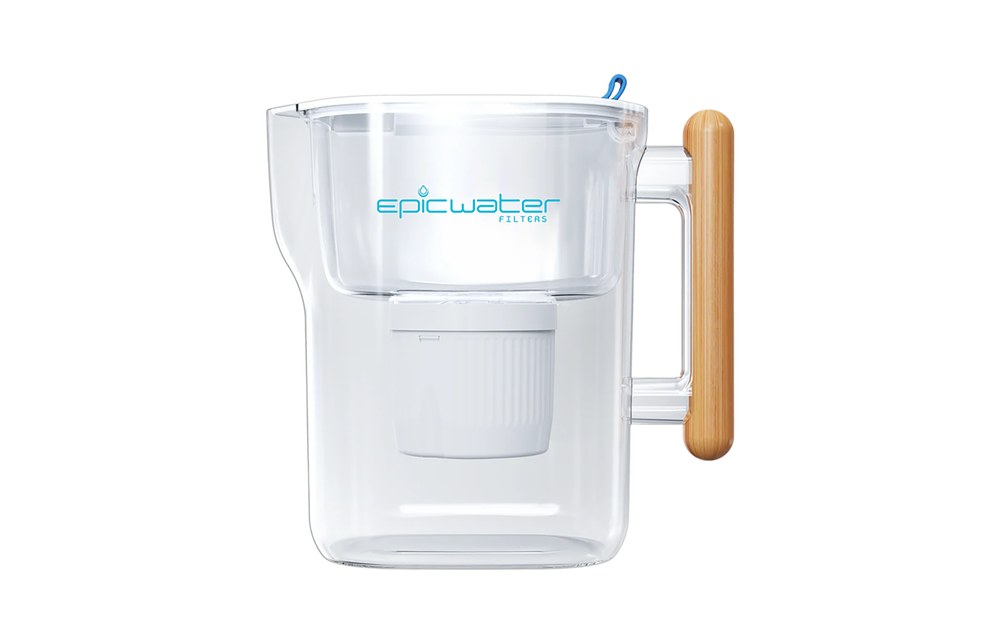
1. Epic Pure Water Filter Pitcher — Best Overall for Microplastics
 Best Overall
Reviewers point to published independent lab data and a filter rated around 150 gallons, far longer than a Brita, as the reasons they trust it, and several describe the slow, deliberate drip as reassuring rather than annoying. The honest downsides: owners report the filtration is genuinely slow and not the pick if you want a glass of water in a hurry, and third-party complaints mention cracked plastic, flip-top lids that stick, and water that spills or leaks from the lid when you pour a full pitcher.
The clearest evidence on this list: Epic posts its independent lab results publicly, so you can see the 99.9% microplastic-removal data instead of trusting a slogan on the box.
Why it's safe: The hollow fiber membrane physically blocks microplastic particles down to ~1 micron, while the carbon stage handles chlorine, lead, and PFAS — all in a BPA-free Tritan body.
Check Today’s Price on Amazon →Amazon prices change daily — tap to see today's price and any active discount.
- Free delivery & returns for Prime members
- Sold & shipped by Amazon
- Thousands of verified reviews
The water you drink and cook with all day — the glass you fill at the tap, the pot you boil your pasta in — is usually a bigger and steadier microplastic source than the food itself, and it’s the input you control most tightly, which makes a good filter the highest-leverage swap on this list. The Epic Pure is the clearest choice: its dual-stage design uses a hollow fiber membrane as the primary microplastic barrier, and Epic publishes the independent lab results to back the 99.9% removal claim — transparency most competitors don’t match.
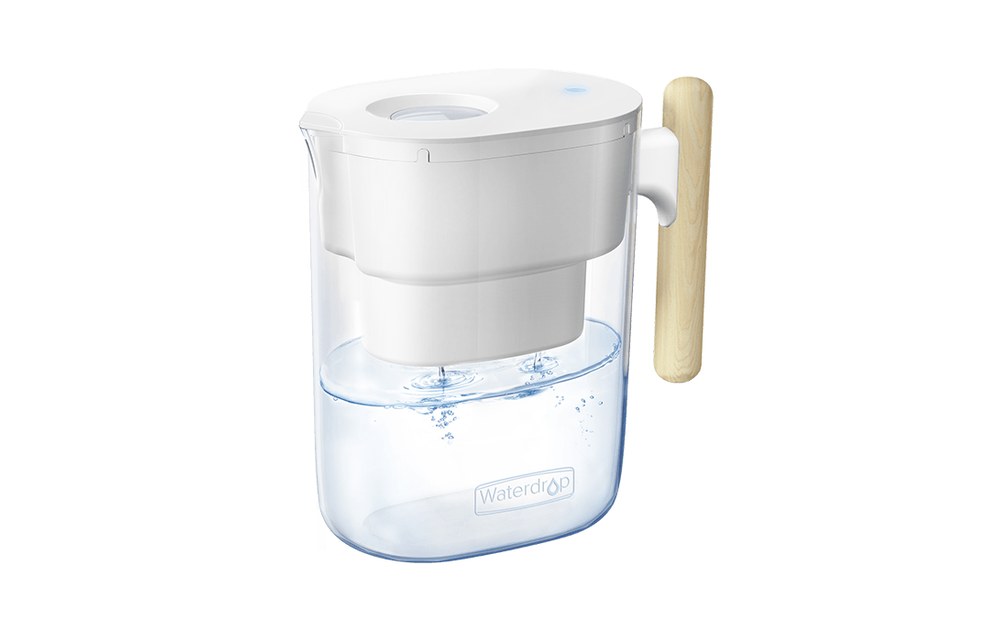
2. Waterdrop Chubby 10-Cup Pitcher — Best Filter Life
 Best Filter Life
Owners like the look and the long 200-gallon filter life, and roughly 80 percent of reviews land positive, with the common praise being clean-tasting water at a low cost per gallon. The honest gripes: several owners warn the handle can feel loose or strain under a full pitcher, so they lift with two hands; some report the pour spills if you tip too fast; and the change-filter indicator light draws complaints for not lighting or not staying lit.
A membrane blocks particles by pore size rather than by claim list, and its 200-gallon filter runs about 4 to 5 months — the lowest ongoing cost on the list.
Why it's safe: A hollow fiber membrane is a physical barrier to particles, while the carbon composite handles chlorine, heavy metals, and PFAS — all in a BPA/BPS-free body.
Check Today’s Price on Amazon →Amazon prices change daily — tap to see today's price and any active discount.
- Free delivery & returns for Prime members
- Sold & shipped by Amazon
- Thousands of verified reviews
If you’re filtering the water you drink and cook with, you’ll run water through a filter constantly — so filter life matters, and the Waterdrop Chubby leads on it: a hollow fiber membrane on Waterdrop’s own published lab data, plus 200 gallons per filter (about 4–5 months for most households). The "filter while you pour" design works just like a familiar counter pitcher, but with a membrane that’s actually tested for microplastics.
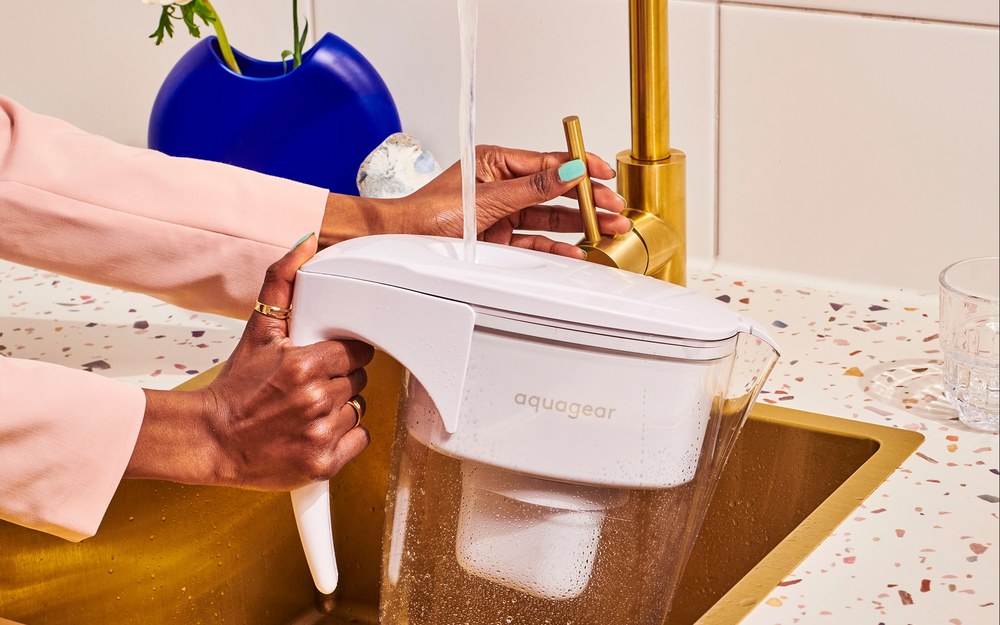
3. Aquagear Water Filter Pitcher — Best Value
 Best Value
Owners choose it for broad contaminant removal and clean taste, and some lab testing found it did not clog. The honest downsides: the most repeated complaint is slow filtration, described by one reviewer as a mixed bag between people waiting minutes and people waiting hours, and it can worsen as the filter ages; and the design draws gripes, with the pour-spout cover popping out and spraying water and a lid that fits poorly and can pop off mid-pour.
Change the filter half as often as most pitchers — 150 gallons per cartridge means fewer replacements, lower annual cost, and less to remember.
Why it's safe: A 5-stage filter with a sub-micron membrane stage captures microplastics, lead, fluoride, and chlorine, in a BPA-free body with USA-made filter media.
Check Today’s Price on Amazon →Amazon prices change daily — tap to see today's price and any active discount.
- Free delivery & returns for Prime members
- Sold & shipped by Amazon
- Thousands of verified reviews
The Aquagear costs more upfront but its 150-gallon filter life means lower annual replacement costs than most competitors, and the pitcher body is guaranteed for life. It uses a 5-stage filter with a sub-micron membrane stage that targets microplastics, heavy metals, and fluoride — a good fit for households that would rather clean up their daily water than fret over the pasta itself.
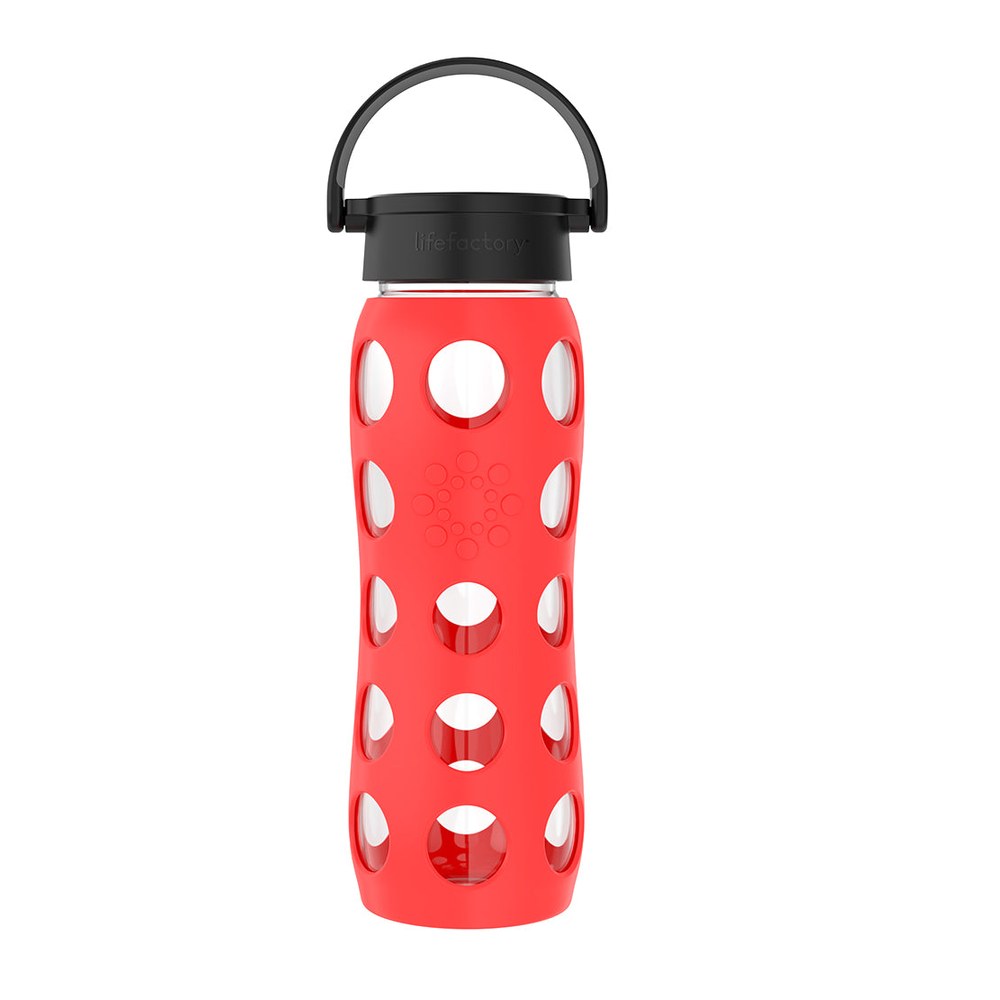
4. Lifefactory Glass Bottle 22oz — Best Glass Bottle
 Best Glass Bottle
A bowl of pasta is a small source; the water you drink all day is the steady one — and this is how you carry the clean version. It’s made from borosilicate glass, the same material used in laboratory glassware, which is thermally stable, chemically inert, and completely free of BPA, BPS, and any polymer contact with your drink. It imparts no taste, so water tastes like water. The protective silicone sleeve adds grip and guards against shattering.
The screw cap contains a small polypropylene component — the only plastic in the system, and it sits at the exterior closure rather than the drink surface. Rinse it like any cap and it stays a non-issue. Dishwasher-safe, and sturdy enough for daily desk-and-bag use.
Owners love that water tastes clean with no plastic aftertaste and that the silicone sleeve makes the glass easy to grip and survive the occasional drop. The honest downsides: it’s heavier than a plastic or steel bottle, the glass can still break if dropped on a hard edge, and some reviewers find the flip-cap spout narrow or report the cap can leak if not fully closed.
Carry the filtered water you made at home instead of buying bottled — no plastic contact, no leaching, and it cleans up in the dishwasher.
Why it's safe: Borosilicate glass is completely inert — it never leaches, never sheds microplastics, and imparts no taste. The only plastic is a small cap component at the exterior closure, not the drink surface.
Check Today’s Price on Amazon →Amazon prices change daily — tap to see today's price and any active discount.
- Free delivery & returns for Prime members
- Sold & shipped by Amazon
- Thousands of verified reviews
A bowl of pasta is worth managing, but water is the source you touch most. Carrying filtered water in a reusable glass or stainless steel bottle — or a dedicated filtered water bottle — gives you grab-and-go hydration without the PET — no shedding, no leaching, no plastic aftertaste — so the packaged bottle stops being the default.
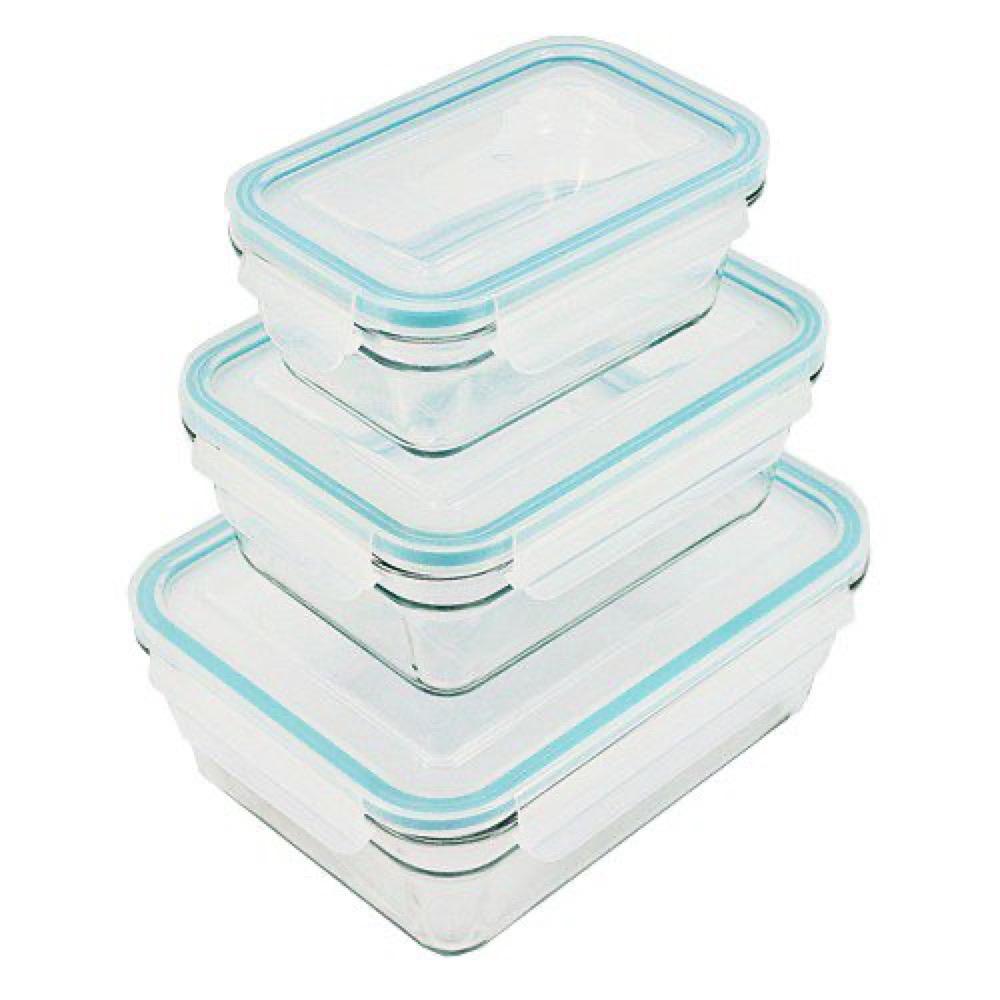
5. Glasslock Oven Safe Container Set (3-Pack) — Best Glass Storage
 Best Glass Storage
Longtime owners like that the glass bodies are oven-, microwave-, and freezer-safe and that the snap-lock lids seal tight. The honest downsides run through the lids, not the glass: reviewers report cracked lids, snapped locking tabs, and mold building up in the rubber gaskets if they are not dried well. Some buyers also received sets with a locking piece missing, and several flag slow, hard-to-reach customer service when they needed a replacement part.
Three stackable glass containers in one box — enough to store a week of leftovers and prepped ingredients without a single plastic tub.
Why it's safe: Your food sits on inert tempered glass, not plastic — so warm, acidic, watery foods can’t leach or pick up shed particles. The BPA-free lids seal with a food-grade silicone gasket that only touches the rim.
Check Today's Price on Amazon →Amazon prices change daily — tap to see today's price and any active discount.
- Free delivery & returns for Prime members
- Sold & shipped by Amazon
- Thousands of verified reviews
Glass storage is the direct fix for keeping the rest of your food off plastic: store leftovers and prepped ingredients in inert glass instead of plastic tubs or cling wrap, and reheat with the lids off so warm food never sits against plastic. Warm, watery, acidic foods are exactly the ones you least want held in plastic, and at roughly ten dollars per container this is the cheapest way to retire your plastic food tubs in one purchase.
6. Stasher Reusable Silicone Bag Starter Kit — Best Silicone Bag
 Best Silicone Bag
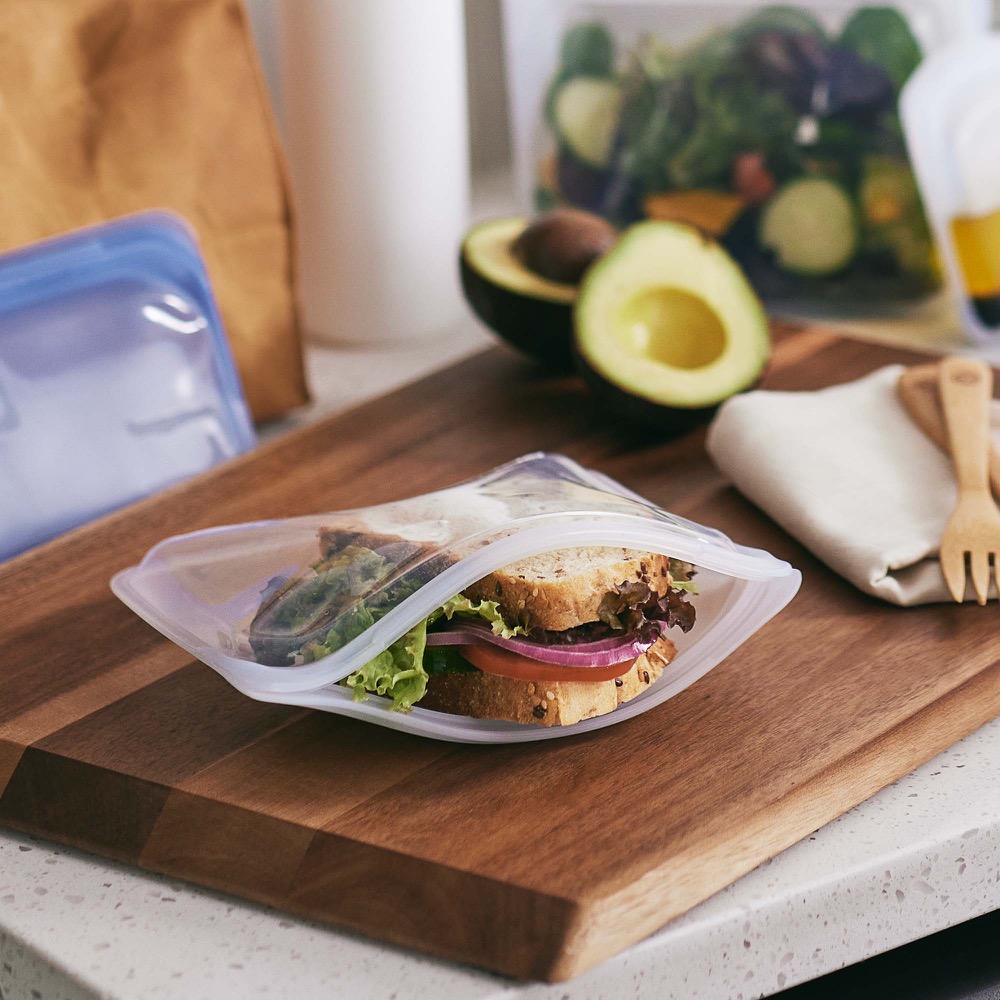
For freezing food in portions, stashing leftovers you won't finish in time, or anything you’d reach for a plastic bag — Stasher’s platinum-cured silicone is the upgrade: sturdier than any disposable bag and free of the chemicals that migrate from plastic. The patented Pinch-Loc seal is genuinely airtight and leakproof, so it keeps food from drying out.
It’s freezer safe to -70°F and goes straight to the microwave or a 425°F oven. The starter kit covers the everyday sizes — sandwich, snack, and stand-up half-gallon — so you can retire a whole box of single-use bags in one purchase.
Owners like that the platinum silicone bags go from freezer to microwave and replace throwaway plastic for years. The honest gripes: smell and stain retention come up often, with reviewers noting garlic and strong odors linger even after washing; the pinch-lock seal can be fiddly to open and close; and the seams are slow to dry, which can invite mildew if you do not air them out.
Store prepped produce, snacks, and batch-cooked food in airtight silicone instead of plastic film — then thaw and reheat in the same bag, no transfer needed.
Why it's safe: Platinum-cured silicone — the highest-purity, chemically inert grade — with no plastic, PVC, BPA, lead, latex, phthalates, or PFAS.
Check Today's Price on Amazon →Amazon prices change daily — tap to see today's price and any active discount.
- Free delivery & returns for Prime members
- Sold & shipped by Amazon
- Tens of thousands of verified reviews
Freezing a batch of cooked pasta or sauce, portioning leftovers, and stashing prepped produce are exactly the jobs people reach for flimsy plastic bags to do. A multi-size platinum-silicone kit replaces the whole box at once, seals airtight, and handles the freezer-to-microwave trip without the shedding of a thin plastic bag. For the full lineup, see our guide to the best silicone food storage bags.
Want the Full Home Protection Guide?
A bowl of pasta is one plastic touchpoint among dozens in a typical kitchen. The Complete Plasticproof Guide covers every room — kitchen, nursery, bathroom, bedroom — with 80+ product recommendations backed by 47+ studies.
The honest verdict
Does pasta have microplastics? Almost certainly — but not for the reason people assume, and no study has yet counted the particles in a cooked bowl. The plastic does not come from the wheat. It is picked up in milling, drying and packaging — the same way it shows up in rice, flour and salt — and then, most of all, from the quarts of tap water you boil pasta in, with a little more from salt, plastic colanders and plastic storage. Pasta is a modest source whose load is dominated by the water, not the food.
And the accurate takeaway is proportion, not alarm. The amounts are tiny next to the tens of thousands of particles you already take in each year from water, dust and air; no study has shown harm at the levels found in everyday foods; and pasta is a cheap, filling staple worth keeping. So the response is not to give it up — it is to cook with filtered water, drain with metal, store in glass, and put most of your effort where it counts: the tap water you drink and cook with all day, the bigger and steadier source you can actually make cleaner. You do not need a plastic scare to cook pasta wisely.
Cut the plastic that actually adds up
A bowl of pasta is small next to the water you drink and cook with all day. A certified filter and glass storage make clean water and plastic-free meals your easy default.
Frequently Asked Questions
Almost certainly, though no study has yet counted the particles in a finished bowl. Dry pasta is a milled, dried and packaged grain, and every comparable dry staple that has been tested — rice, flour, sugar and table salt — contains microplastics picked up during processing, drying and packaging. On top of that, pasta is boiled in a large volume of tap water, which carries its own microplastics, often salted, and drained in a plastic colander. The particles mostly trace to the water and the plastic it touches, not the wheat itself.
Mostly from the processing and the kitchen, not the grain. Milling, drying and packaging add airborne and packaging fibers, the same way they do for rice and flour. Then you boil pasta in several quarts of tap water — a measured microplastic source — add salt (also measured to contain microplastics), and drain it through a plastic colander while it is hot. Storing or reheating leftovers in plastic adds a little more. The wheat itself contributes very little.
It can, but through the water and equipment rather than the heat. Boiling does not create plastic, but you cook pasta in a large volume of tap water, and whatever microplastics that water carries stay with the noodles when you drain them. Hot water also pulls more particles out of any plastic it touches, so a plastic colander, slotted spoon or storage tub that meets hot pasta can shed a little. Filtering your cooking water and using metal or glass tools removes most of that.
It is close to a wash, and neither is the real lever. Dried boxed pasta picks up particles during milling, drying and packaging; fresh refrigerated pasta usually sits in a sealed plastic tray; and instant or cup pasta is steeped in hot water inside a plastic or foam container, which sheds the most. Whichever you buy, far more of your exposure comes from the tap water you boil it in than from the pasta itself.
No study has shown that the microplastic levels associated with everyday foods like pasta cause harm in the people who eat them. A plate of pasta is a small, occasional source next to the tens of thousands of particles people already take in each year from water, other foods, household dust and air. The honest approach is proportion: eat pasta freely and spend your effort on the bigger, steadier sources you control, starting with your drinking and cooking water.
Cook with filtered water, since the pot of tap water is the biggest and most controllable source; drain with a stainless-steel colander instead of a plastic one; and store and reheat leftovers in glass rather than plastic tubs or cling film. Buying pasta in cardboard rather than plastic helps a little at the margins. The single highest-leverage move is filtering the water you drink and cook with all day, which dwarfs any one meal.
Sources
- Kosuth M, Mason SA, Wattenberg EV. "Anthropogenic contamination of tap water, beer, and sea salt." PLOS ONE, 2018;13(4):e0194970. (Found microplastics in the majority of tap-water samples worldwide, plus in beer and sea salt — the cooking water and the salt that go into every pot of pasta.)
- Cox KD, Covernton GA, Davies HL, et al. "Human Consumption of Microplastics." Environmental Science & Technology, 2019;53(12):7068–7074. (Estimated tens of thousands of microplastic particles consumed per person per year from food and drink combined — the exposure context a bowl of pasta sits within.)
- Ranjan VP, et al. (Goel S, corresponding author). "Microplastics and other harmful substances released from disposable paper cups into hot water." Journal of Hazardous Materials, 2021;404(Pt B):124118. (Filling a disposable cup with hot water at 85–90°C for 15 minutes released on the order of 25,000 micron-sized microplastic particles — the mechanism behind a plastic colander or tub shedding into just-drained hot pasta.)
- Akbulut S, Akman PK, Tornuk F, Yetim H. "Microplastic Release from Single-Use Plastic Beverage Cups." Foods, 2024;13(10):1564. (Hot water released more microplastic from plastic and PE-coated paper cups as temperature and contact time rose — why hot pasta sheds more off plasticware than cold food does.)