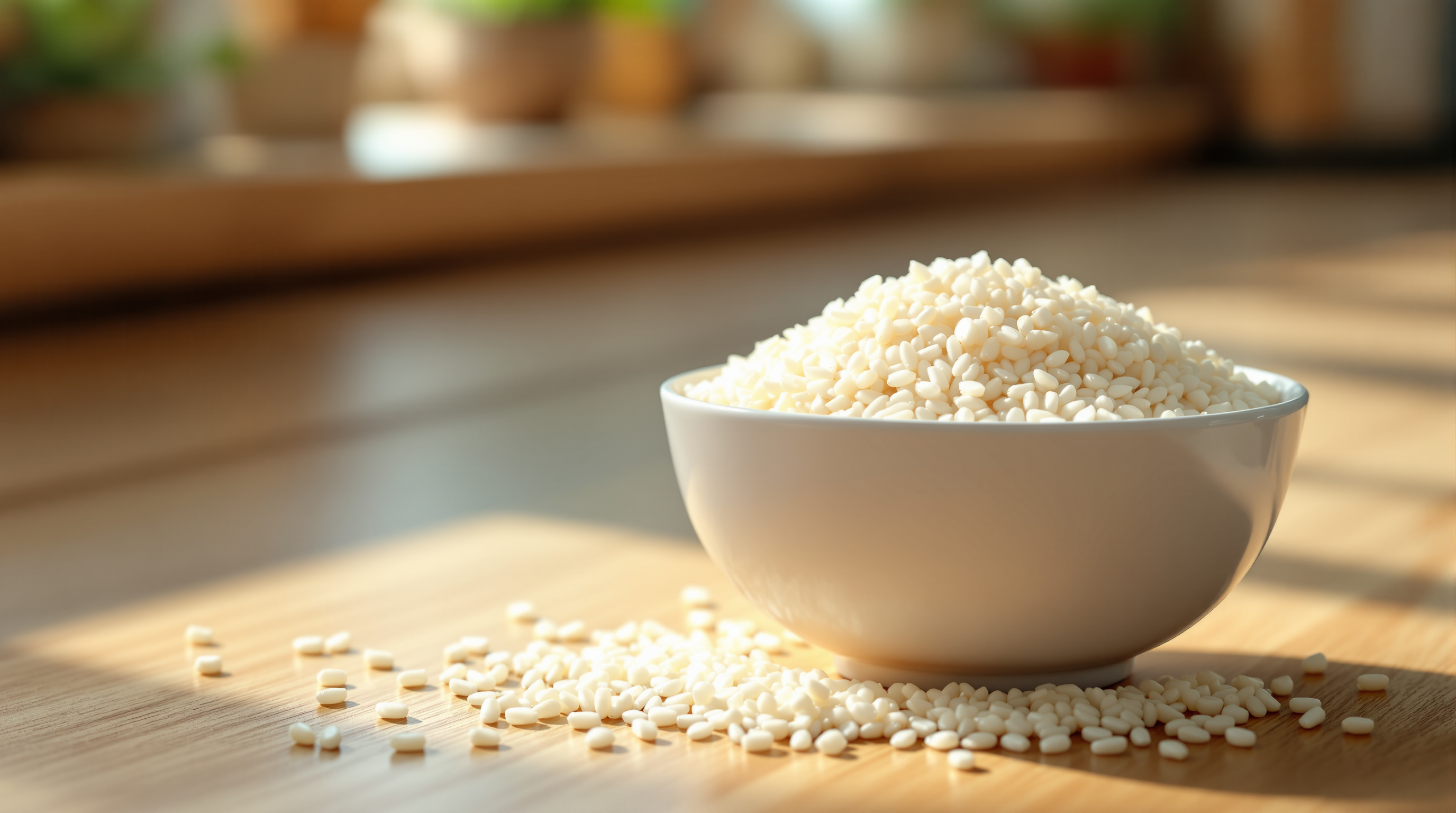
Rice is one of the most-eaten foods on earth — the daily staple for more than half the world's population. So when researchers reported that store-bought rice carries microplastics, and that a single serving comes with a measurable dose of plastic, it understandably set off alarm. The good news is that the amounts are small, and a few simple changes in how you buy, rinse, cook, and store rice can cut your exposure substantially.
The short version: yes, rice contains microplastics, instant rice contains far more, and washing your rice before cooking removes a meaningful share of it. Below we walk through exactly what the studies found, where the plastic comes from, and the kitchen swaps — filtered cooking water and glass storage instead of plastic — that make the biggest difference.
Quick Answer
Are there microplastics in rice? Yes. A 2021 University of Queensland study found microplastics in every rice sample it tested — roughly 3–4 mg of plastic per 100 g (about half a cup) of uncooked rice. Instant rice was about four times worse, at ~13 mg per 100 g. The single easiest fix: washing rice before cooking cut contamination by 20–40%. To reduce your exposure further, choose plain dry rice over instant, rinse it in a fine-mesh strainer, cook it in filtered water, and store it in glass or stainless steel instead of plastic.
Are there microplastics in rice?
Yes. In 2021, researchers at the University of Queensland published the first study to quantify microplastics in store-bought rice, in the Journal of Hazardous Materials. They found plastic in every sample tested and estimated that people consume roughly 3 to 4 milligrams of plastic for every 100 grams — about half a cup — of uncooked rice.
To put that in context: rice is the primary daily staple for more than half the world's population. A few milligrams per serving sounds trivial in isolation, but eaten day after day, year after year, those amounts accumulate. The same pattern shows up across the foods we eat most often — our pillar guide to which foods have the most microplastics ranks rice alongside seafood, salt, and bottled water as one of the most consistent dietary sources.
The plastics found in rice were a mix of particle types and sizes, consistent with contamination picked up across the supply chain — from the soil and water the rice is grown in, through milling and processing, to the plastic packaging it is stored and sold in. The encouraging finding was that a simple step at home — washing the rice — measurably reduced how much plastic remained.
Does washing rice remove microplastics?
Partially, and it is the single easiest thing you can do. The University of Queensland researchers found that rinsing rice before cooking reduced its plastic contamination by 20 to 40 percent. It does not eliminate every particle, but cutting up to 40 percent of the plastic in a daily staple — with a step that also improves the rice's texture — is a meaningful, no-cost win.
The technique matters. Rinse the rice in a fine-mesh stainless steel strainer under cool running water, swirling and agitating the grains with your hand until the water running through it turns from cloudy to clear. The cloudiness is surface starch carrying loose particles away; once the water runs clear, you have removed most of what rinsing can remove.
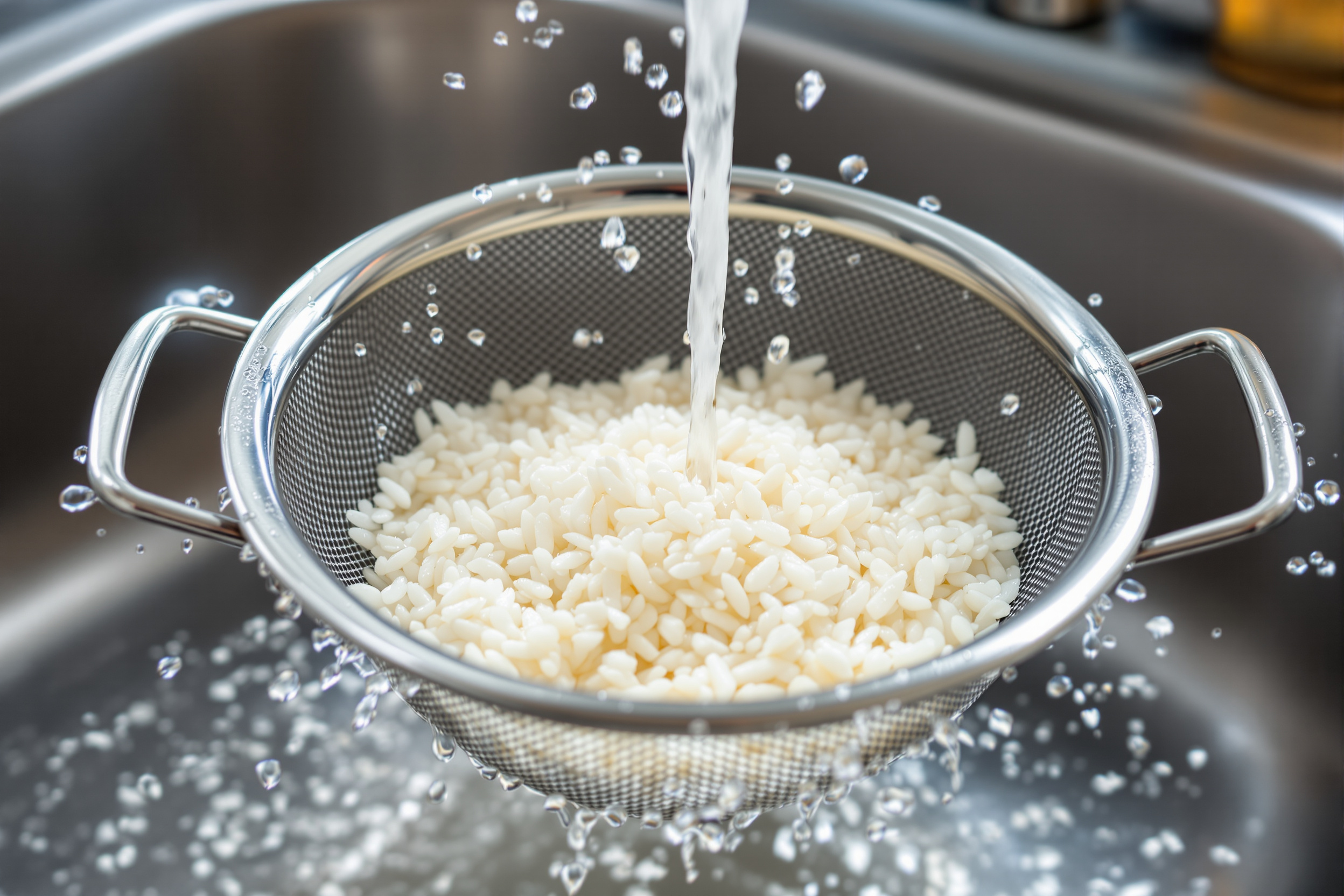
One catch: what you rinse and cook with matters too. Unfiltered tap water can itself carry microplastics, so rinsing and boiling rice in it risks adding particles back in. Cooking rice in filtered water closes that loop — it is the same logic behind our best water filter pitcher for microplastics guide. And if you are wondering whether your tap is a problem in the first place, see is tap water safe to drink.
Does instant rice have more microplastics than regular rice?
Yes — dramatically more. The same University of Queensland study found that instant (pre-cooked) rice contained about four times more plastic than uncooked rice, averaging around 13 milligrams per 100-gram serving versus 3 to 4 milligrams for plain rice. The extra plastic tracks with the additional processing instant rice goes through and the plastic pouches and cups it is cooked and served in.
That makes the choice at the grocery shelf one of the highest-leverage swaps you can make: plain dry rice instead of instant, microwave-pouch, or single-serve cup rice. It is cheaper per serving, it lets you rinse before cooking (something you cannot do with a sealed instant pouch), and it avoids heating food inside plastic — a problem we cover in is it safe to microwave Tupperware.
Is it dangerous to eat microplastics in rice?
Honestly, the science is not settled enough to put a number on the risk. There is no established "safe" or "dangerous" dose of dietary microplastics yet, because researchers are still working out how the body absorbs, distributes, and clears these particles. What we do know is enough to take reasonable precautions rather than panic.
Microplastics have now been detected in human blood, the placenta, lungs, and other tissues, and the particles can act as carriers for plasticizer chemicals — phthalates and bisphenols among them — that research links to hormone disruption. Our explainers on microplastics and hormones and microplastics and gut health go deeper on the mechanisms under investigation.
The sensible takeaway is the precautionary one: you cannot make rice plastic-free, but you can reduce the avoidable share. Washing, filtered cooking water, choosing plain over instant, and storing rice in glass rather than plastic each trim the total — and because rice is something you eat constantly, small per-serving reductions compound into a real difference over a lifetime. For perspective on where rice fits in the full picture: a 2025 study in Ecotoxicology and Environmental Safety (Wang et al.) measured nylon toothbrush bristles releasing roughly 2.33 million microplastic particles per person per year into the mouth during normal brushing — tens of times more than rice or any dietary source. If you are reducing oral microplastic exposure systematically, switching to a microplastic free toothbrush with plant-based bristles is the highest-leverage single swap.
How to reduce microplastics in your rice: the kitchen swaps that work
You cannot buy plastic-free rice, but you can control three of the biggest avoidable inputs: the water you rinse and cook it in, and the containers you store it in before and after cooking. Cooking in filtered water keeps waterborne particles out, and storing dry and cooked rice in glass or stainless steel instead of plastic bags and tubs stops more plastic from migrating in — especially when you reheat. These are the products we reach for, each drawn from guides we already stand behind.
Quick Picks
- Best for storing rice: Glasslock Oven Safe Container Set (3-Pack) — tempered glass, snap-lock lids
- Best for filtered cooking water: Epic Pure Water Filter Pitcher — 99.9% microplastic removal, published lab data
- Best for freezing cooked rice: Stasher Reusable Silicone Bag Starter Kit — platinum silicone, freezer to microwave
- Best for packed rice bowls: Bentgo Glass Lunch Container — borosilicate glass, reheat lid-off
- Best budget filter: ZeroWater 10-Cup Pitcher — 5-stage, TDS meter included
- Best for portioning: Zip Top Reusable Silicone Bags — true silicone zipper, stands upright
1. Glasslock Oven Safe Container Set (3-Pack)
 Best for Storing Rice
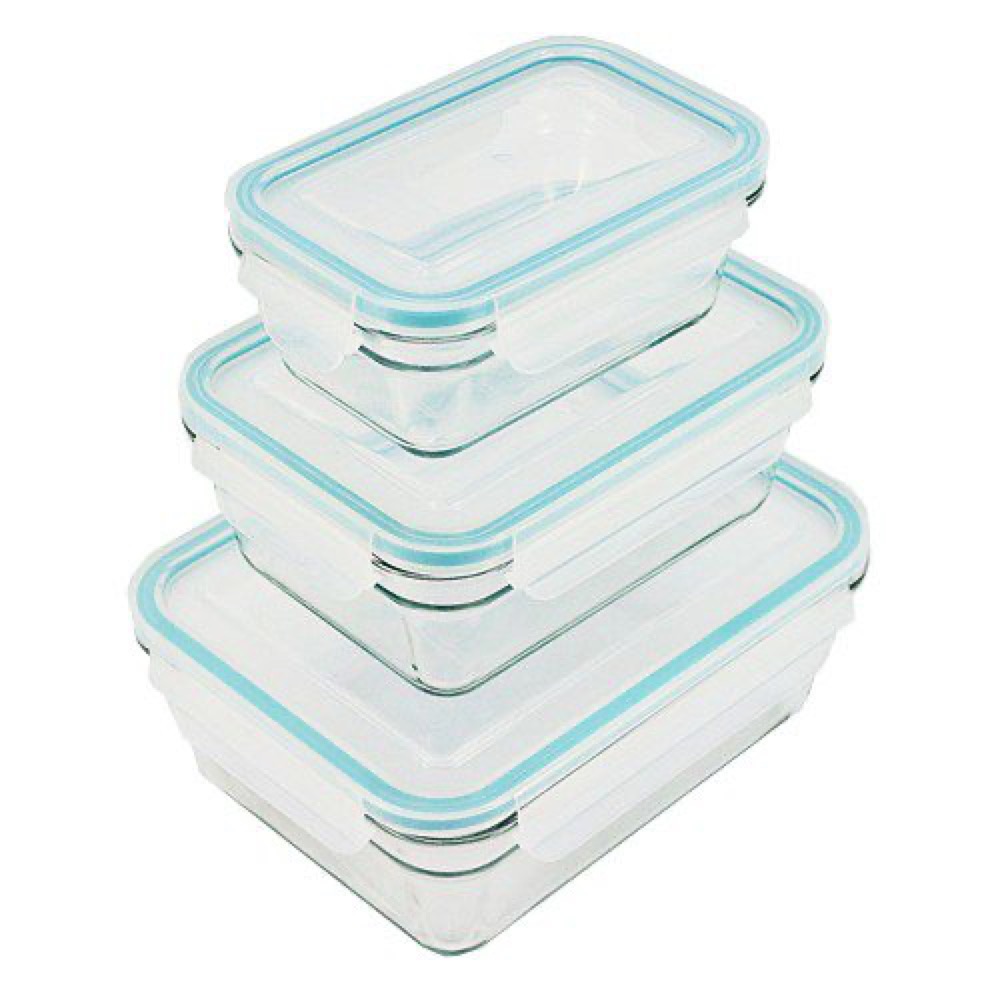
Open a bag of rice and the plastic packaging is touching the grain the whole time it sits in your cupboard. Decant it into these tempered-glass containers and that contact stops. The snap-lock lids have silicone gaskets for a genuine airtight, leak-proof seal — good for the dry grain and for cooked rice you are saving for tomorrow. The glass bodies go straight from fridge to microwave with the lids off, so reheating rice never happens against hot plastic. Tempered glass is more impact-resistant than standard glass, and the 3-pack covers a week of batch-cooked portions. Lids are replaceable if a gasket ever wears out.
Three stackable glass containers — enough to store the dry grain airtight and keep a few days of cooked rice on glass instead of plastic.
Why it's safe: Rice sits on inert tempered glass, not plastic — so neither dry storage nor reheating adds particles. The BPA-free lid seals with a food-grade silicone gasket that only touches the rim.
Check Today's Price on Amazon →Amazon prices change daily — tap to see today's price and any active discount.
- Free delivery & returns for Prime members
- Sold & shipped by Amazon
- Thousands of verified reviews
Why it made the list: Rice picks up plastic from its packaging during storage as much as anywhere, so getting it into glass is one of the highest-value swaps here — and the snap-lock glass doubles as your cooked-rice leftover set. For a full comparison, see our guide to the best glass food storage containers.
2. Epic Pure Water Filter Pitcher
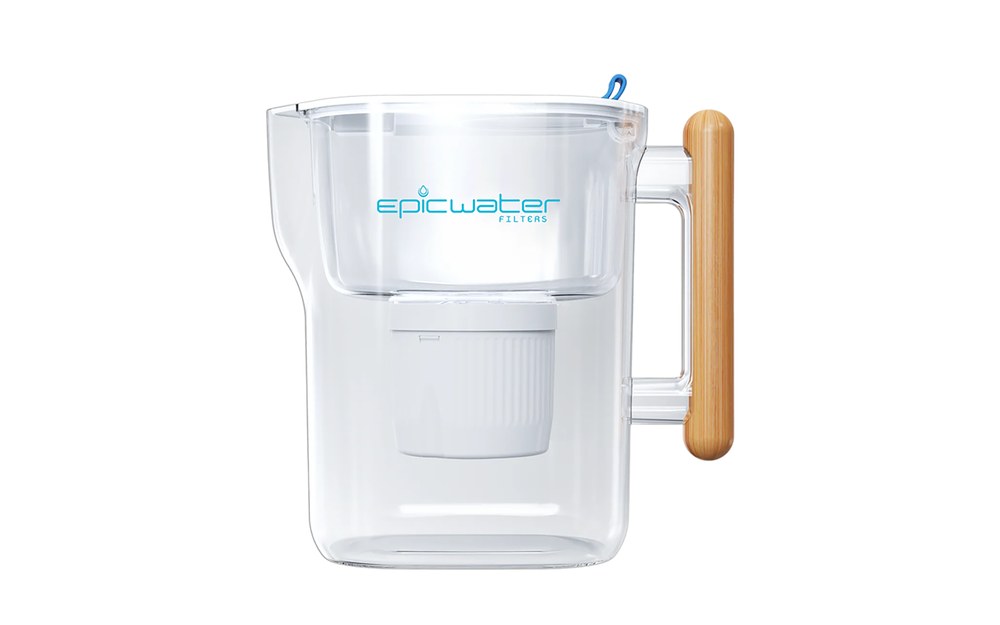 Best for Cooking Water
The whole point of rinsing rice is to remove particles, so doing it in water that carries its own microplastics works against you. The Epic Pure's dual-stage design uses a hollow fiber membrane to physically block microplastic particles down to about 1 micron, then activated carbon for chlorine, lead, PFAS, and taste. Epic is IAPMO certified and — unusually — publishes its independent lab results showing 99.9% removal of microplastics, so you can verify the claim rather than trust a slogan. Filter life is roughly 100 gallons (about two months for a family of four), the body is BPA-free, and it is available in multiple sizes. Use it for the rinse and the boil, and you close the loop washing alone leaves open.
Filtered water for both the rinse and the pot — so the step that removes plastic from rice isn't quietly putting more back in from the tap.
Why it's safe: The hollow fiber membrane physically blocks microplastic particles down to ~1 micron, while the carbon stage handles chlorine, lead, and PFAS — all in a BPA-free body with published independent lab data.
Check Today's Price on Amazon →Amazon prices change daily — tap to see today's price and any active discount.
- Free delivery & returns for Prime members
- Sold & shipped by Amazon
- Thousands of verified reviews
Why it made the list: It is the only pick that publishes its microplastic-removal lab data, which matters when the entire reason you are filtering is to keep particles out of your rice. For the full lineup, see our best water filter pitcher for microplastics guide.
3. Stasher Reusable Silicone Bag Starter Kit
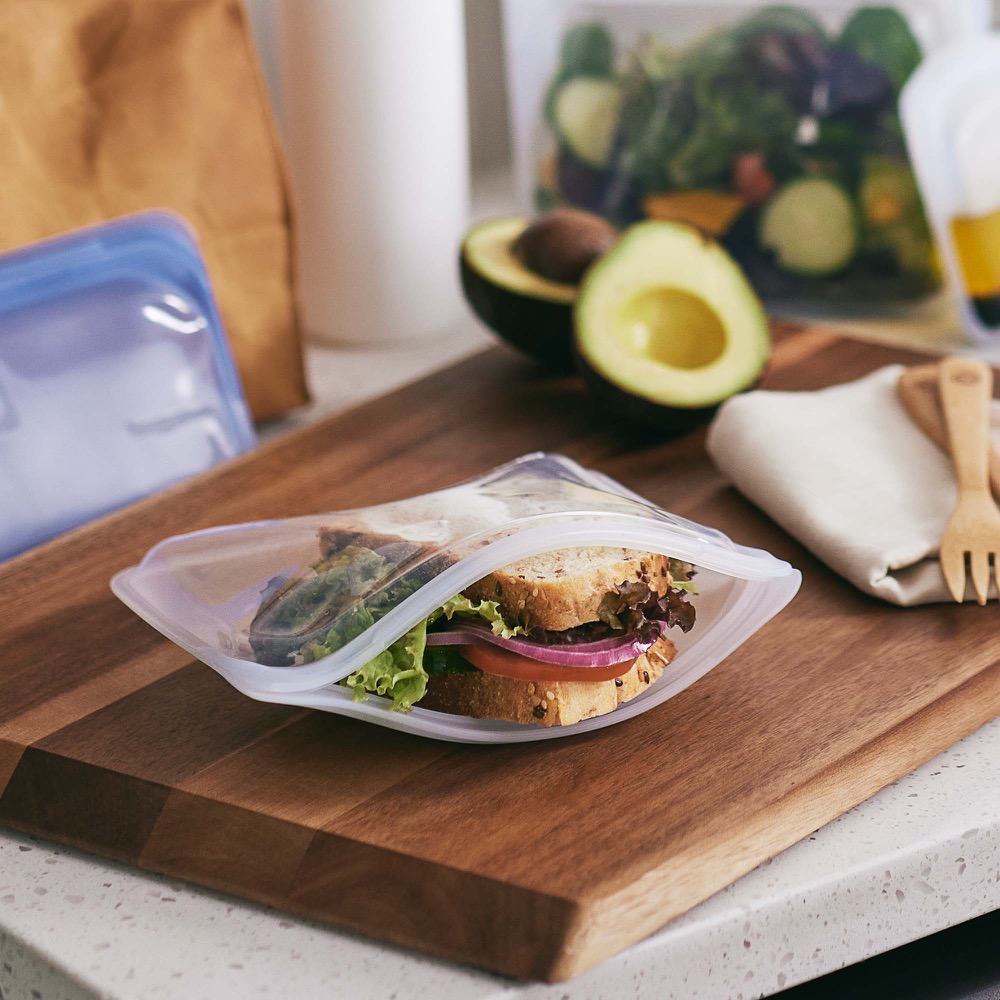 Best for Freezing Rice
Batch-cooking rice on Sunday is smart; freezing it in disposable plastic zip-lock bags undoes the work, because the cooked grain sits against plastic and then gets microwaved inside it. Stasher's platinum-cured silicone is the upgrade — sturdier than any disposable bag, with a patented Pinch-Loc seal that is genuinely airtight and leakproof. Freeze portions flat, then take them straight from freezer to microwave (or a 425°F oven) without transferring to anything. The starter kit covers the everyday sizes, so you can retire single-use bags for your rice, grains, and leftovers in one swap.
Freeze single rice portions flat and reheat them in the same bag — no disposable plastic against the food, and it lasts for years instead of one use.
Why it's safe: Platinum-cured silicone — the highest-purity, chemically inert grade — with no plastic, PVC, BPA, lead, latex, phthalates, or PFAS.
Check Today's Price on Amazon →Amazon prices change daily — tap to see today's price and any active discount.
- Free delivery & returns for Prime members
- Sold & shipped by Amazon
Why it made the list: If you meal-prep rice in bulk, this is the one-for-one replacement for the freezer bags that otherwise put cooked grain against plastic. For the full range, see our guide to the best silicone food storage bags.
4. Bentgo Glass Lunch Container
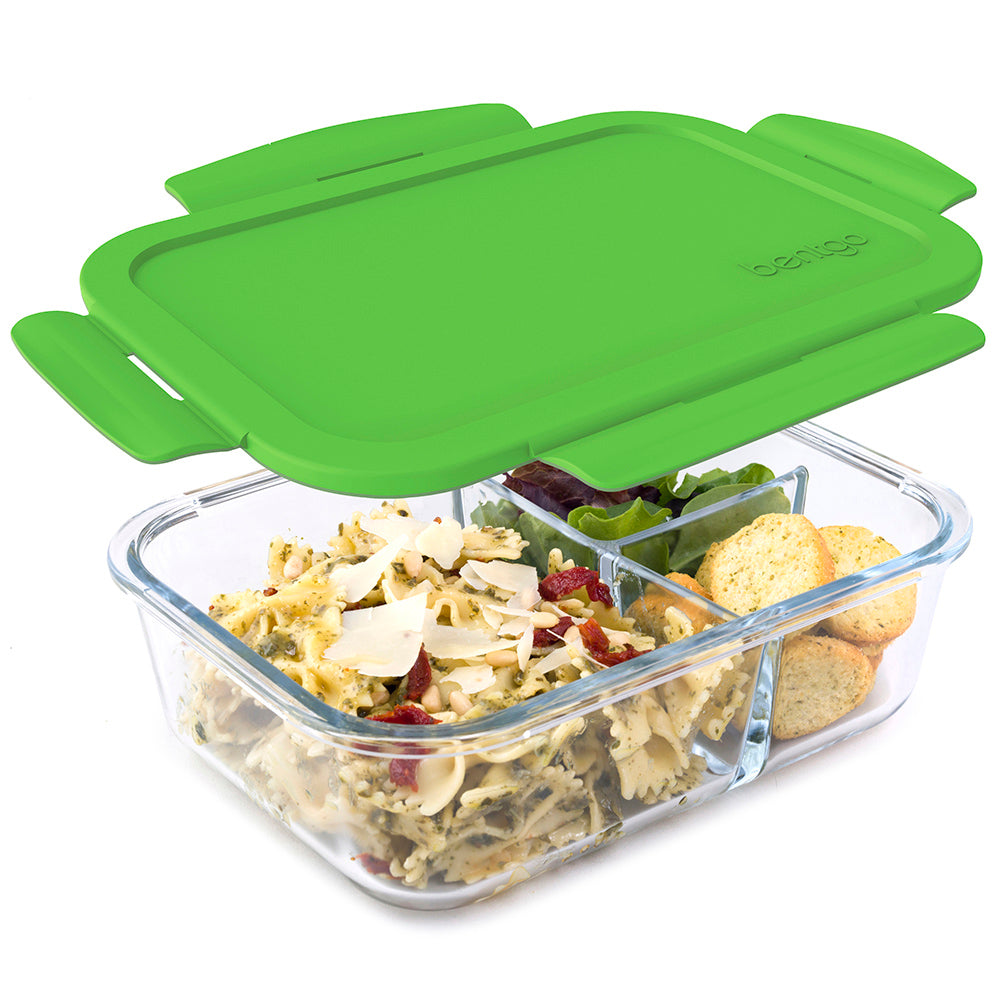 Best for Packed Rice Bowls
Rice bowls are the classic meal-prep lunch, and they are exactly the meal most often reheated in a plastic container. The Bentgo Glass swaps that out: a borosilicate glass body — the same material used in laboratory glassware — with a snap-lock BPA-free lid. Take the lid off and microwave the glass straight from the fridge, so your reheated rice and vegetables sit on inert glass rather than plastic that sheds particles when heated. It is oven-safe to 450°F, freezer-safe, and dishwasher-safe, with a silicone gasket for leak resistance on the commute. The only trade-off is weight, since glass is heavier than plastic.
Reheat a rice bowl at the office with the lid off — your lunch sits on inert glass, not the plastic that sheds nanoplastics when microwaved.
Why it's safe: The food-contact body is borosilicate glass — chemically inert and thermal-shock resistant, so reheating releases nothing into your food. The silicone gasket only seals the rim.
Check Today's Price on Amazon →Amazon prices change daily — tap to see today's price and any active discount.
- Free delivery & returns for Prime members
- Sold & shipped by Amazon
- Thousands of verified reviews
Why it made the list: Packed rice bowls are the meal most likely to be reheated in plastic at work — this puts a reheatable glass body in its place. For more reheat-friendly options, see our roundup of the best non-toxic lunch containers for adults.
5. ZeroWater 10-Cup Pitcher with TDS Meter
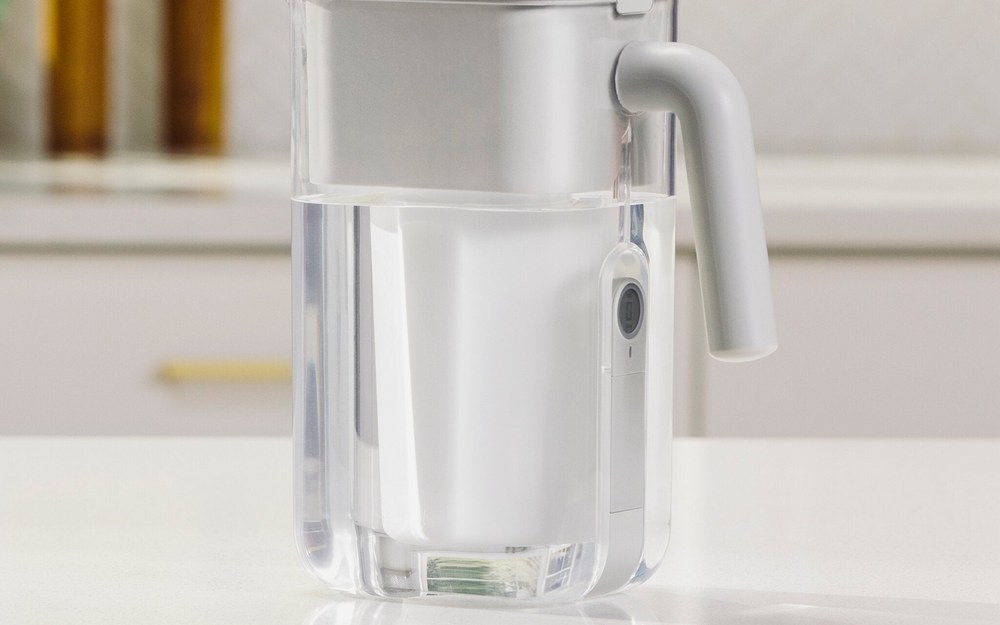 Best Budget Filter
A budget-friendly way to make sure the water you rinse and boil rice in is clean. ZeroWater's 5-stage ion-exchange-plus-filtration system captures physical particles, including microplastics, while stripping dissolved solids down to 0 ppm. The included TDS meter is the standout feature — it confirms exactly when the filter is exhausted, so you replace on data rather than a calendar guess. Filter life varies a lot by water hardness (25–40 gallons in hard water, up to 150 in soft), which is the trade-off for that thorough multi-stage filtration. It is the value pick for anyone who wants cleaner cooking water without a big upfront spend.
Clean cooking and rinsing water on a budget — and the included TDS meter shows the exact moment your filter is spent, which matters most in hard-water homes.
Why it's safe: Five mechanical and ion-exchange stages capture microplastic particles and strip dissolved solids to 0 ppm, and the pitcher is built from BPA-free plastic.
Check Today's Price on Amazon →Amazon prices change daily — tap to see today's price and any active discount.
- Free delivery & returns for Prime members
- Sold & shipped by Amazon
- Thousands of verified reviews
Why it made the list: It delivers the most thorough multi-stage filtration in the pitcher category at the lowest entry price, so cleaner cooking water isn't a premium add-on. See where it lands against the field in our best water filters for microplastics guide.
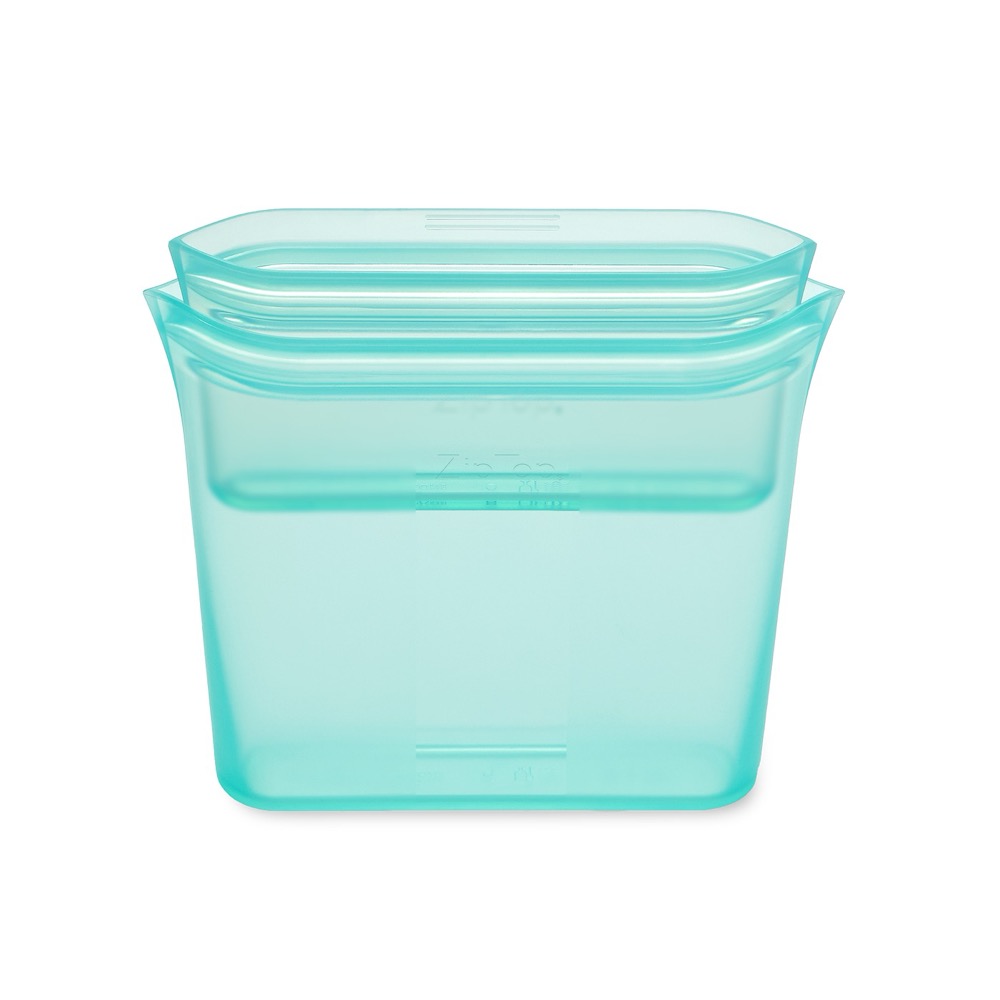
6. Zip Top Reusable Silicone Bags
 Best for Portioning
For dividing a batch of cooked rice into grab-and-go portions, Zip Top is the most intuitive option. It uses a true silicone zipper — a slide-and-lock closure made entirely of food-grade silicone — so it shuts exactly like a plastic bag, except there is no plastic anywhere. It also stands upright on its own, which makes scooping warm rice into it a one-handed job, and it stores neatly in the fridge or freezer. Microwave and dishwasher safe, it replaces the disposable sandwich bags people usually reach for when packing single rice servings.
Portion cooked rice into single servings that stand open while you fill them — the closest thing to a plastic zip-lock that contains zero plastic.
Why it's safe: Built from a single piece of 100% platinum food-grade silicone with no plastic slider, BPA, BPS, or phthalates — nothing to leach or shed into food, reusable for years.
Check Today's Price on Amazon →Amazon prices change daily — tap to see today's price and any active discount.
- Free delivery & returns for Prime members
- Made in the USA
- Thousands of verified reviews
Why it made the list: The stand-upright design and real zipper make it the simplest swap for the disposable baggies people use to portion rice — a practical entry point for going plastic-free in the kitchen.
Comparison Table
| Product | Material | Best Job in the Rice Routine | Microwave-Safe | Price |
|---|---|---|---|---|
| Glasslock Oven Safe Set (3-Pack) | Tempered Glass | Store dry & cooked rice | Yes (lid off) | $ |
| Epic Pure Water Filter Pitcher | BPA-Free Body + Hollow Fiber | Filter rinse & cooking water | N/A | $$ |
| Stasher Silicone Bag Starter Kit | Platinum Silicone | Freeze cooked rice portions | Yes | $$ |
| Bentgo Glass Lunch Container | Borosilicate Glass | Pack & reheat rice bowls | Yes (lid off) | $ |
| ZeroWater 10-Cup Pitcher | BPA-Free Body + 5-Stage | Budget filtered water | N/A | $ |
| Zip Top Reusable Silicone Bags | Platinum Silicone | Portion single servings | Yes | $$ |
Price guide: $ budget · $$ mid-range · $$$ premium. Tap any pick above for today's exact Amazon price.
Habits to Avoid (They Add More Plastic to Your Rice)
Even after you start washing your rice, a few common kitchen habits quietly add plastic back. These are the ones worth dropping.
Avoid Instant, microwave-pouch, and single-serve cup rice
This is the big one. The University of Queensland study found instant rice carried about four times the plastic of plain uncooked rice — roughly 13 mg per 100 g versus 3 to 4 mg. The extra processing and the plastic pouches and cups it is cooked and served in are the likely culprits, and you cannot rinse a sealed pouch. Plain dry rice you wash yourself is cheaper, more versatile, and meaningfully lower in plastic.
Avoid Microwaving rice in plastic containers or pouches
Heat is what drives plastic to shed and leach fastest. Reheating leftover rice in a plastic tub — or steaming a microwave rice pouch — applies heat directly to plastic touching your food, the exact conditions that release the most micro- and nanoplastics. Reheat rice on inert glass with the lid off instead, the same principle we cover in is it safe to microwave Tupperware.
Avoid Cooking and rinsing rice in unfiltered tap water (where quality is poor)
Rinsing rice is meant to remove particles, so doing it in water that carries its own microplastics works against the goal. Tap water quality varies widely by location; if yours is questionable, rinse and boil with filtered water instead. Our guide on whether tap water is safe to drink covers how to find out what is in yours.
Avoid Storing dry rice long-term in its original plastic bag or a plastic bin
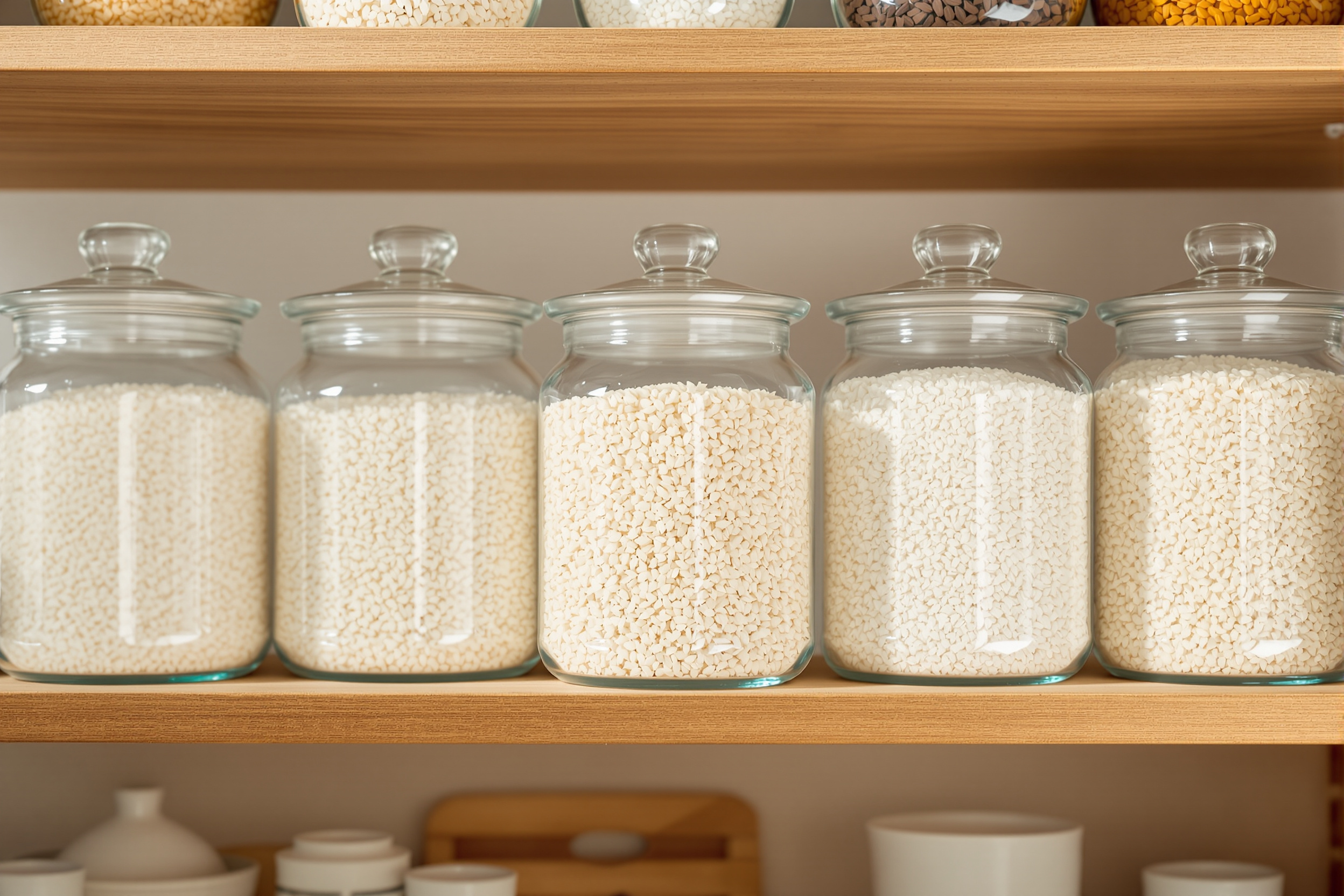
Rice often sits in plastic for months between purchase and the pot, and prolonged contact is one of the ways particles migrate in. Decant rice into glass or stainless steel containers for storage. It also keeps the grain fresher and pest-free — a small upgrade that pays off on every batch you cook.
Want the Full Room-by-Room Protection Guide?
The Complete Plasticproof Guide covers every room in your home — kitchen, nursery, bathroom, bedroom — with the full research and complete swap list. 47+ peer-reviewed studies, 80+ product recommendations.
Frequently Asked Questions
Yes. A 2021 University of Queensland study published in the Journal of Hazardous Materials found microplastics in every store-bought rice sample it tested. The researchers estimated that people consume roughly 3 to 4 milligrams of plastic for every 100 grams (about half a cup) of uncooked rice. The plastic comes from a mix of sources, including the environment the rice is grown and processed in and the plastic packaging it is stored and sold in. Washing rice before cooking reduced the plastic contamination by 20 to 40 percent.
Partially. The University of Queensland researchers found that rinsing rice before cooking reduced its plastic contamination by 20 to 40 percent. Washing does not remove all of it, but it is the single easiest step you can take. Rinse the rice in a fine-mesh stainless steel strainer under running water, swirling it until the water runs clear, then cook it in filtered water rather than unfiltered tap water to avoid adding more particles.
Yes — significantly more. The same University of Queensland study found that instant (pre-cooked) rice contained about four times more plastic than uncooked rice, averaging around 13 milligrams of plastic per 100-gram serving compared with 3 to 4 milligrams for regular rice. The extra plastic is linked to the additional processing and the plastic packaging instant rice is cooked and served in. Choosing plain dry rice over instant or microwave-pouch rice is one of the simplest ways to cut your exposure.
Four steps cover most of it. First, choose plain dry rice over instant or microwave-pouch rice, which carries about four times more plastic. Second, rinse the rice thoroughly in a fine-mesh strainer before cooking, which cuts contamination by 20 to 40 percent. Third, cook it in filtered water so you do not add waterborne microplastics back in. Fourth, store dry and cooked rice in glass or stainless steel rather than plastic bags or tubs, and never microwave rice in a plastic container.
The long-term health effects of dietary microplastics are still being studied, so there is no established "safe" or "dangerous" dose yet. What is clear is that microplastics have been detected in human blood, the placenta, and other tissues, and that they can carry plasticizer chemicals such as phthalates and bisphenols that are linked to hormone disruption. Because rice is a daily staple for billions of people, even small per-serving amounts add up over time, which is why reducing avoidable exposure — through washing, filtered water, and plastic-free storage — is a sensible precaution.
Sources
- Dessì C, Okoffo ED, O'Brien JW, et al. "Plastics contamination of store-bought rice." Journal of Hazardous Materials, 2021. doi:10.1016/j.jhazmat.2021.125778. (University of Queensland study — first to quantify microplastics in rice: ~3–4 mg plastic per 100 g uncooked rice, ~13 mg per 100 g instant rice, washing reduces contamination 20–40%.)
- University of Queensland. "Instant rice packs a plastic punch." UQ News, 2021. (Plain-language summary of the store-bought rice contamination study.)
- Cox KD, Covernton GA, Davies HL, et al. "Human Consumption of Microplastics." Environmental Science & Technology, 2019. doi:10.1021/acs.est.9b01517.
- Leslie HA, van Velzen MJM, Brandsma SH, et al. "Discovery and quantification of plastic particle pollution in human blood." Environment International, 2022. doi:10.1016/j.envint.2022.107199.
- Ragusa A, Svelato A, Santacroce C, et al. "Plasticenta: First evidence of microplastics in human placenta." Environment International, 2021. doi:10.1016/j.envint.2020.106274.
- Vethaak AD, Legler J. "Microplastics and human health." Science, 2021. doi:10.1126/science.abe5041.
- Rochester JR, Bolden AL. "Bisphenol S and F: A Systematic Review and Comparison of the Hormonal Activity of Bisphenol A Substitutes." Environmental Health Perspectives, 2015. doi:10.1289/ehp.1408989.
Protect Every Room in Your Home
From the kitchen to the nursery — the Complete Plasticproof Guide covers every swap that matters, backed by 47+ studies and 80+ product recommendations.