Quick Navigation
What “Plastic-Free” Actually Means on a Tea Bag
The word “plastic-free” gets used loosely on tea packaging, so it’s worth being specific. A truly plastic-free tea bag has no polymer in the bag material and no polymer in the seam. That leaves three formats worth buying:
- Unbleached filter paper, sealed without plastic. The bag is paper. The seam is either stitched with cotton thread, folded and stapled with a paper tag, or sealed with a food-safe non-polymer adhesive. Clipper, Numi, Yogi, Pukka, and Traditional Medicinals all fit here.
- Organic cotton or muslin sachet. Cloth bag, cotton drawstring. Less common at the supermarket, but the format some specialty brands use for whole-leaf blends.
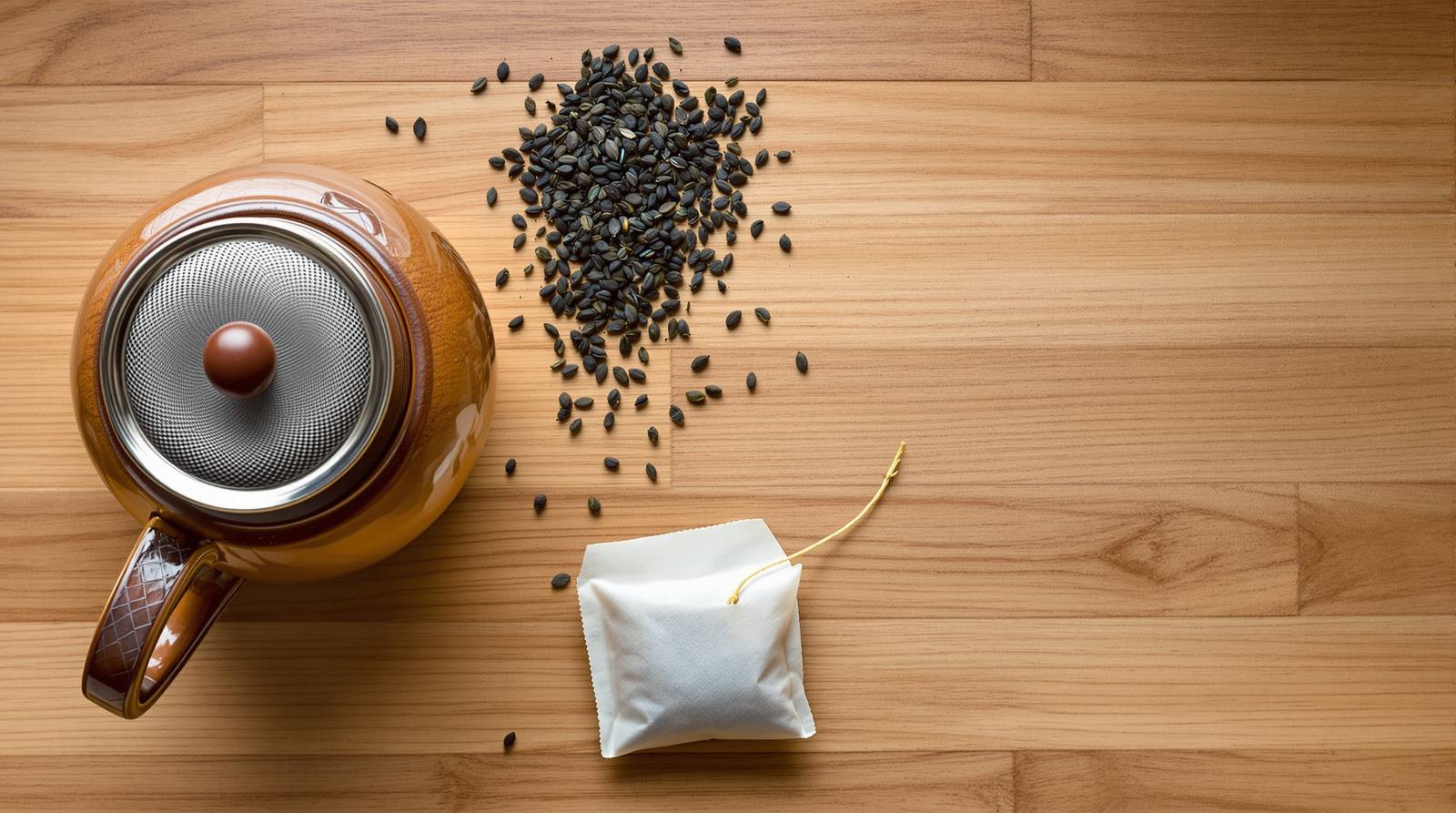
- Loose leaf plus a reusable infuser. No bag at all. A stainless-steel mesh infuser is a one-time purchase; the tea itself ships loose in a tin or resealable pouch. Rishi and Harney & Sons both do this well.
The formats to avoid are the ones with polymer somewhere in the chain: any bag described as “silky,” “silken,” “pyramid,” or “plant-based mesh,” because those are almost always PET, nylon, or PLA plastic. Also avoid conventional paper bags where the seam is heat-welded shut — that seam contains polypropylene at roughly 20–30% by weight, added so the bag can be sealed at factory speed. If the brand doesn’t explicitly say “no polypropylene” or “unbleached, not heat-sealed,” assume the seam has plastic.
What the research actually says. In 2019, researchers at McGill University steeped four commercial nylon and PET pyramid tea bags at 95°C and measured a single bag releasing approximately 11.6 billion microplastic particles and 3.1 billion nanoplastic particles into one cup (Hernandez et al., Environmental Science & Technology, 2019). In December 2024, a team at the Autonomous University of Barcelona extended the analysis to newer “bioplastic” formats: polypropylene bags shed roughly 1.2 billion particles per milliliter, and PLA/cellulose-with-polymer-coating bags shed comparable loads (Banaei et al., Chemosphere, 2024). Heat plus agitation plus a polymer bag equals microplastics in your cup — regardless of whether the polymer is fossil-based or bio-based.
For more on the underlying science, see does tea have microplastics and the plastic tea bag problem. If you already own a stainless-steel infuser, the fastest fix is loose leaf; if you want a drop-in supermarket replacement, jump to the seven brand picks below.
Side-by-Side: The Seven Picks on Real Specs
| Brand | Format | Bag material | Seam | Organic | Best for |
|---|---|---|---|---|---|
| Clipper Organic Everyday | Bagged | Unbleached paper | Non-heat-sealed | Yes | Direct black-tea swap |
| Numi Organic | Bagged | Filter paper, no coating | String-tied | Yes | Turmeric & wellness blends |
| Traditional Medicinals | Bagged | Unbleached paper | String-tied & stapled | Yes | Herbal & medicinal blends |
| Yogi Tea | Bagged | Filter paper | String-tied | Yes | Bedtime & spiced blends |
| Pukka Herbs Organic | Bagged | Unbleached paper | Organic cotton stitch | Yes | UK-style herbal blends |
| Rishi Loose Leaf | Loose | No bag | No seam | Yes (most SKUs) | Real leaf, everyday drinking |
| Harney & Sons Loose Tin | Loose | No bag | No seam | Mixed by blend | Flavored blacks & gifting |
All seven picks below have plastic-free bag and seam materials confirmed on the brand’s own packaging or website. Tap any pick for today’s Amazon price.
1. Clipper Organic Fairtrade Everyday — the “direct grocery-bag swap” pick
 Best supermarket swap
What it actually is. A classic square-and-string paper tea bag. Clipper explicitly confirms the bags are unbleached, non-genetically-modified plant fiber, and sealed with a food-safe adhesive rather than heat-welded polypropylene. The Everyday blend is a full-bodied black tea sourced from Kenya, Assam, and Sri Lanka.
What’s good. Clipper is one of the very few widely available brands that has been plastic-free from the seam up, not as a retrofit. The Everyday blend brews a normal English-style cup, so nobody in the house complains that “the tea tastes different now.” The tag is paper, the string is cotton, the box is recyclable card.
What’s not. (1) It’s a UK import in the US, so per-bag cost is roughly double the cheapest grocery-store brand — still under 10¢ a bag. (2) The Everyday blend is the only plastic-free black tea in the range that’s consistently in stock at US retailers; some flavored varieties come and go. (3) The Amazon listing shows “80 bags,” so it’s a real box, not a sampler pack — but it’s not a bulk institutional size either.
Loyal drinkers say the unbleached, organic bags are the draw and that a five-minute steep gives a smooth cup that does not turn bitter; some will not drink anything else at breakfast. The honest gripes: several owners felt recent batches ran weaker, darker, or thinner, with less tea in each bag, and one reviewer flagged that the bags can still contain a polypropylene layer, which cuts against the fully-compostable impression.
The most-copied “how do I actually stop buying plastic tea” answer — a normal-tasting black tea in a genuinely plastic-free bag.
Why we can recommend it honestly: Clipper publishes the bag material and seam construction in plain language on the box and their site — unbleached paper, non-heat-sealed — so the claim isn’t just marketing.
Check price on Amazon →Prices change daily — tap for today’s price and any active coupon.
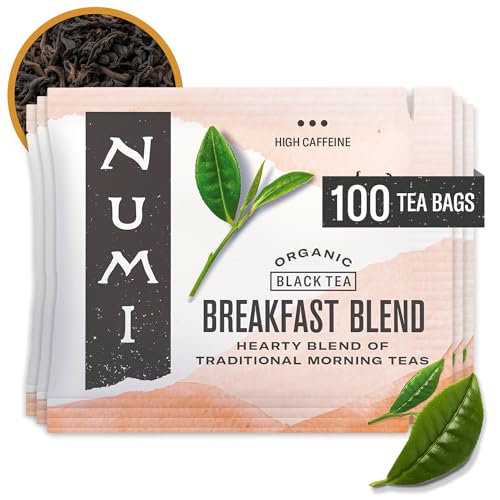
2. Numi Organic Tea — the “full range” pick
 Widest US range
What it actually is. An Oakland-based B-Corp that’s used the same non-GMO filter paper bag with a cotton string and a paper tag from day one. Numi explicitly confirms “no plastic” on the packaging and their website: the bag paper has no plastic coating, and the seam is not heat-sealed with polypropylene.
What’s good. The range is unusually deep for a plastic-free brand — you can get golden turmeric, chamomile, honeybush, jasmine green, Earl Grey, and more without switching brands (which matters, because the plastic-free supermarket shelf is otherwise fragmented). Sold in most Whole Foods, most Sprouts, and Amazon subscribe-and-save.
What’s not. (1) Per-bag cost is roughly 25–35¢ depending on blend — two to three times what a conventional supermarket brand costs, though comparable to any organic tea. (2) The bag paper is soft, so it tears more easily than a stiff pyramid bag if you fish it out with a spoon. (3) Some of the “flowering tea” and premium loose-leaf SKUs are packaged in glass jars with the outer wrap, so shipping runs heavier than a basic box.
Drinkers reach for Numi for clean organic flavor and versatility, using it in London Fogs and chai lattes, and it is a common office and cafe pick. The honest downsides: strength varies a lot by blend, one drinker found the jasmine green bitter with no jasmine coming through, others wished certain flavors were stronger, and a few felt the price was high for what they got.
The one supermarket brand that has your black tea, your green tea, your chamomile, and your turmeric — all in the same plastic-free bag format.
Why we can recommend it honestly: Numi publishes bag construction, seam material, and organic-certification detail on the packaging — the “no plastic” label is backed by specifics you can verify.
Check price on Amazon →Prices change daily — tap for today’s price.
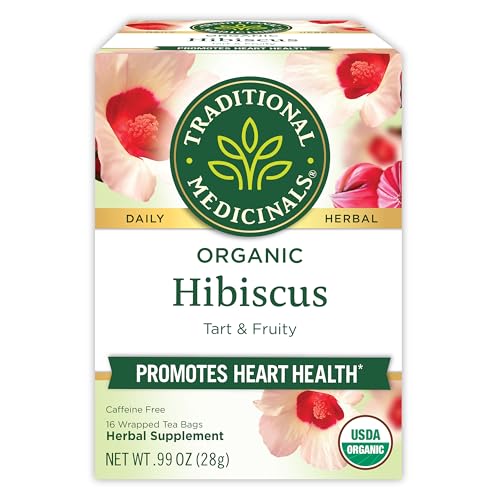
3. Traditional Medicinals — the “herbal medicine cabinet” pick
 Herbal & medicinal
What it actually is. A California herbal-tea maker that specializes in functional blends: Throat Coat (slippery elm and licorice), Smooth Move (senna), Mother’s Milk (fenugreek), Nighty Night (chamomile and passionflower). The bags are unbleached paper, closed with a paper tag on a cotton string and a stainless staple — no polypropylene seam.
What’s good. The company sources herbs to pharmacopoeia standards, publishes each blend’s test results, and is transparent about bag construction — the boxes state “unbleached, non-heat-sealed” explicitly. Widely stocked at drugstores (CVS, Walgreens), supermarkets, and Whole Foods, so it’s easy to buy in a pinch.
What’s not. (1) The staple in the seam is stainless steel — that’s plastic-free, but if you’re composting the used bag you need to pull the staple first. (2) Flavors are herbal-first; if you want a straightforward Ceylon black tea, Clipper or Numi are a better fit. (3) Some blends taste strongly medicinal — that’s the point, but read the blend description before you buy a whole box.
Most buyers are repeat customers, and they credit the organic ingredients and the fact the teas do what they claim, especially the ginger blends for digestion and nausea. The honest downsides: several blends taste bitter or grassy, with reviewers saying the Stress Ease does not taste of cinnamon and the dandelion tastes like pencil shavings; some find the price high; and function-forward blends like Smooth Move can bring cramping.
Plastic-free versions of the exact herbal blends you already keep for a scratchy throat or a sleepless night.
Why we can recommend it honestly: the herbs are pharmacopoeia-grade, the bag construction is stated on the box, and the plastic-free format has been the same for years — not a marketing pivot.
Check price on Amazon →Prices change daily — tap for today’s price.
4. Yogi Tea — the “bedtime and spice” pick
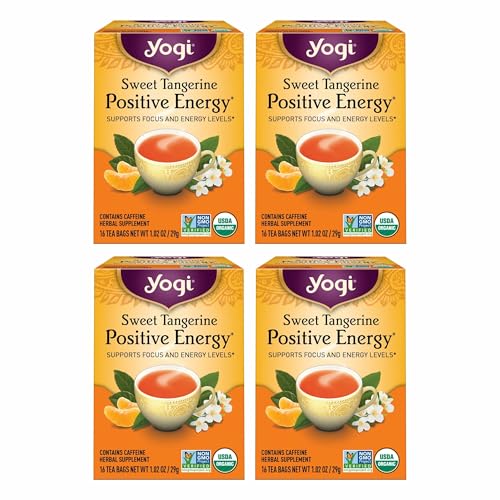 Bedtime & spice
What it actually is. A California brand that specializes in Ayurvedic-style spice blends: cardamom, ginger, cinnamon, licorice root, chamomile. The tea bags are unbleached filter paper closed with a cotton string and a paper tag — no polypropylene seam, no plastic coating on the bag paper.
What’s good. Each bag has an inspirational quote on the tag — a small thing but the reason a lot of people become loyal to the brand. The Bedtime blend is one of the few chamomile-lavender teas that actually tastes right; the Kava Stress Relief is a well-executed spiced kava. Stocked in almost every US supermarket and drugstore.
What’s not. (1) Small box — 16 bags — so if you drink two mugs a night the box empties fast, and per-bag cost is higher than a 40-bag box. (2) A few Yogi “special edition” SKUs are packaged in individual foil pouches; the tea bag inside is still paper, but the outer wrap adds waste. (3) Some Yogi blends contain herbs with real pharmacology (kava, licorice, senna) — read the label before drinking one nightly, especially if you’re pregnant or on medication.
Fans say Yogi's blends have a robust, complex flavor that makes them feel more worth it than everyday grocery tea, with Lemon Ginger and Bedtime the repeat favorites. The honest downsides: in some blends the herbs read muddled or flat and licorice root takes over, the Throat Comfort tastes like cough medicine to several drinkers, and the natural sweetness comes across like stevia or Splenda to people who do not care for it.
The plastic-free answer to “I want a spiced tea before bed” — on almost every US supermarket shelf.
Why we can recommend it honestly: Yogi confirms unbleached paper and no plastic coating on the bag; the paper tag and cotton string are visible on the bag itself — nothing hidden.
Check price on Amazon →Prices change daily — tap for today’s price.
5. Pukka Herbs Organic — the “organic cotton seam” pick
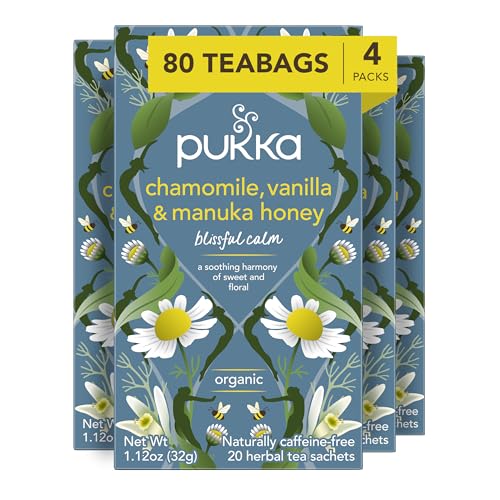 Cotton-stitched
What it actually is. A UK brand co-founded by an herbalist, sold in the US at Whole Foods and on Amazon. Every Pukka bag is unbleached paper stitched shut with a length of organic cotton thread — that’s what the little knotted string on the tea bag is. There’s no polypropylene seam and no plastic coating on the bag. The company publishes the bag construction on their site in plain language.
What’s good. The stitched paper pouch holds up to a long steep — useful for the stronger herbal blends (Feel New, Three Ginger, Night Time) that need five to eight minutes. Flavors are genuinely bold; Pukka’s specialty is dosing herbal ingredients like an infusion, not a hint. Compostable including the string.
What’s not. (1) Individual foil-lined envelope around each bag adds packaging waste even though the bag itself is compostable; only some SKUs sell the “no envelope” version. (2) Per-bag cost runs 30–40¢, on the higher end for organic herbal tea. (3) Some Pukka blends are strong enough to be pharmacologically active (senna in Cleanse, valerian in Night Time) — read the label if you’re pregnant or on meds.
Some drinkers do enjoy Pukka's fruit-and-herb blends and call them smooth. But the honest reality from a lot of reviews is mixed: a recurring complaint is that the tea tastes weak or watery with mainly a hint of licorice coming through every blend, bags sometimes split while steeping, the boxes are hard to open without tearing, and several feel roughly five dollars for twenty bags is steep for the strength you get.
A stitched-pouch bag that gives you the “fancy tea” steep without any polymer in the seam.
Why we can recommend it honestly: Pukka states “no polypropylene, no PLA” on the packaging and shows the organic cotton stitch on every bag — nothing hidden behind marketing.
Check price on Amazon →Prices change daily — tap for today’s price.
6. Rishi Loose Leaf — the “skip the bag entirely” pick
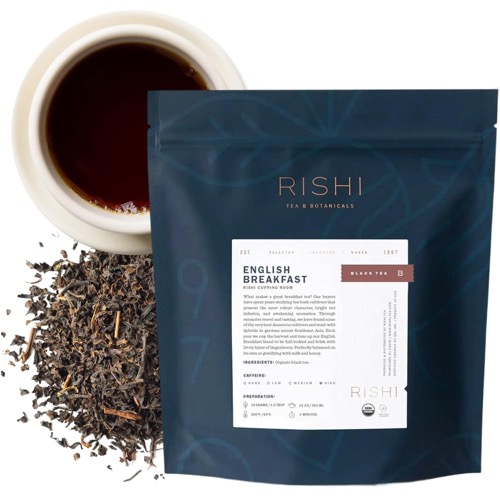 Loose leaf
What it actually is. A Milwaukee-based direct-trade tea importer that ships whole-leaf tea in resealable pouches: Earl Grey, Jade Cloud green, Golden Yunnan, matcha, herbal blends. There’s no tea bag at all — the leaf goes into a strainer or infuser in your cup or teapot.
What’s good. On a per-cup basis, loose leaf is usually cheaper than bagged tea: a $20 pouch of Rishi will steep 40–60 cups. Whole leaf holds up to a second and sometimes third infusion, which halves the effective cost again. Direct-trade sourcing means the estate is named on the pouch. No plastic in the bag because there is no bag.
What’s not. (1) You need a stainless-steel infuser or a teapot with a built-in strainer — add roughly $10 to the first order. (2) Loose leaf takes 10 seconds more per cup than dropping a bag into a mug — small friction, but real. (3) Rishi’s bagged tea line does exist and uses paper bags, but if you can go loose, do it — that’s where the brand shines.
Reviewers who have worked through hundreds of loose-leaf teas rank Rishi high across the board, praising full, well-balanced flavor and blends that come off sweet, soothing, and rich rather than bitter. The honest downsides: a few found certain teas astringent, almost bitter, with a sour aftertaste, and one buyer felt a sachet portion was too small for the price.
The cleanest answer to plastic in tea — skip the bag entirely and put whole leaves in a stainless steel infuser.
Why we can recommend it honestly: the leaf is graded, the sourcing is disclosed by estate, and there is genuinely no polymer anywhere in the product — because there is no bag.
Check price on Amazon →Pair with a stainless-steel mesh infuser ($10–$15) for the full setup.
7. Harney & Sons Loose Leaf Tin — the “fancy flavored blend” pick
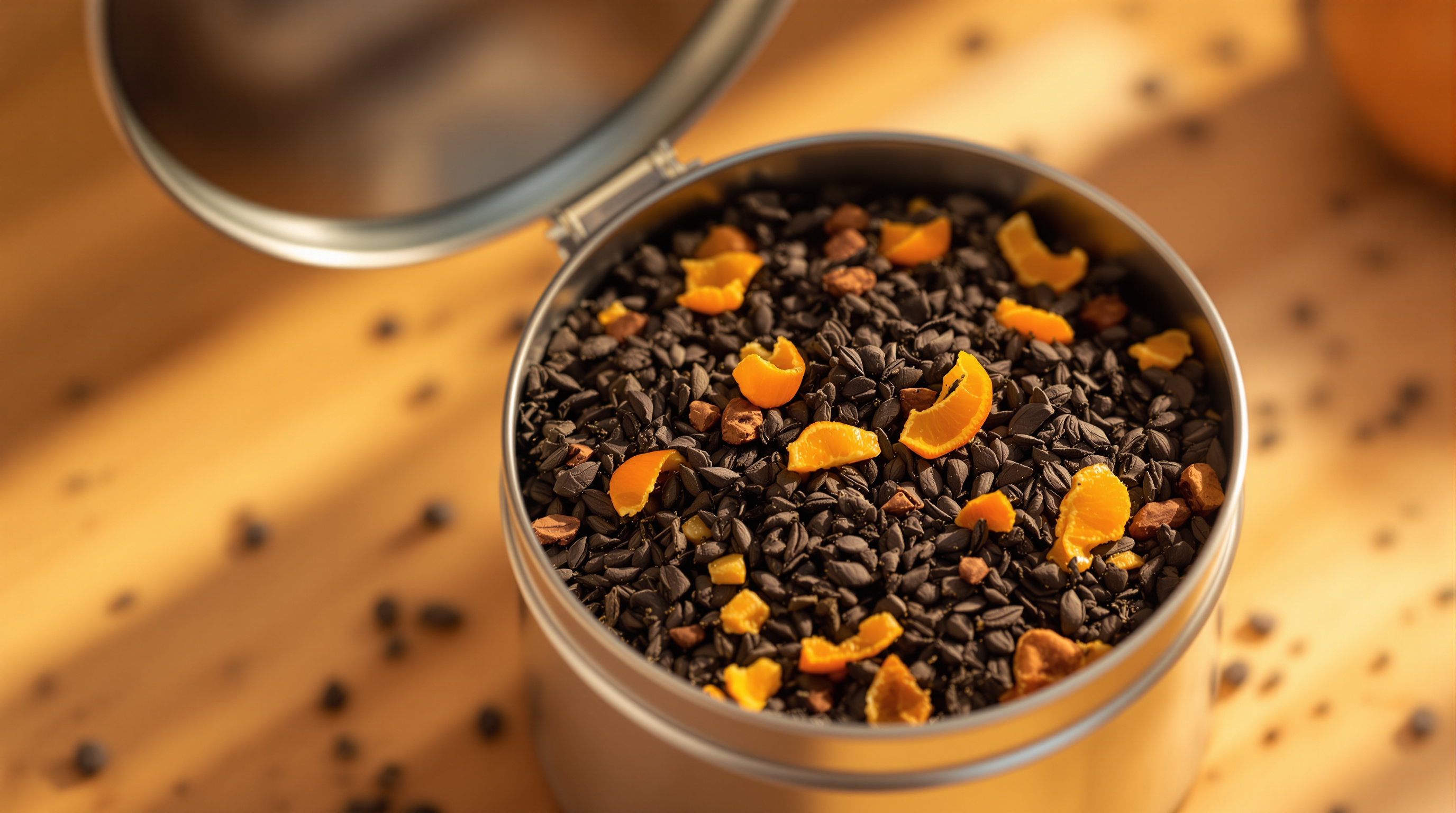 Loose tin
What it actually is. Harney & Sons is a Hudson Valley, NY blender that’s been shipping loose tea for over three decades. The tin contains blended loose leaf — no individual sachets, no plastic. Hot Cinnamon Spice is their best-selling blend: black tea with three types of cinnamon, orange peel, and clove.
What’s good. Zero plastic in the packaging chain: metal tin, paper label, whole leaf inside. A single tin brews roughly 50 cups. The Hot Cinnamon Spice is well-liked enough that it’s the tea most likely to convert a household off bagged flavored teas without complaint.
What’s not. (1) Not all Harney & Sons SKUs are loose leaf — they also sell sachet packs, some of which are silky pyramid-style plastic bags. Buy the tin. (2) Not USDA-organic; the strength is sourcing and blend design, not the organic label. (3) Same infuser step as any loose tea — if you don’t own one, add $10.
It is Harney's most popular flavored blend for a reason: drinkers describe a big cinnamon, clove, and orange-peel aroma with visible bits of bark and peel and no added sugar. The honest downsides: the cinnamon reads like Big Red gum to some, who find it too much; one buyer was let down to see flavoring on the ingredient list; and a few reported multipack shipping mix-ups where cans arrived short.
A widely-loved flavored black tea — loose, in a metal tin, no plastic anywhere.
Why we can recommend it honestly: the tin format has been Harney’s standard for decades; the material chain (metal, paper, leaf) is verifiable at a glance — there is no bag to hide anything in.
Check price on Amazon →Buy the tin, not the sachets — the sachets are silky pyramid bags.
Get the full Plasticproof guide
Tea is one of dozens of daily plastic exposures. The complete guide covers water, kitchen, bedroom, air, and baby — every swap that matters.
Get the free guideWhich One Is Right for You
Seven brands is a lot to sift through. Here’s the short-form decision tree that maps a real situation to a real pick — no “our recommendation” hedge, just the honest match.
- You want a direct swap for the black tea in your cupboard. Buy Clipper Organic Fairtrade Everyday. Same brewing habit, same cup — no polypropylene seam.
- You drink four different flavors in a week. Buy Numi Organic Tea. Widest US plastic-free range — turmeric, chamomile, greens, blacks — in one brand.
- Your tea shelf is really a medicine cabinet (Throat Coat, Nighty Night). Buy Traditional Medicinals. Pharmacopoeia-grade herbs, plastic-free bags, sold at every drugstore.
- You want a spiced bedtime tea from your normal supermarket. Buy Yogi Tea. Bedtime and Kava Stress Relief are the standouts.
- You want the “fancy pouch” steep without polymer. Buy Pukka Herbs Organic. Unbleached paper stitched with organic cotton thread — no PLA anywhere.
- You’re ready to skip the bag entirely. Buy Rishi Loose Leaf plus a stainless-steel infuser. Cheaper per cup, tastes better, no polymer at all.
- You want a flavored black tea and everyone drinks it. Buy the Harney & Sons Hot Cinnamon Spice tin. Loose in a metal tin — but buy the tin, not the sachets.
What to do with the plastic tea bags already in your kitchen
If you look at your current tea box and don’t see “unbleached, non-heat-sealed” or “stitched with organic cotton,” assume the seam contains polypropylene. Two practical calls:
- If they’re silky, silken, or a pyramid shape — those are PET, nylon, or PLA. The 2019 McGill and 2024 Barcelona studies both measured billion-particle-per-cup shedding from this format. Finish the box in coffee or as loose steeping in a bowl if you must, then don’t re-buy.
- If they’re standard flat paper bags of an unmarked brand — the bag paper itself is likely fine; the polypropylene is in the seam, which is a much smaller mass than a whole pyramid. Cutting the seam off and steeping only the paper-and-tea part is a real if fiddly harm-reduction move. Or just switch brands.
See does tea have microplastics and best non-toxic tea bags 2026 for the deeper study review and non-toxic-first framing, and plastic-free tea bag brands (unbleached focus) for the paper-and-seam-detail deep dive.
Bottom line. There isn’t one right plastic-free tea — there’s one right plastic-free tea for how you drink it. Clipper for a direct black-tea swap. Numi for the widest range. Traditional Medicinals and Yogi for the medicine-cabinet blends. Pukka for the stitched pouch feel. Rishi and Harney & Sons if you’re ready to go loose. Any of them ends the pyramid-bag problem in your cup.
Sources & further reading
- Hernandez, L. M., Xu, E. G., Larsson, H. C. E., Tahara, R., Maisuria, V. B. & Tufenkji, N. (2019). Plastic Teabags Release Billions of Microparticles and Nanoparticles into Tea. Environmental Science & Technology, 53(21), 12300–12310. DOI: 10.1021/acs.est.9b02540.
- Banaei, G., Abass, D., Tavakolpournegari, A., Martín-Pérez, J., Gutiérrez, J., Peris, A., Martínez-Bueno, M. J., Fernández-Alba, A. R., Barguilla, I., Vela, L., Pastor, S., Marcós, R. & Hernández, A. (2024). Teabag-derived micro/nanoplastics (true-to-life MNPLs) as a surrogate for real-life exposure scenarios. Chemosphere, 365, 143736. Autonomous University of Barcelona open-access.
- Related on this site: does tea have microplastics, the plastic tea bag problem, plastic-free tea bag brands (unbleached), best non-toxic tea bags 2026.