
Baby food carries microplastics — and most of them come from the plastic it touches, not the fruit or vegetables. A 2023 study in Environmental Science & Technology found that microwaving plastic baby-food containers and reusable food pouches released up to 4.22 million microplastics and 2.11 billion nanoplastics from a single square centimeter of plastic in three minutes, and that ordinary refrigeration or six months of storage released millions to billions of particles too. A 2020 Nature Food study found polypropylene infant feeding bottles shed up to 16.2 million microplastic particles per liter of formula when hot water was used. The food itself is largely innocent; the pouch, tub, bottle and reheating are the story — and every one of those is easy and cheap to change.
It's a fair question to ask about the one part of your household that eats almost nothing you didn't choose for them. Baby food feels like it should be the clean corner of the kitchen: simple purees of fruit and vegetables, portioned into tidy pouches and jars. So the useful thing the research shows isn't that baby food contains microplastics — nearly every packaged food does — it's where they come from and when the count spikes. The produce is barely the issue. The plastic around it, and the heat we add, is.
This guide walks through what the studies actually measured — the staggering particle counts from heated plastic containers, the difference between pouches and glass jars, and why infants are flagged as a higher-concern group — then the honest read on whether it's worth worrying about, and the handful of simple swaps that cut almost all of it. If you also prepare formula, our companion guide on microplastics in baby formula covers the bottle-and-water side in depth.
The bottom line up front: the microplastics in baby food come mainly from the plastic packaging, feeding gear and reheating — not the food — so the fix is to keep the food on glass and stainless steel and never heat it in plastic. Choose glass jars over pouches, make and store purees in glass, warm food in a glass bowl rather than the microwave, and use a metal or silicone spoon. Because purees and formula are often made with tap water, filtering that water closes another steady source. For the wider picture, see why tap water is a top source, our ranking of which foods have the most microplastics, the safest baby bottles, and the room-by-room plastic-free nursery guide.
Does baby food have microplastics, and how much?
It does, and the clearest numbers come from the containers rather than the food. In a 2023 study in Environmental Science & Technology, researchers at the University of Nebraska–Lincoln tested plastic baby-food containers and reusable food pouches sold in U.S. stores and measured how many particles they shed under everyday conditions. Microwaving was the extreme case: one square centimeter of plastic could release up to 4.22 million microplastics and 2.11 billion nanoplastics in just three minutes. Even without heat, refrigerating or storing food in the plastic for six months released millions to billions of particles into food simulants.
The feeding bottle tells the same story. A widely cited 2020 study in Nature Food found that polypropylene infant feeding bottles, sterilized and then filled with hot water to make formula the way the guidelines instruct, shed an average of 16.2 million microplastic particles per liter — and the hotter the water, the more they shed. None of that plastic comes from the milk or the puree. It comes from the plastic we heat, squeeze and store the food in, which puts baby food in the same picture as every other packaged food we've measured, from food packaging generally to canned food — the food is largely innocent; the container is the story.
Where do the microplastics in baby food come from?
Mostly from the plastic the food touches on its way to your baby — not the produce. Squeezable pouches are made of multilayer plastic film; single-serve tubs and reusable pouches are polypropylene or polyethylene; feeding bottles are usually polypropylene; and the bowls, spoons and containers we reheat and store purees in are frequently plastic too. Each contact point sheds particles, and the studies found the released polymers matched the containers, not the fruit or vegetables. The ingredients — sweet potato, apple, pea, oat — carry little of their own.
What makes baby-food plastic an unusually busy source is a combination most other foods don't share: it is frequently heated in its container, it is often an acidic fruit puree, and the containers are reused and squeezed. Heat is the big multiplier — the 2023 study found microwaving released orders of magnitude more particles than storage alone. It's the same “the food is fine, it's the packaging” pattern we see across microwaving food in plastic and food packaging generally. The table below sorts out where the plastic in a typical serving of baby food actually originates.
| Source | What Happens | Contribution |
|---|---|---|
| Heating food in the plastic | Microwaving a pouch or tub, or using hot water in a plastic feeding bottle, drove the largest particle release in the studies — millions of microplastics and billions of nanoplastics per cm² | Major — the main lever |
| Pouches and plastic tubs | Multilayer-film pouches and polypropylene tubs shed into the food during storage; a polyethylene pouch released more particles than rigid containers in the 2023 study | Major |
| Acidic fruit purees + storage time | Acidic purees held against plastic, and months of refrigeration or shelf storage, accelerate shedding and chemical migration from the packaging | Moderate |
| Feeding bottle, bowl and spoon | Plastic bottles (especially with hot formula), plastic bowls and plastic spoon-tips add contact points right at the point of feeding | Moderate |
| The food itself | The fruit, vegetables and grains carry little; the identified polymers trace to packaging and feeding gear, not the ingredient | Negligible |

Does heating baby food in plastic make it worse?
Yes — and this is the single most important thing to take away. Heat is the biggest multiplier of particle release in every study that has looked. In the 2023 Environmental Science & Technology work, three minutes in the microwave drove the extreme numbers — up to 4.22 million microplastics and 2.11 billion nanoplastics per square centimeter — far more than refrigeration or shelf storage produced. The heat softens the plastic and speeds both particle shedding and the migration of plasticizer chemicals out of the container.
The feeding bottle shows the same effect: the 2020 Nature Food study found that the hotter the water used to prepare formula, the more particles the polypropylene bottle shed, climbing sharply as temperature rose. So the two habits that matter most are the two that add heat — microwaving a pouch or tub of puree, and using hot water directly in a plastic bottle. Warm the food in glass or stainless steel instead, and let boiled water cool in a non-plastic container before it meets a bottle, and you remove the condition that produces the worst of the numbers. It also helps to boil that water in a glass or stainless-steel kettle, because a plastic electric kettle can shed microplastics into the water on its own before the formula is ever mixed. Acidic fruit purees and long storage add to it, but heat is the lever with the biggest swing.
"Baby food doesn't get its microplastics from the sweet potato — it gets them from the pouch, the tub and the bottle, and above all from heating them. Warm the food in glass instead of plastic and you remove the biggest source at a stroke."
Is store-bought baby food still fine to feed?
On the microplastics alone, baby food is not something to panic about — and it certainly is not a reason to under-feed a hungry baby. Convenient pouches and jars have real value, and a fed baby comes first. The point of the research isn't “stop buying baby food.” It's that the plastic part is genuinely easy to trim, and worth trimming precisely because the fixes are nearly free: choose glass jars, don't heat in plastic, and feed with a metal or silicone spoon.
That mirrors a theme across this site, and one of the most common microplastics myths: a scary-sounding measurement isn't the same as a proven risk. The dependable move isn't hunting for a mythical “plastic-free” baby food — it's controlling the plastic and heat you actually decide on. Parents already doing this for bottles will recognize the same logic in our overview of microplastics in children, our guide to the safest baby bottles and the best microplastic-free sippy cups.
Are microplastics in baby food dangerous for infants?
Here's where honesty matters. The studies were designed to measure how many particles are released and consumed, what polymers they are, and to estimate exposure — not to test what those particles do once they're inside a child. On the narrow question of proven harm, the research doesn't have a verdict yet, and no one should invent one. What the researchers do flag is that infants are a higher-concern group for reasons that have nothing to do with panic: they eat and drink far more per kilogram of body weight than adults, their organs and detoxifying systems are still developing, and they mouth everything.
There are also early signals worth noting soberly. A 2021 analysis in Environmental Science & Technology Letters reported that infant stool contained roughly ten times more PET microplastic than adult stool, which the authors linked to heavy use of plastic feeding and food products. And microplastics are increasingly detected throughout the human body — in blood, organs and the placenta during pregnancy. None of that proves a specific harm to a specific baby, but it is exactly the situation where cutting the cheap, avoidable sources is the reasonable call while the science matures.
You don't need a plastic scare to act on this one, and you should never skip a feeding over it. The load is dominated by things you control — heating in plastic, pouches and plastic feeding gear — so switching to glass and stainless steel and never microwaving in plastic handles most of it. Fold the rest into the room-by-room plastic-free nursery guide and the kitchen plastic detox guide.
How do you reduce microplastics in your baby's food?
Because the meaningful source is the plastic the food touches and the heat we add, the fixes are about the container and the routine, not about feeding your baby less. Never heat food in plastic — don't microwave a pouch or plastic tub, and don't warm a bottle by pouring hot water straight into it; warm the food in a glass bowl set in a mug of hot water, or in stainless steel. Choose glass jars over pouches where you can, and if you use a pouch, squeeze it into a glass or stainless bowl and feed from there. Feed with a metal or silicone spoon, not a thin plastic one. These moves cost almost nothing and handle the part of the problem that produces the biggest numbers.
For homemade food — often the lowest-plastic route — the same rules apply: blend, store and freeze purees in glass or food-grade silicone, not plastic tubs or ice-cube trays, and reheat gently in glass. And because purees and formula are usually made with tap water, filter that water: a pitcher certified under NSF/ANSI 401 or built around a rated membrane pore size cuts particle counts sharply, and it's the same water your whole family drinks. See our guide to the best water filters for baby formula, blend purees in a non-toxic food processor or blender rather than one with a plastic jar, keep purees and leftovers in glass storage, and build the rest into the plastic-free nursery. The picks below are the simplest, longest-lasting ways to do all of that.

Fix the sources that actually matter
Keeping the food on glass and never heating it in plastic handles most of a baby's exposure — and filtering the water you make purees and formula with closes the steadiest remaining source. Start where it counts.
The gear that cuts the most plastic from your baby's food
There is no “microplastic-free” baby food to buy — the real levers are keeping the food on glass and stainless steel, never heating it in plastic, and filtering the water you make purees and formula with. So instead of padding this out with products that don't exist, here are the real, currently-sold tools that address the sources you actually control: certified water filters for the water behind every puree and bottle, plus glass storage and food-grade silicone to keep purees and leftovers off plastic and out of the microwave. Prices and availability change, so check current listings.
1. Epic Pure Water Filter Pitcher — Best Overall for Microplastics
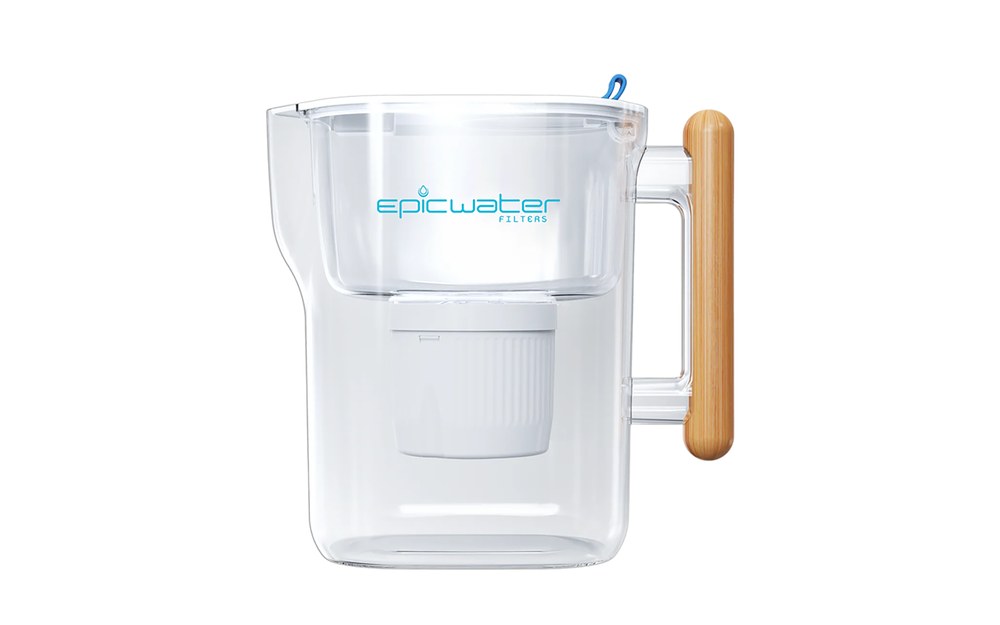 Best Overall
Reviewers point to published independent lab data and a filter rated around 150 gallons, far longer than a Brita, as the reasons they trust it, and several describe the slow, deliberate drip as reassuring rather than annoying. The honest downsides: owners report the filtration is genuinely slow and not the pick if you want a glass of water in a hurry, and third-party complaints mention cracked plastic, flip-top lids that stick, and water that spills or leaks from the lid when you pour a full pitcher.
The clearest evidence on this list: Epic posts its independent lab results publicly, so you can see the 99.9% microplastic-removal data instead of trusting a slogan on the box.
Why it's safe: The hollow fiber membrane physically blocks microplastic particles down to ~1 micron, while the carbon stage handles chlorine, lead, and PFAS — all in a BPA-free Tritan body.
Check Today’s Price on Amazon →Amazon prices change daily — tap to see today's price and any active discount.
- Free delivery & returns for Prime members
- Sold & shipped by Amazon
- Thousands of verified reviews
Almost every puree you blend and every bottle of formula you mix starts with tap water, so filtering it is the highest-leverage swap on this list — it's the input you control most tightly and the one your whole family shares. The Epic Pure is the clearest choice: its dual-stage design uses a hollow fiber membrane as the primary microplastic barrier, and Epic publishes the independent lab results to back the 99.9% removal claim — transparency most competitors don't match. For a version built specifically around infant feeding, see our best water filters for baby formula.
2. Waterdrop Chubby 10-Cup Pitcher — Best Filter Life
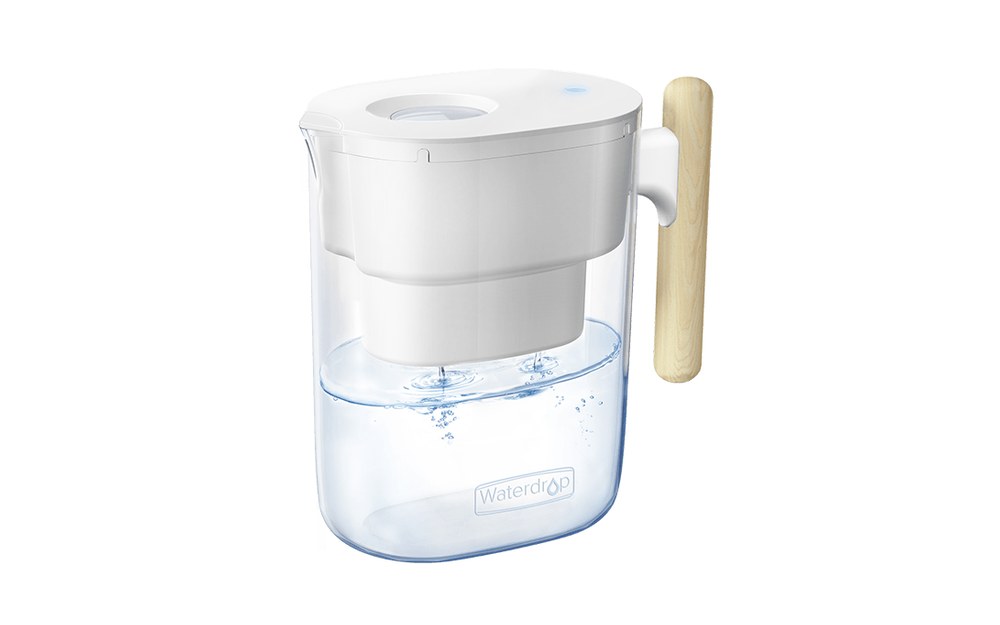 Best Filter Life
Owners like the look and the long 200-gallon filter life, and roughly 80 percent of reviews land positive, with the common praise being clean-tasting water at a low cost per gallon. The honest gripes: several owners warn the handle can feel loose or strain under a full pitcher, so they lift with two hands; some report the pour spills if you tip too fast; and the change-filter indicator light draws complaints for not lighting or not staying lit.
A membrane blocks particles by pore size rather than by claim list, and its 200-gallon filter runs about 4 to 5 months — the lowest ongoing cost on the list.
Why it's safe: A hollow fiber membrane is a physical barrier to particles, while the carbon composite handles chlorine, heavy metals, and PFAS — all in a BPA/BPS-free body.
Check Today’s Price on Amazon →Amazon prices change daily — tap to see today's price and any active discount.
- Free delivery & returns for Prime members
- Sold & shipped by Amazon
- Thousands of verified reviews
Between purees, bottles and the water the rest of the family drinks, you'll run water through a filter constantly — so filter life matters, and the Waterdrop Chubby leads on it: a hollow fiber membrane on Waterdrop's own published lab data, plus 200 gallons per filter (about 4–5 months for most households). The "filter while you pour" design works just like a familiar counter pitcher, but with a membrane that's actually tested for microplastics.
3. Aquagear Water Filter Pitcher — Best Value
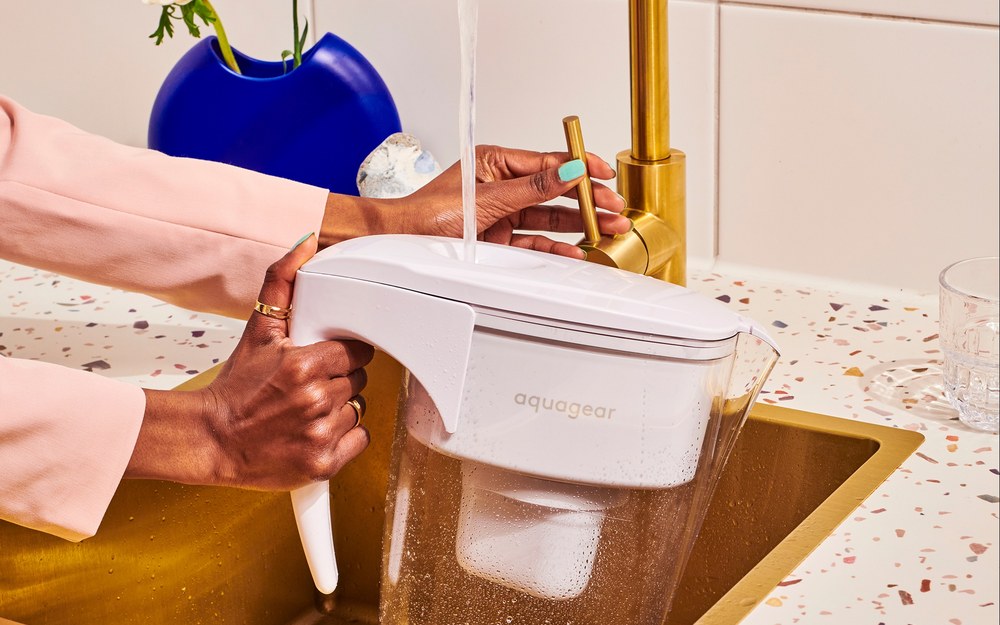 Best Value
Owners choose it for broad contaminant removal and clean taste, and some lab testing found it did not clog. The honest downsides: the most repeated complaint is slow filtration, described by one reviewer as a mixed bag between people waiting minutes and people waiting hours, and it can worsen as the filter ages; and the design draws gripes, with the pour-spout cover popping out and spraying water and a lid that fits poorly and can pop off mid-pour.
Change the filter half as often as most pitchers — 150 gallons per cartridge means fewer replacements, lower annual cost, and less to remember.
Why it's safe: A 5-stage filter with a sub-micron membrane stage captures microplastics, lead, fluoride, and chlorine, in a BPA-free body with USA-made filter media.
Check Today’s Price on Amazon →Amazon prices change daily — tap to see today's price and any active discount.
- Free delivery & returns for Prime members
- Sold & shipped by Amazon
- Thousands of verified reviews
The Aquagear costs more upfront but its 150-gallon filter life means lower annual replacement costs than most competitors, and the pitcher body is guaranteed for life. It uses a 5-stage filter with a sub-micron membrane stage that targets microplastics, heavy metals, and fluoride — a good fit for a busy family that would rather set up clean water once and not think about cartridges every month.
4. Lifefactory Glass Bottle 22oz — Best Glass Bottle
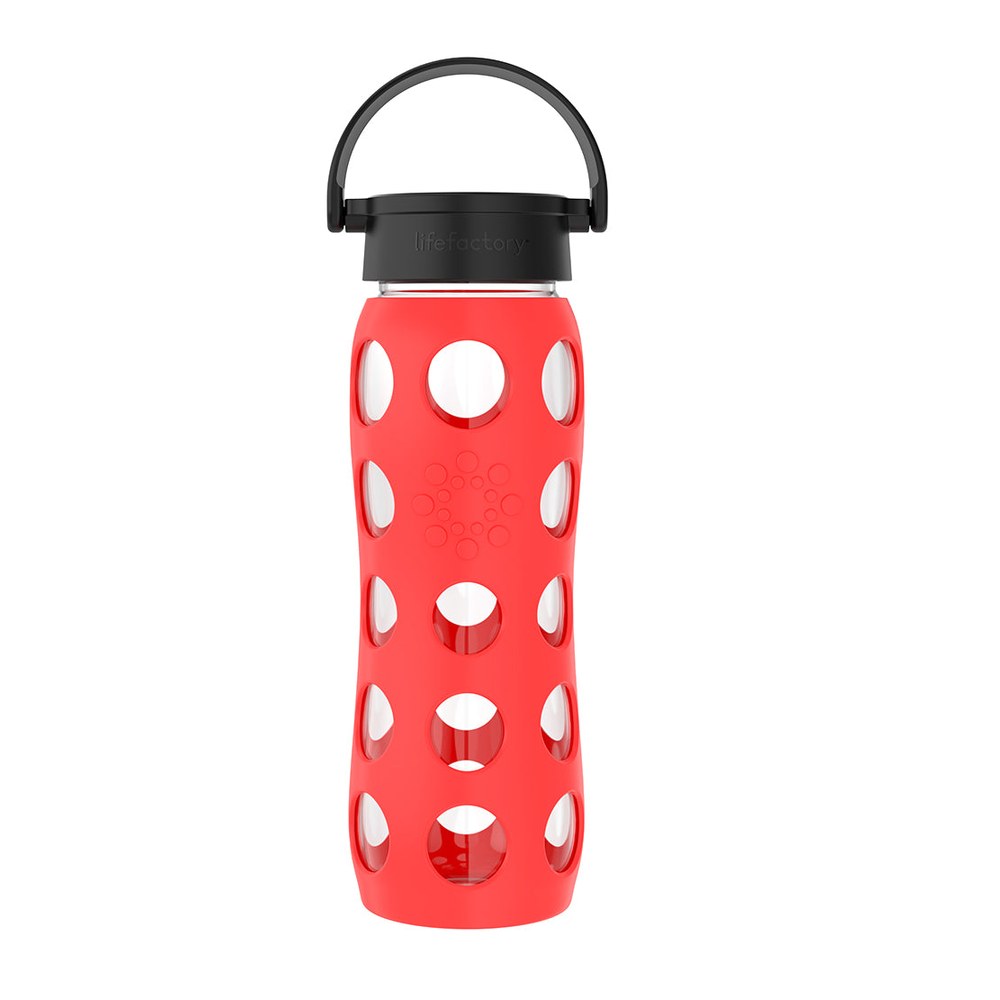 Best Glass Bottle
Once your baby moves on to a cup, this is the plastic-free upgrade — and in the meantime it's the parent's own grab-and-go bottle for the filtered water behind every puree and bottle of formula. It’s made from borosilicate glass, the same material used in laboratory glassware, which is thermally stable, chemically inert, and completely free of BPA, BPS, and any polymer contact with the drink. It imparts no taste, so water tastes like water. The protective silicone sleeve adds grip and guards against shattering.
The screw cap contains a small polypropylene component — the only plastic in the system, and it sits at the exterior closure rather than the drink surface. Rinse it like any cap and it stays a non-issue. Dishwasher-safe, and sturdy enough for daily desk-and-bag use.
Owners love that water tastes clean with no plastic aftertaste and that the silicone sleeve makes the glass easy to grip and survive the occasional drop. The honest downsides: it’s heavier than a plastic or steel bottle, the glass can still break if dropped on a hard edge, and some reviewers find the flip-cap spout narrow or report the cap can leak if not fully closed.
Carry the filtered water you made at home instead of buying bottled — no plastic contact, no leaching, and it cleans up in the dishwasher.
Why it's safe: Borosilicate glass is completely inert — it never leaches, never sheds microplastics, and imparts no taste. The only plastic is a small cap component at the exterior closure, not the drink surface.
Check Today’s Price on Amazon →Amazon prices change daily — tap to see today's price and any active discount.
- Free delivery & returns for Prime members
- Sold & shipped by Amazon
- Thousands of verified reviews
Carrying filtered water in a reusable glass or stainless steel bottle — or a dedicated filtered water bottle — means the water you reach for to mix a bottle or thin a puree on the go is already clean, with no PET shedding or plastic aftertaste. A borosilicate bottle is also a handy, spill-tolerant vessel for cooled boiled water when you're preparing formula away from home.
5. Glasslock Oven Safe Container Set (3-Pack) — Best Glass Storage
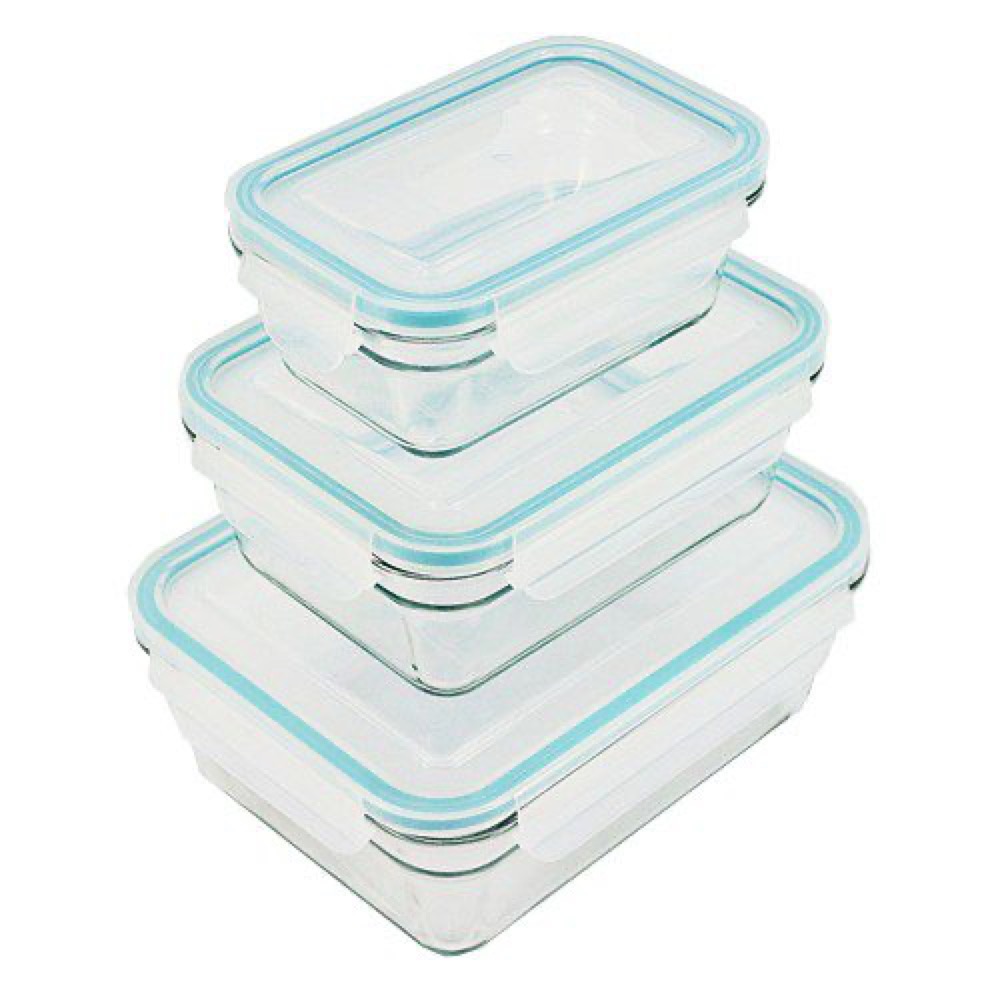 Best Glass Storage
Longtime owners like that the glass bodies are oven-, microwave-, and freezer-safe and that the snap-lock lids seal tight. The honest downsides run through the lids, not the glass: reviewers report cracked lids, snapped locking tabs, and mold building up in the rubber gaskets if they are not dried well. Some buyers also received sets with a locking piece missing, and several flag slow, hard-to-reach customer service when they needed a replacement part.
Three stackable glass containers in one box — enough to store a week of leftovers and prepped ingredients without a single plastic tub.
Why it's safe: Your food sits on inert tempered glass, not plastic — so warm, acidic, watery foods can’t leach or pick up shed particles. The BPA-free lids seal with a food-grade silicone gasket that only touches the rim.
Check Today's Price on Amazon →Amazon prices change daily — tap to see today's price and any active discount.
- Free delivery & returns for Prime members
- Sold & shipped by Amazon
- Thousands of verified reviews
Glass storage is the direct fix for homemade baby food: batch-cook and portion purees into inert glass instead of plastic tubs, refrigerate them there, and warm them with the lid off — in the container set in hot water, never the microwave — so the food never sits against warm plastic. Fruit purees are exactly the acidic, often-reheated foods you least want held in plastic, and at roughly ten dollars per container this is the cheapest way to move a week of baby food off plastic in one purchase. For the full lineup, see our guide to the best glass food storage containers.
6. Stasher Reusable Silicone Bag Starter Kit — Best Silicone Bag
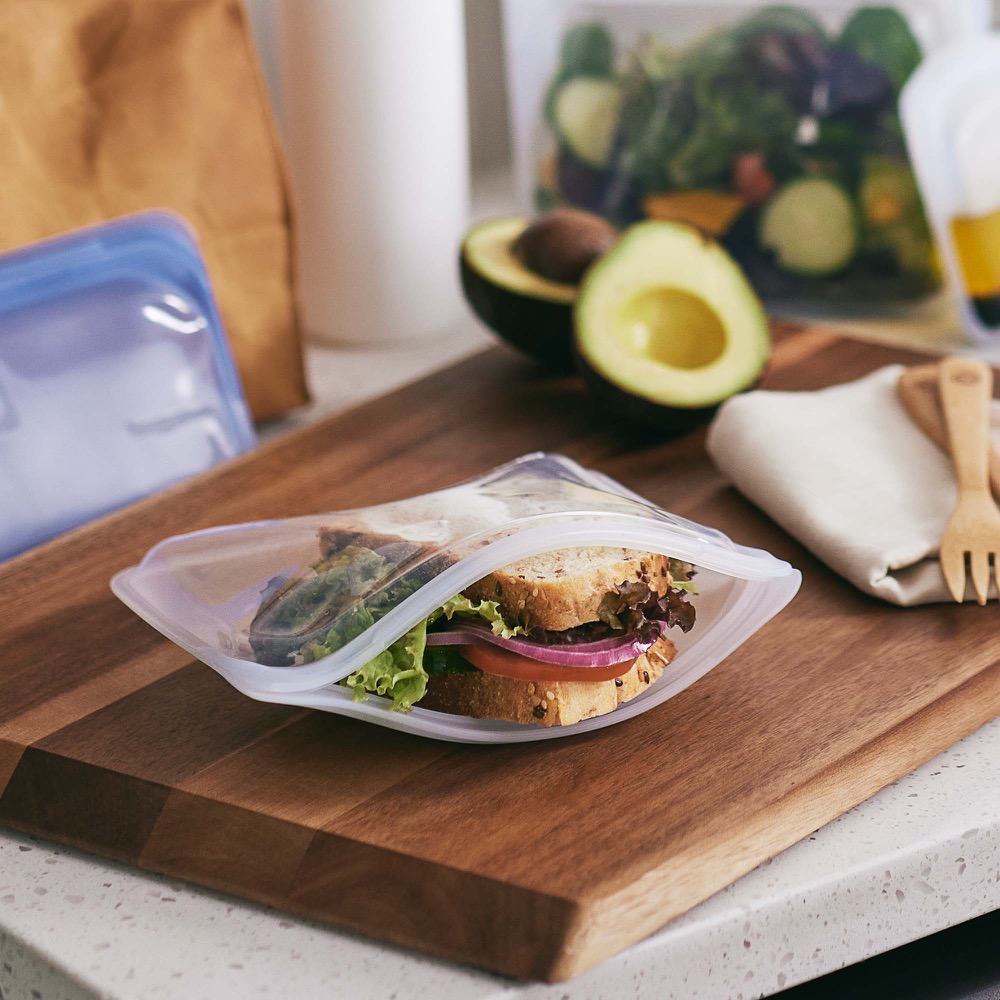 Best Silicone Bag
For freezing food in portions, stashing leftovers you won't finish in time, or anything you’d reach for a plastic bag — Stasher’s platinum-cured silicone is the upgrade: sturdier than any disposable bag and free of the chemicals that migrate from plastic. The patented Pinch-Loc seal is genuinely airtight and leakproof, so it keeps food from drying out.
It’s freezer safe to -70°F and goes straight to the microwave or a 425°F oven. The starter kit covers the everyday sizes — sandwich, snack, and stand-up half-gallon — so you can retire a whole box of single-use bags in one purchase.
Owners like that the platinum silicone bags go from freezer to microwave and replace throwaway plastic for years. The honest gripes: smell and stain retention come up often, with reviewers noting garlic and strong odors linger even after washing; the pinch-lock seal can be fiddly to open and close; and the seams are slow to dry, which can invite mildew if you do not air them out.
Store prepped produce, snacks, and batch-cooked food in airtight silicone instead of plastic film — then thaw and reheat in the same bag, no transfer needed.
Why it's safe: Platinum-cured silicone — the highest-purity, chemically inert grade — with no plastic, PVC, BPA, lead, latex, phthalates, or PFAS.
Check Today's Price on Amazon →Amazon prices change daily — tap to see today's price and any active discount.
- Free delivery & returns for Prime members
- Sold & shipped by Amazon
- Tens of thousands of verified reviews
Freezing homemade puree in portions is the classic baby-food job people reach for flimsy plastic bags or plastic ice-cube trays to do. Food-grade platinum silicone is the upgrade: freeze a batch flat, thaw a portion at a time, and it seals airtight without the shedding of a thin plastic bag — a far better freezer home for acidic fruit purees. For the full lineup, see our guide to the best silicone food storage bags.
Want the Full Home Protection Guide?
Baby food is one plastic touchpoint among dozens in a home with a little one. The Complete Plasticproof Guide covers every room — kitchen, nursery, bathroom, bedroom — with 80+ product recommendations backed by 47+ studies.
The honest verdict
Does baby food have microplastics? It does — but the crucial detail is where they come from. Studies keep pointing to the same culprits: the plastic pouch, tub, feeding bottle and reheating gear, not the fruit or vegetables. The 2023 Environmental Science & Technology work found microwaving plastic containers released up to 4.22 million microplastics and 2.11 billion nanoplastics per square centimeter, and the 2020 Nature Food study found feeding bottles shed up to 16.2 million particles per liter of hot formula. Those studies measured release and exposure, not proven harm, and no one should overstate the risk. So the accurate takeaway is a calm one — and the thing that drives the numbers, the plastic and the heat, is entirely in your hands.
The practical response is easy, because the culprits are the container and the microwave. Feed and store the food in glass or stainless steel, choose glass jars over pouches, never heat food in plastic, and feed with a metal or silicone spoon. For homemade purees, blend, store and freeze in glass or food-grade silicone. And filter the tap water behind every puree and bottle of formula, since it's a steady source you can genuinely clean. You don't need a plastic scare to act on this one — and you should never skip a feeding over it. A few glass containers and a no-microwave rule handle most of it.
Cut the plastic that actually adds up
The biggest wins for a baby are glass instead of pouches, no heating in plastic, and filtered water for purees and formula. A certified filter and glass storage make that your easy default.
Frequently Asked Questions
Baby food can carry microplastics, but most of the load traces to the plastic packaging and containers rather than the fruit or vegetables themselves. A 2023 study in Environmental Science & Technology found that microwaving plastic baby-food containers and reusable food pouches released up to 4.22 million microplastics and 2.11 billion nanoplastics from just one square centimeter of plastic in three minutes, and that plain refrigeration or six months of storage also released millions to billions of particles. A separate 2020 Nature Food study found polypropylene infant feeding bottles shed up to 16.2 million microplastic particles per liter of formula when the water was hot.
Mostly from the plastic the food touches — squeezable pouches, plastic tubs, feeding-bottle plastic and the containers you reheat or store purees in — not the produce. Heat, time and acidic fruit purees all speed up how fast that plastic sheds particles into the food. Homemade purees are not automatically clean either: if you blend, store or warm them in plastic, they pick up particles the same way. The safest commercially available option researchers point to is baby food sold in glass jars.
Yes, dramatically. The 2023 Environmental Science & Technology study found microwaving was the single biggest driver of particle release: up to 4.22 million microplastics and 2.11 billion nanoplastics per square centimeter of plastic in three minutes. Warming a plastic pouch or tub of puree, or preparing formula with hot water in a plastic bottle, is exactly the condition that makes plastic shed fastest. Warm the food in glass or stainless steel instead, and never microwave in the plastic pouch or container.
Glass jars are the lower-plastic option. Squeezable pouches are made of multilayer plastic film and are often warmed or squeezed directly into a baby's mouth or a plastic spoon-tip, and the 2023 study found a polyethylene-based pouch released more particles than rigid polypropylene containers. Glass jars put the food against inert glass instead. If you use pouches, empty them into a glass or stainless bowl, feed with a metal or silicone spoon, and never heat the pouch itself.
Feed and store the food in glass or stainless steel rather than plastic, and never heat it in plastic. Choose baby food in glass jars over pouches, make homemade purees and store them in glass containers or freeze them in food-grade silicone, warm food in a glass bowl set in warm water instead of microwaving plastic, and prepare formula by cooling boiled water in a glass or stainless container before it touches a plastic bottle. Because formula and purees are often made with tap water, filtering that water removes another steady source of particles.
The studies measured how many particles are released and consumed, not what they do inside a child's body, so they do not by themselves prove harm. But researchers flag infants as a higher-concern group: they eat and drink far more per kilogram of body weight than adults, their organs and metabolism are still developing, and one 2021 analysis found infant stool contained about ten times more PET microplastic than adult stool. Given the uncertainty, cutting the avoidable sources — plastic packaging and heat — is a sensible, low-cost precaution.
Sources
- Hussain KA, Romanova S, Okur I, et al. "Assessing the Release of Microplastics and Nanoplastics from Plastic Containers and Reusable Food Pouches: Implications for Human Health." Environmental Science & Technology, 2023;57(26):9782–9792. (University of Nebraska–Lincoln. Microwaving released up to 4.22 million microplastics and 2.11 billion nanoplastics per cm² of plastic in 3 minutes; refrigeration and 6-month storage also released millions to billions; a polyethylene-based food pouch shed more than rigid polypropylene containers.) See also the PubMed record.
- Li D, Shi Y, Yang L, et al. "Microplastic release from the degradation of polypropylene feeding bottles during infant formula preparation." Nature Food, 2020;1:746–754. (Polypropylene infant feeding bottles shed an average of up to 16.2 million microplastic particles per liter during formula preparation, rising with water temperature.)
- Zhang J, Wang L, Trasande L, Kannan K. "Occurrence of Polyethylene Terephthalate and Polycarbonate Microplastics in Infant and Adult Feces." Environmental Science & Technology Letters, 2021;8(11):989–994. (Infant stool contained roughly ten times more PET microplastic than adult stool, linked to heavy use of plastic feeding and food products.)
- Nabi I, Bacha A-U-R, Zhang L. "An Overview of the Possible Exposure of Infants to Microplastics." Life, 2024;14(3):371. (Review of infant microplastic exposure routes and why infants are a higher-concern group; notes baby food in glass jars as the safest commercially available option.)