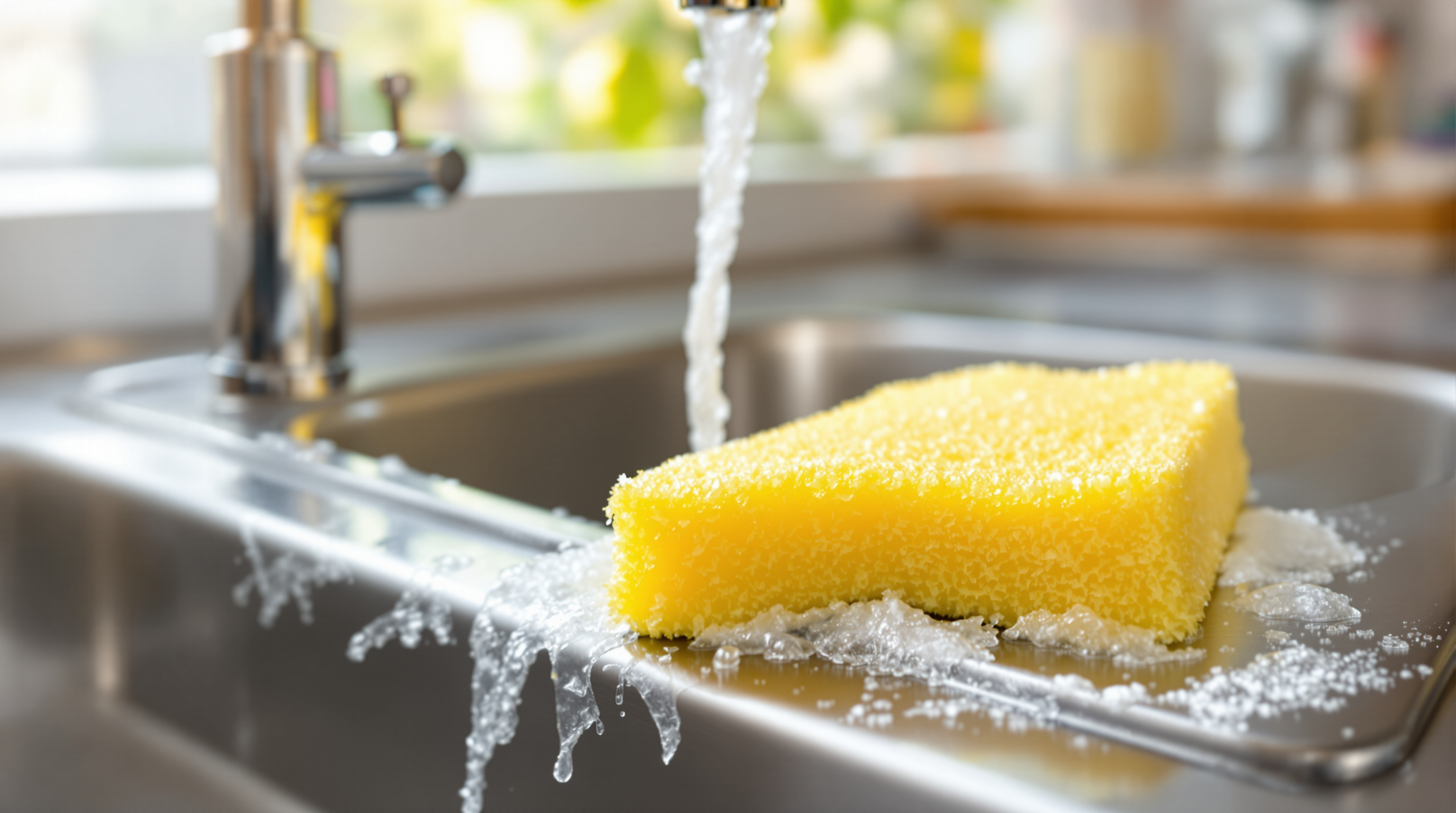
It is the most-used cleaning tool in the house, replaced every few weeks and rarely thought about — but the ordinary kitchen sponge is a block of plastic. The classic yellow-and-green sponge is polyurethane foam bonded to a polyester or nylon scrub pad, and the popular white "magic eraser" is melamine foam. Both are plastics, and both fracture into microscopic pieces as they do their job.
The short version: yes, kitchen sponges have microplastics — they generate them. A 2024 study put hard numbers on it for melamine sponges, and the wear mechanism applies to ordinary foam sponges too. Below is exactly what the research found, where those particles end up, and the plant-fiber swaps — cellulose cloths and wood-handled brushes — that do the same cleaning without shedding any plastic.
Quick Answer
Do kitchen sponges have microplastics? Yes. Most kitchen sponges are plastic — polyurethane foam with a polyester or nylon scrub layer, or melamine "magic eraser" foam — and they shed microplastic fibers as they wear. A 2024 study in Environmental Science & Technology found a melamine sponge releases about 6.5 million microplastic fibers per gram of worn material, an estimated 4.9 trillion fibers a month globally. The fix is to switch to non-shedding tools: cellulose sponge cloths and Swedish dishcloths for wiping, and wood-handled brushes with natural plant-fiber bristles for dishes and pans.
Do kitchen sponges have microplastics?
Yes — and not as a contaminant they pick up, but as something they create. Nearly every dish sponge sold is plastic: a polyurethane foam body, usually with a polyester or nylon abrasive pad bonded to one side. The popular white "magic eraser" is melamine foam, another plastic. As you scrub, the foam abrades and fractures into microscopic particles and fibers that wash down the drain and smear onto whatever you are cleaning.
That matters because the sponge sits at the exact point where plastic meets food contact. The particles it sheds go two places: into kitchen wastewater — a documented route for microplastics into rivers, oceans, and ultimately the food chain — and directly onto your plates, glasses, and countertops. It is the same shedding problem we cover for synthetic textiles in microplastics in clothes, only here the fibers land on the surfaces you eat from.
Rice, seafood, salt, and tap water tend to dominate the conversation about dietary plastic — see our ranked guide to which foods have the most microplastics — but the tools you clean with are an overlooked source hiding in plain sight at the sink.
What did the 2024 melamine sponge study find?
In 2024, researchers publishing in the American Chemical Society's journal Environmental Science & Technology measured how many microplastics a melamine "magic eraser" sponge releases as it wears. The answer was large: about 6.5 million microplastic fibers per gram of worn-down sponge, scaling to an estimated 4.9 trillion fibers released worldwide every month.
The mechanism is mechanical, not chemical leaching. Melamine foam has a hard, brittle open-cell structure — that microscopic rigidity is exactly what makes it scour marks off walls. When you scrub, friction wears those brittle strands down and they snap into fibers between roughly 10 and 405 micrometers long, made of poly(melamine-formaldehyde) plastic. The denser and more worn the sponge, the more it sheds, so a magic eraser used until it crumbles releases the most.
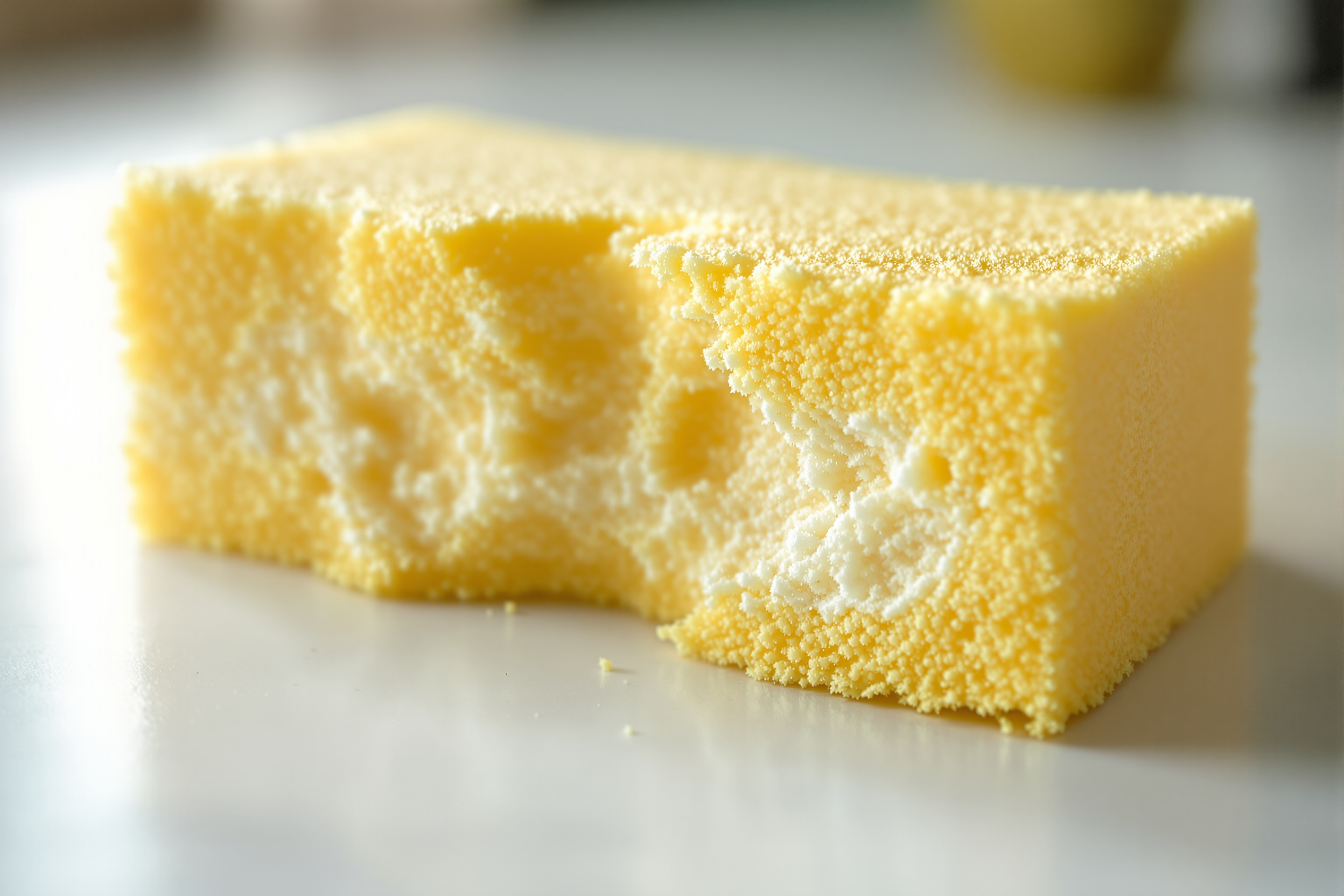
The study looked specifically at melamine sponges because their crumbling is so visible, but the same wear-and-fracture process applies in principle to the polyurethane foam in an ordinary dish sponge. Any time a plastic foam abrades against a hard surface, it leaves some of itself behind as microplastic.
Are regular foam sponges plastic too?
Almost always, yes. The standard kitchen sponge is polyurethane foam — a petroleum-based plastic — usually fused to an abrasive scrubbing pad made of polyester or nylon. Both layers are plastic, so a typical sponge is plastic through and through, and both shed as they degrade with use, heat, and time.
Watch out for the "eco" label, too. Many sponges marketed as natural still bond a synthetic green scrub pad onto a cellulose base, which means the scrub side is the same shedding plastic as a conventional sponge. The only genuinely plastic-free sponges are made purely from cellulose (wood pulp) and cotton, with no synthetic foam and no glued-on scrub layer. Those are the cellulose cloths and Swedish dishcloths we recommend below.
Heat makes shedding worse, which is why people who microwave a damp sponge to "sanitize" it are also accelerating its breakdown. The link between heat and plastic shedding is the same one behind questions about what's in your tap water and the broader case for filtering it — if you want the shortlist of filters that are independently certified to remove microplastics, see our ranked guide to the best water filters for microplastics.
Are microplastics from kitchen sponges harmful?
Honestly, the science is not settled enough to assign a precise risk. There is no agreed "safe" or "dangerous" dose of microplastics yet, because researchers are still working out how the body absorbs, distributes, and clears these particles. What we know is enough to take sensible, low-cost precautions rather than panic.
Microplastics have now been detected in human blood, lungs, the placenta, and other tissues, and the particles can carry plasticizer chemicals — phthalates and bisphenols among them — that research links to hormone disruption. Our explainer on microplastics and hormones goes deeper on those mechanisms. A sponge is a daily-contact item that sheds both into the environment and onto food-prep surfaces, so it is a reasonable thing to address.
The takeaway is the precautionary one: you cannot easily measure the harm of one sponge, but you can remove the source entirely for a few dollars. Because the swap costs little and works as well, replacing shedding foam with non-shedding plant fiber is squarely worth doing — one piece of the broader plan in our kitchen plastic detox guide.
What to use instead: the best plastic-free swaps for the sponge
You don't need a plastic sponge to clean well. Two categories cover almost everything a sponge does: compostable cellulose cloths (Swedish dishcloths and cellulose sponge cloths) for wiping counters and washing everyday dishes, and wood-handled brushes with natural plant-fiber bristles — agave, sisal, tampico, or coconut coir — for pots, pans, and stuck-on food. None contain foam, nylon, or polyester, so there is nothing to fracture into microplastics. These are the swaps we reach for, each drawn from guides we already stand behind.
Quick Picks
- Best sponge replacement: Augine Swedish Dishcloths — biodegradable cellulose + cotton, super-absorbent 5-pack
- Best cellulose sponge: Full Circle Squeeze Cellulose Sponge Cloths — spongy plant fiber, lowest cost-per-cloth
- Best overall brush: BONUMVITA 5 Pack Bamboo Dish Brush Set — bamboo handles, natural bristles, 5-piece set with a 14" bottle brush
- Best for pots & pans: EcoCoconut Kitchen Dish Brush — stiff coconut coir for cast iron and crusted pans
- Best budget brush: SUBEKYU Bamboo Dish Brush — most-reviewed plastic-free pick, palm grip
- Best replaceable head: Vove Bamboo Dish Brush with Replacement Heads — bamboo handle, natural fiber bristles, includes 3 replacement heads
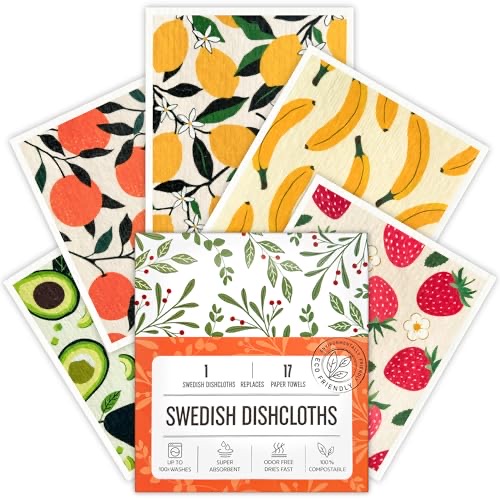
1. Augine Swedish Dishcloths
 Best Sponge Replacement
Made from plant-based cellulose and cotton — no polyurethane foam, polyester, or nylon scrub layer to shed microplastics. Each cloth is highly absorbent, wrings out clean, and air-dries fast, which keeps it more hygienic than a thick, perpetually-damp foam sponge.
Each reusable cloth replaces both the disposable sponge and a stack of paper towels. Machine-wash it or run it on the dishwasher's top rack to refresh it, and it breaks down biodegradably when it finally wears out. The 5-pack makes it a strong value pick.
Retire the shedding foam sponge and the paper-towel roll in one swap — five reusable cloths that wipe and soak up spills.
Why it's safe: Made entirely from cellulose and cotton — no polyurethane foam, polyester, or nylon — so there is no plastic to fracture into microplastic fibers as it wears.
Check Today’s Price on Amazon →Amazon prices change daily — tap to see today's price and any active discount.
- Free delivery & returns for Prime members
- Sold & shipped by Amazon
- Thousands of verified reviews
Why it made the list: A worn foam sponge is the kitchen's most-used shedding plastic; a compostable cellulose cloth removes that source entirely while doing the same job. See the full lineup in our guide to the best plastic-free kitchen towels and cloths.
2. Full Circle Squeeze Cellulose Sponge Cloths
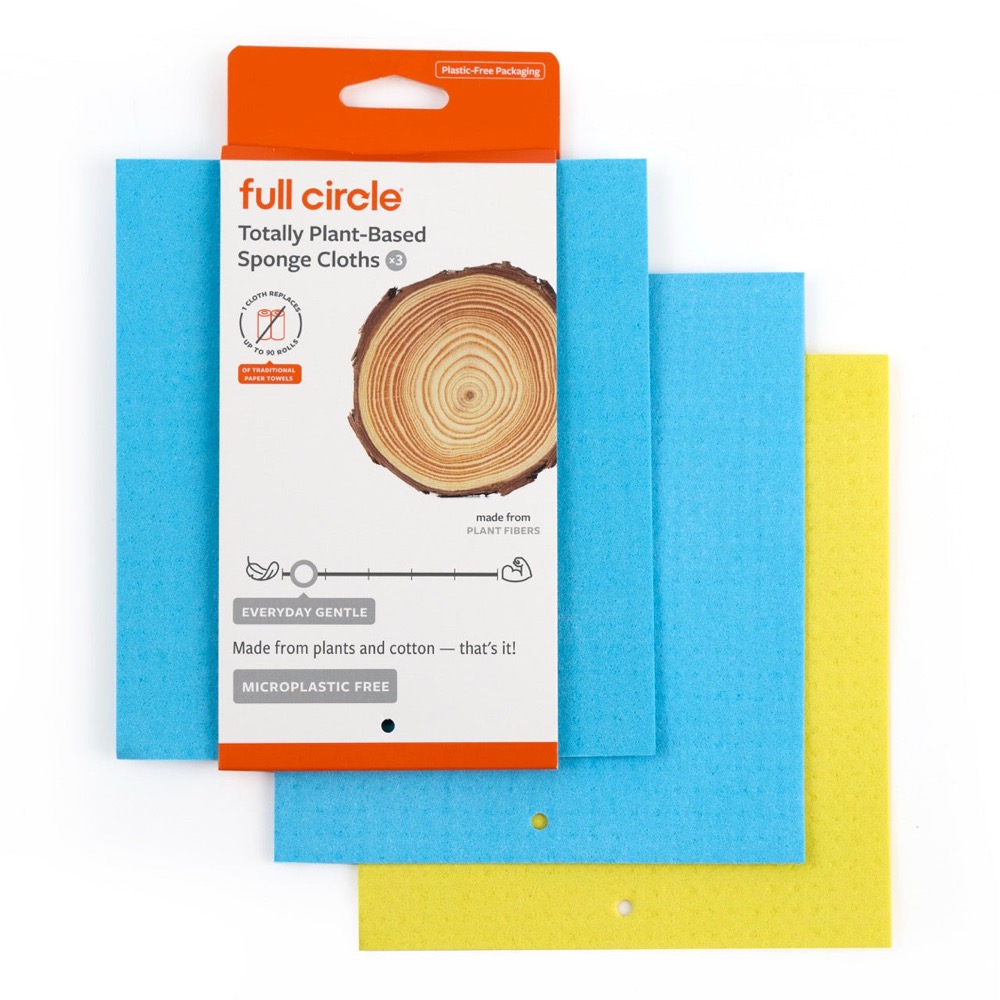 Best Cellulose Sponge
If you want the familiar feel of a sponge without the plastic, this is it: cellulose and cotton with a thicker, spongier texture than a flat Swedish dishcloth, so it cups water and scrubs surfaces the way a foam sponge does. Each cloth replaces roughly 15 rolls of paper towels and is fully compostable at end of life.
It dries stiff (normal for cellulose) and softens the instant it's wet, and it ships in minimal plastic-free cardboard. The crucial difference from a "natural" sponge at the supermarket is that there is no nylon scrub pad bonded on top — so there is nothing plastic to flake off.
The lowest-risk way to try going plastic-free at the sink — a few dollars for sponge-textured cloths that scrub, then compost when worn.
Why it's safe: Plant cellulose and cotton with no synthetic scrub layer — unlike "natural" sponges that bond a nylon scrubber onto a cellulose base, so there is nothing to shed microplastics.
Check Today’s Price on Amazon →Amazon prices change daily — tap to see today's price and any active discount.
- Free delivery & returns for Prime members
- Sold & shipped by Amazon
- Thousands of verified reviews
Why it made the list: It's the closest plastic-free match to the foam-sponge feel people are used to, which makes it the easiest swap to actually stick with. Reducing the plastic in the room you use most is the theme of our kitchen plastic detox guide.
3. BONUMVITA 5 Pack Bamboo Dish Brush Set
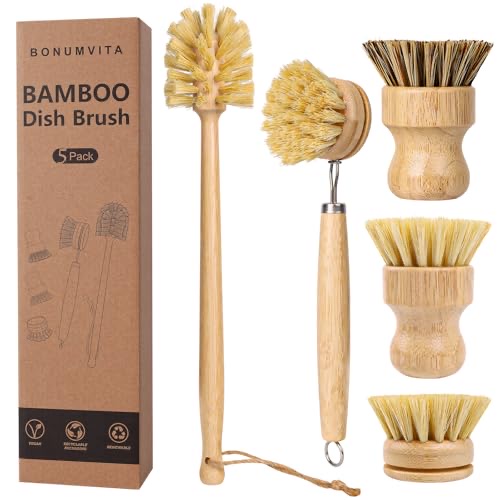 Best Overall Brush
This BONUMVITA set pairs bamboo handles with natural bristles across five brushes plus a 14-inch bottle brush — no molded plastic body to shed microplastics into your water or onto your dishes. The bristles are firm enough for stuck-on rice and pans yet fine for everyday plates and glasses.
Because you get five brushes at once, you can keep a fresh one ready for each job and replace a worn brush immediately — all with bamboo handles instead of plastic. It is a low-cost way for most kitchens to retire the foam sponge and the plastic brush together.
Brushes for plates, glasses, and stuck-on pans — plus a bottle brush — with bamboo handles instead of plastic.
Why it's safe: Bamboo handles and natural bristles — no molded plastic body to shed microplastics into your dishwater or down the drain.
Check Today’s Price on Amazon →Amazon prices change daily — tap to see today's price and any active discount.
- Free delivery & returns for Prime members
- Sold & shipped by Amazon
- Hundreds of verified reviews
Why it made the list: A brush keeps your hand out of the water and gives you scrubbing power a worn sponge can't — and this one does it with no plastic at all. For the full comparison, see our best plastic-free dish brushes guide.
4. EcoCoconut Kitchen Dish Brush
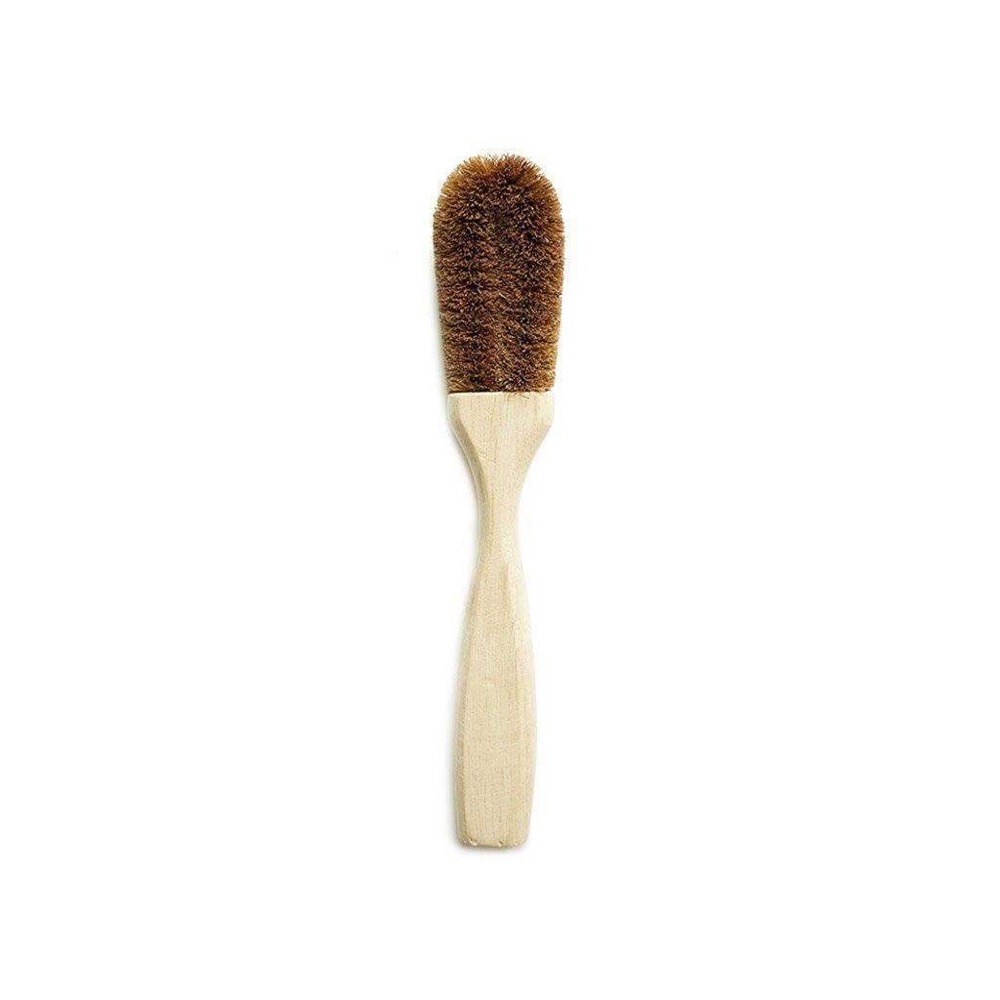 Best for Pots & Pans
The EcoCoconut pairs a rubberwood handle with dense, stiff coconut-coir bristles. Coir is naturally resistant to salt water and bacterial growth and dries quickly between uses, which makes it ideal for the grimiest jobs — baked-on grease, cast iron, and crusted baking sheets that would flatten a softer brush or tear a foam sponge apart.
Every part is natural and biodegradable, so the whole brush composts at end of life. If pots and pans are your main dishwashing battle, this is the plant-fiber brush with the muscle for it — and none of the plastic.
The brush for the jobs that wreck sponges — cast iron, sheet pans, and stuck-on grease meet a fiber stiff enough to win.
Why it's safe: Rubberwood handle and 100% coconut-coir bristles — fully plastic-free and biodegradable, so it never sheds microplastics while it scrubs.
Check Today’s Price on Amazon →Amazon prices change daily — tap to see today's price and any active discount.
- Free delivery & returns for Prime members
- Sold & shipped by Amazon
- Plastic-free, biodegradable build
Why it made the list: Heavy scrubbing is exactly when a foam sponge sheds the most plastic; coir's natural toughness lets you bear down on cast iron without any of it. The same logic applies to black plastic utensils, which shed under heat and abrasion too.
5. SUBEKYU Bamboo Dish Brush
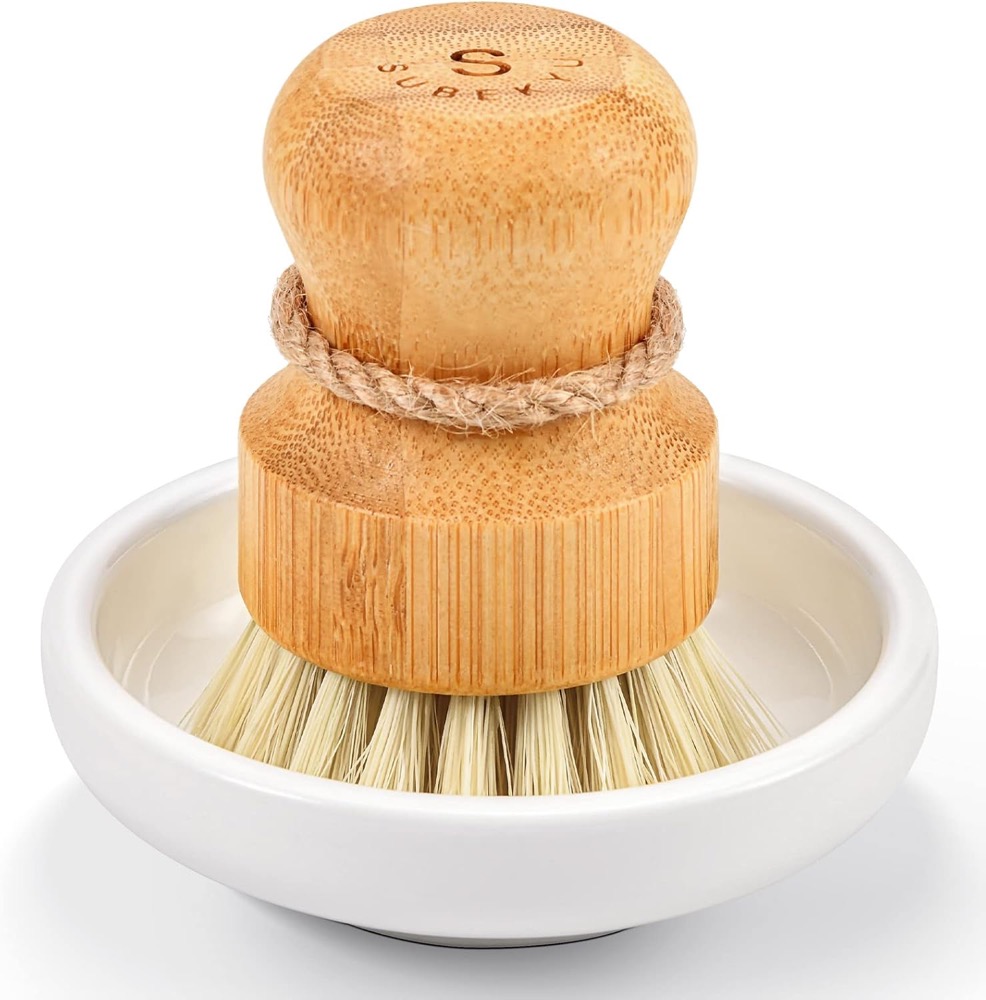 Best Budget Brush
The SUBEKYU is a compact, mushroom-shaped bamboo palm brush with firm natural sisal bristles. You hold it in your palm rather than by a long handle, which gives you real downward pressure for scrubbing pots, vegetables, and stubborn bowls. It comes with a small ceramic dish so it can drain and dry between uses.
With well over a thousand verified ratings, it is the most road-tested pick here — and the lowest cost. The sisal bristles are plant fiber, not nylon, so nothing flakes into your water; the head composts at end of life while the bamboo body keeps going.
Maximum scrubbing leverage with minimum wrist strain — and the lowest price of any genuinely plastic-free tool on this list.
Why it's safe: Bamboo handle and natural sisal plant-fiber bristles — no plastic and no microplastic shedding, unlike the nylon-bristled brushes and foam sponges it replaces.
Check Today’s Price on Amazon →Amazon prices change daily — tap to see today's price and any active discount.
- Free delivery & returns for Prime members
- Sold & shipped by Amazon
- 1,200+ verified reviews
Why it made the list: At a few dollars it removes the price excuse for keeping plastic sponges around, and its thousand-plus reviews make it the safest first buy. It pairs naturally with the rest of a plastic-free kitchen kit.
6. Vove Bamboo Dish Brush with Replacement Heads
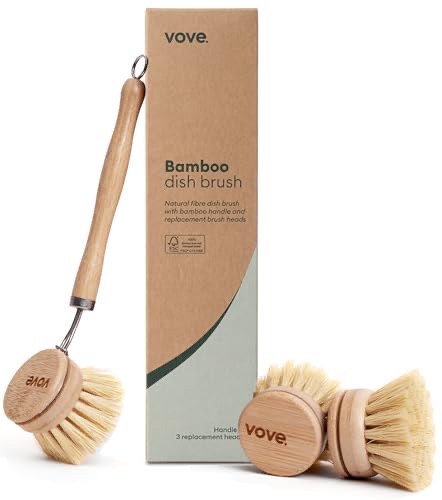 Best Replaceable Head
The Vove brush pairs a bamboo handle with natural fiber bristles and includes three replacement heads. When a head wears down you pop on a fresh one instead of tossing the whole brush — handling everyday plates, glasses, mugs, pots, and pans.
There is no molded plastic body, so nothing petroleum-based sheds into your water, and the replaceable heads keep the brush in service far longer than a one-piece design.
Three replacement heads in the box — refresh the bristles without buying a whole new brush.
Why it's safe: Bamboo handle and natural fiber bristles — no molded plastic body to shed microplastics into your water.
Check Today’s Price on Amazon →Amazon prices change daily — tap to see today's price and any active discount.
- Free delivery & returns for Prime members
- Includes three replacement heads
- Natural bamboo handle
Why it made the list: The included replacement heads mean you always have a fresh natural scrubber on hand instead of reaching for a plastic sponge. It's a natural next step after auditing the plastics across the rest of your food and kitchen routine.
Comparison Table
| Product | Material | Best Job at the Sink | Sheds Microplastics? | Price |
|---|---|---|---|---|
| Augine Swedish Dishcloths | Cellulose + Cotton | Wipe counters & wash dishes | No | $ |
| Full Circle Cellulose Sponge Cloths | Cellulose + Cotton | Sponge-style wiping & scrubbing | No | $ |
| BONUMVITA Bamboo Brush Set | Bamboo + Natural Fiber | Everyday dishes & pans | No | $ |
| EcoCoconut Kitchen Brush | Rubberwood + Coconut Coir | Cast iron & crusted pans | No | $$ |
| SUBEKYU Bamboo Brush | Bamboo + Sisal Fiber | Budget all-purpose scrubbing | No | $ |
| Vove Bamboo (Replaceable Head) | Bamboo + Natural Fiber | Everyday dishes & pans | No | $ |
Price guide: $ budget · $$ mid-range · $$$ premium. Tap any pick above for today's exact Amazon price.
Habits to Avoid (They Add More Plastic at the Sink)
Even once you have a plastic-free brush in the holder, a few common sponge habits keep adding microplastics. These are the ones worth dropping.
Avoid Melamine "magic eraser" sponges, especially worn ones
These are pure plastic foam and the single biggest sponge-shedding source the 2024 study measured — roughly 6.5 million fibers per gram of worn material. The more crumbled the eraser, the more it sheds. For scuff marks, reach for a damp cloth with baking soda or a wood-handled brush instead of a disposable melamine block.
Avoid Polyurethane foam sponges with a nylon scrub pad
The standard dish sponge is plastic on both sides, and it sheds onto the dishes you are trying to clean. Swap it for a cellulose cloth for wiping and a natural-bristle brush for scrubbing — you keep the cleaning power and lose the plastic.
Avoid Microwaving a damp sponge to "sanitize" it
Heat accelerates the breakdown of plastic foam, so microwaving a synthetic sponge degrades it faster and can drive more shedding — the same heat-and-plastic problem behind microwaving Tupperware. Natural cellulose cloths can simply be machine-washed or run through the dishwasher to refresh them.
Avoid "Natural" sponges with a glued-on synthetic scrub layer
Plenty of sponges marketed as eco-friendly bond a green polyester or nylon scour pad onto a cellulose base — so the scrub side is still shedding plastic. Read the material list and choose products that are cellulose and cotton only, with no synthetic scrub layer.
Want the Full Room-by-Room Protection Guide?
The Complete Plasticproof Guide covers every room in your home — kitchen, nursery, bathroom, bedroom — with the full research and complete swap list. 47+ peer-reviewed studies, 80+ product recommendations.
Frequently Asked Questions
Yes. The standard yellow-and-green kitchen sponge is made of plastic — a polyurethane foam body with a polyester or nylon scrubbing layer — and melamine "magic eraser" sponges are plastic foam too. As these sponges scrub and wear down, they fracture into microplastic fibers and fragments that end up in your wastewater and on your dishes. A 2024 study in Environmental Science & Technology measured this directly for melamine sponges, which release roughly 6.5 million microplastic fibers per gram of worn material.
A 2024 study published in the American Chemical Society journal Environmental Science & Technology found that melamine cleaning sponges shed microplastic fibers as they abrade against surfaces. The researchers estimated that each gram of worn-down sponge releases about 6.5 million poly(melamine-formaldehyde) microplastic fibers, and that worldwide sponge use could emit on the order of 4.9 trillion such fibers every month. The brittle open-cell foam fractures into fibers 10–405 micrometers long as friction wears the sponge down.
Almost always, yes. The common dish sponge is a polyurethane foam block bonded to an abrasive scrubbing pad made of polyester or nylon — all plastics derived from petroleum. Even many sponges marketed as "natural" or "eco" still glue a synthetic scrub layer onto a cellulose base. Cellulose sponges and sponge cloths made purely from wood pulp and cotton are the genuinely plastic-free option, because there is no synthetic foam or scrub layer to shed.
The long-term health effects of microplastics are still being researched, so there is no established "safe" dose yet. What is clear is that microplastics have been found in human blood, lungs, and other tissues, and that they can carry plasticizer chemicals linked to hormone disruption. A worn sponge sheds plastic both into kitchen wastewater — a route into the wider environment and food chain — and onto the dishes and counters you prepare food on. Because a sponge is something you use every day, swapping it for a non-shedding natural tool is a low-cost way to cut avoidable exposure.
The best plastic-free swaps are cellulose sponge cloths and Swedish dishcloths (compostable wood-pulp-and-cotton that absorbs like a sponge but sheds no plastic) for wiping and light scrubbing, and wood-handled brushes with natural plant-fiber bristles — agave, sisal, tampico, or coconut coir — for dishes, pots, and pans. None of these contain polyurethane foam, nylon, or polyester, so there is nothing to fracture into microplastics as they wear, and most compost at the end of their life.
Sources
- Su Y, Xing B, Ji R, et al. "Mechanochemical Formation of Poly(melamine-formaldehyde) Microplastic Fibers During Abrasion of Cleaning Sponges." Environmental Science & Technology, 2024. doi:10.1021/acs.est.4c00846. (Melamine sponges release ~6.5 million microplastic fibers per gram of worn material; estimated ~4.9 trillion fibers/month globally; fibers 10–405 µm.)
- American Chemical Society. "Melamine sponges shed microplastics when scrubbed." ACS Press Release, June 2024. (Plain-language summary of the Su et al. study.)
- Cox KD, Covernton GA, Davies HL, et al. "Human Consumption of Microplastics." Environmental Science & Technology, 2019. doi:10.1021/acs.est.9b01517.
- Leslie HA, van Velzen MJM, Brandsma SH, et al. "Discovery and quantification of plastic particle pollution in human blood." Environment International, 2022. doi:10.1016/j.envint.2022.107199.
- Ragusa A, Svelato A, Santacroce C, et al. "Plasticenta: First evidence of microplastics in human placenta." Environment International, 2021. doi:10.1016/j.envint.2020.106274.
- Vethaak AD, Legler J. "Microplastics and human health." Science, 2021. doi:10.1126/science.abe5041.
Protect Every Room in Your Home
From the kitchen to the nursery — the Complete Plasticproof Guide covers every swap that matters, backed by 47+ studies and 80+ product recommendations.