Affiliate disclosure: This article contains affiliate links. If you purchase through these links, Plasticproof may earn a small commission at no extra cost to you. We only recommend products we believe genuinely reduce plastic exposure.
The dish brush sitting next to your sink is almost certainly made of plastic. The handle is polypropylene. The bristles are nylon. The scraper tip, if it has one, is more plastic. And every time you scrub a plate, a pan, or a glass, those nylon bristles lose tiny fragments — microplastic fibers that wash off your dishes, flow down the drain, and enter the water supply.
This matters for three reasons. First, microplastic shedding into the water supply — nylon bristles fragment with every use, and those fibers pass through sink drains into wastewater. Most treatment plants capture only 70-80% of microplastic fibers, meaning the rest flows into rivers, lakes, and oceans. Second, synthetic bristle fragments in food residue — some of those fibers remain on dish surfaces and transfer to food at your next meal, creating a direct ingestion pathway. Third, disposal — when a plastic dish brush finally wears out, the handle takes an estimated 500+ years to decompose in a landfill, shedding microplastics throughout that entire process.
The good news: switching to a natural bristle dish brush eliminates all three problems, and the alternatives are affordable, widely available, and genuinely effective.
Five bamboo scrub brushes plus a 14-inch bottle brush — one purchase covers dishes, pots, pans, sinks, and woks, with natural bristles that never shed nylon microplastics.
Check Today’s Price on Amazon →See how all 6 brushes compare below.
Compare all 6 picks
Every pick side by side — tap a name to jump to the full review, or check today's price.
| Pick | Rating | Why it wins | |
|---|---|---|---|
 Best OverallBONUMVITA 5 Pack Bamboo Dish Brush Set |
— | Bamboo HandlesNatural Bristles |
Check price → |
 Best BudgetSUBEKYU Bamboo Dish Brush |
4.5out of 5 | Plastic-Free BristlesCompostable Head |
Check price → |
 Best PremiumRedecker Tampico Dish Brush |
4.2out of 5 | Plastic-FreeMade in Germany |
Check price → |
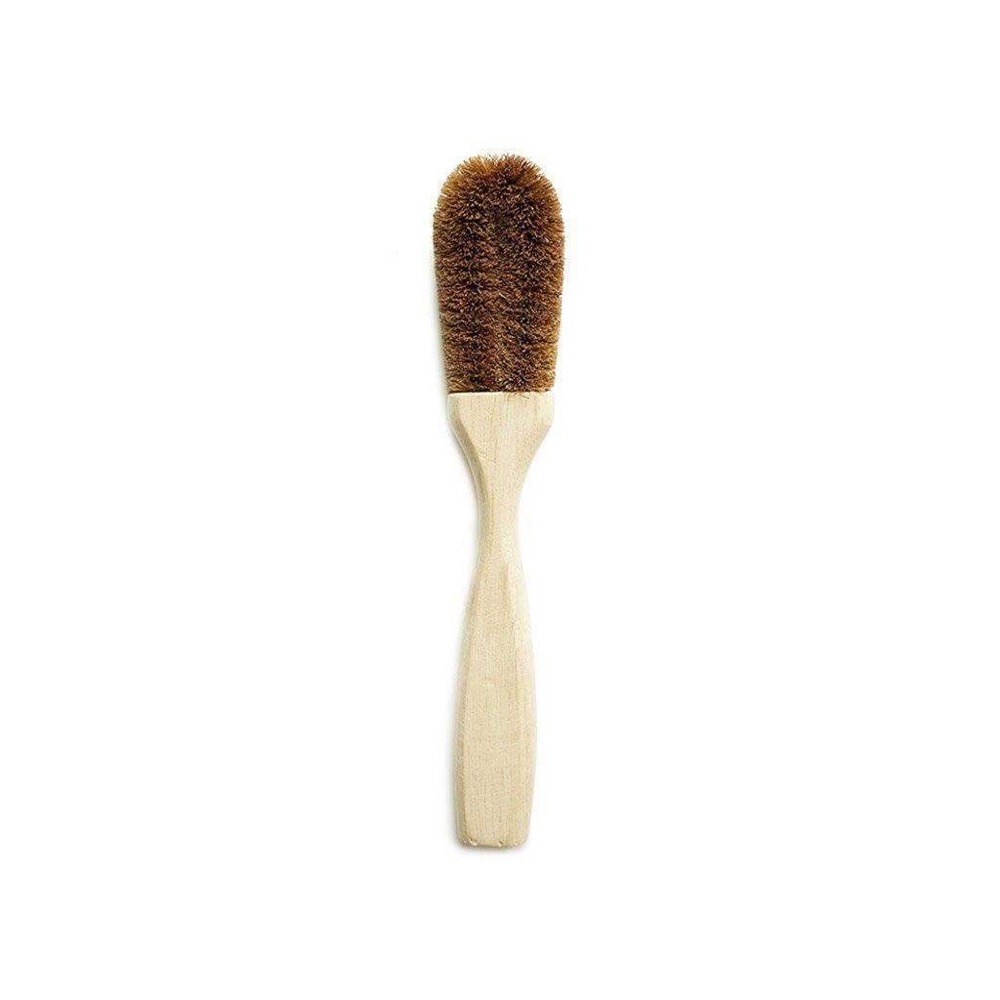 Best Coconut BristleEcoCoconut Kitchen Dish Brush |
— | 100% Plastic-FreeBiodegradable |
Check price → |
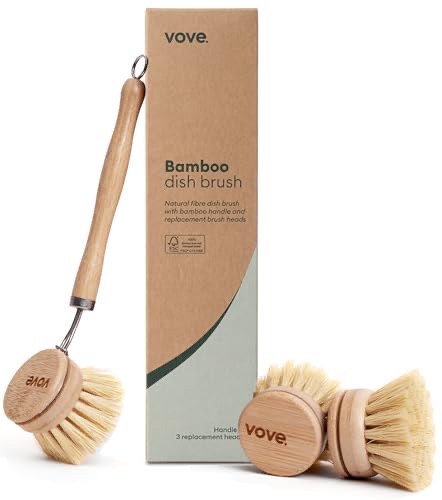 Best Replaceable HeadVove Bamboo Dish Brush with Replacement Heads |
— | Bamboo HandleNatural Fiber Bristles |
Check price → |
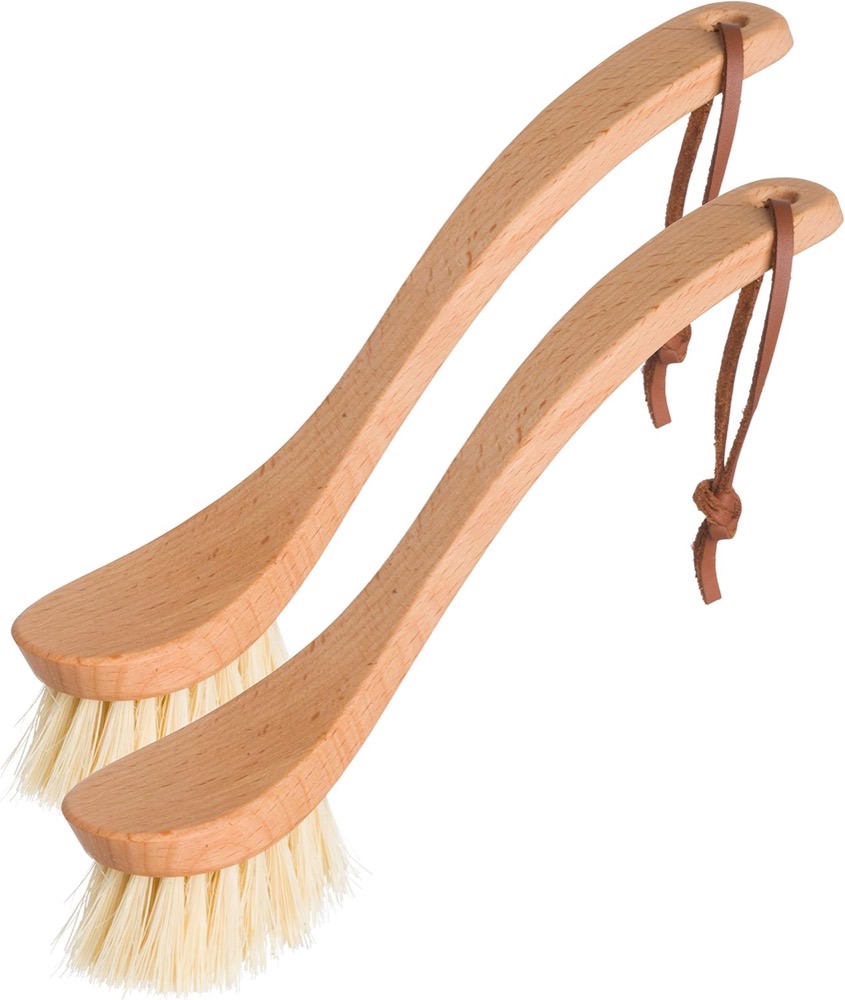 Best ErgonomicRedecker Curved Dish Brush |
4.6out of 5 | Plastic-FreeMade in Germany |
Check price → |
The Problem With Conventional Dish Brushes
A standard plastic dish brush is designed to be cheap and disposable. The bristles are made from nylon 6 or nylon 6,6 — synthetic polymers derived from petroleum. Under the repeated stress of scrubbing, these bristles develop micro-fractures at their tips and along the shaft. Each scrubbing session releases bristle fragments too small to see but large enough to qualify as microplastics (particles under 5mm).
A 2022 study published in Environmental Science & Technology found that kitchen cleaning tools are a measurable source of household microplastic pollution, with brush bristles and sponge fibers identified in sink drain samples at concentrations that rivaled laundry wastewater.
The plastic handle compounds the problem at end of life. Most dish brushes last 2-4 months before the bristles splay and lose effectiveness. That means a household discards 3-6 plastic brush handles per year — none of which are recyclable in standard municipal systems due to their composite construction (multiple plastic types, metal staples).
Sponge alternatives are not much better. Conventional kitchen sponges are made from polyurethane foam (the same petroleum-based plastic in memory foam mattresses) and polyester scrub pads. They shed microplastic fibers at even higher rates than brush bristles because the foam structure breaks down faster under compression and abrasion.
Some dish brushes are marketed as "eco-friendly" or "natural" but use a wooden handle with nylon bristles — or natural bristles secured with a hidden plastic plug. Always check that the bristles, handle, and fastening components are all plastic-free before purchasing. True plastic-free brushes use metal wire or staples to secure natural fiber bristles into wooden heads.
What to Look For in a Plastic-Free Dish Brush
Not all natural dish brushes are created equal. Here are the four features that separate a genuinely good plastic-free brush from a decorative one that falls apart after a week.
Natural fiber bristles
The three main options are coconut coir (the stiffest — excellent for pots and baked-on food), sisal (medium stiffness, derived from agave, good all-purpose), and tampico (the softest, from agave lechuguilla, best for glassware and non-stick surfaces). Coconut coir handles the widest range of kitchen tasks and is the most durable of the three.
Wooden handles
Beechwood is the gold standard — it is hard, smooth, resists water absorption, and has natural antimicrobial properties. Bamboo is also excellent, grows rapidly (making it more sustainable), and performs similarly to beechwood. Avoid softwoods like pine, which absorb water quickly and can crack or harbor bacteria.
Replaceable heads
The best plastic-free dish brushes offer detachable heads that screw or click into the handle. When the bristles wear out, you replace only the head — keeping the handle for years. This reduces waste and brings the ongoing cost down significantly.
Metal or wire connections
Look for bristles secured with stainless steel wire or metal staples — not plastic plugs or synthetic adhesives. Metal fasteners are more durable, fully recyclable, and ensure the brush is 100% compostable at end of life (after removing the metal components).
Quick Picks — Best Plastic-Free Dish Brush 2026
- Best Overall: BONUMVITA 5 Pack Bamboo Dish Brush Set
- Best Budget: SUBEKYU Bamboo Dish Brush
- Best Premium: Redecker Tampico Dish Brush
- Best Coconut Bristle: EcoCoconut Kitchen Dish Brush
- Best Replaceable Head: Vove Bamboo Dish Brush with Replacement Heads
- Best Ergonomic: Redecker Curved Dish Brush
Comparison Table
| Product | Price | Bristle | Handle | Replaceable Head | Compostable |
|---|---|---|---|---|---|
| BONUMVITA Bamboo Set | $ | Natural fiber | Bamboo | No | Yes |
| SUBEKYU Bamboo | $ | Sisal | Bamboo | No | Yes |
| Redecker Tampico | $$$ | Tampico fiber | Oiled beechwood | Yes | Yes |
| EcoCoconut Kitchen | $$ | Coconut coir | Rubberwood | No | Yes |
| Vove Bamboo (Replaceable Head) | $ | Natural fiber | Bamboo | Yes | Yes |
| Redecker Curved | $$$ | Tampico fiber | Oiled beechwood | No | Yes |
Price guide: $ budget · $$ mid-range · $$$ premium. Amazon prices change often — tap any brush below for today's price.
Our Top 6 Plastic-Free Dish Brushes
Best Overall
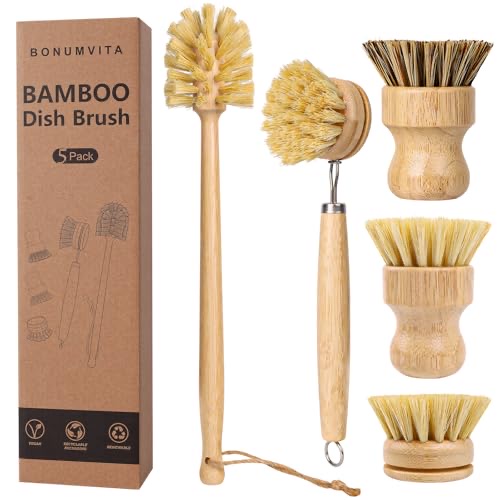
This BONUMVITA set includes five bamboo scrub brushes plus a 14-inch bottle brush, so one purchase covers dishes, pots, pans, sinks, woks, and even vegetables. The bamboo handles and natural bristles stand in for the molded-plastic brushes that shed microplastics as they wear.
Having five brushes on hand means you can keep separate brushes for different jobs and swap in a fresh one the moment one wears down — without buying another plastic brush. It's a low-cost way to move the whole sink area away from plastic.
Buyers like that this set covers everything, from a long bottle brush to palm and sisal scrubbers, and say the wooden handles feel sturdy and the bristles are firm enough to lift food but soft enough not to scratch. The honest gripes: as with all bamboo, the handles wear faster under heavy use and can absorb water and pick up an odor if they stay wet; the bristles soften over time; and the set is not meant for burnt-on or heavy baked-on stains. Hang them to dry between uses and they last longer.
Five bamboo brushes plus a bottle brush in one set — enough to cover every job at the sink and keep spares on hand.
Why it's safe: Bamboo handles and natural bristles instead of the molded plastic and nylon of a conventional brush — so there's no plastic body to fracture into microplastics as it wears.
Check Today’s Price on Amazon →Amazon prices change daily — tap to see today's price and any active discount.
- Free delivery & returns for Prime members
- Sold & shipped by Amazon
- Hundreds of verified reviews
Best Budget
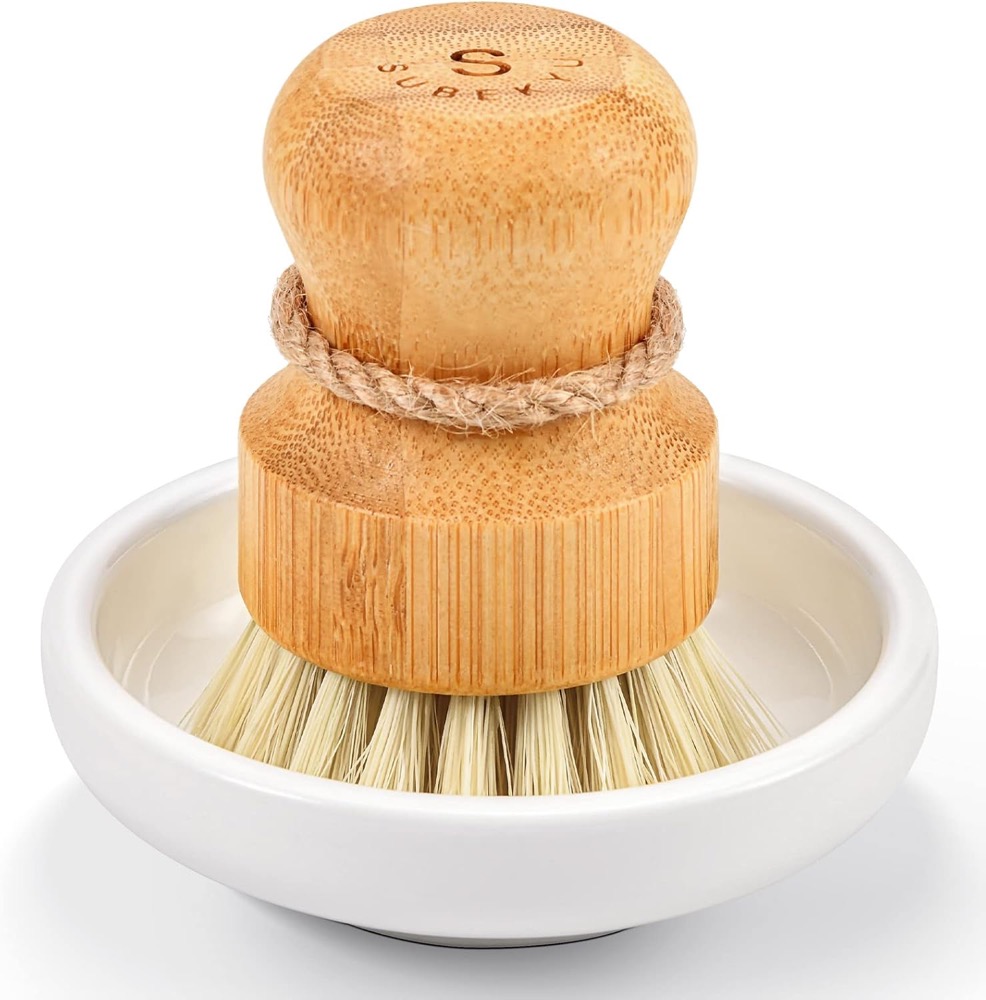
The SUBEKYU is a compact, mushroom-shaped bamboo palm brush with firm natural sisal bristles. You hold it in your palm rather than by a long handle, which gives you real downward pressure for scrubbing pots, vegetables, and stubborn bowls. It comes with a small ceramic dish so it can drain and dry between uses.
With well over a thousand verified ratings, it is the most road-tested pick here — and the lowest cost. The sisal bristles are plant fiber, not nylon, so nothing flakes into your water; the head composts at end of life while the bamboo body keeps going.
Owners use this daily and several report it lasting around six months, calling it good value with a comfortable handle. The honest gripes: the most common durability complaint is the brush head separating from the handle after a couple of months, because only a short length of the bristle wire is glued into the handle; some buyers say food bits are hard to rinse out of the bristles and that they can smell if left damp; and any ceramic soap tray included can arrive chipped from shipping. The maker's advice is not to soak the handle and to hang it to dry.
Maximum scrubbing leverage with minimum wrist strain — and the lowest price of any genuinely plastic-free brush on this list.
Why it's safe: Bamboo handle and natural sisal plant-fiber bristles — no plastic and no microplastic shedding, unlike the nylon-bristled brushes it replaces.
Check Today’s Price on Amazon →Amazon prices change daily — tap to see today's price and any active discount.
- Free delivery & returns for Prime members
- Sold & shipped by Amazon
- 1,200+ verified reviews
Best Premium
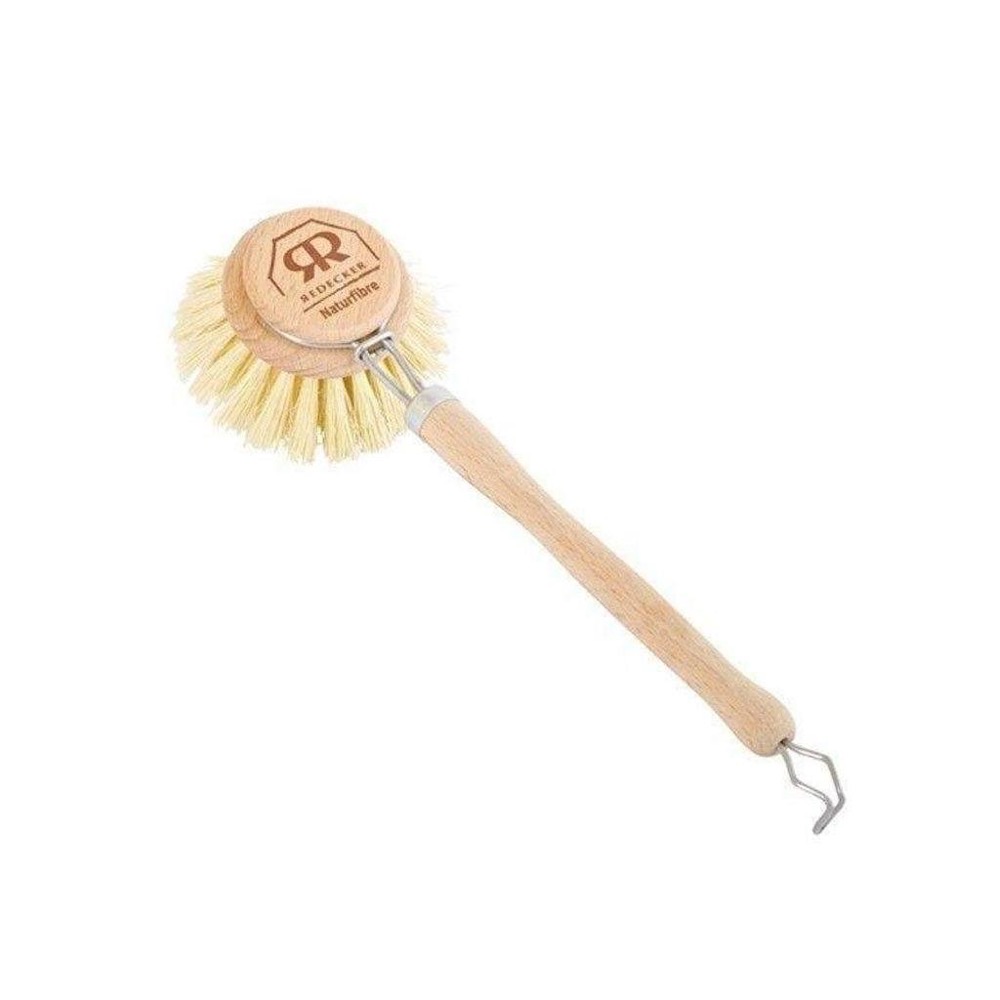
Redecker's classic dish brush uses an oiled beechwood handle that shrugs off water and develops a warm patina over time, topped with a round head of natural tampico (agave plant) fiber. The bristles are firm and springy — gentle enough for glassware, tough enough for pots — and a metal hook lets it hang to dry.
The head is replaceable, so the handle becomes a long-term fixture rather than a throwaway. It costs more than the budget picks, but the build quality is in a different league and it will outlast several cheaper brushes — making it a sound buy if you value craftsmanship and longevity.
CNN Underscored rates this the best sponge replacement for durability and cleaning, and owners say the stiff Tampico plant fiber outlasts plastic brushes that mat down first; Redecker also sells replacement heads. The honest gripes: several buyers say the brush arrived with a strong smell, described as body odor, that the maker admits is natural to plant fiber and only fades with use; the fibers need soap reapplied every three or four dishes; and expect a little bristle shedding while it breaks in.
Buy it once: a German-made beechwood brush that resists water damage and keeps its shape long after disposable plastic brushes would have splayed and shed.
Why it's safe: Oiled beechwood handle and natural tampico plant-fiber bristles — completely plastic-free, with no microplastics to flake into your sink.
Check Today’s Price on Amazon →Amazon prices change daily — tap to see today's price and any active discount.
- Free delivery & returns for Prime members
- Sold & shipped by Amazon
- 600+ verified reviews
Best Coconut Bristle
The EcoCoconut pairs a rubberwood handle with dense, stiff coconut-coir bristles. Coir is naturally resistant to salt water and bacterial growth and dries quickly between uses, which makes it ideal for the grimiest jobs — baked-on grease, cast iron, and crusted baking sheets that would flatten a softer brush.
Every part is natural and biodegradable, so the whole brush composts at end of life. If pots and pans are your main dishwashing battle, this is the plant-fiber brush with the muscle for it.
Fans of the coconut-coir bristles say they are tough on grime but do not scratch, and that the fibers do not shed the way cheaper brushes do, lasting a long time. The honest gripes: you will see some loose fiber or dust the first few uses; as it wears, the wire underneath can start to poke out and scratch; soft or low-quality plastics can still get marked; and sticky food like scrambled egg tends to lodge in the bristles and needs cleaning out.
The brush for the jobs that wreck other brushes — cast iron, sheet pans, and stuck-on grease meet a fiber stiff enough to win.
Why it's safe: Rubberwood handle and 100% coconut-coir bristles — fully plastic-free and biodegradable, so it never sheds microplastics while it scrubs.
Check Today’s Price on Amazon →Amazon prices change daily — tap to see today's price and any active discount.
- Free delivery & returns for Prime members
- Sold & shipped by Amazon
- Plastic-free, biodegradable build
Best Replaceable Head
The Vove brush pairs a bamboo handle with natural fiber bristles and comes with three replacement heads. When a head wears down you pop on a fresh one instead of throwing away the whole brush, which cuts waste and keeps the plastic-free handle in service.
Natural fiber bristles and a bamboo handle mean there's no molded-plastic body to fracture into microplastics as it wears — and the replaceable heads make it last longer than a one-piece brush.
The draw here is the replaceable head on an FSC-certified bamboo handle: each head lasts two to three months and the bundle of spares stretches to six to nine months, which owners like for cutting waste. The honest gripes: some find the handle thick or awkward to grip; the metal wire holding the bristles can loosen over time and need adjusting; and the natural sisal bristles are on the soft side, so heavy baked-on grime is a struggle.
Three replacement heads in the box — refresh the bristles without buying a whole new brush.
Why it's safe: A bamboo handle and natural fiber bristles, not molded plastic — nothing petroleum-based to shed microplastics into your dishwater.
Check Today’s Price on Amazon →Amazon prices change daily — tap to see today's price and any active discount.
- Free delivery & returns for Prime members
- Includes three replacement heads
- Natural bamboo handle
Best Ergonomic
This Redecker takes the same German craftsmanship and natural tampico fiber as the classic model and puts it on an ergonomic, S-curved oiled-beechwood handle with a leather hanging loop. The contoured grip and angled head let you reach the corners of pans and the bottoms of bowls without twisting your wrist.
The tampico bristles are firm plant fiber — tough on stuck-on food, safe on non-stick — and the oiled beechwood resists water for a long service life. If extended scrubbing sessions or wrist strain are a concern, this is the most comfortable brush on the list.
This one gets long-term love, with owners reporting three-plus years of use and saying the angled Tampico bristles scrub caked-on messes without scratching nonstick pans, and it is fully biodegradable. The honest gripes: the recurring complaint is the leather hang loop, which eco-minded buyers wish were a non-animal material; and, like any natural-fiber brush, expect a faint plant smell and some break-in shedding at first.
A sculpted handle that does the reaching for you — less wrist twisting on pots, bowls, and corners during longer washing-up sessions.
Why it's safe: Oiled beechwood handle and natural tampico plant-fiber bristles — plastic-free with no microplastic shedding, just like Redecker's classic brush.
Check Today’s Price on Amazon →Amazon prices change daily — tap to see today's price and any active discount.
- Free delivery & returns for Prime members
- Sold & shipped by Amazon
- 70+ verified reviews
"The kitchen sink is one of the most underestimated microplastic exposure points in the home. Every scrub with a nylon brush releases fibers that end up in waterways — or back on your plates."
Care and Maintenance Tips
Natural bristle dish brushes last longest when you follow a few simple habits. These are the same practices we use in our own kitchens.
- Rinse thoroughly after each use. Shake off food particles and excess water. Natural fibers hold less bacteria when they start each drying cycle clean.
- Store upright or hanging. Air circulation around the bristles prevents mold and extends bristle life significantly. Many of the brushes above include a handle hole or hanging loop for this purpose. Avoid leaving the brush sitting in a wet dish rack with bristles pointing down.
- Deep clean weekly. Soak the brush head in a mixture of white vinegar and warm water (1:3 ratio) for 15 minutes once a week. This removes grease buildup and deodorizes the bristles without chemicals.
- Oil the handle occasionally. For untreated wood handles, rub a thin layer of food-safe mineral oil or beeswax into the wood once a month. This prevents cracking and water damage. Oiled beechwood handles (like the Redecker) need this less frequently.
- Replace when bristles flatten. Once bristles lose their stiffness and splay outward, the brush is no longer cleaning effectively. With replaceable-head models, just swap the head. With fixed-head brushes, compost the entire brush and start fresh.
Want the Full Kitchen Detox Checklist?
The Complete Plasticproof Guide covers every room in your home — kitchen, nursery, bathroom, bedroom — with the full research and complete swap list. 47+ peer-reviewed studies, 80+ product recommendations.
Frequently Asked Questions
Yes. Conventional dish brushes with nylon or polypropylene bristles shed microplastic fibers every time they are used. The scrubbing action against plates, pots, and pans breaks down bristle tips, releasing tiny plastic fragments into the wash water and onto food-contact surfaces. A 2022 study in Environmental Science & Technology found that kitchen cleaning tools are a measurable source of household microplastic pollution. These fibers flow down the drain and into waterways, and some remain on dish surfaces where they can transfer to food. Switching to natural fiber bristles — coconut coir, sisal, or tampico — eliminates this shedding pathway entirely.
A well-maintained natural bristle dish brush typically lasts 2-4 months with daily use, which is comparable to the lifespan of a conventional plastic dish brush. Coconut coir bristles tend to be the most durable, while sisal bristles are slightly softer and may wear faster on heavy-duty scrubbing. To maximize lifespan, rinse the brush thoroughly after each use, shake off excess water, and store it upright or hanging to allow bristles to dry completely between uses. Many plastic-free brushes offer replaceable heads, so you only replace the bristle portion while keeping the handle — reducing waste and cost over time.
The three main natural bristle materials each have strengths: (1) Coconut coir — the toughest natural fiber, excellent for scrubbing pots, pans, and baked-on food. Naturally resistant to salt water and slow to absorb water, making it resistant to mold. (2) Sisal — derived from the agave plant, moderately stiff, good for everyday dishwashing. More flexible than coconut coir, gentler on non-stick surfaces. (3) Tampico — the softest of the three, made from the agave lechuguilla plant. Best for delicate items like glassware and non-stick cookware. For most households, a coconut coir or sisal brush handles 90% of dishwashing needs.
Yes — and in some ways more so than plastic. Untreated beechwood and bamboo have natural antimicrobial properties. A 2002 study published in the Journal of Food Protection found that wooden cutting surfaces recovered fewer bacteria after cleaning than plastic ones, because wood's porous grain draws moisture (and bacteria) below the surface where they die as the wood dries. The same principle applies to brush handles. To keep wooden handles in good condition, allow them to dry fully between uses and occasionally rub a thin layer of food-safe mineral oil or beeswax into the wood. Avoid soaking the handle in standing water for extended periods.
Fully natural dish brushes — those with wooden handles, natural fiber bristles, and metal wire connections — are 100% compostable in a home compost bin. The wooden handle and natural bristles break down within 3-6 months. Metal staples or wire can be removed before composting or will remain in the compost as inert material. This is a significant advantage over plastic dish brushes, which take an estimated 500+ years to decompose in a landfill and shed microplastics throughout that process. Before composting, verify that your brush contains no hidden plastic components — some brushes marketed as "natural" use a small plastic plug to secure bristles.
Sources
- Browne MA, et al. "Accumulation of Microplastic on Shorelines Worldwide: Sources and Sinks." Environmental Science & Technology, 2011.
- Napper IE, Thompson RC. "Release of synthetic microplastic plastic fibres from domestic washing machines: Effects of fabric type and washing conditions." Marine Pollution Bulletin, 2016.
- Sun J, et al. "Microplastics in wastewater treatment plants: Detection, occurrence and removal." Water Research, 2019.
- Sobhani Z, et al. "Microplastics generated when opening plastic packaging." Scientific Reports, 2020.
- Tamargo A, et al. "PET microplastics affect human gut microbiota communities." Food and Chemical Toxicology, 2022.
- Ak NC, et al. "Survival of bacteria on wood and plastic surfaces." Journal of Food Protection, 2002.
Protect Every Room in Your Home
From the kitchen to the nursery to the bathroom — the Complete Plasticproof Guide covers every swap that matters, backed by 47+ studies.