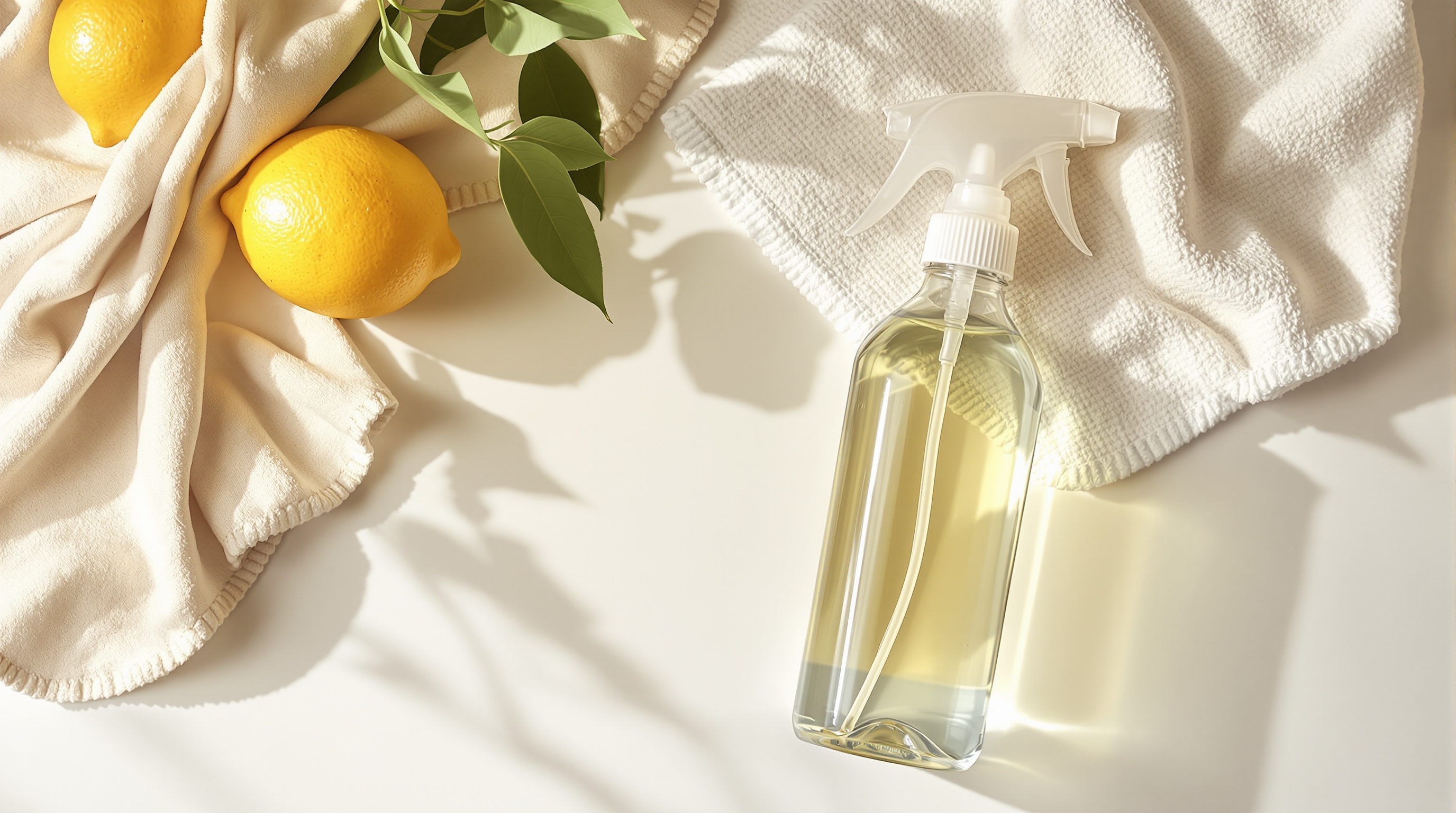
Every time you spray a conventional all-purpose cleaner, you're misting a cocktail of volatile organic compounds, synthetic fragrances, and surfactants into the air of your home. The EPA estimates that indoor air is 2 to 5 times more polluted than outdoor air — and household cleaning products are a primary driver of that pollution. The irony is difficult to ignore: the act of cleaning is making your indoor environment less safe.
The core problem is ingredient opacity. Conventional cleaners like Formula 409, Lysol Multi-Surface, and Fantastik are formulated with ammonia, synthetic fragrance blends, glycol ethers, and quaternary ammonium compounds — none of which need to be fully disclosed on the label. The word "fragrance" alone can represent 50 to 200 individual chemical compounds, including phthalates, which are endocrine disruptors used as fixatives to make scent linger on surfaces.
The good news: a new generation of certified, plant-based cleaners perform just as well on grease, grime, and everyday messes — without ammonia, chlorine, synthetic fragrance, or hidden VOCs. We screened dozens of products against rigorous criteria to find the six that we can actually recommend. To keep the whole routine low-waste, pair your spray with reusable kitchen towels instead of paper towels — a cloth wipes down surfaces without shedding or throwing anything away.
Compare all 6 picks
Every pick side by side — tap a name to jump to the full review, or check today's price.
| Pick | Why it wins | |
|---|---|---|
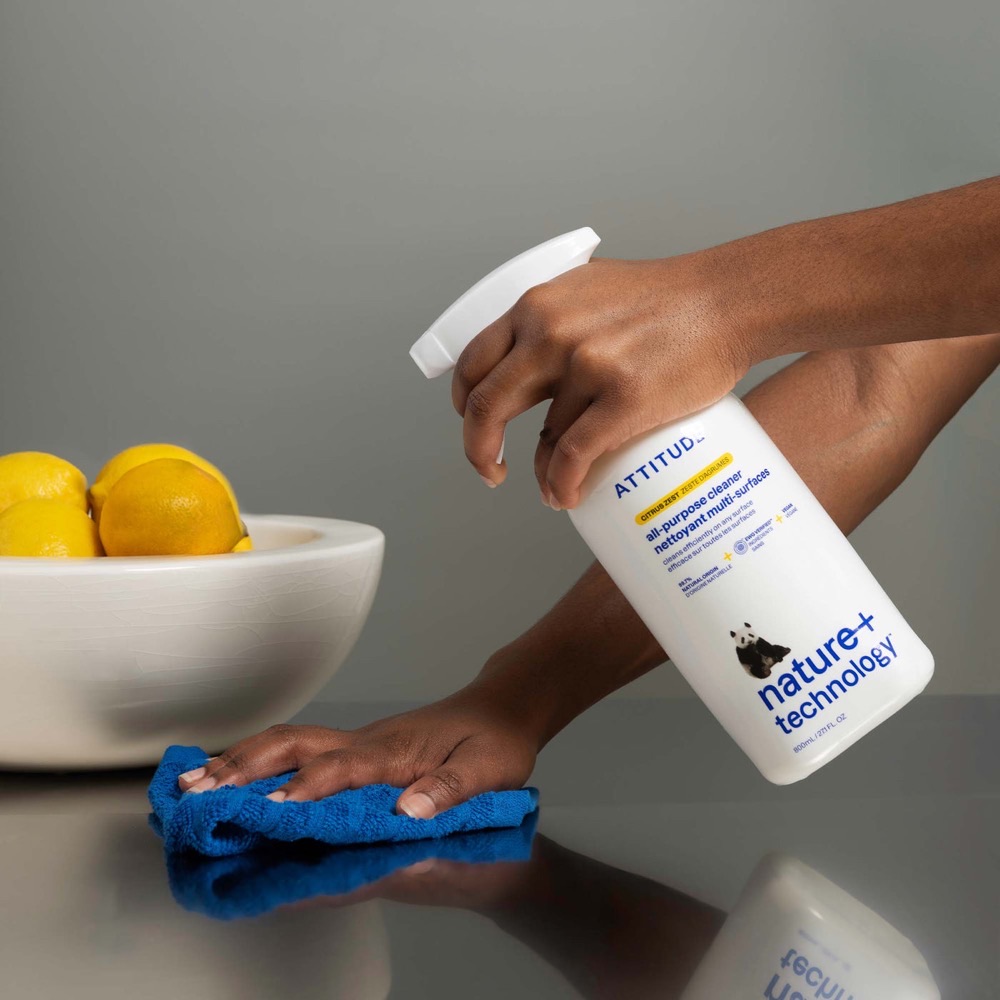 Best OverallATTITUDE All Purpose Cleaner |
EWG VerifiedNo Synthetic Fragrance |
Check price → |
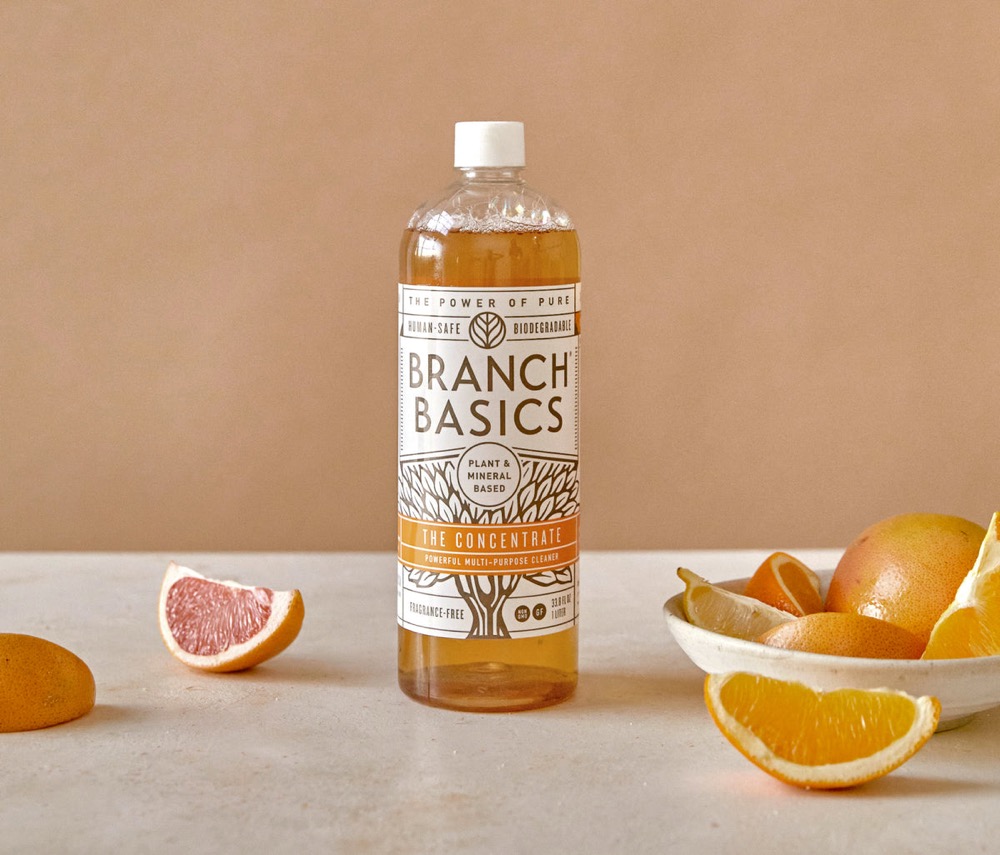 Best Concentrate SystemBranch Basics Concentrate |
Fragrance-FreeNo VOCs |
Check price → |
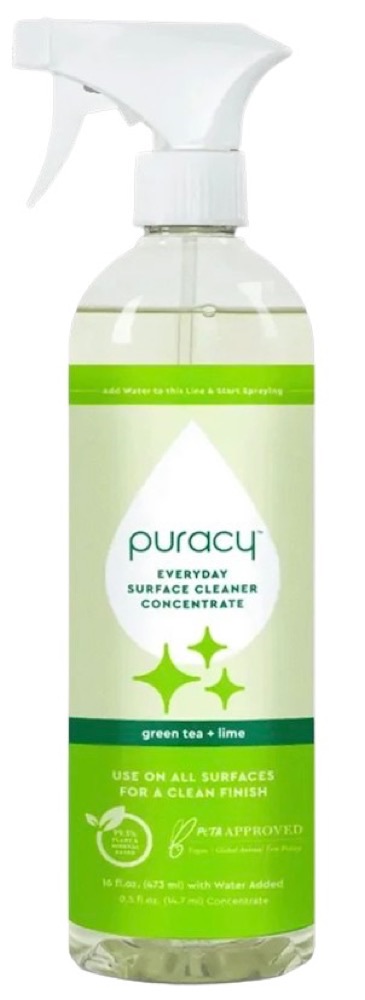 Best ValuePuracy Multi-Surface Cleaner |
EWG A-RatedNo Synthetic Fragrance |
Check price → |
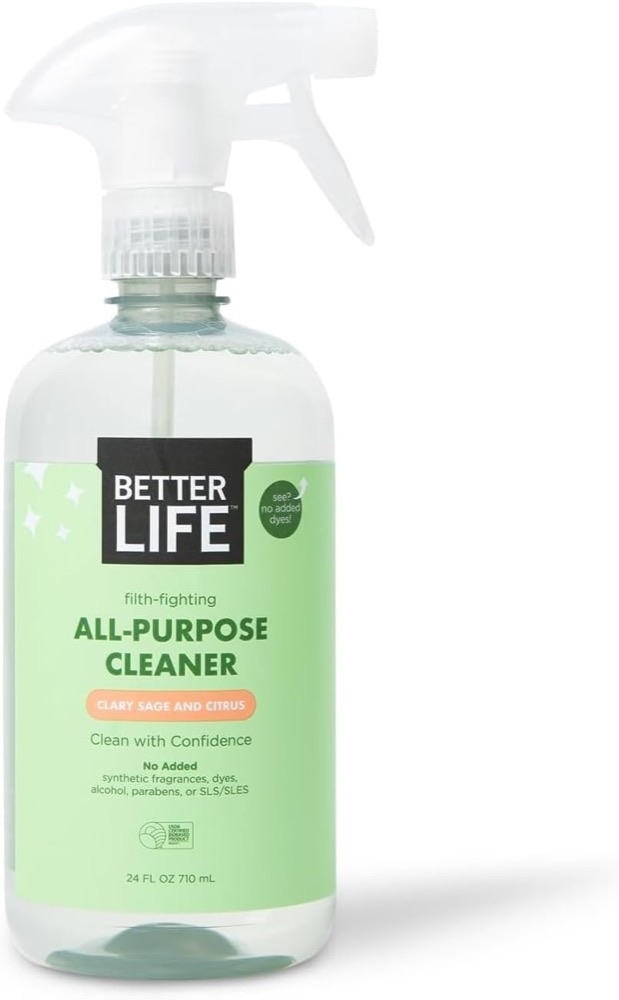 Best for FamiliesBetter Life All-Purpose Cleaner |
No Synthetic FragranceNo Dyes |
Check price → |
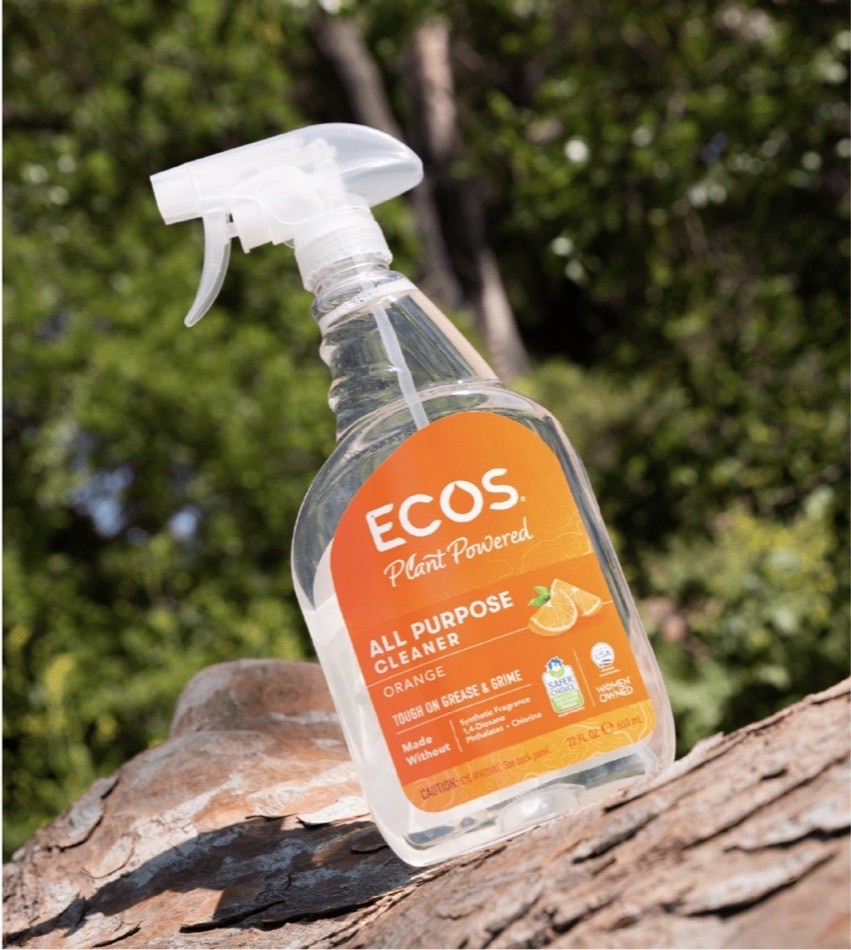 Best Eco-FriendlyECOS All Purpose Cleaner |
EPA Safer ChoiceNo Synthetic Fragrance |
Check price → |
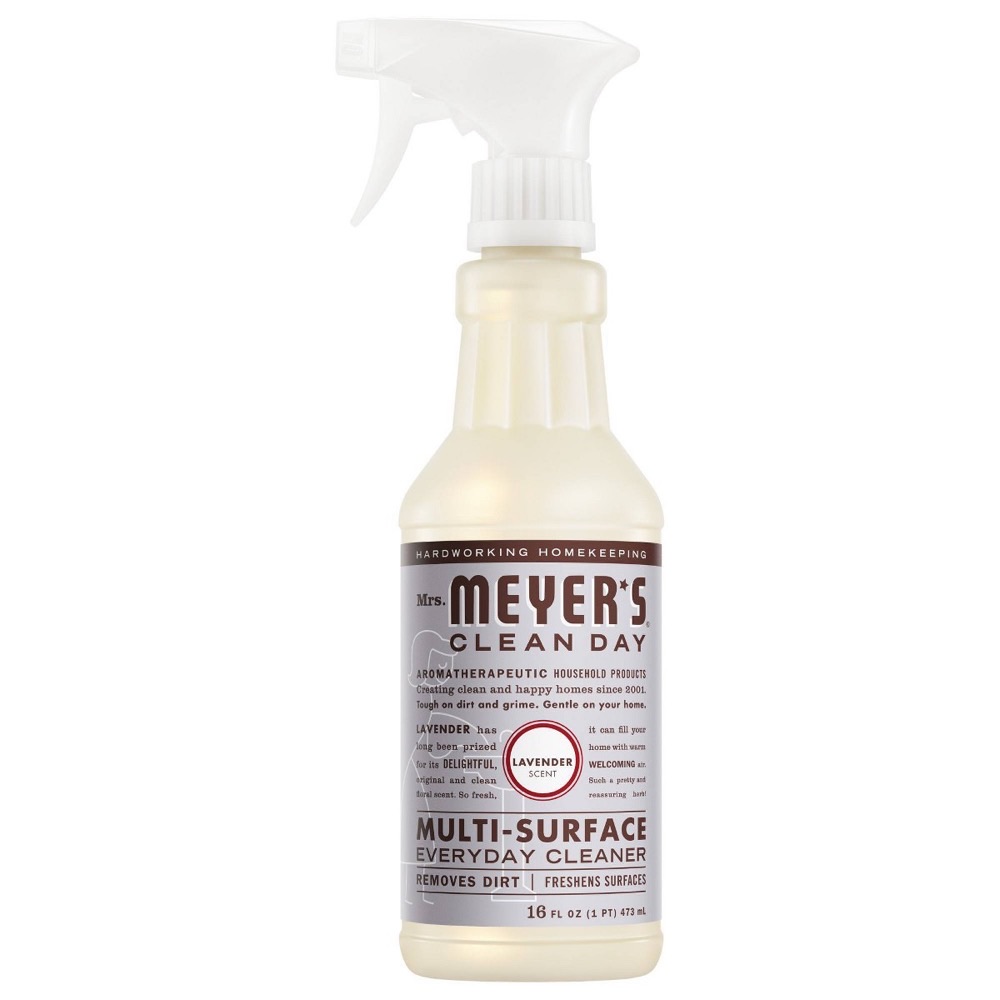 Best Widely AvailableMrs. Meyer's Clean Day All-Purpose Cleaner |
Ammonia-FreePlant-Derived |
Check price → |
Why Conventional Cleaners Are a Problem
Conventional all-purpose cleaners rely on a short list of effective but hazardous active ingredients. Ammonia is perhaps the most common — it cuts grease efficiently but irritates respiratory mucous membranes and can trigger asthma attacks with repeated exposure. Mixed with bleach (a common household mistake), ammonia produces chloramine gas, which causes immediate lung damage.
Chlorine-based cleaners carry their own risks. Chlorine bleach (sodium hypochlorite) releases volatile chlorine compounds that irritate the respiratory tract and eyes. When used on surfaces that contain ammonia residue — common in multi-product cleaning routines — it produces the same toxic chloramine reaction. Even without mixing, aerosolized bleach particles are classified as respiratory irritants by the EPA and OSHA.
Synthetic fragrances represent the least visible but most pervasive hazard in conventional cleaners. Under current law, manufacturers can list "fragrance" as a single ingredient while that term conceals dozens of individual chemicals — many of which are volatile organic compounds that off-gas at room temperature. A 2016 study by Anne Steinemann published in Air Quality, Atmosphere & Health found that fragranced consumer products emit over 150 different VOCs, including known carcinogens like acetaldehyde and formaldehyde, directly into indoor air.
"The word 'fragrance' on a cleaner label can legally conceal dozens of undisclosed synthetic chemicals — including phthalates, benzene derivatives, and VOCs that accumulate in your indoor air with every cleaning session."
Antibacterial agents add another layer of concern. Triclosan — once ubiquitous in antibacterial cleaners — was banned from hand soaps by the FDA in 2016 but still appears in some surface cleaners. Quaternary ammonium compounds (quats), the current dominant antibacterial class, are associated with respiratory sensitization, skin reactions, and emerging concerns about reproductive toxicity. For routine household cleaning, the CDC notes that soap and water or simple detergent-based cleaners are sufficient — antimicrobial agents are unnecessary outside of clinical settings and add chemical risk without meaningful benefit.
EWG Verified vs. EPA Safer Choice: What They Mean
Two third-party certifications provide meaningful assurance for cleaning products. Understanding the difference helps you make smarter purchasing decisions.
EWG Verified is issued by the Environmental Working Group, an independent nonprofit. To earn EWG Verified status, a product must disclose every ingredient — including individual fragrance components — pass EWG's safety database screening, avoid all chemicals on EWG's "Unacceptable" list (over 500 substances), and meet manufacturing and packaging standards. EWG Verified is the stricter of the two certifications and represents the gold standard for ingredient transparency.
EPA Safer Choice is a federal program run by the Environmental Protection Agency. Products bearing the Safer Choice label have been reviewed by EPA scientists who confirm that every ingredient meets the program's safety criteria. Safer Choice does not require full fragrance disclosure — fragrances are screened against an approved list rather than disclosed individually — but it does prohibit known carcinogens, reproductive toxicants, and persistent pollutants. It is a rigorous, government-backed standard that is broadly trustworthy, though slightly less transparent on fragrance than EWG Verified.
Products that carry either certification — and especially those with both — represent a meaningful improvement over unlabeled conventional cleaners.
What We Screened For
Every product recommended in this guide had to meet all of the following criteria:
- EWG A rating or EWG Verified status, OR EPA Safer Choice certification.
- No synthetic fragrance — either fragrance-free, or scented only with disclosed essential oils.
- No ammonia — a common respiratory irritant that produces toxic chloramine gas when mixed with bleach.
- No chlorine bleach — eliminated from formulas due to VOC production and respiratory irritation risk.
- Plant-based surfactants — derived from corn, coconut, or other renewable botanical sources rather than petroleum.
- Full ingredient disclosure — brands that obscure ingredients behind vague label language were excluded regardless of marketing claims.
Our 6 Top Picks for 2026
Quick Picks
- Best overall: ATTITUDE All Purpose Cleaner — EWG Verified, 94% plant-based, citrus zest ($)
- Best concentrate system: Branch Basics Concentrate — replaces all cleaners, fragrance-free, makes ~24 bottles ($$$)
- Best value: Puracy Multi-Surface Cleaner — 99.9%+ natural, green tea + lime ($)
- Best for families: Better Life All-Purpose Cleaner — plant-powered, safe on all surfaces ($)
- Best eco-friendly: ECOS All Purpose Cleaner — plant-powered, carbon neutral certified ($)
- Best widely available (partial rec): Mrs. Meyer's Clean Day — plant-derived, some synthetic fragrance ($)
1. ATTITUDE All Purpose Cleaner
Best Overall
EWG Verified — the highest possible certification for ingredient safety and transparency. Formulated with 94% plant- and mineral-based ingredients. Scented with citrus essential oils; no synthetic fragrance. Free from ammonia, chlorine, phthalates, and phosphates. Hypoallergenic and safe for use around children and pets. ATTITUDE discloses a full ingredient list on every product, including individual surfactant sources. This is our top pick for households that want the strictest ingredient standard available in a ready-to-use spray.
Buyers reach for ATTITUDE because the Citrus Zest all-purpose spray is EWG Verified with fully disclosed ingredients, and reviewers say it handles a broad range of messes, from soap scum to mud to dried-on food. The scent gets called light and not offensive. The honest gripes: the citrus formula contains terpineol, a pine-derived compound that is a known contact allergen and can bother people with asthma or fragrance sensitivity (ATTITUDE sells a fragrance-free version for them); and, as with most plant-based sprays, tough baked-on grime can need a second pass.
A ready-to-use spray you can reach for on any surface without second-guessing the label — no decoding, no dilution, no hidden fragrance chemicals.
Why it's safe: EWG Verified with every ingredient disclosed — including the individual citrus essential oils used for scent. No ammonia, no chlorine, no phthalates, and no synthetic fragrance to off-gas into your indoor air.
Check Today’s Price on Amazon →Amazon prices change daily — tap to see today's price and any active discount.
- Free delivery & returns for Prime members
- Ships from Amazon
- Amazon A-to-z purchase guarantee
2. Branch Basics Concentrate
Best Concentrate System
A single concentrate that replaces every cleaner in your home — all-purpose spray, bathroom cleaner, laundry detergent, dish soap, and hand wash — by diluting to different ratios. Completely fragrance-free, making it ideal for asthma, allergies, and chemically sensitive households. Formulated from food-grade and plant-derived ingredients: purified water, coconut-derived surfactants, and a handful of other disclosed components. No synthetic fragrance, no ammonia, no chlorine, no VOCs. The concentrate model also dramatically reduces plastic packaging. On a per-finished-bottle basis it works out to be very economical despite the higher upfront cost.
Branch Basics earns its following as one concentrate that dilutes into all-purpose, glass, and bathroom sprays, and long-term owners say the cost per bottle undercuts the sprays it replaced; it shines on counters, mirrors, and high-touch surfaces around kids. The honest gripes: it barely suds, so people who equate foam with cleaning are skeptical at first; it is not a heavy-duty degreaser or tough-stain remover, so baked-on messes take extra effort; and the starter-kit price is a lot to pay up front.
Replace five different cleaning products with one bottle — and cut the stack of plastic spray bottles under your sink down to a single concentrate you refill.
Why it's safe: Completely fragrance-free and made from food-grade, plant- and mineral-based ingredients — no synthetic fragrance, no ammonia, no chlorine, and no VOCs, which makes it a top choice for asthma and chemically sensitive households.
Check Today’s Price on Amazon →Amazon prices change daily — tap to see today's price and any active discount.
- Free delivery & returns for Prime members
- Ships from Amazon
- Amazon A-to-z purchase guarantee
3. Puracy Multi-Surface Cleaner
Best Value
99.9%+ natural ingredients, developed by a team of biochemists and formulated with plant-derived surfactants. Scented with green tea and lime essential oils — no synthetic fragrance. Free from ammonia, chlorine, sulfates, and petroleum-derived compounds. Safe on granite, stainless steel, sealed hardwood, glass, and fabric. EWG A-rated ingredients across the formula. Puracy discloses a complete ingredient list on their website and product labels. It offers the best value among our top picks without sacrificing ingredient quality.
Owners like the light green-tea-and-lime scent that does not linger and say Puracy is one of the better performers on stainless steel and glass without streaking, with overall ratings around 4.4 out of 5. The honest gripes: a few reviewers still found streaks or residue on mirrors that needed a second wipe; and the most common complaint is not the cleaner at all but shipping, with bottles arriving leaked, half-empty, or missing the spray trigger.
One streak-free spray for granite, stainless, sealed wood, glass, and fabric — so you can stop buying a separate cleaner for every surface.
Why it's safe: EWG A-rated across the whole formula, with plant-derived surfactants and green tea + lime essential oils instead of synthetic fragrance — no ammonia, chlorine, sulfates, or petroleum-derived ingredients.
Check Today’s Price on Amazon →Amazon prices change daily — tap to see today's price and any active discount.
- Free delivery & returns for Prime members
- Ships from Amazon
- Amazon A-to-z purchase guarantee
4. Better Life All-Purpose Cleaner
Best for Families
Plant-powered formula with coconut-, corn-, and soap-bark-derived cleaning agents. Scented with clary sage and citrus essential oils — no synthetic fragrance components, no dyes. Safe on all household surfaces including natural stone, wood, and stainless steel. No ammonia, no chlorine, no alcohol, no petroleum solvents, no parabens or SLS/SLES. Specifically formulated to be safe around children and pets. Better Life is a family-owned brand that maintains strong transparency on ingredient sourcing. An excellent everyday option for family households.
Better Life pulls strong ratings (4.5 out of 5 across more than 15,000 reviews) and buyers say it wipes greasy stove splatter with no residue. The honest gripes: the clary-sage-and-citrus scent is so faint reviewers say it might as well be unscented; the formula foams up soapy and can get soapier as you wipe, leaving some people rinsing; and on stubborn stains testers found it only okay, about on par with dish soap and water.
A single spray you can use on countertops, appliances, sealed stone, glass, and even toys — gentle enough to use in the spaces where kids and pets spend time.
Why it's safe: Plant-derived cleaning agents scented only with clary sage and citrus essential oils — no synthetic fragrance, dyes, ammonia, chlorine, alcohol, parabens, or SLS/SLES.
Check Today’s Price on Amazon →Amazon prices change daily — tap to see today's price and any active discount.
- Free delivery & returns for Prime members
- Ships from Amazon
- Amazon A-to-z purchase guarantee
5. ECOS All Purpose Cleaner
Best Eco-Friendly
EPA Safer Choice certified and carbon neutral certified — ECOS offsets 100% of its manufacturing carbon emissions and operates its own renewable-powered production facilities. Plant-powered formula using plant-derived surfactants and disclosed botanical ingredients. Available in multiple scents (all essential oil-based) and an unscented version. No phosphates, chlorine, ammonia, or synthetic fragrance. Biodegradable and packaged in bottles made with post-consumer recycled plastic. ECOS is the most affordable EPA-certified option on this list without compromise on safety standards.
Owners praise the ECOS Parsley cleaner on glass, granite, and marble, saying it leaves no haze or streaks on high-shine stone and carries a mild herbal scent that fades quickly. The honest gripes: several reviewers wish it were stronger on heavy grime and say it struggles with heavy-duty messes; and the parsley scent is faint enough that people expecting a fresh smell afterward may be underwhelmed.
A certified cleaner at the lowest price on this list — the easiest way to swap out a conventional spray without spending more than you do now.
Why it's safe: EPA Safer Choice certified, with plant-derived surfactants and essential-oil scent — no phosphates, chlorine, ammonia, or synthetic fragrance, in a recycled-plastic, biodegradable formula.
Check Today’s Price on Amazon →Amazon prices change daily — tap to see today's price and any active discount.
- Free delivery & returns for Prime members
- Ships from Amazon
- Amazon A-to-z purchase guarantee
6. Mrs. Meyer's Clean Day All-Purpose Cleaner
Best Widely Available
Widely available at Target, Walmart, grocery stores, and pharmacies — which earns it a spot on this list as a transitional option. Plant-derived surfactants, no ammonia, no chlorine. Available in numerous scents. Important caveat: Mrs. Meyer's formulas contain a blend of essential oils and synthetic fragrance components. The brand does not fully disclose individual fragrance ingredients, which means phthalate status cannot be independently verified. This is a partial recommendation — meaningfully better than conventional cleaners like Formula 409 or Lysol, but not as clean as the other five picks. Best as a first step for households making the switch away from conventional cleaners.
Mrs. Meyer's is the familiar pick, and buyers like the seasonal scents (Basil, Lavender, Lemon Verbena) and say most surfaces wipe clean with little effort. Be aware this is the least fragrance-neutral option here. The honest gripes: it uses synthetic fragrance plus the preservatives methylisothiazolinone and benzisothiazolinone, both known to trigger contact dermatitis (methylisothiazolinone was named Allergen of the Year in 2013), so it is a poor fit for anyone with skin or scent sensitivity; some buyers report spray-trigger malfunctions; and a few say a reformulated version cuts grease less well than before.
The pick you can grab on your next grocery run — no special order needed, and a real upgrade over the ammonia- and bleach-based sprays beside it on the shelf.
Why it's safe (with a caveat): Plant-derived surfactants with no ammonia or chlorine — but the fragrance blend mixes essential oils with undisclosed synthetic components, so phthalate status can't be independently verified. Choose it as a transition, not a final destination.
Check Today’s Price on Amazon →Amazon prices change daily — tap to see today's price and any active discount.
- Free delivery & returns for Prime members
- Ships from Amazon
- Amazon A-to-z purchase guarantee
Comparison Table
| Product | Certification | Fragrance | Ammonia-Free | Price |
|---|---|---|---|---|
| ATTITUDE | EWG Verified | Essential oils only | Yes | $ |
| Branch Basics | — | Fragrance-free | Yes | $$$ conc. |
| Puracy | EWG A-rated | Essential oils only | Yes | $ |
| Better Life | EPA Safer Choice | Essential oils only | Yes | $ |
| ECOS | EPA Safer Choice | Essential oils only | Yes | $ |
| Mrs. Meyer's | — | EO + synthetic* | Yes | $ |
Price tiers: $ budget · $$ mid · $$$ premium (Branch Basics is a concentrate that makes ~24 finished bottles, so its per-bottle cost is low despite the higher upfront price). *Mrs. Meyer's does not fully disclose fragrance ingredients. All other brands on this list provide full or near-full ingredient transparency.
What to Avoid
The following ingredients and product categories should be avoided in all-purpose cleaners, particularly in households with children, pets, pregnant individuals, or anyone with respiratory conditions.
Avoid "Fragrance" without full disclosure
Any cleaner that lists "fragrance" or "parfum" as an ingredient without disclosing individual components should be treated with caution. Under U.S. law, fragrance formulas are protected as trade secrets and can conceal dozens of synthetic chemical compounds — including phthalates, benzene derivatives, and VOCs — without any label disclosure. If a brand won't tell you what's in their scent, that's the signal you need.
Avoid Ammonia-based cleaners
Ammonia (ammonium hydroxide) is a respiratory irritant that volatilizes readily at room temperature. Repeated exposure is associated with airway inflammation and is a documented asthma trigger. Mixed with bleach — whether deliberately or through surface residue — it produces chloramine gas, which causes immediate pulmonary damage. Cleaners containing ammonia include most conventional window and kitchen spray formulas.
Avoid Chlorine bleach products
Sodium hypochlorite (bleach) releases volatile chlorine compounds during use and aerosolization. Combined with ammonia residue on surfaces, it produces toxic chloramine. Combined with acids (including some other cleaners and vinegar), it produces chlorine gas. In poorly ventilated bathrooms and kitchens — the rooms where cleaning is most frequent — bleach-based cleaners produce measurable spikes in indoor VOC levels that persist for hours after use.
Avoid Antibacterial cleaners with triclosan or quats
Quaternary ammonium compounds (quats) — common in antibacterial surface sprays — are associated with respiratory sensitization, occupational asthma in cleaning workers, and emerging reproductive toxicity concerns. Triclosan, though now FDA-banned from hand soaps, still appears in some surface cleaners. For routine household cleaning, antimicrobial agents are not necessary and add chemical exposure without meaningful benefit over plant-based surfactants.
Avoid "Natural" or "green" labels without certification
Greenwashing is pervasive in the cleaning product market. Terms like "natural," "eco-friendly," "botanical," "plant-based," and "green" are entirely unregulated — any brand can use them regardless of ingredient safety. Without EWG Verified, EPA Safer Choice, or EWG A/B ratings on every ingredient, these claims mean nothing. Certification costs time and money, which is precisely why brands that earn them are worth trusting — and brands that don't, but use the language anyway, are not.
Want the Full Room-by-Room Protection Guide?
The Complete Plasticproof Guide covers every room in your home — kitchen, nursery, bathroom, bedroom — with the full research and complete swap list. 47+ peer-reviewed studies, 80+ product recommendations.
Frequently Asked Questions
Yes, for most household cleaning tasks. Plant-based surfactants derived from coconut or corn are highly effective at breaking down grease, grime, and most household bacteria. The key difference is that conventional cleaners often rely on caustic chemicals like ammonia or chlorine bleach — which are more aggressive but also more hazardous. For disinfection (killing 99.9% of pathogens), EPA-registered disinfectants are more reliable. But for general all-purpose cleaning — counters, stovetops, appliances, sinks — plant-based formulas perform comparably. Multiple independent studies and consumer testing organizations have found that EWG Verified and EPA Safer Choice cleaners clean surfaces effectively without compromising safety.
EWG Verified is a certification from the Environmental Working Group, an independent nonprofit research and advocacy organization. To earn the EWG Verified mark, a product must meet strict criteria: full ingredient transparency (every ingredient disclosed, including fragrance components), use of only ingredients that pass EWG's safety screening, avoidance of chemicals on EWG's "Unacceptable" list (which includes over 500 chemicals of concern), and manufacturing and packaging standards. EWG Verified is stricter than the EPA Safer Choice program — it requires full fragrance disclosure and prohibits a broader set of chemicals. It is not a government certification, but it is one of the most rigorous third-party standards currently available for cleaning products.
White distilled vinegar (acetic acid, typically 5% concentration) is effective for cutting through light grease, dissolving mineral deposits, and deodorizing surfaces. It is non-toxic, inexpensive, and biodegradable. However, it has real limitations. Vinegar is not an EPA-registered disinfectant and will not reliably kill pathogens like Salmonella or E. coli. It can damage natural stone surfaces (granite, marble) and should never be mixed with bleach (produces chlorine gas) or hydrogen peroxide (produces peracetic acid). For routine kitchen and bathroom cleaning, diluted vinegar is a reasonable option. For surfaces that need actual disinfection — cutting boards after raw meat, bathroom fixtures — a certified cleaner is more appropriate.
No. Household cleaning products are regulated by the EPA (under the Federal Insecticide, Fungicide, and Rodenticide Act for disinfectants) and by the Consumer Product Safety Commission — not by the FDA. Importantly, there is no federal requirement for cleaning product manufacturers to disclose all ingredients. The Fair Packaging and Labeling Act requires listing "hazardous" ingredients, but "fragrance" can be listed as a single term that conceals dozens of individual chemical compounds. This regulatory gap is why third-party certifications like EWG Verified and EPA Safer Choice carry practical weight — they fill the transparency gap that federal law leaves open.
For surfaces that babies touch — floors, high chair trays, changing tables, toy surfaces — the safest options are EWG Verified or EPA Safer Choice cleaners that are fragrance-free or scented only with essential oils. ATTITUDE All Purpose Cleaner (EWG Verified) and Branch Basics Concentrate (fragrance-free, made from food-grade ingredients) are both appropriate for use in spaces where infants spend time. Avoid any cleaner containing ammonia, quaternary ammonium compounds (quats), chlorine bleach, or synthetic fragrance around babies. Always allow surfaces to dry fully before baby contact. When in doubt, a simple solution of castile soap and water is effective for light cleaning and carries very low risk.
Sources
- U.S. Environmental Protection Agency. "Introduction to Indoor Air Quality." EPA Indoor Air Quality Program. Accessed 2026. epa.gov/indoor-air-quality-iaq.
- Steinemann A. "Fragranced consumer products: exposures and effects from emissions." Air Quality, Atmosphere & Health, 2016. doi:10.1007/s11869-016-0442-z.
- Environmental Working Group. "EWG's Guide to Healthy Cleaning — Methodology." EWG.org. Accessed 2026. ewg.org/guides/cleaners/content/methodology.
- U.S. EPA. "Safer Choice Standard." EPA Safer Choice Program, 2015 (revised 2022). epa.gov/saferchoice/safer-choice-standard.
- Wolkoff P, Nielsen GD. "Organic compounds in office environments — sensory irritation, odor, measurements and the role of reactive chemistry." Indoor Air, 2001;11(2):92–102.
- Quirós-Alcalá L, et al. "Exposure to quaternary ammonium compounds and asthma-related outcomes among cleaning workers." Environmental Research, 2019;179:108721.
Protect Every Room in Your Home
From the kitchen to the nursery to the bathroom — the Complete Plasticproof Guide covers every swap that matters, backed by 47+ studies.