Look under any bathroom sink and you will almost certainly find a plastic soap dispenser. It seems harmless enough — it is just soap, after all. But that dispenser is typically made from cheap polypropylene (PP) or polyethylene terephthalate (PET), and it sits in one of the most chemically aggressive environments in your home: a warm, humid bathroom where temperatures regularly exceed 80°F and moisture is constant.
Those conditions accelerate plastic degradation. Heat softens the polymer matrix, and humidity promotes hydrolysis — the breakdown of chemical bonds within the plastic. The result is an ongoing, low-level migration of plasticizers, stabilizers, and other chemical additives into the soap inside the dispenser and into the surrounding air. Every time you pump soap from a degrading plastic bottle, trace chemicals transfer to your hands, which then touch your face, food, and children.
The fix is straightforward: switch to a glass or stainless steel soap dispenser that you refill. The upfront cost is $12–$50, the dispenser lasts years, and you eliminate both the chemical exposure pathway and the cycle of buying new plastic dispenser bottles every few months.
Compare all 5 picks
Every pick side by side — tap a name to jump to the full review, or check today's price.
| Pick | Rating | Why it wins | |
|---|---|---|---|
 Best OverallRail19 Glass Soap Dispenser |
4.1out of 5 | Plastic-Free BodyRecycled Glass |
Check price → |
 Best Eco DesignFull Circle Soap Opera Glass Dispenser |
3.7out of 5 | Plastic-Free BodyRecycled Glass |
Check price → |
 Best Touchlesssimplehuman Rechargeable Sensor Pump (Stainless Steel) |
4.1out of 5 | Plastic-Free BodyBrushed Stainless Steel |
Check price → |
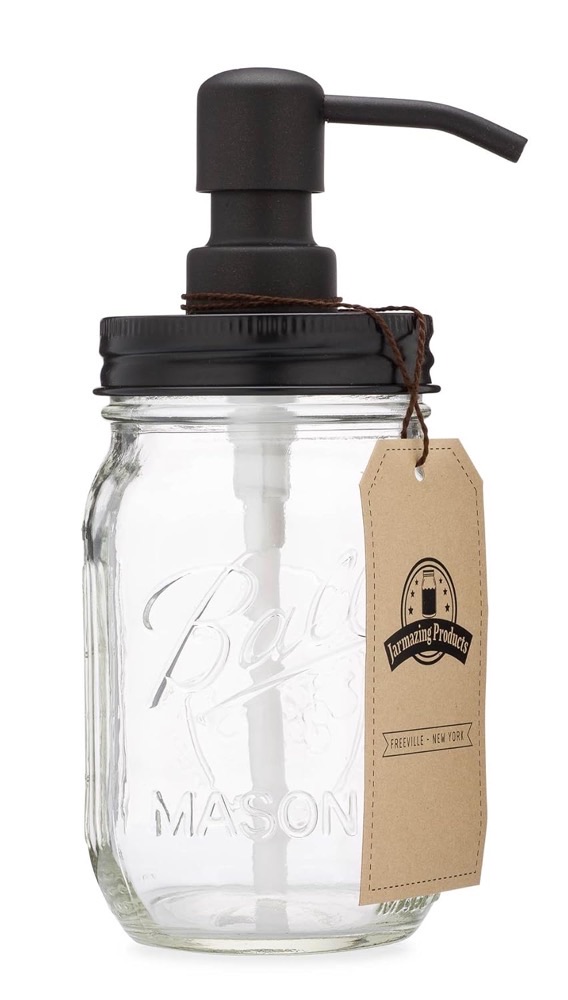 Best Rustic StyleJarmazing Mason Jar Soap Dispenser |
4.8out of 5 | Plastic-Free BodyBall Mason Jar |
Check price → |
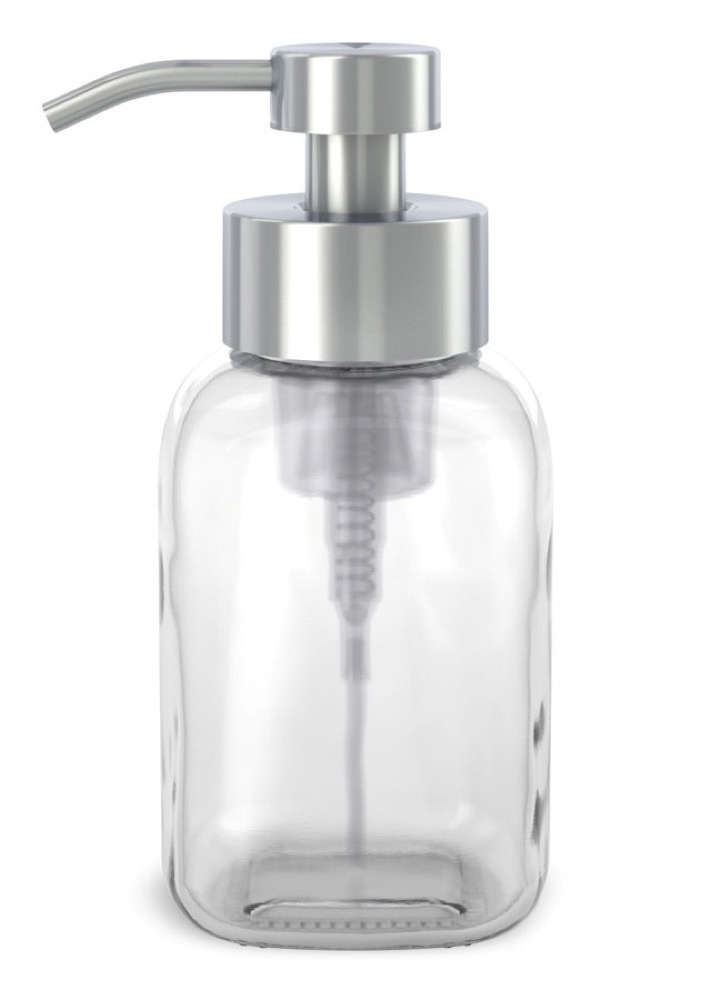 Best Budget & TabletsGrove Collaborative Glass Foaming Hand Soap Dispenser |
3.7out of 5 | Plastic-Free BodyLead-Free Glass |
Check price → |
Why Plastic Soap Dispensers Are a Problem
Plastic soap dispensers are rarely discussed in the context of chemical exposure, but the science points to real concern. Polypropylene and PET — the two most common dispenser plastics — contain processing additives including antioxidants, UV stabilizers, slip agents, and in some cases residual catalysts from manufacturing. These additives are not chemically bonded to the polymer chain. They migrate.
A 2020 study published in Environmental Science & Technology demonstrated that warm, humid conditions significantly increase the rate of chemical migration from plastic food-contact materials. Bathroom soap dispensers face identical conditions — and unlike food containers, soap dispensers are never regulated for chemical migration because soap is not classified as a food product.
Bathrooms after a hot shower can reach 90–100% relative humidity and temperatures above 90°F. These are precisely the conditions that laboratory studies use to accelerate plastic degradation testing. A plastic soap dispenser sitting next to a shower is undergoing a slow-motion version of the same degradation process, releasing chemicals into its contents continuously.
Beyond chemical leaching, there is the waste problem. Most plastic soap dispensers are not effectively recycled — the pump mechanism contains mixed materials (metal spring, plastic housing, silicone gasket) that contaminate recycling streams. The majority end up in landfill, where they fragment into microplastics over decades.
If you are already working on reducing plastic in your bathroom, this pairs well with switching to a fully plastic-free bathroom setup and choosing plastic-free shampoo bars to eliminate shower bottles entirely — and don't overlook the last bit of plastic in your oral-care routine with plastic-free dental floss. Because chlorinated shower water is its own exposure route, a shower filter for microplastics and chlorine is a worthwhile bathroom upgrade too.
"The bathroom is one of the most chemically active rooms in the home. Warm humidity accelerates the breakdown of every plastic surface — from shower curtains to soap dispensers — releasing additives into the air and any liquid they contact."
What to Look for in a Plastic-Free Soap Dispenser
Not all non-plastic dispensers are created equal. Here is what separates the genuinely good options from the greenwashed ones:
- Body material: Glass (borosilicate or thick recycled glass) or solid stainless steel (304-grade / 18/8). Avoid "stainless steel look" dispensers that are actually plastic with a metallic coating.
- Pump mechanism: Stainless steel pump head with minimal internal plastic. Some silicone gaskets are acceptable — food-grade silicone is chemically stable and does not leach like PP or PET.
- Refillability: Wide mouth opening for easy refilling with bulk soap or soap refill tablets. Avoid dispensers designed for proprietary cartridges — those often reintroduce plastic packaging.
- Weight and stability: Heavier dispensers are more stable and less likely to tip. Thick glass and solid stainless steel naturally provide this.
- Compatibility with soap tablets: If using foaming soap refill tablets (like Blueland or Grove), the dispenser needs a foaming pump mechanism. Standard pump dispensers work with liquid soap refills.
Quick Picks: Best Plastic-Free Soap Dispensers at a Glance
Our Top 5 Picks for 2026
| Pick | Product | Price | Best For |
|---|---|---|---|
| Best Overall | Rail19 Glass Soap Dispenser | $$ | Best all-around glass dispenser for most homes |
| Best Budget | Grove Collaborative Glass Foaming Dispenser | $ | Budget-friendly with soap tablet ecosystem |
| Best Touchless | simplehuman Sensor Pump (Stainless) | $$$ | Touchless operation, families with kids |
| Best Eco Design | Full Circle Soap Opera Glass Dispenser | $$ | Eco-conscious design with bamboo accent |
| Best Rustic | Jarmazing Mason Jar Soap Dispenser | $ | Farmhouse style, repurposed mason jar |
Price guide: $ budget · $$ mid-range · $$$ premium. Tap any pick below for today's exact Amazon price.
The 5 Best Plastic-Free Soap Dispensers for 2026
1. Rail19 Glass Soap Dispenser — Best Overall
Best Overall
Repeat buyers say Rail19 dispensers look great and last for years, and like that you can swap pump colors and styles. The honest gripes: after about six months some owners find the plunger gets harder to press and shoots soap sideways onto the counter; others report the pump sticking or the nozzle leaking soap onto the base; and the metal pump can rust where soap sits on the tip and wears the finish. The warranty covers pump defects for only 60 days.
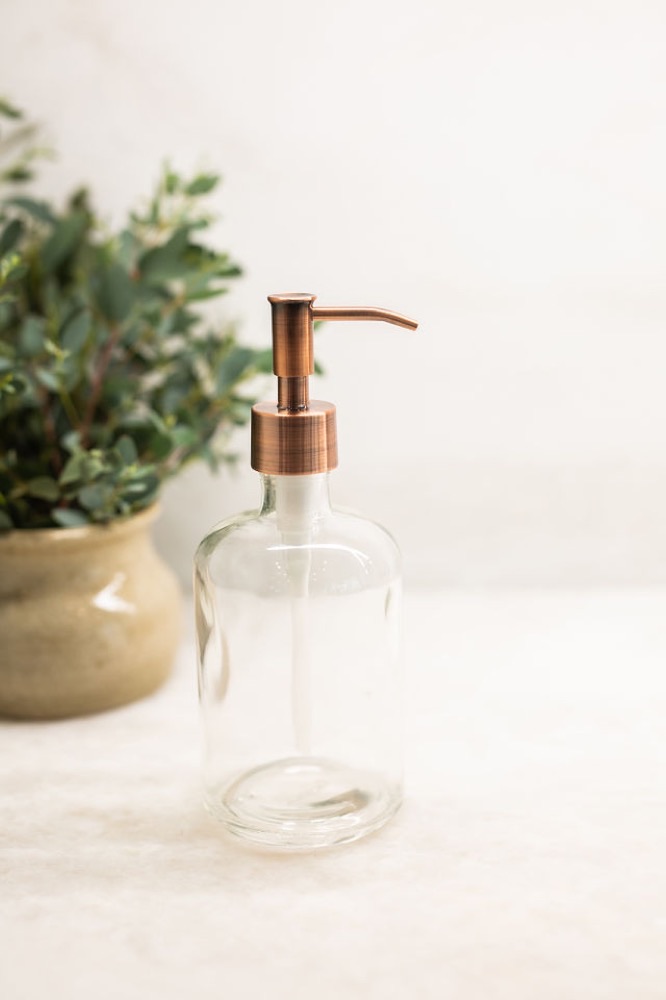
A heavy, wide-mouth glass dispenser that refills in seconds from bulk soap — the everyday workhorse that replaces a cabinet's worth of disposable plastic bottles.
Why it's safe: The soap sits only against lead-free recycled glass and a stainless steel pump — no large plastic surface to leach plasticizers or BPA in a warm, humid bathroom.
Check Today’s Price on Amazon →Amazon prices change daily — tap to see today's price and any active discount.
- Free delivery & returns for Prime members
- Amazon A-to-z purchase guarantee
- Hundreds of verified reviews
The Rail19 is the dispenser Plasticproof recommends for most households. The thick recycled glass feels substantial in the hand, resists casual bumps, and the stainless steel pump delivers a smooth, drip-free action that matches or exceeds the feel of any plastic pump. It costs about the same as a few bottles of disposable hand soap — meaning it pays for itself within a few months when paired with bulk soap refills.
The wide-mouth opening is a practical detail that matters more than it seems. Many glass dispensers have narrow necks that make refilling messy. Rail19 solved this, and it makes the difference between a product you actually reuse and one that ends up in the back of a cabinet.
2. Full Circle Soap Opera Glass Dispenser — Best Eco Design
Best Eco Design
The recycled frosted glass with a bamboo top is what draws people in, and some say the pump has held up through daily use. But this one has the roughest reviews in the group, so here is the honest read: many owners say the first pump almost never works, that it takes three to six presses to get a normal amount of soap, and that it then drips for a while afterward; the nozzle sits low and close to the glass, so soap runs down the side and your hand barely fits underneath; and several units arrived broken.
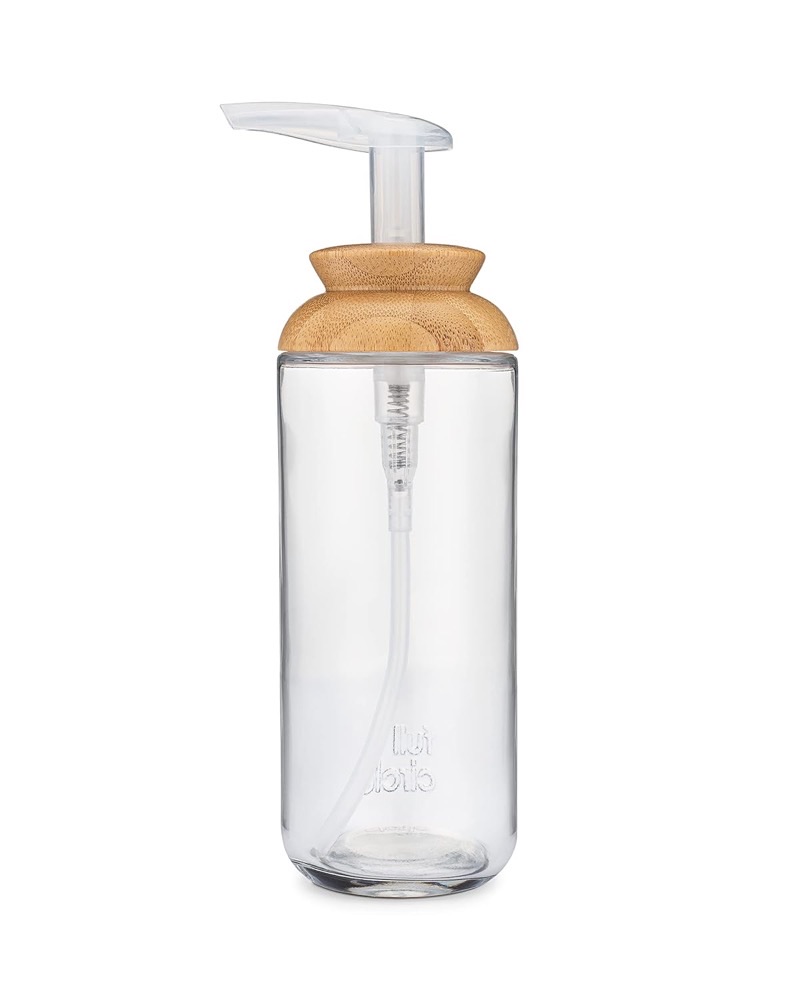
The dispenser you actually want on display — recycled glass and real bamboo that looks intentional next to any sink, with a clear body so you always know when to refill.
Why it's safe: Soap contacts only recycled glass and a bamboo-and-silicone collar — none of the polypropylene or PET that off-gasses and leaches in a steamy bathroom.
Check Today’s Price on Amazon →Amazon prices change daily — tap to see today's price and any active discount.
- Free delivery & returns for Prime members
- Amazon A-to-z purchase guarantee
- Certified B-Corp brand
Full Circle built their reputation on thoughtfully designed home products that reduce waste, and the Soap Opera dispenser reflects that ethos. The recycled-glass body and bamboo collar are not just attractive — they signal the kind of material intentionality that extends through the whole product, right down to a certified B-Corp supply chain that's plastic-neutral and ships carbon-neutral. The clear glass also lets you see at a glance when it's time to refill.
It's an excellent entry point for anyone switching from plastic. Pair it with a non-toxic dish soap refill for the kitchen sink version.
3. simplehuman Rechargeable Sensor Pump (Stainless) — Best Touchless
Best Touchless
This is the splurge, and owners say the touch-free sensor is convenient and looks sharp on the counter. The honest gripes: charging is the weak point, with some units holding a charge only a few days and others needing a recharge every two to three weeks; the charging cord is short and the socket is not meant to get wet, which is awkward next to a sink; some report inconsistent soap flow and no soap-level window; and a few had units stop charging after several months from corrosion, which simplehuman has replaced under warranty.
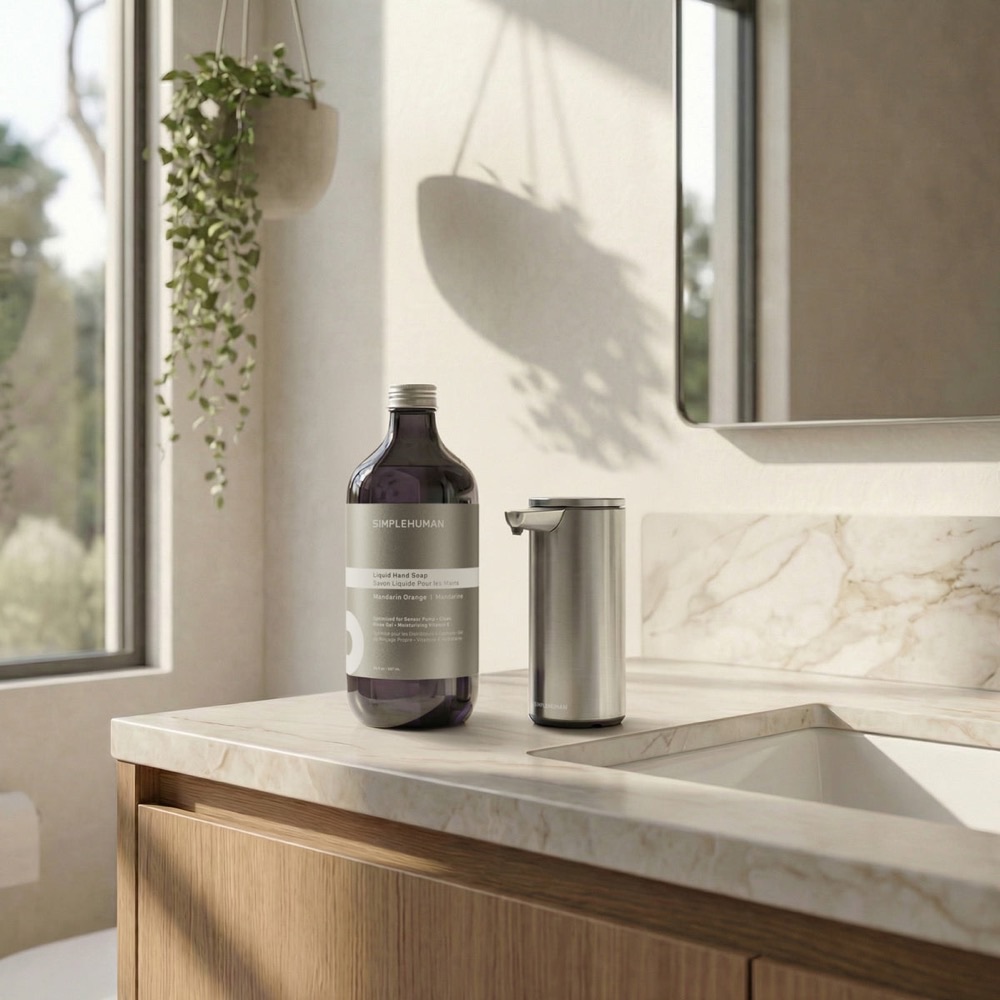
Wave a soapy or dirty hand near it and it dispenses — no plastic pump to push, no shared surface to touch, and a steel body that lasts years instead of cracking like plastic.
Why it's safe: The entire reservoir and housing are brushed stainless steel — the same inert grade used in commercial kitchens — so there's no plastic body to degrade or leach in bathroom humidity.
Check Today’s Price on Amazon →Amazon prices change daily — tap to see today's price and any active discount.
- Free delivery & returns for Prime members
- Amazon A-to-z purchase guarantee
- Thousands of verified reviews
The simplehuman Sensor Pump is the premium pick on this list, and it earns its price. The entire body is brushed 304 stainless steel — the same grade used in commercial kitchen equipment. There is no plastic housing, no plastic reservoir, no plastic pump mechanism. The touchless sensor is genuinely useful in a bathroom context: when hands are dirty or soapy, a no-touch dispense prevents the grime buildup that plagues manual pump heads.
For families with young children, the touchless operation also means kids can wash hands independently without struggling with stiff pump mechanisms. The adjustable volume control prevents soap waste — a small detail that adds up over hundreds of uses per month.
It costs more than the glass options, but for a piece of bathroom hardware that lasts 5+ years, it is a sound investment — especially compared to the cumulative cost and waste of disposable plastic dispensers.
4. Jarmazing Mason Jar Soap Dispenser — Best Rustic Style
Best Rustic Style
Around 69% of buyers give this five stars, and fans say the black-coated 304 stainless pump and lid feel well made and resist rust better than similarly priced options. The honest gripes: some owners say the lid came apart soon after purchase or the pump assembly cracked over time; the screw-on lid can be tight enough to make refills a two-hand job; and a number report the lid leaking when the jar is tipped or shaken.
Farmhouse looks plus real modularity — if the jar ever breaks you replace it for a couple of dollars, and the rust-proof steel pump keeps working for years.
Why it's safe: Soap sits only in inert mason-jar glass with a 304 stainless steel pump — no plastic body, and the steel is rust-resistant enough for daily wet bathroom use.
Check Today’s Price on Amazon →Amazon prices change daily — tap to see today's price and any active discount.
- Free delivery & returns for Prime members
- Amazon A-to-z purchase guarantee
- Thousands of verified reviews
Jarmazing takes a genuinely clever approach: rather than manufacturing a proprietary glass body, they designed a stainless steel pump lid that fits standard mason jars. This means the glass component is a mass-produced, widely available, extremely affordable item — and if the jar ever breaks, you replace it for under $2 rather than buying a whole new dispenser.
The hand-finished quality is visible. The pump action is smooth, the lid threading is precise, and the stainless steel finish options (brushed, matte black, antique brass) look intentional rather than cheap. This is a particularly good option for farmhouse, cottage, or rustic bathroom aesthetics — and the 32 oz quart jar option means fewer refills.
The modularity also means Jarmazing is the most repairable dispenser on this list. Pump wearing out? Replace just the pump lid. Jar cracks? Swap in a new jar. This is the kind of design thinking that plastic products never offer.
5. Grove Collaborative Glass Foaming Hand Soap Dispenser — Best Budget + Tablet System
Best Budget & Tablets
Owners say the glass foamer looks handsome in a bathroom and, when it works, dispenses foaming soap nicely. The honest gripes: several buyers say it does not foam as advertised and felt the pump did not deliver what it promised; the pump doses a lot of soap per full press; the glued nozzle tip can work loose and pop out; and even with the silicone base sleeve the bottle slides around on a wet counter, with some shipments arriving without that sleeve.
The lowest-cost entry point out of plastic — a real glass dispenser plus a tablet refill system that arrives in paper, so you stop buying plastic soap bottles entirely.
Why it's safe: Soap touches only lead-free glass and a stainless steel pump, and the refill tablets eliminate the plastic jugs that come with conventional liquid soap.
Check Today’s Price on Amazon →Amazon prices change daily — tap to see today's price and any active discount.
- Free delivery & returns for Prime members
- Amazon A-to-z purchase guarantee
- Plastic-free refill tablet system
The Grove Collaborative dispenser is the most affordable option on this list — and it is specifically designed around the refill tablet model that eliminates plastic packaging entirely. Drop a soap tablet into the dispenser, add warm water, wait 10 minutes, and you have a full bottle of foaming hand soap. No plastic refill jugs, no shipping heavy liquids across the country.
The lead-free glass body is durable and partially recycled, and the clear glass lets you see exactly when soap is running low — a small practical detail that keeps the dispenser in rotation instead of sitting empty. The stainless steel pump head means there's no large plastic component in contact with your soap.
The foaming pump mechanism also reduces soap consumption by roughly 40% per wash compared to a standard liquid pump. Combined with refill tablets at approximately $2 per refill, the ongoing cost is dramatically lower than buying pre-packaged hand soap bottles. A year of hand soap for a single sink costs approximately $16–$20 with this system, versus $40–$60 with disposable plastic bottles.
How to Transition: The Practical Steps
Switching soap dispensers is one of the easiest plastic swaps in the home. Here is the process Plasticproof recommends:
- Audit your sinks. Count how many soap dispensers are currently in use across your home — kitchen, bathrooms, guest bath, utility sink. Most homes have 3–5.
- Start with the highest-use sink. The kitchen sink and the main bathroom sink get the most use. Replace those dispensers first.
- Choose your refill method. Soap refill tablets (Grove, Blueland) eliminate all packaging. Bulk liquid soap refills (Dr. Bronner's, local refill stores) reduce packaging by 80–90%. Either is vastly better than buying new plastic bottles.
- Finish your current soap first. There is no reason to waste the soap already in your plastic dispenser. Use it up, then retire the plastic bottle and switch to your new glass or steel dispenser.
- Set a refill routine. Keep a bulk soap refill under the sink or a box of refill tablets in the linen closet. When the dispenser runs low, refill immediately. The habit takes about two weeks to form.
The whole transition costs $12–$50 per sink and takes less than 5 minutes. Within a month, the new routine feels completely natural — and the plastic bottles stop accumulating.
What About the Pump Mechanism?
A common question: if the pump still contains some plastic or silicone parts internally, does it matter? The answer is nuanced.
Most stainless steel pump mechanisms contain small silicone gaskets or seals to prevent leaking. Food-grade silicone is chemically inert, does not contain BPA or phthalates, and is highly stable under bathroom conditions. The contact surface area between these tiny gaskets and the soap is minimal compared to a full plastic dispenser body.
The goal is reducing the dominant exposure pathway — which is the large plastic body of the dispenser sitting in warm, humid air and in prolonged contact with soap. Eliminating that body and replacing it with glass or stainless steel removes 95%+ of the plastic surface area. Obsessing over the remaining silicone gasket inside a pump is the kind of perfectionism that prevents people from making the meaningful swap.
For those working on a broader bathroom overhaul, pairing a plastic-free soap dispenser with non-toxic cleaning products throughout the home creates a compounding reduction in chemical exposure.
Soap Refill Options: Tablets vs. Bulk Liquid
Once you have a refillable dispenser, the next question is what to fill it with. There are two main approaches, and both are significantly better than buying new plastic bottles of soap.
Soap Refill Tablets
Brands like Blueland and Grove Collaborative sell small tablets that dissolve in warm water inside your dispenser. The tablets ship in compostable paper wrappers — zero plastic. Each tablet produces one full bottle of foaming hand soap. Over a year, a family using tablets at all their sinks eliminates 30–50 plastic bottles.
The trade-off: tablet-based soaps are foaming formulas. Some people prefer the richer feel of liquid pump soap. If that is you, go with bulk liquid refills instead.
Bulk Liquid Soap Refills
Dr. Bronner's Castile Soap is available in 32 oz and 1-gallon sizes. One gallon of concentrated Castile soap, diluted to hand soap strength, produces roughly 3–4 gallons of ready-to-use hand soap — equivalent to 16+ standard dispenser bottles. The gallon jug is still plastic, but the packaging-to-soap ratio is dramatically better.
For zero-waste purists, many local refill shops now offer soap by the ounce — bring your dispenser (or any container) and fill up. Check Litterless for a zero-waste shop near you.
Want the Full Room-by-Room Protection Guide?
The Complete Plasticproof Guide covers every room in your home — kitchen, nursery, bathroom, bedroom — with the full research and complete swap list. 47+ peer-reviewed studies, 80+ product recommendations.
Frequently Asked Questions
Yes. Plastic soap dispensers — typically made from polypropylene (PP) or PET — sit in warm, humid bathroom environments that accelerate plastic degradation. Heat and moisture promote the release of plasticizers, BPA/BPS, and phthalates into the soap itself and surrounding air. A 2020 study in Environmental Science & Technology found that warm, humid conditions significantly increase the rate of chemical migration from plastic containers. Liquid soap is often slightly acidic or alkaline, which further accelerates leaching. Switching to glass or stainless steel eliminates this chemical exposure pathway entirely.
Food-grade and medical-grade silicone is generally considered safe and far more stable than conventional plastics. Silicone does not contain BPA, BPS, or phthalates, and it resists degradation in warm, humid conditions much better than polypropylene or PET. Most glass and stainless steel soap dispensers use small silicone gaskets or seals inside the pump mechanism — this is a minimal contact point and is not a significant concern. The goal is to eliminate the large plastic body of the dispenser, which has the most surface area in contact with soap and bathroom humidity.
Choose dispensers made from thick, weighted glass — borosilicate glass and recycled glass options tend to be heavier and more impact-resistant than thin decorative glass. Place the dispenser on a non-slip silicone mat or tray near the sink to prevent sliding. For households with young children, consider a stainless steel dispenser instead, or mount a wall-mounted glass dispenser out of reach. The Rail19 and Jarmazing dispensers both use thick glass that resists casual bumps. If a glass dispenser does break, it produces glass shards (recyclable, inert) rather than microplastic fragments — a meaningfully better failure mode.
Soap refill tablets are significantly better for reducing plastic waste. A single tablet replaces one full bottle of liquid soap and ships in compostable or paper packaging — eliminating the plastic refill jug entirely. Brands like Blueland and Grove Collaborative offer foaming hand soap tablets that dissolve in warm water inside a reusable glass dispenser. Over a year, a household using refill tablets can eliminate 8–12 plastic soap bottles. The tablets also reduce shipping weight by over 90%, lowering the carbon footprint of each refill. The only trade-off is that tablet-based soaps are typically foaming formulas, which some people find less rich than liquid pump soap.
High-quality stainless steel soap dispensers (look for 304-grade or 18/8 stainless steel) are highly rust-resistant, even in humid bathroom environments. The chromium content in stainless steel forms a passive oxide layer that protects against corrosion. To maintain this protection: wipe the dispenser dry after splashes, avoid leaving it in standing water, and clean it periodically with a mild soap solution. Lower-grade stainless steel or chrome-plated plastic dispensers can rust — always verify the product is solid stainless steel, not plastic with a metallic coating. The simplehuman Sensor Pump uses brushed 304 stainless steel specifically engineered for wet environments.
Sources
- Zimmermann L, et al. “Are bioplastics and plant-based materials safer than conventional plastics? In vitro toxicity and chemical composition.” Environment International, 2020.
- Muncke J, et al. “Impacts of food contact chemicals on human health: a consensus statement.” Environmental Health, 2020.
- Groh KJ, et al. “Overview of known plastic packaging-associated chemicals and their hazards.” Science of the Total Environment, 2019.
- Hahladakis JN, et al. “An overview of chemical additives present in plastics: Migration, release, fate and environmental impact during their use, disposal and recycling.” Journal of Hazardous Materials, 2018.
- Yang CZ, et al. “Most Plastic Products Release Estrogenic Chemicals: A Potential Health Problem That Can Be Solved.” Environmental Health Perspectives, 2011.
- Geyer R, Jambeck JR, Law KL. “Production, use, and fate of all plastics ever made.” Science Advances, 2017.
- US EPA. “Plastics: Material-Specific Data.” Facts and Figures about Materials, Waste and Recycling, 2023.
Protect Every Room in Your Home
From the bathroom to the kitchen to the nursery — the Complete Plasticproof Guide covers every swap that matters, backed by 47+ studies.