Dish soap seems harmless. It sits next to the sink, smells like lemons, and gets the grease off your plates. But conventional dish soap is one of the most overlooked chemical exposure points in the average kitchen. Unlike a surface cleaner that you spray and wipe away, dish soap leaves a thin surfactant residue on every dish, glass, and utensil it touches — residue that transfers directly to your food and into your body at every meal.
The problem goes beyond what is listed on the label. Many conventional dish soaps contain synthetic fragrances (which can include dozens of undisclosed chemicals, including phthalates), sodium lauryl sulfate (SLS, a harsh skin irritant), and trace levels of 1,4-dioxane — a probable carcinogen that forms during the manufacturing process and is never listed as an ingredient. Some older formulas still contain triclosan, an antibacterial agent and endocrine disruptor that the FDA banned from hand soaps in 2016 but that persists in certain household products.
At Plasticproof, we believe the products that touch your food should meet the highest safety standard. This guide covers the dish soaps that do.
Compare all 6 picks
Every pick side by side — tap a name to jump to the full review, or check today's price.
| Pick | Why it wins | |
|---|---|---|
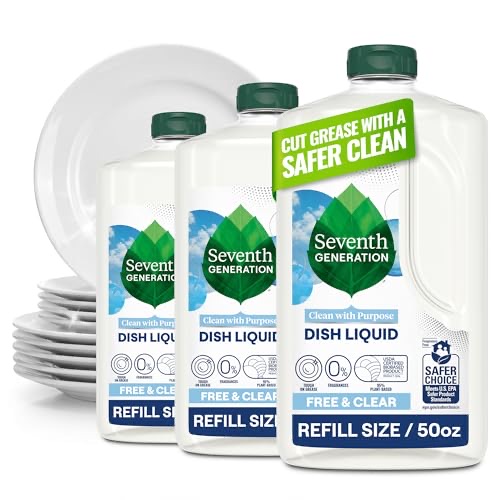 Best OverallSeventh Generation Free & Clear Dish Liquid |
EPA Safer ChoiceFragrance-Free |
Check price → |
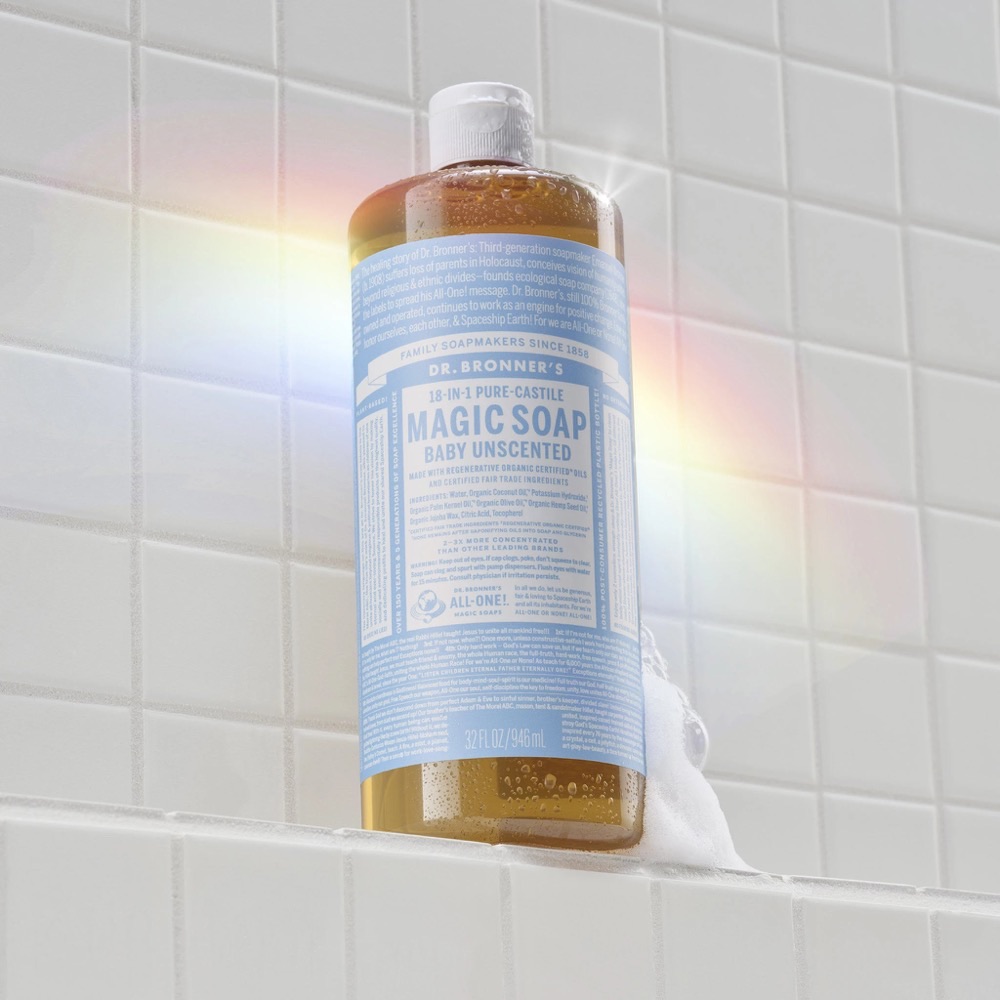 Cleanest IngredientsDr. Bronner's Pure-Castile Liquid Soap (Baby Unscented) |
USDA OrganicFragrance-Free |
Check price → |
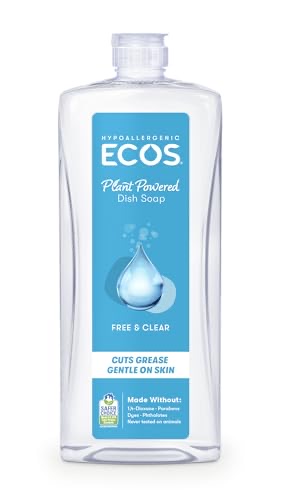 Best BudgetECOS Dishmate Dish Soap (Free & Clear) |
Free & ClearPlant-Based |
Check price → |
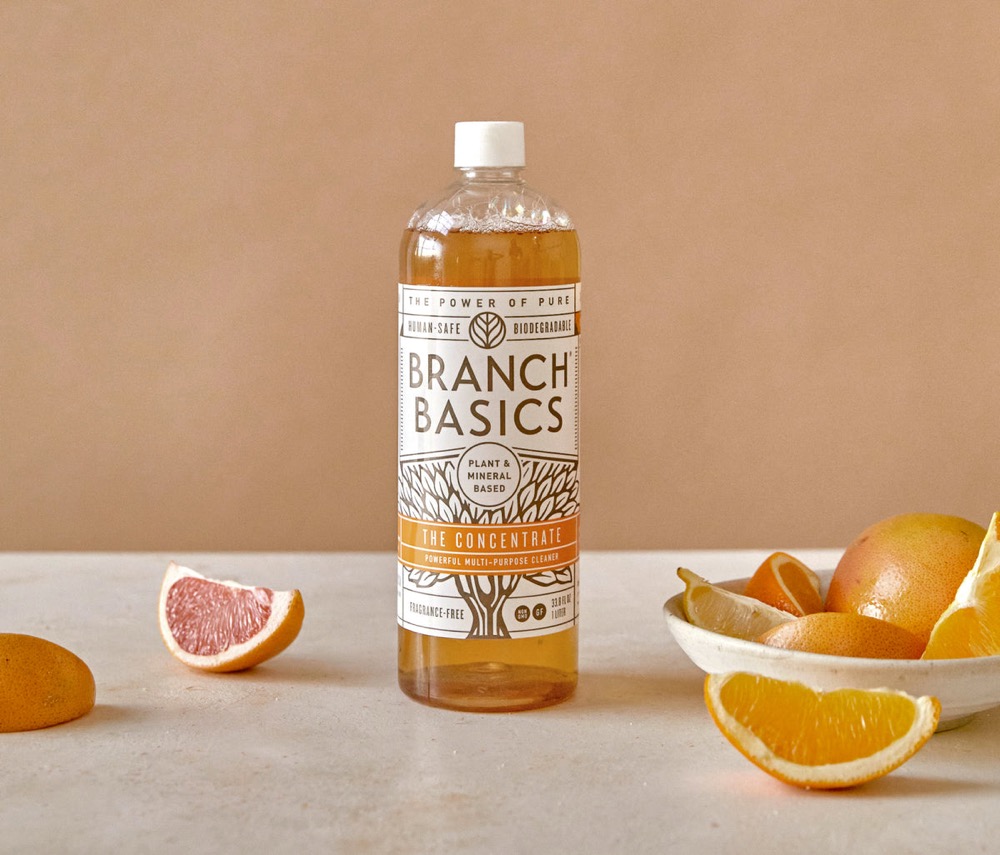 Best Multi-PurposeBranch Basics Concentrate (used as dish soap) |
MADE SAFEFragrance-Free |
Check price → |
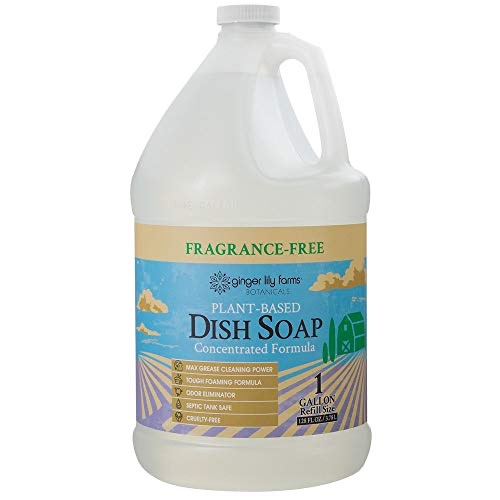 Best Value RefillGinger Lily Farms Botanicals Plant-Based Liquid Dish Soap |
Plant-BasedFragrance-Free |
Check price → |
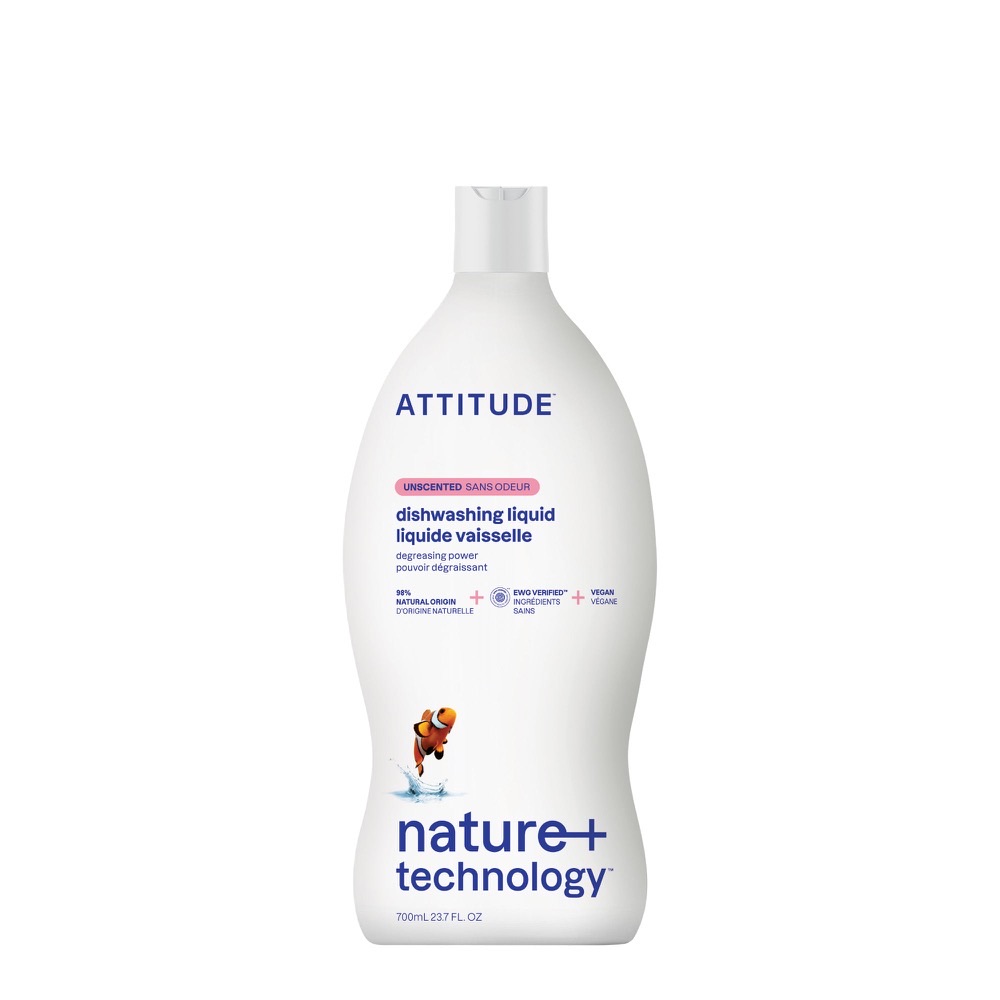 Best for Sensitive SkinATTITUDE Dish Soap — Fragrance-Free |
EWG VerifiedFragrance-Free |
Check price → |
How We Screened These Dish Soaps
We evaluated over 20 dish soap formulas against four criteria, weighted by how directly the product affects your family's health:
- EWG (Environmental Working Group) rating. We prioritized products rated A or B in EWG's Guide to Healthy Cleaning database. Products rated C or below were excluded. EWG screens for over 1,500 ingredients of concern, including carcinogens, endocrine disruptors, and respiratory sensitizers.
- Third-party certification. We looked for EPA Safer Choice, MADE SAFE, and USDA Organic certifications. EPA Safer Choice requires every ingredient — including surfactants, preservatives, and fragrances — to be independently verified for human and environmental safety. MADE SAFE screens against 6,500+ toxic chemicals.
- Ingredient transparency. Products that list "fragrance" or "parfum" without full disclosure were penalized. We favored brands that publish complete ingredient lists, including sub-components of fragrance blends. If a company hides behind proprietary formulations, we cannot verify safety.
- Practical performance. A dish soap that does not clean is not a viable recommendation. We referenced consumer testing data and EPA Safer Choice performance requirements (which mandate cleaning efficacy comparable to conventional alternatives) to ensure every pick actually works.
Quick Picks — Best Non-Toxic Dish Soap 2026
- Best Overall: Seventh Generation Free & Clear — EPA Safer Choice, easiest swap
- Cleanest Ingredients: Dr. Bronner's Pure-Castile Unscented — USDA Organic, 5 ingredients
- Best Value Refill: Ginger Lily Farms Botanicals Plant-Based Liquid Dish Soap — plant-based, fragrance-free, 1-gallon refill
- Best Multi-Purpose: Branch Basics Concentrate — MADE SAFE, replaces all cleaners
- Best Budget: ECOS Dishmate Dish Soap (Free & Clear) — plant-based, free & clear, cruelty-free
- Best for Sensitive Skin: ATTITUDE Dish Soap Fragrance-Free — EWG Verified, hypoallergenic
Our Top 6 Non-Toxic Dish Soaps
Best Overall: Seventh Generation Free & Clear Dish Liquid
Best Overall
EPA Safer Choice certified, fragrance-free, with no triclosan or SLS. Plant-derived surfactants cut grease effectively in hot or cold water. Available at virtually every grocery store in the US — the easiest swap from conventional dish soap. Works on greasy pans, baked-on food, and everyday dishwashing with no performance compromise. The Free & Clear version is the one to buy — their scented versions contain fragrance compounds we do not recommend.
Buyers keep coming back to how little you need and that there is no scent clinging to clean dishes, and a repeated line is that it cuts grease about as well as Dawn once you get used to using a bit more of it. Parents and people with sensitive skin like that it rinses off without a perfume smell. The honest gripes: it is low-sudsing, so heavy grease can take a second squirt; several reviewers report an oily, rainbow-sheen residue on stainless pots unless they rinse well; and buyers have complained about bottles arriving as 19 oz when they expected the older 25 oz size.
The lowest-friction swap on this list — same aisle, same price range as conventional dish soap, but with every ingredient screened for safety.
Why it's safe: EPA Safer Choice requires every ingredient — surfactants, preservatives, fragrance — to be independently verified. The Free & Clear formula adds no synthetic fragrance, dyes, triclosan, or SLS, so the residue left on your dishes is as clean as the soap.
Check Today’s Price on Amazon →Amazon prices change daily — tap to see today's price and any active discount.
- Free delivery & returns for Prime members
- Sold & shipped by Amazon
- Thousands of verified reviews
Cleanest Ingredients: Dr. Bronner's Pure-Castile Liquid Soap (Baby Unscented)
Cleanest Ingredients
USDA Organic, Fair Trade, and one of the simplest ingredient lists of any soap available: water, organic coconut oil, potassium hydroxide, organic palm kernel oil, and organic olive oil. That is the entire formula. Dilute approximately 1 tablespoon per sink of water for dishwashing. It does not suds as aggressively as conventional dish soap and may leave a film in hard water areas — a splash of white vinegar in the rinse eliminates this. The 32oz bottle lasts months when diluted properly, bringing the per-use cost in line with conventional dish soap.
Owners love the five-ingredient label and how gentle the unscented castile is on hands, and many stretch one bottle across body, hands, and light dish duty. Diluted with water it lathers well. The honest downside for dishwashing: castile reacts with hard water and can leave a cloudy film on glasses and a residue in the sink, so heavy users say the Sal Suds version is the better pick for dishes. You also have to dilute it (roughly one part soap to ten parts water) and it performs best in soft water, so it is more finicky than a ready-to-pour dish liquid.
One organic bottle replaces dish soap, hand soap, and more — and you can read every ingredient out loud in five seconds.
Why it's safe: No synthetic fragrance, dyes, sulfates, or preservatives — just saponified organic plant oils. Biodegradable and certified USDA Organic and Fair Trade, so nothing questionable transfers to the dishes you eat off.
Check Today’s Price on Amazon →Amazon prices change daily — tap to see today's price and any active discount.
- Free delivery & returns for Prime members
- Sold & shipped by Amazon
- Thousands of verified reviews
Best Budget: ECOS Dishmate Dish Soap (Free & Clear)
Best Budget
Plant-based and free & clear. ECOS Dishmate is a coconut-based liquid dish soap made without dyes or synthetic fragrance, which makes the Free & Clear version a sensible pick if added scent bothers you. ECOS makes it cruelty-free, and it's a widely available, budget-friendly way onto this list.
Buyers pick ECOS Dishmate for the fragrance-free formula and the value in the big jugs, and several say it stays gentle on their hands through a full sink of dishes. Reviews split on cleaning power: some report it breaks down grease well even in hard water. The honest gripes: it is a deliberately low-sudsing soap, so people say they use more of it than a conventional brand; and a chunk of reviewers find it does not cut heavy grease, reaching back for Dawn on baked-on pans.
A budget-friendly way onto this list — a plant-based, coconut-based formula that's free & clear and cruelty-free.
Why it's safe: Free & Clear means no dyes and no synthetic fragrance, with plant-based, coconut-based cleaning ingredients — no masking scents to rinse off your dishes.
Check Today’s Price on Amazon →Amazon prices change daily — tap to see today's price and any active discount.
- Free delivery & returns for Prime members
- Sold & shipped by Amazon
- Thousands of verified reviews
Best Multi-Purpose: Branch Basics Concentrate
Best Multi-Purpose
MADE SAFE certified — screened against 6,500+ known toxic chemicals. Branch Basics is a single concentrate that replaces every cleaner in your home, including dish soap. For dishwashing, use approximately 1 teaspoon of concentrate per sink of water, or a few drops directly on a sponge. The formula is truly fragrance-free (no masking scents), NSF/ANSI 61 safe (approved for contact with drinking water), and doctor-recommended for chemically sensitive individuals. The kit makes 10+ bottles of various cleaners — the per-use cost for dish soap alone is very low.
Branch Basics has a loyal following because one bottle of concentrate replaces a cabinet of sprays and, diluted down, works out cheaper per use than what it replaced; owners rave about it on counters, glass, and around kids and food. Used as a dish soap it is genuinely low-irritation. The honest gripes: it barely suds, which throws people who equate bubbles with clean; it is not a strong degreaser, so baked-on pans and heavy grease can need a second pass; and the upfront kit price is steep next to a bottle of dish soap.
Clear out the cabinet of single-purpose bottles — one concentrate dilutes into dish soap, all-purpose spray, and more.
Why it's safe: MADE SAFE screens against 6,500+ toxic chemicals; the plant- and mineral-based formula adds no synthetic fragrance, dyes, or sulfates and is NSF/ANSI 61 rated for contact with drinking water — about as inert as a cleaner gets.
Check Today’s Price on Amazon →Amazon prices change daily — tap to see today's price and any active discount.
- Free delivery & returns for Prime members
- Sold & shipped by Amazon
- Thousands of verified reviews
Best Value Refill: Ginger Lily Farms Botanicals Plant-Based Liquid Dish Soap
Best Value Refill
Ginger Lily Farms makes a plant-based, fragrance-free dish liquid with a concentrated formula for grease-cutting power. It ships as a 1-gallon (128 fl oz) refill, so you top up a smaller bottle again and again instead of buying a new one each time — far less packaging per wash. The formula is cruelty-free and free of added fragrance, making it a strong value pick for high-volume households.
Owners buy this one by the gallon and the recurring theme is value and longevity, with one reviewer saying a single jug lasts around a year. People like that the fragrance-free version cuts grease and milk residue off bottles without a scent. Real review data is thinner than for the big brands, so treat specifics with some caution. The honest notes so far: a few reviewers say the suds do not last as long as they expected, and the gallon jug has no pump, so you will need to refill your own dispenser.
Buy the gallon once and refill your dish soap bottle for months — far less packaging per wash than single bottles.
Why it's safe: The plant-based formula is fragrance-free and cruelty-free, with no added scent to rinse off your dishes — and buying in bulk cuts the packaging you throw away.
Check Today’s Price on Amazon →Amazon prices change daily — tap to see today's price and any active discount.
- Free delivery & returns for Prime members
- Sold & shipped by Amazon
- Thousands of verified reviews
Best for Sensitive Skin: ATTITUDE Dish Soap — Fragrance-Free
Best for Sensitive Skin
EWG Verified, hypoallergenic, and dermatologist tested. ATTITUDE is a Canadian company that publishes full ingredient transparency and has received the EWG Verified mark — which requires disclosure of every sub-ingredient, including fragrance components. Their fragrance-free dish soap uses plant- and mineral-based ingredients. The formula is gentle enough for sensitive skin while maintaining strong grease-cutting ability. Packaging is made from recycled and recyclable HDPE plastic.
ATTITUDE carries the EWG Verified mark, and that is what buyers cite most, along with how gentle the unscented formula is for sensitive skin and households with young kids. Reviewers say it performs on everyday grease and stuck-on food comparably to conventional brands. The honest gripes: it struggles with heavy oils and fats, where people report needing more product or switching to a conventional detergent; the fragrance-free bottle is pricier per ounce than drugstore soap; and, like most plant-based soaps here, it is lower-sudsing than what you may be used to.
If conventional dish soap leaves your hands dry, cracked, or itchy, this is the gentlest grease-cutter on the list.
Why it's safe: The EWG Verified mark requires full disclosure of every ingredient — including fragrance sub-components. This formula has none: no synthetic fragrance, dyes, or sulfate harshness, just plant- and mineral-based ingredients that are gentle on sensitive skin.
Check Today’s Price on Amazon →Amazon prices change daily — tap to see today's price and any active discount.
- Free delivery & returns for Prime members
- Sold & shipped by Amazon
- Thousands of verified reviews
Comparison Table
Price tier: $ = budget · $$ = mid · $$$ = premium. Amazon prices change often — tap any pick above for today's price.
| Product | Price | EWG Rating | Fragrance-Free | Plastic-Free Packaging |
|---|---|---|---|---|
| Seventh Generation Free & Clear | $ | A | Yes | No (recyclable HDPE) |
| Dr. Bronner's Pure-Castile Unscented | $$ | A | Yes | No (recycled plastic) |
| ECOS Dishmate (Free & Clear) | $ | — | Yes | No (plastic bottle) |
| Branch Basics Concentrate | $$$ | A | Yes | Partial (refill system) |
| Ginger Lily Farms Plant-Based Dish Soap | $$ | — | Yes | No (bulk gallon refill) |
| ATTITUDE Fragrance-Free | $ | A (EWG Verified) | Yes | No (recycled HDPE) |
What to Avoid in Dish Soap
When reading labels on dish soap — or looking up products in the EWG database — here are the specific ingredients and categories to avoid, and why each matters.
If you see any of these on a dish soap label, put it back on the shelf.
- Synthetic fragrance / parfum. An unregulated umbrella term that can contain dozens to hundreds of undisclosed chemicals. Common components include phthalates (endocrine disruptors linked to reproductive harm), synthetic musks (bioaccumulative), and volatile organic compounds. The International Fragrance Association's own database lists over 3,000 chemicals used in fragrance formulations — none of which need to be individually disclosed to consumers.
- Triclosan. An antibacterial agent and confirmed endocrine disruptor. The FDA banned it from consumer hand soaps in 2016, but it persists in some dish soaps and dishwasher detergents. It interferes with thyroid hormone signaling and contributes to antibiotic resistance in aquatic environments.
- Sodium lauryl sulfate (SLS) / sodium laureth sulfate (SLES). Harsh surfactants that strip natural oils from skin. SLS is a well-documented skin irritant — particularly concerning for a product your hands are submerged in daily. SLES is less irritating but can be contaminated with 1,4-dioxane during the ethoxylation process.
- 1,4-Dioxane. A probable human carcinogen (classified by the EPA and IARC) that forms as a byproduct during the manufacture of ethoxylated surfactants. It never appears on ingredient labels because it is a contaminant, not an added ingredient. The only way to avoid it is to choose products from brands that test for and certify absence of 1,4-dioxane — or to choose products with non-ethoxylated surfactants.
- Methylisothiazolinone (MI) / methylchloroisothiazolinone (MCI). Preservatives and potent contact allergens. The European Scientific Committee on Consumer Safety has flagged MI as unsafe in leave-on products and restricted its use in rinse-off products. It is one of the most common causes of contact dermatitis from cleaning products.
- Optical brighteners. Fluorescent chemicals that absorb UV light and re-emit blue light to make dishes appear brighter. They serve zero cleaning function, absorb through skin, and are toxic to aquatic organisms. They have no place in dish soap.
Why Fragrance-Free Matters More for Dish Soap
We recommend fragrance-free formulas across all cleaning product categories. But dish soap deserves special emphasis, for one reason: ingestion.
When you wash a plate with scented dish soap and rinse it, fragrance molecules remain on the surface. A 2020 study from the University of Copenhagen found that surfactant and fragrance residue persists on ceramic and glass surfaces even after thorough rinsing under running water. When food is placed on that plate, those chemicals transfer to the food and are consumed directly.
This is not a theoretical concern. The average American eats roughly 1,000 meals per year off hand-washed dishes. If each meal transfers even trace amounts of fragrance chemicals — phthalates, synthetic musks, VOCs — the cumulative annual dose becomes meaningful, especially for children and pregnant women who are more vulnerable to endocrine disruption at lower thresholds.
"Dish soap is the one cleaning product where chemical residue ends up inside your body at every meal. Fragrance-free is not a preference — it is a safety decision."
Want the Full Kitchen Detox Checklist?
The Complete Plasticproof Guide covers every room in your home — kitchen, nursery, bathroom, bedroom — with the full research and complete swap list. 47+ peer-reviewed studies, 80+ product recommendations.
Frequently Asked Questions
Yes, it can be. Studies show that rinsing alone does not fully remove surfactant residue from dishware. A 2021 study published in the Journal of Exposure Science & Environmental Epidemiology found detectable levels of surfactants and fragrance chemicals on plates after standard handwashing and rinsing. When you eat off these dishes, you ingest trace amounts of whatever was in the soap. This makes dish soap one of the most direct chemical exposure pathways in the kitchen — and why choosing a non-toxic, fragrance-free formula matters more here than for most other cleaning products.
The most concerning ingredients are: (1) Synthetic fragrance/parfum — an undisclosed mixture that often contains phthalates, synthetic musks, and VOCs. (2) Triclosan — an antibacterial agent and known endocrine disruptor. (3) Sodium lauryl sulfate (SLS) — a harsh surfactant linked to skin irritation. (4) 1,4-Dioxane — a probable carcinogen that forms as a contaminant during surfactant manufacturing. (5) Methylisothiazolinone (MI) — a preservative and potent skin sensitizer. (6) Optical brighteners — fluorescent chemicals that serve no cleaning purpose. Look for EPA Safer Choice or EWG A-rated products to avoid all of these.
Dr. Bronner's Pure-Castile Liquid Soap works well for handwashing dishes when diluted properly (about 1 tablespoon per sink of water). It is USDA Organic, Fair Trade, and has one of the cleanest ingredient lists of any soap on the market. However, it does not suds as aggressively as conventional dish soap, and it can leave a film on dishes if used with hard water. Adding a splash of white vinegar to the rinse water eliminates the film. For greasy pots and pans, it may require a bit more scrubbing. The unscented Baby Mild version is the safest choice for dishwashing.
For everyday dishwashing — plates, glasses, utensils, lightly soiled pans — yes. Plant-derived surfactants like decyl glucoside and coco-glucoside cut grease effectively for normal kitchen use. The EPA Safer Choice program requires certified dish soaps to demonstrate cleaning performance comparable to conventional alternatives. Where plant-based formulas may fall slightly short is on heavily baked-on grease or burnt food. In those cases, soaking dishes for 15-20 minutes before scrubbing closes the gap entirely.
Indirectly, yes. Most dish soaps come in HDPE or PET plastic bottles. While these plastics are considered food-safe for storage, they contribute to single-use plastic waste — the US alone discards over 500 million dish soap bottles annually, and less than 30% are recycled. The rest degrade into microplastics in landfills and waterways. Brands like Blueland (dissolvable tablets in paper packaging) and Branch Basics (concentrated refill system) eliminate single-use plastic entirely. If you want to reduce both chemical and plastic exposure, these systems are the best option.
Sources
- Dodson RE, et al. "Endocrine disruptors and asthma-associated chemicals in consumer products." Environmental Health Perspectives, 2012.
- Zheng G, et al. "Per- and polyfluoroalkyl substances (PFAS) in breast milk: Concerning trends for current-use PFAS." Environmental Science & Technology, 2021.
- Environmental Working Group. "EWG's Guide to Healthy Cleaning — Dish Soap Ratings." ewg.org, 2025.
- Steinemann A. "Fragranced consumer products: exposures and effects from emissions." Air Quality, Atmosphere & Health, 2016.
- US EPA. "Safer Choice Standard and Criteria for Surfactants." EPA.gov, 2024.
- Weatherly LM, Gosse JA. "Triclosan exposure, transformation, and human health effects." Journal of Toxicology and Environmental Health, Part B, 2017.
Protect Every Room in Your Home
From the kitchen to the nursery to the bathroom — the Complete Plasticproof Guide covers every swap that matters, backed by 47+ studies.