
Air fryers have become a kitchen staple — fast, convenient, and marketed as a healthier alternative to deep frying. But there is a problem hiding inside nearly every basket-style air fryer on the market: the non-stick coating.
The vast majority of air fryers use PTFE (polytetrafluoroethylene, better known as Teflon) coatings on their baskets and trays. PTFE is part of the PFAS family of "forever chemicals" — and at the temperatures air fryers routinely reach, these coatings begin to degrade and release toxic particles and gases into the cooking environment.
This guide breaks down which air fryers avoid PFAS and PTFE entirely, what coating materials are actually safe at high heat, and which specific models are worth the investment. No brand partnerships, no affiliate ranking manipulation — just an honest assessment of what belongs in a health-conscious kitchen.
Compare all 6 picks
Every pick side by side — tap a name to jump to the full review, or check today's price.
| Pick | Rating | Why it wins | |
|---|---|---|---|
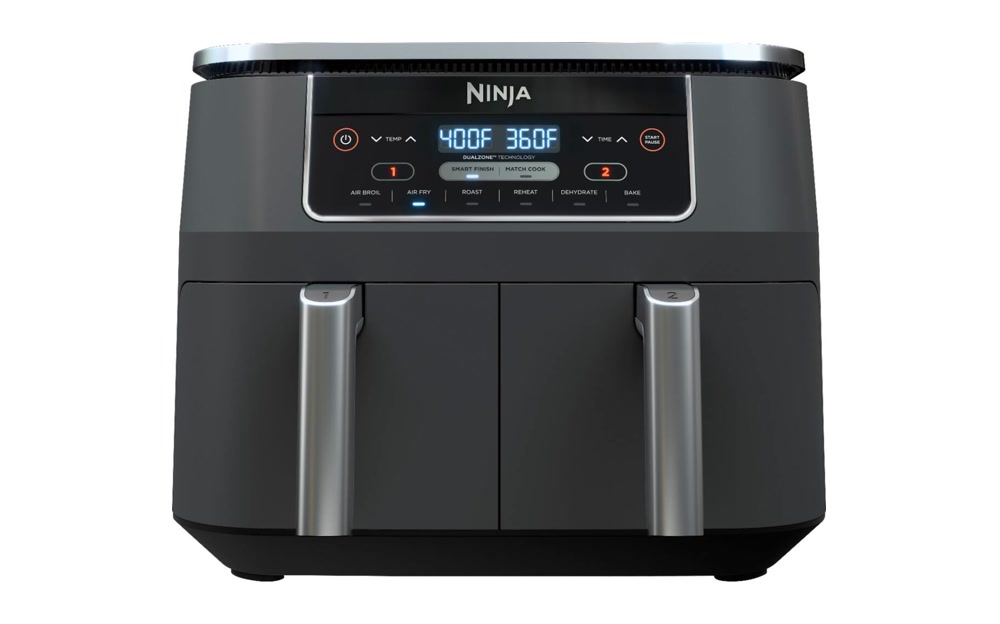 Best OverallNinja Foodi DualZone (DZ201) |
4.8out of 5 | PFAS-FreePTFE-Free |
Check price → |
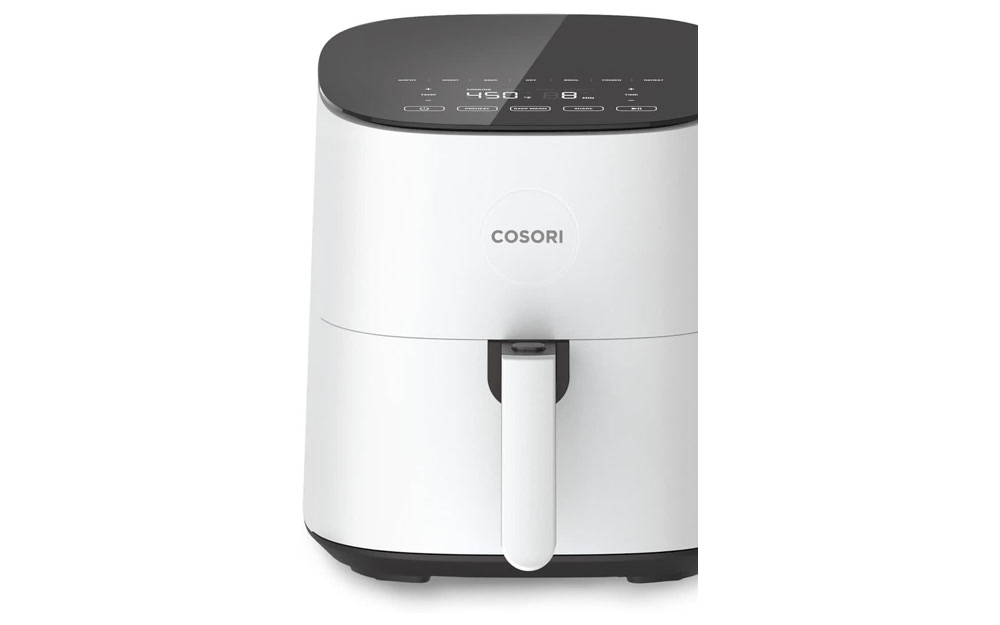 Best ValueCosori Pro LE (L501) |
4.7out of 5 | PFAS-Free OptionStainless Steel Basket |
Check price → |
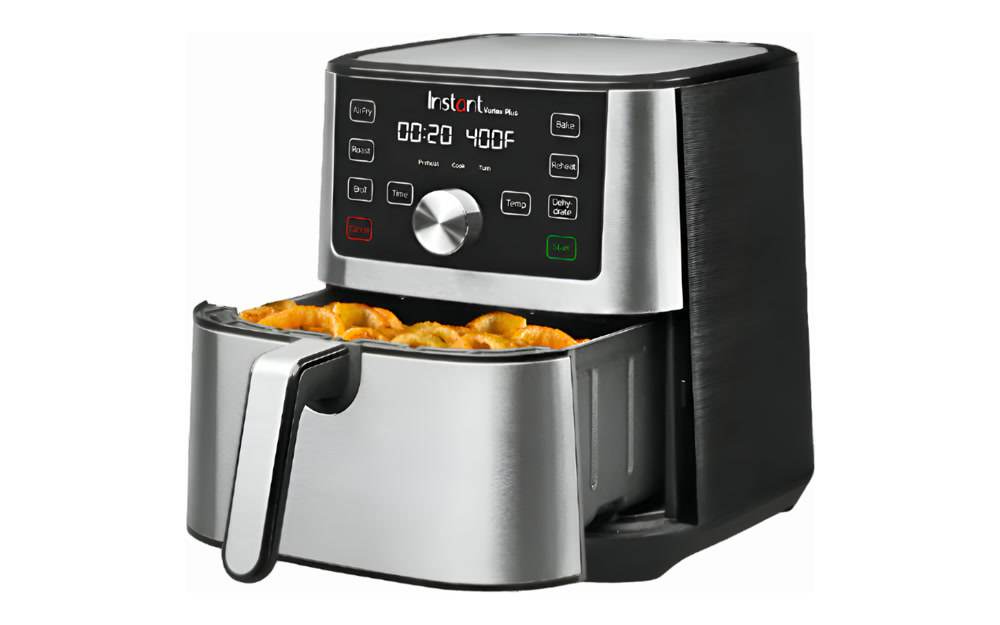 Best VersatilityInstant Vortex Plus 6-in-1 |
4.7out of 5 | No TeflonStainless Steel Tray |
Check price → |
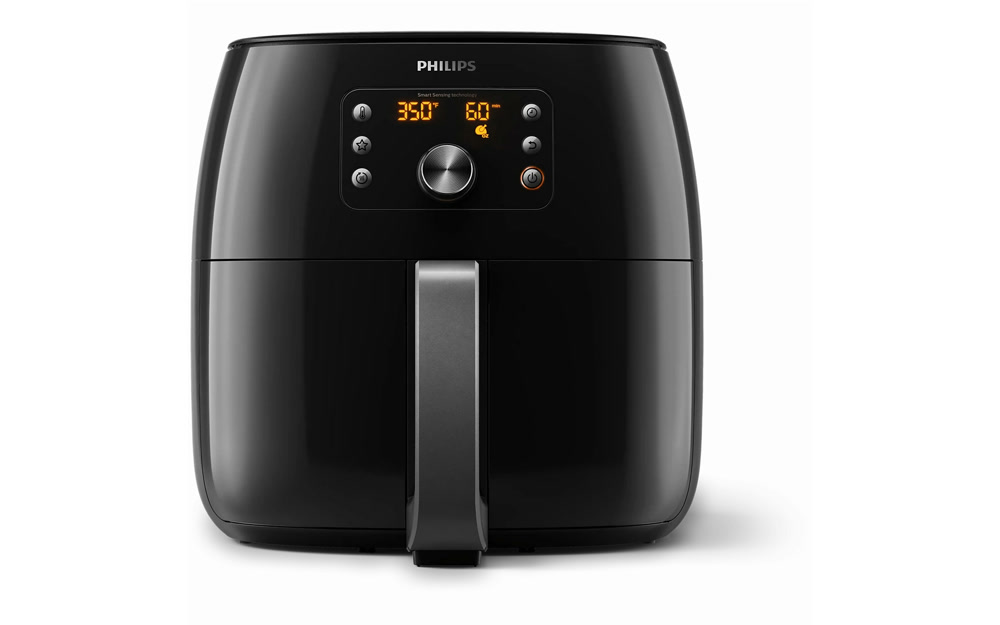 Best PremiumPhilips Premium Airfryer XXL (HD9867) |
— | No Plastic Food ContactStainless Mesh Basket |
Check price → |
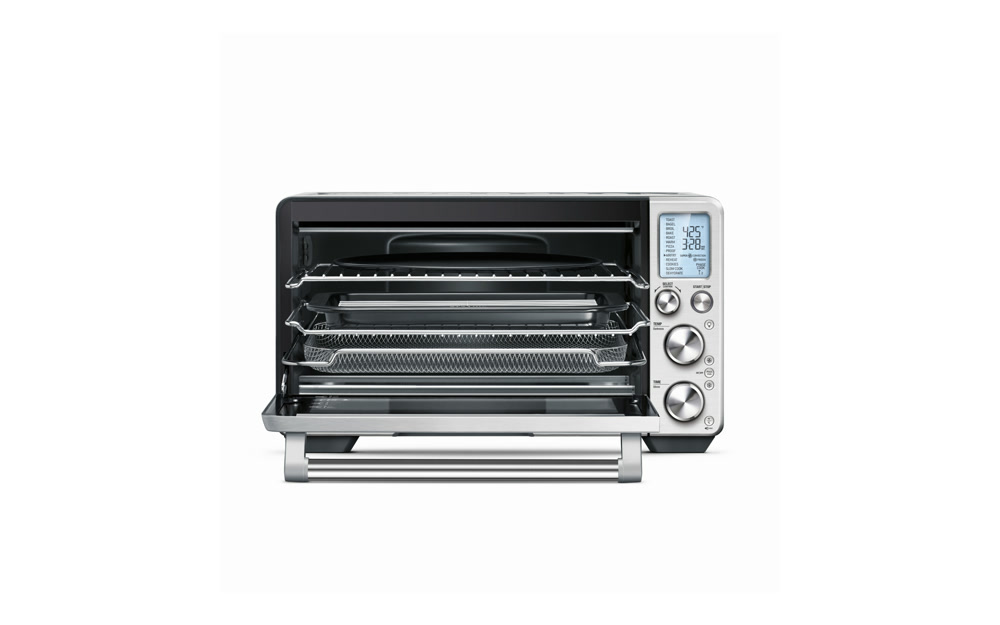 Best Oven-StyleBreville Smart Oven Air Fryer Pro |
4.8out of 5 | No Non-Stick CoatingsFull Stainless Interior |
Check price → |
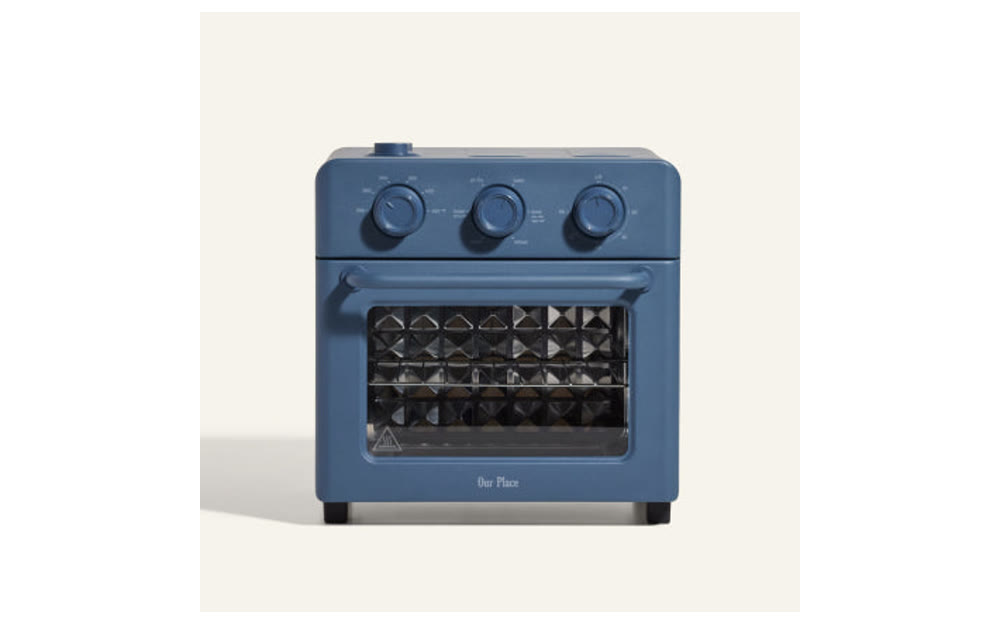 Best DesignOur Place Wonder Oven |
4.3out of 5 | PFAS-FreePTFE-Free |
Check price → |
The PFAS/Teflon Problem in Air Fryers
PTFE coatings were designed for convenience — food slides off, cleanup is easy. But that convenience comes with a chemical trade-off that matters more in an air fryer than in any other kitchen appliance. If you are still weighing the risk, our explainer on whether air fryers are toxic walks through exactly what the research shows.
Here is why: air fryers operate at higher sustained temperatures than most stovetop cooking. A pan on medium heat sits around 300-350°F. An air fryer cooking chicken wings or fries is blasting concentrated hot air at 375-425°F directly onto the coated basket surface. The coating is not just exposed to heat — it is battered by it continuously from a focused heating element inches away.
When PTFE coatings overheat, they release a cocktail of toxic compounds. Studies have documented the release of perfluorooctanoic acid (PFOA), ultrafine particles, and other fluorinated gases. These are part of the broader PFAS (per- and polyfluoroalkyl substances) family — chemicals so persistent in the environment and human body that they are called "forever chemicals." Research has linked PFAS exposure to thyroid disease, liver damage, immune system suppression, and certain cancers.
The risk compounds over time. Every cycle of heating and cooling degrades the coating slightly. Scratches from metal utensils or abrasive cleaning expose the underlying material. What starts as a smooth, intact coating gradually becomes a source of microscopic PTFE particles that flake directly into food. The usual fix is a ceramic coating instead of PTFE, and the ceramic vs nonstick cookware lab data shows how much of a real upgrade that is — and where budget ceramic still wears thin.
"The irony of air fryers is that people buy them to eat healthier — less oil, fewer calories — while unknowingly cooking on a surface that introduces toxic chemicals into every meal."
What to Look for in a Non-Toxic Air Fryer
Choosing a genuinely non-toxic air fryer means evaluating three things:
- Basket/tray coating material: Look for ceramic-coated, bare stainless steel, or uncoated metal surfaces. Avoid anything labeled "non-stick" without specifying the coating material — it is almost certainly PTFE.
- Food-contact surfaces: Check whether any plastic components touch food or sit in the hot air path. Some air fryers have plastic drip trays, plastic basket handles that extend into the cooking chamber, or plastic dividers.
- Heating element proximity: Basket-style air fryers place food closer to the heating element than oven-style models. Oven-style air fryers with stainless steel interiors offer the most distance and the safest cooking surfaces.
For a deeper look at how plastic and chemical exposure accumulates across the kitchen, the full kitchen detox guide covers every appliance and surface.
Quick Comparison
| Air Fryer | Price | Capacity | Coating | PFAS-Free | Best For |
|---|---|---|---|---|---|
| Ninja Foodi DualZone | $$ | 6 qt (dual) | Ceramic | Yes | Overall |
| Cosori Pro LE | $ | 5 qt | Stainless steel | Yes | Value |
| Instant Vortex Plus | $ | 6 qt | Stainless steel | Yes | Versatility |
| Philips XXL | $$$ | 7 qt | Stainless mesh | Yes | Premium |
| Breville Smart Oven | $$$ | Oven-style | Stainless steel | Yes | Oven-style |
| Our Place Wonder Oven | $$ | Compact oven | Ceramic | Yes | Design |
Price guide: $ budget · $$ mid-range · $$$ premium. Tap any pick below for today's exact Amazon price.
Quick Picks
| Best For | Pick | Why It Made the List |
|---|---|---|
| Best overall | Ninja Foodi DualZone (DZ201) | Ceramic-coated dual baskets with independent controls — cook two dishes at once, no PFAS. |
| Best value | Cosori Pro LE (L501) | Stainless steel basket at the budget end — hardest to beat on price for a genuinely non-toxic air fryer. |
| Best versatility | Instant Vortex Plus 6-in-1 | Six cooking functions, ClearCook window, stainless steel tray — does more than just air fry. |
| Best premium | Philips Premium Airfryer XXL | Fat removal technology, stainless mesh basket, no plastic food contact — the gold standard. |
| Best oven-style | Breville Smart Oven Air Fryer Pro | Full stainless interior, 13 functions, convection-based — replaces multiple countertop appliances. |
| Best design | Our Place Wonder Oven | Ceramic-coated, steam + air fry, no PFAS — the best-looking non-toxic option by far. |
Our Top Picks
Best Overall: Ninja Foodi DualZone (DZ201)
Best Overall
Ceramic-coated baskets with zero PFAS or PTFE. Two independent 3-quart cooking zones with separate temperature and timing controls. IQ Boost technology automatically syncs both zones to finish at the same time. Six cooking functions: air fry, air broil, roast, bake, reheat, dehydrate. The ceramic coating provides genuine non-stick performance without the chemical trade-offs of Teflon. Dishwasher-safe baskets.
The dual-zone design solves a real cooking problem — making a protein and a side simultaneously at different temperatures — while the ceramic coating eliminates the PFAS concern entirely. The ceramic baskets are also more durable than many budget ceramic coatings, holding up well after months of regular use.
Owners come back again and again to the two independent baskets: the most-repeated praise is being able to cook two different foods that finish at the same time, which reviewers describe as a help for busy weeknight dinners. Many say it cuts oven time roughly in half and cooks food evenly, and a common refrain is that it is the best air fryer they have owned, with baskets quick to wipe out. The honest downside: reviewers report an initial plastic smell on first use, note the fans run loud, and warn that each basket is too small for something like a whole chicken; a few also say the high power draw tripped their circuit breakers, and a vocal minority wishes for one large basket instead of two.
Cook a protein and a side at the same time on two separate ceramic surfaces — the convenience of Teflon with none of the forever-chemical trade-off.
Why it's safe: The cooking baskets are ceramic-coated with no PTFE, PFOA, or other PFAS — so nothing can off-gas or flake into food at the high temperatures air fryers reach.
Check Today’s Price on Amazon →Amazon prices change daily — tap to see today's price and any active discount.
- Free delivery & returns for Prime members
- Sold & shipped by Amazon
- Thousands of verified reviews
Best Value: Cosori Pro LE (L501)
Best Value
Available with a stainless steel basket option — one of the few budget air fryers that offers bare metal food contact. 5-quart capacity fits a full meal for two or sides for four. BPA-free construction throughout. Nine one-touch cooking presets. Compact footprint that fits under most cabinets. The stainless basket does require a light oil spray to prevent sticking, but that is a small trade-off for zero chemical coating concerns.
Finding a genuinely non-toxic air fryer at the budget end is difficult. The Cosori Pro LE delivers stainless steel food contact at a price point where most competitors are still using PTFE. The 5-quart size is practical for most households, and the stainless basket is virtually indestructible compared to any coated alternative.
The most-repeated praise from owners is that it "Heats up quickly, cooks well" and that it "Doesn't take much space, fits perfectly on a small countertop," which reviewers in smaller kitchens single out. People who have used it daily for a month or more call it a solid everyday fryer once they dial in their own times. The honest gripe: multiple owners warn that "The presets are not accurate," with food coming out overcooked or undercooked until you set time and temperature by hand, that the basket is "smaller than it looks in product photos," and that "It's not super quiet.
The cheapest way to get bare-metal food contact — a stainless basket means there is literally no coating to wear out or flake.
Why it's safe: The stainless steel basket option is completely inert at air fryer temperatures, with BPA-free construction throughout and no PTFE non-stick layer to degrade.
Check Today’s Price on Amazon →Amazon prices change daily — tap to see today's price and any active discount.
- Free delivery & returns for Prime members
- Sold & shipped by Amazon
- Thousands of verified reviews
Best Versatility: Instant Vortex Plus 6-in-1
Best Versatility
Stainless steel cooking tray with no Teflon coatings. ClearCook window lets you monitor food without opening the basket — which maintains temperature and reduces the temptation to touch coated surfaces with utensils. Six functions: air fry, roast, broil, bake, reheat, dehydrate. 6-quart capacity. From the makers of Instant Pot, with the same build quality and reliability. EvenCrisp technology for consistent browning.
The six cooking functions mean this replaces multiple appliances, and the ClearCook window is a genuinely useful feature — checking food without opening the basket preserves heat and reduces cooking time. The stainless steel tray is a straightforward, no-compromise approach to non-toxic cooking.
Owners most often praise crisp results, straightforward operation, and quick cleanup, and several call out the ClearCook window that lets them watch food without opening the drawer, reporting it holds up as a dependable daily fryer for one or two people. The honest downside: many note a plastic smell for the first few uses that should not be mistaken for burning, some say food can come out paler than with other fryers even when fully cooked through, and owners flag that the tray tends to slide out when dumping food and that multiple trays cook unevenly unless you swap them partway.
Watch food crisp through the ClearCook window instead of opening the basket — one appliance that air fries, roasts, bakes, broils, reheats, and dehydrates.
Why it's safe: Food cooks on a bare stainless steel tray with no Teflon or PTFE coating anywhere in the basket — nothing to break down or shed into your meal.
Check Today’s Price on Amazon →Amazon prices change daily — tap to see today's price and any active discount.
- Free delivery & returns for Prime members
- Sold & shipped by Amazon
- Thousands of verified reviews
Best Premium: Philips Premium Airfryer XXL (HD9867)
Best Premium
Philips patented Fat Removal technology captures and drains excess fat away from food. Stainless steel mesh basket provides excellent airflow without any non-stick coating — the mesh design means less food-to-surface contact, which reduces sticking naturally. No plastic touches food at any point. 7-quart capacity fits a whole chicken. Rapid Air circulation technology. Philips invented the air fryer category and this is their flagship — the engineering shows.
The stainless steel mesh basket is the best engineering solution to the non-stick problem — instead of coating a surface, they reduced the surface area itself. Less contact means less sticking, with zero chemical coatings needed. The price is high, but the build quality and cooking performance justify it for serious home cooks.
Owners most often praise the large XXL capacity as enough to feed a whole family in one batch, along with the solid build and dishwasher-safe parts that keep cleanup manageable, so households cooking big loads of fries or wings say it earns its counter space. The honest downside: several report that the mesh-bottom basket lets fat and juices drip onto the counter, that the machine is pricey and noisy, and that a full load comes out soggy on the bottom unless you stop midway to stir; owners of the dial-control versions add that the analog dial slips and is hard to set precisely.
A 7-quart basket that fits a whole chicken, with patented fat-removal — premium performance and zero coating to worry about.
Why it's safe: The stainless steel mesh basket has no non-stick coating, and no plastic touches food at any point in the cooking chamber — nothing to off-gas or shed.
Check Today’s Price on Amazon →Amazon prices change daily — tap to see today's price and any active discount.
- Free delivery & returns for Prime members
- Sold & shipped by Amazon
- Thousands of verified reviews
Best Oven-Style: Breville Smart Oven Air Fryer Pro
Best Oven-Style
Full stainless steel interior with zero non-stick coatings anywhere in the cooking chamber. Convection-based air frying with Element IQ technology — six independent heating elements adjust automatically for each cooking function. 13 functions including air fry, toast, bake, roast, broil, pizza, bagel, reheat, cookies, slow cook, dehydrate, proof, and warm. Fits a 14-pound turkey or 9x13 baking dish. This is not just an air fryer — it replaces a toaster oven, dehydrator, slow cooker, and proofing box.
For anyone willing to invest in a single, do-everything countertop appliance, the Breville is the gold standard. The 13 cooking functions genuinely replace multiple appliances, which is both a space-saver and a cost-saver over time. The Element IQ system produces the most even cooking results of any air fryer tested. For more on building a fully non-toxic kitchen, see the non-toxic cookware guide.
The most-repeated praise is that this doubles as a full oven; owners write "It's basically replaced my oven" and "We use it every single day," and many highlight the build quality and the roomy interior that fits a Dutch oven or a 12-inch skillet, with some reporting years of daily use and rating it a top performer at toast, pizza, and roast chicken. The honest downside: the recurring knock is the air frying itself, with owners saying "The air fryer function is slow" and flatly "It's not a great air fryer," plus it is hard to clean after air frying and can trip a breaker when other appliances share the circuit.
One appliance replaces your toaster oven, dehydrator, slow cooker, and proofing box — with a cooking surface that never wears out.
Why it's safe: The cooking chamber is bare stainless steel with no PTFE, no ceramic, and no coating of any kind — there is literally nothing to degrade or off-gas at high heat.
Check Today’s Price on Amazon →Amazon prices change daily — tap to see today's price and any active discount.
- Free delivery & returns for Prime members
- Sold & shipped by Amazon
- Thousands of verified reviews
Best Design: Our Place Wonder Oven
Best Design
Ceramic-coated interior with zero PFAS or PTFE. Unique steam injection + air fry combination — the steam function keeps food moist inside while the air fry function crisps the exterior. Six functions: air fry, bake, roast, broil, toast, reheat. Compact countertop footprint designed to look good left out on the counter. Available in multiple colorways. From the makers of the Always Pan, with the same design-forward, non-toxic philosophy.
It is not just aesthetics — the steam + air fry combination produces genuinely superior results for proteins and baked goods. The ceramic coating is PFAS-free and handles the operating temperatures with ease. The compact footprint also makes it ideal for smaller kitchens or apartments.
Owners who like it are enthusiastic: one calls it "the best thing I've bought in ages. Way better than my old counter top air fryer," and health-focused buyers repeatedly praise that it is, in one reviewer's words, "the only one that truly does not contain pfas or any other forever chemicals," on top of a compact footprint and quick preheat that lets it stand in for a separate toaster oven and air fryer. The honest downside: complaints cluster on speed and upkeep, with owners of the newer Pro version saying "It takes ages to preheat" and "It's hard to clean," and one buyer returned it because it "took 2x longer" to cook than their previous air fryer.
The one air fryer you'd actually leave on the counter — steam keeps food moist while air fry crisps the outside, in a genuinely non-toxic ceramic chamber.
Why it's safe: The interior is ceramic-coated with no PFAS or PTFE — the same design-forward, non-toxic philosophy behind the Always Pan.
Check Today’s Price on Amazon →Amazon prices change daily — tap to see today's price and any active discount.
- Free delivery & returns for Prime members
- Sold & shipped by Amazon
- Thousands of verified reviews
Coating Materials Guide: Ceramic vs. Stainless Steel vs. PTFE
Understanding what is on the cooking surface is the most important factor in choosing a non-toxic air fryer. Here is how the three main options compare:
Ceramic Coating
- What it is: An inorganic coating made primarily from silicon dioxide (sand-derived), applied via a sol-gel process.
- Safety: Contains no PFAS, PTFE, PFOA, or fluorinated compounds. Safe to temperatures above 800°F — well beyond any air fryer operating range.
- Non-stick performance: Good when new, gradually diminishes over 1-3 years of regular use. Even when worn, does not release toxic compounds — it simply becomes less slippery.
- Maintenance: Hand wash with soft sponge. Avoid abrasive cleaners and metal utensils. Use silicone or wooden tools.
- Bottom line: The best balance of safety and convenience for most users.
Stainless Steel (Uncoated)
- What it is: Bare food-grade stainless steel (typically 304/18-8 grade), the same material used in professional restaurant equipment.
- Safety: Completely inert at all cooking temperatures. No coatings to degrade, no chemicals to release. The safest possible food-contact surface.
- Non-stick performance: None — food will stick without oil or parchment paper, so if you line the basket, choose a parchment paper confirmed to be PFAS-free. This is the trade-off for zero chemical exposure.
- Maintenance: Extremely durable. Can be scrubbed aggressively without damage. Dishwasher safe. Essentially indestructible.
- Bottom line: The purist choice. Requires slightly more effort (oil spray or parchment) but eliminates every possible coating concern.
PTFE (Teflon) — What to Avoid
- What it is: Polytetrafluoroethylene, a synthetic fluoropolymer and member of the PFAS "forever chemical" family.
- Safety: Begins degrading at 464°F (240°C). Releases toxic particles and at least six toxic gases at 572°F (300°C). Air fryers regularly operate at 375-450°F, dangerously close to the degradation threshold.
- Non-stick performance: Excellent when intact. Degrades with use, scratches, and thermal cycling.
- Bottom line: Not recommended for air fryers due to the high sustained temperatures involved. The non-stick cookware safety guide covers this in detail.
Many air fryer brands advertise "PFOA-free" coatings as if this makes them safe. PFOA is just one chemical in the PFAS family of over 12,000 compounds. A PTFE-coated air fryer basket can be technically "PFOA-free" while still containing PTFE itself (a PFAS compound) and other replacement chemicals like GenX that carry similar health concerns. Always look for "PFAS-free" or "PTFE-free" — not just "PFOA-free." Better yet, choose ceramic, stainless steel, or cast iron and avoid the issue entirely. For more on how these marketing claims mislead consumers, see the non-toxic baking sheets guide.
Want the Full Kitchen Protection Guide?
Air fryers are just one source of chemical exposure in the kitchen. The Complete Plasticproof Guide covers every appliance, cookware set, and storage container — with 80+ product recommendations backed by 47+ studies.
Frequently Asked Questions
Air fryers themselves are not inherently toxic — the concern is the non-stick coating. Many conventional air fryers use PTFE (Teflon) coatings that begin degrading at 464°F, releasing toxic particles and gases. Since air fryers regularly reach 400°F+, this is a legitimate concern. Choosing ceramic or stainless steel cooking surfaces eliminates this risk entirely.
PFOA is just one chemical within the larger PFAS family of over 12,000 "forever chemicals." A product labeled "PFOA-free" may still contain other PFAS compounds like GenX or PFBS. "PFAS-free" is the stronger claim — it means no per- or polyfluoroalkyl substances of any kind. Always look for "PFAS-free" rather than just "PFOA-free."
Yes. Ceramic coatings are made from inorganic minerals (primarily silicon dioxide) and contain no PFAS, PTFE, or fluorinated compounds. They withstand temperatures up to 800°F without releasing toxic fumes. The trade-off is durability — ceramic coatings last 1-3 years before losing non-stick properties — but even worn ceramic does not release harmful chemicals.
Yes. Several air fryers now come with stainless steel baskets or trays. Food may stick slightly more, but a light brush of oil or parchment paper solves this easily. Stainless steel is completely inert at air fryer temperatures and will never off-gas or degrade. Many cooks prefer it because there is zero coating to wear out.
Air fryers with plastic components that contact hot air or food can potentially release microplastics. A 2023 study found that heating plastic food containers above 100°C significantly increased microplastic release. To minimize exposure, choose air fryers where all food-contact surfaces are metal or ceramic, and avoid placing food against plastic components inside the cooking chamber.
For ceramic-coated baskets: hand wash with warm soapy water and a soft sponge. Avoid abrasive scrubbers. For stainless steel: soak in warm water for 10-15 minutes, then scrub with a non-scratch pad. Baking soda paste works well for stubborn residue. Never use metal utensils on ceramic coatings. Allow full cooling before cleaning. Replace parchment liners after each use.
Sources
- Sajid M, Ilyas M. "PTFE-coated non-stick cookware and toxicity concerns: a perspective." Environmental Science and Pollution Research, 2017.
- Shimizu T, et al. "Thermal decomposition of PTFE in the presence of various metal catalysts." Journal of Analytical and Applied Pyrolysis, 2020.
- Fenton SE, et al. "Per- and polyfluoroalkyl substance toxicity and human health review." Journal of Toxicology and Environmental Health, Part B, 2021.
- EPA. "PFAS Strategic Roadmap: EPA's Commitments to Action 2021-2024." United States Environmental Protection Agency, 2021.
- Huang W, et al. "Microplastics and nanoplastics in food, water, and human body." Science of the Total Environment, 2023.
- Blum A, et al. "The Madrid Statement on Poly- and Perfluoroalkyl Substances (PFASs)." Environmental Health Perspectives, 2015.
- Bakir A, et al. "Release of PTFE nanoparticles from coated cookware during cooking." Environmental Science & Technology, 2022.
Protect Every Room in Your Home
From the kitchen to the nursery — the Complete Plasticproof Guide covers every swap that matters, backed by 47+ studies.