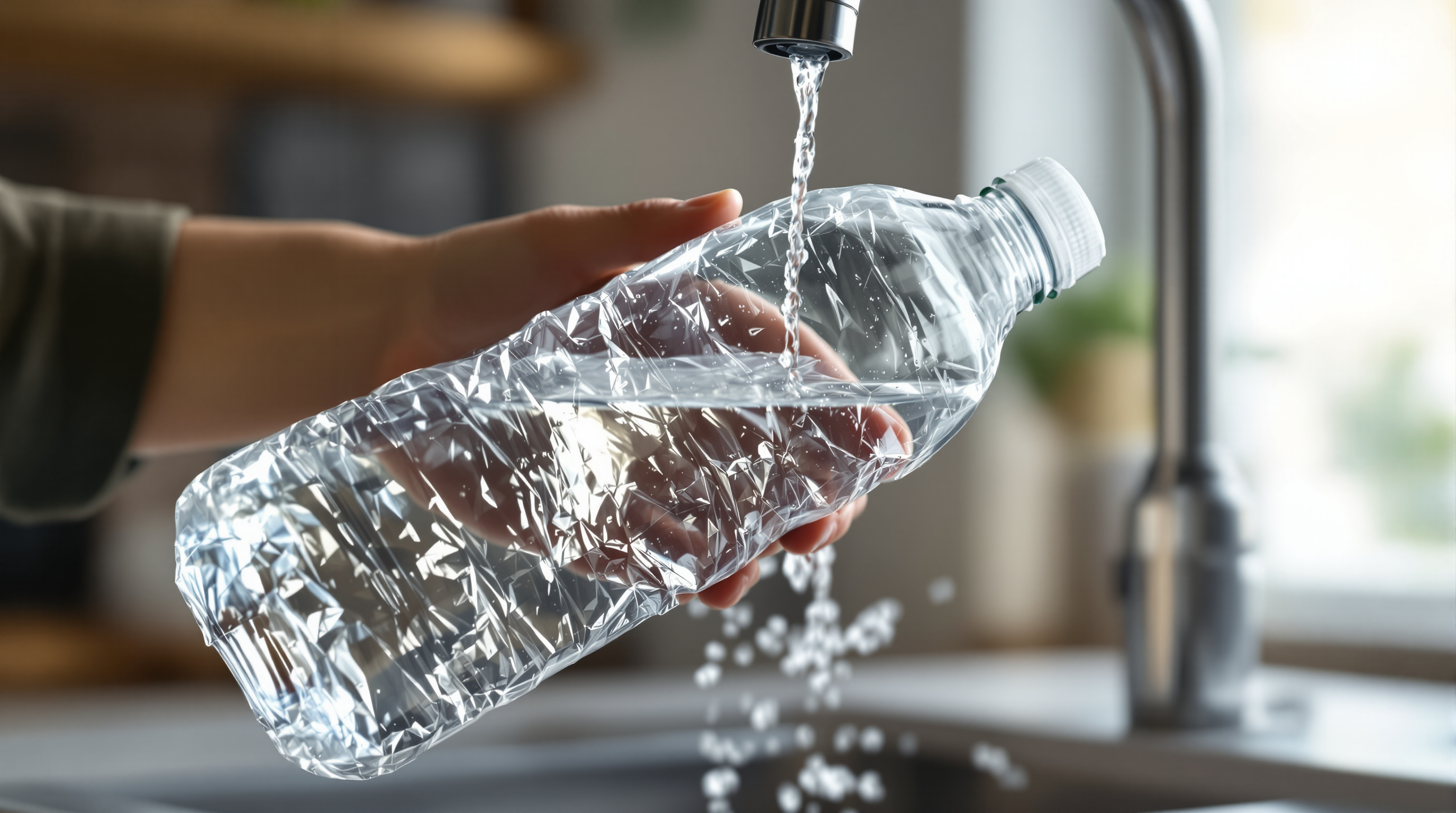
It's one of the most common money-saving habits there is: you finish the bottled water you bought, then refill it from the tap and keep using it for days. It feels thrifty and eco-friendly. But disposable water bottles are stamped "single use" for a reason — and the question of whether it's actually safe to reuse them comes down to three things: microplastics, a metal called antimony, and bacteria.
The short version: reusing a disposable plastic bottle once or twice in a pinch won't hurt you. The problem is doing it repeatedly, over days or weeks, especially when the bottle gets warm, scratched, or left in the sun. That thin PET (#1) plastic is not built to be refilled and scrubbed for the long haul — and the longer you push it, the more it sheds into your water and the more bacteria it collects.
Quick Answer
Are plastic water bottles safe to reuse? For a one-off refill, yes — the risk is low. But repeatedly reusing a disposable single-use (PET #1) bottle is not recommended. With each refill, and especially with heat, sunlight, and wear, the plastic sheds more microplastic and nanoplastic particles and can leach trace antimony, while scratches and threads trap bacteria that rinsing won't remove. PET doesn't contain BPA, so "BPA-free" tells you nothing here. For everyday hydration, switch to an 18/8 stainless steel or borosilicate glass bottle built to be refilled for years.
What happens when you reuse a single-use plastic water bottle?
Reusing a disposable bottle accelerates exactly the kind of wear it was never designed to withstand. The thin PET (#1) plastic flexes, scratches, and warms with each refill — and every one of those stresses speeds up the release of plastic particles and trace chemicals into your water, while creating hiding places for bacteria. Three problems stack up at once.
First, microplastic shedding. Plastic is not a stable, inert material — it degrades continuously through UV light, heat cycling, and mechanical stress. A 2024 Columbia/Rutgers study found bottled water carries roughly 240,000 nanoplastic particles per liter, shed largely from the PET walls and cap. Refilling, squeezing, and scrubbing a disposable bottle physically abrades those walls, releasing more particles over time. Microplastics have now been detected in human blood, liver, placenta, and breast milk.
For context, a reused bottle is not even the biggest daily-life plastic-shedding source most people carry: a conventional nylon-bristle toothbrush was measured shedding roughly 2.33 million microplastic particles per person, per year straight into the mouth (Wang et al., Ecotoxicology and Environmental Safety, 2025, DOI 10.1016/j.ecoenv.2025.118694) — a scale of oral exposure the bottle in your bag isn’t close to. If particle shedding is the concern that brought you to this page, the highest-leverage fix outside the bottle is a microplastic-free toothbrush with plant-based bristles, and it costs about the price of a single trip to the vending machine.
Second, antimony. PET is made using antimony trioxide as a catalyst, and a small amount can migrate from the plastic into the water. Research consistently shows this migration rises sharply with temperature and storage time — a bottle baking in a hot car or sitting in sunlight leaches far more antimony than a cool, freshly filled one. Levels from a single fresh bottle usually stay below drinking-water limits, but repeatedly reusing and heat-cycling the same disposable bottle is exactly the scenario that pushes exposure up.
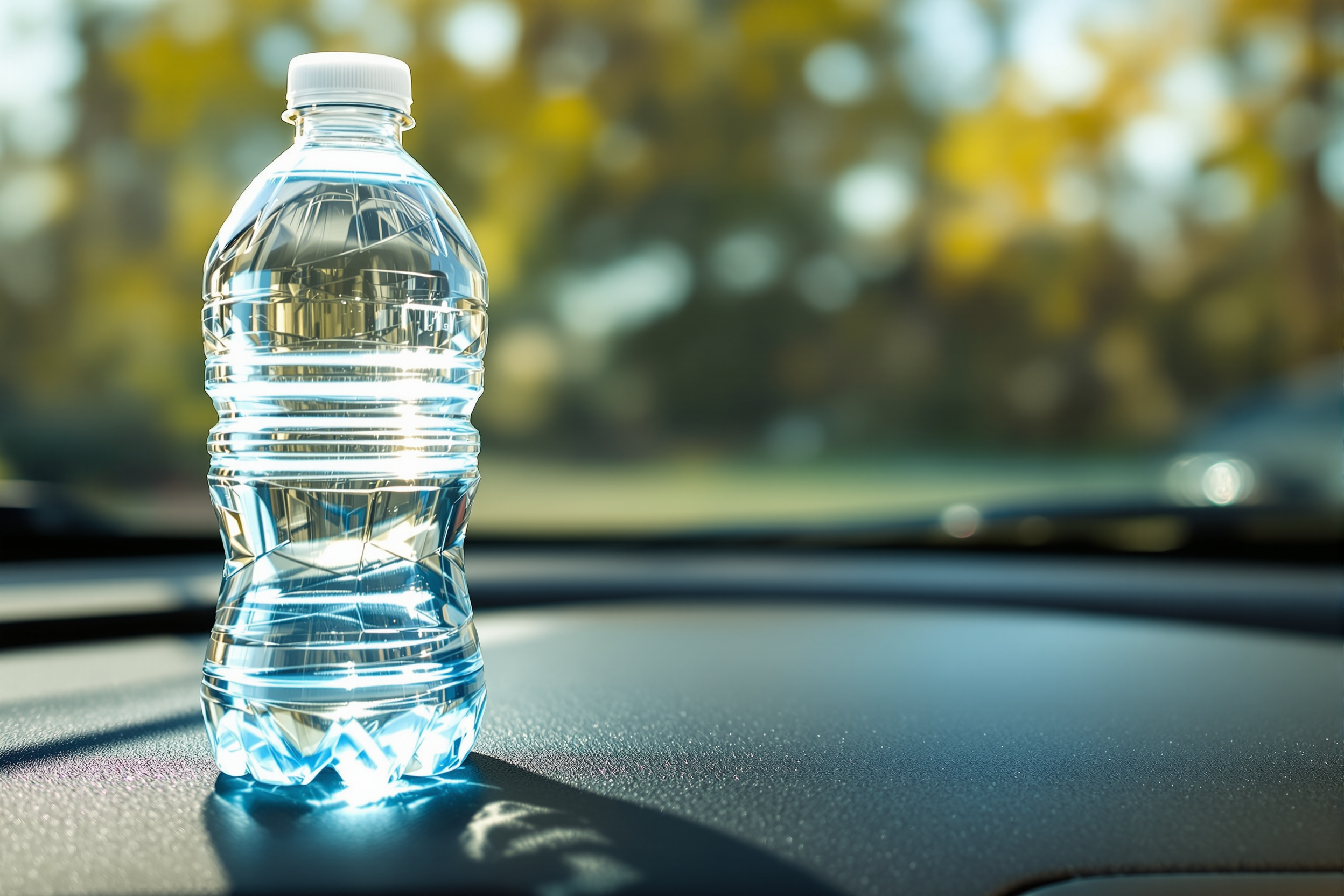
Third, the bottle simply wears out. PET is soft, so it scratches easily, and the threads around the cap are nearly impossible to clean fully. That is the perfect setup for the third problem — bacteria — which we cover below. The takeaway: a disposable bottle is fine for the single use it was built for, but every additional day of reuse trades a little more particle shedding, chemical migration, and bacterial risk for a few cents of savings.
Do reused plastic bottles leach BPA or other chemicals?
Here's the surprise: most disposable water bottles do not contain BPA. BPA (bisphenol A) is associated with hard polycarbonate (#7) plastics and epoxy can linings — not the lightweight PET (#1) used for single-use water bottles. So a "BPA-free" label on a disposable bottle is essentially marketing noise; it was never the relevant risk.
The chemicals that actually matter when you reuse PET are antimony (covered above) and, to a lesser and more debated degree, trace amounts of other migration compounds that increase with heat and age. The real lesson is that "BPA-free" does not mean "safe to reuse." It addresses one chemical that isn't even in the bottle while ignoring microplastics, antimony, and bacteria entirely. For more on why that label is misleading, see our deep dive on why BPA-free plastic isn't actually safe.
Older hard reusable plastic bottles are a different story. Many were made from polycarbonate that does contain BPA, and the "BPA-free" replacements often use BPS and BPF — structurally similar chemicals that peer-reviewed research shows disrupt hormones at comparable potency. If you have an old cloudy hard-plastic bottle in a cabinet, that's the one to retire first. Our guide to microplastics in water bottles breaks down how much plastic different bottle types release.
Can bacteria grow in a reused water bottle?
Yes — and for many people this is the bigger day-to-day risk than chemicals. Every time you drink, bacteria from your mouth and hands transfer to the bottle, and the warm, moist interior is an ideal place for them to multiply. Leave a refilled bottle out overnight and you're effectively incubating whatever was already inside.
Disposable bottles make this worse because soft PET scratches so easily. Those micro-scratches, plus the narrow cap threads, shelter bacteria and biofilm that a quick rinse can't reach. A reusable bottle isn't automatically cleaner — but a smooth, scratch-resistant 18/8 stainless steel or glass surface is far easier to actually scrub clean, and most can go in the dishwasher. Whatever bottle you use, wash it daily with hot, soapy water and let it air-dry fully.
How many times can you safely reuse a plastic water bottle?
There's no official reuse limit, but since disposable PET bottles are designed for a single use, the honest answer is "as few times as possible." If you genuinely need to reuse one, keep it to a day or two, store it cool and out of direct sunlight, never put hot liquid in it, wash it daily, and throw it out the moment it looks cloudy or scratched or starts to smell.
For anything beyond an occasional emergency, the math favors switching. A single quality reusable bottle replaces hundreds of disposables, eliminates the microplastic-and-antimony question entirely, cleans up properly, and pays for itself within weeks. It's the same conclusion our how many microplastics are in a water bottle analysis reaches: the durable fix is to stop drinking from disposable plastic in the first place. The same logic extends to hot drinks: a plastic-lined to-go coffee cup sheds particles into a hot beverage, so for those a reusable non-toxic travel mug in 18/8 steel or borosilicate glass is the equivalent switch.
The safest fix: switch to a reusable bottle
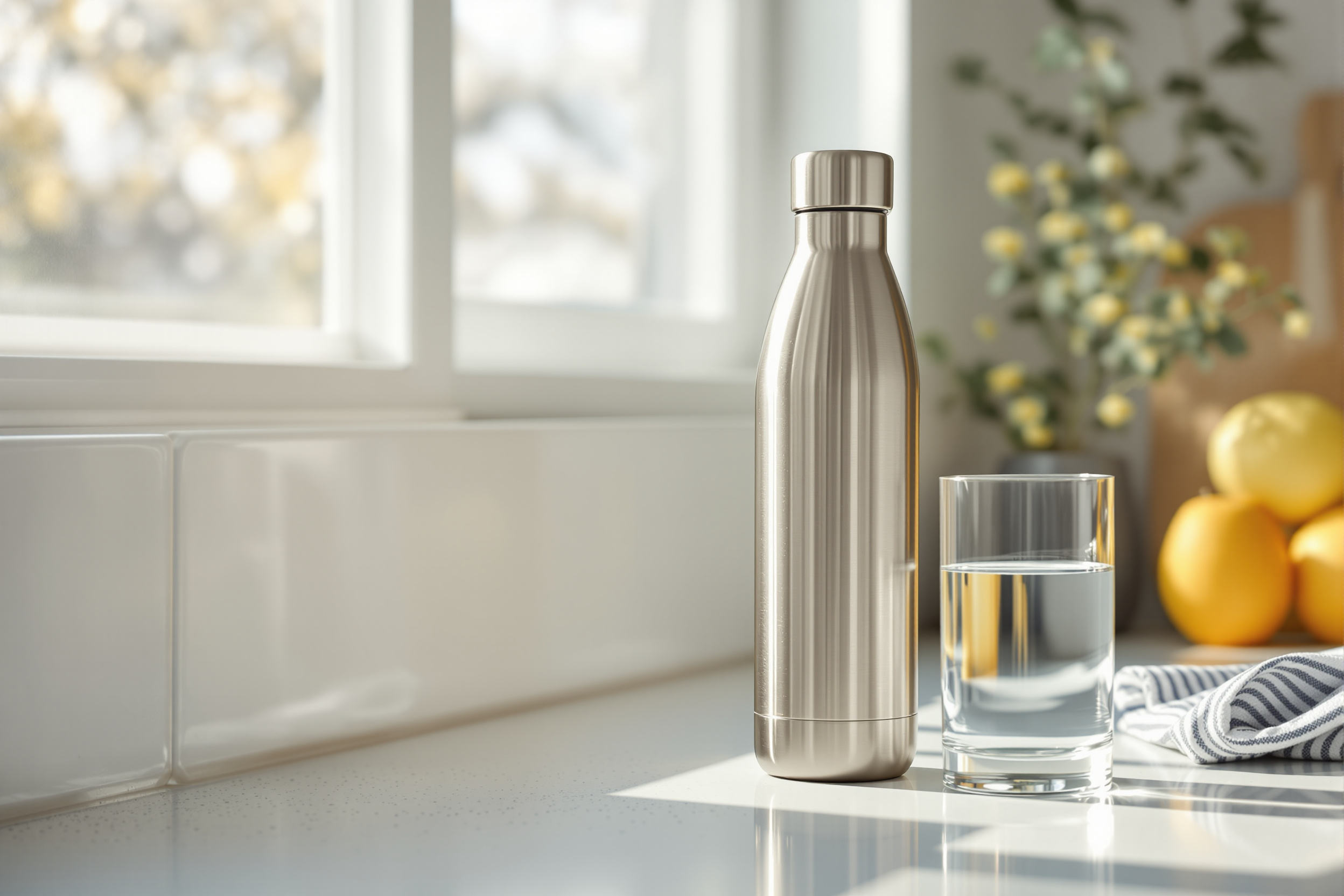
If you're ready to stop reusing disposables, these are the bottles we recommend. Every one uses 18/8 (304) food-grade stainless steel or borosilicate glass — materials that don't shed microplastics, don't leach antimony, and wipe or scrub genuinely clean. They're drawn from our full plastic-free water bottle guide and stainless steel bottle roundup, so each pick is one we already stand behind. If you also want to clean up questionable tap water while you're out, a filtered water bottle pairs a safe body with built-in filtration.
Quick Picks
- Best overall: Klean Kanteen Classic 27oz — 18/8 stainless, bamboo cap option
- Best 100% plastic-free: Pura Sport 22oz Insulated — MADE SAFE certified, medical-grade silicone
- Best insulated: S'well Original 17oz — triple-wall vacuum, keeps cold 36hrs
- Best glass: Lifefactory Glass Bottle 22oz — borosilicate glass, silicone sleeve
- Best for durability: Hydro Flask Standard Mouth 21oz — 18/8 pro-grade stainless, powder coat
- Best for travel: JOCO Glass Flask 20oz — borosilicate glass, natural wood lid, matte colorways
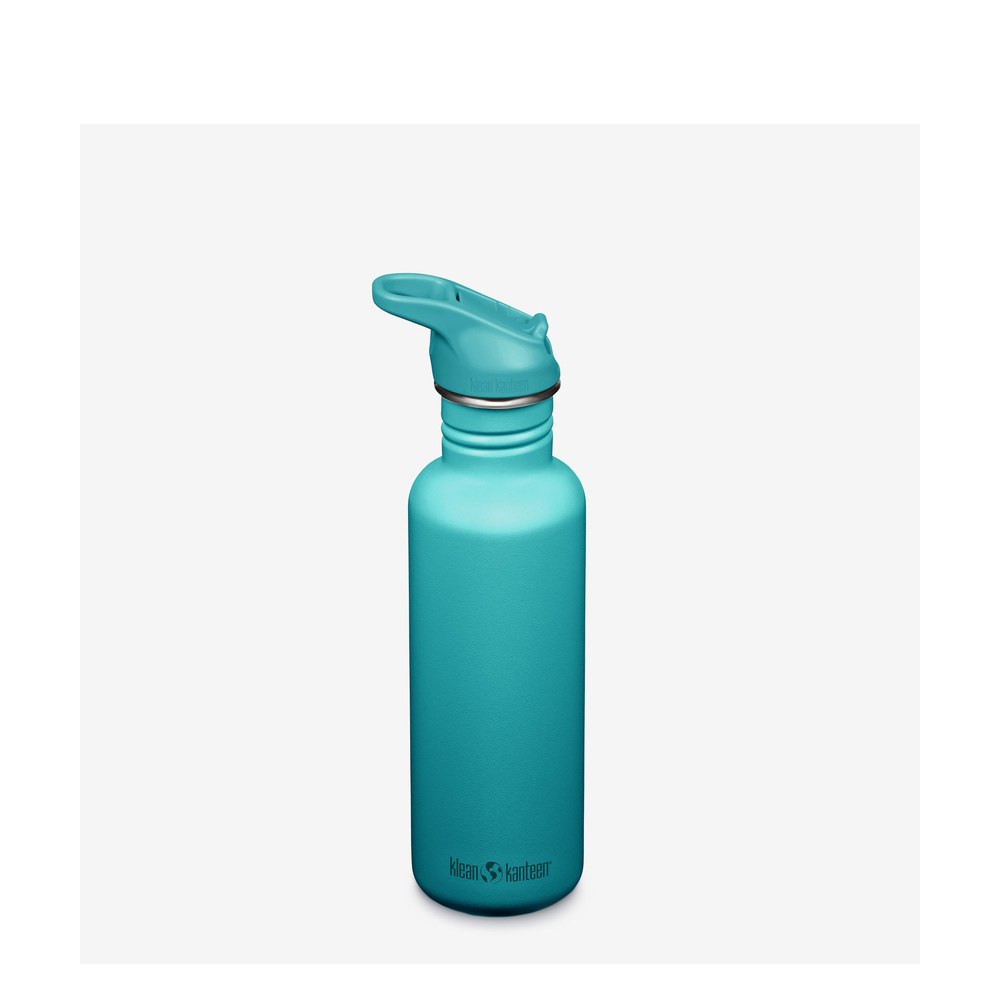
1. Klean Kanteen Classic 27oz
 Best Overall
The benchmark for plastic-free hydration. Made from 18/8 food-grade stainless steel with a single-wall construction — the interior is nothing but bare metal. Available with a bamboo cap (all-natural closure) or stainless steel cap, eliminating plastic from the lid as well. No liner, no coating, no plastic contact surface. Klean Kanteen's 18/8 steel is confirmed food-safe and sourced from certified manufacturers. The Classic is non-insulated, making it the lightest and most economical option. For cold beverages, pair with ice; for the insulated version, see the Klean Kanteen TKWide. Our top overall recommendation for its simplicity, transparency, and price.
The cleanest baseline on the list — bare 18/8 stainless inside and a plastic-free bamboo cap option, at the lowest price of any pick here.
Why it's safe: The only thing your water touches is 18/8 food-grade stainless steel — no plastic liner, no coating, and no microplastic shedding, even when refilled daily for years.
Check Today’s Price on Amazon →Amazon prices change daily — tap to see today's price and any active discount.
- Free delivery & returns for Prime members
- Sold & shipped by Amazon
- Thousands of verified reviews
2. Pura Sport 22oz Insulated
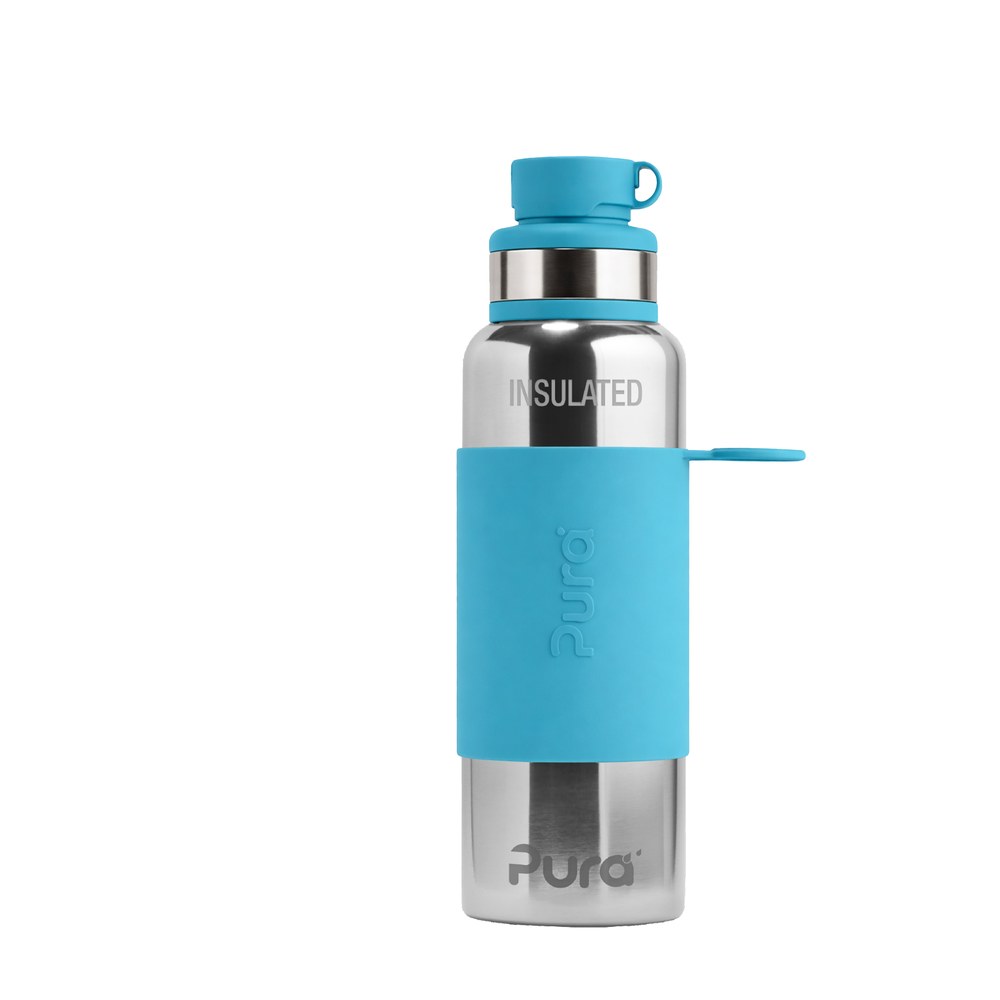 Best 100% Plastic-Free
The most comprehensively plastic-free bottle on this list. Pura holds MADE SAFE certification — a rigorous third-party standard that screens for thousands of harmful chemicals. The bottle body is 18/8 food-grade stainless steel. Where other bottles use plastic, Pura uses medical-grade silicone: the sport cap, sleeve, and sealing components are all silicone, not plastic. Silicone is inert, does not shed microplastic particles, and is not associated with endocrine disruption at physiological temperatures. Double-wall vacuum insulation keeps beverages cold for up to 24 hours. The best choice for those who want the most rigorous plastic-free standard available.
The only MADE SAFE–certified pick — even the cap and sleeve are medical-grade silicone, so there is no plastic anywhere on the bottle.
Why it's safe: Water touches only 18/8 stainless and inert medical-grade silicone — no plastic, no BPA/BPS, and nothing that sheds microplastic particles into your drink.
Check Today’s Price on Amazon →Amazon prices change daily — tap to see today's price and any active discount.
- Free delivery & returns for Prime members
- Sold & shipped by Amazon
- Thousands of verified reviews
3. S'well Original 17oz
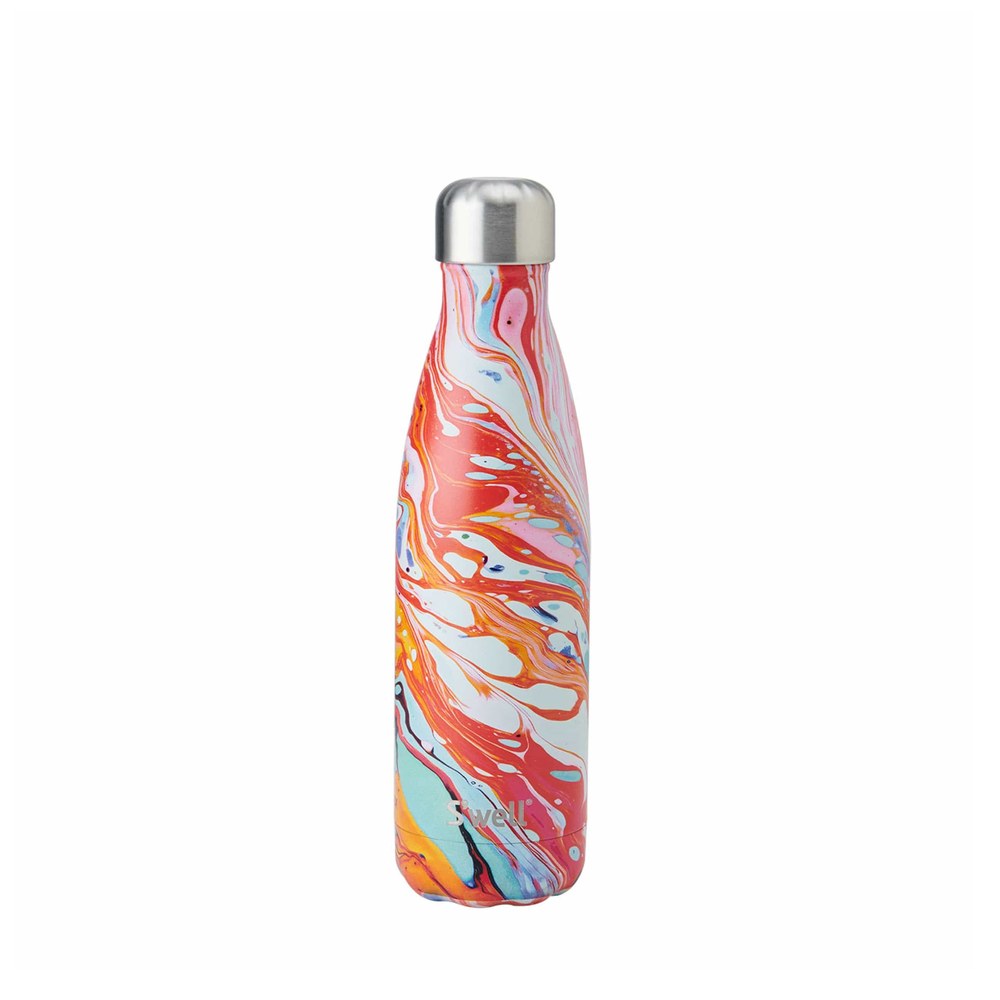 Best Insulated
The best insulated option for keeping water cold throughout a full day. S'well's triple-wall vacuum insulation (a proprietary "Therma-S'well" technology) keeps beverages cold for up to 36 hours and hot for up to 18 — exceptional thermal performance among bottles in this class. The interior is 18/8 food-grade stainless steel with no liner or coating. The exterior is finished with a non-toxic powder coat. The stainless steel lid contains a silicone seal gasket — the only polymer component. Wide range of finishes and designs. The narrower mouth profile makes it easier to drink from than wide-mouth competitors. An excellent daily carry bottle for those prioritizing insulation performance.
Triple-wall vacuum keeps water cold for up to 36 hours — fill it with ice in the morning and it's still cold after a long day out.
Why it's safe: The interior is bare 18/8 stainless with no liner or coating, so nothing leaches or sheds — the only polymer is a silicone gasket in the lid, away from your water.
Check Today’s Price on Amazon →Amazon prices change daily — tap to see today's price and any active discount.
- Free delivery & returns for Prime members
- Sold & shipped by Amazon
- Thousands of verified reviews
4. Lifefactory Glass Bottle 22oz
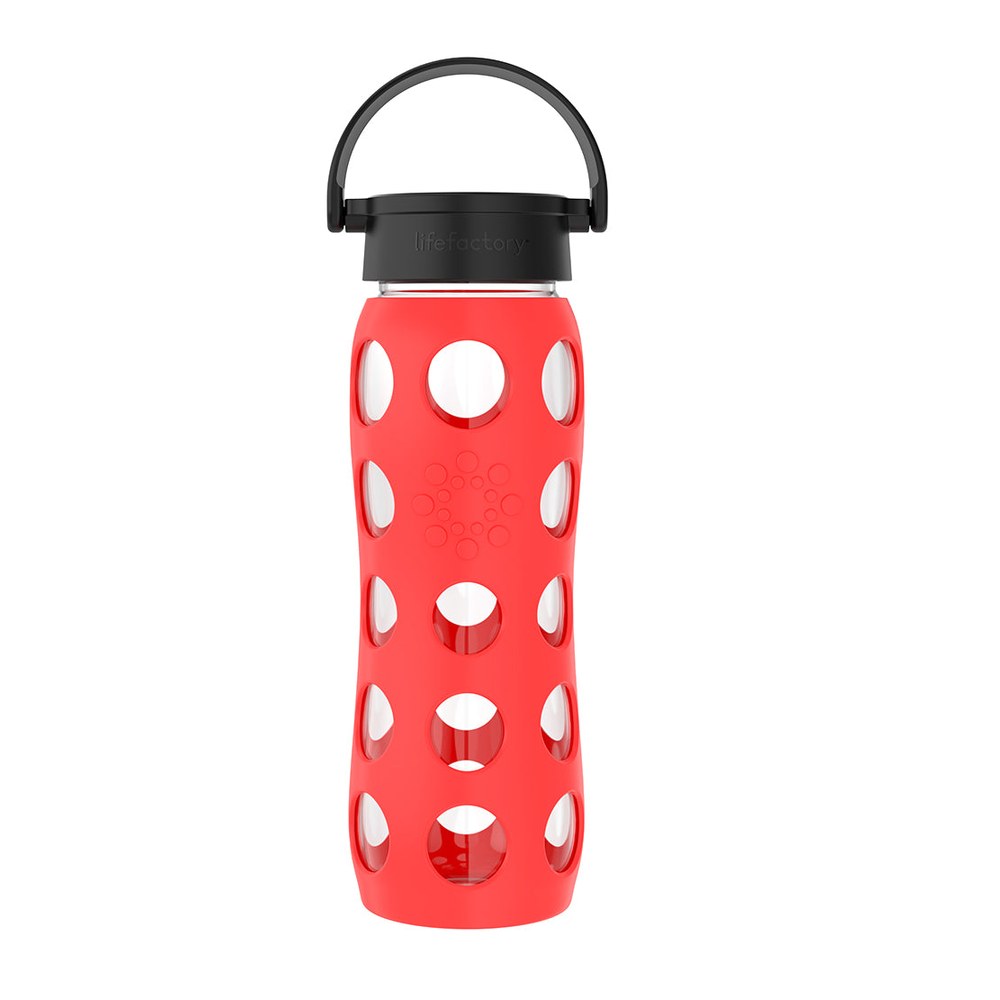 Best Glass
The best glass option for daily use. Made from borosilicate glass — the same material used in laboratory glassware — which is thermally stable, chemically inert, and completely free of BPA, BPS, and any polymer contact with your water. Borosilicate glass will not impart any taste or odor to water, making it the gold standard for flavor purity. The protective silicone sleeve provides grip and protects against shattering from minor drops. Available with a flat cap or flip cap; the cap contains a small polypropylene component — the only plastic in the system, located at the exterior closure rather than the water-contact surface. Dishwasher-safe. The best choice for home and desk use where durability demands are lower.
Glass-pure water with no metallic note — the silicone sleeve gives you grip and drop protection without putting any plastic near your drink.
Why it's safe: Borosilicate glass is completely inert — it never leaches, never sheds microplastics, and imparts no taste. The only plastic is a small cap component at the exterior closure, not the water surface.
Check Today’s Price on Amazon →Amazon prices change daily — tap to see today's price and any active discount.
- Free delivery & returns for Prime members
- Sold & shipped by Amazon
- Thousands of verified reviews
5. Hydro Flask Standard Mouth 21oz
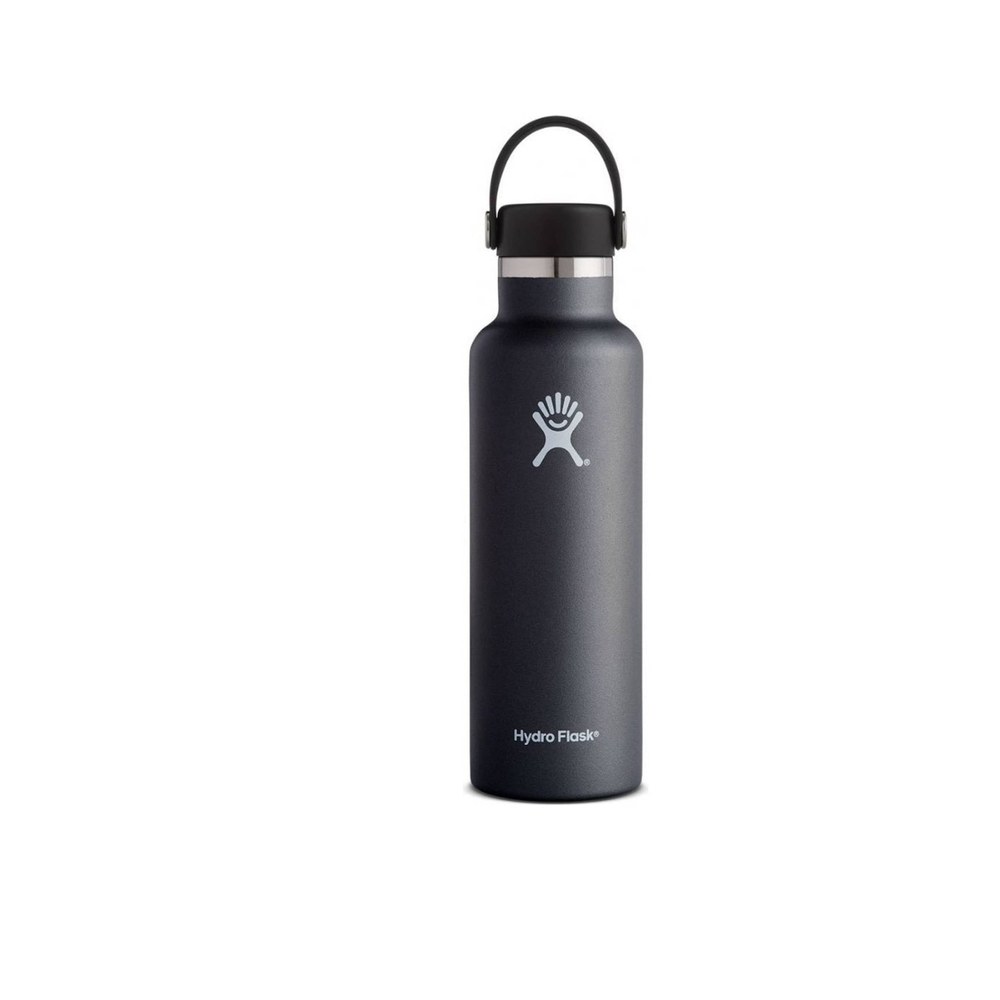 Best for Durability
The most durable stainless steel bottle on this list — built to withstand years of hard use. Hydro Flask uses 18/8 pro-grade stainless steel for the body, with a powder coat exterior that is chip-resistant and holds up well to repeated drops and abrasion. Double-wall vacuum insulation keeps beverages cold for 24 hours and hot for 12. No interior liner or coating — bare stainless steel contact surface only. The Flex Cap includes a small food-grade silicone gasket for leak-proofing. Widely available for in-store purchase, easy to find replacement lids, and backed by a lifetime warranty. The right choice for outdoor use, sports, and anyone who needs a bottle that can take serious abuse.
Take it hiking, drop it, toss it in a pack — pro-grade stainless and a chip-resistant coat shrug it all off, backed by a lifetime warranty.
Why it's safe: The interior is bare 18/8 pro-grade stainless with no liner or coating — nothing to scratch through, leach, or shed, even after years of rough daily use.
Check Today’s Price on Amazon →Amazon prices change daily — tap to see today's price and any active discount.
- Free delivery & returns for Prime members
- Sold & shipped by Amazon
- Thousands of verified reviews
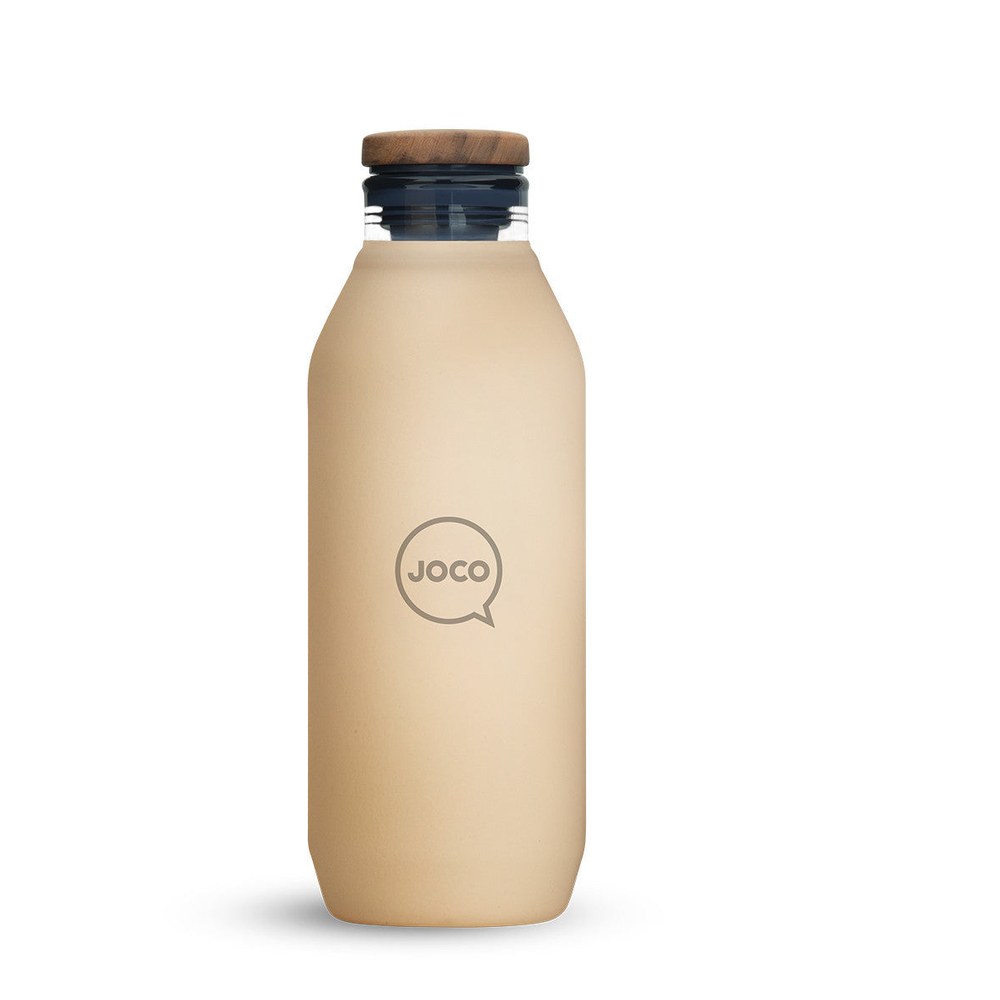
6. JOCO Glass Flask 20oz
 Best for Travel
The best glass bottle for travel and everyday carry. JOCO's Flask uses borosilicate glass construction with a removable velvet-touch silicone sleeve for grip and impact protection, topped with a natural olive-wood lid. The lid seals securely for leak resistance during transit. JOCO's matte colorways make it distinctive and easy to identify in a bag. Like all borosilicate glass, the Flask is completely chemically inert — no leaching, no taste transfer, absolute flavor purity. The 20oz capacity is practical for most daily needs without being unwieldy. A strong choice for those who want the purity of glass in a format designed for commuting and travel.
Glass-pure water you can actually carry — the velvet-grip sleeve resists drops and the natural wood lid seals it for your bag or backpack.
Why it's safe: Your water touches only inert borosilicate glass — no plastic, no leaching, no taste transfer — while the silicone sleeve and wood lid keep plastic off the bottle entirely.
Check Today’s Price on Amazon →Amazon prices change daily — tap to see today's price and any active discount.
- Free delivery & returns for Prime members
- Sold & shipped by Amazon
- Thousands of verified reviews
Comparison Table
| Product | Material | Insulated | Plastic-Free Rating | Price |
|---|---|---|---|---|
| Klean Kanteen Classic 27oz | 18/8 Stainless | No (single-wall) | Excellent (bamboo cap) | $ |
| Pura Sport 22oz | 18/8 Stainless + Silicone | Yes (double-wall) | Best (MADE SAFE) | $$ |
| S'well Original 17oz | 18/8 Stainless | Yes (triple-wall) | Excellent | $$ |
| Lifefactory Glass 22oz | Borosilicate Glass | No | Excellent | $ |
| Hydro Flask Standard 21oz | 18/8 Pro-Grade Stainless | Yes (double-wall) | Excellent | $$ |
| JOCO Glass Flask 20oz | Borosilicate Glass | No | Excellent | $$ |
Price guide: $ budget · $$ mid-range · $$$ premium. Tap any pick above for today's exact Amazon price.
What to Avoid When You Switch
If you're replacing a reused disposable bottle, don't trade it for one of these — they reintroduce the same problems you're trying to escape.
Avoid Keeping any plastic bottle in rotation — including BPA-free
There is no safe plastic for long-term water contact, and "BPA-free" doesn't fix it — disposable PET never contained BPA in the first place, and harder BPA-free plastics simply swap in BPS and BPF, chemicals with similar endocrine-disrupting profiles. All plastic bottles shed microplastic particles regardless of their chemical composition. This includes Tritan plastic (marketed as "BPA-free and BPS-free") — Tritan is still a polymer that sheds nanoplastic particles and contains proprietary additives that have not been comprehensively studied at the nanoplastic exposure level.
Avoid Aluminum bottles with plastic liners
Pure aluminum is reactive with many liquids and cannot be used uncoated in water bottles. Most "aluminum" water bottles — including many popular sports brands — have an interior plastic lining (often epoxy-based) to prevent corrosion. This liner contacts your water directly. Aluminum bottles are not the same as stainless steel bottles and should not be assumed to be plastic-free. Check explicitly for an interior liner before purchasing.
Avoid Stainless steel bottles with plastic straws or plastic lid inserts
A stainless steel body paired with a plastic straw that contacts your liquid is a partial solution at best. The plastic straw undergoes the same degradation processes as any other plastic — it sheds particles and leaches compounds into the water it contacts. Integrated straw lids are a common feature on popular "stainless" bottles; the straw material matters. Look for stainless steel straws, silicone straws, or no straw at all.
Avoid Tritan plastic bottles
Tritan is a copolyester plastic marketed by Eastman Chemical as BPA-free, BPS-free, and "estrogen-activity free." Independent research has challenged these claims — a 2011 study in Environmental Health Perspectives found that many plastics marketed as estrogen-activity-free, including some Tritan products, showed estrogenic activity in cell-based assays. Regardless of where one lands on that specific debate, Tritan is still a plastic polymer that sheds nanoplastic particles. It is not an acceptable substitute for stainless steel or glass.
Want the Full Room-by-Room Protection Guide?
The Complete Plasticproof Guide covers every room in your home — kitchen, nursery, bathroom, bedroom — with the full research and complete swap list. 47+ peer-reviewed studies, 80+ product recommendations.
Frequently Asked Questions
Reusing a disposable PET (#1 plastic) water bottle once or twice in a pinch is low-risk, but repeated long-term reuse is not recommended. Disposable bottles are designed for a single use. With each refill — and especially with heat, sunlight, scrubbing, and wear — the PET sheds more microplastic and nanoplastic particles and can leach trace antimony. Scratches and threads also trap bacteria that are hard to clean. For daily hydration, switch to an 18/8 stainless steel or borosilicate glass bottle made to be refilled for years. Our safest water bottle brands comparison ranks Owala, Stanley, Hydro Flask, and Klean Kanteen by how much plastic actually touches your water.
PET plastic is manufactured using antimony trioxide as a catalyst, and small amounts of antimony can migrate from the bottle into the water. Peer-reviewed studies show antimony migration rises sharply with temperature and storage time — a bottle left in a hot car or in sunlight leaches far more than a cool, freshly filled one. Levels in a single fresh bottle are typically below drinking-water limits, but repeatedly reusing and heat-cycling a disposable bottle increases cumulative exposure. Stainless steel and glass contain no antimony.
Yes. Reused bottles accumulate bacteria from your mouth, hands, and the air, and the warm, moist interior is an ideal growth environment. Disposable plastic bottles are especially problematic because the soft PET scratches easily, and those micro-scratches plus the narrow threads and cap shelter bacteria and biofilm that ordinary rinsing cannot remove. A daily-use bottle should be washed with hot, soapy water every day. Smooth stainless steel and glass surfaces are far easier to clean thoroughly and resist scratching.
Most disposable water bottles are made from PET (#1), which does not contain BPA — BPA is associated with hard polycarbonate (#7) plastics and epoxy can linings, not PET. So "BPA-free" on a single-use bottle is largely meaningless. The real concerns with reusing PET bottles are microplastic shedding, antimony migration, and bacterial growth — none of which BPA-free status addresses. Older hard reusable plastic bottles, by contrast, may contain BPA or its substitutes BPS and BPF, which show similar hormone-disrupting activity in research.
There is no official limit, but disposable PET bottles are intended for a single use, and the practical answer is: as few times as possible. If you must reuse one, keep it to a day or two, store it cool and out of sunlight, never put hot liquid in it, and discard it once it looks cloudy, scratched, or smells off. For anything beyond an emergency, a refillable 18/8 stainless steel or borosilicate glass bottle is the safe, durable, and ultimately cheaper choice.
More questions buyers ask
Non Toxic Water Bottle: what should I actually look for?
"Non-toxic" only means something if you can name the material. The 32 oz Wide Mouth Insulated Water Bottle is made from Stainless Steel, Silicone, so there is no coating or soft plastic that can break down into your food. Every pick above is chosen the same way.
Water Bottle Without Plastic: what should I actually look for?
Every water bottle listed here is made without plastic in the parts that touch your food or water — Stainless Steel, Silicone, Glass instead. Start with the 32 oz Wide Mouth Insulated Water Bottle if you want one answer.
Stainless Steel Vs Glass Water Bottle: what should I actually look for?
"Non-toxic" only means something if you can name the material. The 32 oz Wide Mouth Insulated Water Bottle is made from Stainless Steel, Silicone, so there is no coating or soft plastic that can break down into your food. Every pick above is chosen the same way.
Water Bottle Without Microplastics: what should I actually look for?
Plastic sheds particles as it is heated, scrubbed and aged — it does not have to look damaged to do it. The water bottles on this page are made from Stainless Steel, Silicone, Glass, none of which shed plastic as they wear. The 32 oz Wide Mouth Insulated Water Bottle is the pick we would buy first.
Stainless Steel Vs Plastic Water Bottle: what should I actually look for?
"Non-toxic" only means something if you can name the material. The 32 oz Wide Mouth Insulated Water Bottle is made from Stainless Steel, Silicone, so there is no coating or soft plastic that can break down into your food. Every pick above is chosen the same way.
Water Bottle Microplastics: what should I actually look for?
Plastic sheds particles as it is heated, scrubbed and aged — it does not have to look damaged to do it. The water bottles on this page are made from Stainless Steel, Silicone, Glass, none of which shed plastic as they wear. The 32 oz Wide Mouth Insulated Water Bottle is the pick we would buy first.
Glass Vs Plastic Water Bottle: what should I actually look for?
"Non-toxic" only means something if you can name the material. The 32 oz Wide Mouth Insulated Water Bottle is made from Stainless Steel, Silicone, so there is no coating or soft plastic that can break down into your food. Every pick above is chosen the same way.
Water Bottle Without Lead: what should I actually look for?
Every water bottle listed here is made without plastic in the parts that touch your food or water — Stainless Steel, Silicone, Glass instead. Start with the 32 oz Wide Mouth Insulated Water Bottle if you want one answer.
Sources
- Qian N, et al. "Rapid single-particle chemical imaging of nanoplastics by SRS microscopy." Proceedings of the National Academy of Sciences, 2024. (Columbia University / Rutgers University nanoplastics study — 240,000 nanoplastic particles per liter in bottled water.)
- Westerhoff P, et al. "Antimony leaching from polyethylene terephthalate (PET) plastic used for bottled drinking water." Water Research, 2008. (Antimony migration from PET rises with temperature and storage time.)
- Shotyk W, Krachler M. "Contamination of bottled waters with antimony leaching from PET increases upon storage." Environmental Science & Technology, 2007.
- Rochester JR, Bolden AL. "Bisphenol S and F: A Systematic Review and Comparison of the Hormonal Activity of Bisphenol A Substitutes." Environmental Health Perspectives, 2015.
- Vom Saal FS, et al. "Plastics, the environment and human health: current consensus and future trends." Philosophical Transactions of the Royal Society B, 2009.
- Yang CZ, et al. "Most Plastic Products Release Estrogenic Chemicals: A Potential Health Problem That Can Be Solved." Environmental Health Perspectives, 2011. (Includes analysis of Tritan plastic.)
- Vethaak AD, Legler J. "Microplastics and human health." Science, 2021. doi:10.1126/science.abe5041.
- Boor BE, et al. "Phthalate migration from flexible PVC consumer products." Environmental Science & Technology, 2015.
Protect Every Room in Your Home
From the kitchen to the nursery — the Complete Plasticproof Guide covers every swap that matters, backed by 47+ studies and 80+ product recommendations.