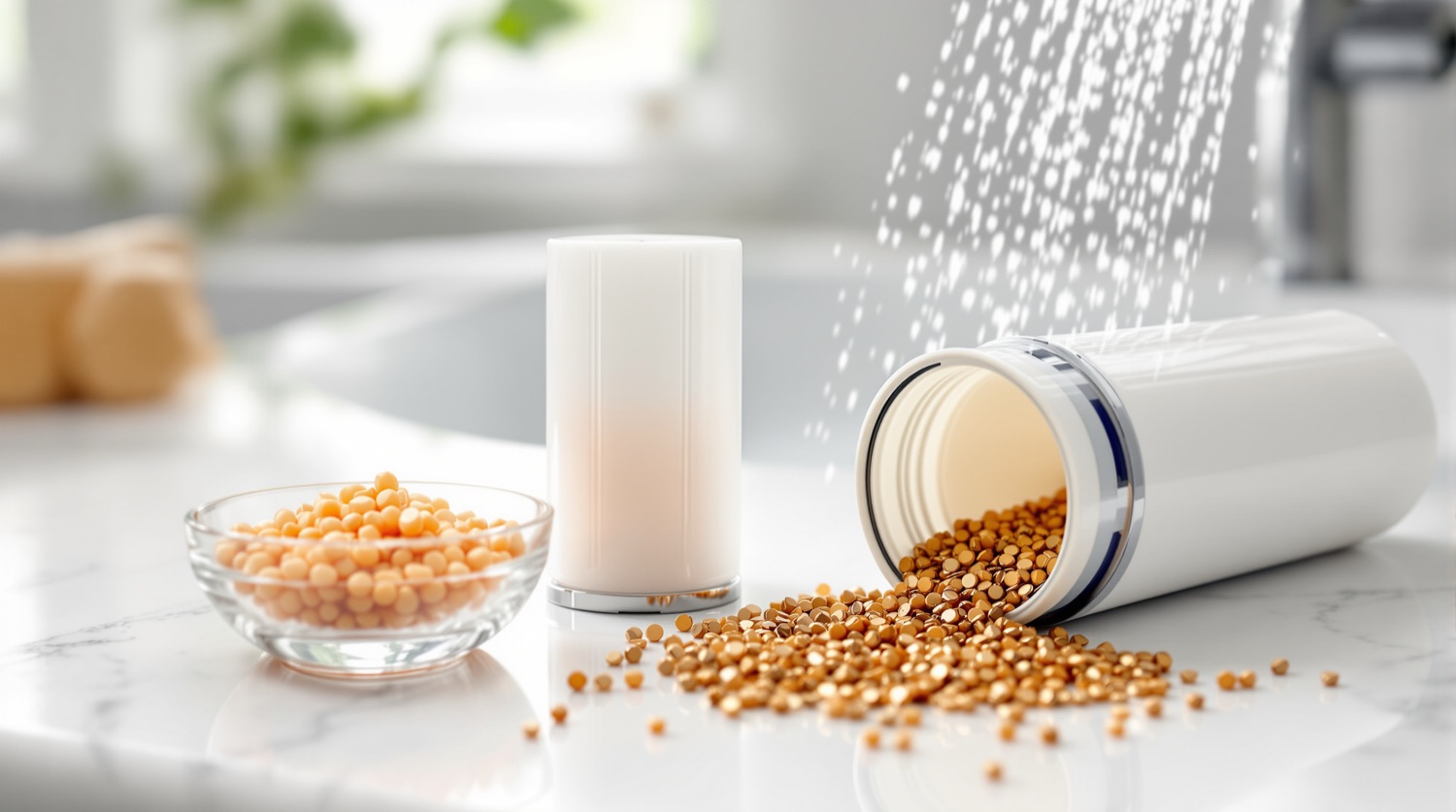
Shower filters are sold almost entirely on skin and hair claims, and the two media you will see on nearly every box — vitamin C and KDF-55 — are marketed as if they did the same job. They do not. They remove chlorine by different chemistry, they behave differently in hot water, they wear out on very different schedules, and only one of them has a real answer for chloramine, the longer-lasting disinfectant a growing share of U.S. utilities now use. Pick the wrong one for your city and you are paying for a cartridge that does little to the water you actually have.
This comparison uses four primary sources: the USDA Forest Service’s 2005 tech tip on vitamin C dechlorination, KDF’s own published hot-water lab results, the test conditions of NSF/ANSI 177 (the only American National Standard for shower filters), and EPA’s data on chloramine use. Where nobody has measured something, we say so.
Bottom line: Find out which disinfectant your utility uses first — it is printed in the annual water quality report. Free chlorine: buy a KDF-55 filter that appears in NSF’s own NSF/ANSI 177 database, such as the Jolie. Chloramine: buy a vitamin C filter such as the Sonaki VitaPure inline, and budget for a new cartridge every one to two months. Neither type removes microplastics; that job belongs to the filter on your drinking water.
Is a Vitamin C or KDF Shower Filter Better?
Neither is better everywhere; each is better for one kind of tap water. KDF-55 is the stronger, longer-lasting choice against free chlorine in hot water. Vitamin C is the only common shower media that chemically neutralizes chloramine, the disinfectant EPA says “more than one in five Americans” now receives, but it is used up quickly.
The difference comes from how each one works. KDF-55 is a granular copper-zinc alloy: as water flows over it, an oxidation-reduction reaction converts free chlorine into chloride, the harmless ion in table salt. The media is not consumed quickly, so a cartridge lasts months. Vitamin C (ascorbic acid, or its neutral salt sodium ascorbate) reacts directly with chlorine and chloramine and is used up in the process — every milligram of chlorine it neutralizes costs a fixed amount of vitamin C, which is why the cartridges are small, cheap and short-lived.
Head-to-Head: Vitamin C vs KDF-55
What the primary sources measured or require, side by side. A dash means no published test we could find has measured it.
| Feature | Vitamin C Filter | KDF-55 Filter |
|---|---|---|
| How it works | Ascorbic acid reacts with and neutralizes the disinfectant | Copper-zinc granules convert free chlorine to chloride |
| Free chlorine | About 2.5 parts ascorbic acid per part chlorine; reaction “very fast” (USDA 2005) | 96–100% removed at 103–105°F (KDF lab test) |
| Cooler water (82–84°F) | — no published shower test | 83–91% removed (same KDF lab test) |
| Chloramine | Neutralizes it; the reason utilities and aquarium keepers use it | — not in KDF’s published data; not tested under NSF/ANSI 177 |
| Typical cartridge life | 4–8 weeks, up to 5,000 L (Sonaki listing) | About 90 days (Jolie listing) |
| NSF/ANSI 177 listings | None identified as vitamin C media in NSF’s database | Jolie (KDF-55 + calcium sulfite) is listed |
| Effect on water pH | Ascorbic acid lowers it slightly at high doses; sodium ascorbate is neutral (USDA) | — not reported |
| Removes microplastics | — not designed or tested for it | — not designed or tested for it |
| Best for | Chloraminated city water | Free-chlorine city water, hot showers |
Does Vitamin C Remove Chlorine From Shower Water?
Yes, quickly and in a predictable ratio. The clearest public data comes from the U.S. Forest Service, which had a practical reason to study it: crews need to dechlorinate water from disinfected pipes before it reaches streams. In the 2005 San Dimas Technology and Development Center tech tip Using Vitamin C to Neutralize Chlorine in Water Systems, sanitary engineer Brenda Land reported that “approximately 2.5 parts of ascorbic acid are required for neutralizing 1 part chlorine” and about 2.8 parts of sodium ascorbate. The reaction with ascorbic acid was described as very fast — a useful property in a shower, where water passes through the cartridge in a second or two.
The same document gives a rule of thumb that makes the math easy for a household: 1 gram of ascorbic acid neutralizes 1 mg/L of chlorine in 100 gallons of water. Run a typical shower through it:
- A 10-minute shower at 2.0 gallons per minute is about 20 gallons.
- City water commonly carries 1 to 2 mg/L of disinfectant; CDC notes that levels up to 4 mg/L are considered safe to drink.
- At 2 mg/L, that shower needs roughly 400 mg of vitamin C to neutralize all of it — about one standard supplement tablet’s worth, every shower.
That arithmetic explains the short cartridge life. Sonaki rates its vitamin C cartridges at up to 5,000 liters (about 1,320 gallons, or 66 twenty-gallon showers), which its listing translates to 4 to 8 weeks of use. A household of three showering daily would reach that in about three weeks. The Forest Service also notes vitamin C keeps for at least a year when dry but degrades within a day or two once dissolved, so a cartridge cannot be “topped up” with a homemade solution.
How Well Does KDF-55 Work in Hot Water?
Very well against free chlorine at normal shower temperatures, and measurably worse in cooler water. KDF Fluid Treatment publishes a lab log of a shower filter test submitted by Sprite Industries, run on a filter holding 18 ounces of KDF-55D over more than 5,000 gallons of water dosed with about 2.2–2.4 ppm of free chlorine. At the normal showering temperature of 103–105°F, removal was 96 to 100 percent. When a failed water heater dropped the test water to 82–84°F, removal fell to 83 to 91 percent, and the lab noted that “the percent of chlorine removal is directly related to temperature.”
Two caveats matter. The data is from 1990 and comes from the media maker’s own lab, using a filter submitted by a filter brand — not an independent university study. And it measured free chlorine only. That temperature behavior is the opposite of activated carbon, which loses effectiveness as water gets hotter; it is the reason most shower filters lead with KDF rather than carbon, and why carbon-only shower filters are a poor buy.
Can a KDF Filter Handle Chloramine?
There is no public evidence that it can, and the shower filter standard does not test it. Chloramine is chlorine bonded to ammonia; EPA says utilities add it because it provides “longer-lasting disinfection as the water moves through pipes,” and CDC notes it forms fewer disinfection byproducts than chlorine. The same stability that makes it useful in a water main makes it harder to strip out in the one or two seconds water spends inside a shower filter.
NSF/ANSI 177 was written around free chlorine. As published, its test water is held at 104°F (±4) with 2.0 mg/L free chlorine and less than 0.1 mg/L total chloramines, and a filter passes if it cuts that chlorine by 50 percent. Certified products must even print a disclaimer that the system “has not been evaluated for free available chlorine reduction performance in the presence of chloramines.” So an NSF/ANSI 177 seal on the box tells a chloramine household almost nothing. Vitamin C, by contrast, reacts with chloramine directly, which is why water utilities and aquarium keepers use it as a dechlorinator. One honest limit: neutralizing chloramine releases its ammonia, which vitamin C does not remove.
How Do You Know Which Disinfectant Your City Uses?
Look it up in about two minutes. Every community water system must publish an annual water quality report (the Consumer Confidence Report), and it names the disinfectant — search your utility’s name plus “water quality report.” If the report is unclear, call the utility and ask “do you use chlorine or chloramine?” You can also test at the tap with strips that read both free chlorine and total chlorine: if total chlorine is much higher than free chlorine, most of what is in your water is chloramine.
Choose KDF-55 if:
- Your utility uses free chlorine
- You want one cartridge every few months
- You want an NSF/ANSI 177 listing you can verify
- You take hot showers (KDF works best above 100°F)
Choose vitamin C if:
- Your utility uses chloramine
- You notice a chlorine smell that a KDF filter did not fix
- You are fine replacing a cartridge every 4–8 weeks
- You want a lower up-front cost and do not mind the running cost
Do Either of These Filters Remove Microplastics?
No, and no shower filter we have found publishes microplastic test data. KDF granules and vitamin C both target the disinfectant, not particles, and a shower filter has to pass 1.5 to 2.5 gallons a minute, far too fast for the fine filtration that traps micro-sized plastic. If microplastics are the reason you are shopping, the evidence-backed fix is on the water you drink, not the water you rinse in: our shower filter vs whole-house filter comparison explains where each sits, and does tap water have microplastics covers what is actually in the tap. For a myth-by-myth look at shower filter marketing, see do shower filters work, and for the ranked list across every media type, the best shower filters of 2026. If chlorine taste in your drinking water is the issue, the best water filter for chlorine is the right page.
Is the Certification on the Box Real?
Check it yourself, because the claim and the database do not always agree. On November 16, 2026, NSF’s public NSF/ANSI 177 listing showed 11 products from 7 manufacturers, including the Jolie Filtered Showerhead and the Weddell Duo (WD-100). Sprite’s HO2 Amazon listing states it is “Certified to NSF/ANSI Standard No. 177,” but Sprite did not appear in that database on the day we checked. That does not prove the filter performs badly — it means the certification is not one you can confirm from NSF, so we treat it as unverified.
The Four Worth Buying
Two KDF-based filters that appear in NSF’s own NSF/ANSI 177 database, one vitamin C filter for chloramine cities, and one budget option. Prices move daily, so each button opens today’s price on Amazon.
 Best KDF Filter
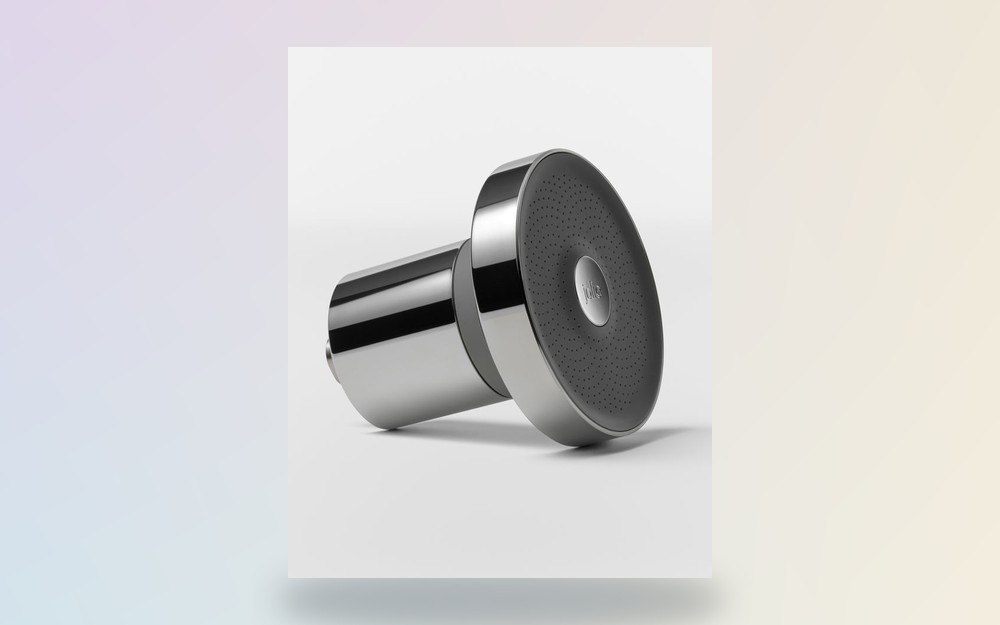
Jolie pairs KDF-55, which does its best work in hot water, with calcium sulfite, a second chlorine-reducing media. It replaces your showerhead rather than hanging off it, which keeps the setup tidy. Jolie advises a new filter every 90 days. Like every NSF/ANSI 177 product, it was tested against free chlorine with almost no chloramine present, so it is the wrong pick for a chloramine city.
Pros
- Listed in NSF’s NSF/ANSI 177 database
- KDF-55 works best at normal shower temperatures
- One cartridge every 90 days
Cons
- Not evaluated for chloramine
- Premium price for a showerhead
- Replaces your existing head rather than adding to it
The verified-certified pick for free-chlorine water.
Why it is the safer choice: Its chlorine-reduction claim is backed by an NSF/ANSI 177 listing you can look up, not just a marketing badge.
Check Today's Price on Amazon →Amazon prices change daily — tap to see today's price and any current discount.
- Free delivery for Prime members
- NSF/ANSI 177 listed
- Easy 30-day returns
 Best Vitamin C Filter
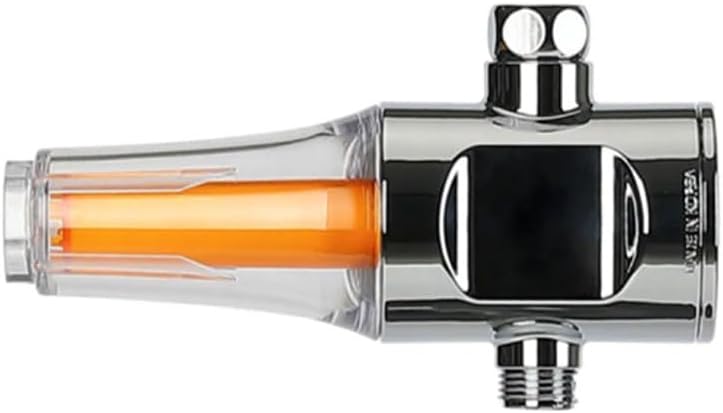
Vitamin C is the media that reacts with chloramine as well as chlorine, so this is the filter that does something for the one in five Americans on chloraminated water. The listing rates each cartridge at up to 5,000 liters; Sonaki’s refill listing describes that as 4 to 8 weeks. Its “99.9%” removal figure is the brand’s own claim, and we could not find an independent test of it, nor an NSF/ANSI 177 listing for any vitamin C cartridge in NSF’s database. The cartridge is visible through the clear housing, which makes it easy to see when the orange media is spent.
Pros
- Neutralizes chloramine, which KDF filters are not tested for
- Keeps your existing showerhead
- Fast reaction suits a shower’s short contact time
Cons
- Cartridges last weeks, so running cost adds up
- No NSF/ANSI 177 listing; removal figure is the brand’s own
- Leaves behind the ammonia from neutralized chloramine
The filter that actually reacts with chloramine.
Why it is the safer choice: In a chloramine city, a KDF filter certified only against free chlorine can leave most of the disinfectant in place; vitamin C neutralizes it.
Check Today's Price on Amazon →Amazon prices change daily — tap to see today's price and any current discount.
- Free delivery for Prime members
- Fits a standard shower arm
- Easy 30-day returns
 Best Add-On Filter
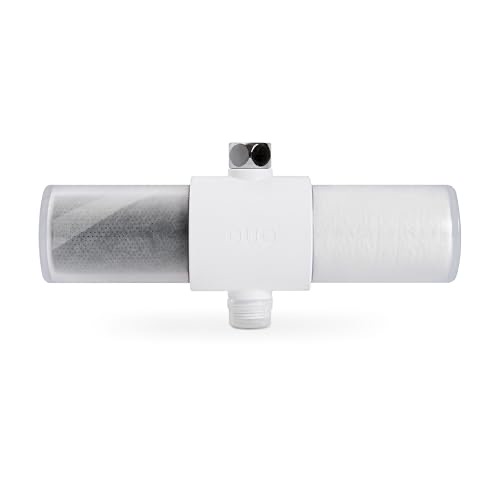
The Weddell Duo (model WD-100) appears in NSF’s NSF/ANSI 177 listing for free chlorine reduction. Its clear dual cartridges let you watch the media and twist them out to replace them without tools. Weddell also advertises PFAS and particulate reduction verified by a separate lab, and its own listing is careful to say that claim is “not part of NSF Certification” — so treat it as the brand’s claim. The listing does not name the filter media, so we do not either.
Pros
- Listed in NSF’s NSF/ANSI 177 database
- Works with the showerhead you already own
- Clear cartridges show when to replace
Cons
- Not evaluated for chloramine
- Filter media not disclosed on the listing
- PFAS claim sits outside the NSF certification
Certified chlorine reduction without replacing your showerhead.
Why it is the safer choice: Its NSF/ANSI 177 listing is verifiable in NSF’s public database on the day you buy.
Check Today's Price on Amazon →Amazon prices change daily — tap to see today's price and any current discount.
- Free delivery for Prime members
- Tool-free install
- Easy 30-day returns
 Budget Pick
Sprite is the brand that submitted the KDF hot-water test described above, and the HO2 uses its own Chlorgon media against free chlorine. Its listing rates the cartridge at 12 months or 25,000 gallons, the longest life of the four. The listing also says it is certified to NSF/ANSI 177, but the filter did not appear in NSF’s database when we checked on November 16, 2026, so we cannot confirm it. It is not a chloramine filter.
Pros
- Lowest price of the four
- Longest-rated cartridge: 12 months or 25,000 gallons
- Extends the head only about 4 inches
Cons
- NSF/ANSI 177 claim not found in NSF’s database
- Proprietary media with no independent test we could find
- Not for chloramine water
A low-cost, long-life filter for free-chlorine water.
Why it is the safer choice: It reduces free chlorine for a year per cartridge at the lowest cost of any filter here.
Check Today's Price on Amazon →Amazon prices change daily — tap to see today's price and any current discount.
- Free delivery for Prime members
- Fits 1/2-inch shower arms
- Easy 30-day returns
Frequently Asked Questions
Is a vitamin C or KDF shower filter better?
It depends on what your utility adds to the water. If your water is treated with free chlorine, a KDF-55 filter is the better buy: a KDF lab test measured 96 to 100 percent chlorine removal at normal shower temperatures, the cartridges last months, and KDF filters such as Jolie are certified to NSF/ANSI 177. If your water is treated with chloramine, which EPA says reaches more than one in five Americans, vitamin C is the media that chemically neutralizes it, though the cartridges wear out in weeks.
Does vitamin C remove chlorine from shower water?
It neutralizes it. A 2005 USDA Forest Service tech tip by sanitary engineer Brenda Land found that about 2.5 parts of ascorbic acid neutralize 1 part chlorine, and that the reaction is very fast. As a rule of thumb, 1 gram of ascorbic acid neutralizes 1 mg/L of chlorine in 100 gallons of water. A 20-gallon shower at 2 mg/L chlorine therefore uses up about 400 mg of vitamin C.
Does a KDF shower filter remove chloramine?
Not reliably, and no public standard tests it. NSF/ANSI 177, the shower filter standard, challenges filters with free chlorine and less than 0.1 mg/L chloramine, and certified filters must state that they have not been evaluated for chlorine reduction in the presence of chloramines. KDF's own published lab data covers free chlorine only. If your water is chloraminated, choose vitamin C media.
How do I know if my water has chlorine or chloramine?
Check your utility's annual water quality report, called the Consumer Confidence Report, or call the utility and ask which disinfectant it uses. You can also test at home with a strip or kit that reads both free chlorine and total chlorine: if total chlorine is much higher than free chlorine, most of the disinfectant is chloramine.
Do KDF or vitamin C shower filters remove microplastics?
Neither is designed to. KDF-55 is a granular copper-zinc media and vitamin C is a chemical neutralizer; both target the disinfectant, not particles. No shower filter we know of has published test data on microplastic removal. For microplastics in water, the evidence-backed tools are reverse osmosis and fine filtration on your drinking water.
How long does a vitamin C shower filter last?
Weeks, not months. Sonaki rates its vitamin C cartridges at up to 5,000 liters, which its refill listing describes as typically 4 to 8 weeks. That short life follows from the chemistry: vitamin C is consumed as it neutralizes chlorine, so a cartridge only holds a fixed number of showers' worth. KDF cartridges are commonly rated for months; Jolie advises replacing its filter every 90 days.
Sources
- Land B. Using Vitamin C to Neutralize Chlorine in Water Systems. Tech Tip 0523-1301-SDTDC. USDA Forest Service, San Dimas Technology and Development Center; April 2005. fs.usda.gov
- U.S. Environmental Protection Agency. Chloramines in Drinking Water. Updated March 12, 2026. epa.gov
- Centers for Disease Control and Prevention. About Water Disinfection with Chlorine and Chloramine. cdc.gov
- NSF International. Certified product listings, NSF/ANSI 177 (Shower Filtration Systems — Aesthetic Effects). Accessed November 16, 2026. info.nsf.org
- NSF/ANSI Standard 177: A Level Playing Field for Shower Filter Claims. Plumbing & Mechanical, June 1, 2005 (test water conditions and pass criterion). pmmag.com
- KDF Fluid Treatment / Kymera International. Lab Results: Free Chlorine Reduction in Hot Water Using KDF Media (test submitted by Sprite Industries, 1990). kdf.kymerainternational.com