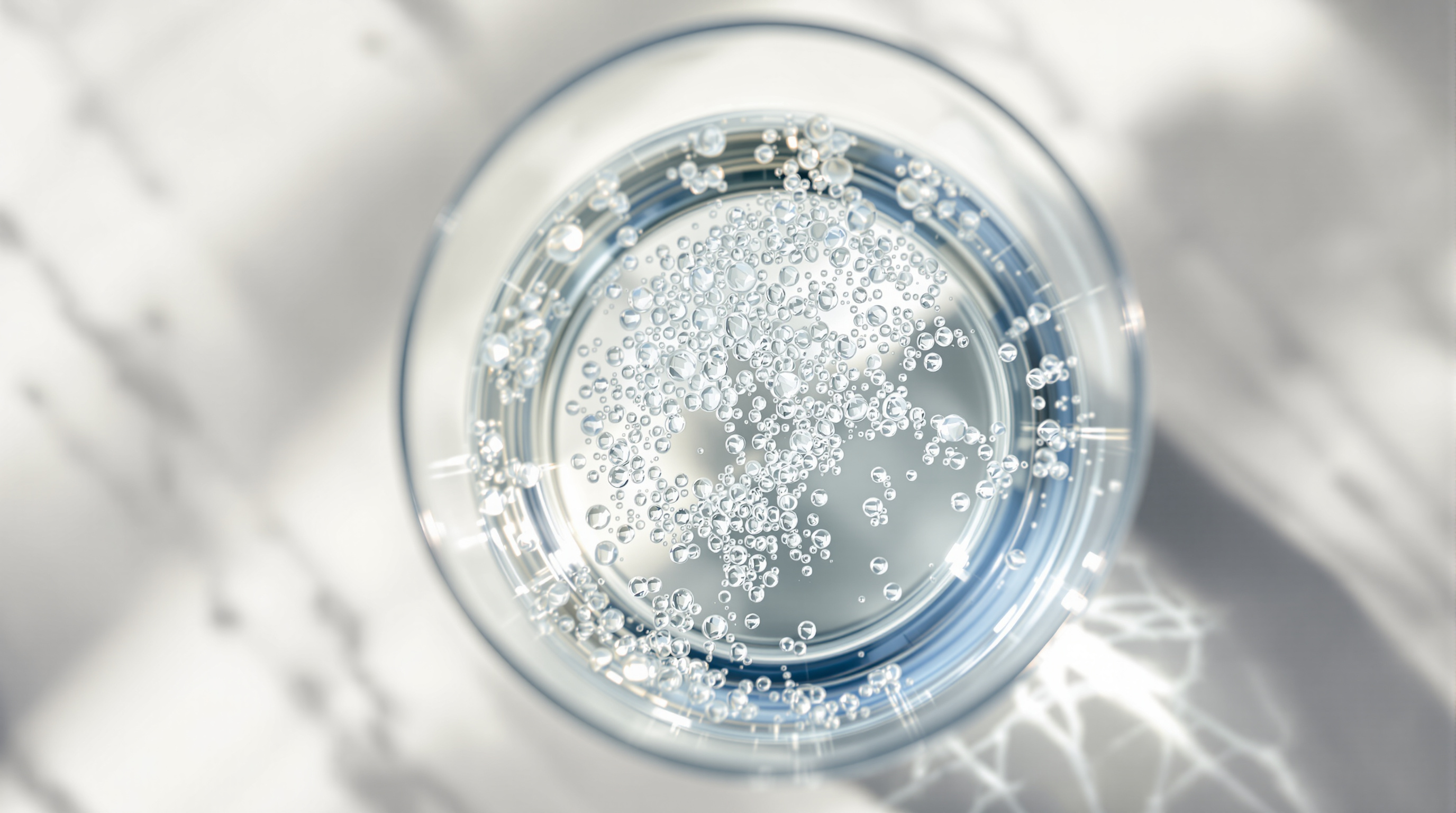
Yes — all major brands of bottled water contain microplastics and nanoplastics. A landmark 2024 PNAS study found an average of ~240,000 nanoplastic particles per liter across three leading US brands, up to 100× more than older estimates. The particles come primarily from the plastic bottle itself, the cap, and the bottling process. Tap water also contains microplastics, but at significantly lower concentrations. The safest practical swap is filtered tap water in a reusable stainless steel or glass bottle.
For decades, bottled water was marketed as the pure, clean alternative to tap water — water from untouched mountain springs, filtered to perfection, sealed for freshness. The irony is that the container itself has been quietly contaminating the contents all along.
The evidence has been accumulating since at least 2018, when an investigation by Orb Media and State University of New York at Fredonia tested 259 bottles from 11 brands across nine countries and found microplastic contamination in 93% of them. At the time, the counts ran into the hundreds of particles per liter. That already sounded alarming — but the 2024 PNAS study revealed those early measurements had been missing the smallest particles by several orders of magnitude.
How many microplastics are actually in a bottle of water?
The number depends almost entirely on how you look for them. Older studies using light microscopy could only detect particles larger than about 1 micrometer, and they found counts in the hundreds to low thousands per liter. A 2019 study published in Frontiers in Chemistry found a mean of 325 microplastic particles per liter across popular brands — which was alarming enough at the time.
Then in January 2024, Qian Naixin and colleagues at Columbia University published a study in the Proceedings of the National Academy of Sciences using stimulated Raman scattering (SRS) microscopy, a laser-based technique capable of detecting and chemically identifying plastic particles down to 100 nanometers in size. When they applied this method to three widely available US bottled water brands, they found an average of approximately 240,000 particles per liter — with the vast majority (about 90%) being nanoplastics invisible to conventional microscopes.
The key takeaway isn’t just that the number is larger. It’s that the particles we’ve been failing to see for years are the ones most likely to cross biological barriers. Nanoplastic particles — under 1 micrometer — can potentially pass through the gut wall, enter the bloodstream, and accumulate in organs. Microplastics above 150 micrometers are too large to cross most membranes and are mostly excreted. The 2024 study essentially revealed that the contamination problem is not only worse than we thought — it’s dominated by the most biologically active size fraction.
Where do the microplastics in bottled water come from?
The bottle itself is the primary culprit. Most single-use water bottles are made from polyethylene terephthalate (PET), a plastic that sheds particles during manufacturing, during filling, during shipping (especially temperature fluctuations), and during use. Every squeeze, every drop from height, every round of sitting in a hot car accelerates the shedding of particles from the inner surface.
The cap is the second major source. Plastic caps are typically made from polypropylene (PP) or high-density polyethylene (HDPE). The repeated twisting action of opening and closing a cap is one of the most mechanically abrasive things you do to a plastic container — and research on cap-derived microplastics has shown it can shed hundreds of particles per opening cycle. A 2021 study on plastic water bottles found that the act of opening the cap alone was one of the highest-shedding events for the entire container.
A third, often-overlooked source is the bottling process itself: the conveyor belts, filling nozzles, and plastic tubing that water passes through on its way into the bottle can contribute particles that are present before the cap is ever twisted.
PET bottles release significantly more microplastic particles when warm. Bottles left in a hot car, stored in direct sunlight, or shipped long distances in summer conditions can shed up to 4× more particles than the same bottle stored cool. Buying cold bottled water at a store isn’t a guarantee of lower exposure — the bottle may have been warm for days or weeks during distribution.
Is bottled water worse than tap water for microplastics?
For microplastics specifically, yes — bottled water is generally worse than tap water. Tap water contains microplastics from the environment: atmospheric deposition, aging pipe infrastructure, and treatment processes that don’t fully remove particles. Studies on tap water from across the US, Europe, and Asia typically find counts in the range of several hundred to a few thousand particles per liter using conventional microscopy. Some studies find tap water is as low as 50 particles per liter in well-maintained systems; others find spikes near aging infrastructure.
But the PNAS 2024 study found ~240,000 nanoplastics per liter in bottled water. Even accounting for the better detection method, bottled water appears to contain roughly 10–100 times more plastic particles than typical tap water from the same era.
That said, comparing tap to bottled solely on microplastics misses the full picture. Tap water can contain other contaminants — lead from old service lines, chlorine disinfection byproducts like trihalomethanes (THMs), PFAS (“forever chemicals”) from industrial contamination, and occasionally agricultural runoff. The right comparison isn’t “bottled vs. unfiltered tap” but “bottled vs. properly filtered tap.” A reverse osmosis filter removes virtually all microplastics from tap water and also strips out PFAS, lead, and most other common contaminants — giving you water that is cleaner than bottled on every dimension, at a fraction of the cost per gallon.
| Water Source | Typical Microplastic Count | Other Key Contaminants | Cost per Gallon |
|---|---|---|---|
| Bottled water (PET) | ~240,000 nanoplastics/L (PNAS 2024) | Generally low (varies by source) | $1–$5 |
| Unfiltered tap | Hundreds–thousands/L (older methods) | Lead, THMs, PFAS (location-dependent) | <$0.01 |
| Tap + carbon pitcher | Reduced but not eliminated | Chlorine taste reduced; PFAS/lead not reliably removed | ~$0.05 |
| Tap + reverse osmosis | Near zero (>99% removal) | PFAS, lead, nitrates, THMs all removed | ~$0.10–$0.25 |
Are some bottled water brands lower in microplastics?
No brand has been able to credibly claim to be microplastic-free. The Orb Media and SUNY Fredonia studies found contamination across Aquafina, Dasani, Evian, Nestlé Pure Life, San Pellegrino, Gerolsteiner, and others. Glass-bottled water has substantially fewer plastic-derived particles because the container is inert, but even glass-bottled water passes through plastic caps and plastic-lined processing equipment and picks up some particles along the way.
Aluminum cans are also a relevant consideration: water canned in aluminum (like several sparkling water brands) contacts a thin plastic liner on the inside of the can, and a 2021 study found this liner can contribute microplastics. So switching to canned water doesn’t fully solve the problem either.
The only reliable way to dramatically reduce plastic particle intake from drinking water is to eliminate single-use plastic containers entirely and filter your tap water at home — then carry it in a reusable stainless steel or glass bottle.
“The container is the contamination. The water didn’t come with 240,000 particles per liter from the mountain spring — it picked them up from the bottle on the way to you.”
What are the health effects of nanoplastics in bottled water?
This is the frontier of the science, and we don’t have definitive causal evidence in humans yet — but the early findings are worrying enough to justify reducing exposure now, before that evidence fully accumulates.
In March 2024, a study in the New England Journal of Medicine (Marfella et al.) analyzed carotid artery plaques surgically removed from 257 patients and found that those with detectable microplastics and nanoplastics in their plaques had a 4.5× higher risk of heart attack, stroke, or death over 34 months of follow-up. This was a prospective observational study — it doesn’t prove that the microplastics caused the heart events, but the association was strong even after controlling for traditional cardiovascular risk factors.
Animal and cell studies have shown that nanoplastic particles can trigger inflammatory responses, disrupt cellular membranes, act as vehicles for carrying persistent organic pollutants and endocrine-disrupting additives into cells, and accumulate in the liver, kidneys, and testes. A growing body of evidence suggests the particles themselves — not just the chemicals they carry — may cause physical irritation to biological membranes at concentrations plausible in human tissue.
The precautionary logic is strong: we have established exposure (240,000 particles per liter of a popular consumer product), plausible biological mechanisms, and now several concerning observational associations. We don’t yet have a randomized controlled trial showing harm from bottled water specifically. But we also don’t need one to make the decision to switch to filtered tap water — which is cheaper and better on every other measurable dimension anyway.
What’s the safest alternative to bottled water?
The best swap is filtered tap water carried in a reusable stainless steel or glass bottle. This eliminates the single-use plastic container entirely and filters out the microplastics (and other contaminants) already in your tap water. Here are the seven products we recommend across three categories — all genuinely distinct from options covered in our other guides.
Reusable Stainless Steel Bottles
Check Price on Amazon →
✓ Ships free with Prime · Free returns · Amazon A-to-z purchase guarantee (on eligible items)
Check Price on Amazon →
✓ Ships free with Prime · Free returns · Amazon A-to-z purchase guarantee (on eligible items)
Check Price on Amazon →
✓ Ships free with Prime · Free returns · Amazon A-to-z purchase guarantee (on eligible items)
Glass Bottles (Zero Plastic Body)
Check Price on Amazon →
✓ Ships free with Prime · Free returns · Amazon A-to-z purchase guarantee (on eligible items)
On-the-Go Filtration (Travel & Outdoor)
Check Price on Amazon →
✓ Ships free with Prime · Free returns · Amazon A-to-z purchase guarantee (on eligible items)
Home Water Filtration
Check Price on Amazon →
✓ Ships free with Prime · Free returns · Amazon A-to-z purchase guarantee (on eligible items)
Check Price on Amazon →
✓ Ships free with Prime · Free returns · Amazon A-to-z purchase guarantee (on eligible items)
Not sure which filter to get?
Our full guide ranks every major filter type — pitchers, under-sink, countertop RO, and shower filters — by verified microplastic removal and cost per gallon. One article, all the options.
The bottom line on bottled water and microplastics
The science is unambiguous on the core question: yes, bottled water contains microplastics and nanoplastics, and the true concentrations are dramatically higher than earlier studies suggested. The 2024 PNAS finding of ~240,000 nanoplastic particles per liter didn’t create a new problem — it revealed the scale of one that was already there.
The good news is that the alternative is straightforward and costs less. Filtered tap water in a reusable stainless steel or glass bottle eliminates nearly all plastic particle exposure from your drinking water, removes the other contaminants in tap water that bottled water sidesteps, costs a few cents per gallon instead of a few dollars, and generates no single-use plastic waste. If you want to test your own tap water for microplastics, there are now consumer-accessible options for that too.
The switch from plastic bottles to filtered tap + stainless bottle is one of the highest-leverage, lowest-friction reductions in daily microplastic exposure available to most people. You’re not giving something up — you’re upgrading.
Want the Full Home Protection Guide?
Drinking water is one of dozens of daily plastic touchpoints. The Complete Plasticproof Guide covers every room — kitchen, nursery, bathroom, bedroom — with 80+ product recommendations backed by 47+ studies.
Frequently Asked Questions
Yes. Multiple independent studies confirm that virtually all commercially bottled water contains microplastic and nanoplastic particles. The 2024 PNAS study found ~240,000 nanoplastic particles per liter across three major US brands — the highest count ever recorded due to new detection technology capable of seeing particles as small as 100 nanometers. Contamination has been found across every major brand tested, including Aquafina, Dasani, Evian, and Nestlé Pure Life.
Older studies using optical microscopy found hundreds to ~3,000 particles per liter. The 2024 PNAS study using stimulated Raman scattering microscopy found ~240,000 nanoplastic particles per liter — about 100× higher because it detected far smaller particles. In a standard 500 mL bottle, that’s roughly 120,000 nanoplastic particles, most of them invisible to the naked eye and to conventional filter testing.
Yes — bottled water has significantly more microplastics than typical municipal tap water. Tap water typically contains hundreds to a few thousand particles per liter. Bottled water’s ~240,000 nanoplastics per liter is 10–100× higher. However, tap water may contain other contaminants (lead, PFAS, chlorine byproducts) that bottled water doesn’t. The best option is filtered tap water from a reverse osmosis system, which beats both on every measure.
No major brand can credibly claim to be microplastic-free. Research has found contamination across Aquafina, Dasani, Evian, Nestlé Pure Life, San Pellegrino, Gerolsteiner, and others. Water in glass bottles contains fewer plastic-derived particles since the container is inert, but still picks up particles from caps and processing equipment. There is no reliably “clean” brand of plastic-bottled water — the safest swap is eliminating the plastic container entirely.
The long-term health effects of ingesting nanoplastics at bottled-water concentrations are still being studied. A 2024 NEJM study found 4.5× higher risk of heart attack and stroke in patients with detectable microplastics in their artery plaques. Animal and cell studies show nanoplastics can trigger inflammation and carry chemical additives across biological membranes. Most researchers recommend reducing exposure where practical — and switching to filtered tap water in a stainless bottle achieves that easily.
Filtered tap water in a reusable stainless steel or glass bottle. A reverse osmosis filter at home removes >99% of microplastics plus PFAS, lead, and other common tap contaminants. Carry that water in a stainless steel bottle (18/8, no plastic lid if possible) to eliminate on-the-go plastic bottle exposure. This combination costs a few cents per gallon and reduces your plastic particle intake from drinking water to near zero.
Sources
- Qian N, et al. “Rapid single-particle chemical imaging of nanoplastics by SRS microscopy.” Proceedings of the National Academy of Sciences, 2024. (The 240,000 nanoplastics/L finding.)
- Marfella R, et al. “Microplastics and Nanoplastics in Atheromas and Cardiovascular Events.” New England Journal of Medicine, 2024. (4.5× elevated cardiovascular risk in patients with plastic in arterial plaques.)
- Mason SA, et al. “Synthetic Polymer Contamination in Bottled Water.” Frontiers in Chemistry, 2018. (First major bottled-water microplastics study; 325 particles/L mean across brands.)
- Schymanski D, et al. “Analysis of microplastics in water by micro-Raman spectroscopy.” Analytical and Bioanalytical Chemistry, 2018. (Multi-brand European bottled water contamination data.)
- Winkler A, et al. “Does mechanical stress cause microplastic release from plastic water bottles?” Journal of Water and Health, 2019. (Cap-derived microplastic shedding; hundreds of particles per opening.)
- Pivokonský M, et al. “Occurrence of microplastics in raw and treated drinking water.” Science of the Total Environment, 2018. (Tap water microplastic baseline comparisons.)
- EPA. “Per- and Polyfluoroalkyl Substances (PFAS) in Drinking Water.” US Environmental Protection Agency, 2024.
- NSF International. “NSF/ANSI 58: Reverse Osmosis Drinking Water Treatment Systems.” (Standards for RO filter certification.)