
How long microplastics stay in your body depends on the particle's size. Most microplastics you swallow are not absorbed — they travel through your gut and leave in your stool within about one to two days, which is why researchers reliably find them in human feces. A smaller fraction, especially nanoplastics, can cross the gut wall into your blood and lodge in tissues such as the liver, kidneys, lungs and placenta, where clearance is slow and no human half-life has yet been measured. So the honest answer is days for most particles and potentially far longer for the smallest ones — kept topped up by continuous everyday exposure. That last part is the key: because the ones you swallow leave quickly, cutting your intake is what actually lowers your long-term body burden.
"How long do microplastics stay in your body" is one of the first questions people ask after they read that these particles have been found in human blood, lungs and even the placenta. It is the right question, because the answer decides whether there is anything useful to do: if everything passed through in a day, there would be little to act on, and if everything lodged forever, nothing would help. The real picture sits between those two, and that in-between is exactly where a few habits make a measurable difference.
This guide follows a microplastic particle from the moment you take it in — through the gut, into the stool, and in some cases across into the blood and organs — grounded in what the research actually measures. It takes the same evidence-first approach as how dangerous are microplastics and microplastics in the human body, and ends with the one lever that reliably brings your burden down.
The short version: big particles leave fast — most swallowed microplastics ride through your digestive tract and exit in your stool within a day or two. Small particles are the question mark: a fraction of nanoplastics cross into the blood and settle in organs, clearing slowly, with no confirmed human half-life. Because you are re-exposed constantly, your body holds a steady background level — and the way to lower it is to cut your intake, not to chase a detox.
How long do microplastics stay in your body?
There is no single number, because "a microplastic" is not one thing. The particles range from visible-ish flakes down to nanoplastics thousands of times smaller than a grain of salt, and size decides their fate. Most of what you swallow is too big to be absorbed, so it leaves in your stool within roughly one to two days, the same pace as the food it rode in on. The small minority that is tiny enough to cross the gut wall is the part that can linger — slipping into blood and settling in organs, where the body clears it slowly and, so far, immeasurably.
That split is the whole answer. For the bulk of your daily intake, the dwell time is short and your digestion does the work. For the fraction that translocates, dwell time is long and poorly defined, and continuous re-exposure keeps a background level present. Understanding each half separately is what turns a scary headline into something you can actually act on.
What happens to microplastics after you swallow them?
By far the most common way particles enter you is by mouth — in water, food and drinks. Once swallowed, the great majority behave like indigestible fiber: they are not broken down and not absorbed, they simply pass through the stomach and intestines and exit in the stool. Normal gut transit runs about 24 to 72 hours, and most microplastics clear within that window. This is why stool is the most reliable place to find them.
A landmark 2019 study analyzed stool samples from healthy volunteers across Europe and Asia and found microplastics in every single sample, up to nine different polymer types per person (Schwabl et al., Annals of Internal Medicine, 2019). That is reassuring and sobering at once: reassuring because it confirms your body is constantly flushing these particles out the far end, sobering because it means intake is constant enough that everyone tested is excreting them. You can read more on what that finding means in microplastics in stool.
Which microplastics cross into your blood and organs?
The particles that can overstay are the smallest ones. Below a few micrometers — and especially at nanoplastic scale — a fraction can pass through the intestinal lining, or be absorbed deep in the lungs after being inhaled, and enter the bloodstream. From there they can be carried to and deposited in tissues. This is no longer theoretical: in 2022 researchers reported detecting and quantifying plastic particles in human blood for the first time, finding them in most of the adults they sampled (Leslie et al., Environment International, 2022).
Since then, microplastics have been reported in a growing list of human tissues — the liver and kidneys, the lungs, the placenta and more. Their presence in these organs is what makes the clearance question real: a particle sitting in liver tissue is not going to pass in tomorrow's stool. How long it stays, and whether it causes harm while it is there, are the open questions — the detection is solid, the long-term effect is still being worked out, as we cover in microplastics in blood.
Do microplastics build up, or do they clear out?
The realistic model is a steady background level, not a one-way accumulation and not a clean sweep to zero. Each day you take in new particles; each day your gut flushes most of them; and a small, slowly-cleared fraction stays behind in tissues. The result is a rough equilibrium that rises or falls with your exposure rather than a tank that only ever fills. A 2021 modeling study of lifetime intake and clearance concluded that body concentrations depend heavily on both how much you take in and how efficiently you excrete and eliminate particles (Mohamed Nor et al., Environmental Science & Technology, 2021).
Two honest caveats come with that model. First, no one has yet established a human half-life for microplastics — we know the smallest particles clear slowly, but not precisely how slowly. The World Health Organization's 2022 review of micro- and nanoplastic exposure reached the same conclusion, confirming the particles are widespread in water, food and air while cautioning that the data are still too limited for a full risk assessment (WHO, 2022). Second, the health consequences of the retained fraction are still being studied; detection has run ahead of the toxicology. What is not in doubt is the direction of control: because the fast-clearing majority dominates your intake, lowering intake lowers the steady-state level over time.
Can you detox microplastics out of your body?
No supplement, cleanse, tea or protocol has been shown to pull microplastics out of tissues where they have lodged, and any product promising to "detox microplastics" is selling you something the science cannot back. The body has no special organ for dissolving plastic; what it does is excrete the particles it was going to excrete anyway, on its normal schedule.
That is not a dead end — it just means the lever is intake, not extraction. Since the particles you swallow mostly leave within days, taking in fewer of them lets your background burden drift down on its own. Supporting your body's ordinary excretion helps too: plenty of dietary fiber and good hydration keep digestion and gut transit moving, which is the route most microplastics take out.
There is no evidence any cleanse, binder or supplement removes microplastics already in your organs. The honest, effective move is the opposite of a detox: reduce how many new particles you take in, and let your body's normal clearance do the rest. Spend on a water filter, not a detox tea.
How do you lower your microplastic body burden?
Because your body already clears the fast-moving majority, the whole game is cutting intake so the steady-state level falls — and supporting the normal excretion that does the clearing. You cannot reach zero, and you do not need to. These are the highest-impact moves, in order, with your water first since drinking water is one of the largest and most controllable sources.
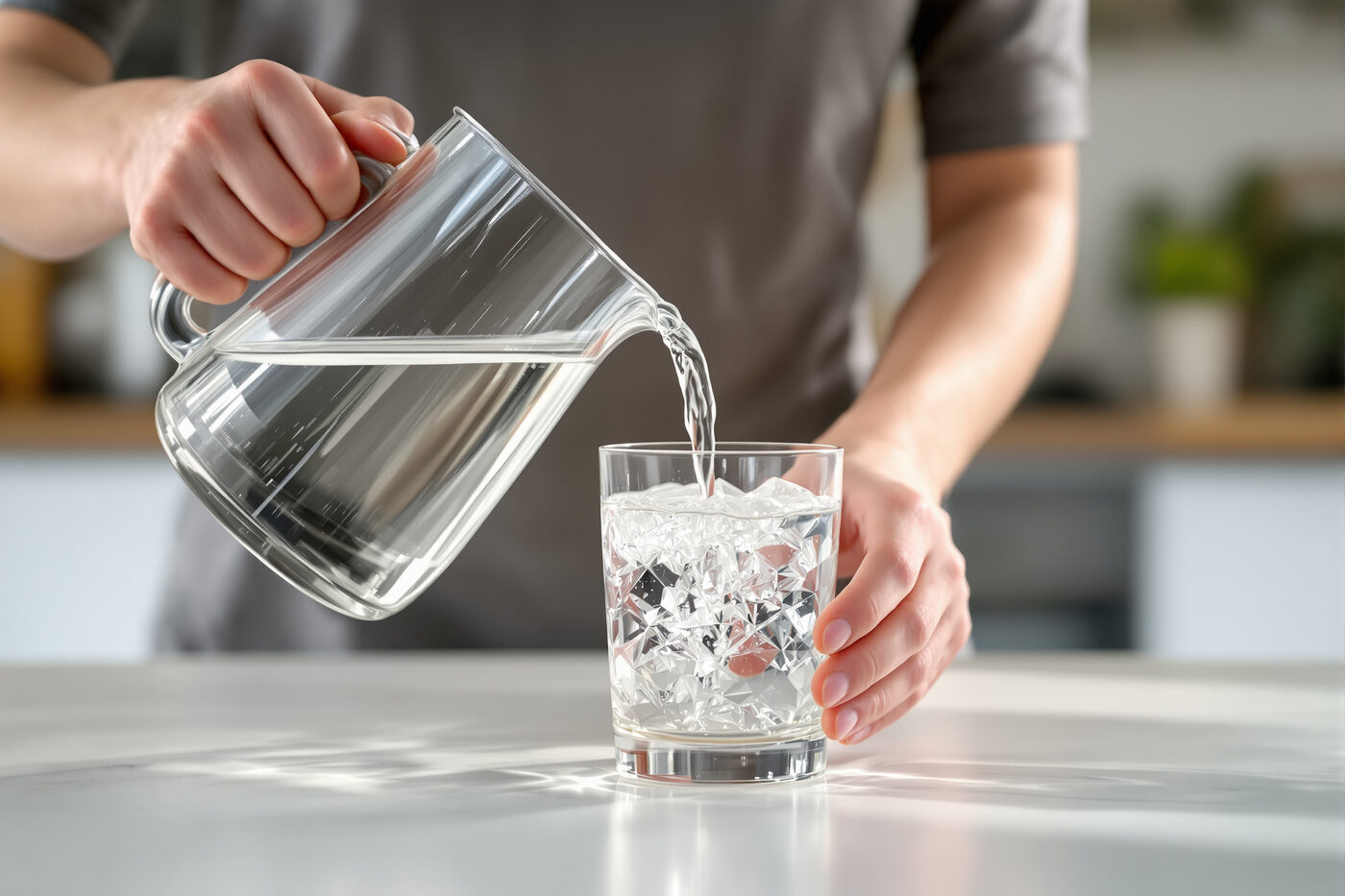
- Filter your tap water, skip bottled. Bottled water is a top dietary source; start with the best water filters for microplastics and check whether your tap water is safe to drink.
- Never heat or store hot food in plastic. No microwaving plastic containers and no pouring boiling liquid into plastic — heat drives the most particle shedding, adding to what you swallow.
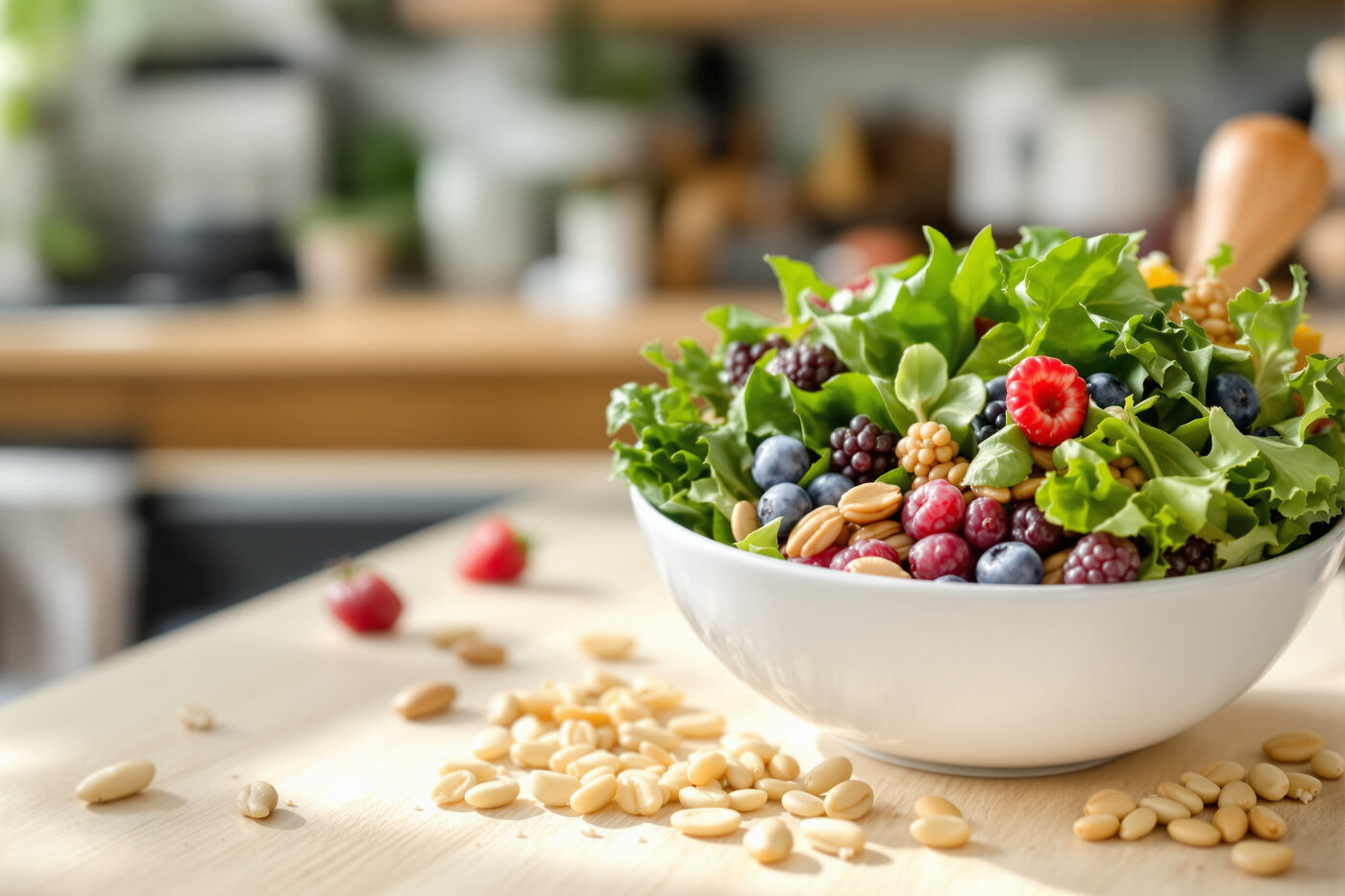
- Eat plenty of fiber and stay hydrated. Fiber and water keep gut transit moving, which is exactly how your body ushers most swallowed microplastics out in the stool within a day or two.
- Switch to glass and steel. Move leftovers into glass containers and drink from stainless steel bottles instead of plastic, so fewer particles shed into what you consume.
- Cut indoor microplastic dust. Ventilate, damp-dust and vacuum with a HEPA filter, and favor natural-fiber textiles — this trims the inhaled route behind a share of what reaches your lungs. See microplastics in household dust.
The bottom line: how long microplastics stay in your body
For most of what you take in, the answer is short and encouraging: the particles are too big to be absorbed, so they pass through your digestive tract and leave in your stool within a day or two, which is why researchers find them in essentially everyone's feces. The complication is the smallest fraction — the nanoplastics that cross into blood and settle in organs like the liver, lungs and placenta, where they clear slowly and no human half-life has yet been pinned down.
So your body is neither a sealed vault that traps every particle forever nor a sieve that passes them all in a day. It holds a background level that tracks your exposure. That is genuinely good news, because it means the lever is in your hands: there is no detox to buy, but cutting your intake lowers your burden over time. For the full plan, see how to avoid microplastics and how dangerous are microplastics.
Lower your burden, starting with your water
There is no detox for microplastics — the real move is taking in fewer of them. These guides show the swaps that matter most, starting with your drinking water and food storage.
Frequently Asked Questions
It depends on the size of the particle. Most larger microplastics you swallow are not absorbed — they move through your digestive tract and leave in your stool within about one to two days, which is why researchers reliably find them in human feces. Smaller particles, especially nanoplastics, can cross the gut wall into the bloodstream and settle in tissues such as the liver, kidneys, lungs and placenta, where clearance is slow and poorly measured. No confirmed human half-life exists yet, so the honest answer is days for most particles and potentially much longer for the smallest ones, kept topped up by continuous everyday exposure.
Yes. The great majority of microplastics you ingest are never absorbed and are excreted in your stool, usually within a couple of days of eating or drinking them. Some smaller particles that do get absorbed can be cleared through urine, and the lungs can expel some inhaled particles through mucus. The open question is the fraction of very small particles that translocate into blood and organs — those appear to clear far more slowly, and scientists have not yet established how long they persist in people.
Some can. Studies have now detected microplastics in human blood, liver, kidney, lung, placenta and other tissues, which shows that a portion of the smallest particles crosses biological barriers rather than simply passing through. Because these particles are cleared slowly and you are exposed continuously, the body appears to hold a roughly steady background level rather than ever reaching zero. How much accumulates, and what it does, are still active research questions — the particles are measurable, but the long-term health effect is not yet settled.
There is no proven detox, supplement, cleanse or protocol that removes microplastics already in your tissues, and you should be skeptical of any product that claims to. What genuinely lowers your body burden is reducing how many new particles you take in, because the ones you swallow mostly leave within days — so cutting intake lets your steady-state level drift down over time. Drinking filtered water, eating plenty of fiber, staying well hydrated and avoiding heated plastic support normal excretion without any special product.
About as fast as your food does. Normal gut transit time runs roughly 24 to 72 hours, and most microplastics ride along with the digesting food and are excreted in that window. A 2019 study that analyzed stool samples from volunteers on several continents found microplastics in every single sample, confirming that swallowed particles routinely appear at the far end of the digestive tract within days. Fiber and good hydration keep that transit moving.
Staying hydrated supports normal digestion and excretion, which is how your body gets rid of most microplastics, so it does not hurt — but the far bigger factor is what is in the water. If you drink unfiltered bottled or tap water, you may be adding more particles than hydration helps remove. Filtering your water and skipping single-use plastic bottles reduces intake, which matters more for your long-term body burden than drinking volume alone.
Sources
- Schwabl P, Köppel S, Königshofer P, Bucsics T, Trauner M, Reiberger T, Liebmann B. "Detection of Various Microplastics in Human Stool: A Prospective Case Series." Annals of Internal Medicine, 2019;171(7):453–457, doi.org/10.7326/M19-0618. Found microplastics in every stool sample from eight healthy participants across Europe and Asia, with up to nine polymer types detected and a median of about 20 particles per 10 grams of stool — evidence that swallowed particles are routinely excreted.
- Leslie HA, van Velzen MJM, Brandsma SH, Vethaak AD, Garcia-Vallejo JJ, Lamoree MH. "Discovery and quantification of plastic particle pollution in human blood." Environment International, 2022;163:107199, doi.org/10.1016/j.envint.2022.107199. The first measurement of plastic particles in human blood, detecting quantifiable levels in most of the adults sampled — evidence that a fraction of particles crosses into the bloodstream.
- Mohamed Nor NH, Kooi M, Diepens NJ, Koelmans AA. "Lifetime Accumulation of Microplastic in Children and Adults." Environmental Science & Technology, 2021;55(8):5084–5096, doi.org/10.1021/acs.est.0c07384. Models intake, excretion and tissue accumulation of microplastics over a lifetime, concluding that body concentrations depend strongly on both exposure and the efficiency of clearance.
- Cox KD, Covernton GA, Davies HL, Dower JF, Juanes F, Dudas SE. "Human Consumption of Microplastics." Environmental Science & Technology, 2019;53(12):7068–7074, doi.org/10.1021/acs.est.9b01517. Estimates annual microplastic ingestion of roughly 39,000–52,000 particles from food and water (74,000–121,000 including inhalation), and that bottled-water-only consumption adds about 90,000 particles a year versus about 4,000 for tap water.
- World Health Organization. "Dietary and inhalation exposure to nano- and microplastic particles and potential implications for human health," 2022, who.int. Confirms that nano- and microplastics are widespread in drinking water, food and air, reviews the main exposure and clearance routes, and concludes the evidence base is still too limited for a complete human health risk assessment.