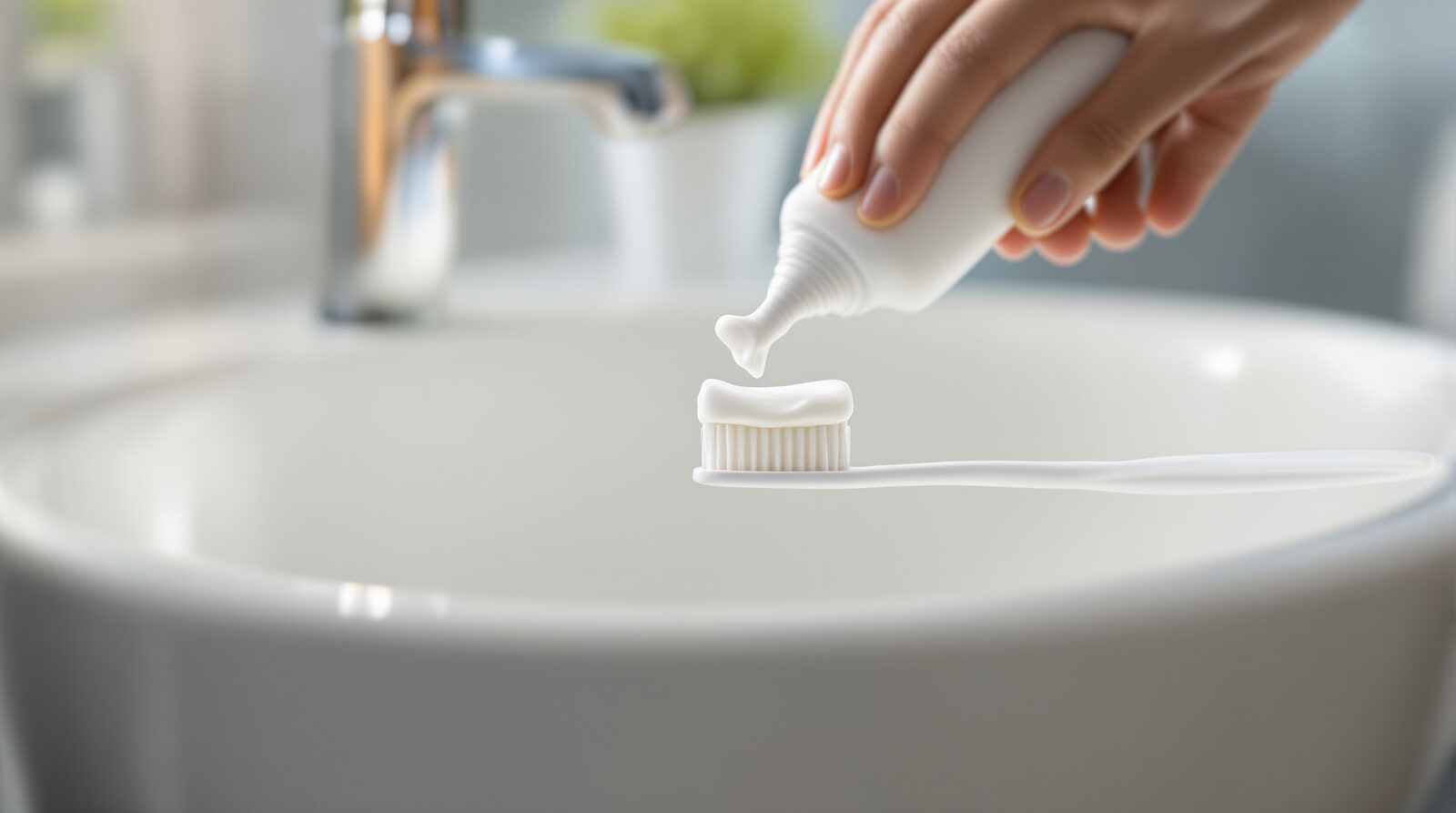
Does toothpaste still contain plastic microbeads?
No — the classic plastic exfoliating bead is effectively gone from US toothpaste. For years, brands added tiny polyethylene microbeads (the little colored specks in some whitening pastes) purely for scrubbing and looks. They did nothing for your teeth, slipped straight through wastewater plants, and even lodged in gum pockets, which is what first drew dentists' complaints.
Public pressure and then federal law ended the practice. Crest removed the polyethylene beads from its pastes by 2016, and the Microbead-Free Waters Act of 2015 made it mandatory: manufacturers could no longer make rinse-off cosmetics containing plastic microbeads after July 1, 2017, or sell them after July 1, 2018 (the deadlines fell one year later for fluoride toothpastes, which are also regulated as over-the-counter drugs). The statute — Public Law 114-114 — defines a plastic microbead as any solid plastic particle under five millimeters meant to exfoliate or cleanse, and names toothpaste as a covered product.
If microbeads are banned, how can toothpaste still have microplastics?
Because the ban is narrow. It outlaws only solid plastic beads added to scrub — it says nothing about the soluble and gel-forming synthetic polymers that do real jobs in a modern formula. Those petroleum-derived polymers are still common, and they are plastic in origin even though they do not look like a bead.
Toothpaste uses them as thickeners, film-formers, foam stabilizers and anti-tartar agents: PEG compounds keep the paste smooth, carbomer and PVM/MA copolymer (often listed as Gantrez) help it cling to enamel, and acrylates copolymer binds the gel. Whether these dissolved polymers should count as "microplastics" is genuinely debated by scientists — they are not insoluble fragments the way a microbead is — but if your goal is a plastic-free bathroom, they belong on your radar.
How many microplastics does brushing actually release?
More than you would guess, and not only from the paste. In a 2025 study published in Ecotoxicology and Environmental Safety, researchers measured the plastic particles shed during ordinary brushing by residents in China (PubMed 40680448). They estimated toothpaste alone released on the order of 1.18 million particles per person per year, with the toothbrush itself contributing at least twice that again as its nylon bristles and plastic head abrade.
The particles were identified as polyethylene and ethylene-vinyl acetate — the same plastic families used in packaging and bristles. The study measured what is released, not what your body absorbs, so it is a pollution-and-exposure signal rather than a proven health dose. But it makes the point that the tube is only half the story: a worn plastic toothbrush is a microplastic source in its own right, which is why a bamboo-handled brush is part of the fix.
Which toothpaste ingredients are actually plastics?
You do not need a chemistry degree to screen a label — you need a short list of names to scan for. These are the petroleum-derived synthetic polymers that turn up most often in mainstream toothpaste:
- Polyethylene (PE) — the original microbead plastic; rare now, but still worth checking for in novelty "sparkle" or glitter pastes.
- PEG compounds (PEG-8, PEG-12, etc.) — polyethylene glycol thickeners and humectants.
- Carbomer — crosslinked polyacrylic acid used to gel and suspend the paste.
- PVM/MA copolymer (Gantrez) — a film-former that helps anti-tartar and anti-plaque agents stick to enamel.
- Acrylates copolymer and sodium polyacrylate — binders and texture modifiers.
- Poloxamer 407 and PVP (polyvinylpyrrolidone) — surfactant and film-forming polymers.
None of these is a banned microbead, and all are allowed in toothpaste. But they are the ingredients a genuinely microplastic-conscious formula leaves out, replacing them with mineral and plant-based alternatives.
Are these plastics in toothpaste dangerous to swallow?
The honest answer is that nobody can promise either "perfectly safe" or "clearly harmful," and it helps to separate two questions. On the environmental side the case is settled enough that Congress acted: microbeads were a documented water-pollution problem. On the human-health side the FDA has said there is no evidence that microbeads themselves harm people, and the 2015 law was not a safety finding.
Two things lower the stakes further: toothpaste is spat out rather than swallowed, and the dissolved polymers are a different thing from the insoluble fragments that dominate microplastics-in-the-body research. What we don't yet have is good long-term data on daily ingestion of these polymers, especially for young children who swallow more paste. That uncertainty is a reason for sensible caution — choosing a simpler formula — not for alarm. If reducing your overall load is the goal, see our guide on how to avoid microplastics.
How do I tell if my toothpaste has microplastics?
Turn the tube over and read the ingredient list, which is the only claim that matters — "natural" on the front of the box is marketing, not a standard. Scan for the polymer names above (polyethylene, PEG, carbomer, PVM/MA copolymer, acrylates copolymer, poloxamer, PVP). If none appear, the formula is almost certainly free of plastic-derived ingredients.
A clean paste usually leans on a short, recognizable base instead: calcium carbonate or hydrated silica as the gentle abrasive, nano-hydroxyapatite for remineralization, xylitol for cavity protection, and glycerin or sorbitol as the humectant. Two quick shortcuts: look for an EWG Verified mark, which screens out these polymers, and consider toothpaste tablets, which skip the gel chemistry (and the plastic tube) entirely. The same label-reading logic applies to other "free-from" claims — verify, don't trust the front of the pack.
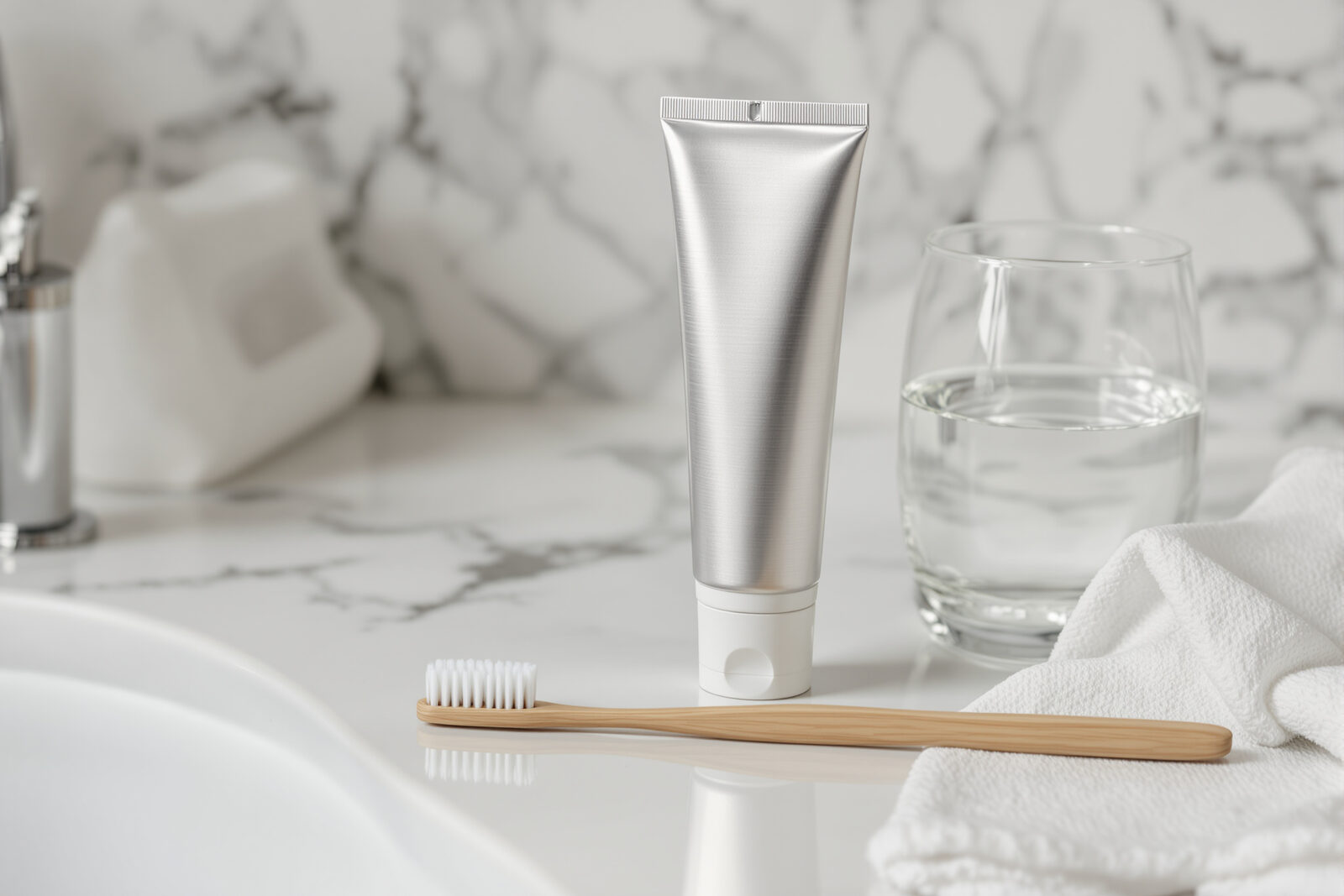
What are the best microplastic-free toothpastes?
Each of these leaves out the synthetic polymers above and builds its formula on minerals, nano-hydroxyapatite or xylitol instead. They range from a drugstore tube to glass-jar tablets, so there is a plastic-free option at every price. For the full head-to-head breakdown, see our best non-toxic toothpaste guide; and because children swallow more paste, a simple mineral formula matters even more for them.
Davids is the clean-toothpaste benchmark: a short, recognizable ingredient list, a genuinely pleasant peppermint, and a metal tube key so you can roll out the last of it. If you want one swap that covers both the formula and the packaging, this is it.
Check Price on Amazon →✓ Ships free with Prime · Free returns · Amazon A-to-z purchase guarantee (on eligible items)
RiseWell leans on hydroxyapatite — the mineral teeth are actually made of — to remineralize enamel without fluoride, which makes it a favorite for people who want cavity protection and a clean label at once.
Check Price on Amazon →✓ Ships free with Prime · Free returns · Amazon A-to-z purchase guarantee (on eligible items)
Boka made n-Ha mainstream, and the Ela Mint is its most approachable flavor. It is an easy first swap if you want a modern, dentist-style paste without the synthetic-polymer thickeners.
Check Price on Amazon →✓ Ships free with Prime · Free returns · Amazon A-to-z purchase guarantee (on eligible items)
Tablets sidestep the whole question: with no paste to gel, there is nothing to thicken with carbomer or PEG. The glass jar and compostable refill pouches make Bite the pick if cutting plastic packaging matters as much as the formula.
Check Price on Amazon →✓ Ships free with Prime · Free returns · Amazon A-to-z purchase guarantee (on eligible items)
If you want to drop the plastic ingredients without spending more, Dr. Bronner's is the value pick. Short ingredient list, coconut-oil base, widely stocked, and a trusted name in clean personal care.
Check Price on Amazon →✓ Ships free with Prime · Free returns · Amazon A-to-z purchase guarantee (on eligible items)
Hello proves a clean label does not have to mean a specialty order. The naturally-whitening formula (coconut oil and gentle silica, not plastic beads) is the easiest mainstream swap on this list.
Check Price on Amazon →✓ Ships free with Prime · Free returns · Amazon A-to-z purchase guarantee (on eligible items)
Complete the swap: brush, floss and routine
Because the toothbrush sheds as much plastic as the paste, the biggest reduction comes from changing both. Pair any clean paste above with a plastic-free toothbrush and plastic-free floss, and you have removed the three largest microplastic sources from your sink in one go. If you are overhauling the whole room, the plastic-free bathroom guide walks through the rest, and our reduce-your-body-burden guide puts it in context with food and water.
Frequently Asked Questions
Sources & further reading
- US FDA — The Microbead-Free Waters Act: FAQs
- US Congress — Public Law 114-114, Microbead-Free Waters Act of 2015
- Ecotoxicology and Environmental Safety (2025) — Patterns and risks of microplastic release during primary oral care in Chinese residents