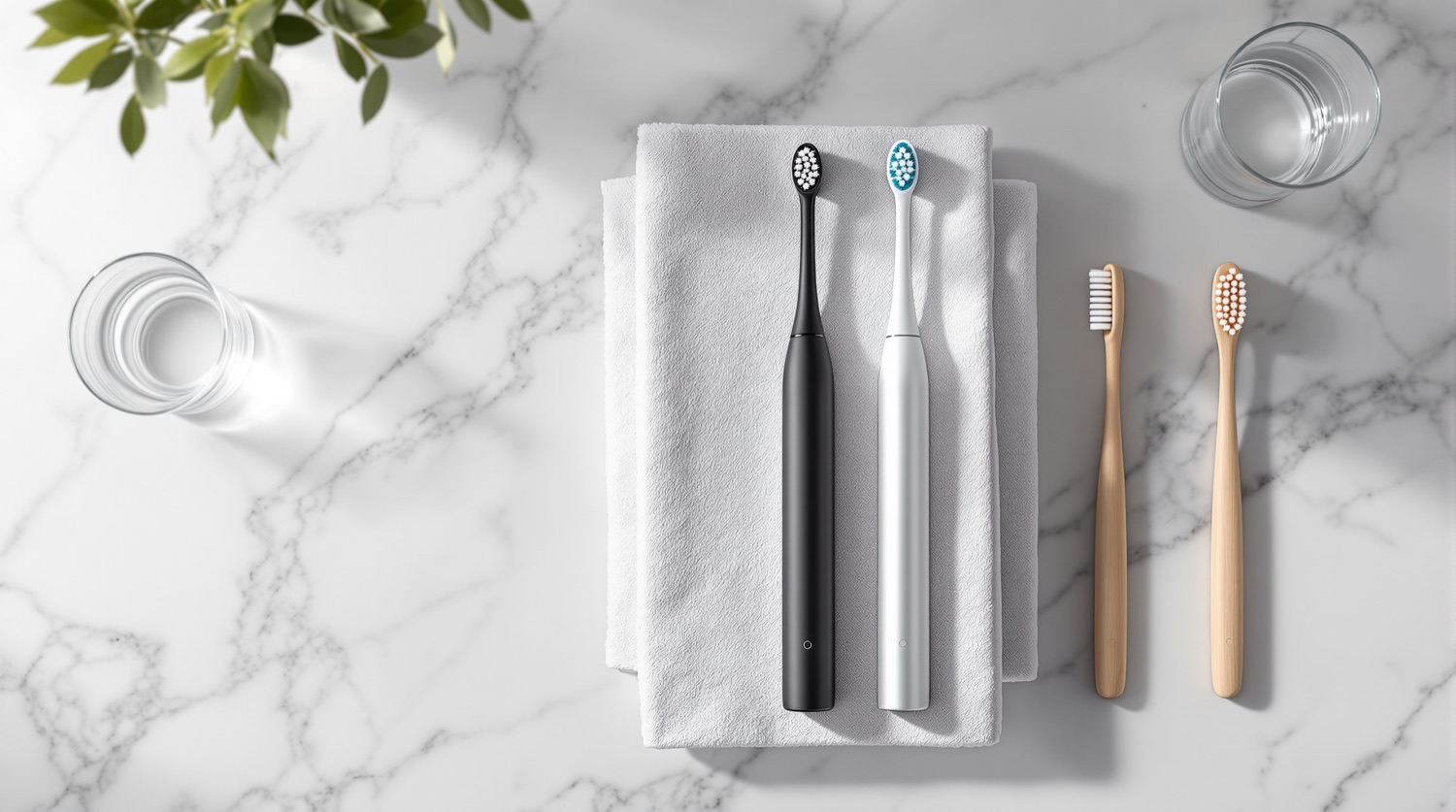
The best non-toxic electric toothbrush in 2026 is the SURI Pro Sonic, because it is the only mainstream sonic brush that pairs an aluminum handle with a plant-based brush head and a free take-back program for the used heads — so the throwaway part is the only plastic in the system. The number worth knowing before you buy anything: a 2026 narrative review in The Saudi Dental Journal estimates toothbrush use releases at least 2.33 million plastic particles per person per year, about 63 percent of them under 100 microns. No electric toothbrush on sale is plastic-free, and any brand telling you otherwise is selling you nylon made from castor beans. Below, six picks ranked on bristle polymer, handle material and replacement frequency — including the one option with genuinely zero nylon in it.
An electric toothbrush is an awkward product for anyone trying to get plastic out of the house. It cleans measurably better than a manual brush, which is not in serious dispute. It is also a motorized plastic object that you put in your mouth for four minutes a day, with a plastic head you are told to throw away every three months, and the bristles sitting against your gums are the same family of polymers found in human blood, lungs and placenta.
So the honest framing is not “which electric toothbrush is plastic-free.” None of them are. The useful question is narrower and answerable: of the brushes you can actually buy, which ones minimize the polymer that touches your mouth, minimize how often you throw a head away, and are straight with you about what their bristles are made of. That is what this guide ranks.
How much plastic does a toothbrush actually shed?
Enough to be measured, and the measurement is recent. In March 2026, Chaudhary, Giri and Giri published a narrative review in The Saudi Dental Journal (volume 38, article 30) pulling together what is known about micro- and nanoplastics from dental sources. On toothbrushes specifically, the review reports estimated releases of at least 23.3 × 10⁵ particles per year per person — 2.33 million — with the detected microplastics dominated by particles under 100 microns (about 63 percent) and including a substantial polypropylene fraction (about 22 percent). The paper is at doi.org/10.1007/s44445-026-00139-x.
Three details in that review change how you shop. First, the bristles on a conventional brush are polypropylene, polyamide (nylon), polyethylene or PET — and the polymer determines the failure mode. The authors note that “PET bristles often develop more obvious coarse damage at the tips, whereas PP and nylon bristles fragment into finer debris.” Finer debris is the fraction small enough to swallow without noticing. Second, release rises with brush age: as a head wears, more particles come off per use, which makes the replacement schedule a real variable rather than a sales tactic. Third — and this belongs in any honest write-up — the review states plainly that human clinical evidence linking these specific exposures to disease remains absent. This is an exposure-reduction decision, not a proven-harm one.
| Finding | Measured or estimated value | Source |
|---|---|---|
| Toothbrush-associated particle release | At least 23.3 × 10⁵ (2.33 million) particles/year/person | Chaudhary et al., Saudi Dent J 38 (2026) |
| Share of detected particles under 100 µm | About 63% | Chaudhary et al., 2026 |
| Polypropylene share of detected particles | About 22% | Chaudhary et al., 2026 |
| Castor-oil bristle wear after 6 months simulated brushing | Minimal; behaved like polyamide bristles | Kaisarly et al., Polymer Testing 148 (2025) |
| Plaque reduction, powered vs manual, 1–3 months | 11% | Cochrane review, 56 trials, 5,068 participants (2014) |
| Plaque reduction, powered vs manual, after 3 months | 21% | Cochrane review (2014) |
One honest gap before the picks: no published study has directly compared how much an electric brush head sheds against a manual brush. The 2.33 million figure is a toothbrush estimate, not an electric-toothbrush estimate. An electric head carries less bristle area than a full manual brush but moves far faster against enamel, and nobody has measured which way that trade lands. Anyone who tells you the number for electric specifically is making it up.
Compare all 6 picks
Every pick side by side — tap a name to jump to the full review, or check today's price.
| Pick | Handle | Bristle material | |
|---|---|---|---|
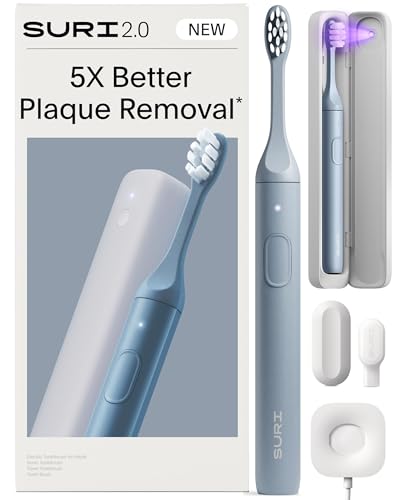 Best OverallSURI Pro Sonic |
Aluminum | Plant-based (castor-oil nylon)Free head take-back |
Check price → |
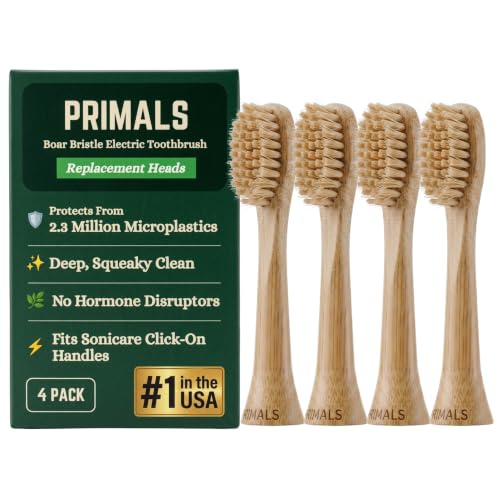 Only Zero-Nylon BristlePRIMALS Boar Bristle Heads |
Your Sonicare | Natural boar bristleBamboo head base |
Check price → |
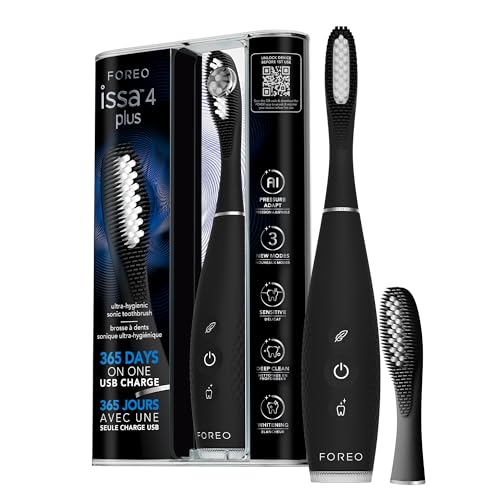 Fewest Head ChangesFOREO ISSA 4 Plus |
Silicone-clad | Medical-grade silicone + PBTHead lasts 6 months |
Check price → |
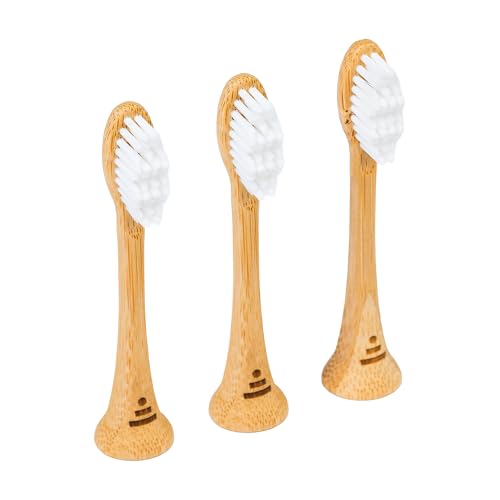 Best Upgrade for a Brush You OwnBetter & Better Bamboo Heads |
Your Sonicare | Plant-based bristlesBamboo head base |
Check price → |
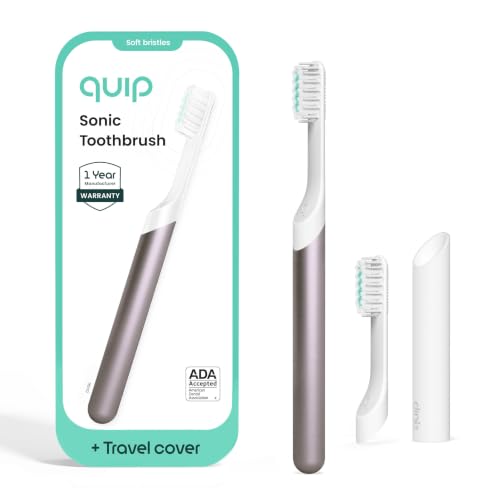 Simplest Metal HandleQuip Sonic, Metal Handle |
Metal | Conventional soft nylonADA Accepted |
Check price → |
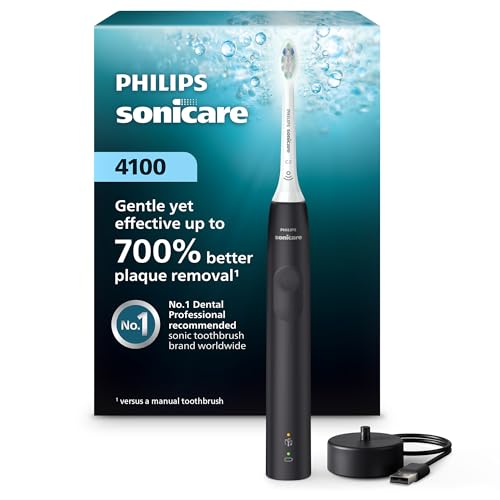 Best Cleaning for the MoneyPhilips Sonicare 4100 |
Plastic | Conventional nylonTakes bamboo third-party heads |
Check price → |
What makes an electric toothbrush “non-toxic,” exactly?
Three things, in descending order of how much they matter. The bristles come first, because they are the only part that is abraded against a hard surface inside your mouth twice a day, and abrasion is what produces particles. The head base is second: a bamboo or plant-fiber base means the part you bin every few months is not another molded block of polypropylene. The handle is third and mostly symbolic for exposure — an aluminum body does not touch your gums — but it is the part that determines whether the brush lasts a decade or goes in a landfill when the battery dies.
What does not belong on that list: “BPA-free.” It is printed on nearly every brush sold and it tells you almost nothing, for the reasons we set out in why BPA-free is not the same as safe. Nylon and polypropylene never contained BPA to begin with.
Are plant-based bristles really better than nylon?
Partly, and the part that is not true is the part brands lean on hardest. “Castor-oil” or “plant-based” bristles are nylon-11, a polyamide made from castor oil by a multi-step industrial process — castor oil to methyl ricinoleate, pyrolysis to methyl undecylenate, then on to 11-aminoundecanoic acid. The McGill University Office for Science and Society walks through that chemistry in its piece on the “plant-based” toothbrush. The feedstock is renewable. The output is still a synthetic polymer, and it is not compostable and not meaningfully biodegradable in a home or municipal system.
There is now direct test data on how these bristles behave, and it is a double-edged result. Kaisarly and colleagues published “Wear, mechanical and chemical properties of castor oil toothbrush bristles” in Polymer Testing volume 148 (2025), doi 10.1016/j.polymertesting.2025.108839. They ran five commercial castor-oil-bristle brushes plus an American Dental Association control through 12,500, 25,000, 37,500 and 50,000 brushing cycles — about six months of real use — and measured bristle wear, dentin surface roughness, elastic modulus and chemical composition. The headline: after six months of simulated brushing, signs of wear were minimal, and the castor-oil bristles behaved and performed much like conventional polyamide bristles.
Read that twice, because it cuts both ways. The good news is that choosing a plant-based bristle costs you nothing in durability or gentleness — a real concern with eco-marketed products, and here it is answered with data. The sobering news is that behaving like nylon is exactly what you would not want if your hope was that a bio-based bristle sheds less. Nothing in that study supports a lower-shedding claim. What you are buying with nylon-11 is a renewable feedstock and a smaller fossil footprint, not a bristle that stops being plastic in your mouth.
The 6 Best Non-Toxic Electric Toothbrushes in 2026
#1 — SURI Pro Sonic — Best Overall
Best Overall
Everything you keep is metal; the only thing you throw away is a small head the brand will take back. That is as close to a closed loop as this category currently gets.
Why it’s best for plastic exposure: plant-based bristles instead of petroleum nylon, a head base that is not another block of polypropylene, and a metal handle with no reason to be replaced when the fashion changes.
Check Today’s Price on Amazon →Amazon prices change daily — tap to see today's price and any active discount.
- Free delivery & returns for Prime members
- Aluminum body, plant-based head
- Free head take-back in the US and UK
The honest trade-offs. It sits at the upper-middle of the price range, well above a basic Sonicare, and you are paying partly for design. The plant-based head is nylon-11 — see the section above; it is renewable, not biodegradable, and the Polymer Testing data says it wears like ordinary nylon. Reviewers also consistently note the barrel-shaped handle is a matter of taste, and SURI offers fewer cleaning modes than a comparably priced Philips or Oral-B. If you want maximum programmable features, this is not that brush.
Best for: Anyone who wants one brush that lasts, is willing to pay for an aluminum body, and would rather have a take-back program than a fourth cleaning mode.
#2 — PRIMALS Boar Bristle Replacement Heads — Only Zero-Nylon Option
Only Zero-Nylon Bristle
Keep the brush you own, change the one part that touches your teeth, and the nylon leaves your bathroom entirely.
Why it’s here: it is the single option on this page that removes synthetic bristle filament from the routine rather than substituting a different polymer for it.
Check Today’s Price on Amazon →Amazon prices change daily — tap to see today's price and any active discount.
- Free delivery & returns for Prime members
- Fits Philips Sonicare click-on handles
- Natural bristle on a bamboo base
The caveats are real and you should read them before buying. Boar bristle is an animal product, so it is not vegan, and it is a byproduct of the meat industry. It is porous, which means it holds water and can harbor more bacteria than a sealed synthetic filament unless it is dried properly after every use. Natural bristle tips are not end-rounded the way a manufactured nylon filament is, so technique and pressure matter more. And critically, the clinical evidence base for electric brushing — including the Cochrane numbers below — was built on conventional bristles; no trial has tested boar bristle on a powered handle. If you have receding gums, sensitive teeth, or an implant, ask your dentist before switching.
Best for: Someone who already owns a Sonicare handle, has healthy gums, and wants the bristle polymer gone rather than swapped.
#3 — FOREO ISSA 4 Plus — Fewest Head Changes
Fewest Head Changes
Two heads a year instead of four, and one charge a year instead of twenty-six. Less thrown away, less bought, less to remember.
Why it’s here: the dental review found particle release rises as a head wears, so the replacement interval is a genuine lever — and this is the only pick that doubles it with a published figure rather than a suggestion.
Check Today’s Price on Amazon →Amazon prices change daily — tap to see today's price and any active discount.
- Free delivery & returns for Prime members
- Brush head rated for 6 months of use
- 365 days of use per USB charge, per FOREO
The honest catch, and it is a real one: PBT is polybutylene terephthalate, a polyester in the same family as the PET the Saudi Dental Journal review singles out for developing coarse tip damage. So this is not a plastic-free head — it is a part-silicone head that you replace half as often. Silicone bristles also feel very different, and some users find them less effective at scrubbing between teeth than filament tufts; if you have heavy staining or are prone to plaque at the gumline, the Sonicare below is the safer clinical choice. Our broader take on the material is in is silicone safe.
Best for: Sensitive gums, travel, and anyone whose honest priority is throwing away fewer parts rather than changing which polymer they are made of.
#4 — Better & Better Bamboo Sonic Heads — Best Upgrade for a Brush You Already Own
Best Upgrade for a Brush You Own
A change you can make this week, for the price of a pack of heads, without throwing away a working toothbrush to do it.
Why it’s here: the discarded head base is the single largest piece of plastic in a conventional electric-brush routine, and this is the cheapest way to stop discarding it.
Check Today’s Price on Amazon →Amazon prices change daily — tap to see today's price and any active discount.
- Free delivery & returns for Prime members
- Bamboo base instead of molded polypropylene
- No new appliance required
The trade-offs: “plant-based bristles” here means the same castor-oil nylon-11 discussed above, so the filament is still a polymer. Third-party heads do not carry Philips’ own fit guarantee, and a handful of reviewers across every third-party brand report a looser click than an original head. Bamboo also needs to dry between uses or it will discolor at the base. Check your handle’s fitting type before ordering — these suit the click-on Sonicare style, not Oral-B’s round twist-on heads.
Best for: The Sonicare owner who wants a real improvement today and refuses to send a working appliance to landfill to get it.
#5 — Quip Sonic, Metal Handle — Simplest Metal Handle
Simplest Metal Handle
A metal handle and a clinically accepted clean, without buying into a subscription, an app or a charging dock.
Why it’s here: the handle is metal rather than molded plastic, and it is the cheapest brush on this page where that is true.
Check Today’s Price on Amazon →Amazon prices change daily — tap to see today's price and any active discount.
- Free delivery & returns for Prime members
- Carries the ADA Seal of Acceptance
- Metal handle, no charging dock needed
What it does not do: the heads are conventional plastic with conventional nylon bristles, and Quip does not currently offer a plant-based or bamboo head. So this pick fixes the handle and leaves the bristle question untouched. Its sonic vibration is also gentler than a Sonicare or an Oral-B, which some people prefer and which others find underpowered. The AAA battery in older models has been replaced by a rechargeable cell in current ones, so check which version you are buying.
Best for: Someone who wants out of a plastic handle cheaply and cares more about a recognized clinical credential than about bristle material.
#6 — Philips Sonicare 4100 — Best Cleaning for the Money
Best Cleaning for the Money
The cheapest route to a clinically strong clean that also fits the bamboo and natural-bristle heads from the picks above.
Why it’s here: the click-on fitting is what makes the genuinely low-plastic heads on this page usable at all. Pair it with pick #2 or #4 rather than the head in the box.
Check Today’s Price on Amazon →Amazon prices change daily — tap to see today's price and any active discount.
- Free delivery & returns for Prime members
- Accepts third-party bamboo and boar-bristle heads
- Pressure sensor and 2-minute guided timer
Stated plainly: the handle is plastic, the supplied head is plastic with nylon bristles, and Philips does not sell a plant-based head. The 700 percent figure is the company’s own claim, measured against a manual brush rather than against a rival electric. If you are buying this, buy it as a chassis and change the head.
Best for: The reader who wants the strongest clinical clean per dollar and is willing to do the head swap themselves.
What we left out, and why
Fully bamboo electric toothbrushes. Several exist. None of them are fully bamboo — the motor, battery, seals and switch are plastic in every case, and a bamboo veneer over a plastic body adds a material that fails faster in a wet bathroom. A metal handle is the more honest answer to the same question.
Brushes marketed as “biodegradable.” If the bristles are nylon-11, the word is wrong, for the chemistry set out above. We will list a genuinely compostable bristle the day one exists at retail.
Charcoal-infused bristles. Widely sold alongside eco branding and not supported by evidence of benefit; charcoal particles add abrasion without a demonstrated cleaning advantage. If you want the whitening claim examined, our non-toxic toothpaste guide covers where the real evidence sits.
Manual bamboo brushes. Not a gap — a different product. They are genuinely the lowest-plastic option available, and they are ranked separately in our best plastic-free toothbrush guide. This page exists for people who are not willing to give up powered brushing, and the Cochrane numbers below explain why that is a defensible position.
Is an electric toothbrush worth it at all?
On the dental evidence, yes, and the size of the benefit is known. The Cochrane Oral Health group reviewed 56 randomized trials covering 5,068 participants in Powered versus manual toothbrushing for oral health (Cochrane Database of Systematic Reviews, 2014). Powered brushes produced an 11 percent reduction in plaque at one to three months and a 21 percent reduction after three months, with corresponding reductions in gingivitis. The review is on PubMed.
That is the trade this whole page is really about. You accept a motorized plastic object and a quarterly head replacement, and in exchange you get a measurably cleaner mouth and less gum inflammation. Gum disease is not a hypothetical risk the way the health effects of ingested microplastic currently are — as the Saudi Dental Journal review itself concedes, the human clinical evidence linking these particle exposures to disease is still absent. Choosing the brush with the better bristle and the slower replacement cycle is the sane way to take both facts seriously at once. If you want the wider version of that calculation, see how to avoid microplastics.
Comparison Table: At a Glance
| Pick | Type | Handle material | Bristle material | Head replacement |
|---|---|---|---|---|
| SURI Pro Sonic | Full brush | Aluminum | Plant-based (castor-oil nylon-11) | 3 months, free mail-back |
| PRIMALS Boar Bristle Heads | Heads only | Uses your Sonicare | Natural boar bristle, bamboo base | 3 months |
| FOREO ISSA 4 Plus | Full brush | Silicone-clad body | Medical-grade silicone + PBT polymer | 6 months |
| Better & Better Bamboo Heads | Heads only | Uses your Sonicare | Plant-based bristles, bamboo base | 3 months |
| Quip Sonic, Metal Handle | Full brush | Metal | Conventional soft nylon | 3 months |
| Philips Sonicare 4100 | Full brush | Plastic | Conventional nylon (swappable) | 3 months |
Materials and replacement intervals are each manufacturer’s own published wording, checked against their live listings on October 22, 2026. We are not printing prices in this table because Amazon changes them daily and a stale number is worse than none — tap any buy button for today’s figure.
Our Pick by Situation
- You want the best overall answer and will pay for it: SURI Pro Sonic.
- You want the bristle polymer gone, not substituted: PRIMALS boar bristle heads on a Sonicare handle.
- You want to throw away the fewest parts: FOREO ISSA 4 Plus, with its six-month head.
- You already own a Sonicare and do not want a new appliance: Better & Better bamboo heads.
- You want off a plastic handle on a budget: Quip Sonic with the metal handle.
- Gum disease, heavy plaque, or a dentist’s instruction: Philips Sonicare 4100, with a bamboo head on it.
- You would rather skip the motor entirely: a manual bamboo brush from our plastic-free toothbrush guide.
How We Evaluated These Toothbrushes
We did not run a laboratory test and we are not going to imply we did. What we did is narrower and checkable. For every candidate we required the manufacturer to state the bristle material and the head-base material in its own published copy, and anything that would only say “eco-friendly” or “sustainable” without naming a material was excluded rather than guessed at. We weighted bristle polymer above head base, and head base above handle, because abrasion inside the mouth is where particle release happens. Published replacement intervals were taken from each brand’s own documentation, since the dental literature says release rises with brush age. Claims we could not verify — including any comparative shedding figure for electric versus manual brushing, which no published study provides — were left out instead of estimated. Materials and specifications were read off each product’s live listing on October 22, 2026.
Frequently Asked Questions
Any brush with synthetic bristles does. A 2026 narrative review in The Saudi Dental Journal estimates toothbrush use releases at least 23.3 × 10⁵ particles per person per year, around 63 percent of them smaller than 100 microns, with polypropylene making up roughly 22 percent of what is detected. The review also notes release increases as a brush head wears. What no study has yet measured is whether a powered head sheds more or less than a manual brush, so treat any specific electric-versus-manual figure you see as unsourced.
No — and this is the most common misreading in the category. Castor-oil bristles are nylon-11, a polyamide manufactured from castor oil through several industrial steps. The feedstock is renewable; the resulting filament is a synthetic polymer that does not compost in a home or municipal system. A 2025 study in Polymer Testing that ran five castor-oil-bristle brushes through 50,000 simulated brushing cycles found they wore minimally and behaved much like conventional polyamide bristles — good news for durability, and a clear signal that they are not a lower-shedding material.
Not at retail today. Every powered brush contains a motor, a battery, seals and a switch, and those parts are plastic in every model on sale. The closest you can get is to minimize each layer: a metal handle instead of a molded plastic shell, a bamboo head base instead of polypropylene, and a natural or plant-based bristle instead of petroleum nylon. A manual bamboo toothbrush remains the genuinely low-plastic option, which is why we rank those separately.
For most people with healthy gums, used gently, they are fine — but the honest answer carries conditions. Natural bristle is porous, so it holds moisture and needs to dry fully between uses or it harbors more bacteria than a sealed synthetic filament. The tips are not end-rounded the way manufactured nylon filaments are, which makes brushing pressure matter more. And the clinical evidence base for powered brushing was built entirely on conventional bristles; no trial has tested boar bristle on a powered handle. Anyone with receding gums, an implant or sensitivity should ask their dentist first.
By a measured margin. The Cochrane Oral Health review of 56 randomized trials covering 5,068 participants found powered brushes reduced plaque by 11 percent at one to three months and by 21 percent after three months, with matching reductions in gingivitis. That is the benefit you are weighing against a plastic appliance and a quarterly head replacement. Gum disease is a documented harm; the health effects of ingested microplastic are not yet established in humans. Picking the brush with the better bristle and the longer head life is how you respect both of those facts.
Follow the manufacturer’s interval, and do not stretch it. Three months is standard; FOREO’s silicone hybrid head is published at six. The dental literature gives a reason beyond cleaning performance: particle release rises with brush age as filaments microcrack and fracture at the tips, so an old head is both less effective and shedding more. If the bristles have splayed before the interval is up, you are brushing too hard — which is itself a cause of both gum recession and faster bristle breakdown.
Protect Every Room in Your Home
From the kitchen to the nursery to the bathroom — the Complete Plasticproof Guide covers every swap that matters, backed by 47+ studies.