
Flossing is one of the most recommended dental hygiene habits — and one of the most overlooked sources of plastic and chemical exposure in the bathroom. Standard dental floss is made from nylon, a synthetic polymer derived from petrochemicals. It doesn't biodegrade. Every piece of floss that goes in the trash will persist in a landfill for hundreds of years. And the popular "glide" flosses go further: they're coated with PTFE (polytetrafluoroethylene), better known as Teflon — a member of the PFAS family of synthetic fluorinated chemicals.
PFAS are called "forever chemicals" because they don't break down in the body or the environment. A landmark 2019 study found that women who regularly used Oral-B Glide floss — a PTFE-coated product — had measurably higher PFAS blood concentrations than non-users. PFAS accumulate in tissue over time and are linked to thyroid disruption, immune dysfunction, and increased cancer risk. Flossing daily with a PFAS-coated product means daily mucosal exposure — one of the most absorptive tissues in the body.
The good news is that effective plastic-free alternatives exist at every price point. Silk, bamboo fiber, and corn-based PLA flosses can all clean between teeth just as well as nylon — without the plastic, without the PFAS, and in packaging that's designed to be refilled, not discarded. We screened the available options to find six that genuinely work.
The floss is only half of the oral-care microplastic story, though. The brush itself is the other half: a 2025 Ecotoxicology and Environmental Safety study (Wang et al., DOI 10.1016/j.ecoenv.2025.118694) measured nylon toothbrush bristles shedding roughly 2.33 million microplastic particles per person per year — more than 40 times the volume added by a typical daily floss. A genuinely microplastic free toothbrush pairs with plastic-free floss to remove both release points from the same two-minute routine.
Compare all 6 picks
Every pick side by side — tap a name to jump to the full review, or check today's price.
| Pick | Why it wins | |
|---|---|---|
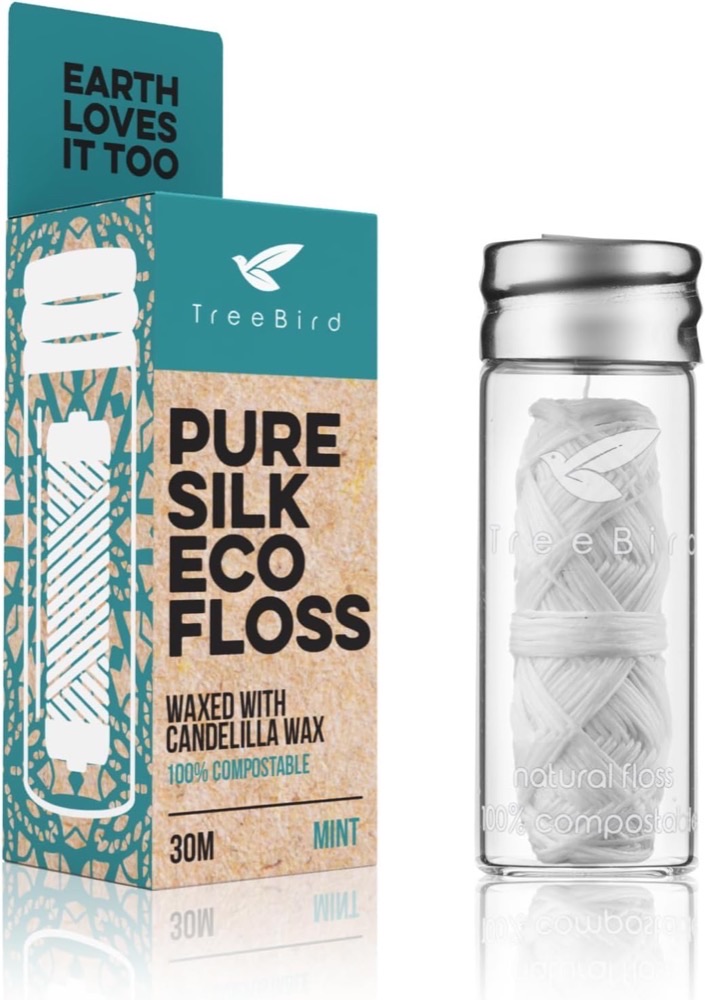 Best OverallTreeBird Pure Silk Eco Floss |
PFAS-FreePeace Silk |
Check price → |
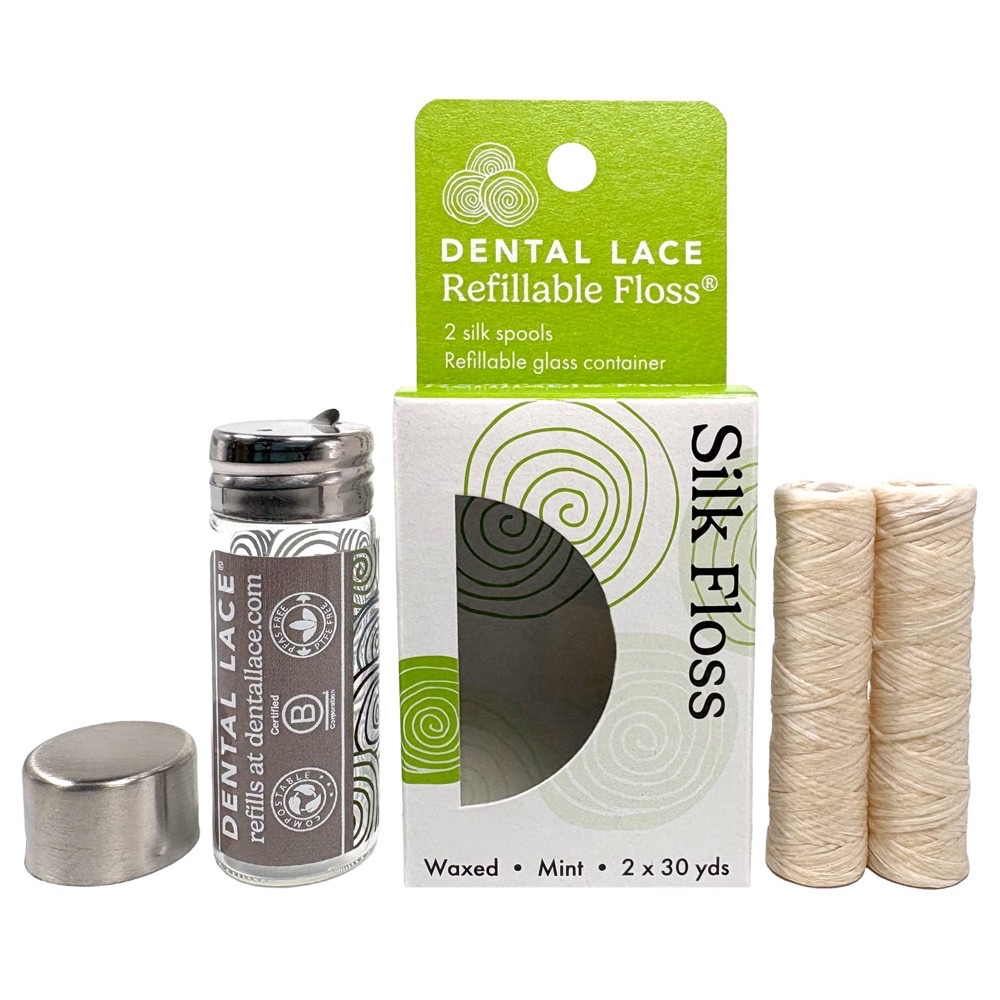 Best Refill SystemDental Lace Silk Floss Refills |
PFAS-FreeRefillable System |
Check price → |
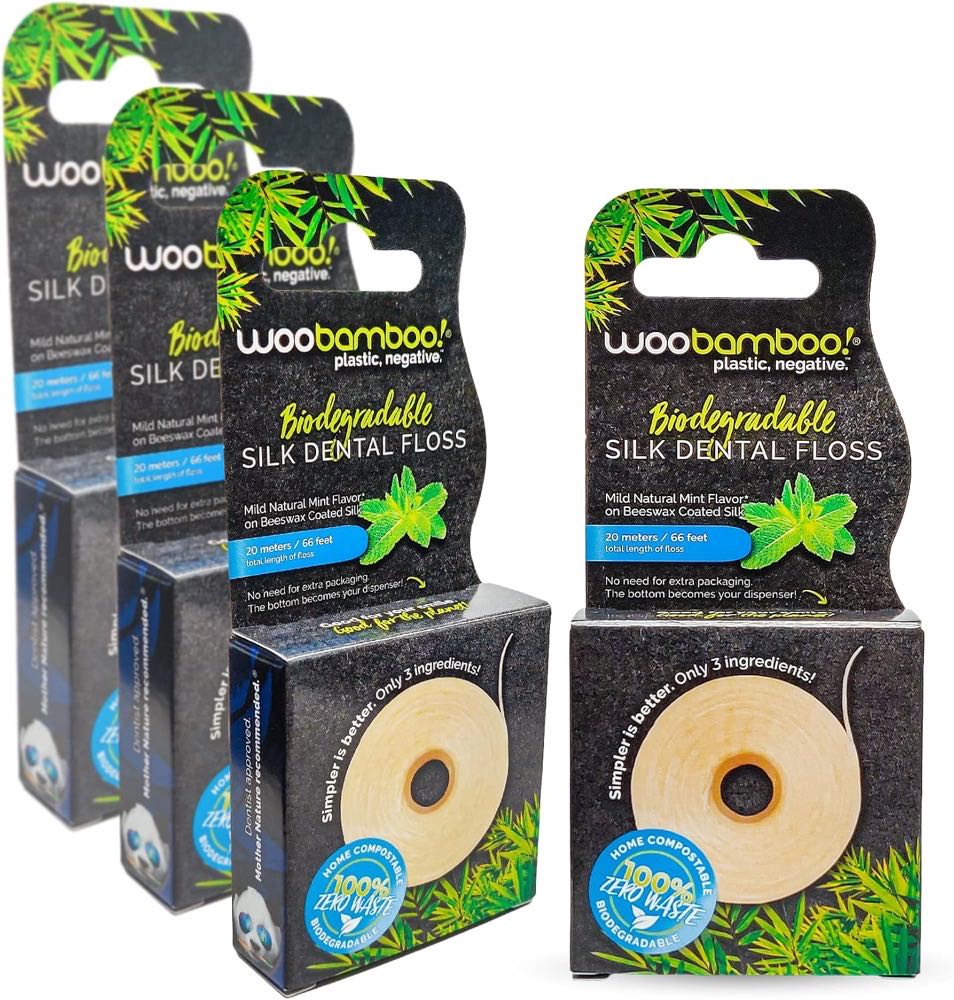 Best ValueWooBamboo Silk Dental Floss |
PFAS-FreeNatural Silk |
Check price → |
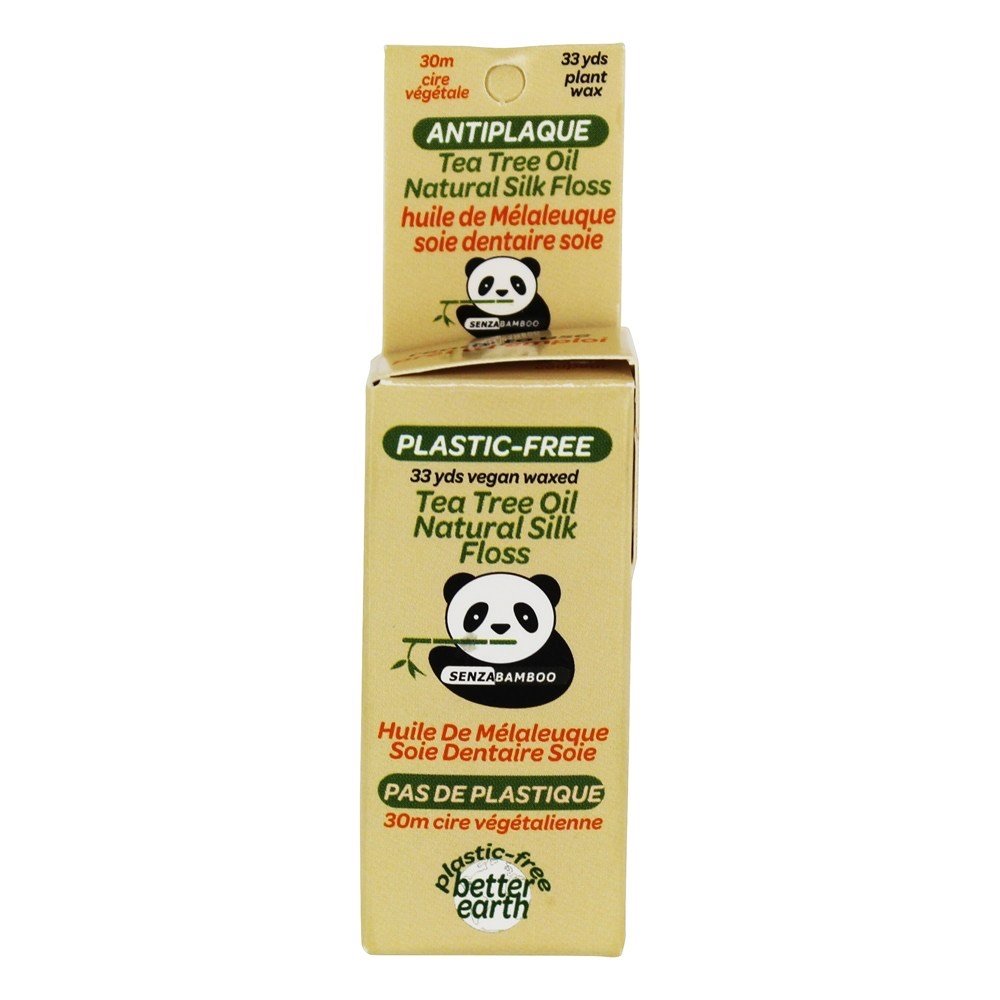 Best PFAS-Free CertifiedSENZACARE Silk Dental Floss |
PFAS-Free CertifiedNatural Silk |
Check price → |
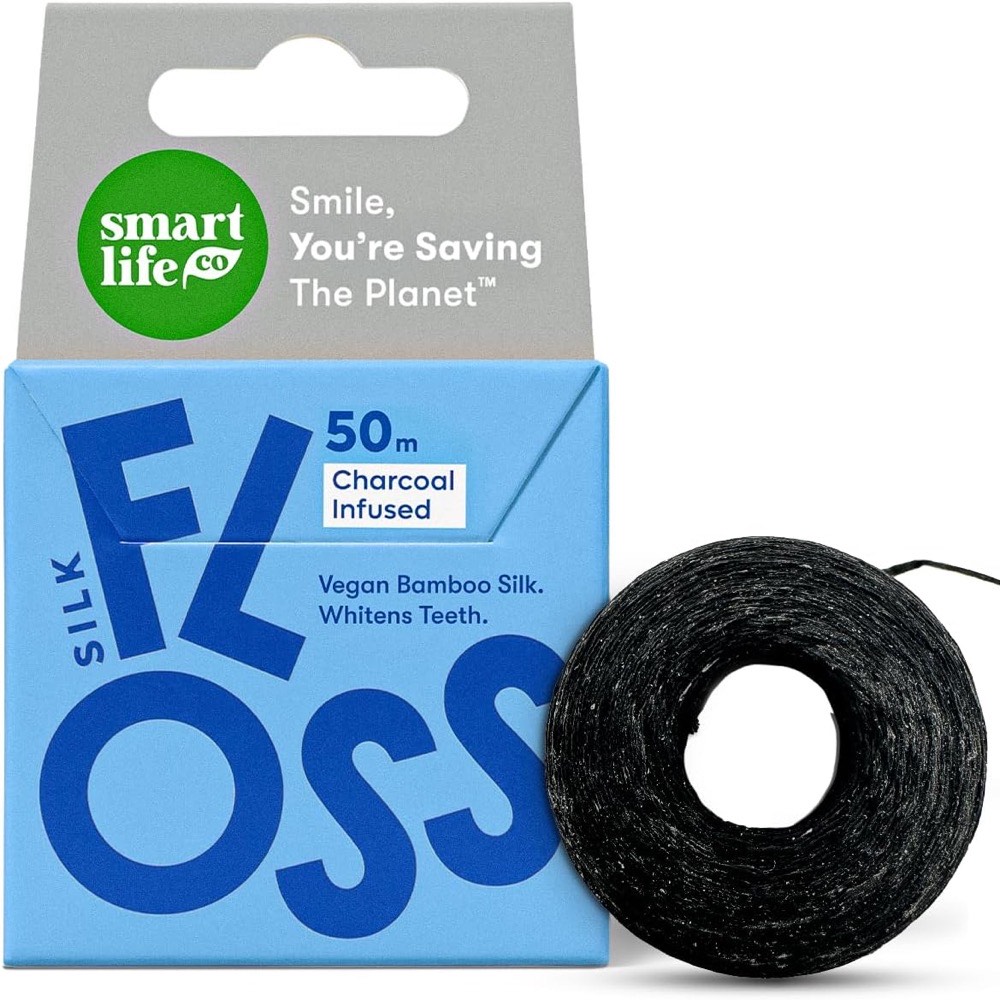 Best Vegan OptionSmart Life Co Bamboo Charcoal Silk Floss |
PFAS-FreeBamboo Fiber |
Check price → |
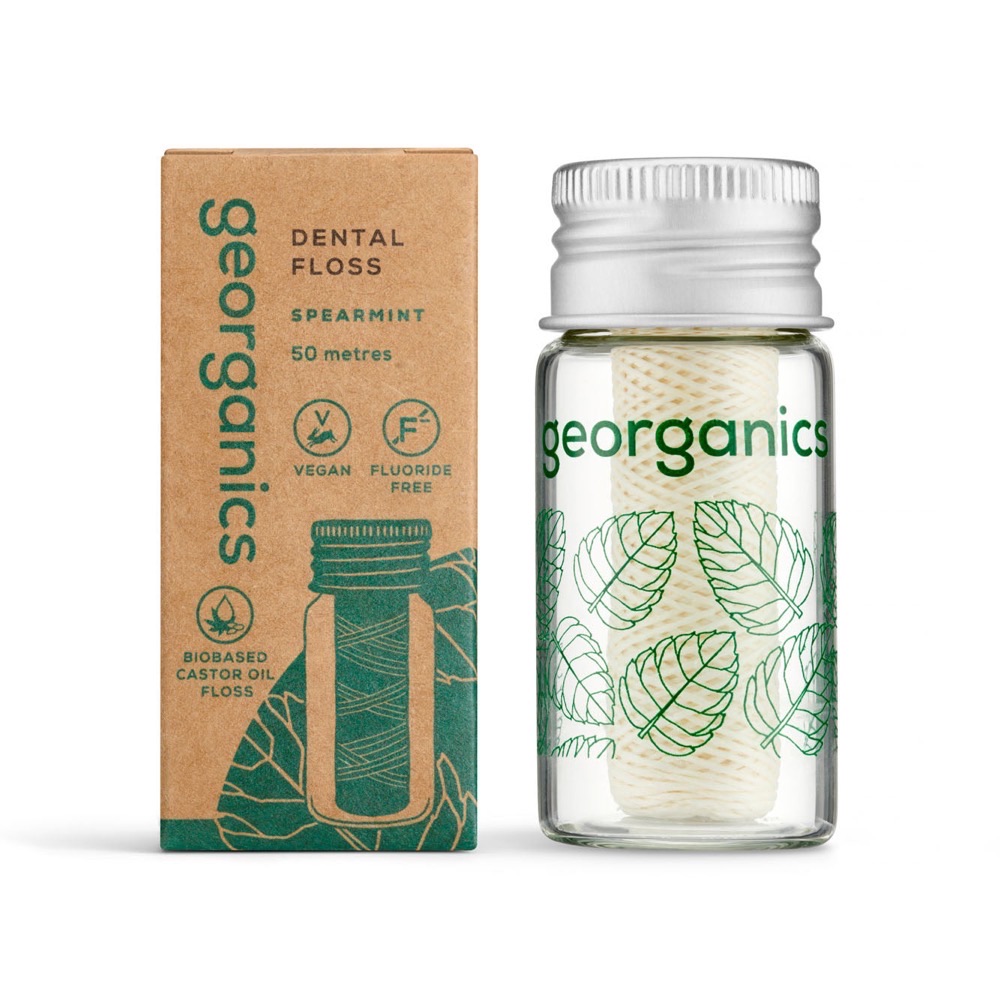 Best for Sensitive GumsGeorganics Natural Floss |
PFAS-FreePlant-Based Fiber |
Check price → |
Why Conventional Dental Floss Is a Problem
Most people don't think of dental floss as a plastic product. It's thin, it's used in the mouth, it seems innocuous. But conventional floss is fundamentally a plastic product — either nylon monofilament or multifilament — manufactured from petrochemical precursors and packaged in a plastic dispenser that itself is rarely recyclable.
Nylon (polyamide) is a synthetic polymer. It doesn't biodegrade in any meaningful timeframe. When it enters the environment — flushed down the toilet, blown out of a bin, escaping from landfill — it behaves like any other microplastic precursor: it fragments into smaller and smaller pieces, enters waterways, and is ingested by marine life. Nylon floss has been documented as a wildlife entanglement hazard in birds and marine animals.
Then there's the PFAS issue. PTFE-coated flosses — which include Oral-B Glide, Colgate Total, and many store-brand "comfort" flosses — use polytetrafluoroethylene as a lubricant to make the floss slide more easily between tight teeth. PTFE is technically a fluoropolymer and a member of the broader PFAS chemical family. The 2019 Silent Spring Institute study published in the Journal of Exposure Science & Environmental Epidemiology directly linked Oral-B Glide use to elevated PFAS blood levels in women — a finding that prompted significant public health attention.
"Women who reported using Oral-B Glide floss had significantly higher blood concentrations of a specific PFAS compound (PFHxS) than non-users. The association was dose-dependent — more frequent use correlated with higher levels."
The packaging compounds the problem. Most conventional floss comes in a small plastic dispenser — injection-molded polypropylene or polystyrene — that is rarely accepted by curbside recycling programs due to its size and mixed-material construction. Each dispenser, used and discarded, joins the estimated 3 billion pieces of plastic dental waste entering the U.S. waste stream annually.
Silk vs. Bamboo vs. Corn-Based PLA — What's the Difference?
Not all plastic-free flosses are created equal. The three main material categories each have distinct properties, trade-offs, and ideal use cases.
Natural Silk Floss
Silk floss is made from the same fiber used in silk textiles — the protein filament produced by silkworms. It's naturally strong, smooth, and biodegradable. Silk floss is typically coated with candelilla wax (a plant-derived wax) or beeswax for lubrication. It slides between teeth similarly to PTFE-coated floss, making it the best transition option for people accustomed to glide-style products. Silk degrades relatively quickly in compost — within months under ideal conditions, and within 1 to 4 years in typical environments. The main consideration: silk is an animal product, making it non-vegan. Look for "peace silk" (also called Ahimsa silk) if this matters to you — it's harvested without killing the silkworm.
Bamboo Fiber Floss
Bamboo floss is made from bamboo-derived fiber, sometimes blended with activated charcoal for mild whitening and antibacterial properties. It's fully plant-based and vegan when waxed with candelilla or carnauba wax (check labels — some bamboo flosses use beeswax). Bamboo floss tends to be slightly thicker and less silky than silk floss, which can make it harder to work in very tight contacts but more effective as a scrubbing fiber in wider spaces. Biodegradation rate is moderate — faster than nylon, slower than pure silk.
Corn-Based PLA Floss
PLA (polylactic acid) floss is made from fermented corn starch — technically a bioplastic. It looks and feels similar to conventional nylon floss. The critical distinction: PLA requires industrial composting conditions (sustained temperatures above 58°C/136°F) to degrade effectively. In home compost or landfill, PLA degrades very slowly and may persist for years. It is genuinely plant-derived and does not contain PFAS, but its environmental advantage over nylon depends heavily on proper disposal infrastructure. Still a meaningful step up from nylon — but silk and bamboo are more clearly biodegradable in real-world conditions.
What We Screened For
Every product recommended in this guide was evaluated against four non-negotiable criteria:
- No nylon: The floss fiber must be natural silk, bamboo, hemp, or plant-based PLA. No polyamide, no PTFE, no petroleum-derived synthetic fibers.
- No PFAS: No PTFE coating, no fluoropolymer treatments, no perfluorinated or polyfluorinated compounds of any kind.
- Biodegradable or compostable: The floss itself must be capable of breaking down in biological environments — either home compostable (silk, bamboo) or industrially compostable (PLA). Non-degradable coatings disqualify a product.
- Plastic-free packaging: The dispenser must be made from glass, metal, or compostable materials. Plastic dispensers — even "recyclable" ones — were excluded. Refillable systems were strongly preferred.
Our 6 Top Picks for 2026
Quick Picks
- Best overall: TreeBird Pure Silk Eco Floss — peace silk, candelilla wax, refillable glass jar
- Best refill system: Dental Lace Silk Floss Refills — glass dispenser + paper-wrapped refill spools
- Best value: WooBamboo Silk Dental Floss — 4-pack, natural silk in cardboard
- Best PFAS-free certified: SENZACARE Silk Dental Floss — tea tree oil, 100% plastic-free
- Best vegan option: Smart Life Co Bamboo Charcoal Silk Floss — bamboo silk + activated charcoal
- Best for sensitive gums: Georganics Natural Floss — spearmint, plant-based fiber, glass jar
1. TreeBird Pure Silk Eco Floss
Best Overall
Made from peace silk (Ahimsa silk — harvested without killing the silkworm), coated with candelilla wax for smooth glide. Comes in a reusable glass jar with a metal lid. No nylon, no PTFE, no PFAS, no plastic packaging. The silk is fine enough to fit comfortably in tight contacts while still providing effective plaque removal. This is the closest plastic-free alternative to a conventional glide floss in terms of feel and ease of use. Fully compostable floss thread.
TreeBird is one of only three flosses to pass a Consumer Reports safety screening for PFAS, and buyers choose it for the eco angle, saying "Replacing our plastic floss with this all-natural silk floss was a no brainer," reporting "no bleeding or irritation during use," and keeping the refillable glass dispenser going with 33-yard refill spools. Review volume is genuinely thin, mostly Amazon. The honest downside is the dominant one for silk floss: it "breaks 4 times faster than normal floss," worse "around metal fillings," and it is "very thin," so the per-use cost climbs; it is also silk, so not vegan.
Glides like a conventional comfort floss into tight contacts — but the thread is pure compostable silk and the jar is refillable glass, not plastic.
Why it's safe: 100% silk fiber waxed only with plant-derived candelilla wax — no nylon, no PTFE, and no PFAS "forever chemical" coating touching your gums.
Check Today’s Price on Amazon →Amazon prices change daily — tap to see today's price and any active discount.
- Free delivery & returns for Prime members
- Refillable glass jar — buy refill spools, not new dispensers
- Amazon A-to-z purchase guarantee
2. Dental Lace Silk Floss Refills
Best Refill System
Dental Lace pioneered the refillable glass floss dispenser. The starter kit includes a compact glass capsule and a spool of mulberry silk floss coated with candelilla wax; refill spools come packaged in a small paper sleeve — zero plastic in the chain. The glass dispenser is designed to last indefinitely. Silk is biodegradable. Candelilla wax is plant-derived and vegan. The refill system means ongoing waste is limited to a paper sleeve per spool — an outstanding low-waste dental care solution.
This B Corp's mulberry-silk floss earns steady praise for a smooth, gum-friendly feel, with reviewers saying "It is very much like your standard floss, with the exception that it glides smoothly between your teeth" and "I am able to get a great clean even in the tightest gaps," kept in a refillable glass vial you buy spools for. The honest downside is one the brand itself owns: "Some customers with tight teeth or sharp spots have told us that our silk floss sometimes breaks and shreds," some say it "takes twice as long to floss," and it is silk, so not vegan.
Buy the glass dispenser once, then refill it forever — each replacement is a spool of silk in a paper sleeve, so you never throw away another plastic floss case.
Why it's safe: Biodegradable mulberry silk waxed with plant-derived candelilla — no PTFE coating and no PFAS, in a refillable glass-and-steel dispenser.
Check Today’s Price on Amazon →Amazon prices change daily — tap to see today's price and any active discount.
- Free delivery & returns for Prime members
- Refillable glass dispenser — paper-sleeve refills only
- Amazon A-to-z purchase guarantee
3. WooBamboo Silk Dental Floss
Best Value
Natural silk floss waxed with beeswax — note this makes it non-vegan. Packaged in a small cardboard box rather than a plastic dispenser. Each box contains 30 meters of floss. Buying the 4-pack brings the per-box cost down sharply, making this the most affordable silk option on our list. Biodegradable floss thread. WooBamboo is a certified B-Corp with transparent supply chain practices. The cardboard packaging is recyclable and plastic-free. Best pick for households looking to make a budget-friendly switch.
Buyers like that this silk floss is "just the right thickness to really grab stuff and clean well" and "super tough and much tougher than plastic floss," so it "doesn't shred the first time you push it down between your teeth," and fans of thick, grippy floss compare it to CocoFloss. The honest downsides: the packaging and cutter are the top gripe, with the "cutting tool falls out easily" so people resort to scissors, it "can be brittle in tight spaces" for people with very tight teeth, and because it is silk with a beeswax coating it is not vegan.
A 4-pack drops the per-box cost well below the single-jar picks — the easiest way to swap the whole household off nylon without overpaying for the change.
Why it's safe: Biodegradable natural silk in a recyclable cardboard box — no nylon, no PTFE, no PFAS. (Waxed with beeswax, so it is plastic-free but not vegan.)
Check Today’s Price on Amazon →Amazon prices change daily — tap to see today's price and any active discount.
- Free delivery & returns for Prime members
- Certified B-Corp, plastic-free cardboard packaging
- Amazon A-to-z purchase guarantee
4. SENZACARE Silk Dental Floss
Best PFAS-Free Certified
100% natural silk coated with tea tree oil and candelilla wax. Tea tree oil adds mild antibacterial properties. The dispenser is a glass vial with a metal cap — fully plastic-free from floss to packaging. SENZACARE explicitly certifies no PFAS, no nylon, no synthetic chemicals. It is one of the most affordable glass-packaged options available. Good for people prioritizing PFAS-free certification with verifiable ingredient transparency. The tea tree scent is mild and pleasant without being overpowering.
This candelilla-wax-coated silk floss is widely stocked (Amazon, Walmart, Target) and comes in mint, tea tree, and unflavored in a refillable glass vial, bought mainly for being 100% plastic-free at a price close to conventional floss. Honesty note: verified review text is genuinely thin and mostly paraphrased, with a mixed 3.9-star Walmart score on its tea-tree version. The one downside with real supporting signal is that the silk "can break" and needs "gentler handling than regular floss" on tight teeth, and, being real silk, it is not vegan.
The brand spells out the claim others leave vague — certified no PFAS, no nylon, no synthetics — with mild antibacterial tea tree oil baked in.
Why it's safe: Natural silk waxed with plant-derived candelilla and tea tree oil, packaged in a glass vial — certified free of PFAS, PTFE, and nylon.
Check Today’s Price on Amazon →Amazon prices change daily — tap to see today's price and any active discount.
- Free delivery & returns for Prime members
- Certified PFAS-free, 100% plastic-free packaging
- Amazon A-to-z purchase guarantee
5. Smart Life Co Bamboo Charcoal Silk Floss
Best Vegan Option
Made from bamboo-derived silk fiber infused with activated charcoal, waxed with plant-based wax — making it fully vegan. The activated charcoal provides mild whitening and antimicrobial action. Packaged plastic-free. Bamboo fiber is thicker and more textured than pure silk, which makes it excellent at physically dislodging debris in average-to-wide contact points. For very tight contacts, see our silk picks above. The best fully vegan, plant-based option on our list with zero animal-derived ingredients throughout.
This bamboo-silk floss with a charcoal coating comes in a compostable box, and the brand-verified reviews that exist are short and positive, with testimonial titles like "Silky Smooth" and "Gentle Yet Effective." Honesty note: independent written reviews are currently scarce and no verified complaints surfaced, so treat this as a lighter-evidence pick rather than one with a deep track record. One useful clarification for shoppers: it is marketed as bamboo "vegan silk," so the usual not-vegan objection to silk floss does not straightforwardly apply here.
The textured charcoal fiber grabs and scrubs debris from wider gaps that fine silk can skate over — fully vegan, and the charcoal adds mild whitening.
Why it's safe: Plant-based bamboo silk fiber waxed without animal products — no nylon, no PTFE, and no PFAS coating, in plastic-free packaging.
Check Today’s Price on Amazon →Amazon prices change daily — tap to see today's price and any active discount.
- Free delivery & returns for Prime members
- Vegan, plant-based, plastic-free packaging
- Amazon A-to-z purchase guarantee
6. Georganics Natural Floss
Best for Sensitive Gums
Made from plant-derived fiber (a renewable bioplastic) infused with spearmint essential oil for a fresh, clean feel. Packaged in a refillable glass jar. This is the most accessible price point on our list. The fiber is free of nylon and PFAS and derived from renewable plant feedstock. Important caveat: this bioplastic fiber requires industrial composting conditions to fully biodegrade — in home compost or landfill it degrades slowly. Still a meaningful improvement over nylon — no PFAS, no petroleum fiber — and the spearmint makes it particularly pleasant for people who dislike unflavored floss. Good for sensitive gums due to the smooth, consistent texture.
Georganics is loved for the concept and the refillable glass jar, with buyers praising a spearmint that is "not overpowering" and glide that "glides well between teeth," and reaching for "the little refillable bottle" with future refills in mind. The honest downside is loud and consistent, though: on tight teeth "this floss kept getting seriously stuck between teeth, then shredding, and breaking," several find it "more the width of tape than floss," and buyers who owned an older version complain the newer corn-based refill is "too big, so requires a new pot," undercutting the zero-waste promise.
The smoothest, most consistent texture on the list with a fresh spearmint finish — gentle enough for sensitive gums and the cheapest glass-jar option here.
Why it's safe: Plant-derived fiber, not nylon — no PFAS and no PTFE glide coating — refilled from a reusable glass jar. (Best composted industrially, not at home.)
Check Today’s Price on Amazon →Amazon prices change daily — tap to see today's price and any active discount.
- Free delivery & returns for Prime members
- Refillable glass jar, plant-based fiber
- Amazon A-to-z purchase guarantee
Comparison Table
| Product | Material | Wax | Packaging | Vegan | Price |
|---|---|---|---|---|---|
| TreeBird Silk Floss | Peace silk | Candelilla | Glass jar | Yes* | $$ |
| Dental Lace Refills | Mulberry silk | Candelilla | Glass + paper | Yes | $ |
| WooBamboo Silk | Natural silk | Beeswax | Cardboard | No | $ / 4pk |
| SENZACARE Silk | Natural silk | Candelilla | Glass vial | Yes | $ |
| Smart Life Co Bamboo | Bamboo + charcoal | Plant wax | Plastic-free | Yes | $ |
| Georganics Natural | Plant-based fiber | Candelilla | Glass jar | Yes | $ |
Price guide: $ budget · $$ mid-range · $$$ premium. Plastic-free floss is inexpensive across the board — tap any pick above for today's exact Amazon price. *Peace silk is harvested without killing the silkworm but remains an animal-derived product — not universally accepted as vegan. WooBamboo uses beeswax, which is animal-derived. All other picks use plant-derived waxes.
What to Avoid
The following floss types introduce plastic, PFAS, or unnecessary waste into your daily routine — and all have direct plastic-free replacements.
Avoid Nylon dental floss
Standard dental floss — including Reach Waxed, Johnson & Johnson, and most store-brand flosses — is made from nylon. Nylon is a petroleum-derived plastic that takes 500 to 600 years to decompose. It enters waterways as microplastic and is documented as a marine wildlife hazard. There is no meaningful advantage to nylon over silk or bamboo for average flossing needs.
Avoid PTFE/Teflon-coated floss
Oral-B Glide, Colgate Total, and most "comfort" or "shred-resistant" flosses use PTFE coating. PTFE is a PFAS compound — a forever chemical that accumulates in tissue and has been linked to thyroid disruption, immune suppression, hormone interference, and certain cancers. A 2019 peer-reviewed study directly measured elevated PFAS blood levels in regular Oral-B Glide users. Daily mucosal contact with PFAS-coated floss represents a meaningful chronic exposure pathway.
Avoid Plastic floss picks
Single-use plastic floss picks — the Y-shaped devices with a small piece of floss stretched across a plastic handle — combine nylon or PTFE floss with a non-recyclable plastic body. Each pick is used once and thrown away. They are convenient but represent one of the most wasteful per-use plastic items in the bathroom. Reusable floss threaders made from stainless steel or silicone are a better option for people with braces or bridges.
Avoid "Eco" floss in plastic dispensers
Some brands market "natural" or "biodegradable" floss — but package it in a standard plastic dispenser. The floss itself may be silk or PLA, but the plastic housing negates the environmental claim. Always check the full product package: floss material, wax source, and dispenser material. A silk floss in a plastic case is still a plastic product at the point of sale and end of life.
Tips for Getting the Most from Plastic-Free Floss
Switching from nylon or PTFE floss takes a brief adjustment period. A few tips to make the transition smooth:
- Start with a waxed silk floss if you're used to glide-style products. The candelilla wax coating closely mimics the slip of PTFE without the chemical risk. TreeBird and SENZACARE are the closest in feel to conventional glide floss.
- Use a longer piece than you think you need. Natural silk and bamboo flosses benefit from using 18 to 24 inches, winding around your fingers as you work from tooth to tooth. Reusing the same segment picks up and redeposits bacteria — use a fresh section at each interproximal space.
- For very tight contacts, warm the floss briefly between your fingers before threading. This softens the wax coating slightly, improving slide. A waxed silk floss will work in most tight contacts without this step.
- Compost spent floss correctly. Silk and bamboo floss threads can go in a home compost bin — they will break down. PLA floss should go to an industrial composting facility; check your municipality's guidelines.
- Buy the refill system. Dental Lace's refillable glass dispenser is the most waste-minimizing option over the long term. The upfront investment in the glass capsule pays off immediately — refill spools come in a paper sleeve only.
Want the Full Plastic-Free Bathroom Guide?
Dental floss is one swap. The Complete Plasticproof Guide covers every product category in your bathroom — toothpaste, soap, shampoo, lotion — with full research, brand-by-brand comparisons, and 80+ product recommendations backed by 47+ peer-reviewed studies.
Frequently Asked Questions
Yes. Silk dental floss removes plaque and food debris just as effectively as nylon in clinical use. The fiber structure of natural silk is strong enough for routine flossing and slides between teeth smoothly when waxed with candelilla or beeswax. The primary difference is that silk fibers are finer and may fray more easily in very tight contact points — for those cases, a thicker bamboo or corn-PLA floss can provide more durability. Overall, silk is a fully effective replacement for nylon floss.
PFAS (per- and polyfluoroalkyl substances) are a class of synthetic fluorinated chemicals used to create non-stick, water-resistant, and glide-enhancing coatings. In dental floss, PFAS — specifically PTFE (polytetrafluoroethylene), also known as Teflon — are applied to make floss slide more easily between teeth. A 2019 study published in the Journal of Exposure Science & Environmental Epidemiology found that women who regularly used Oral-B Glide floss (a PTFE-coated product) had significantly higher levels of PFAS in their blood. PFAS are linked to thyroid disruption, immune suppression, certain cancers, and reproductive harm. They do not break down in the body or the environment — hence the name "forever chemicals."
Bamboo fiber floss is generally vegan, but the wax coating matters. Many bamboo flosses use beeswax for lubrication, which is an animal byproduct and not considered vegan. For a fully vegan option, look for floss waxed with candelilla wax (a plant-derived wax from the candelilla shrub native to Mexico) or carnauba wax. Smart Life Co Bamboo Charcoal Floss and Georganics Natural Floss both use plant-based waxes. Always check the wax source on the product label — it is not always prominently displayed.
Natural silk floss composted in optimal conditions (moisture, microorganisms, warmth) can begin to break down within weeks and fully decompose within 1 to 4 years depending on the environment. Corn-based PLA floss requires industrial composting conditions — at home compost temperatures, PLA degrades very slowly and may persist for several years. Bamboo fiber floss falls in between, decomposing more readily than PLA but slower than pure silk. All three options are dramatically better than nylon, which can persist in landfill and ocean environments for 500 to 600 years.
Yes, though the choice of floss type matters. For tight contacts between teeth, a waxed silk floss with candelilla wax tends to slide most easily and is the closest in feel to conventional PTFE-coated floss. TreeBird Pure Silk Floss and SENZACARE Silk Floss are both waxed and work well in tight spaces. Unwaxed bamboo or PLA floss can be more difficult to maneuver in very tight contacts and may shred. If you have consistently tight contacts, start with a waxed silk option and adjust from there.
Sources
- Boronow KE, et al. "Serum concentrations of PFASs and exposure-related behaviors in African American and non-Hispanic white women." Journal of Exposure Science & Environmental Epidemiology, 2019. (Silent Spring Institute PFAS/dental floss study)
- Liu Y, et al. "PFAS in consumer products: sources, exposure pathways and human health effects." Environmental Science & Technology, 2021.
- Rilling M, et al. "Biodegradation of silk in aquatic and terrestrial environments." Polymer Degradation and Stability, 2017.
- Geyer R, Jambeck JR, Law KL. "Production, use, and fate of all plastics ever made." Science Advances, 2017. (Context on nylon persistence)
- Lohmann R, et al. "Are Fluoropolymers Really of Low Concern for Human and Environmental Health and Separate from Other PFAS?" Environmental Science & Technology, 2020.
- U.S. Environmental Protection Agency. "PFAS Explained." EPA.gov, 2023. Accessed April 2026.
Protect Your Whole Bathroom from Hidden Plastics
From floss to shampoo to lotion — the Complete Plasticproof Guide covers every bathroom product with full research, brand comparisons, and 80+ product recommendations.