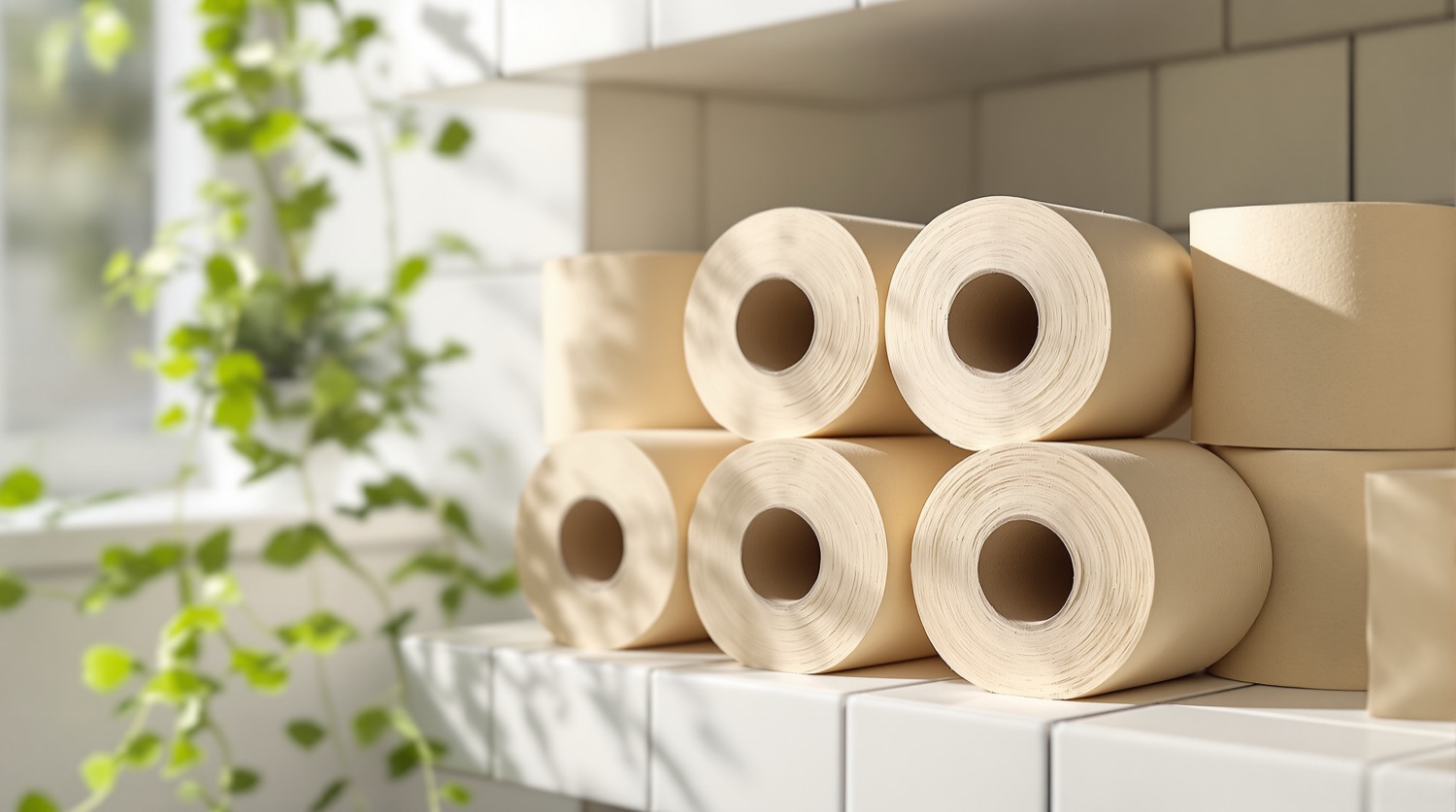
The best plastic-free toilet paper in 2026 is Betterway’s 100% Bamboo 3-Ply — 360 sheets a roll, no plastic film at any layer of the pack, and one of the products that came back non-detect for organic fluorine, the standard screening marker for PFAS, at an EPA-certified laboratory. The number behind this whole category: in testing of 23 retail toilet papers, six returned detectable organic fluorine between 6 and 35 parts per million — and three of those six were bamboo brands people buy precisely to avoid this. Separately, a 2023 study in Environmental Science & Technology Letters found PFAS in toilet paper collected from four world regions, with one compound, 6:2 diPAP, making up 91 percent of what was there. Below, six packs that tested clean, and the six that did not.
Toilet paper is the one paper product in the house that nobody researches. You buy the pack that is on offer, it comes home in a plastic bag, and the bag goes in the bin within about four seconds. That is roughly the whole decision, for most households, for a lifetime.
Two things have changed that are worth five minutes of attention. The first is that the plastic bag is no longer necessary — a real plastic-free pack now costs roughly what a supermarket multipack costs, which was not true three years ago. The second is less comfortable: researchers have now measured PFAS in toilet paper itself, not just in the packaging, and when a consumer group paid an EPA-certified laboratory to screen 23 retail products, the brands that failed were not the ones you would guess. We will name all of them, and we will be precise about what the testing can and cannot tell you.
Why does plastic-free toilet paper need a PFAS test?
Because PFAS is measurably in toilet paper already, at parts-per-billion levels, and the reason is mundane rather than sinister: PFAS compounds are used as wetting agents in the pulping process, and recycled paper fiber can carry them in from whatever the paper was in a previous life. Nobody is adding “forever chemicals” to toilet paper on purpose. We covered the science in full in does toilet paper have PFAS; here is the short version, because it is what the ranking below is built on.
The study that established this is Thompson, Chen, Bowden and Townsend, “Per- and Polyfluoroalkyl Substances in Toilet Paper and the Impact on Wastewater Systems,” published in Environmental Science & Technology Letters in 2023, doi 10.1021/acs.estlett.3c00094, with the published record at the American Chemical Society. The team at the University of Florida collected packaged toilet paper from four world regions — Africa, North America, South and Central America, and Western Europe — assayed each sample for 34 separate PFAS, and analyzed sewage sludge from eight Florida wastewater treatment plants for the same list.
| What Thompson et al. (2023) measured | Figure |
|---|---|
| World regions toilet paper was collected from | 4 |
| PFAS compounds assayed in each sample | 34 |
| Most prevalent PFAS in toilet paper and in sludge | 6:2 diPAP |
| Share of total PFAS mass that was 6:2 diPAP | 91% |
| Share that was 8:2/6:2 diPAP | 3.7% |
| Share that was PFHxA | 3.3% |
| Share that was PFOA | 0.6% |
| Estimated 6:2 diPAP sent to wastewater per person, per year | 6.4–80 µg |
| Effect of recycled fiber content on diPAP levels | None detected |
Now the part most coverage of this study skipped, and the reason we are not going to tell you to panic. This is a study about what reaches the sewer, not about a dose you absorb. The authors’ conclusion is that toilet paper should be treated as a potentially major source of PFAS entering wastewater treatment systems, because treated sewage sludge is spread on farmland. It is an environmental-loading paper. Nobody has demonstrated that the PFAS in a sheet of toilet paper does anything to the person holding it.
What makes 6:2 diPAP worth tracking anyway is that it is a precursor. It does not stay as itself: work on biotransformation in animals and in biosolid-amended soil has shown diPAPs converting into stable perfluoroalkyl carboxylic acids, including PFHxA and PFOA — see, for example, the rat uptake and biotransformation work indexed at PubMed 24460105 and the biosolids-applied soil study at PubMed 24308318. The EPA’s own plain-language summary of what PFAS are and why they persist sits at EPA: our current understanding of the risks of PFAS. So the compound that dominates toilet paper is the kind that turns into the compounds everybody is worried about, downstream, slowly.
Which plastic-free brands tested clean, and which did not?
The peer-reviewed study above did not name brands — it sampled anonymously by region. The brand-level data comes from a separate effort: the consumer group Mamavation bought retail toilet paper between October 2021 and September 2026 and sent 23 products to an EPA-certified laboratory to be screened for organic fluorine, using the method “Determination of Total Fluorine by Oxygen Flask Combustion and Ion-Selective Electrode.” Six came back with a detection. You can read the full report and methodology.
| Product with detectable organic fluorine | Fiber | Result |
|---|---|---|
| Seventh Generation 100% Recycled | Recycled | 35 ppm |
| Charmin Ultra Soft | Virgin wood pulp | 13 ppm |
| Who Gives a Crap Bamboo | Bamboo | 11 ppm |
| Tushy Bamboo | Bamboo | 10 ppm |
| DeBella Bamboo Septic Safe | Bamboo | 10 ppm |
| Purafide 100% Tree Free Bamboo | Bamboo | 6 ppm |
Four of the six are products bought specifically to be the responsible choice. That is the finding worth carrying out of this page. Who Gives a Crap and Tushy are not supermarket afterthoughts — they are the brands recommended in most “eco toilet paper” roundups on the internet, including ones that cite this exact test and then recommend them anyway.
And the caveat, stated as plainly as the finding, because you deserve both. Organic fluorine is a screening marker, not proof of a specific PFAS. The testers say so themselves: fluorinated pesticide residue and fluorinated pharmaceuticals can also register on this method. A detection means fluorine-carrying organic compounds are present and PFAS is the most likely explanation; it does not identify which one or at what level. Equally, non-detect does not mean zero — it means below what this method could see in that lot, on that day. This is one commissioned round of consumer testing, not a peer-reviewed survey, and a mill can change its process without changing its packaging. We rank on it because it is the only brand-level evidence that exists, and we would rather use imperfect real data than none.
Compare all 6 picks
Every pick side by side — tap a name to jump to the full review, or check today’s price.
| Pick | PFAS marker | Plastic film & sheets | |
|---|---|---|---|
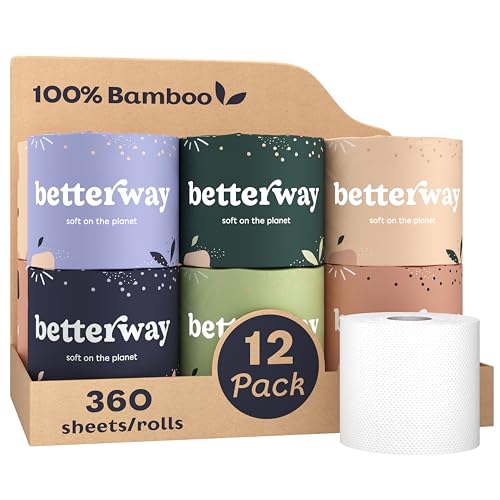 Best OverallBetterway 3-Ply Bamboo |
Non-detect | None in the pack360 × 12 rolls |
Check price → |
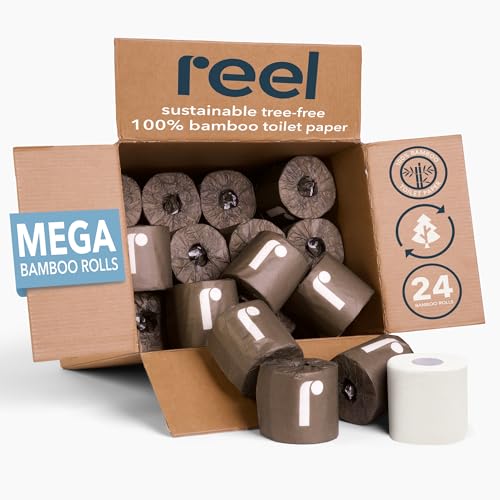 Best Zero-Plastic PackagingReel Premium Bamboo |
Non-detect | None in the pack300 × 24 rolls |
Check price → |
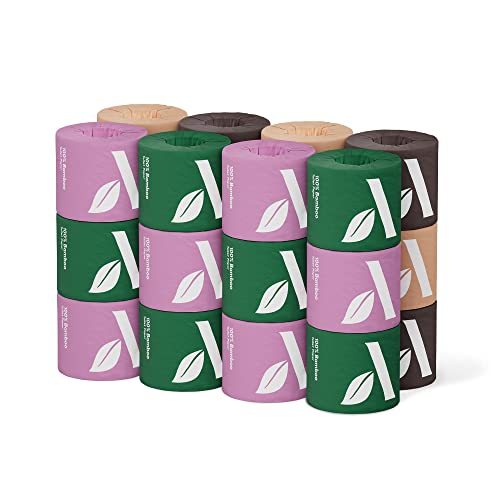 Best ValueAmazon Aware Bamboo |
Non-detect | None in the pack350 × 24 rolls |
Check price → |
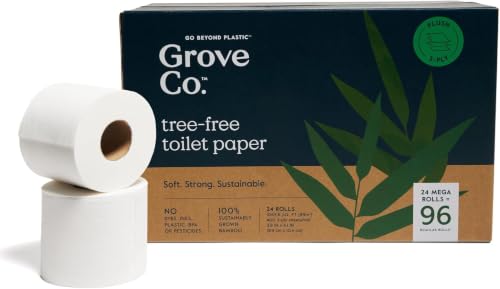 Most Sheets per RollGrove Co. Ultra Soft |
Non-detect | None in the pack400 × 24 rolls |
Check price → |
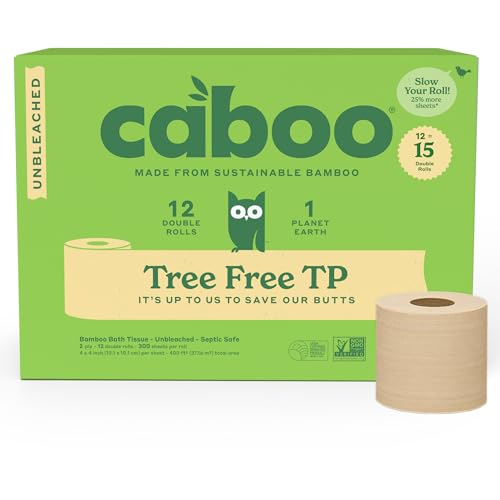 Best UnbleachedCaboo Unbleached |
Non-detect | None in the pack300 × 12 double rolls |
Check price → |
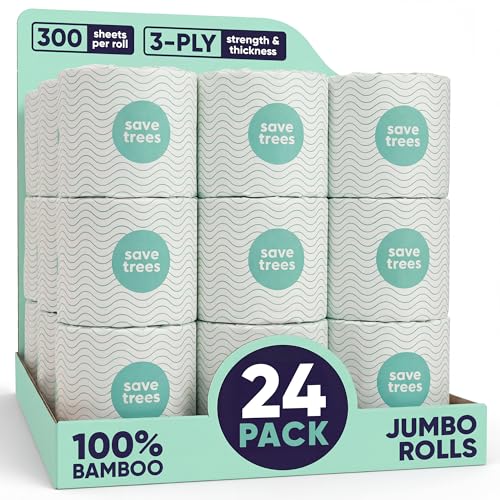 Best for Septic and RVSave Trees Bamboo |
Non-detect | None in the pack300 × 24 rolls |
Check price → |
What does “plastic-free” toilet paper actually mean?
Three separate layers, and most packs on sale only fix one of them. Getting this straight is what stops you paying a premium for a pack that still arrives in a bag.
Layer one is the outer wrap. A standard supermarket multipack is sealed in polyethylene film — a single-use plastic bag with a lifespan of about four seconds. This is the big one by weight, and it is the layer every pick in this guide replaces with a cardboard carton.
Layer two is the individual roll sleeve. Plenty of “eco” packs put paper on the outside and then wrap each roll in plastic inside. Every pick here uses a paper sleeve instead, and three of them — Reel, Grove Co. and Caboo — skip printed color on the roll entirely. You can see the plain brown sleeves in the Reel photograph above.
Layer three is the sheet itself, and here the word “plastic” stops being the right word. Toilet paper is not made of plastic in any brand. What the sheet can carry is process chemistry: PFAS from pulping or recycled feedstock, chlorine compounds from bleaching, plus dyes, inks and fragrance. That is why this guide ranks on a laboratory result rather than on the words on the front of the box, and the same reasoning we applied to paper food packaging in our pieces on whether paper plates have PFAS and whether parchment paper has PFAS.
One more label that gets over-read: “tree-free” and FSC certification are forestry claims, not chemistry claims. They tell you where the fiber came from and how it was grown. They say nothing whatsoever about what happened in the mill — which is exactly how three FSC-friendly bamboo products ended up in the detection table above.
The 6 Best Plastic-Free Toilet Paper Brands in 2026
#1 — Betterway Bamboo Toilet Paper, 3-Ply (12 rolls, 360 sheets) — Best Overall
Best Overall
No plastic bag, no plastic sleeve, 360 sheets on every roll, and an independent lab result rather than a sentence on the box.
Why it’s best for plastic exposure: every layer of the packaging is paper or board, so nothing in the pack is a polyethylene film you unwrap and throw away.
Check Today’s Price on Amazon →Amazon prices change daily — tap to see today's price and any active discount.
- Free delivery & returns for Prime members
- No plastic film anywhere in the pack
- Non-detect for organic fluorine at an EPA-certified lab
The honest trade-offs. Twelve rolls is a small box, so the cost per sheet is higher than the 24- and 36-roll packs further down this list — if price per wipe is your metric, buy the bulk version. The paper sleeves are printed with colored ink, which is a cosmetic choice rather than a plain one; Reel and Caboo skip the color entirely. And “PFAS free” printed on a listing is a manufacturer’s claim, not a test — it is the independent non-detect result, not the label, that earns this the top spot.
Best for: Anyone who wants the whole question settled in one purchase and is willing to pay a little more per sheet for a longer roll and a tested product.
#2 — Reel Premium 3-Ply Bamboo Toilet Paper (24 rolls, 300 sheets) — Best Zero-Plastic Packaging
Best Zero-Plastic Packaging
The simplest package on this page: a cardboard box and 24 rolls in plain brown paper, with nothing plastic to remove.
Why it’s best for plastic exposure: the outer carton is board and the individual sleeves are uncoated paper, so the pack contributes no film at all to the bin.
Check Today’s Price on Amazon →Amazon prices change daily — tap to see today's price and any active discount.
- Free delivery & returns for Prime members
- Unbleached and undyed
- Non-detect for organic fluorine at an EPA-certified lab
The honest trade-offs. Unbleached means visibly tan, and some households simply do not like how that looks in a white bathroom — worth knowing before 24 rolls arrive. At 300 sheets a roll it carries 60 fewer sheets than the Betterway roll and 100 fewer than the Grove Co. roll, so a 24-pack does not last as long as the count suggests. And like every bamboo brand here, the fiber is grown and milled in Asia, so the low-paper-footprint argument comes with a shipping footprint attached.
Best for: The reader whose objection is the plastic wrapper itself, and who would rather have a box they can flatten and recycle whole.
#3 — Amazon Aware Bamboo 3-Ply Toilet Paper (24 rolls, 350 sheets) — Best Value
Best Value
The lowest-friction switch here: a familiar checkout, 8,400 sheets, no plastic in the pack, and the same lab verdict as the premium brands.
Why it’s good for plastic exposure: paper sleeves and a board carton, with no polyethylene overwrap on the multipack.
Check Today’s Price on Amazon →Amazon prices change daily — tap to see today's price and any active discount.
- Free delivery & returns for Prime members
- FSC certified, unscented
- Non-detect for organic fluorine at an EPA-certified lab
The honest trade-offs. This is a retailer’s own private label, which means the mill behind it is not named and can change without the product name changing — a real limitation when the thing you care about is mill chemistry. FSC certification covers how the bamboo was grown and harvested, not what happened to it in processing, so it is not a chemical claim. And the tissue is bleached white rather than left natural, which is a cosmetic preference but also an extra processing step.
Best for: Households replacing a 24-pack habit who want the switch to cost roughly what they already spend.
#4 — Grove Co. Ultra Soft Bamboo Toilet Paper (24 mega rolls, 400 sheets) — Most Sheets per Roll
Most Sheets per Roll
The longest roll on this page by a clear margin, in a pack that states it uses no dyes, no inks and no plastic.
Why it’s good for plastic exposure: no plastic in the packaging and no printing on the tissue, so there is nothing added to the sheet after the mill.
Check Today’s Price on Amazon →Amazon prices change daily — tap to see today's price and any active discount.
- Free delivery & returns for Prime members
- No dyes or inks on the tissue
- Non-detect for organic fluorine at an EPA-certified lab
The honest trade-offs. A 400-sheet mega roll is physically fat, and it will not fit every recessed or spring-loaded holder — measure before you commit to 24 of them. “Equivalent to 96 regular rolls” is a sheet-count conversion rather than a count of rolls you receive, which is standard practice in this category and still worth reading carefully when you compare prices. And “ultra soft” is a manufacturer’s description, not a measured property.
Best for: Big households, and anyone who would rather restock twice a year than once a month.
#5 — Caboo Tree-Free Bamboo Toilet Paper, Unbleached (12 double rolls) — Best Unbleached
Best Unbleached
No bleach, no dye, no fragrance, and an independent lab result — the shortest list of things done to the paper of any pick here.
Why it’s good for plastic exposure: plastic-free packaging, and an unbleached sheet means one fewer processing stage between the plant and the roll.
Check Today’s Price on Amazon →Amazon prices change daily — tap to see today's price and any active discount.
- Free delivery & returns for Prime members
- Unbleached, fragrance-free
- Non-detect for organic fluorine at an EPA-certified lab
The honest trade-offs. This is the only two-ply pick on the list, and a two-ply sheet is thinner than a three-ply one — in practice people reach for more sheets, which quietly eats the savings of the longer roll. Twelve rolls is also the smallest pack here. And “double roll” counting makes direct price comparison harder than it should be: compare total sheets, which is 3,600 in this box, rather than the number on the front.
Best for: Anyone with sensitive skin, and anyone who would rather have the plainest possible product than the softest one.
#6 — Save Trees Bamboo Toilet Paper, 3-Ply (24 jumbo rolls, 300 sheets) — Best for Septic and RV
Best for Septic and RV
A three-ply bamboo roll sold for septic and holding tanks, with plastic-free packaging and a clean lab screen.
Why it’s good for plastic exposure: paper roll wraps and a board tray, with no polyethylene bag around the multipack.
Check Today’s Price on Amazon →Amazon prices change daily — tap to see today's price and any active discount.
- Free delivery & returns for Prime members
- FSC certified, sold as septic safe
- Non-detect for organic fluorine at an EPA-certified lab
The honest trade-offs. “Septic safe” is a manufacturer’s claim on this product as on every other one in the category — there is no government mark behind it, and the only real test is how your own system behaves. The brand name change from Cloud Paper means older reviews and older guides point at listings that may no longer be the same pack. And at 300 sheets a roll, “jumbo” describes the roll’s diameter rather than an unusual sheet count.
Best for: Septic-tank households, RV owners and anyone whose plumbing has strong opinions about toilet paper.
What we left out, and why
Who Gives a Crap bamboo. The best-known plastic-free toilet paper in the world, genuinely good on packaging, and the reason it is not on this list is one line in a laboratory report: 11 ppm organic fluorine. We are not calling it unsafe — at that level nobody can tell you what the health consequence is, if any. We are saying that when six other packs with identical packaging credentials came back non-detect, there is no reason to choose the one that did not.
Seventh Generation 100% Recycled. The highest reading in the whole round at 35 ppm, roughly three times the next-highest. It is also the brand most often named when people ask what the responsible choice is. Recycled fiber is a genuinely good idea; this particular product did not screen clean.
Charmin Ultra Soft and other conventional brands. Charmin Ultra Soft registered 13 ppm, and most conventional packs come wrapped in plastic film regardless. Worth noting for honesty: several conventional papers in the same round — Scott, Angel Soft, Quilted Northern — were non-detect. They are still sold in plastic bags, which is why they are not here, but “conventional” is not a synonym for “contaminated.”
“Flushable” wipes. A different product and a worse one for this purpose: most contain synthetic fibers, they are a well-documented cause of sewer blockages, and nothing about them belongs in a plastic-free bathroom.
A bidet. Honestly, the most effective option in this entire category is to use dramatically less toilet paper, and a bidet seat does that. We have not ranked one here because this page is about which paper to buy, but if your goal is to cut the paper out rather than switch it, that is the move — and it pairs with the rest of the room in our plastic-free shower curtain guide and the plastic-free dental floss guide.
Is recycled toilet paper worse than bamboo?
The label does not predict it, and the two best pieces of evidence agree on that even though they look like they disagree. Thompson and colleagues specifically compared papers labeled as containing recycled fiber against non-recycled papers and found that recycled content did not affect the 6:2 diPAP concentrations. The consumer lab round then produced its highest single reading on a recycled product — while other recycled products, including Green Forest, Natural Value and Open Nature, came back non-detect.
Read together, those say the same thing: the fiber is not the variable, the mill is. A bamboo product from a mill with fluorinated process chemistry will test worse than a recycled product from a mill without it, and vice versa. Which is unsatisfying, because it means no shortcut on the front of a box can answer this for you — only a test of the actual product can, which is why we built the ranking on one.
Comparison Table: At a Glance
| Pick | Ply & sheets | Organic fluorine | Plastic film in pack |
|---|---|---|---|
| Betterway 3-Ply Bamboo | 360 × 12 rolls | Non-detect | None in the pack |
| Reel Premium Bamboo | 300 × 24 rolls | Non-detect | None in the pack |
| Amazon Aware Bamboo | 350 × 24 rolls | Non-detect | None in the pack |
| Grove Co. Ultra Soft | 400 × 24 rolls | Non-detect | None in the pack |
| Caboo Unbleached | 300 × 12 double rolls | Non-detect | None in the pack |
| Save Trees Bamboo | 300 × 24 rolls | Non-detect | None in the pack |
Ply, sheet counts, roll counts and packaging descriptions are each manufacturer’s own published wording, read off their live listings on October 31, 2026. The organic-fluorine column is not taken from any brand’s marketing — it is the result recorded for that brand’s bamboo tissue in EPA-certified laboratory testing commissioned by Mamavation. We are not printing prices, because Amazon changes them daily and a stale number is worse than none — tap any buy button for today’s figure.
Our Pick by Situation
- You want one decision, made once: Betterway 100% bamboo 3-ply, 360 sheets a roll.
- You want nothing plastic to arrive at all: Reel Premium, kraft box and brown paper sleeves.
- You want to spend what you already spend: Amazon Aware bamboo, 8,400 sheets.
- You are tired of changing the roll: Grove Co. Ultra Soft, 400 sheets a roll.
- Sensitive skin, or you want the plainest sheet: Caboo unbleached, no bleach, dye or fragrance.
- Septic tank, boat or RV: Save Trees 3-ply jumbo rolls.
- You want the rest of the bathroom handled: start with our plastic-free razor guide.
How We Evaluated These
We did not run our own laboratory test and we are not going to imply that we did. What we did is narrower and checkable. We started from the only brand-level PFAS screening data that exists for this category — the EPA-certified laboratory round covering 23 retail toilet papers — and we required every pick to be a product recorded as non-detect in it. That requirement alone removed the single best-known plastic-free brand on the market. We then required the pack to contain no plastic film at any layer, which we checked against each product’s own listing photograph rather than its marketing copy, and we recorded ply, sheets per roll and roll count from the live Amazon listings on October 31, 2026 so the at-a-glance table compares like with like. Every product photograph on this page is the manufacturer’s own listing image. Where the evidence is weaker than people assume — organic fluorine as a marker rather than an identification, non-detect as a limit rather than a zero, one commissioned round rather than a peer-reviewed survey — we have said so in the body rather than in a footnote.
Frequently Asked Questions
Plastic-free packaging and PFAS-free paper are two different claims, and a pack can have one without the other. PFAS has been measured in toilet paper itself at parts-per-billion levels: Thompson, Chen, Bowden and Townsend, publishing in Environmental Science & Technology Letters in 2023, collected packaged toilet paper from four world regions and assayed it for 34 different PFAS. One compound, 6:2 fluorotelomer phosphate diester, accounted for 91 percent of the PFAS mass they found, and it was also the dominant PFAS in sewage sludge from eight Florida treatment plants. The authors estimated toilet paper contributes 6.4 to 80 micrograms of 6:2 diPAP per person per year to wastewater. That is a study about what reaches the sewer, not a measurement of a dose anyone absorbs.
In testing commissioned by the consumer group Mamavation and carried out at an EPA-certified laboratory, six of 23 toilet paper products returned detectable organic fluorine, the standard screening marker for PFAS: Seventh Generation 100% Recycled at 35 ppm, Charmin Ultra Soft at 13 ppm, Who Gives a Crap Bamboo at 11 ppm, Tushy Bamboo at 10 ppm, DeBella Bamboo Septic Safe at 10 ppm and Purafide 100% Tree Free Bamboo at 6 ppm. Organic fluorine is a marker rather than proof of a particular PFAS, and the testers say so — fluorinated pesticide residue and fluorinated pharmaceuticals can also register.
Betterway’s 100% bamboo 3-ply. The pack contains no plastic film at any layer — no outer bag, and each roll is sleeved in printed paper rather than polyethylene — and Betterway’s bamboo tissue came back non-detect for organic fluorine at the EPA-certified lab. At 360 sheets per roll across 12 rolls it also puts more paper on each roll than most bamboo competitors, which matters because a short roll is simply used up faster.
Not automatically, and this is the single most useful thing on this page. Three of the six products that showed detectable organic fluorine in the EPA-certified lab round were bamboo: Who Gives a Crap Bamboo, Tushy Bamboo and DeBella Bamboo Septic Safe. Bamboo describes the fiber, not the chemistry of the mill that processed it or anything blended in alongside. The fiber is not the predictor; the specific product is.
The peer-reviewed evidence says the label does not predict it. Thompson and colleagues specifically compared papers labeled as containing recycled fiber against non-recycled papers and reported that recycled content did not affect the 6:2 diPAP concentrations. The consumer lab round is consistent with that in a more awkward way: the single highest reading of all 23 products was a recycled one, Seventh Generation at 35 ppm, while other recycled products including Green Forest, Natural Value and Open Nature came back non-detect. Mill by mill, not material by material.
There are three separate layers and most packs only fix one. The outer bag is the big one — a standard supermarket multipack is sealed in polyethylene film. The second is the individual roll sleeve, which is paper on every pick in this guide and plastic on many conventional packs. The third is the roll itself, which is not plastic in any brand, but carries whatever inks, dyes, fragrance or process chemistry the mill used. A pack can be sold as tree-free and still arrive inside a plastic bag, so check the photograph of the packaging, not the word on the front.
Sources cited
- Thompson, J. T., Chen, B., Bowden, J. A., & Townsend, T. G. (2023). “Per- and Polyfluoroalkyl Substances in Toilet Paper and the Impact on Wastewater Systems.” Environmental Science & Technology Letters. doi 10.1021/acs.estlett.3c00094 — published record.
- Mamavation, “Indications of Toxic PFAS ‘Forever Chemicals’ Found in Toilet Paper” — 23 retail products screened for organic fluorine at an EPA-certified laboratory. Full report and methodology.
- US Environmental Protection Agency, Our Current Understanding of the Human Health and Environmental Risks of PFAS.
- Uptake, elimination and biotransformation of polyfluoroalkyl phosphate esters in the rat — PubMed 24460105.
- Fate of polyfluoroalkyl phosphate diesters and their metabolites in biosolids-applied soil — PubMed 24308318.
- Product ply, sheet counts, roll counts and packaging descriptions: each manufacturer’s own Amazon listing, read October 31, 2026.
Protect Every Room in Your Home
From the kitchen to the nursery to the bathroom — the Complete Plasticproof Guide covers every swap that matters, backed by 47+ studies.