
Affiliate disclosure: This article contains affiliate links. If you purchase through these links, Plasticproof may earn a small commission at no extra cost to you. We only recommend products we believe genuinely reduce plastic exposure.
The disposable razor is a product designed to be used a handful of times and thrown in the trash — handle, cartridge, blades, and all. The entire device is engineered for the landfill. Every component of a typical disposable razor is plastic: the handle, the cartridge housing, the lubricating strip, and the packaging. The blades are the only metal part, and they are permanently fused into a plastic cartridge that cannot be separated for recycling.
This guide covers the best plastic-free alternatives — stainless steel safety razors that use replaceable double-edge blades. The handle lasts a lifetime. The blades are 100% recyclable stainless steel. The cost per shave drops to pennies. And the shave itself is often superior to what multi-blade cartridge razors deliver.
Compare all 6 picks
Every pick side by side — tap a name to jump to the full review, or check today's price.
| Pick | Why it wins | |
|---|---|---|
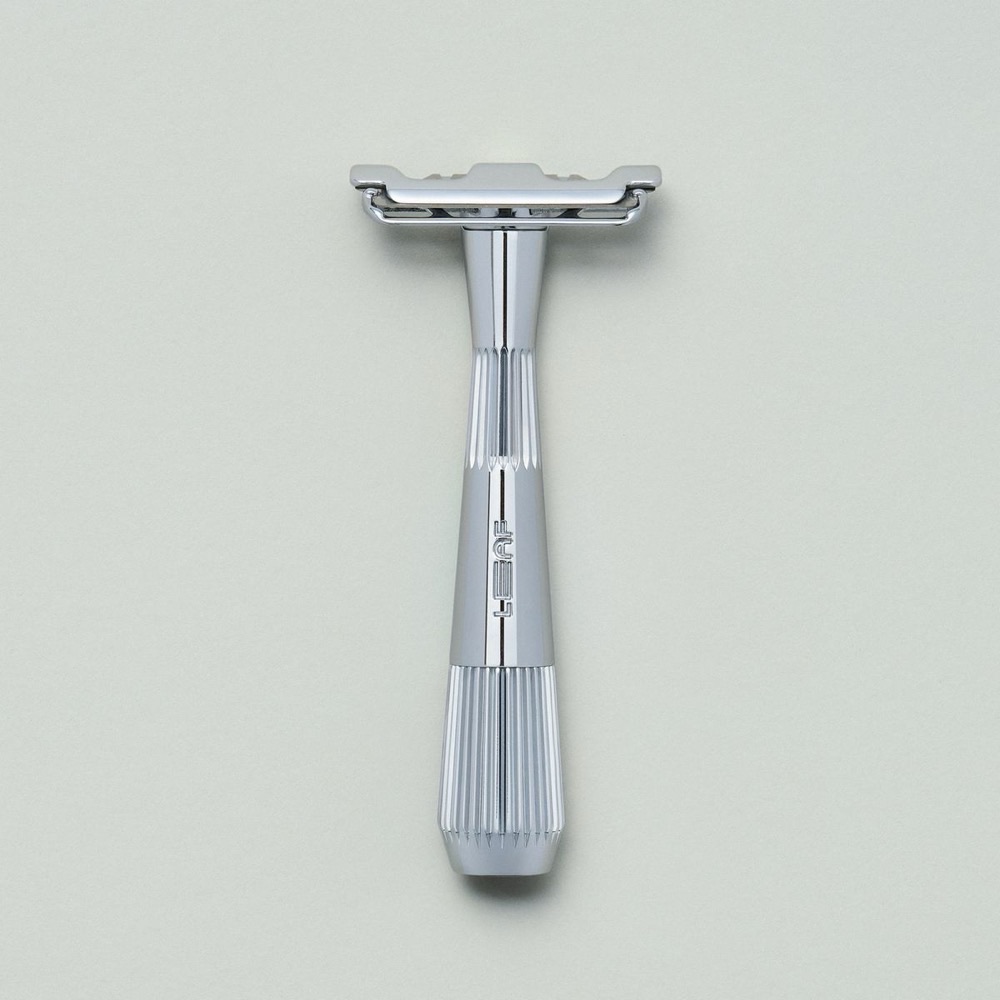 Best OverallLeaf Shave Twig Razor |
Plastic-FreeAll-Metal Body |
Check price → |
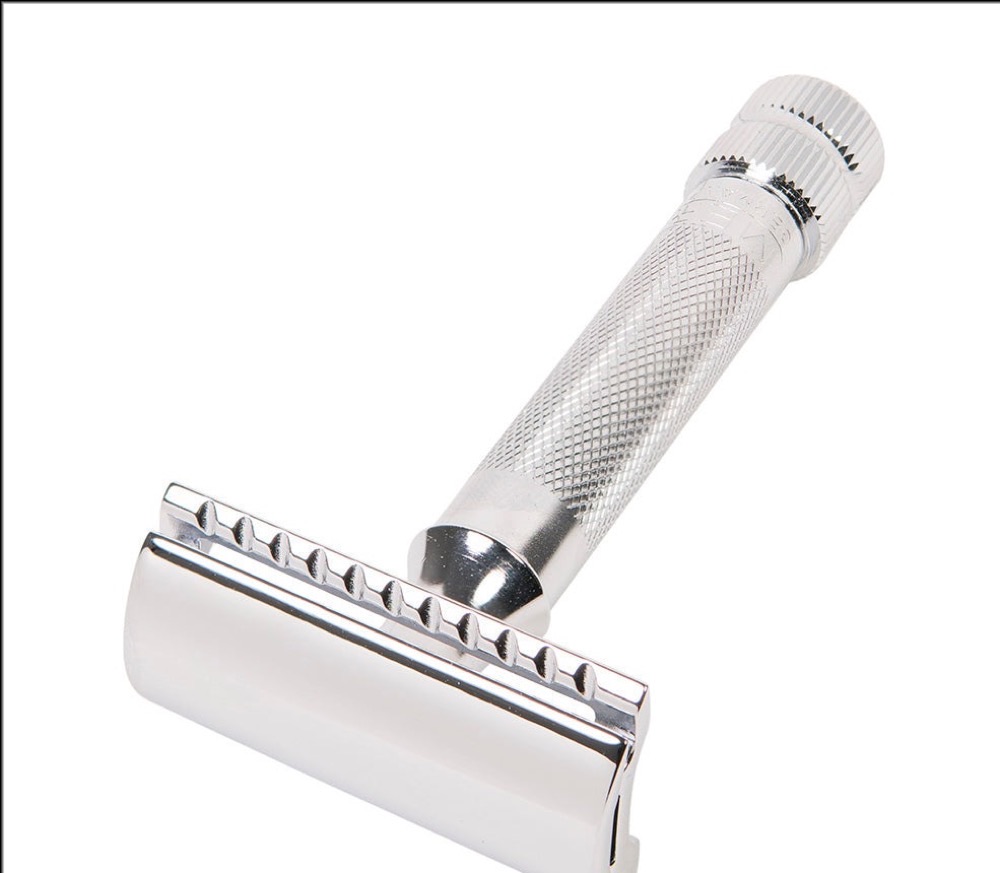 Best ClassicMerkur 34C Heavy Duty Safety Razor |
Plastic-FreeGerman Made |
Check price → |
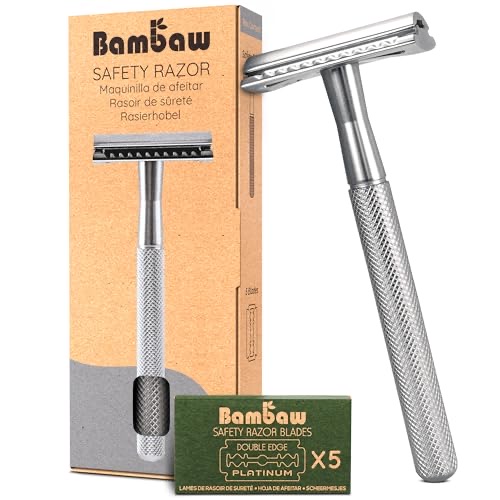 Best ValueBambaw Safety Razor |
Plastic-FreeBamboo Handle |
Check price → |
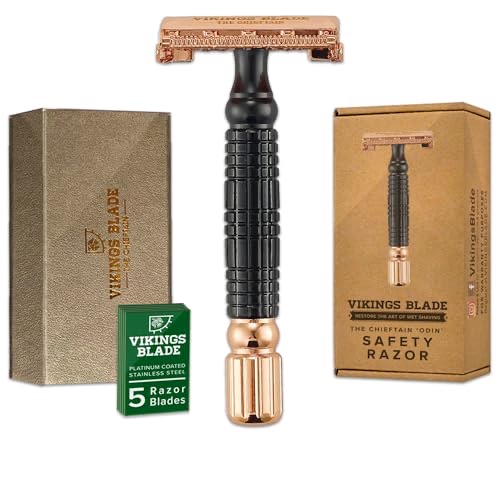 Best for BeginnersVikings Blade Double Edge Safety Razor |
Plastic-FreeReusable Metal |
Check price → |
 Best AdjustableRockwell 6C Adjustable Safety Razor |
Plastic-Free6 Settings |
Check price → |
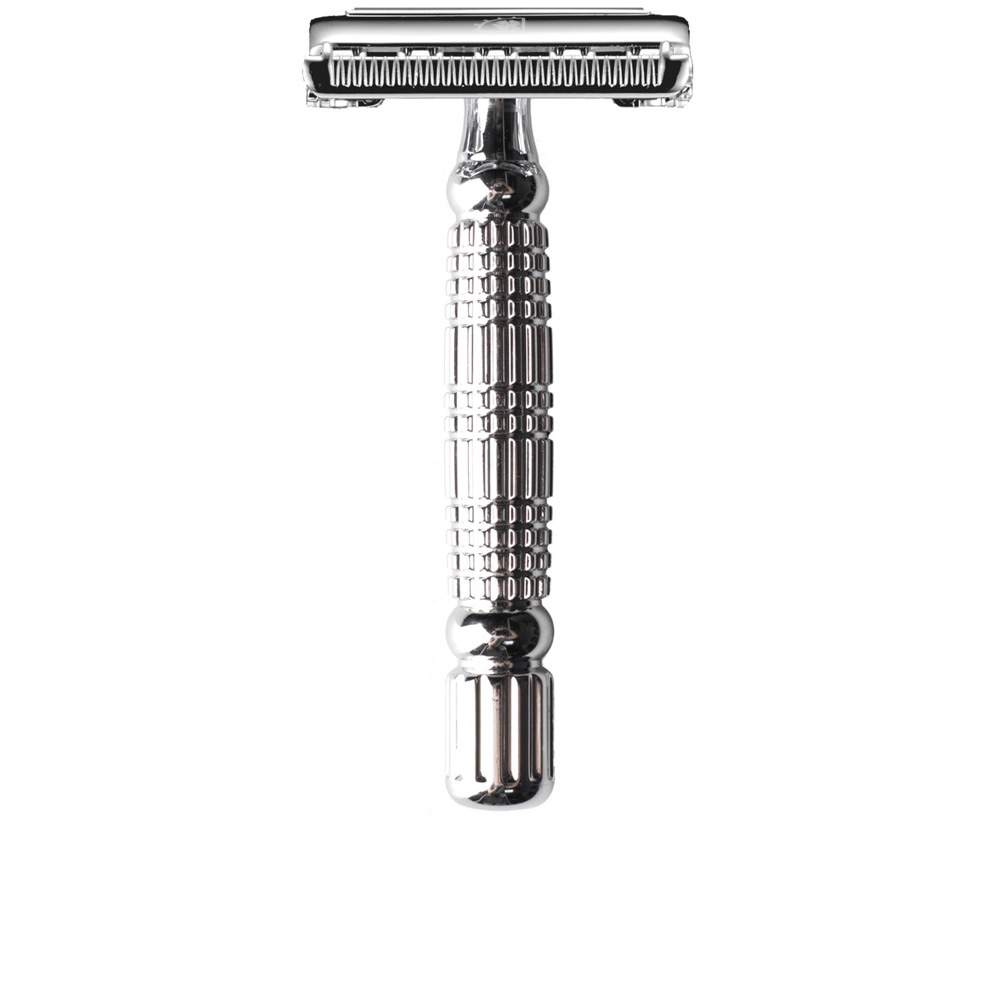 Best Mid-RangeVikings Blade The Chieftain Safety Razor |
Plastic-FreeBrass Core |
Check price → |
The Problem With Disposable Razors
Disposable and cartridge razors create three distinct problems: plastic waste, microplastic generation, and chemical exposure from lubricating strips.
Plastic waste: A single person who shaves regularly will use roughly 5 to 12 cartridges or disposable razors per year. Over a lifetime, that amounts to hundreds of plastic razors per person — none of which are accepted by curbside recycling. The handles are typically polystyrene or polypropylene, and the cartridge housings are a multi-material composite that recycling facilities cannot process. Razor brand "recycling programs" exist but require mailing used cartridges to specialized facilities, and participation rates are negligible.
Microplastic degradation: Plastic razors that reach landfills do not biodegrade. Instead, they fragment over decades into smaller and smaller pieces, eventually becoming microplastics that leach into soil and groundwater. UV exposure accelerates this fragmentation, particularly in open landfill environments. Every disposable razor ever made still exists in some form.
Chemical lubricating strips: The "moisturizing strips" on cartridge razors contain polyethylene glycol (PEG), synthetic polymers, and various chemical lubricants designed to reduce friction. These compounds come into direct contact with freshly shaved, micro-abraded skin — meaning they have a direct pathway into the body. For people with sensitive skin, these strips are a common cause of irritation, redness, and contact dermatitis.
The lubricating strips on cartridge razors typically contain polyethylene glycol (PEG), polyvinylpyrrolidone (PVP), and synthetic polymers like polyethylene oxide. These compounds contact freshly shaved, micro-abraded skin with every stroke. PEG compounds can be contaminated with ethylene oxide (a known carcinogen) and 1,4-dioxane (a probable carcinogen) as manufacturing byproducts. Safety razors eliminate this exposure entirely — there is no lubricating strip, just a single steel blade.
Why Safety Razors Are Better
A safety razor is a simple, elegant design that has been in use since the early 1900s. The razor consists of a metal handle and a head that holds a single double-edge blade. The blade is exposed just enough to cut hair at the skin surface, with a guard that prevents excessive pressure.
- Zero plastic waste: The handle is stainless steel, chrome, or brass — built to last decades or a lifetime. The only consumable is the blade, which is fully recyclable stainless steel.
- Better shave quality: A single sharp blade cuts hair cleanly at the surface rather than using the multi-blade "lift and cut" mechanism that pulls hair below the skin line and causes ingrown hairs, razor bumps, and irritation.
- No chemical strips: Safety razors have no lubricating strips, no PEG compounds, no synthetic polymers touching your skin. Use a natural shaving soap or cream instead.
- Dramatically lower cost: A 100-pack of double-edge blades costs $8 to $15 and lasts 1 to 2 years. Compare that to $4 to $6 per cartridge refill for brands like Gillette or Schick.
- Recyclable blades: Used blades go into a blade bank (a small metal tin). When full, seal it and place it in metal recycling. No special programs needed.
Quick Picks
| Best For | Pick | Price | Why |
|---|---|---|---|
| Best Overall | Leaf Shave Twig Razor | $$$ | All-metal, pivoting head, works for face and body |
| Best Classic | Merkur 34C Heavy Duty | $$ | German-made chrome, the gold standard safety razor |
| Best Value | Bambaw Safety Razor | $ | Bamboo handle, stainless head, unbeatable price |
| Best for Beginners | Vikings Blade Double Edge Safety Razor | $ | Reusable metal, ships with 5 Swedish steel blades, easy first safety razor |
| Best Adjustable | Rockwell 6C Adjustable | $$ | 6 adjustable settings for any skin type |
| Best Mid-Range | Vikings Blade The Chieftain | $$ | Butterfly open, heavy duty, great build quality |
Price guide: $ budget · $$ mid-range · $$$ premium. Tap any pick below for today's exact Amazon price.
The 6 Best Plastic-Free Razors for 2026
Best Overall: Leaf Shave Twig Razor
Best Overall
Owners call the Twig's shave "smooth and comfortable" with "little to no blade feel," praise how forgiving it is for a single-blade razor, and note the small head gets into tight spots; the included Leaf blades are "surprisingly good." The honest downsides: people with wiry or coarse hair sometimes find it "too mild" to cut cleanly, the balance is "bottom heavy" which not everyone likes, and loading a snapped half-blade is "a bit tricky" at first.
The pivoting head follows the contours of your face, legs, and underarms — so you get a plastic-free shave without learning the precise angle a fixed safety razor demands.
Why it's plastic-free: The handle and head are solid metal, built to last decades, and the only consumable is a standard double-edge steel blade that drops straight into your metal recycling — no plastic cartridges, no lubricating strip, no landfill waste.
Check Today’s Price on Amazon →Amazon prices change daily — tap to see today's price and any active discount.
- Free delivery & returns for Prime members
- Sold & shipped by Amazon
- Thousands of verified reviews
Why it wins: The Leaf Twig is the best bridge between a cartridge razor and a traditional safety razor. The pivoting head removes the biggest barrier to safety razor adoption — the learning curve. For anyone who has never used a safety razor before, or who shaves large body areas like legs and underarms, the Twig's flexibility makes the transition seamless. It is the most premium pick on this list, but the all-metal construction means it will last years or decades, and the per-shave blade cost is still just pennies.
Best Classic: Merkur 34C Heavy Duty Safety Razor
Best Classic
This is the razor others get measured against, and owners call it "remarkably forgiving," giving a close shave "without a lot of cuts" once you learn it, which is why it is the classic beginner pick. The honest gripes: the roughly 3-inch handle is short and awkward for larger hands, buyers report "poor plating" that wears over time on some units, coarse or extra-thick beards may want more bite, and expect a two-to-four-week learning curve with a few nicks coming off cartridges.
The heft of the solid brass core lets the razor do the cutting without pressure — a closed-comb head that's forgiving for daily use yet still delivers a barber-close shave.
Why it's plastic-free: A brass-and-chrome handle with no plastic anywhere, built to last a lifetime; the single double-edge steel blade is fully recyclable, so there's no cartridge waste and no chemical lubricating strip touching your skin.
Check Today’s Price on Amazon →Amazon prices change daily — tap to see today's price and any active discount.
- Free delivery & returns for Prime members
- Sold & shipped by Amazon
- Thousands of verified reviews
Why it wins: The Merkur 34C is the most recommended safety razor on nearly every wet-shaving forum and review site — and has been for over a decade. The reason is consistency: the blade geometry, weight distribution, and handle grip are optimized for a close, comfortable shave with minimal effort. The short handle provides better control than longer-handled models, and the heft of the solid brass core lets the razor do the work without needing to apply pressure. German manufacturing quality means tight tolerances and a chrome finish that resists tarnishing for years. It sits in the mid-range, and it is the benchmark against which all other safety razors are measured.
Best Value: Bambaw Safety Razor
Best Value
Cartridge switchers rate it a solid, low-cost, no-nonsense razor that gives a close shave with less irritation, razor burn and ingrown hairs, and owners like the comfortable balance and bamboo handle. The honest downsides: experienced wet-shavers point out it is widely seen as a "rebranded, mass-produced" head sold under many names online, its aggressiveness is only mild-to-medium (about a 5 out of 10), and the bamboo handle needs to be dried between uses to hold up long-term.
The cheapest entry into plastic-free shaving — a renewable bamboo handle with a long, easy grip that's especially comfortable for legs and body.
Why it's plastic-free: A renewable, biodegradable bamboo handle paired with a stainless steel head and recyclable steel blades — and it even ships in plastic-free recyclable cardboard, so there's no plastic in the product or the box.
Check Today’s Price on Amazon →Amazon prices change daily — tap to see today's price and any active discount.
- Free delivery & returns for Prime members
- Sold & shipped by Amazon
- Thousands of verified reviews
Why it wins: The Bambaw is the most affordable entry point into plastic-free shaving. The bamboo handle is a deliberate design choice — it is renewable, biodegradable (unlike a metal handle), and gives the razor a natural, warm feel. The stainless steel head accepts all standard double-edge blades and delivers a perfectly competent shave. The longer handle makes it easier to grip during body shaving. For anyone testing whether a safety razor works for them before investing in a premium model, the Bambaw is the ideal starting point.
Best for Beginners: Vikings Blade Double Edge Safety Razor
Best for Beginners
Owners like that it ships with five Swedish steel blades so there is "nothing else to buy" to start, and around 86 percent of reviews are positive, describing it as "extra mild and forgiving, yet precise" - a friendly first safety razor. The honest gripes: the handle gets slick when wet and the grip slips, some find it heavy and the long handle awkward for shaving the neck, and shoppers note a near-identical Baili razor sells for a fraction of the price.
It comes with 5 Swedish steel double-edge blades in the box, so you can start shaving the day it arrives — a low-cost, low-risk way to try safety-razor shaving.
Why it's plastic-free: A reusable all-metal handle and head with no plastic and no lubricating strip, and recyclable steel blades — no plastic cartridges and no landfill waste.
Check Today’s Price on Amazon →Amazon prices change daily — tap to see today's price and any active discount.
- Free delivery & returns for Prime members
- Sold & shipped by Amazon
- Thousands of verified reviews
Why it wins: The Vikings Blade double-edge razor is an easy, affordable first safety razor. It ships with 5 Swedish steel double-edge blades, so there is nothing else to buy to start shaving, and it accepts every standard double-edge blade after that — blades that cost pennies each. The reusable all-metal build has no plastic and no lubricating strip, and the single steel blade drops straight into your metal recycling. It is inexpensive enough to gift or to try without a significant financial commitment.
Best Adjustable: Rockwell 6C Adjustable Razor
Best Adjustable
The draw is adjustability: three reversible base plates give six settings, so one "premium chromed zinc" razor can go from gentle to aggressive as your skill grows, and owners say the company's support is responsive. The honest downsides: it is interchangeable rather than truly adjustable, since you must swap the base plate to change the setting mid-shave, there have been reports of "spotty quality control on some manufacturing runs," and the 6C is zinc alloy, not the stainless steel of the pricier 6S.
Start mild on setting 1 and work up — three swappable base plates give six exposure levels, so a too-aggressive or too-mild shave is a thing of the past.
Why it's plastic-free: A chrome metal handle and head with no plastic and no lubricating strip, paired with recyclable steel blades — one durable razor replaces a lifetime of disposable plastic cartridges.
Check Today’s Price on Amazon →Amazon prices change daily — tap to see today's price and any active discount.
- Free delivery & returns for Prime members
- Sold & shipped by Amazon
- Thousands of verified reviews
Why it wins: The Rockwell 6C solves the biggest frustration with fixed-head safety razors: finding the right aggressiveness for your skin. A razor that is too mild leaves stubble; one that is too aggressive causes irritation. The 6C's interchangeable base plates give six distinct settings, allowing users to dial in the exact level of blade exposure that works for their face, neck, legs, or any area. Start at setting 1 or 2 and work up. Many users settle on different settings for different areas (milder for the neck, more aggressive for the cheeks). For a mid-range price, it offers exceptional versatility.
Best Mid-Range: Vikings Blade The Chieftain
Best Mid-Range
Owners like the butterfly head that changes a blade "in as little as 5 seconds," the solid brass core and satisfying weight, and how comfortable it is for sensitive skin, backed by a lifetime warranty and included extras. The honest gripes: the most common complaint is that it is "too mild," so coarse beards can feel under-served, the closed-comb head keeps it gentle despite a wide blade gap, and while it feels premium, some see the build as mid-tier for the money.
Twist the handle and the head opens for a five-second blade change — a hefty brass-core build that feels far more premium than its mid-range price.
Why it's plastic-free: A brass-core, chrome-plated handle with no plastic and no lubricating strip; it ships with recyclable steel blades and a metal blade-disposal case, so used blades go safely into metal recycling instead of the trash.
Check Today’s Price on Amazon →Amazon prices change daily — tap to see today's price and any active discount.
- Free delivery & returns for Prime members
- Sold & shipped by Amazon
- Thousands of verified reviews
Why it wins: The Vikings Blade Chieftain occupies the sweet spot between the budget options and the premium picks. It delivers a build quality — solid brass core, tight tolerances, satisfying weight — that feels closer to the premium category. The butterfly mechanism makes blade changes effortless, and the medium-aggressive shave settings work well for the majority of users without being intimidating for newcomers. The included blade bank is a thoughtful addition. For anyone who wants a step up from the entry-level options without paying premium prices, the Chieftain is the best value in the mid-range.
How to Shave With a Safety Razor
The technique for using a safety razor is slightly different from a cartridge razor. The key principles:
- Let the weight do the work. Do not press the blade into your skin. A safety razor is heavier than a cartridge razor for exactly this reason — gravity and the razor's own weight provide sufficient pressure. Pressing harder causes nicks and irritation.
- Hold at a 30-degree angle. The blade should meet your skin at roughly 30 degrees. Start with the handle perpendicular to your face, then slowly tilt it down until the blade just begins to contact the skin.
- Use short, gentle strokes. Avoid long sweeping passes. Short strokes of 1 to 2 inches give better control, especially around jawlines, knees, and ankles.
- Shave with the grain first. On the first pass, shave in the direction your hair grows. For a closer shave, do a second pass across the grain. Avoid shaving against the grain, especially while learning — it increases irritation and ingrown hair risk.
- Prep your skin. Wash with warm water before shaving to soften hair and open pores. Use a natural shaving soap or cream — avoid canned shaving foam, which typically contains synthetic lubricants and propellants.
- Rinse the blade frequently. Tap the razor head in warm water every few strokes to clear hair and lather from the blade. A clogged blade drags instead of cutting.
Blade Recycling
One of the biggest advantages of safety razors over disposable and cartridge razors is that the blades are 100% recyclable. Double-edge blades are a single piece of stainless steel — no plastic, no rubber, no mixed materials. However, loose used blades are a safety hazard and should never be dropped directly into a recycling bin.
The standard approach is a blade bank — a small metal container (often a tin with a slot in the top) that stores used blades safely. After each blade change, slide the old blade through the slot. When the bank is full (which can take a year or more of regular shaving), seal it with tape and place it in your metal recycling. Many safety razor brands include a blade bank with purchase, or standalone banks can be purchased for a few dollars. Some shavers simply use an empty metal Altoids tin with a slot cut in the lid.
Want the Full Bathroom Detox Guide?
Razors are just one source of bathroom plastic. The Complete Plasticproof Guide covers every room — personal care, cleaning products, kitchen, and more — with 80+ product recommendations backed by 47+ studies.
Frequently Asked Questions
Yes. Safety razors use a single sharp blade that cuts hair cleanly at the surface, rather than the multi-blade lift-and-cut action of cartridge razors that pulls hair below the skin line. This single-blade approach causes significantly less irritation, fewer ingrown hairs, and less razor burn. Dermatologists frequently recommend single-blade razors for people with sensitive skin or those prone to razor bumps (pseudofolliculitis barbae). The absence of a plastic lubricating strip also means fewer synthetic chemicals contacting your skin during each shave.
A single double-edge safety razor blade typically lasts 5 to 7 shaves, depending on hair thickness and shaving area. Coarse or thick hair will dull blades faster, while fine hair allows more shaves per blade. At roughly 5 cents per blade, this means a full year of shaving costs between $5 and $10 in blades — compared to $30 to $60 or more per year for cartridge razor refills. The razor handle itself, if made from stainless steel, will last a lifetime with no replacement needed.
Absolutely. Safety razors work on all body hair regardless of gender. Many women prefer safety razors for legs, underarms, and bikini areas because the single blade causes less irritation and fewer ingrown hairs than multi-blade cartridge razors. The Leaf Shave Twig, with its pivoting head, is a particularly popular choice for body shaving. The technique is slightly different from cartridge razors — use short, gentle strokes and let the weight of the razor do the work rather than applying pressure.
Over a 10-year period, a safety razor saves roughly $500 to $1,000 compared to cartridge razors. A quality safety razor costs $15 to $60 upfront, and replacement blades cost about $0.05 to $0.10 each. That works out to roughly $5 to $15 per year in blades. Cartridge razors, by contrast, cost $3 to $6 per cartridge, with most people using one cartridge per week — totaling $150 to $300 per year. The safety razor pays for itself within the first two to three months.
Yes — safety razor blades are made from stainless steel and are fully recyclable. However, loose blades should never be tossed directly into a recycling bin for safety reasons. The standard method is to use a blade bank — a small metal tin with a slot in the top. Drop used blades in after each change. Once the bank is full (which takes years), seal it with tape and place it in your metal recycling. Some razor brands include a blade bank with purchase, or they can be bought separately for a few dollars. This is a significant advantage over plastic cartridge razors, which are not recyclable in standard municipal recycling programs.
Sources
- US Environmental Protection Agency. "Non-durable goods: razors and blades." Municipal Solid Waste Generation, Recycling, and Disposal in the United States: Tables and Figures, 2018.
- Geyer R, Jambeck JR, Law KL. "Production, use, and fate of all plastics ever made." Science Advances, 2017.
- Andrady AL. "Microplastics in the marine environment." Marine Pollution Bulletin, 2011.
- Burnett CL, et al. "Safety assessment of PEG cocamine and related ingredients as used in cosmetics." International Journal of Toxicology, 2019.
- Draelos ZD. "The science behind skin care: cleansers and moisturizers." Journal of Cosmetic Dermatology, 2018.
- Jambeck JR, et al. "Plastic waste inputs from land into the ocean." Science, 2015.
- American Academy of Dermatology. "Tips for shaving: how to get a close shave without irritation." AAD Public Resources, 2023.
- Thompson RC, et al. "Lost at sea: where is all the plastic?" Science, 2004.
Protect Every Room in Your Home
From the bathroom to the kitchen — the Complete Plasticproof Guide covers every swap that matters, backed by 47+ studies.