
For thirty years the standard kitchen advice ran the other way: plastic boards were the “hygienic” choice, wood was the old-fashioned one you kept for bread. Restaurants were told to use color-coded plastic. Home cooks bought the white polyethylene slab because it went in the dishwasher. The microplastics research of the last three years has flipped the question, and the bacteria research, it turns out, never supported the plastic-is-cleaner claim in the first place.
This guide compares wood and plastic cutting boards on the four things that actually matter: how much plastic each one puts into your food, what that plastic does once it is in you, whether wood is safe for raw meat, and how each board holds up and cleans up over years of use.
Bottom line: A plastic cutting board is one of the largest single sources of microplastics in a home kitchen, and it sheds more as it wears. A solid hardwood board sheds wood fibers, not plastic, and the best laboratory comparison found bacteria harder to recover from wood than from plastic. Buy a hard maple, walnut, or teak board, oil it monthly, and retire the plastic one.
How Many Microplastics Does a Plastic Cutting Board Release?
Tens of millions of particles a year, by the only direct estimate published so far. In 2023 a team led by Syeed Md Iskander at North Dakota State University published “Cutting Boards: An Overlooked Source of Microplastics in Human Food?” in Environmental Science & Technology (Yadav et al., 2023, vol. 57, pp. 8225–8235). They had volunteers chop on polyethylene and polypropylene boards, with and without carrots, and counted what came off. The two plastics are the ones almost every board in a store is made from.
The headline estimates: a person chopping on a polyethylene board is exposed to 14.5 to 71.9 million microplastic particles a year, or 7.4 to 50.7 grams of plastic by weight. A polypropylene board came out worse at 79.4 million particles and 49.5 grams a year. Polypropylene released 14 to 71% more particles and 5 to 60% more mass than polyethylene. Most of the particles were spherical and under 100 microns across, which is small enough to ride along on a carrot slice without anyone noticing.
Two honest caveats that the study itself makes. First, the yearly figures rest on assumptions about how often a household chops and how hard; the range is wide for exactly that reason. Second, the team ran a preliminary toxicity test and found the polyethylene particles did not reduce the viability of mouse fibroblast cells over 72 hours. That is a narrow test, not an all-clear, and the 2025 study below went a lot further.
What Happens to the Body When Food Is Prepared on Plastic Boards?
In mice, the plastic-board diet caused measurable gut inflammation that the wood-board diet did not. That is the finding of Gan et al., Environmental Health Perspectives, 2025 (vol. 133, article 047004), a Nanjing University study that is the first to compare wood and plastic boards in a feeding experiment rather than just counting particles. The team prepared mouse food by cutting it on three boards, polypropylene, polyethylene, and willow wood, and fed each diet to mice for 4 and 12 weeks.
The release numbers alone are worth knowing. A new polypropylene board shed about 0.106 milligrams of microplastics per cut and a new polyethylene board about 0.078 milligrams. By the twelfth round of cutting, as knife scars roughened the surface, that rose to 0.249 and 0.277 milligrams per cut, roughly two to three times the fresh-board rate. The finished diets carried 1,088 micrograms of plastic per gram of food from the polypropylene board and 1,211 from the polyethylene board. The polypropylene particles averaged 10.4 microns across, the polyethylene ones 27.4 microns.
Then the biology. After 12 weeks, mice eating the polypropylene-board diet had significantly higher blood levels of C-reactive protein, TNF-alpha, IL-10, the bacterial endotoxin LPS, and the tumor marker CEA than mice eating the wood-board diet, plus higher inflammation markers in the ileum and colon and lower expression of Occludin and ZO-1, the proteins that hold the gut lining together. The polyethylene-board mice did not show that inflammation, but their gut microbiome shifted (fewer Firmicutes, more Desulfobacterota) and their fecal and liver metabolites changed. The authors’ conclusion: polypropylene-board microplastics impair the intestinal barrier and cause inflammation; polyethylene-board microplastics alter the gut microbiome and liver metabolism. Wood was the reference both were measured against.
Mice are not people, and a 12-week rodent study is not a human trial. But it is the most direct evidence yet that the plastic coming off a cutting board is biologically active once swallowed, and that the plastic-versus-wood difference shows up in tissue, not just in a particle count.
Head-to-Head: Wood vs Plastic Cutting Boards
Judged on measured microplastic release, bacteria, durability, and care.
| Feature | Plastic (PE / PP) | Solid Hardwood |
|---|---|---|
| Material | Polyethylene (HDPE) or polypropylene, molded slab | Hard maple, walnut, cherry, teak; edge-grain or end-grain |
| Sheds microplastics? | Yes: 14.5–71.9 million particles/yr (PE), 79.4 million (PP) | No: sheds cellulose wood fibers, not plastic |
| Release per cut (new board) | 0.078 mg (PE) to 0.106 mg (PP) | Not plastic; wood was the control |
| Release per cut (worn, 12th cycle) | 0.277 mg (PE) to 0.249 mg (PP), 2–3x a new board | — |
| 12-week mouse feeding result | PP: gut inflammation, weakened lining; PE: microbiome and liver-metabolite shifts | Reference (clean control) diet |
| Bacteria after raw meat | Recoverable for minutes to hours; multiplied overnight | Absorbed within 3–10 min; usually not recoverable at raw-meat doses |
| Knife-scarred surface | Hard to clean by hand once scarred; scars increase shedding | Can be sanded and re-oiled; scars close up in the grain |
| Dishwasher-safe? | Yes | No: hand wash, dry upright |
| Care | None until it is grooved, then replace | Food-grade mineral oil monthly; sand out deep scars |
| Lifespan | Replace once grooved (often 1–2 years of daily use) | 10+ years; decades with care |
| Knife edge | Gentle on blades | Gentle on blades (end-grain is gentlest) |
| Our verdict | Retire it; if you keep one, replace it the day it shows grooves | Recommended for daily use |
Is a Wood Cutting Board Sanitary for Raw Meat?
The best-known laboratory answer is yes, and it has been on the record since 1994. The plastic-is-cleaner belief was tested head-on by Ak, Cliver and Kaspar at the University of Wisconsin–Madison Food Research Institute, published in the Journal of Food Protection (1994, vol. 57, pp. 16–22). They cut new and used boards into 5-centimeter blocks, nine hardwoods on one side and four plastics plus hard rubber on the other, and inoculated the surfaces with E. coli (including O157:H7), Listeria, and Salmonella in broth or chicken juice.
On plastic, the bacteria were readily recovered for minutes to hours afterward and multiplied if the block sat overnight. On clean wood, the liquid was absorbed into the surface within 3 to 10 minutes, and at the doses likely to come off raw meat or poultry (a thousand to ten thousand bacteria) the organisms generally could not be recovered once they had entered the wood. Even at a million-plus dose, after 12 hours at room temperature and high humidity, counts on wood were down by at least 98%, and often more than 99.9%. Oiling the wood with mineral oil made little difference either way. The authors’ exact wording: the results “do not support the often-heard assertion that plastic cutting boards are more sanitary than wood.”
In later summaries of the work, Cliver added the practical finding every home cook should know: plastic boards that were knife-scarred were essentially impossible to clean and disinfect by hand, especially with fatty residue such as chicken fat in the grooves. That is the same scarring the 2025 study found doubles or triples microplastic release. A worn plastic board is the worst of both worlds.
None of this means you skip washing. Any board, wood or plastic, gets hot soapy water after raw meat. The point is that the material that was supposed to be the hygienic upgrade never was, and it is the one shedding plastic into your dinner.
Does Wood Shed Anything Into Food?
Wood boards do release wood microparticles when you chop on them, and it is worth saying so plainly. Coverage of the 2023 Environmental Science & Technology work, including Technology Networks’ report on the study, noted that the wooden boards in the team’s tests produced more microparticles by count than the plastic ones, and that the wood particles, like the polyethylene particles, did not affect mouse cell viability in the preliminary test.
The difference is what the particle is made of. A wood fiber is cellulose and lignin, the same plant material in a stalk of celery or a whole-grain flour, and the digestive tract has handled it for as long as there have been digestive tracts. A microplastic is a persistent synthetic polymer that the body cannot break down, that accumulates in tissue, and that the 2025 feeding study linked to inflammation and a weakened gut lining. Counting the two together is a category error. The question this page answers is which board sheds fewer microplastics, and on that question wood sheds none.
Which Should You Buy?
Match the board to how you cook.
Choose solid hardwood if:
- You chop vegetables daily and want zero plastic in the food
- You are willing to hand wash and oil a board once a month
- You want a board that lasts a decade instead of a year
- You cook for young children or anyone with gut issues
Keep a plastic board only if:
- You genuinely need dishwasher sanitizing for a raw-meat-only board
- You will replace it the day it shows visible grooves
- You never use it for vegetables, bread, or anything eaten raw
- Or skip it: a wood-fiber composite board (below) is dishwasher-safe and plastic-free
For a full ranked lineup across wood, bamboo, and composite, see our best non-toxic cutting boards guide. If you want the study behind the plastic numbers unpacked on its own, read do plastic cutting boards release microplastics. Once the board is handled, the pan is next: our best non-toxic cookware guide ranks what to cook in. The cutting board is one of the seven kitchen mistakes that put microplastics in your food, and swapping it is the cheapest of the seven.
The Four Wood Boards Worth Buying
Three solid hardwood boards for the daily driver, and one wood-fiber composite for people who will not give up the dishwasher.
 Best Overall
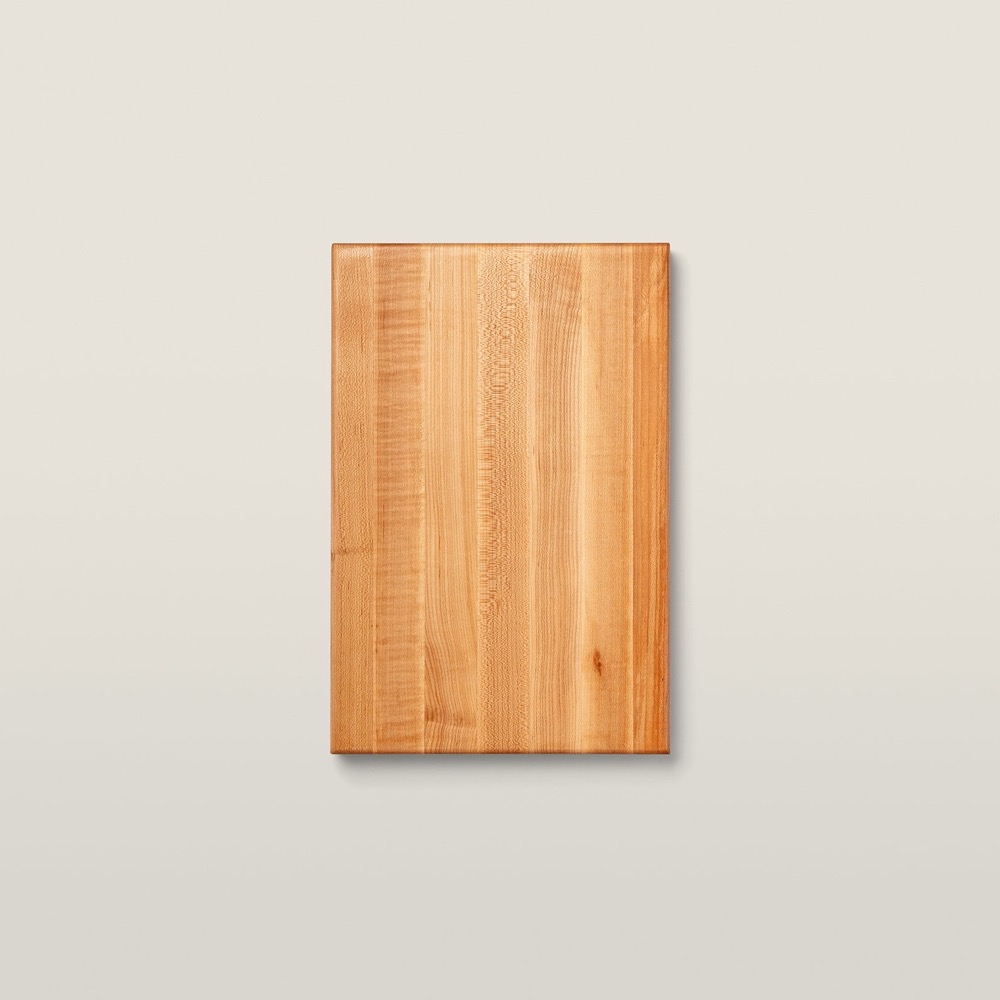
Maple was among the hardwoods in the 1994 Journal of Food Protection tests, and the study found all nine woods behaved similarly against bacteria, so the species matters less than the fact that it is solid, oil-finished wood with no plastic surface. Hand wash, dry it standing on edge, and oil it monthly with food-grade mineral oil or Boos’s own board cream.
Pros
- Solid hard maple, no plastic surface, no plastic particles
- Reversible, so one side can stay for raw meat
- Refinishable: sand out scars instead of replacing
- Made in the USA by a company that has done this for over a century
Cons
- Heavy; a large size stays on the counter
- Not dishwasher-safe
- Needs oiling monthly to avoid drying and cracking
The board that sheds nothing but wood, and can be sanded back to new for decades.
Why it matters: Every cut on a plastic board releases a measurable dose of microplastic (0.078 to 0.277 mg per cut in the 2025 Environmental Health Perspectives study). A solid maple board takes that number to zero.
Check Today’s Price on Amazon →Amazon prices change daily — tap to see today’s price and any current discount.
- Free delivery for Prime members
- Thousands of verified reviews
 Best Low-Maintenance Wood
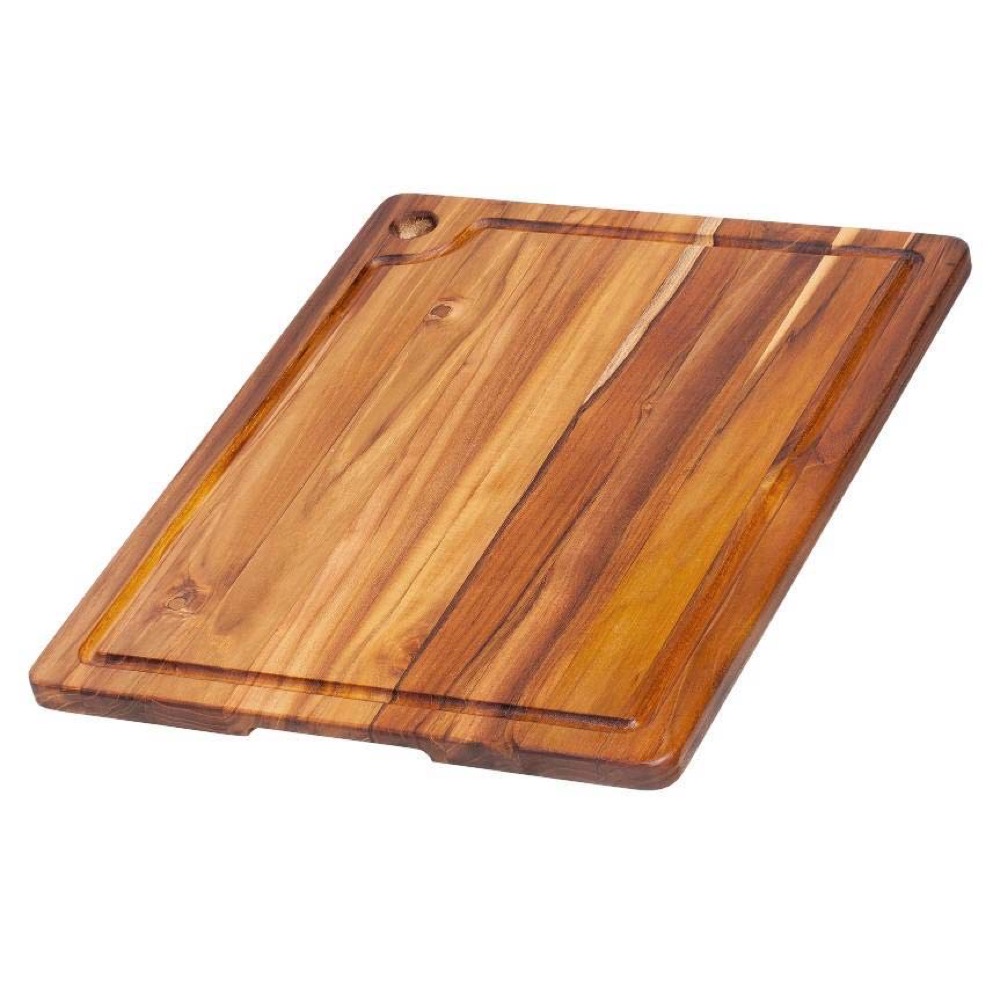
Proteak grows its teak on plantations in Mexico rather than logging old-growth forest, which matters for a wood that is otherwise a sustainability concern. Like every solid wood board here, it is hand-wash only. Oil it when the surface looks pale rather than on a strict schedule.
Pros
- Solid teak, no plastic, no plastic particles
- Natural oils resist drying and warping
- Hand grips make a large board easy to lift and rinse
- Plantation-grown, not old-growth
Cons
- Slightly harder on knife edges than maple
- Not dishwasher-safe
- Darker wood shows light-colored residue more
A plastic-free board that forgives neglect better than any other solid wood.
Check Today’s Price on Amazon →Amazon prices change daily — tap to see today’s price and any current discount.
- Free delivery for Prime members
- Thousands of verified reviews
 Best Walnut
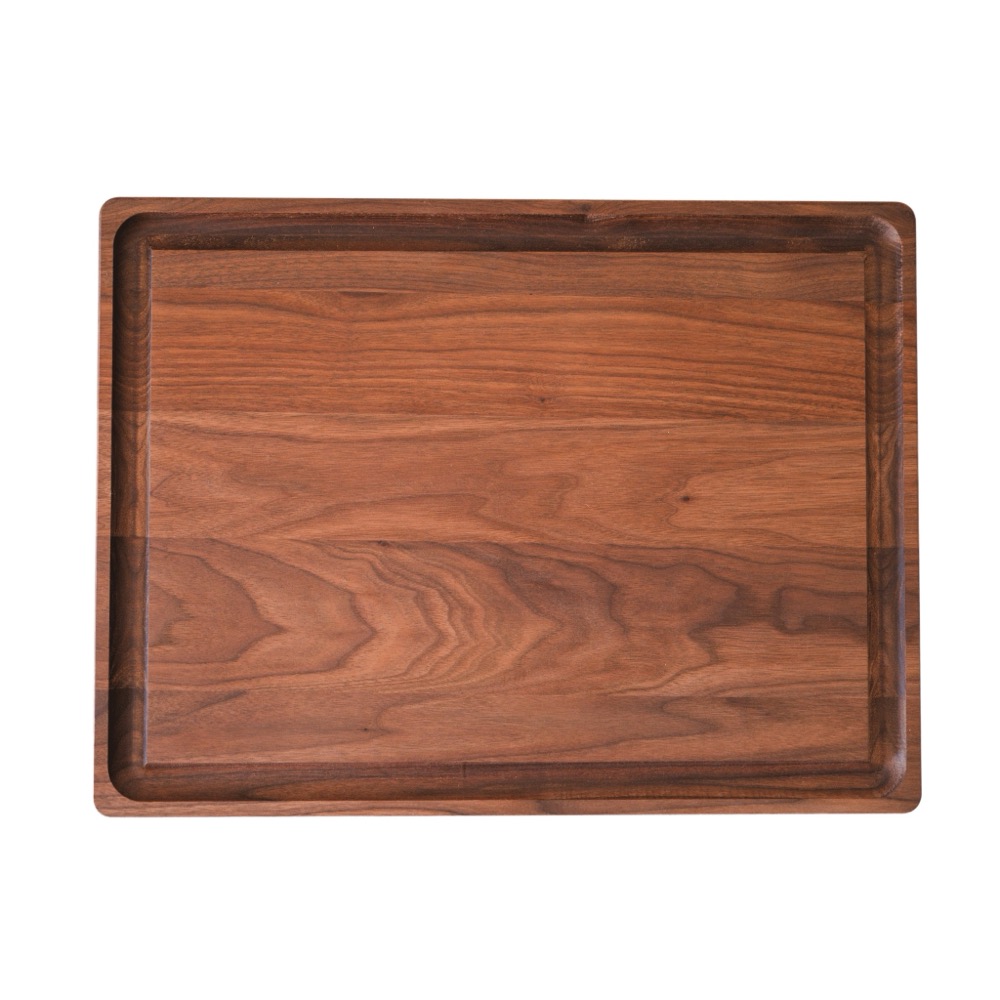
Walnut’s dark color hides stains from beets and berries that show on maple. The oil-and-beeswax finish is food-safe and easy to renew; the company sells the same conditioner they use, or a plain food-grade mineral oil works. Hand wash, dry upright, oil monthly.
Pros
- Solid walnut, no plastic, no plastic particles
- Juice groove catches meat and fruit juices
- Kind to knife edges
- Made in the USA with a food-safe natural finish
Cons
- Softer than maple; shows knife marks a little sooner
- Not dishwasher-safe
- Juice groove reduces flat chopping area on smaller sizes
The counter-worthy wood board with a groove for roasts and tomatoes.
Check Today’s Price on Amazon →Amazon prices change daily — tap to see today’s price and any current discount.
- Free delivery for Prime members
- Thousands of verified reviews
 Best Dishwasher-Safe Alternative
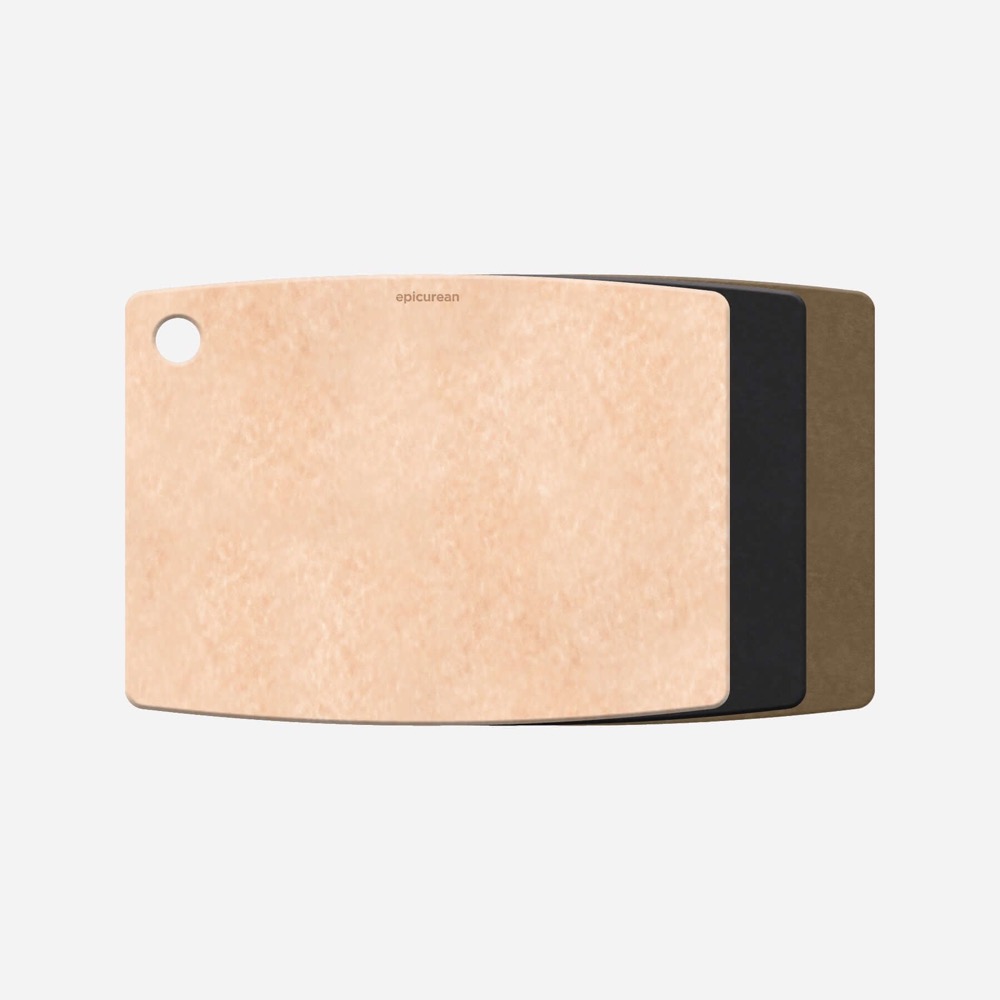
The surface is harder than solid wood, so it is a little louder under the knife and a touch harder on edges. In exchange you get a board that weighs a fraction of a maple block, dries in minutes, and goes in the dishwasher without warping. Keep the solid wood board for vegetables and daily chopping; use this for chicken and fish.
Pros
- Not polyethylene or polypropylene, the two plastics the studies measured
- Dishwasher-safe, so raw-meat sanitizing is easy
- Thin, light, and heat-resistant to 350°F
- Made in the USA
Cons
- Not solid wood; a resin-bonded composite
- Harder surface is tougher on knife edges than maple or walnut
- Louder to chop on
Dishwasher-safe without being a plastic slab: the board for raw meat.
Check Today’s Price on Amazon →Amazon prices change daily — tap to see today’s price and any current discount.
- Free delivery for Prime members
- Thousands of verified reviews
How to Care for a Wood Cutting Board So It Lasts Decades
- Hand wash with hot soapy water right after use, both sides, then dry with a towel and stand it on edge so air reaches both faces. Never soak it and never run it through the dishwasher; the heat and standing water crack and warp solid wood.
- Oil it monthly with food-grade mineral oil or an oil-and-beeswax board conditioner. The 1994 study found oiling made little difference to bacteria, so this is about preventing drying and cracking, not hygiene.
- Sand out deep scars with 120-grit then 220-grit paper when the surface gets rough, wipe off the dust, and re-oil. A plastic board at this stage gets thrown away; a wood board gets renewed.
- Keep one face for raw meat on a reversible board, and wash it immediately. Wood’s absorbency works in your favor, but it is not a substitute for washing.
Frequently Asked Questions
Is a wood cutting board better than plastic for avoiding microplastics?
On the measured evidence, yes by a wide margin. Yadav et al. (Environmental Science & Technology, 2023) estimated 14.5 to 71.9 million microplastic particles a year from a polyethylene board and 79.4 million from polypropylene. Wood sheds cellulose fibers, not plastic, and the 2025 Environmental Health Perspectives feeding study used a willow wood board as the clean comparison against which the plastic boards caused inflammation and microbiome changes in mice.
Are wood cutting boards sanitary for raw meat?
The best-known laboratory comparison says yes. Ak, Cliver and Kaspar (Journal of Food Protection, 1994) found clean wood absorbed bacteria-laden liquid within 3 to 10 minutes and that at raw-meat doses the bacteria generally could not be recovered afterward, while on plastic the same bacteria were recoverable for hours and multiplied overnight. Wash any board with hot soapy water after raw meat regardless of material.
How many microplastics does a plastic cutting board release per cut?
Gan et al. (Environmental Health Perspectives, 2025) measured about 0.106 mg per cut from a new polypropylene board and 0.078 mg from a new polyethylene board, rising to 0.249 and 0.277 mg per cut by the twelfth cutting cycle as the surface roughened. The particles averaged 10 to 27 microns across.
Which wood is best for a cutting board?
Closed-grain hardwoods: hard maple, walnut, cherry, and teak. The 1994 study tested nine hardwoods and found similar antibacterial behavior across all of them, so choose on hardness, grain, and finish rather than species. Look for a food-safe oil finish, not a film coating.
When should you replace a plastic cutting board?
The day it shows visible knife grooves. Release per cut was two to three times higher on a worn board than a new one in the 2025 study, and scarred plastic was found very difficult to clean by hand in the 1994 work. Better still, replace it with wood and stop the clock entirely.
Sources
- Yadav H, Khan MRH, Quadir M, Rusch KA, Mondal PP, Orr M, Xu EG, Iskander SM. “Cutting Boards: An Overlooked Source of Microplastics in Human Food?” Environmental Science & Technology 2023; 57(22):8225–8235. https://doi.org/10.1021/acs.est.3c00924 (PubMed 37220346)
- Gan HJ, Chen S, Yao K, Lin XY, Juhasz AL, Zhou D, Li HB. “Simulated Microplastic Release from Cutting Boards and Evaluation of Intestinal Inflammation and Gut Microbiota in Mice.” Environmental Health Perspectives 2025; 133(4):047004. https://doi.org/10.1289/EHP15472 · full text: PMC11980920
- Ak NO, Cliver DO, Kaspar CW. “Cutting Boards of Plastic and Wood Contaminated Experimentally with Bacteria.” Journal of Food Protection 1994; 57(1):16–22. https://doi.org/10.4315/0362-028X-57.1.16 · PubMed 31113021
- Technology Networks. “Cutting Boards Release Microparticles During Chopping, Study Shows.” 2023 report on the Environmental Science & Technology study, including the wood-particle comparison. technologynetworks.com