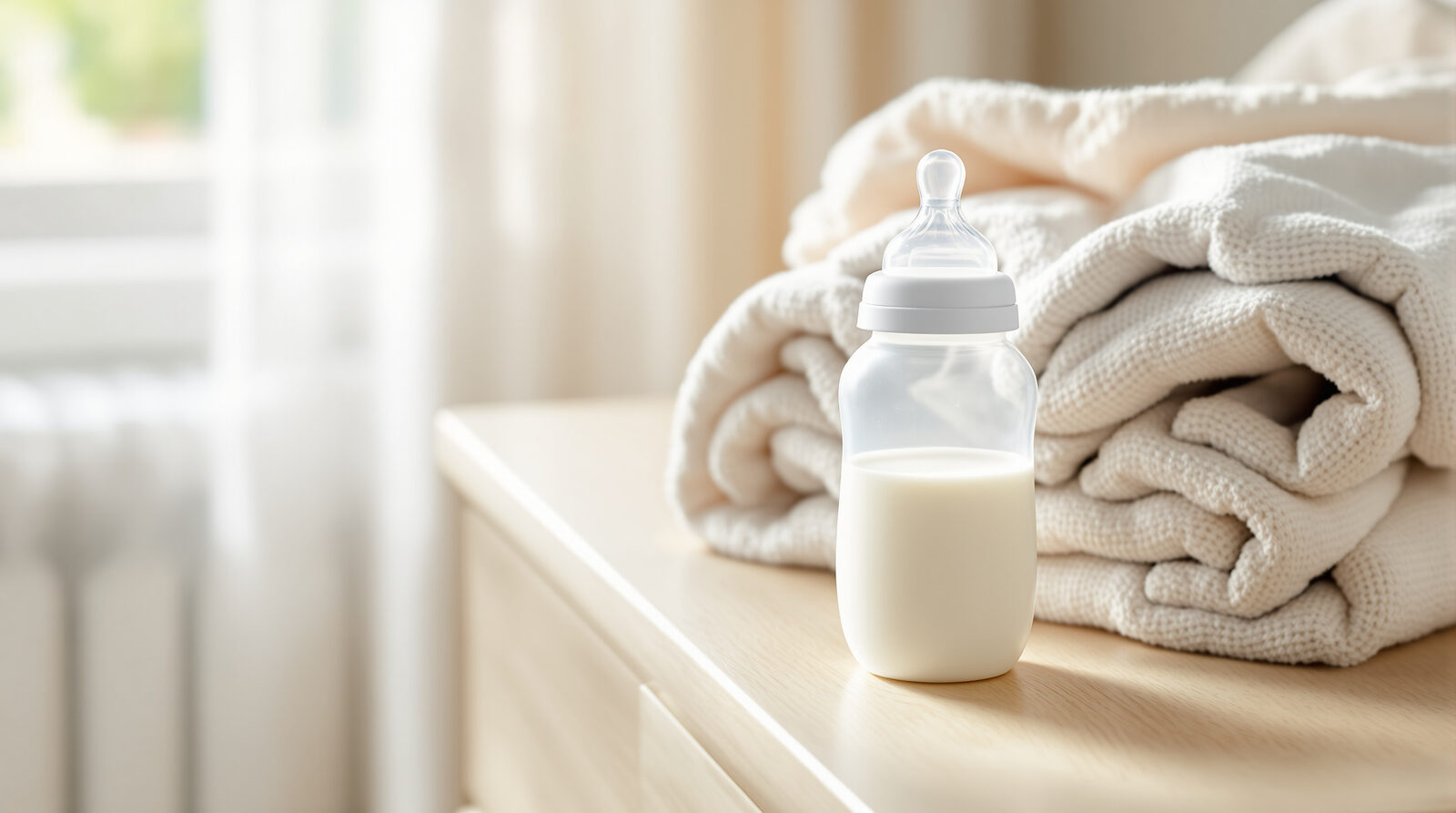
Food-grade and medical-grade silicone baby bottles are widely considered safe. Silicone is chemically stable, contains no BPA, BPS, or phthalates, and — unlike polypropylene plastic — does not shed microplastics into warm milk. A 2020 Nature Food study found plastic bottles can release millions of microplastic particles per liter; silicone does not fragment that way. The two real caveats are cheap, filler-adulterated silicone from unknown brands and trace siloxanes that can migrate under very high heat — both easy to avoid.
“Are silicone baby bottles safe?” is the question that follows almost every parent's decision to ditch plastic. Silicone bottles — the soft, squeezable kind from brands like Comotomo and Nanobébé — are marketed as the non-toxic upgrade, and on the whole that framing is fair. But “silicone” is not one thing, and the honest answer has a couple of asterisks worth understanding before you fill a bottle with your baby's milk.
This guide walks through what silicone actually is, whether it leaches, what siloxanes are and how much they matter, whether silicone sheds microplastics the way plastic does, and how to tell quality silicone from the cheap stuff. If you decide you'd rather skip silicone entirely, there's a short list at the end of the safest glass and stainless bottles — the materials that remove even the trace concerns.
Are silicone baby bottles safe overall?
For most families, yes. Food-grade and medical-grade silicone is one of the more stable materials you can put against warm milk: it carries no BPA, BPS, PVC, or phthalates, it does not break down into microplastics, and it tolerates heat far better than plastic. Regulators including the US Food and Drug Administration permit silicone for repeated food contact, and it has a long safety record in medical devices.
That said, “silicone is safe” is doing some quiet work in that sentence. It is true of pure, high-grade silicone from a reputable maker. It is less certain for the bargain-bin silicone sold by anonymous brands, which can be cut with cheaper plastic fillers that defeat the entire point of switching. And even good silicone releases trace amounts of its building blocks, called siloxanes, especially when it is very hot. None of this makes silicone dangerous — it makes silicone a material you want to buy well and use sensibly. Compared with the microplastic problem that plastic baby bottles have, silicone starts from a much better place.
What is silicone actually made of?
Silicone is a synthetic rubber, but it is not a petroleum plastic in the usual sense. Its backbone is a chain of alternating silicon and oxygen atoms (a siloxane chain), with carbon-based groups attached — chemically much closer to sand and quartz than to the polypropylene or polycarbonate used in hard plastic bottles. That silicon-oxygen backbone is what gives silicone its heat tolerance and its stability.
The grade is what matters for a baby bottle. “Medical-grade” and “platinum-cured” (also called platinum-catalyzed) silicone is the highest standard: it is cured with a platinum catalyst rather than a peroxide one, which leaves fewer reactive leftovers and lower levels of the volatile siloxanes discussed below. “Food-grade” is the baseline you should accept for anything your baby drinks from. Anything that just says “silicone” with no grade, from a brand you cannot identify, is the category to avoid. For the fuller chemistry, see our explainer on whether silicone is safe for food.
What are siloxanes, and should parents worry?
Siloxanes are the small building-block molecules that make up silicone, and a handful of the volatile ones — cyclic siloxanes such as D4, D5, and D6 — are the main reason silicone is not considered perfectly inert. Studies of silicone kitchenware have shown that small amounts of these compounds can migrate out of the material into food, and that migration increases with heat, with fat content, and with longer contact time.
Here is the perspective that matters: the amounts measured in those studies are generally low, well below the levels that trigger regulatory action, and migration drops sharply once a bottle has been through its first few sterilizing cycles (which drive off most of the loosely bound siloxanes). The precautionary move is simple — buy platinum-cured or medical-grade silicone, boil new bottles before first use to off-gas them, and don't subject silicone to extreme, prolonged heat it doesn't need. The risk is best described as “small and manageable,” not “zero” and not “alarming.”
Cheap silicone from unbranded sellers is sometimes adulterated with plastic fillers to cut costs. The classic at-home check: pinch and twist a flat section of the silicone — pure silicone stays its original color, while filler-cut silicone often shows a faint white streak where the plastic shows through. A filler-cut bottle defeats the reason you bought silicone in the first place, so stick to brands that state their silicone is 100% food- or medical-grade.
Do silicone baby bottles release microplastics?
No — and this is the single biggest reason silicone beats plastic. Microplastics are shed by petroleum plastics as they physically fragment, and infant feeding is a worst-case scenario for it: hot water, vigorous shaking, and daily sterilizing. A landmark 2020 study in Nature Food found that polypropylene infant feeding bottles released on the order of millions of microplastic particles per liter during normal formula preparation, with hotter water producing far more.

Silicone's silicon-oxygen backbone does not fragment into microplastics the way a carbon-chain plastic does, so on the specific question of particle shedding, silicone sits with glass and stainless steel on the safe side of the line. If your main worry is the microplastic load in your baby's formula, switching off polypropylene is the highest-value move you can make — and it's worth pairing with clean water, since the way you prepare formula and the water you mix it with both change how many particles end up in the bottle. For the wider picture, see our deep dive on whether baby formula has microplastics and microplastics in baby food.
Food-grade vs. filler silicone: how to tell them apart
Because the safety case for silicone depends almost entirely on grade, knowing how to spot the good stuff is the practical skill here. Reputable brands are explicit; sketchy ones are vague. Use this quick checklist before you trust a bottle with your baby's milk.
| Signal | Safe silicone | Avoid |
|---|---|---|
| Grade stated | “Medical-grade” or “platinum-cured / 100% food-grade” | Just “silicone,” no grade given |
| Brand | Named maker with a safety page and certifications | Anonymous marketplace seller |
| Pinch-and-twist test | Stays the same color | Shows a white filler streak |
| Smell & feel | Neutral, smooth, non-sticky | Chemical odor, greasy or tacky surface |
If a bottle you already own becomes sticky, cloudy, discolored, or develops a lingering smell, retire it — those are signs the silicone is degrading, which is when migration goes up. Good silicone used sensibly should give you years of clean feeds.
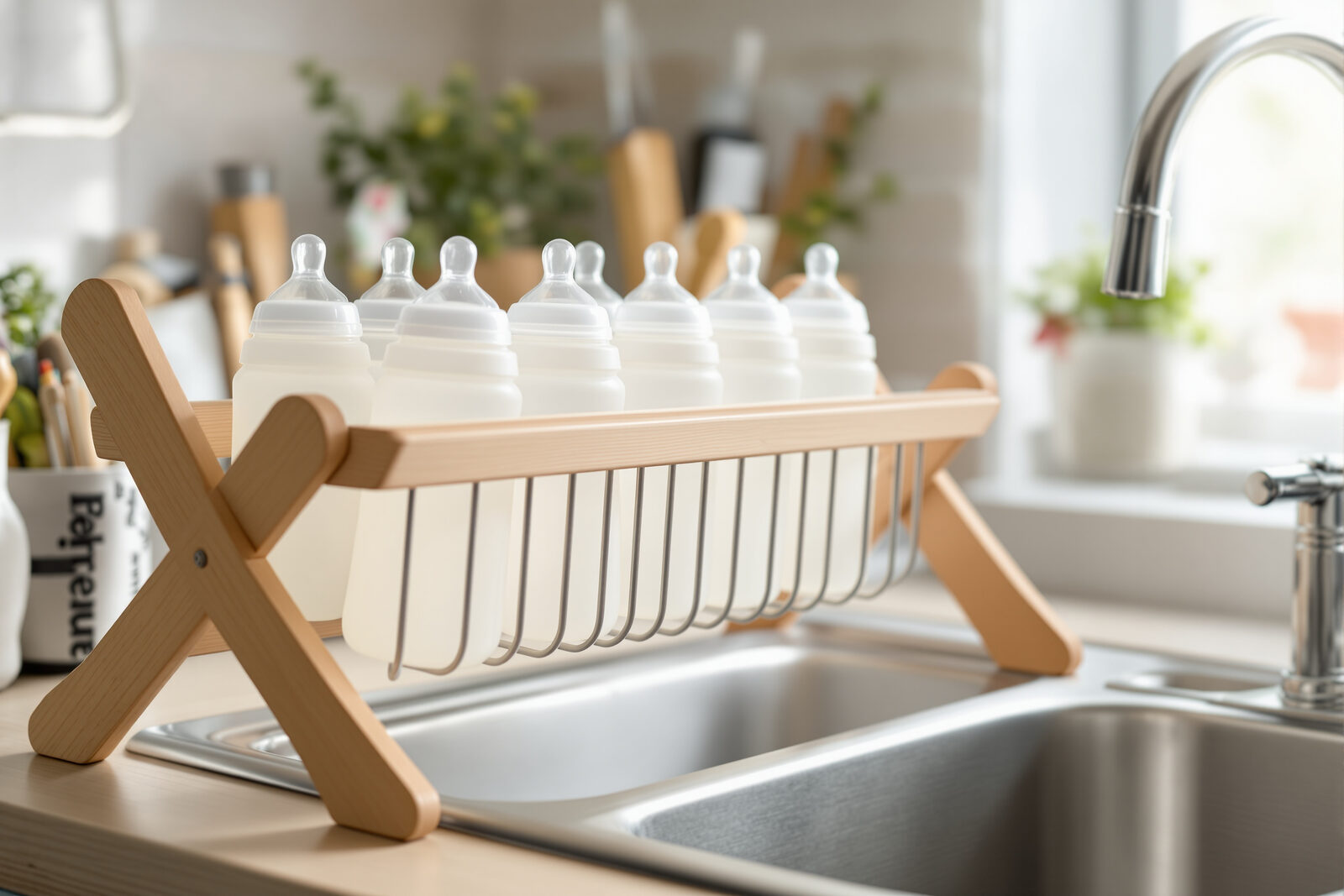
How to use silicone baby bottles safely
Most of what keeps silicone in the “safe” column is how you treat it. Because the few concerns (siloxane migration, degradation) all scale with heat and wear, a handful of simple habits keep exposure as low as possible without any fuss.
- Boil new bottles before first use. A few minutes in boiling water drives off most of the loosely bound surface siloxanes, so the bottle is at its cleanest before it ever holds milk.
- Sterilize per the maker's instructions, then let it cool. Medical-grade silicone tolerates boiling and steam, but there is no reason to leave it sitting in boiling water longer than needed.
- Serve formula at body temperature, not scalding. Warm, not hot, is better for your baby and for the bottle — and it's the same rule that cuts microplastic shedding when any bottle is involved.
- Skip harsh scouring. Abrasive pads and strong solvents degrade the surface. Warm soapy water and a soft brush are all silicone needs.
- Replace on sight of wear. Stickiness, cloudiness, tears, or a persistent smell all mean it's time for a new bottle.
“The grade on the label matters more than the material on the label. Good silicone, used warm instead of scalding, is a genuinely safe feed.”
Want the zero-compromise option instead?
If you'd rather not think about grades or siloxanes at all, glass and stainless steel remove even the trace concerns. See how the materials stack up in our full comparison.
The safest non-silicone baby bottles if you'd rather skip it
Medical-grade silicone is a reasonable choice, but if you want to remove even the trace siloxane question, glass and stainless steel are the materials that leach nothing and shed no microplastics at any temperature. These are real, currently-sold bottles with an inert drink path — a glass or steel body and a silicone nipple only, so warm milk never touches a plastic surface. Prices move on Amazon, so we link to the live listing.
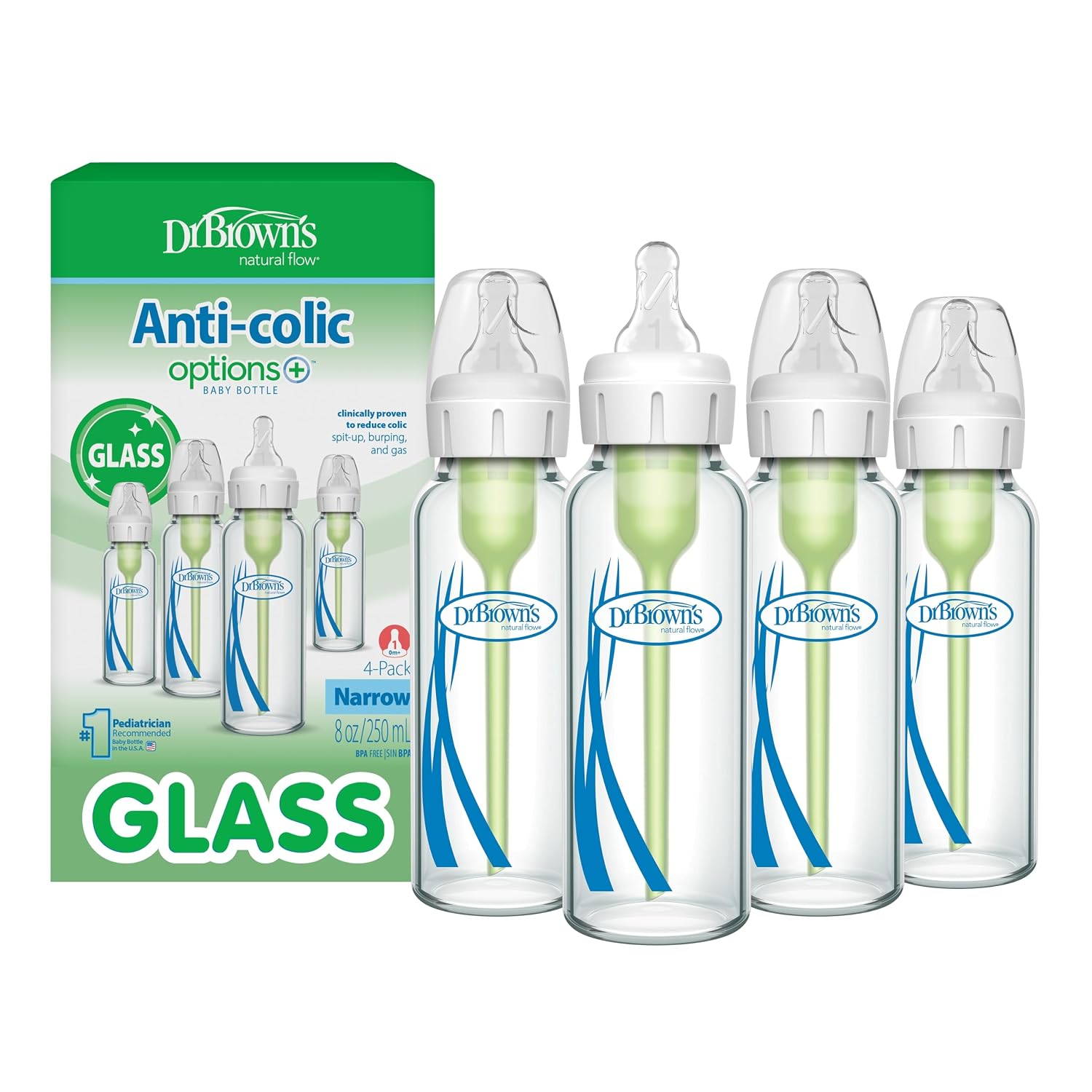 Best Overall
Dr. Brown's pairs a durable glass body with its signature internal vent, which channels air away from the milk and is the reason the brand is a fixture in hospital nurseries and pediatric recommendations. There is no plastic in the drink path — the body is glass and the nipple is silicone — so warm formula never touches a leaching surface. The vent adds a few parts to wash, which is the main trade-off, but most parents find the reduction in gas and spit-up worth it. Available in narrow and wide-neck sizes so you can match an existing nipple preference.
The safest default: an inert glass body plus the anti-colic system that actually cuts down on gassy, interrupted feeds.
Why it's safe: The bottle is glass and the nipple is medical-grade silicone, so nothing in the liquid path can leach BPA/BPS or shed microplastics into warm milk.
Check Price on Amazon →✓ Ships free with Prime · Free returns · Amazon A-to-z purchase guarantee (on eligible items)
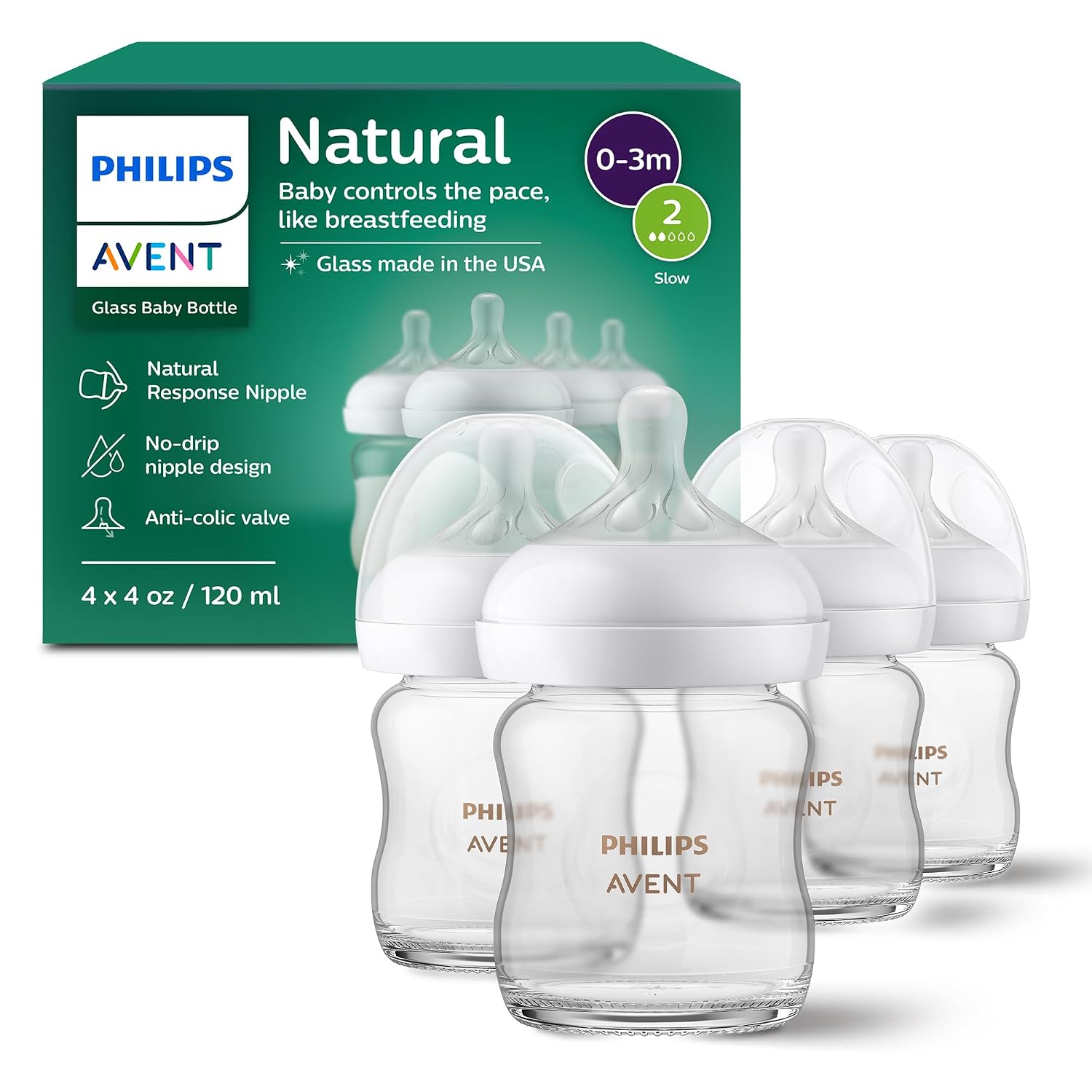 Best for Breast + Bottle
Avent's Natural Response nipple only releases milk when the baby actively sucks, mimicking the dynamics of breastfeeding and reducing the nipple confusion that trips up combo-feeding families. The glass body is thick and inert, and the wide neck is easy to fill and scrub. It is a soda-lime glass design, so the usual rule applies — avoid pouring boiling water onto a cold bottle — but it handles normal warming without issue. A strong pick for exclusively or partially breastfed babies.
The closest thing to the breast in a glass bottle, so switching back and forth is far less of a fight.
Why it's safe: An inert glass body and a silicone nipple mean no BPA, BPS or microplastic exposure in the drink path, warm or cold.
Check Price on Amazon →✓ Ships free with Prime · Free returns · Amazon A-to-z purchase guarantee (on eligible items)
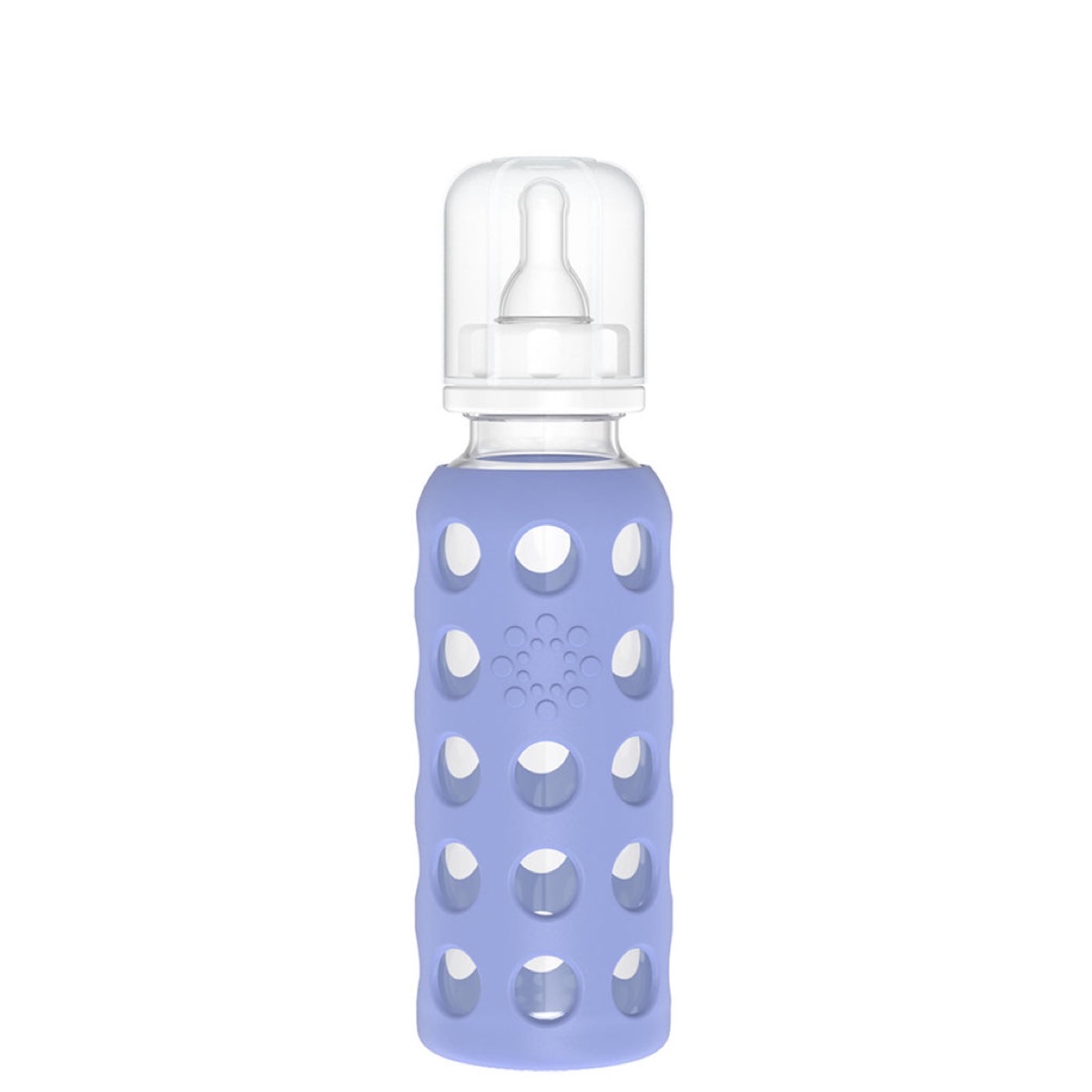 Best Drop Protection
Lifefactory uses borosilicate glass, the same thermal-shock-resistant family used in lab glassware, so it tolerates fridge-to-warm transitions with less stress than soda-lime glass. The signature feature is the dimpled silicone sleeve that wraps the whole body, cushioning impacts and giving babies and parents a secure grip. As your child grows, the same bottle converts with flat-cap and straw accessories into a storage or drinking cup, which stretches its useful life well past the bottle years. Heavier than plastic, but the sleeve is what makes glass realistic for families nervous about breakage.
The glass bottle you can actually hand to a wriggly baby — the sleeve cushions drops and the borosilicate shrugs off temperature changes.
Why it's safe: Borosilicate glass and a silicone sleeve and nipple mean zero plastic contact with the milk — nothing to leach or shed.
Check Price on Amazon →✓ Ships free with Prime · Free returns · Amazon A-to-z purchase guarantee (on eligible items)
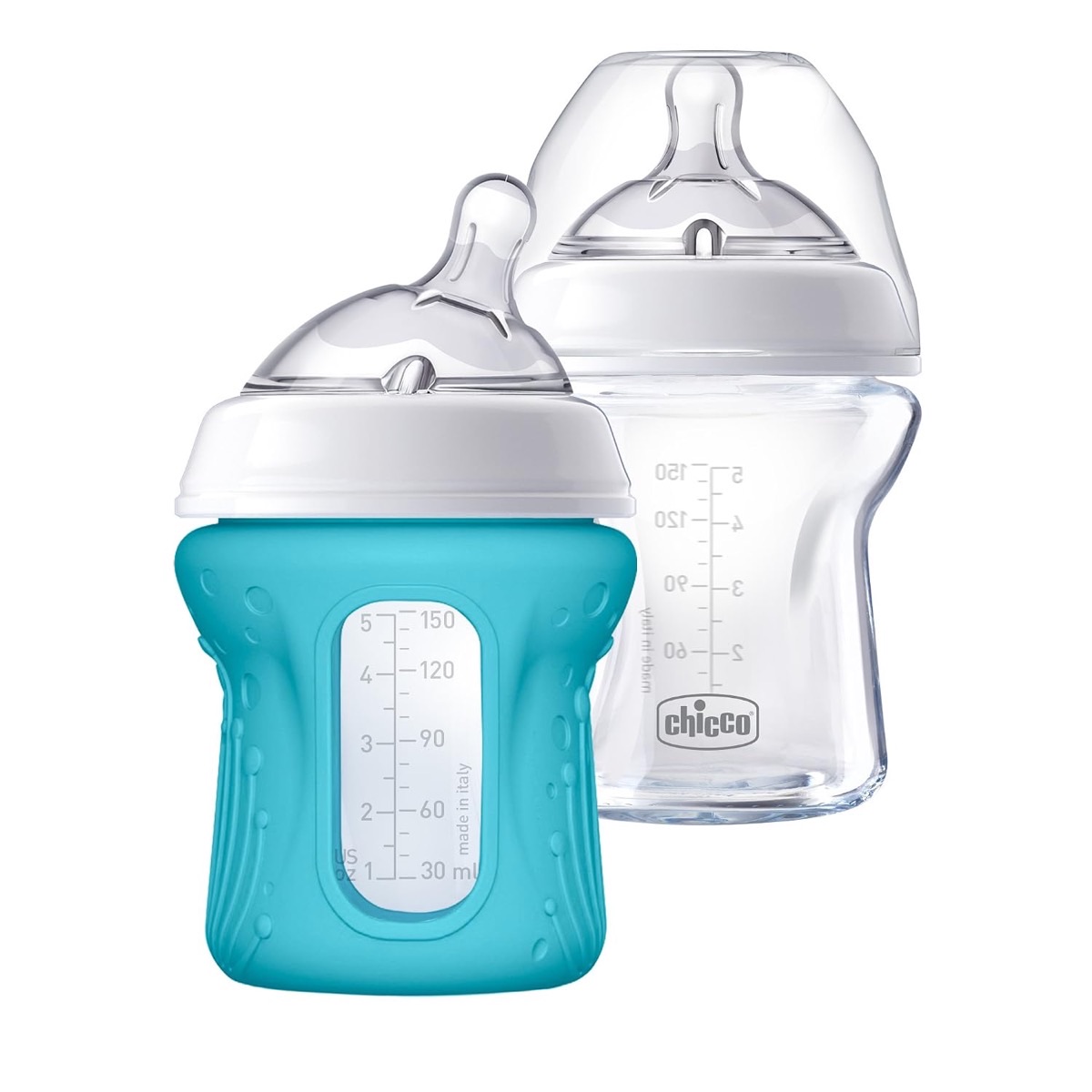 Best for Easy Latch
Chicco's NaturalFit line pairs a clear glass body (made in Italy) with a wide, angled silicone nipple shaped to encourage a natural, deep latch and an anti-colic valve to cut down on swallowed air. It is a good alternative for parents who have tried the big-name bottles and found the nipple shape didn't click with their baby. An optional silicone sleeve adds grip and drop protection. Because it is less commonly stocked than Dr. Brown's or Avent, we link to a live Amazon search so you land on the current in-stock listing.
A wide, intuitive nipple on an inert glass body — the pick to try when a baby fusses at other bottle shapes.
Why it's safe: Clear glass and a silicone nipple keep the liquid path free of BPA, BPS and microplastics at any feeding temperature.
Check Price on Amazon →✓ Ships free with Prime · Free returns · Amazon A-to-z purchase guarantee (on eligible items)
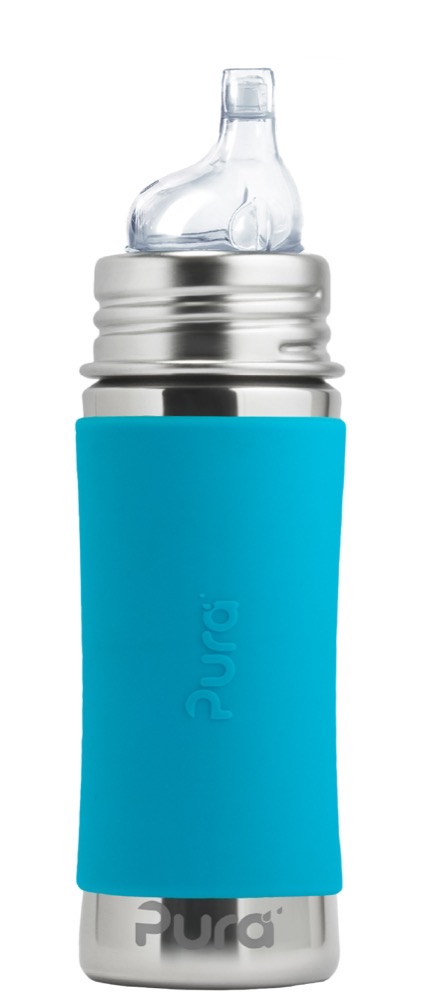 Best Non-Glass Alternative
Not glass, but the natural companion to it. The Pura Kiki body is 18/8 stainless steel with a medical-grade silicone nipple and sleeve, so like glass it keeps all plastic out of the liquid path — there is no leaching and no particle shedding. The advantage over glass is that it simply cannot shatter, which makes it the sensible choice for the diaper bag, daycare, and older babies who like to test gravity. Pura is unusually transparent about its materials, and the same stainless body converts to a sippy or straw cup as the child grows. Many families run glass at home and this at everywhere-else.
All the safety of glass with none of the breakage — one stainless body that converts from bottle to sippy to straw cup.
Why it's safe: An 18/8 stainless body and silicone nipple mean no plastic ever touches the milk, so there is nothing to leach BPA or shed microplastics.
Check Price on Amazon →✓ Ships free with Prime · Free returns · Amazon A-to-z purchase guarantee (on eligible items)
The honest verdict
Are silicone baby bottles safe? For the food-grade and medical-grade silicone sold by reputable brands, yes — it is a stable, BPA-free material that, crucially, does not shed microplastics into warm milk the way polypropylene plastic does. That one fact puts silicone far ahead of plastic for infant feeding. The honest asterisks are small: trace siloxanes that migrate more under high heat, and cheap filler-cut silicone from anonymous sellers that you should simply not buy.
So the practical answer is reassuring. Buy platinum-cured or medical-grade silicone from a named brand, boil new bottles before first use, serve formula warm rather than scalding, and replace any bottle that shows wear. Do that and silicone is a safe feed. If you'd rather not manage even the trace concerns, glass is the gold standard and stainless steel is the unbreakable runner-up — either one removes the last asterisk entirely. Whichever you choose, the single biggest upgrade for your baby is the same: get off microplastic-shedding plastic.
Frequently Asked Questions
For most families, yes. Food-grade and medical-grade silicone is chemically stable, carries no BPA, BPS, or phthalates, and does not shed microplastics into warm milk the way polypropylene plastic bottles do. The two caveats are cheap filler-adulterated silicone from unknown brands and trace siloxanes that migrate more under high heat. Buy a reputable brand that states its silicone is 100% food- or medical-grade and the material is a safe choice.
Pure food-grade silicone is close to inert and leaches very little under normal feeding conditions. Studies of silicone kitchenware have detected small amounts of cyclic siloxanes migrating into food, rising with heat and fat content, but the amounts are low and the US FDA permits silicone for repeated food contact. Use quality silicone, avoid overheating it, and replace any bottle that becomes sticky, cloudy, or damaged.
No. Microplastics are shed by petroleum plastics like polypropylene. A 2020 Nature Food study found polypropylene infant bottles can release millions of microplastic particles per liter during formula preparation, driven by heat and shaking. Silicone's silicon-oxygen backbone does not fragment into microplastics the way polypropylene does, so on particle shedding it sits with glass and stainless steel on the safe side.
Glass is the safest overall: completely inert, leaches nothing, sheds no microplastics at any temperature. Stainless steel is next and is virtually unbreakable. Medical-grade silicone is a reasonable third — soft and breast-like, with no microplastic shedding and only trace siloxane migration. Polypropylene plastic is the material to be most cautious with. See our safest baby bottles guide for the full ranking.
Quality medical-grade silicone tolerates boiling and steam sterilizing, which is one of its advantages, but siloxane migration rises with temperature, so don't leave silicone in boiling water longer than needed. Sterilize per the maker's instructions, let the bottle cool before filling, and prepare formula warm rather than scalding. If you want to avoid the question entirely, glass handles boiling with no migration concern.
Sources
- Li D, Shi Y, Yang L, et al. “Microplastic release from the degradation of polypropylene feeding bottles during infant formula preparation.” Nature Food, 2020. doi.org/10.1038/s43016-020-00171-y
- US Food and Drug Administration. “Rubber articles intended for repeated use,” 21 CFR 177.2600. accessdata.fda.gov
- World Health Organization. “Microplastics in drinking-water.” 2019. who.int