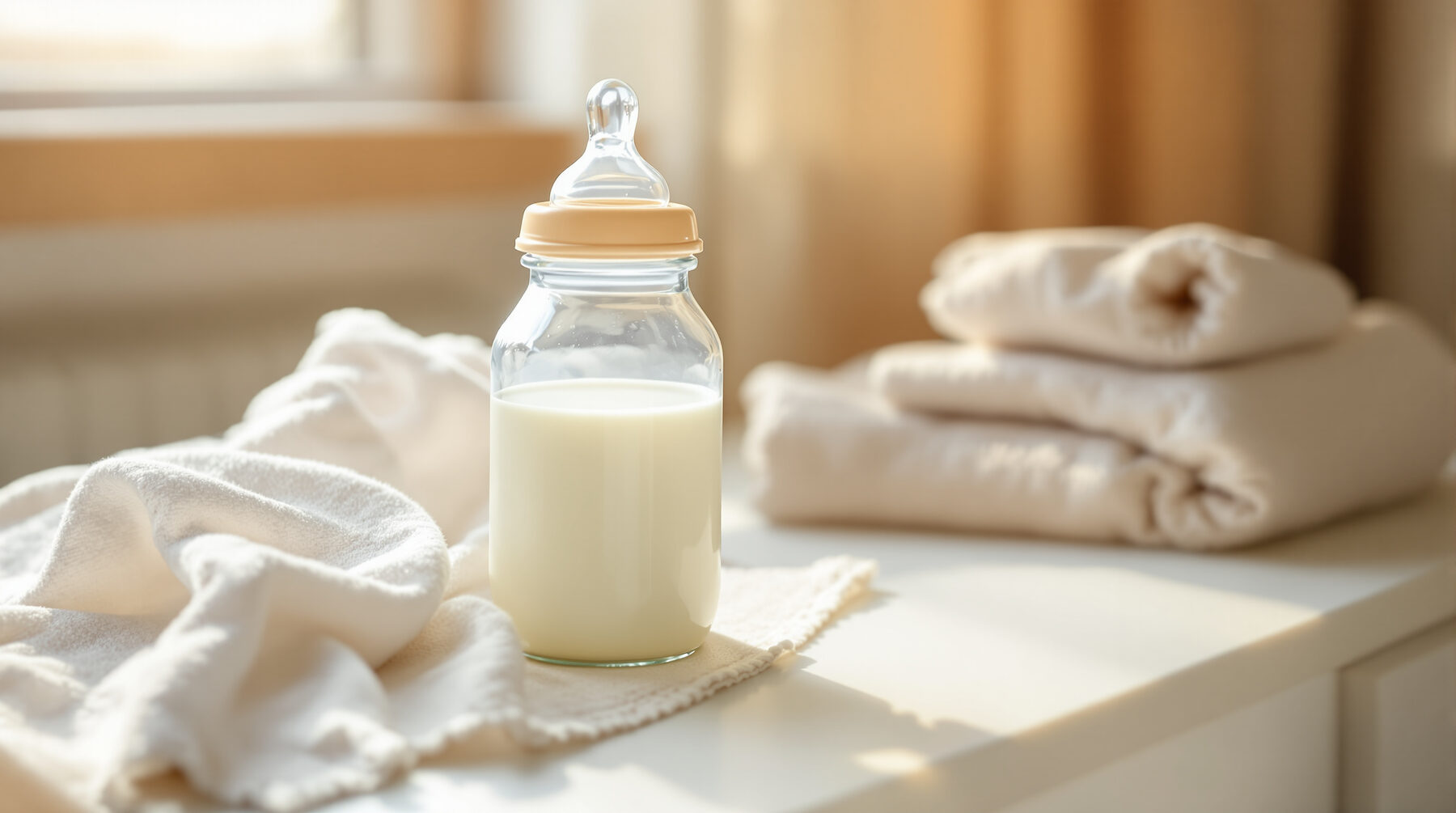
If you are switching your baby off plastic bottles, the reason is almost always the same: a 2020 study in Nature Food found that polypropylene infant bottles released, on average, 4 million microplastic particles per litre during ordinary formula preparation — and warmer water pushed that figure up to tens of millions. Every parent sterilising a plastic bottle and filling it with warm formula was running almost exactly the scenario the study measured, several times a day.
Glass removes that exposure completely. It is chemically inert, it does not contain BPA or its newer cousins BPS and BPF, and it does not break down into particles no matter how many times you heat it. The questions parents actually have are the practical ones — which glass bottles are tough enough for daily life, which nipple systems babies accept, and whether weight and breakage are dealbreakers. Below are the five glass (and one stainless) baby bottles we recommend in 2026, after cross-checking each against its maker's own material specs.
The best glass baby bottle for most families in 2026 is the Dr. Brown's Options+ Anti-Colic Glass bottle — inert borosilicate-grade glass with a vented, anti-colic nipple system pediatric offices trust. For breastfed babies switching between breast and bottle, the Philips Avent Natural Response Glass has the most breast-like latch; for drop protection, the Lifefactory 9oz with silicone sleeve is the toughest. All of them share the one thing that matters: no plastic in the liquid path, so there is nothing to leach BPA or shed microplastics into warm milk.
Why choose a glass baby bottle at all?
Because glass is the only common bottle material that is inert on every axis parents worry about at once. It does not leach bisphenols, it does not release microplastics, and it does not absorb odours or stains. A plastic bottle can be “BPA-free” and still fail on the other two counts — BPA-free plastics are usually made with BPS or BPF, which a 2015 systematic review in Environmental Health Perspectives found to be similarly hormone-active, and every plastic still sheds particles as it ages and is heated.
The microplastic figure is the one that moves most parents. In the 2020 Nature Food study, polypropylene bottles released millions of particles per litre, and the release scaled sharply with water temperature — exactly the warm-formula conditions a bottle is used in. The World Health Organization has called for more research into microplastics in drinking water, and the precautionary move while that research matures is simply to not feed a newborn out of plastic. Glass takes the question off the table. This matters most in the first year, when a baby's dose per pound of body weight is proportionally higher than an adult's and the same few bottles are heated and reheated every day.
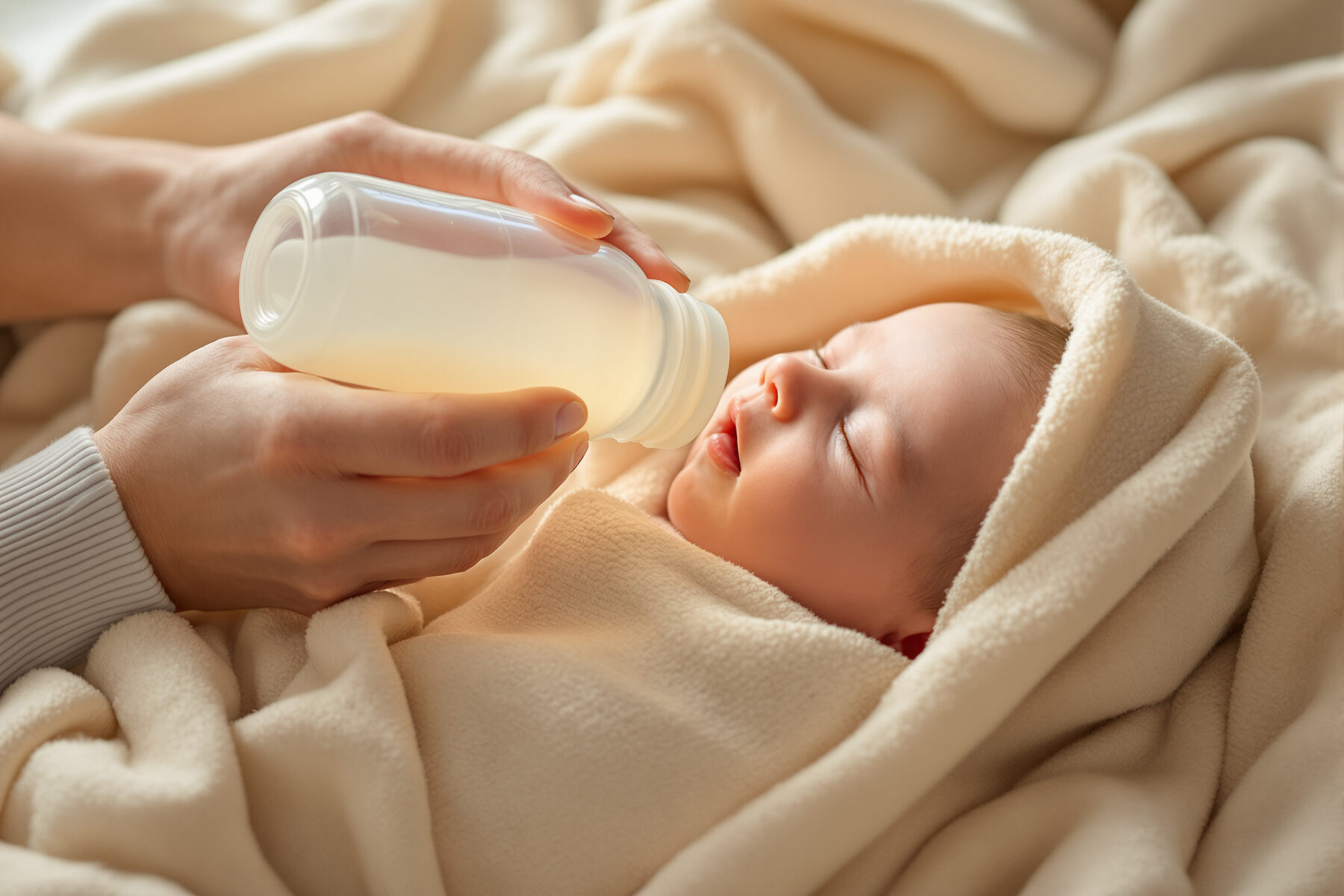
The 5 best glass baby bottles of 2026
Each pick below was chosen for an inert glass body, a medical-grade silicone nipple, and a design that survives real daily use. We note the exact material claims from each maker and who the bottle is best for. Prices move constantly on Amazon, so we link to the live listing rather than quoting a number that will be wrong by next week.
 Best Overall
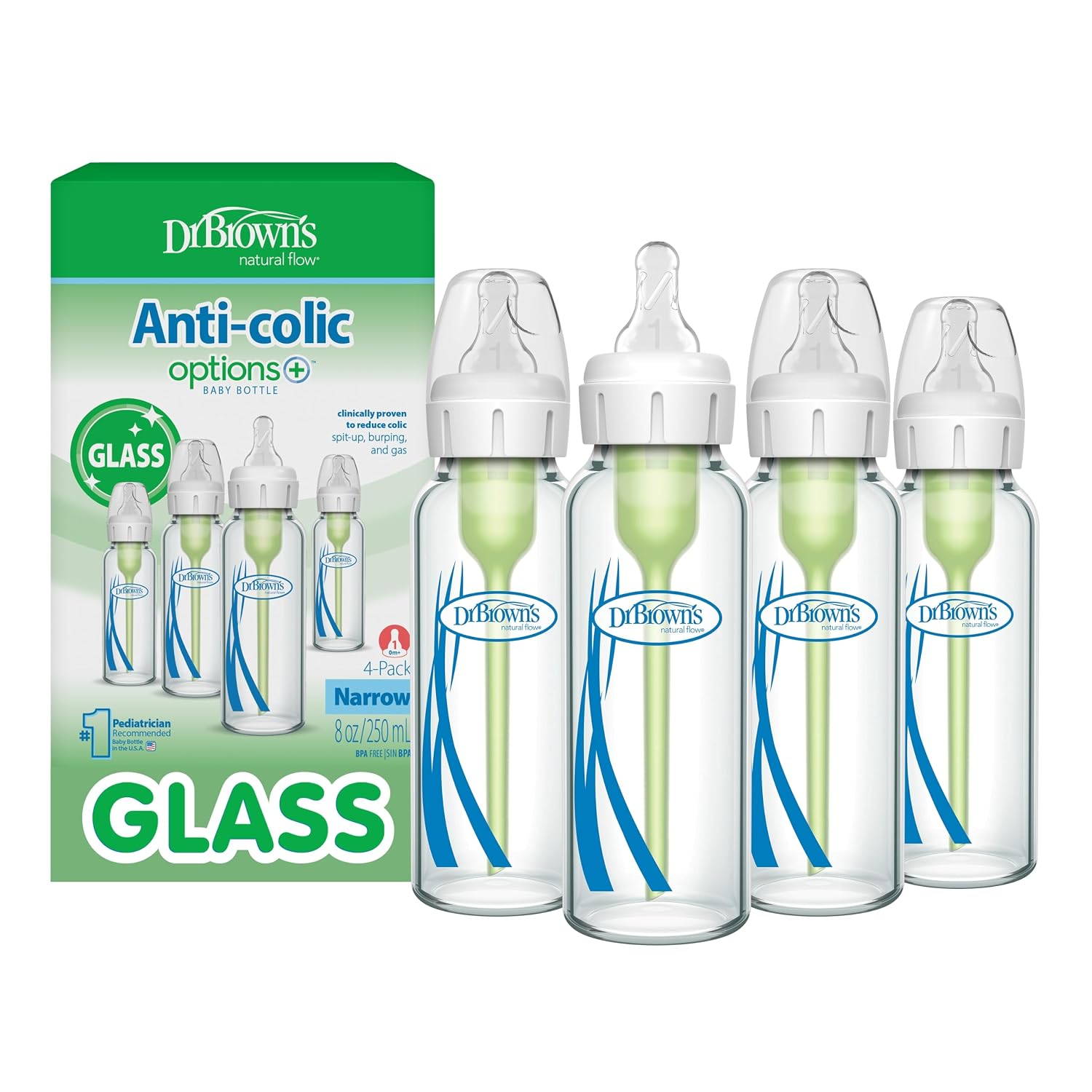
Dr. Brown's pairs a durable glass body with its signature internal vent, which channels air away from the milk and is the reason the brand is a fixture in hospital nurseries and pediatric recommendations. There is no plastic in the drink path — the body is glass and the nipple is silicone — so warm formula never touches a leaching surface. The vent adds a few parts to wash, which is the main trade-off, but most parents find the reduction in gas and spit-up worth it. Available in narrow and wide-neck sizes so you can match an existing nipple preference.
The safest default: an inert glass body plus the anti-colic system that actually cuts down on gassy, interrupted feeds.
Why it's safe: The bottle is glass and the nipple is medical-grade silicone, so nothing in the liquid path can leach BPA/BPS or shed microplastics into warm milk.
Check Price on Amazon →✓ Ships free with Prime · Free returns · Amazon A-to-z purchase guarantee (on eligible items)
 Best for Breast + Bottle
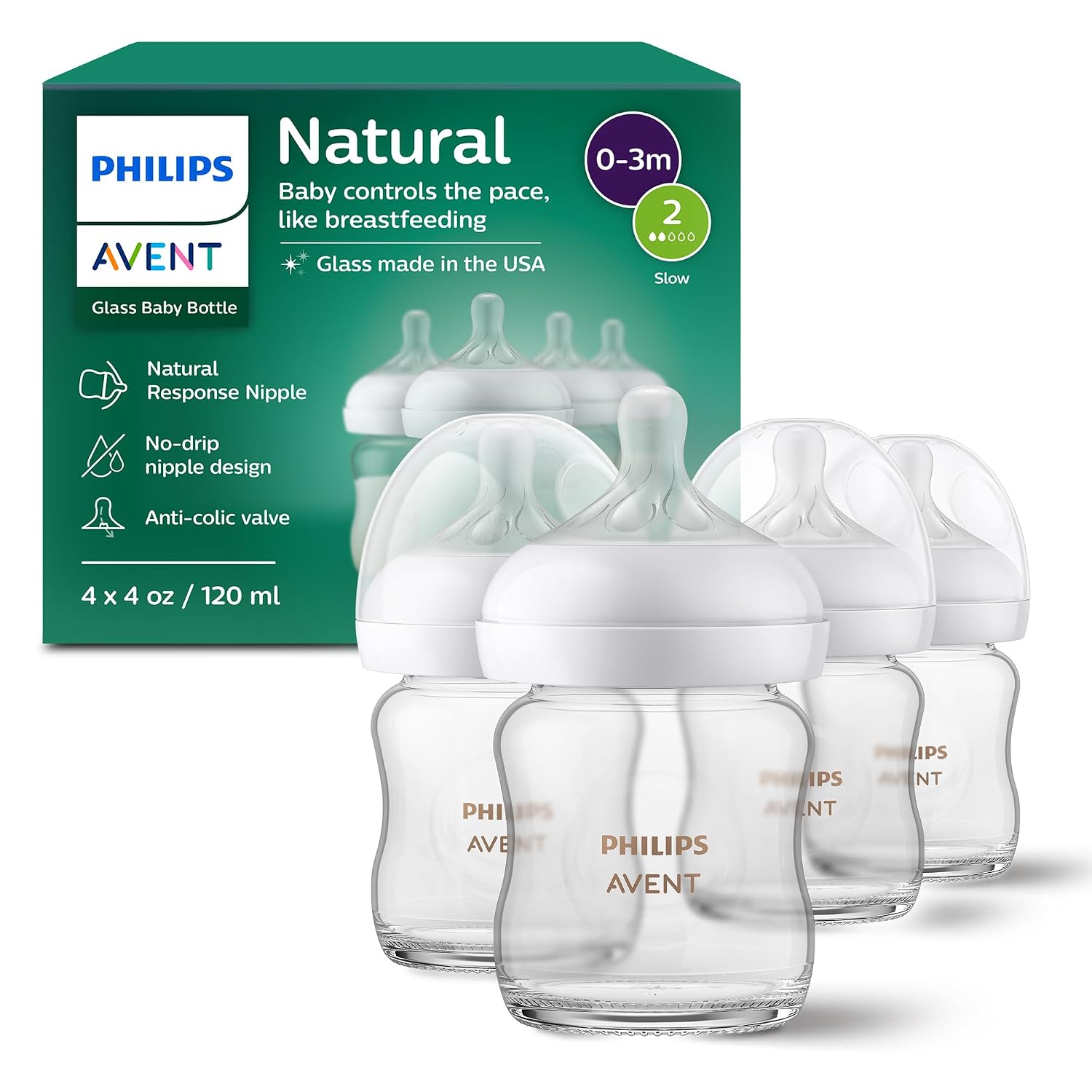
Avent's Natural Response nipple only releases milk when the baby actively sucks, mimicking the dynamics of breastfeeding and reducing the nipple confusion that trips up combo-feeding families. The glass body is thick and inert, and the wide neck is easy to fill and scrub. It is a soda-lime glass design, so the usual rule applies — avoid pouring boiling water onto a cold bottle — but it handles normal warming without issue. A strong pick for exclusively or partially breastfed babies.
The closest thing to the breast in a glass bottle, so switching back and forth is far less of a fight.
Why it's safe: An inert glass body and a silicone nipple mean no BPA, BPS or microplastic exposure in the drink path, warm or cold.
Check Price on Amazon →✓ Ships free with Prime · Free returns · Amazon A-to-z purchase guarantee (on eligible items)
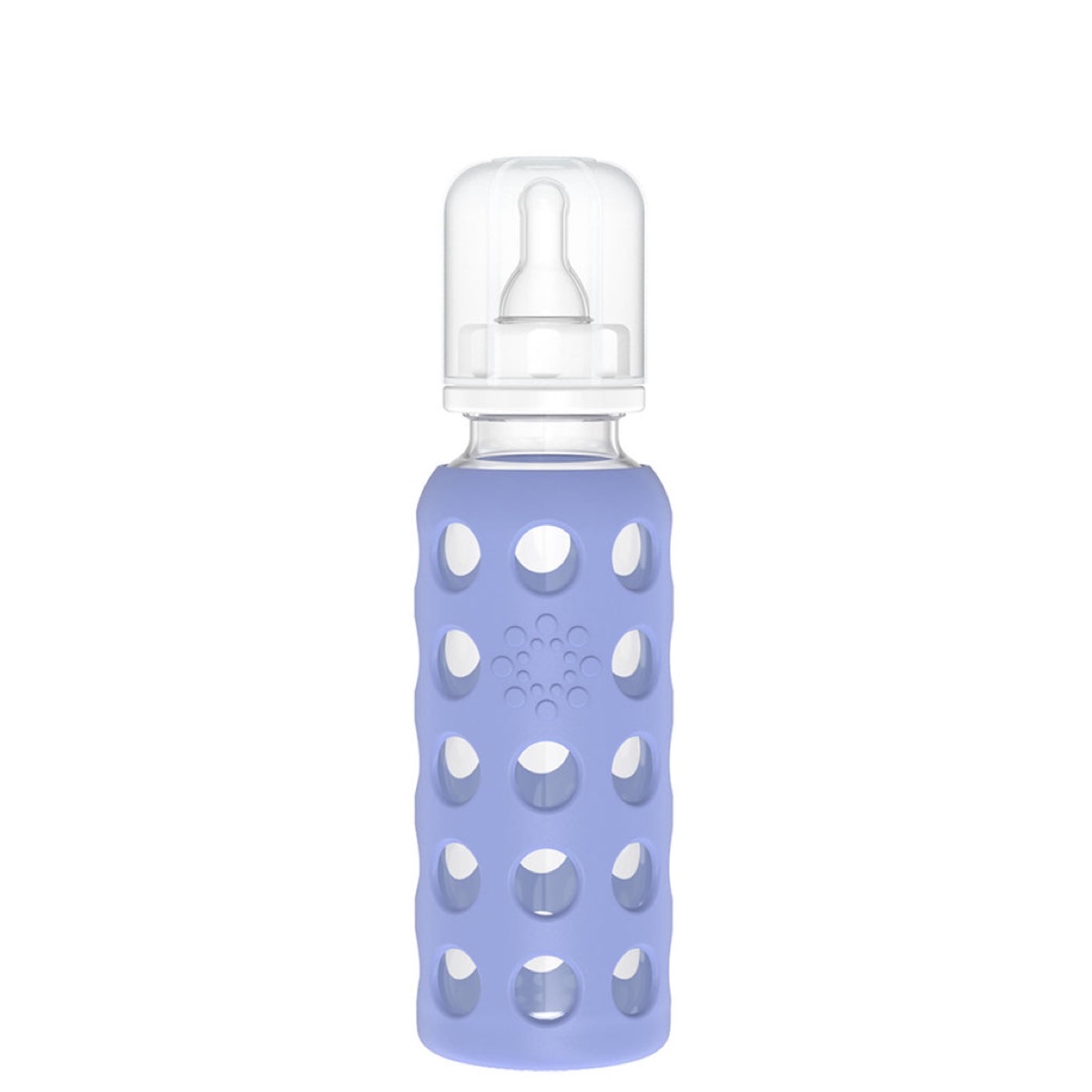 Best Drop Protection
Lifefactory uses borosilicate glass, the same thermal-shock-resistant family used in lab glassware, so it tolerates fridge-to-warm transitions with less stress than soda-lime glass. The signature feature is the dimpled silicone sleeve that wraps the whole body, cushioning impacts and giving babies and parents a secure grip. As your child grows, the same bottle converts with flat-cap and straw accessories into a storage or drinking cup, which stretches its useful life well past the bottle years. Heavier than plastic, but the sleeve is what makes glass realistic for families nervous about breakage.
The glass bottle you can actually hand to a wriggly baby — the sleeve cushions drops and the borosilicate shrugs off temperature changes.
Why it's safe: Borosilicate glass and a silicone sleeve and nipple mean zero plastic contact with the milk — nothing to leach or shed.
Check Price on Amazon →✓ Ships free with Prime · Free returns · Amazon A-to-z purchase guarantee (on eligible items)
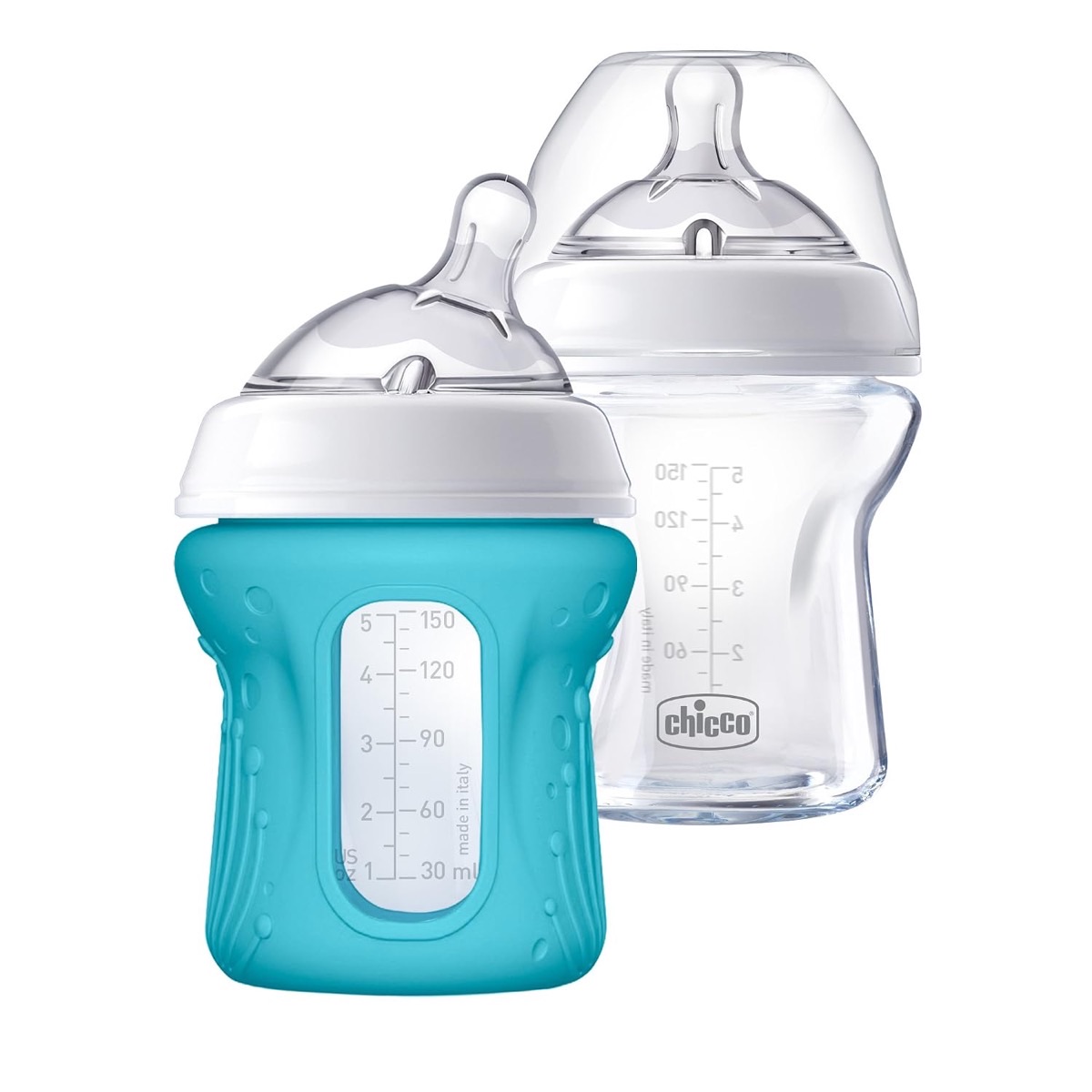 Best for Easy Latch
Chicco's NaturalFit line pairs a clear glass body (made in Italy) with a wide, angled silicone nipple shaped to encourage a natural, deep latch and an anti-colic valve to cut down on swallowed air. It is a good alternative for parents who have tried the big-name bottles and found the nipple shape didn't click with their baby. An optional silicone sleeve adds grip and drop protection. Because it is less commonly stocked than Dr. Brown's or Avent, we link to a live Amazon search so you land on the current in-stock listing.
A wide, intuitive nipple on an inert glass body — the pick to try when a baby fusses at other bottle shapes.
Why it's safe: Clear glass and a silicone nipple keep the liquid path free of BPA, BPS and microplastics at any feeding temperature.
Check Price on Amazon →✓ Ships free with Prime · Free returns · Amazon A-to-z purchase guarantee (on eligible items)
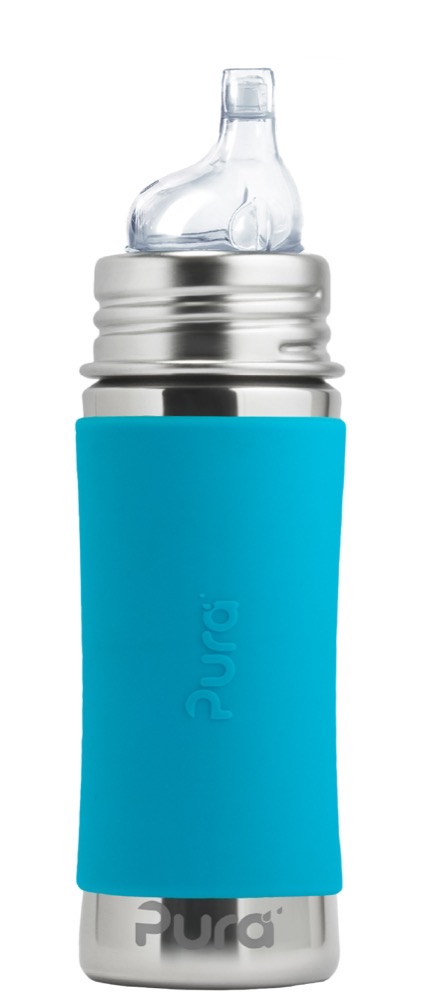 Best Non-Glass Alternative
Not glass, but the natural companion to it. The Pura Kiki body is 18/8 stainless steel with a medical-grade silicone nipple and sleeve, so like glass it keeps all plastic out of the liquid path — there is no leaching and no particle shedding. The advantage over glass is that it simply cannot shatter, which makes it the sensible choice for the diaper bag, daycare, and older babies who like to test gravity. Pura is unusually transparent about its materials, and the same stainless body converts to a sippy or straw cup as the child grows. Many families run glass at home and this at everywhere-else.
All the safety of glass with none of the breakage — one stainless body that converts from bottle to sippy to straw cup.
Why it's safe: An 18/8 stainless body and silicone nipple mean no plastic ever touches the milk, so there is nothing to leach BPA or shed microplastics.
Check Price on Amazon →✓ Ships free with Prime · Free returns · Amazon A-to-z purchase guarantee (on eligible items)
Are glass baby bottles safe? The honest trade-offs
Glass baby bottles are safe — the material itself is the safest option on the shelf — but they come with two real-world trade-offs worth planning around rather than pretending don't exist: weight and breakage. A full glass bottle is noticeably heavier than plastic, which is a non-issue for the first several months when you are holding the bottle anyway, but becomes a factor once a baby is old enough to self-feed. And glass can break. Modern bottles resist it far better than parents expect, thanks to tempered or borosilicate construction and silicone sleeves, but a drop onto tile or concrete can still crack one.
The practical answer most families land on is a split system: glass at home, where feeds are calm and the floor is often carpeted, and an unbreakable stainless bottle like the Pura Kiki for the diaper bag, the car, and daycare. That keeps the inert, plastic-free feed everywhere without asking a glass bottle to survive a parking lot. None of these trade-offs involve chemical safety — on leaching and microplastics, glass simply wins.
Borosilicate vs soda-lime glass: does it matter?
For chemical safety, no — both are inert and neither leaches or sheds particles. The difference is how they handle sudden temperature changes. Borosilicate glass (used by Lifefactory and most laboratory glassware) has a low thermal-expansion coefficient, so it tolerates fridge-to-warm swings with less internal stress. Soda-lime glass, usually tempered for strength and used by brands like Dr. Brown's and Philips Avent, is perfectly safe but less forgiving of extreme, sudden temperature jumps — the thing to avoid is pouring boiling water directly onto a cold bottle. In normal use, where you warm a bottle gradually, either type performs well. If you specifically want the most thermal-shock-tolerant bottle, borosilicate is the one to look for.
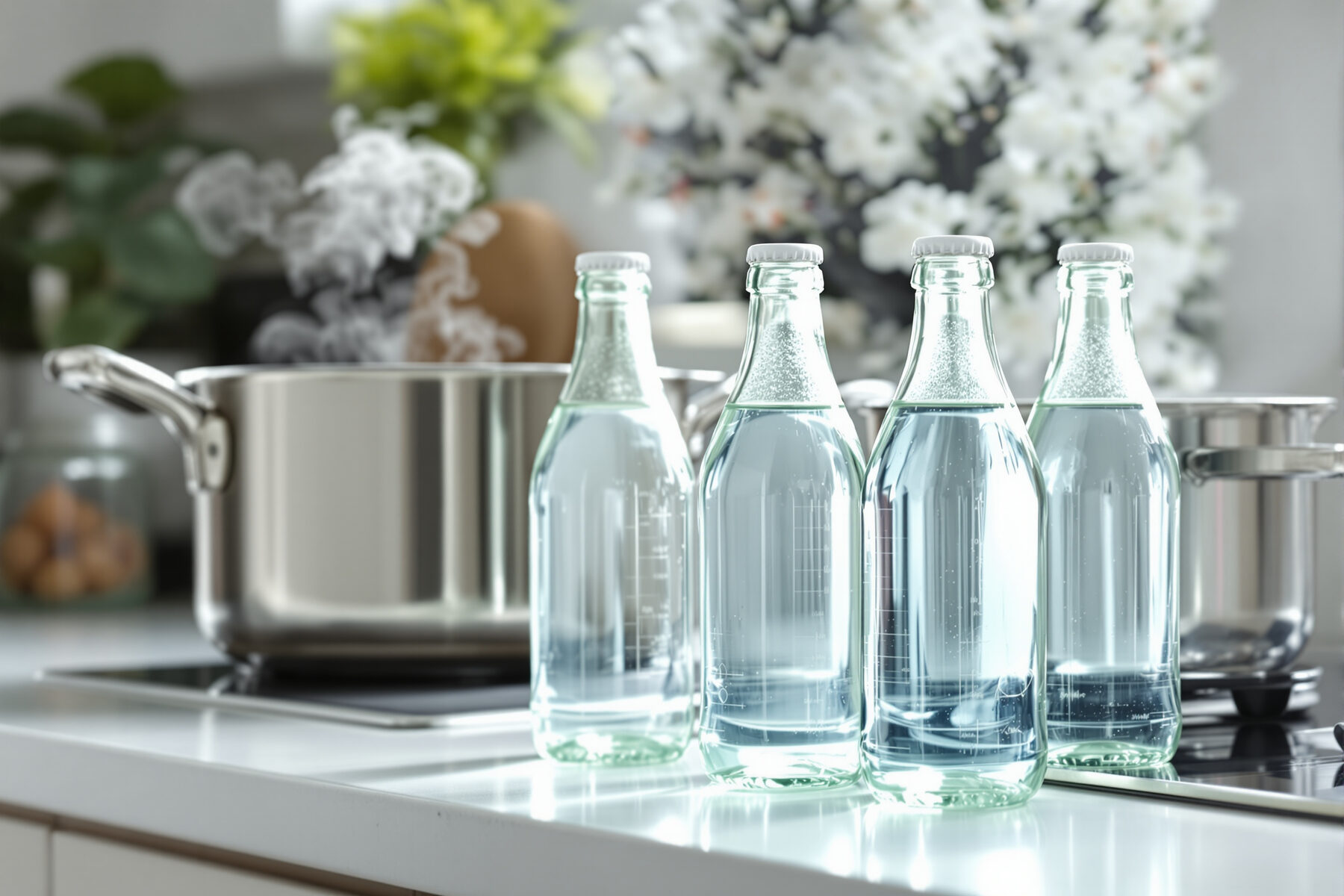
How to sterilise glass baby bottles safely
Glass actually tolerates a lifetime of sterilising better than plastic, which degrades and sheds more particles the more it is heated. The one rule is to avoid thermal shock: let the bottle approach room temperature, then place it into water as the water heats rather than plunging a cold bottle into a rolling boil. From there you have the usual options — boil for about five minutes, run the top rack of the dishwasher, or use an electric or microwave steam steriliser. Always remove the silicone nipple and ring and sterilise them separately so every surface is reached.
If you are preparing formula, the water you mix it with matters as much as the bottle. Boiling water does not remove microplastics already present, so many parents pair a glass bottle with filtered water — see our guide on preparing baby formula without microplastics and whether formula itself carries microplastics.
Glass vs stainless steel vs silicone bottles
Glass and stainless steel are the two fully inert, plastic-free options, and they cover almost every family's needs: glass for the home feed and the clear view of how much milk is left, stainless for anywhere a drop would end a glass bottle. Silicone bottles (such as Comotomo) are a soft, squeezable third option — food-grade silicone is chemically stable and does not shed microplastics the way hard plastic does, so it is a reasonable choice, though it is opaque and holds odours more than glass. What all three have in common is that no hard plastic touches the warm milk. For the full material-by-material ranking, see our safest baby bottles guide, and for the head-to-head reasoning, glass vs plastic baby bottles.
Frequently asked questions
Are glass baby bottles safe for newborns?
Yes. Glass is chemically inert, so it does not leach BPA, BPS, phthalates or any plasticiser into warm milk or formula, and it does not shed microplastics the way polypropylene bottles do — which is exactly why hospitals used glass for decades. The only real trade-offs are weight and the risk of breakage if dropped on a hard floor, which is why most modern glass bottles ship with a silicone sleeve that cushions impacts and improves grip.
Do glass baby bottles have microplastics or BPA?
No. Glass contains no BPA, BPS or BPF and does not break down into microplastics. The concern that pushed parents toward glass comes from the 2020 Nature Food study, which found polypropylene bottles released millions of microplastic particles per litre during normal formula prep, rising with water temperature. The only non-glass part is the nipple, which is medical-grade silicone — chemically stable and not a microplastic source at feeding temperatures.
Do glass baby bottles break easily?
Less than parents expect. Most are tempered or borosilicate glass that resists thermal shock, and nearly all come with a silicone sleeve that absorbs a typical drop from a lap or changing table. The bottle that actually shatters in daily use is the exception. The honest caveats are weight and that a drop onto tile or concrete can still crack one — which is why many families keep an unbreakable stainless bottle for travel and daycare.
Is borosilicate or soda-lime glass better for baby bottles?
Both are equally safe and inert; the difference is thermal-shock resistance. Borosilicate (Lifefactory, lab glassware) handles sudden fridge-to-warm swings better. Soda-lime glass (Dr. Brown's, Philips Avent) is tempered for strength and perfectly safe as long as you avoid extreme, sudden temperature changes such as boiling water on a cold bottle. On chemical safety and microplastics the two are equivalent.
How do you sterilise glass baby bottles without cracking them?
Let the bottle come close to room temperature, then put it into water as it heats rather than dropping a cold bottle into boiling water — the sudden jump is what stresses glass. You can boil for about five minutes, use the dishwasher's top rack, or use a steam steriliser, always removing the silicone nipple and ring to clean separately. Unlike plastic, repeated high-heat sterilising does not degrade glass or increase particle shedding.
Sources
- Li, D., et al. (2020). Microplastic release from the degradation of polypropylene feeding bottles during infant formula preparation. Nature Food.
- Rochester, J.R. & Bolden, A.L. (2015). Bisphenol S and F: A Systematic Review of the Hormonal Activity of Bisphenol A Substitutes. Environmental Health Perspectives.
- World Health Organization (2019). WHO calls for more research into microplastics and a crackdown on plastic pollution.