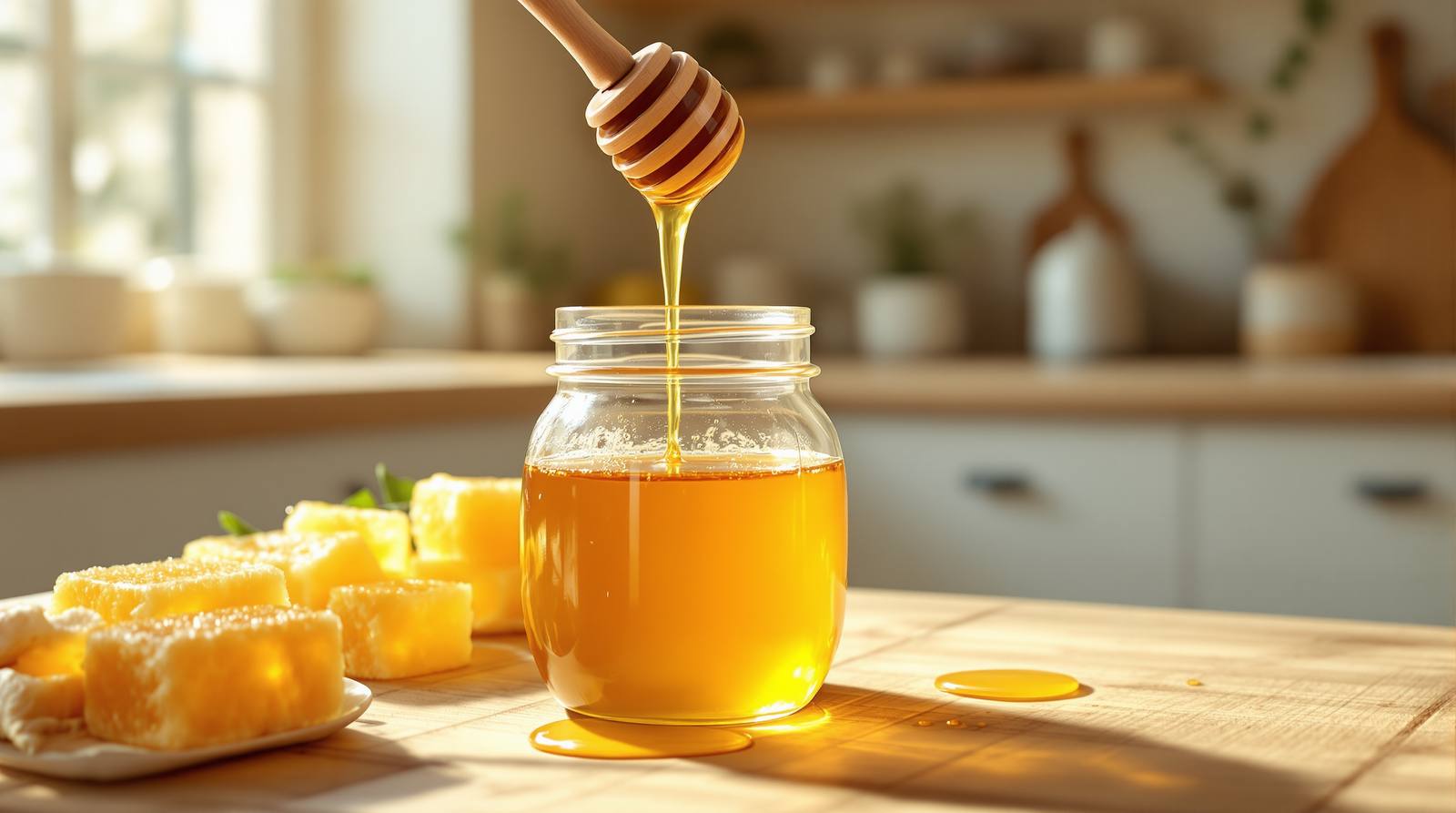
Probably yes — the amount is disputed, but the presence isn't. A 2013 German study first reported plastic fibers and fragments in honey samples worldwide. A 2017 follow-up showed a big share of those fibers were likely airborne lab contamination, not honey. But a 2020 study in Ecuador, using stricter contamination controls, still found microplastic particles in every honey sample it tested. Bees are the most plausible vector — they fly through the same microplastic-laced air we breathe — and plastic packaging adds a second pathway. The particle counts reported in honey are far smaller than in bottled water or seafood, so the reasonable move is proportion: buy honey in glass, filter your water, and fix the bigger sources in your kitchen at the same time.
Honey has an unusual place in the pantry. It's the closest thing to a raw, single-ingredient food most of us eat — no processing pipeline, no cans, no additives. So the first time researchers started finding microplastic fibers in it, the reaction was disbelief. Then a second team pushed back on the method. Then a third team fixed the method and found the particles anyway. The story of microplastics in honey is really a story about how carefully you have to measure something that's this small.
The two plausible pathways are simple. Bees forage across kilometers of landscape, brushing past every kind of dust and fiber in the air on the way — the same microplastics in indoor and outdoor air that everyone else breathes. And once the honey is out of the hive, most of it goes into plastic squeeze bottles, where it sits in contact with plastic through storage, warming, and every squeeze. This guide walks through the three studies that put numbers on it, whether it's worth worrying about (calmer than headlines suggest), and the honest, cheap swaps that cut your exposure.
The bottom line up front: honey almost certainly contains some microplastics — the debate in the literature is over how many, not whether. It's a small contributor next to bottled water and seafood, so the fix is proportion, not fear: buy honey in glass, cut plastic squeeze bottles, and filter the water you dissolve it into. See our ranking of which foods have the most microplastics and the room-by-room kitchen plastic detox guide.
Does honey have microplastics?
The short answer the current literature supports: probably yes, in small amounts. Three peer-reviewed studies have looked directly, and each one landed in a different place. Read together they tell a consistent story — honey isn't microplastic-free, it just isn't loaded the way bottled water is.
In 2013, Gerd Liebezeit and Elisabeth Liebezeit published the first study, in Food Additives & Contaminants, reporting synthetic fibers and fragments in every honey sample they tested from a global set of sources. It was the finding that put honey on the microplastics map. In 2017, a follow-up team led by Peter Mühlschlegel in the same journal argued the fiber counts were largely airborne contamination from the laboratory itself — a real methodological problem that any microplastic study has to control for. Then in 2020, Diaz-Basantes and colleagues published in Sustainability, using stricter clean-lab controls, and still detected microplastic particles in every honey sample they tested in Ecuador. The 2013 numbers may have been too high, but "some are there" survived a much harder look.
How does plastic get into honey?
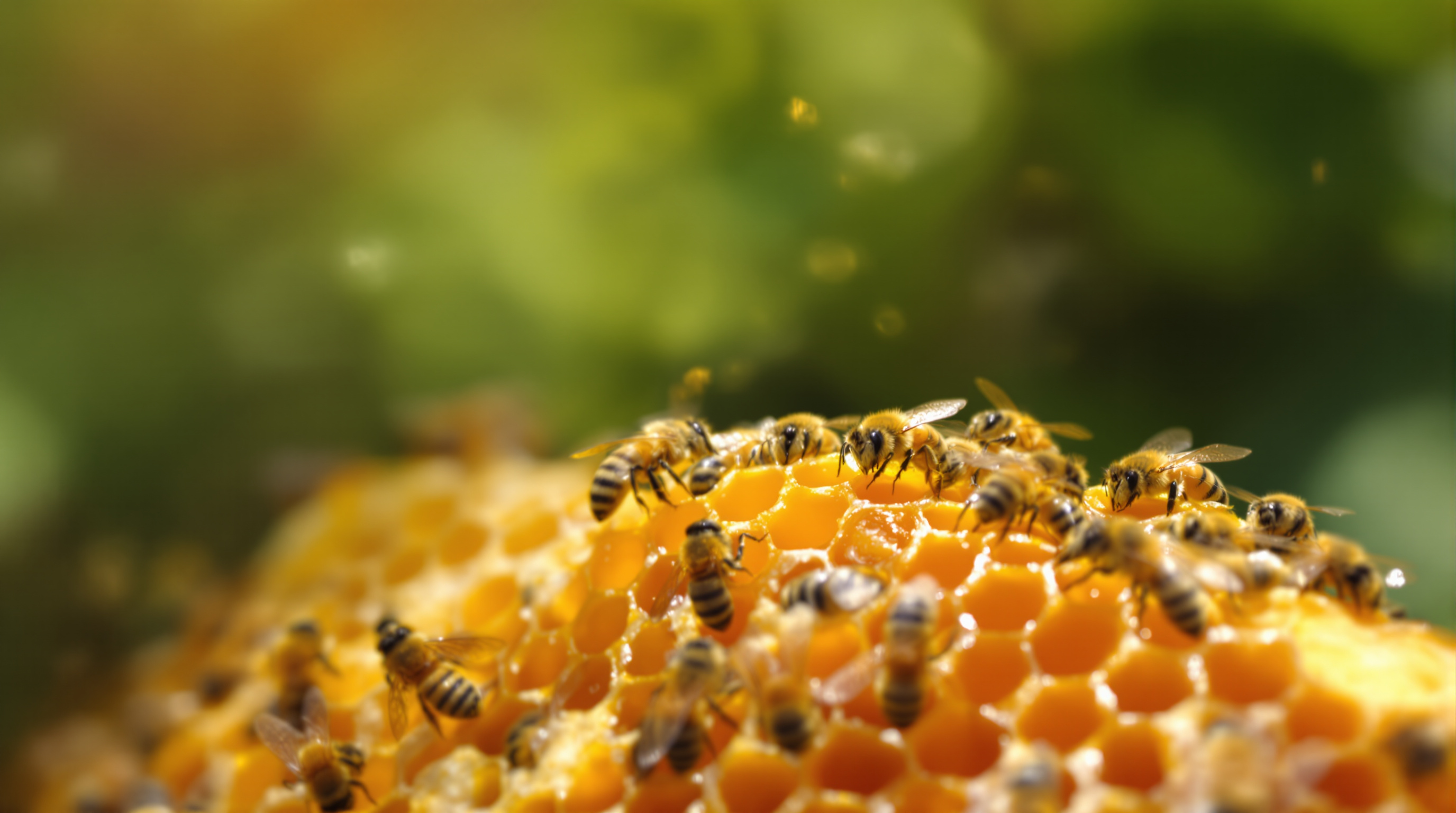
Two pathways, one you can influence and one you can't. The pathway you can't fix directly is environmental: bees forage across a wide radius of landscape, and airborne microplastic fibers and fragments settle onto their bodies, their pollen loads, and the open cells in the hive. Ambient air — indoors and out — carries millions of tiny plastic fibers, mostly from clothing and dust, and bees are constantly moving through it. That's the same broader story as microplastics in fruits, vegetables and even sea salt: anything harvested from the environment picks up what's in the environment.
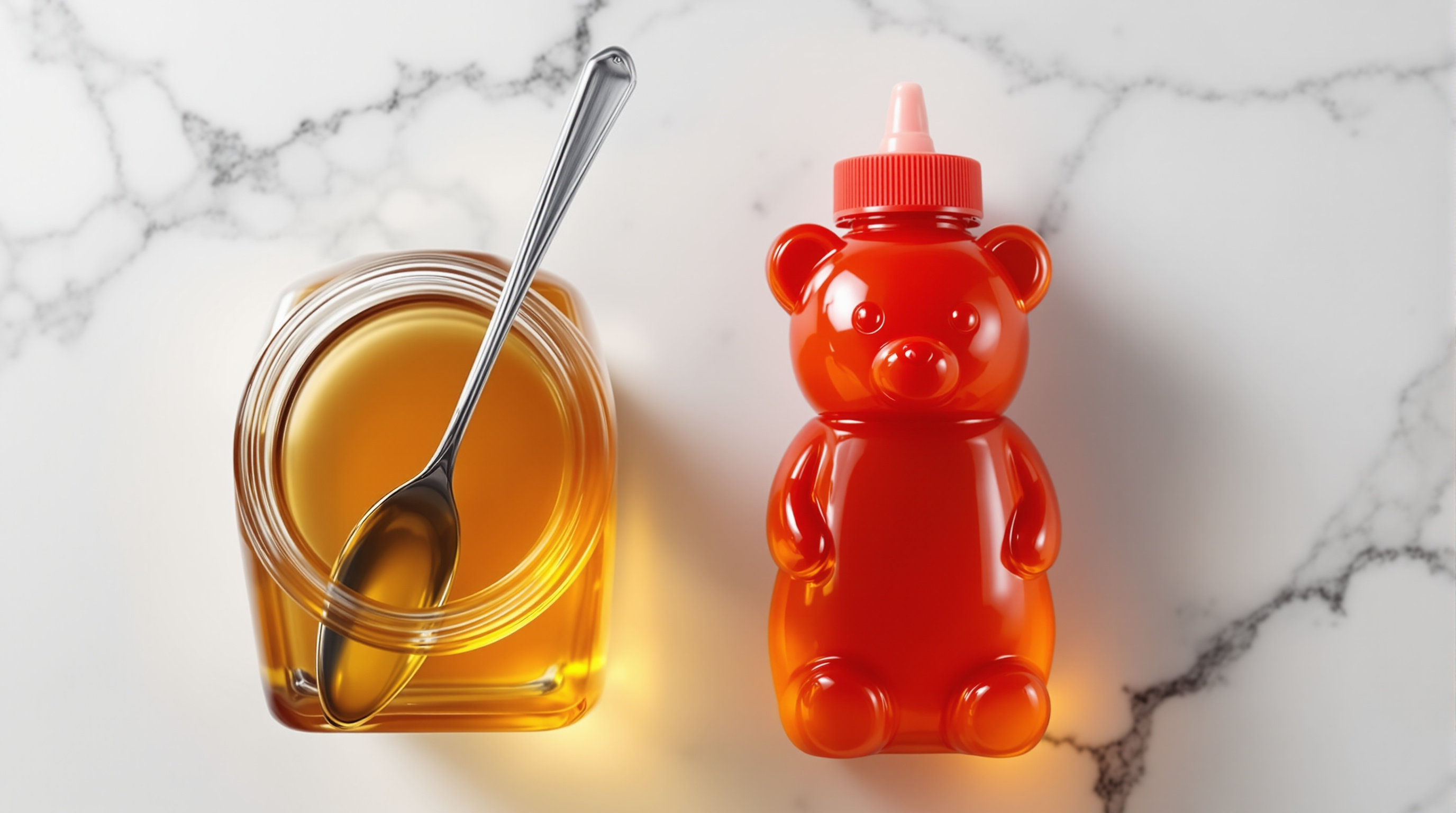
The pathway you can fix is packaging and processing. Most supermarket honey ships in plastic squeeze bottles — often polyethylene — and stays there for months. Every squeeze, every warm-up in a mug of tea, every hot summer in a pantry is another chance for the plastic surface to shed. Extraction lines and filtration also put honey in contact with plastic tubing on the way to the jar. Bulk raw honey in glass sidesteps most of that. It doesn't get you to zero (the bees still fly through polluted air), but it removes a source that's entirely under your control.
How much microplastic is in honey compared to other foods?
Small, on the scale of what we already know. To put it in perspective: microplastic counts reported for bottled water, seafood, and salt run into the hundreds or thousands of particles per liter or kilogram, and studies consistently find plastic in tap water, beer and wine, and even produce. The best-controlled honey studies land at particle counts far below those food categories. It's real, it's measurable, and it's not the biggest food source in the average diet by a long way.
That's why the honest guidance is proportion, not avoidance. A tablespoon of honey a day isn't the front line of your microplastic exposure — a plastic water bottle probably is. Fix the front line first (a certified filter and no plastic bottles), then remove the smaller sources you can, and honey packaging is one of the cheaper wins.
"Honey isn't the problem — bottled water is. But a glass jar is a free fix, and it means the sweetest thing in your pantry isn't sitting in plastic all year."
| Honey Format | Plastic Contact | Notes |
|---|---|---|
| Plastic squeeze bottle (bear or bottle) | High | Honey sits against the plastic wall for months and gets warmed with every use — the format to skip |
| Plastic-lidded glass jar (supermarket standard) | Low | Honey touches glass; only the small lid liner is plastic. Fine everyday choice |
| Glass jar with metal lid (many raw / local honeys) | Lowest | No plastic in the packaging path once opened. The most reassuring option |
| Bulk / from a local beekeeper into your own glass | Lowest | Skips the retail bottle entirely. Environmental (airborne) source still applies |
Should you stop eating honey?
No. On the specific question of whether the microplastics in honey are harmful, the science doesn't have an answer yet, and no honest guide will pretend otherwise. What we do know is scale: honey particle counts are small next to bottled water or seafood, and honey is a small part of most diets. Against that backdrop, cutting honey is not the highest-leverage move — it's not close.
What is worth doing is removing the plastic packaging pathway, because it's cheap, permanent, and entirely under your control. Every plastic squeeze bottle you replace with glass is one less food touching plastic in your kitchen for the next year. And because most people take honey with hot water — tea, warm water, an oatmeal drizzle — filtering the water you dissolve it into is the other half of the fix.
Don't stop eating honey. Do stop buying honey in plastic squeeze bottles when a glass jar is right next to it on the shelf. The bigger microplastic sources in your kitchen — bottled water, plastic cutting boards, plastic food storage — are what our kitchen plastic detox guide attacks first.
How do you cut microplastics around honey?
Three moves cover it, in rough order of leverage. First, buy honey in a glass jar — ideally with a metal lid, but a plastic-lidded glass jar is fine too. If your usual brand only comes in a plastic bear, buy a bigger tub-in-glass and decant into a smaller glass dispenser. Second, filter the water you take honey with; most honey goes into a mug, and boiling doesn't remove the microplastics in tap water. A pitcher with a specific microplastic claim (ideally NSF/ANSI P473 certified) does. Third, close the other kitchen sources at the same time — because honey is a small contributor, the bigger wins in your kitchen detox matter more than fussing over the jar.
Cut the plastic around your honey
Glass jar for the honey, certified filter for the water you take it in — two one-time swaps that close the packaging pathway and the water pathway at once.
The best swaps to cut microplastics around honey
The fix for the honey pathway is small and permanent: glass storage, a good filter for the water you dissolve it into, and plastic-free food wraps for the rest of your pantry. Every product below is a real, currently-sold model — two certified microplastic-reducing pitchers, two glass storage sets to decant honey out of plastic, and a beeswax wrap set that removes the last plastic in your everyday food storage. Prices and availability change, so check current listings.
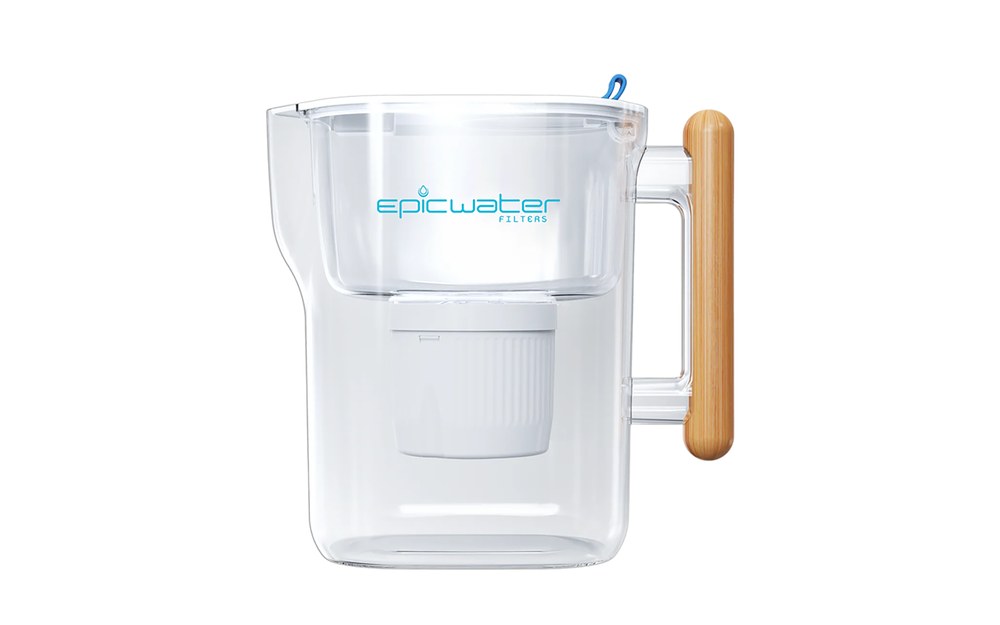
1. Epic Pure Water Filter Pitcher — Best Water Filter
 Best Water Filter
Boiling won't remove the microplastics already in your tap water — and hot water is where most honey ends up. Epic posts its independent lab results publicly, so you can see the 99.9% microplastic-removal data instead of trusting a slogan.
Why it's safe: The hollow fiber membrane physically blocks microplastic particles down to ~1 micron, while the carbon stage handles chlorine, lead, and PFAS — all in a BPA-free Tritan body.
Check Today’s Price on Amazon →Amazon prices change daily — tap to see today's price and any active discount.
- Free delivery & returns for Prime members
- Sold & shipped by Amazon
- Thousands of verified reviews
Because most honey ends up in a mug of tea or warm water, the water itself is the other half of the story. The Epic Pure pairs a hollow fiber membrane (the primary microplastic barrier) with an activated carbon stage, and Epic publishes its independent lab data instead of hiding behind a claim.
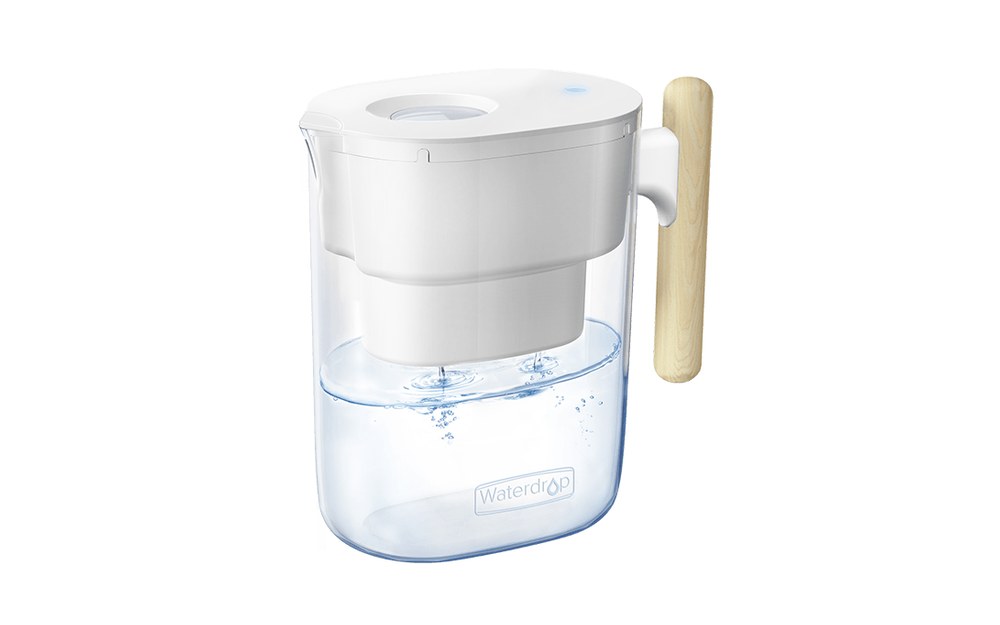
2. Waterdrop Chubby 10-Cup Pitcher — Best Certification (NSF P473)
 Best Certification
The only pitcher here that holds the formal NSF P473 microplastic certification, and its 200-gallon filter runs about 4–5 months — the lowest ongoing cost on the list.
Why it's safe: A hollow fiber membrane independently certified to NSF/ANSI P473 blocks microplastics, while the carbon composite tackles chlorine, heavy metals, and PFAS — all in a BPA/BPS-free body.
Check Today’s Price on Amazon →Amazon prices change daily — tap to see today's price and any active discount.
- Free delivery & returns for Prime members
- Sold & shipped by Amazon
- Thousands of verified reviews
If you want the one credential that proves a filter is rated for microplastics, the Waterdrop Chubby has it: formal NSF/ANSI P473 certification, plus the longest filter life on the market at 200 gallons (roughly 4–5 months for most households). Filter your water, then take your honey in it, and you've closed the water half of the pathway.
3. Anchor Hocking TrueSeal Glass Storage — Best for Decanting Honey
 Best for Decanting Honey
Buy your usual honey in the biggest glass tub the store carries, then decant a working portion into a small glass jar. Honey never sits in plastic on your counter again.
Why it's safe: The container body is soda-lime glass, so honey only ever touches glass. The lid gasket is a small piece of food-grade plastic that never contacts the honey itself.
Check Today’s Price on Amazon →Amazon prices change daily — tap to see today's price and any active discount.
- Free delivery & returns for Prime members
- Sold & shipped by Amazon
- Thousands of verified reviews
The single most useful swap for the honey pathway isn't buying a fancy artisanal honey — it's giving whatever honey you already like a glass home. TrueSeal is the cheapest, most durable way: a soda-lime glass body, a leak-proof lid, and enough size options to double as everyday food storage.
4. Pyrex Simply Store Glass Container Set — Best Value Glass Set
 Best Value Glass Set
One purchase, nine sizes of glass — enough to replace the plastic squeeze bottles, leftover tubs, and single-serving containers in an entire everyday kitchen.
Why it's safe: Bodies are soda-lime glass — food contacts only glass. The lids are BPA-free plastic and touch only the lip; freezer, fridge, and dishwasher safe as a system, and the glass itself is oven and microwave safe.
Check Today’s Price on Amazon →Amazon prices change daily — tap to see today's price and any active discount.
- Free delivery & returns for Prime members
- Sold & shipped by Amazon
- Thousands of verified reviews
Because honey is just one of many things that shouldn't sit in plastic for months, the biggest single swap is buying enough glass at once. Pyrex Simply Store is the classic answer: soda-lime glass in every size you'll actually use, including small dishes that work perfectly as honey and jam dispensers on the table.
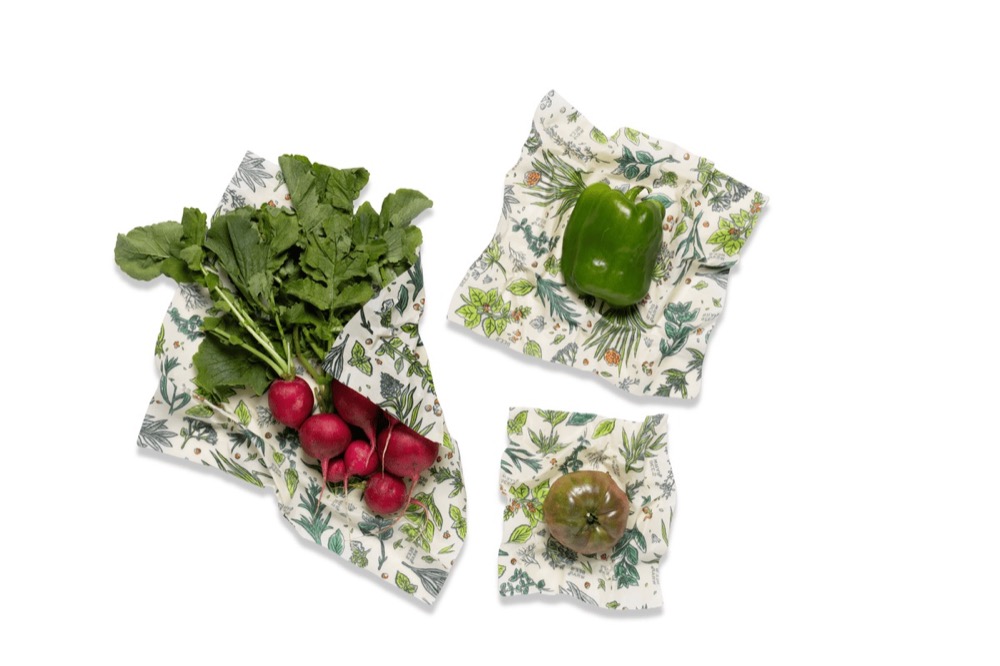
5. Bee's Wrap Assorted 3-Pack — Best Plastic-Free Food Wrap
 Best Plastic-Free Food Wrap
Beeswax food wraps are the direct replacement for cling film, which is one of the plastics you're most often stretching over an open honey jar or a bowl of fruit next to your morning toast. Bee's Wrap is the original: organic cotton dipped in beeswax, jojoba oil, and tree resin, so it moulds warm to a jar rim and seals as it cools. It's washable, reusable for roughly a year, and compostable at the end — the honest, low-tech replacement for the plastic layer you were about to add.
The reusable, plastic-free wrap for the jars and bowls honey usually meets on a counter — and the cheapest way to remove single-use cling film from a kitchen for good.
Why it's safe: Just organic cotton, beeswax, organic jojoba oil, and tree resin — no plastic film, no PFAS, and no plasticizers. The label lists every ingredient.
Check Today’s Price on Amazon →Amazon prices change daily — tap to see today's price and any active discount.
- Free delivery & returns for Prime members
- Sold & shipped by Amazon
- Thousands of verified reviews
Want the Full Home Protection Guide?
Honey packaging is one plastic touchpoint among dozens in a typical day. The Complete Plasticproof Guide covers every room — kitchen, nursery, bathroom, bedroom — with 80+ product recommendations backed by 47+ studies.
The honest verdict
Does honey have microplastics? The best available evidence says yes, in small amounts. The 2013 German paper first put fibers and fragments on the record; the 2017 follow-up rightly forced a stricter method; the 2020 Ecuadorian work applied that stricter method and still found particles in every sample. The exact quantity is disputed, and the harm question is unanswered. That's the whole truth — not "honey is toxic," and not "honey is fine."
What makes honey a good target for calm, permanent fixes is how cheap they are. A glass jar is often free with the honey; a certified filter cleans up the water you take honey in; and a set of glass containers takes plastic squeeze bottles out of the pantry for good. None of that requires you to give up honey, and none of it requires you to prove the particles are harmful. It's the same principle we apply everywhere else on this site: remove the plastic where removing it is cheap, and stop worrying about the parts you can't control.
Cut the plastic around your honey
A glass jar for the honey and a certified filter for the water you take it in — two one-time swaps that close the packaging pathway and the water pathway at once.
Frequently Asked Questions
The evidence is mixed but leans toward yes. A 2013 German study first reported microplastic fibers and fragments in honey samples worldwide. A 2017 follow-up showed a large share of those fibers were likely airborne lab contamination, not honey. But a 2020 study in Ecuador, using stricter contamination controls, still found microplastic particles in every honey sample it tested. The practical takeaway: honey almost certainly contains some microplastics — the debate is over the quantity, not the presence.
There are two plausible sources. First, environmental: bees forage across kilometers of landscape and pick up airborne microplastic fibers and fragments on their bodies and in nectar, which end up in the hive. Second, processing and packaging: extraction equipment, transfer hoses, filtration, and especially plastic squeeze bottles all put honey in contact with plastic. You can't fix the environmental part, but choosing honey in glass removes the packaging pathway.
The research hasn't cleanly separated the two. Raw honey skips heavy processing and often skips plastic packaging, which are the two pathways you can control, so it is a reasonable default. But bees are the main vector for environmental microplastics, and raw honey doesn't fix that — no honey does. The strongest lever is glass packaging, not raw versus processed.
No. The particle counts reported in honey studies are far smaller than what has been measured in bottled water, seafood, or salt, and honey is a small fraction of most diets. The reasonable move is proportion, not avoidance: buy honey in glass, decant into a glass jar if you have to buy plastic, and cut the bigger microplastic sources in your kitchen at the same time.
It removes one clear pathway. A plastic squeeze bottle keeps honey in contact with plastic through storage, warming, and every squeeze. Glass eliminates that contact. It won't erase the environmental microplastics bees pick up while foraging, but it removes a source that is fully under your control.
Yes, indirectly. Most people take honey with something — tea, warm water, coffee, oatmeal — and tap water carries microplastics too. A pitcher with a specific microplastic claim (ideally NSF/ANSI P473 certified) cuts particle counts in that water sharply, which lowers the total plastic in the cup even if the honey itself contributes some.
Sources
- Liebezeit G, Liebezeit E. "Non-pollen particulates in honey and sugar." Food Additives & Contaminants: Part A, 2013, 30(12):2136–2140 — the first peer-reviewed study to report synthetic fibers and fragments in honey samples worldwide.
- Mühlschlegel P, Hauk A, Walter U, Sieber R. "Lack of evidence for microplastic contamination in honey." Food Additives & Contaminants: Part A, 2017, 34(11):1982–1989 — a follow-up arguing that airborne laboratory contamination accounted for a large share of the fibers previously counted in honey.
- Diaz-Basantes MF, Conesa JA, Fullana A. "Microplastics in Honey, Beer, Milk and Refreshments in Ecuador as Emerging Contaminants." Sustainability, 2020, 12(14):5514 — using stricter contamination controls, still detected microplastic particles in every honey sample tested.
- Cox KD, Covernton GA, Davies HL, et al. "Human Consumption of Microplastics." Environmental Science & Technology, 2019 — for context on total dietary microplastic intake across food groups.
- Leslie HA, van Velzen MJM, Brandsma SH, et al. "Discovery and quantification of plastic particle pollution in human blood." Environment International, 2022.
- US FDA. "Microplastics and Nanoplastics in Foods." fda.gov — for the regulatory perspective on food-source microplastics.