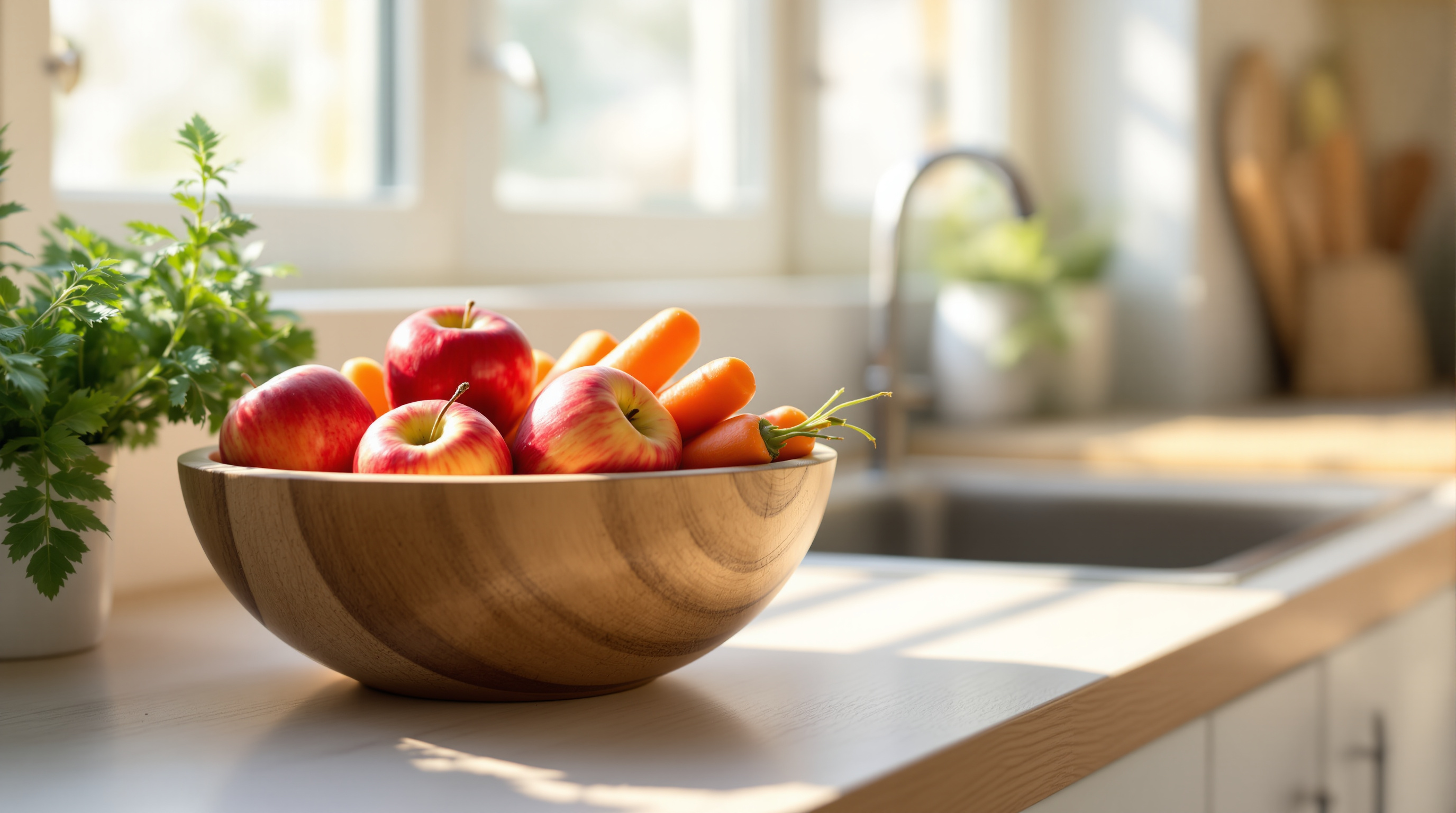
Independent lab studies have found microplastics in common fruits and vegetables. A 2020 analysis in Environmental Research tested apples, pears, broccoli, lettuce, carrots and potatoes bought at ordinary markets and detected micro- and nanoplastics in all of them — apples were the most contaminated fruit and carrots the most contaminated vegetable. The revealing part is where it comes from: not a coating on the skin, but plastic drawn up through the roots from polluted soil and irrigation water, a route a 2020 Nature Sustainability study demonstrated directly in living crops. The important caveat: these studies measured presence, not human harm — and the proven health benefits of eating produce vastly outweigh this unproven risk, so the answer is never to eat less of it.
Fruit and vegetables are supposed to be the safe part of the plate. They're whole foods, unprocessed, the thing every dietitian tells you to eat more of — which is exactly why it's jarring that when scientists ran ordinary apples, carrots, and lettuce under a microscope, they kept finding the same tiny plastic fragments that turn up in tap water and in our own blood. And the surprise isn't unique to produce — microplastics have shown up across the food supply, from rice to seafood to meat.
The core finding is that a plant is partly a product of the soil and water it grows in, and modern farm soil is contaminated with plastic. This guide walks through exactly what the studies found, which fruits and vegetables carried the most, how the plastic gets in (mostly the roots, not a spray), whether washing removes it, and the handful of changes that actually cut it — without ever giving up the healthiest food you eat.
The bottom line up front: the plastic in produce comes mainly from the soil and irrigation water the plant grew in — roots pull small particles up into the flesh — plus a smaller share from handling and plastic packaging, so washing helps but can't remove what's inside. The fixes are around the produce, not instead of it: rinse under filtered water, peel root vegetables when you like, store in glass or silicone rather than plastic, and above all filter the tap water you wash and drink with, since water is a far bigger microplastic source than food. For the bigger picture, see our ranking of which foods have the most microplastics, why tap water is a top source, and the room-by-room kitchen plastic detox guide.
Do studies find microplastics in fruits and vegetables?
Yes — and the clearest evidence looked at fresh produce head-on. A 2020 study published in Environmental Research, described by its authors as the first diet-risk assessment of its kind, bought apples, pears, broccoli, lettuce, carrots, and potatoes from ordinary markets and analyzed the edible parts. It found micro- and nanoplastics in every sample. Fruits carried more than vegetables on average, and the particles were small — many in the nanometer range, small enough to have moved through the plant rather than settled on it.
A second 2020 study, in Nature Sustainability, explains how they got there. Working with lettuce and wheat, the researchers showed living plants take submicrometre plastic particles up through their roots — specifically through the tiny cracks where new lateral roots push out — and transport them upward into the stems and leaves you eat. That is the finding that separates produce from a drink in a plastic bottle: the plastic isn't only on the surface, it's partly grown in. Independent teams, different crops, same conclusion.
Which fruits and vegetables have the most microplastics?
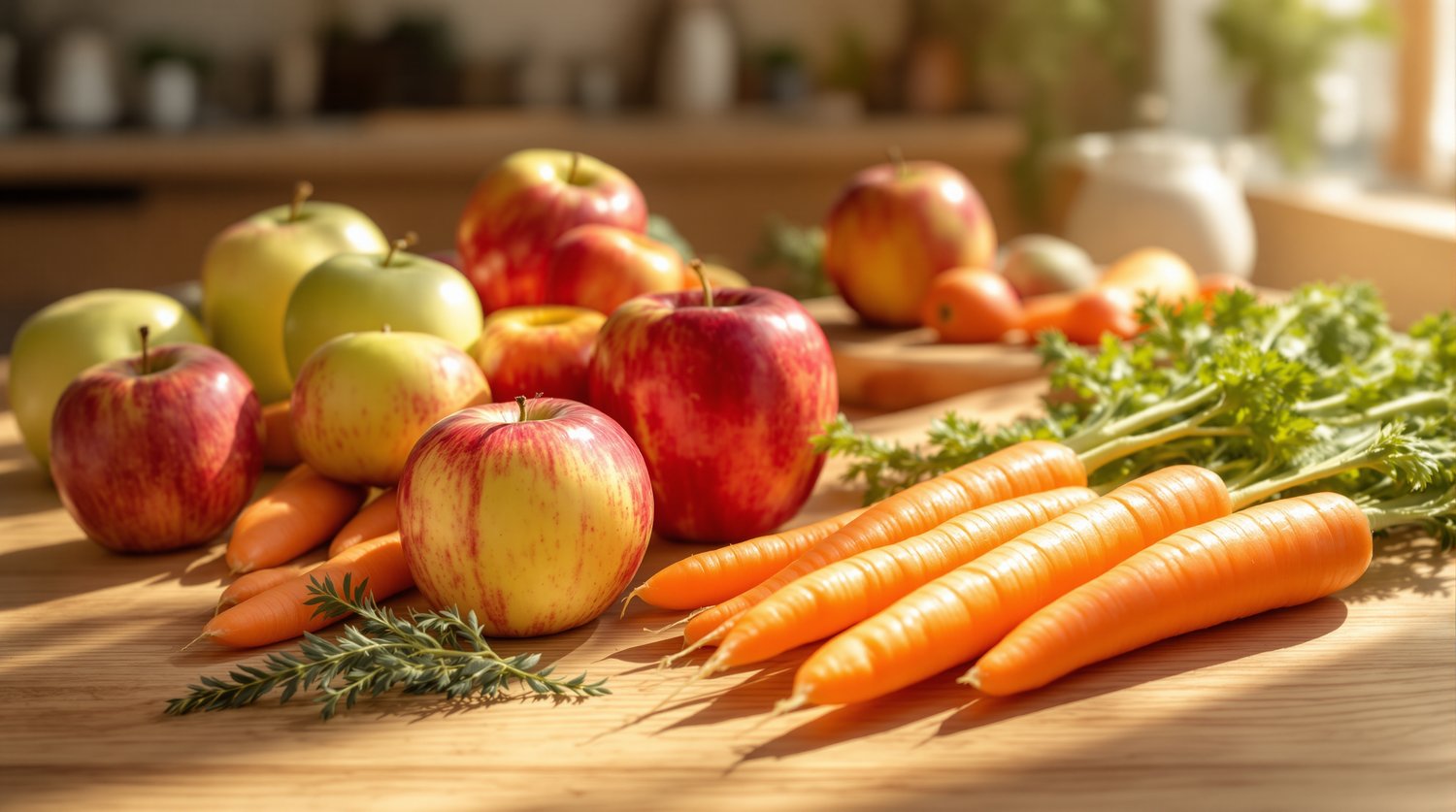
Among the produce the 2020 Environmental Research team tested, apples topped the fruits and carrots topped the vegetables, with pears close behind apples and lettuce showing the least. As a group, fruits carried more particles than vegetables. Those two headliners aren't a coincidence: apple trees are long-lived and their fruit spends a whole season drawing water, and carrots are roots that sit in direct, prolonged contact with soil — both are set up to accumulate whatever is in the ground around them.
The pattern that emerges tracks how a crop grows more than what it is. Root vegetables in constant soil contact, leafy greens with large surface areas, and high-water fruits tend toward the higher end; a tuber you peel or a fruit with a thick inedible rind toward the lower. But the spread is the real story: every category tested came back positive, so this is a ranking of "more or less," never "some or none." The table below sorts the study's produce from most to least contaminated.
| Produce | Why It Ranks There | Relative Load |
|---|---|---|
| Apples | Most contaminated fruit tested; a full season of water uptake into a thin-skinned, edible-whole fruit | Highest |
| Pears | Close behind apples for the same reasons — a high-water, eaten-whole tree fruit | High |
| Carrots | Most contaminated vegetable; a root in prolonged, direct contact with soil | Highest of the vegetables |
| Broccoli & potatoes | Moderate loads; potatoes are protected somewhat by a skin most people peel | Moderate |
| Lettuce | Lowest of the group tested, though still positive — nothing came back clean | Lowest tested |
How do microplastics get into fruits and vegetables?
Mostly through the ground and the water, not a spray or a wrapper. Farm soil has become a major plastic reservoir: sewage-sludge "biosolids" spread as fertilizer, plastic mulch films that break down in the field, tire and road dust, irrigation with contaminated water, and fibers that simply fall out of the air all leave microplastic in the dirt a crop's roots sit in. From there the 2020 Nature Sustainability work showed the decisive step — roots actively draw the smallest particles up into the plant, so some of the plastic ends up inside the flesh you eat rather than on its skin.
Layered on top of that root-uptake route is a second, more familiar one: contact. Larger particles settle on skins and leaves from the air and the soil, more is added as produce is harvested, trucked, and handled, and still more comes from the plastic bags, clamshells, and films it's sold in. The contact plastic is the share washing can reach; the root-absorbed plastic is the share it can't. That split is the key to understanding why rinsing helps but doesn't solve it.
"Produce doesn't get its plastic from a spray you can rinse off — a lot of it is drawn up through the roots from the soil and water the plant grew in. That's the part you can't wash away, which is why the real fix is upstream, in cleaner water and soil."
Does washing fruits and vegetables remove microplastics?
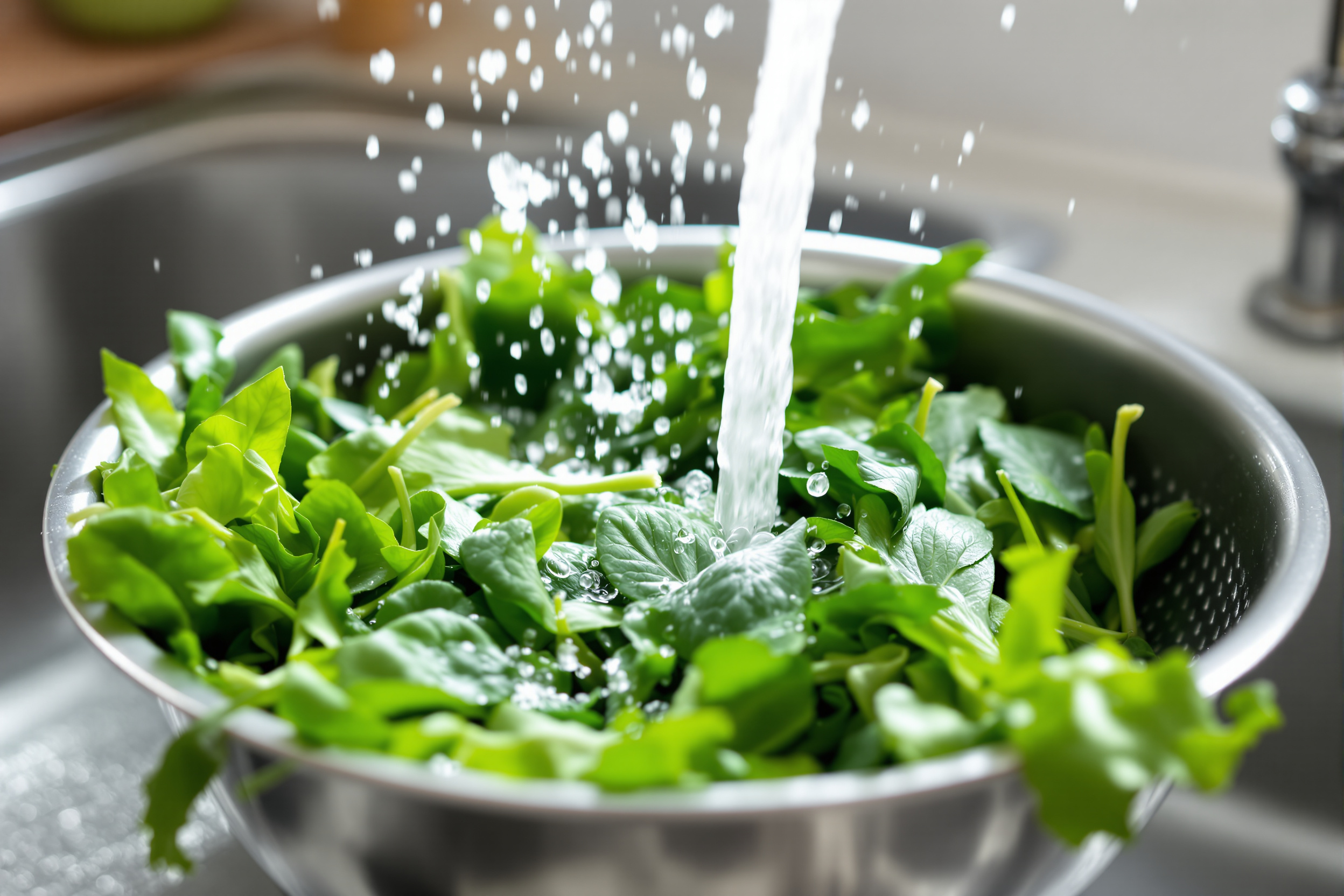
Partly, and it's still worth doing. Rinsing produce under running water is genuinely useful for the microplastic that's on the surface — the fibers and fragments that settled from the air, rubbed off during handling, or came from the packaging. A firm rinse, and a scrub for sturdy items like carrots and potatoes, knocks a real portion of that loose. Peeling goes further for root vegetables and apples, removing the skin where surface particles concentrate, though you lose some fiber and nutrients in the trade.
What no amount of washing can reach is the plastic the plant absorbed through its roots and moved into its tissue — that's inside the cells, not sitting on the outside. So treat washing as a sensible habit that trims one share of the total, alongside the food-safety reasons to do it anyway, and don't mistake a clean rinse for a plastic-free apple. The lever that shrinks the bigger, hidden share isn't at your sink — it's cleaner water and soil upstream, and, for your own intake, filtering the water you use.
Should you stop eating fruits and vegetables because of microplastics?
No — and this is the most important line in the article. The studies were built to measure how much plastic is present and what polymers it is, not to test what those particles do once they're inside a person. On the specific question of harm from the microplastics in produce, the research doesn't have an answer yet, and no one should read a health verdict into it the data can't support.
Meanwhile the benefit on the other side of the scale is one of the best-established findings in all of nutrition: eating more fruits and vegetables lowers the risk of heart disease, stroke, and several cancers, year after year, across decades of research. Cutting produce to dodge an unproven microplastic risk would trade a large, certain good for a small, uncertain one — exactly the wrong trade. A 2019 analysis in Environmental Science & Technology put the average person's total intake at tens of thousands of microplastic particles a year from food and drink combined, with bottled water a leading driver; produce is one modest contributor inside that total. What we do know more broadly is that microplastics are increasingly detected throughout the human body — in blood, organs, and even the brain — so trimming the easy, avoidable sources is sensible while the harm question stays open.
Keep eating your fruits and vegetables — the health case for them is overwhelming and the microplastic case against them isn't a case at all yet. Put your effort where the plastic is both larger and better documented: the water you drink and cook with. Filter that first, then work through the bigger sources in our kitchen plastic detox guide.
How do you reduce the microplastics in your fruits and vegetables?
You can't strip out what a plant absorbed through its roots, so the leverage is around the produce, not inside it. A few habits do most of the work: rinse everything under running — ideally filtered — water, and scrub or peel sturdy root vegetables; buy loose produce over plastic-wrapped clamshells to cut the packaging share; and store it in glass or silicone at home instead of plastic bags and tubs, so it doesn't pick up more on the way to your plate. None of this requires eating less of anything — it just keeps the avoidable plastic off.
Then fix the water, because it's the highest-volume thing you put in your body, a top microplastic source in its own right, and the water you wash produce with. A pitcher that carries a specific microplastics claim — certified under NSF/ANSI 401, or a rated membrane pore size — cuts particle counts sharply; see our full guide to the best water filter pitchers for microplastics and the broader water filter roundup. Keep that filtered water and your produce in glass or steel rather than plastic, and you've closed the sources you actually control. The picks below are the simplest, longest-lasting ways to do all of that.
Fix the sources that actually matter
The microplastic inside produce is mostly out of your hands — but the water you wash and drink with is the largest, best-documented source you fully control. Start there: filter your tap water and make it your default.
The tools that cut the plastic around your produce
There's no such thing as "microplastic-free apples," and you can't wash out what a plant grew in. So instead of padding this out with products that don't exist, here are the real, currently-sold tools that cut the plastic you actually control — certified water filters for the water you rinse and drink with, plus glass and platinum-silicone vessels to store fruit and vegetables off plastic at home. Prices and availability change, so check current listings.
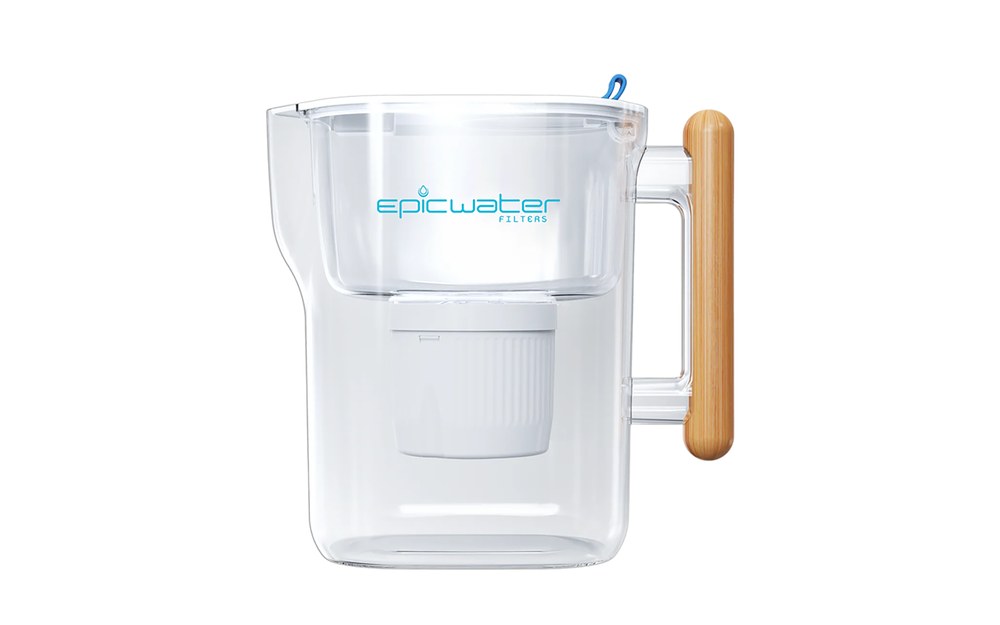
1. Epic Pure Water Filter Pitcher — Best Overall for Microplastics
 Best Overall
Reviewers point to published independent lab data and a filter rated around 150 gallons, far longer than a Brita, as the reasons they trust it, and several describe the slow, deliberate drip as reassuring rather than annoying. The honest downsides: owners report the filtration is genuinely slow and not the pick if you want a glass of water in a hurry, and third-party complaints mention cracked plastic, flip-top lids that stick, and water that spills or leaks from the lid when you pour a full pitcher.
The clearest evidence on this list: Epic posts its independent lab results publicly, so you can see the 99.9% microplastic-removal data instead of trusting a slogan on the box.
Why it's safe: The hollow fiber membrane physically blocks microplastic particles down to ~1 micron, while the carbon stage handles chlorine, lead, and PFAS — all in a BPA-free Tritan body.
Check Today’s Price on Amazon →Amazon prices change daily — tap to see today's price and any active discount.
- Free delivery & returns for Prime members
- Sold & shipped by Amazon
- Thousands of verified reviews
The water you rinse produce in and drink all day is the microplastic source you control most tightly, which makes a good filter the highest-leverage swap on this list. The Epic Pure is the clearest choice: its dual-stage design uses a hollow fiber membrane as the primary microplastic barrier, and Epic publishes the independent lab results to back the 99.9% removal claim — transparency most competitors don't match. Fill it once and every glass and every rinse afterward is cleaner.
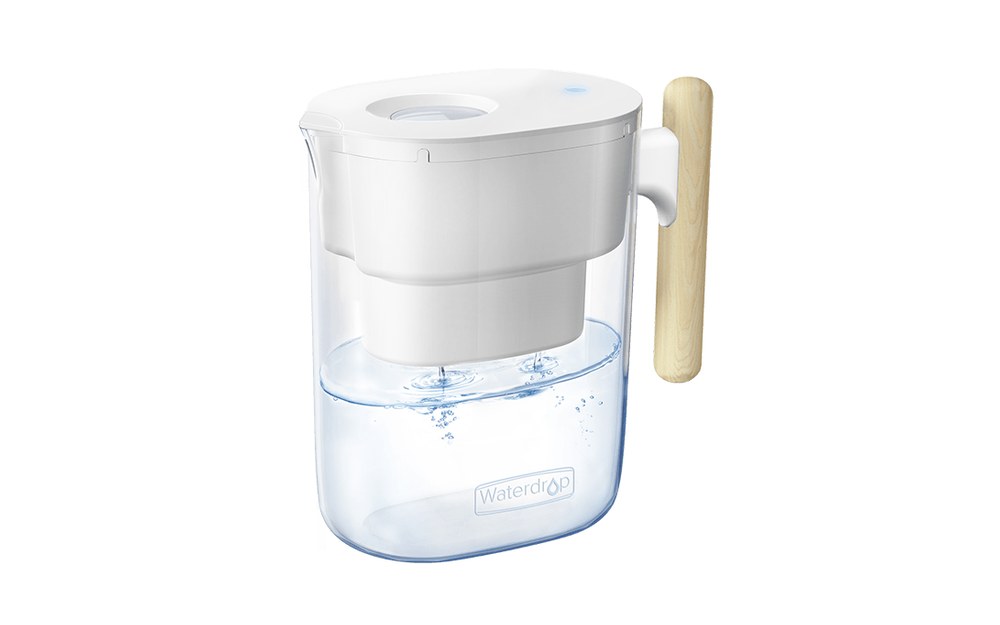
2. Waterdrop Chubby 10-Cup Pitcher — Best Filter Life
 Best Filter Life
Owners like the look and the long 200-gallon filter life, and roughly 80 percent of reviews land positive, with the common praise being clean-tasting water at a low cost per gallon. The honest gripes: several owners warn the handle can feel loose or strain under a full pitcher, so they lift with two hands; some report the pour spills if you tip too fast; and the change-filter indicator light draws complaints for not lighting or not staying lit.
A membrane blocks particles by pore size rather than by claim list, and its 200-gallon filter runs about 4 to 5 months — the lowest ongoing cost on the list.
Why it's safe: A hollow fiber membrane is a physical barrier to particles, while the carbon composite handles chlorine, heavy metals, and PFAS — all in a BPA/BPS-free body.
Check Today’s Price on Amazon →Amazon prices change daily — tap to see today's price and any active discount.
- Free delivery & returns for Prime members
- Sold & shipped by Amazon
- Thousands of verified reviews
If a household is washing produce and drinking filtered water all day, filter life matters — you'll be refilling it constantly — and the Waterdrop Chubby leads on it: a hollow fiber membrane on Waterdrop's own published lab data, plus 200 gallons per filter (about 4–5 months for most households). The "filter while you pour" design works just like a familiar counter pitcher, but with a membrane that's actually tested for microplastics.
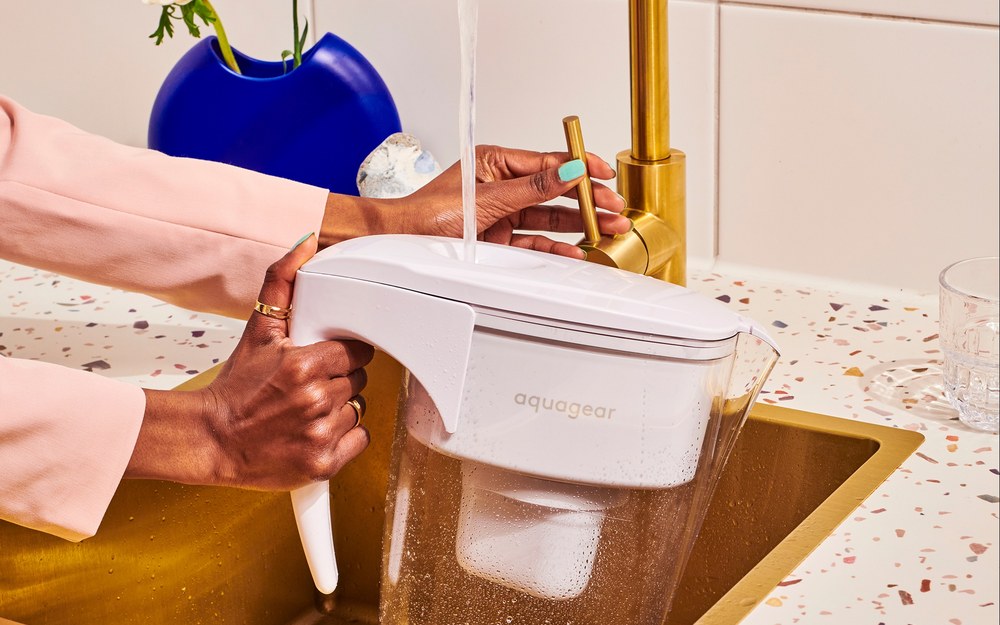
3. Aquagear Water Filter Pitcher — Best Value
 Best Value
Owners choose it for broad contaminant removal and clean taste, and some lab testing found it did not clog. The honest downsides: the most repeated complaint is slow filtration, described by one reviewer as a mixed bag between people waiting minutes and people waiting hours, and it can worsen as the filter ages; and the design draws gripes, with the pour-spout cover popping out and spraying water and a lid that fits poorly and can pop off mid-pour.
Change the filter half as often as most pitchers — 150 gallons per cartridge means fewer replacements, lower annual cost, and less to remember.
Why it's safe: A 5-stage filter with a sub-micron membrane stage captures microplastics, lead, fluoride, and chlorine, in a BPA-free body with USA-made filter media.
Check Today’s Price on Amazon →Amazon prices change daily — tap to see today's price and any active discount.
- Free delivery & returns for Prime members
- Sold & shipped by Amazon
- Thousands of verified reviews
The Aquagear costs more upfront but its 150-gallon filter life means lower annual replacement costs than most competitors, and the pitcher body is guaranteed for life. It uses a 5-stage filter with a sub-micron membrane stage that targets microplastics, heavy metals, and fluoride — a good fit for households that don't want to track filter changes constantly.
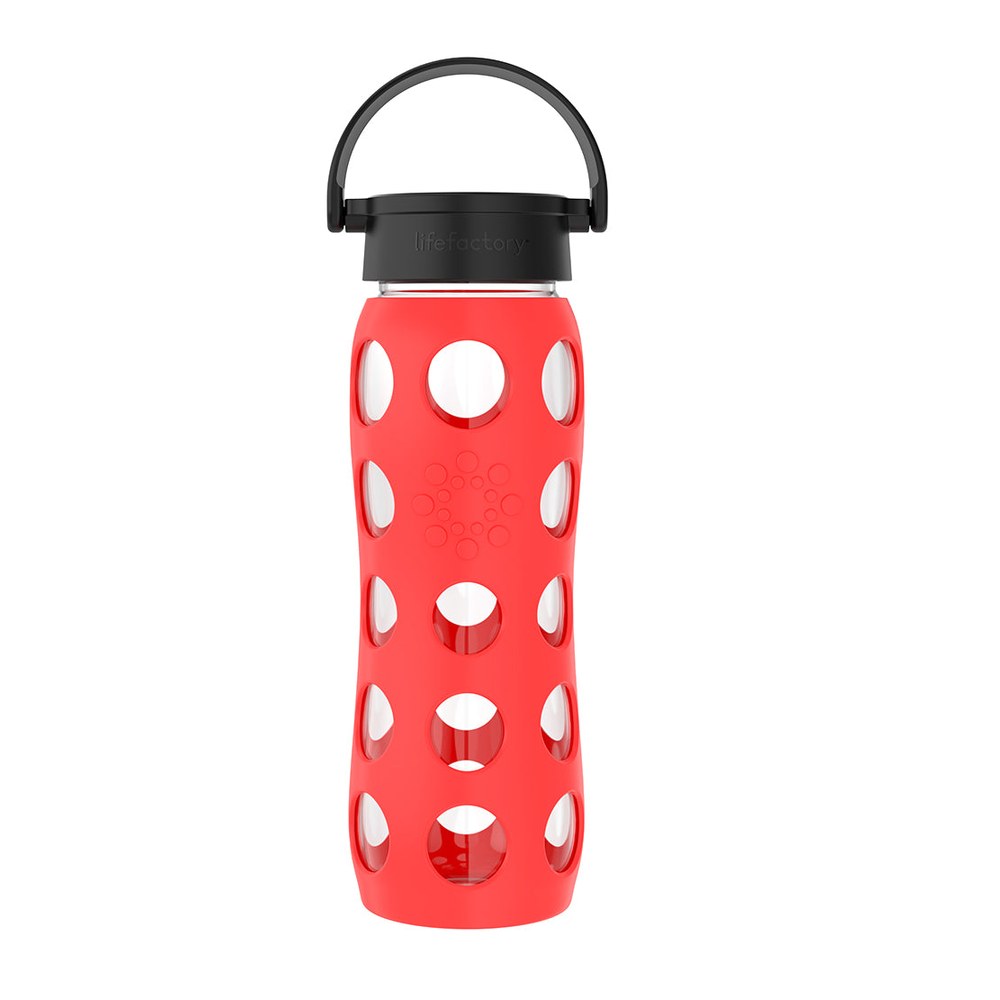
4. Lifefactory Glass Bottle 22oz — Best Glass Bottle
 Best Glass Bottle
The simplest way to keep filtered water with you all day, so the plastic-free water you made at home doesn't get replaced by a plastic bottle the moment you leave. It’s made from borosilicate glass — the same material used in laboratory glassware — which is thermally stable, chemically inert, and completely free of BPA, BPS, and any polymer contact with your drink. It imparts no taste, so water tastes like water, not plastic. The protective silicone sleeve adds grip and guards against shattering. The cap contains a small polypropylene component — the only plastic in the system, at the exterior closure rather than the drink surface. Dishwasher-safe.
Carry the filtered water you made at home instead of buying a plastic bottle out — no plastic contact, no shedding, and it cleans up in the dishwasher.
Why it's safe: Borosilicate glass is completely inert — it never leaches, never sheds microplastics, and imparts no taste. The only plastic is a small cap component at the exterior closure, not the drink surface.
Check Today’s Price on Amazon →Amazon prices change daily — tap to see today's price and any active discount.
- Free delivery & returns for Prime members
- Sold & shipped by Amazon
- Thousands of verified reviews
The water you use to rinse produce and to drink is worth carrying with you too. A borosilicate glass bottle gives you grab-and-go filtered water without the PET — no leaching, no shed fibers, no plastic aftertaste — and it’s sturdy enough for daily desk-and-bag use, so a plastic bottle stops being the default when you're out.
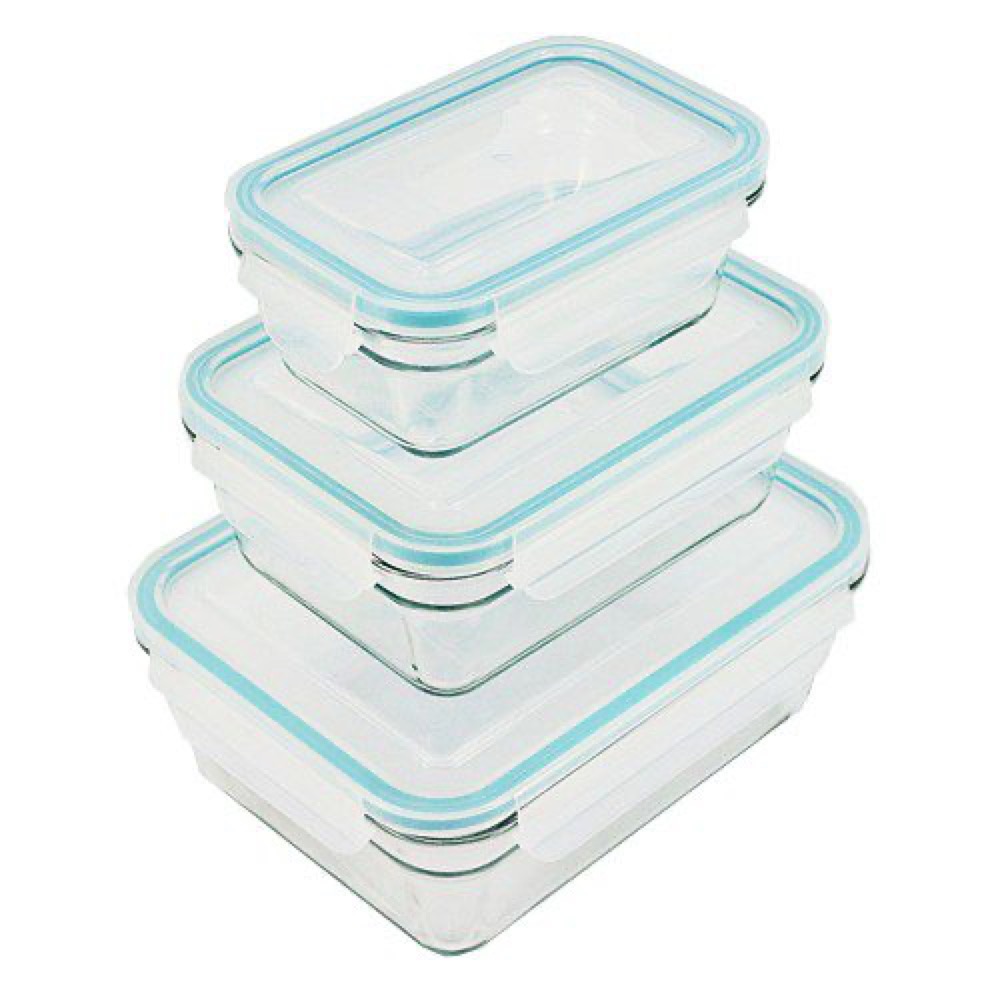
5. Glasslock Oven Safe Container Set (3-Pack) — Best Glass Storage
 Best Glass Storage
Longtime owners like that the glass bodies are oven-, microwave-, and freezer-safe and that the snap-lock lids seal tight. The honest downsides run through the lids, not the glass: reviewers report cracked lids, snapped locking tabs, and mold building up in the rubber gaskets if they are not dried well. Some buyers also received sets with a locking piece missing, and several flag slow, hard-to-reach customer service when they needed a replacement part.
Three stackable glass containers in one box — enough to store a week of leftovers and prepped ingredients without a single plastic tub.
Why it's safe: Your food sits on inert tempered glass, not plastic — so warm, acidic, watery foods can’t leach or pick up shed particles. The BPA-free lids seal with a food-grade silicone gasket that only touches the rim.
Check Today's Price on Amazon →Amazon prices change daily — tap to see today's price and any active discount.
- Free delivery & returns for Prime members
- Sold & shipped by Amazon
- Thousands of verified reviews
Drinks aside, most kitchens leak plastic into food through storage tubs. Pour leftovers and prepped ingredients into glass instead, and reheat with the lids off so warm food never sits against plastic — the exact condition that drives the most particle migration. At roughly ten dollars per container, it's also the cheapest way to retire your plastic food tubs in one purchase.
6. Zip Top Silicone Containers (Dish Set) — Best Silicone Set
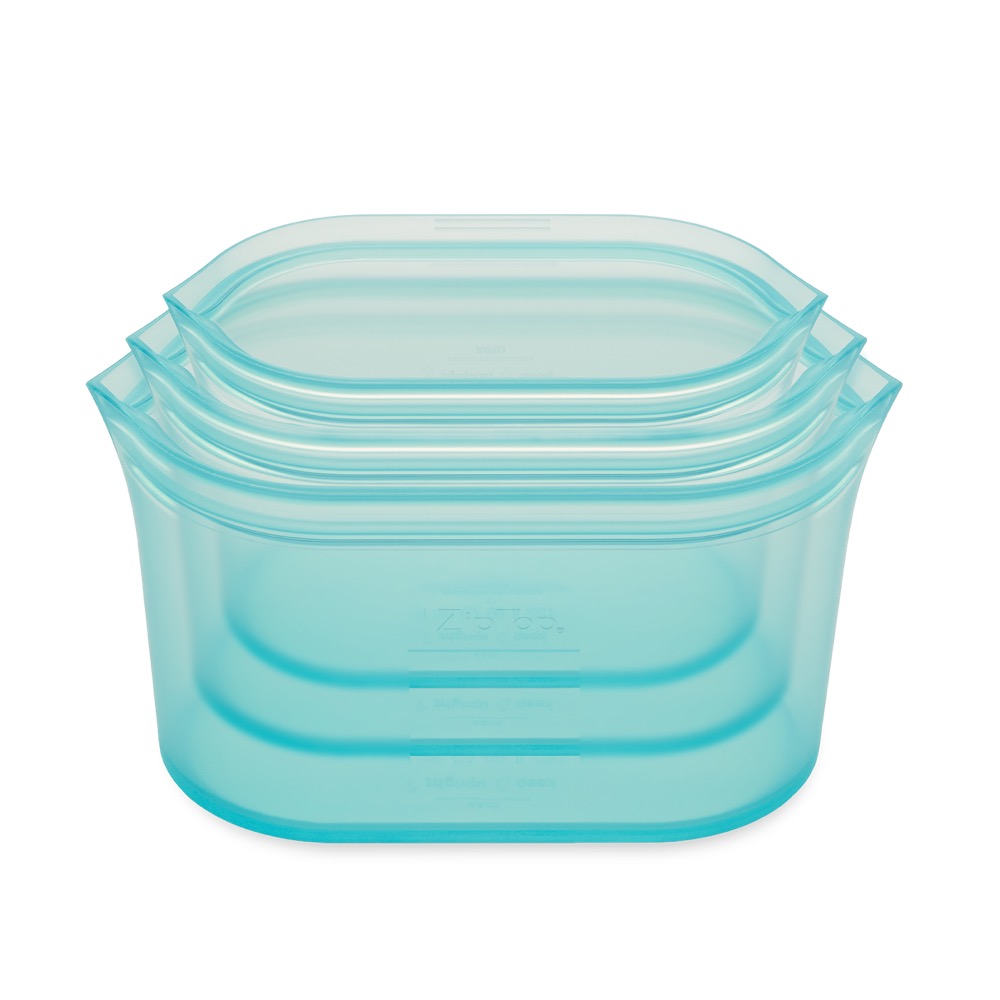 Best Silicone Set
Zip Top's design is its own category: 100% platinum-silicone containers that stand upright, stay open while you fill them, then zip shut along the top. There's no plastic frame or zipper insert — it's a single piece of silicone, so there's nothing to harbor chemicals or break down.
The dish set includes small, medium, and large (16, 24, and 32 oz) and goes in the dishwasher, microwave, and freezer. It's the tidiest swap for portioned leftovers and snacks to go with the game.
Owners like that the stand-up silicone dishes open with a light pinch and go from freezer to microwave to dishwasher. The honest downsides: the seal is not airtight, so reviewers warn that if a container tips over the liquids will leak out and the dishes must stay upright in the fridge; pigmented foods like tomato or beets stain the silicone and the marks persist after washing; and strong-smelling foods can leave odors the material holds onto.
Meal-prep and snack storage without a stack of plastic tubs. One-piece silicone dishes stand up, zip shut, and rinse clean — nothing leaching into tomorrow's lunch.
Why it's safe: A single piece of 100% platinum-cured silicone, made in the USA — no plastic, PVC, BPA, or PFAS, and no separate lid to off-gas.
Check Today's Price on Amazon →Amazon prices change daily — tap to see today's price and any active discount.
- Free delivery & returns for Prime members
- Sold & shipped by Amazon
For snacks, leftovers, and anything you'd reach for a plastic tub or bag to hold, platinum-cured silicone is the upgrade — free of the chemicals that migrate from plastic, and durable enough to last for years. For the full lineup, see our guide to the best silicone food storage bags.
Want the Full Home Protection Guide?
Produce is one plastic touchpoint among dozens in a typical day. The Complete Plasticproof Guide covers every room — kitchen, nursery, bathroom, bedroom — with 80+ product recommendations backed by 47+ studies.
The honest verdict
Do fruits and vegetables have microplastics? Yes — a 2020 study in Environmental Research found micro- and nanoplastics in every fruit and vegetable it tested, with apples the most contaminated fruit and carrots the most contaminated vegetable, and a 2020 Nature Sustainability study showed living crops pull the smallest particles up through their roots into the parts you eat. But the crucial detail is that much of that plastic is grown in, not sprayed on, so washing reaches only part of it, and counts vary widely by crop and region. Those studies measured presence, not human harm. So the accurate takeaway is proportion, not alarm.
And the practical response is genuinely easy, because it asks you to change nothing about how much produce you eat. Keep eating fruits and vegetables — the health case for them is overwhelming and settled. Rinse them under filtered water, peel root vegetables when you like, store them in glass or silicone instead of plastic, and put your real effort into filtering the tap water you wash and drink with, which is a larger and far better-documented microplastic source than food. You don't need a produce scare — you need cleaner water and a calmer sense of proportion.
Cut the plastic that actually adds up
The plastic inside produce is a small source next to the water you drink and wash with all day. A certified filter and a couple of glass vessels make filtered water and plastic-free storage the easy default.
Frequently Asked Questions
Yes. A 2020 study in Environmental Research analyzed apples, pears, broccoli, lettuce, carrots and potatoes bought from ordinary markets and found micro- and nanoplastics in every single one. Apples were the most contaminated fruit and carrots the most contaminated vegetable. The plastic is not sprayed on the outside — much of it is drawn up through the roots from plastic-polluted soil and irrigation water, which is why you cannot fully wash it away.
In the 2020 Environmental Research study, apples carried the highest microplastic count of the fruits tested and carrots the highest of the vegetables, with pears also high and lettuce the lowest. Fruits generally showed more particles than vegetables. The differences track how a crop grows — long-storage, high-water fruits and root vegetables in prolonged soil contact tend to accumulate more — but every type tested contained some, so no produce is truly plastic-free.
Mostly through the soil and water the plant grows in, not from spraying or packaging. Farm soil picks up plastic from sewage-sludge fertilizer, plastic mulch films, irrigation water and airborne fibers. A 2020 Nature Sustainability study showed that lettuce and wheat take submicron plastic particles up through cracks where new roots emerge and move them into the edible shoots. Larger particles also cling to surfaces, and more is added during handling and plastic packaging.
Washing helps, but only partly. Rinsing under running water removes surface dust, loose fibers and some particles that settled from the air or the packaging, so it is always worth doing. What it cannot remove is the microplastic the plant absorbed through its roots and carried into the flesh — that is inside the tissue, not on the skin. Peeling root vegetables and apples cuts surface load further, at the cost of some fiber and nutrients.
No — this is the most important point. The health benefits of eating fruits and vegetables are enormous and well proven, while the harm from the microplastics they contain is not established; the studies measured how much plastic is present, not what it does inside a person. Cutting produce to avoid microplastics would trade a real, large benefit for an unproven risk. Keep eating them, wash them, and spend your effort on bigger, more certain plastic sources like the water you drink.
You cannot strip out what a plant absorbed through its roots, so the leverage is around the produce, not inside it: rinse everything under filtered water, peel root vegetables when it matters to you, store fruit and veg in glass or silicone instead of plastic bags and tubs, and — the biggest move of all — filter the tap water you wash and drink with, since water is a far larger and better-documented microplastic source than food. Buying loose produce over plastic-wrapped also trims the packaging share.
Sources
- Oliveri Conti G, Ferrante M, Banni M, et al. "Micro- and nano-plastics in edible fruit and vegetables. The first diet risks assessment for the general population." Environmental Research, 2020;187:109677. (Micro- and nanoplastics detected in every fruit and vegetable tested; apples the most contaminated fruit, carrots the most contaminated vegetable.)
- Li L, Luo Y, Li R, et al. "Effective uptake of submicrometre plastics by crop plants via a crack-entry mode." Nature Sustainability, 2020;3:929–937. (Living lettuce and wheat plants take submicrometre plastic particles up through lateral-root cracks and transport them into the edible shoots.)
- Cox KD, Covernton GA, Davies HL, et al. "Human Consumption of Microplastics." Environmental Science & Technology, 2019;53(12):7068–7074. (Estimated tens of thousands of microplastic particles consumed per person per year from food and drink combined, with bottled water a leading driver.)