Plastic cutting boards shed microplastics straight into your food. A 2023 study in Environmental Science & Technology found that chopping abrades the board's surface, and estimated a single plastic board could release roughly 14–71 million microplastic particles a year (around 79 million for polyethylene). The good news: when researchers exposed cells to those particles, they saw no significant harm over 72 hours — so this is a reason to switch, not to panic. A solid wood or bamboo board sheds no plastic at all and lasts for years.
Look closely at an old plastic cutting board and you'll see its whole history written in it: a dense web of pale knife scars crisscrossing the surface. Every one of those grooves is material that used to be part of the board and now isn't. For years the obvious question — where did it all go? — went mostly unasked. In 2023, a research team finally measured it, and the answer was uncomfortable: a lot of it goes into the food you're chopping.
This guide walks through exactly what that study found, how many particles we're really talking about, whether the amount is something to worry about (the honest answer is more reassuring than the headlines suggested), and which cutting boards sidestep the problem completely. If you only change one thing in your kitchen this year, this is a strong candidate.
The bottom line up front: the fix is simple and one-time — swap your scratched-up plastic board for a solid wood or bamboo one, which contains no plastic to shed. See our full guide to the best non-toxic cutting boards for tested picks, our ranking of which foods have the most microplastics, and the room-by-room kitchen plastic detox guide.
Do plastic cutting boards release microplastics?
Yes. A 2023 study published in the journal Environmental Science & Technology set out to test exactly this, and found that the act of chopping food on a plastic board mechanically shaves off tiny fragments of the plastic — microplastics — that end up in the food being prepared. The knife scars you can see are only the visible evidence; the particles themselves are far too small to notice.
It makes intuitive sense once you say it out loud. A cutting board exists to be repeatedly struck by a sharp blade, and most kitchen boards are made of polyethylene or polypropylene — the same soft plastics used in bags and containers. Every chop removes a little material. Over a board's life that adds up to a startling number of particles, and unlike a scratch on a nonstick pan, these fragments have nowhere to go but onto your carrots. The same abrasion physics applies to the plastic dish sponge you clean up with afterward: as it scrubs and wears, a melamine or foam sponge grinds off its own microplastic fibers too.
How many microplastics does a cutting board actually shed?
A lot — though the exact figure depends heavily on how you cook. The researchers measured the particles generated while chopping and then modeled annual exposure. Their headline estimate was roughly 14 to 71 million polypropylene microplastic particles per year from a single board, and about 79 million particles a year for a polyethylene board, depending on the person's chopping style, force, and how worn the board already was.
That's a wide range for a reason. Someone who dices vegetables daily with heavy pressure on a deeply grooved old board will shed far more than someone who slices gently on a newer one. The study also found that a board's material and roughness mattered: rougher, more worn surfaces released more. In other words, the tired plastic board you've been meaning to replace is likely the worst offender in your kitchen.
| Board Material | Microplastics Shed Into Food | Takeaway |
|---|---|---|
| Polyethylene plastic | Highest (~79 million particles/yr est.) | Soft plastic; grooves deeply and sheds the most |
| Polypropylene plastic | High (~14–71 million particles/yr est.) | The most common kitchen board plastic |
| Bamboo | None (plant fiber) | No plastic to shed; choose formaldehyde-free glue |
| Solid hardwood | None (maple, walnut, teak) | Zero microplastics; naturally antimicrobial |
| Wood-fiber composite | Negligible (primarily wood fiber) | Dishwasher-safe upgrade from plastic |
Why do plastic boards shed so much — and what makes it worse?
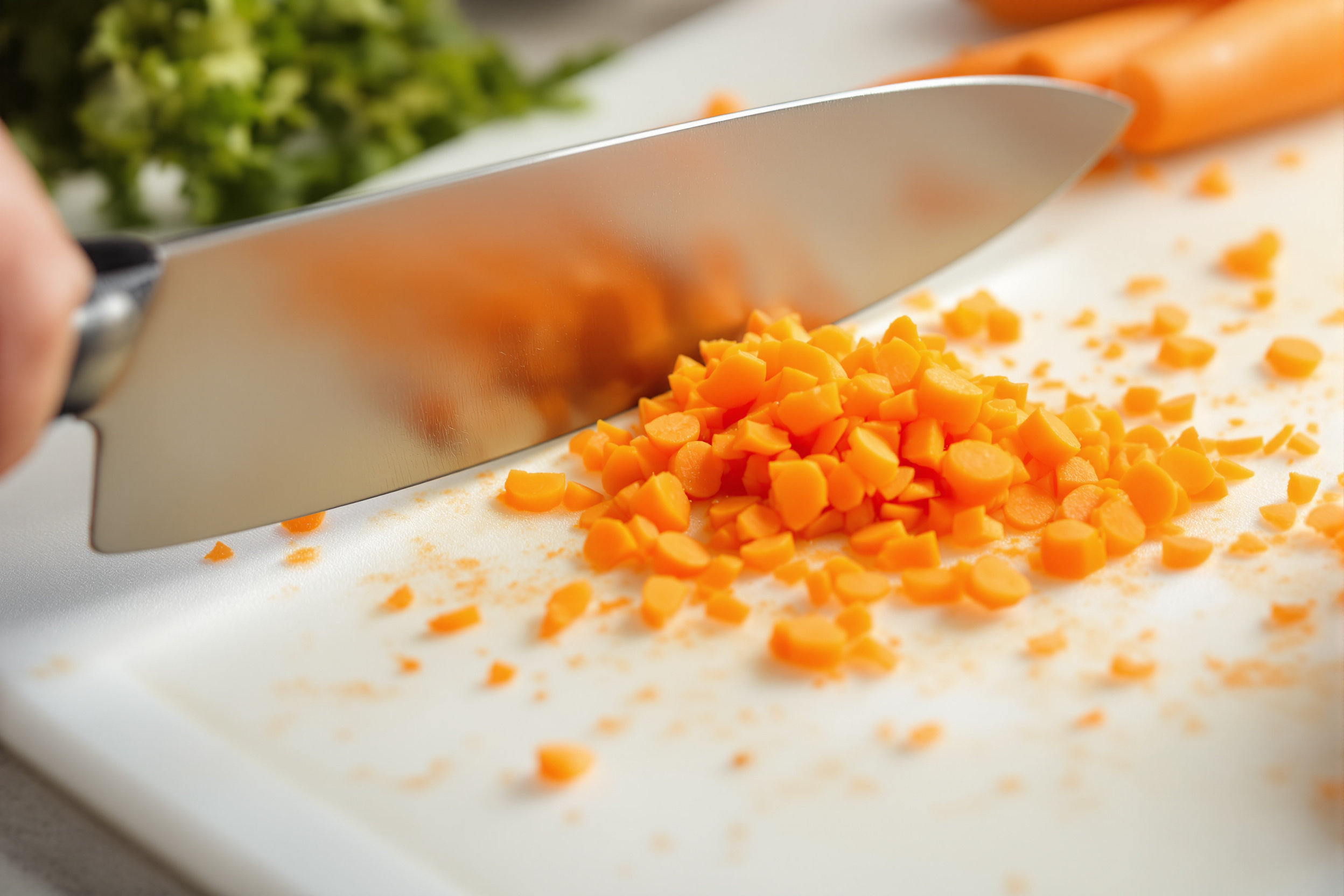
Because the whole point of a cutting board is to absorb blade impact, and soft plastic does that by deforming. Each cut presses the knife edge into the polyethylene or polypropylene, splitting off microscopic fragments and leaving a groove. Multiply that by the thousands of cuts a busy home board takes each year, and the material loss becomes significant even though no single chop looks like it removed anything.
A few factors push the number higher. Wear is the big one: a fresh board is relatively smooth, but as grooves accumulate the surface gets rougher and each pass dislodges more particles. Force matters too — heavy, rocking chopping sheds more than gentle slicing. And the softer the plastic, the more it gives; the study's polyethylene boards shed more than the harder polypropylene ones. The practical read is that the older and more chewed-up a plastic board looks, the more it's contributing to your daily intake. For the same reason we flag black plastic utensils and worn nonstick cookware — heat, abrasion, and age all accelerate how much plastic ends up in food. Swapping to a plastic-free reusable utensil set in stainless steel or bamboo removes one of those everyday abrasion sources for good.
"The knife scars on an old plastic board aren't just cosmetic wear — they're a record of the plastic that has already left the board and gone somewhere else."
Are the microplastics from your cutting board dangerous?
Here's where honesty matters. The particle counts are alarming, but the same 2023 study included a toxicity test — and the result was reassuring. When the researchers exposed mouse cells to the microplastics released from the boards, they observed no significant effect on cell death or viability over a 72-hour window. On that specific measure, the shed particles did not appear acutely toxic.
That is genuinely good news, and worth holding onto against the scarier framing this study sometimes gets. But it is not the same as "proven safe." A short-term test on one cell line cannot capture what decades of daily ingestion might do, and it says nothing about the smaller nanoplastics that can cross biological barriers. Microplastics are now being detected throughout the human body — in blood, organs, and even the brain — and researchers are still working out what, if anything, that means for health. The reasonable stance is neither panic nor dismissal: this is an exposure we don't fully understand, and one we can remove almost for free.
You do not need to overhaul your life over a cutting board, and the cell-toxicity result argues against alarm. But when an exposure is this easy to eliminate — one wood board, bought once, lasting a decade or two — taking the precaution costs you almost nothing. Save your worry for the exposures you can't control, and simply delete the ones you can. That's the same logic behind our whole kitchen plastic detox guide.
What's the best cutting board material to avoid microplastics?
Solid wood, without much competition. Hardwoods like maple, walnut, and teak — along with properly made bamboo — contain no plastic whatsoever, so no amount of chopping can shed polyethylene or polypropylene into your food. As a bonus, wood has natural antimicrobial properties that draw bacteria below the surface where they die off, and a quality board lasts 10 to 20 years, easily outliving the plastic boards you'd otherwise replace every year or two.
There are two honest caveats. First, cheap bamboo boards are sometimes assembled with urea-formaldehyde glue, a separate off-gassing issue — so pick one that specifies a formaldehyde-free, food-safe adhesive. Second, a wood-fiber composite (like Richlite) is a great middle path if you want dishwasher convenience: it's mostly wood fiber, so it doesn't shed plastic the way a solid plastic board does. Whatever you choose, the upgrade path is the same: get raw fruits and vegetables — the foods you eat without cooking — off plastic first.
Swap the plastic board for good
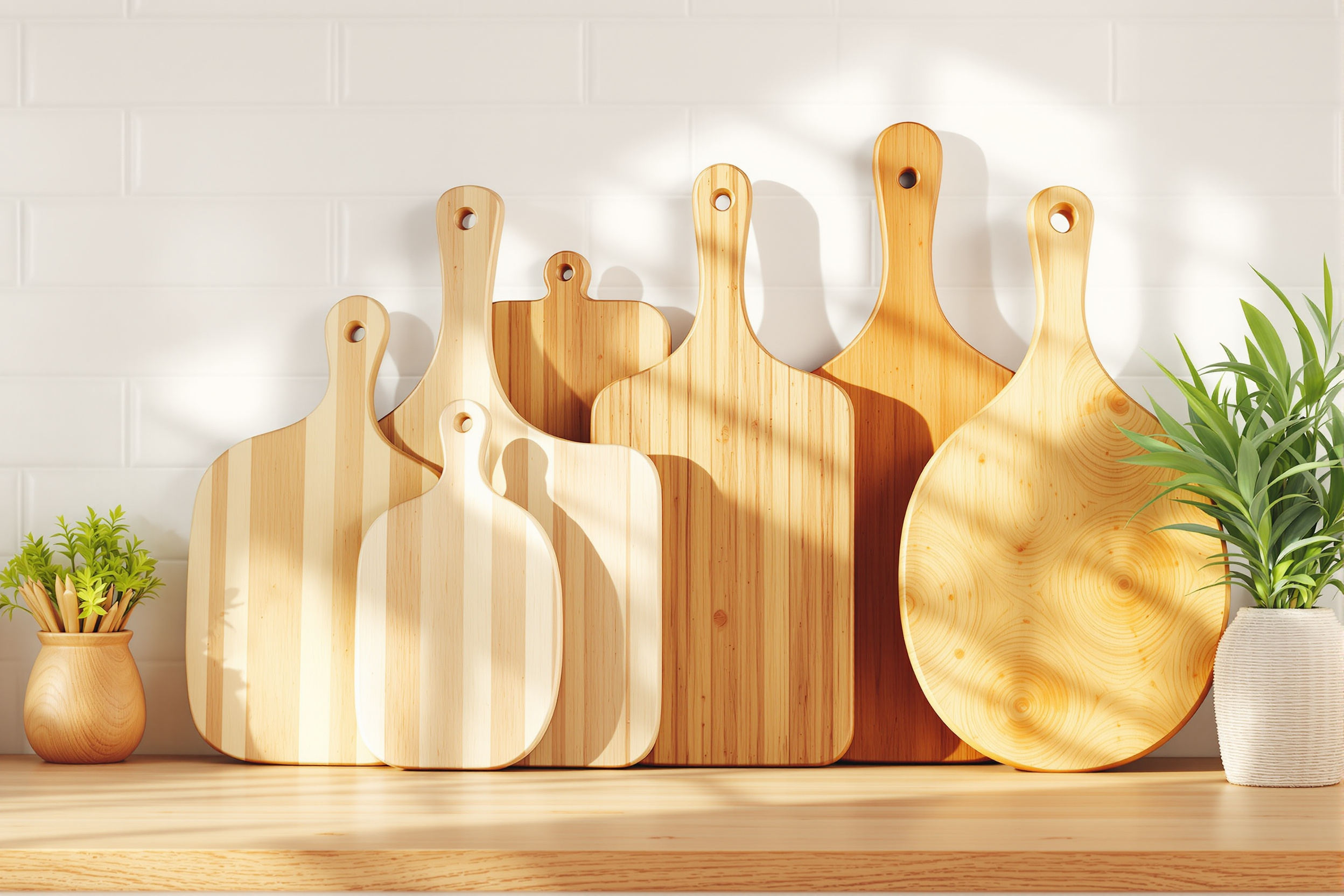
The clean answer to the microplastics question is a wood or bamboo board you buy once. See the boards we recommend — solid hardwood, bamboo, and a dishwasher-safe composite pick.
The best plastic-free cutting boards
These are real, currently-sold cutting boards made from materials that shed no plastic into food — solid hardwoods, bamboo, and a mostly-wood composite — plus one honest note on a pro-kitchen synthetic. Each is a one-time purchase that ends the microplastic question for your daily prep. Prices and availability change, so check current listings.
1. John Boos Maple Edge Grain — Best Overall
 Best Overall
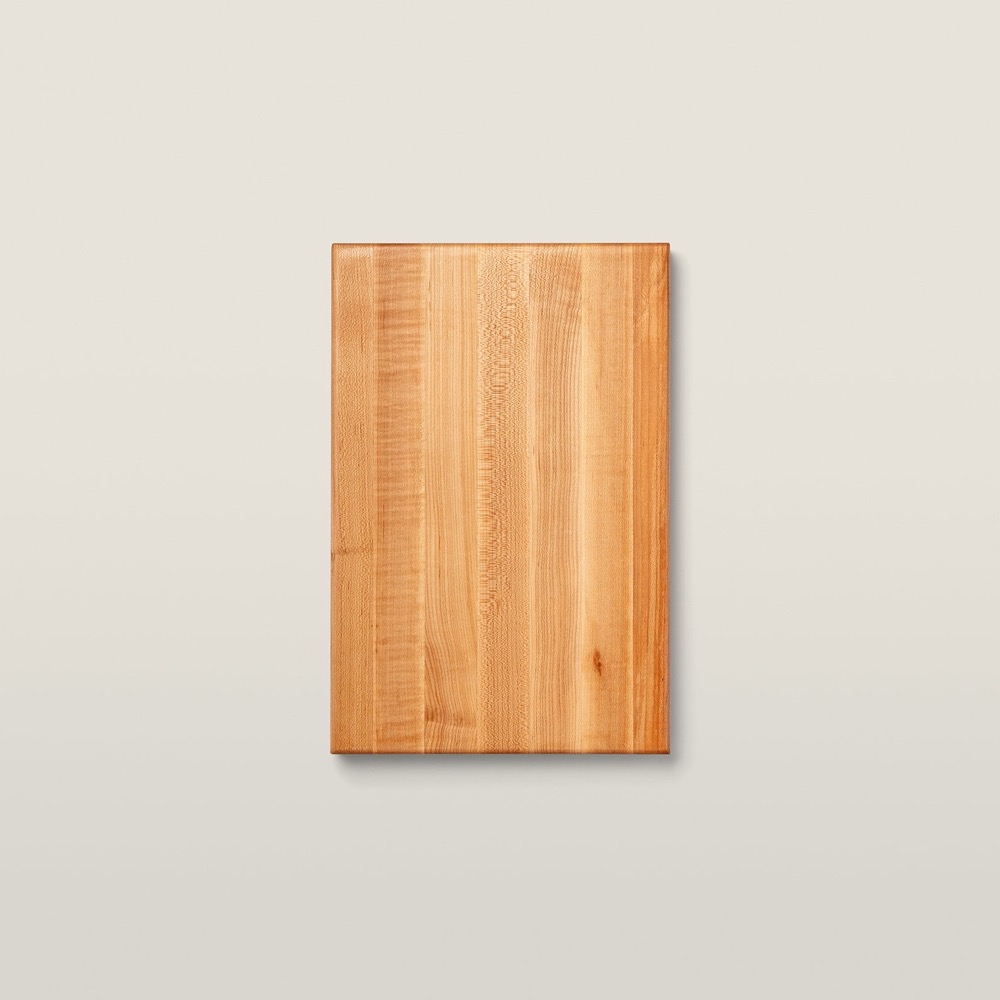
Solid North American hard maple in edge grain construction. NSF certified for food contact. Made in Effingham, Illinois since 1887. Available in multiple sizes (the 20x15 is the most versatile). Comes pre-treated with food-safe mineral oil. Hard maple is one of the most durable and knife-friendly wood species — dense enough to resist deep scarring but soft enough not to dull blades. John Boos is the brand used in professional kitchens, culinary schools, and restaurant supply.
Hard maple is the ideal cutting board wood — rated 1,450 on the Janka hardness scale, hard enough to resist excessive scarring but soft enough not to damage blade edges. A well-maintained maple board can last 10–20 years, so the lifetime cost beats replacing a plastic board every year or two — without the microplastic exposure.
The John Boos maple board is a buy-it-for-life favorite: one owner reported 18 years of daily use with no warping or cracking, and the dense hard-rock maple resists deep cuts. Reviewers oil it a few times a year and it stays flat and food-safe. The honest gripes: quality can be inconsistent, some newer boards arrive bowed (one owner's warped within days) or develop gaps where the maple strips shrink at different rates, and it is heavy. Skipping regular oiling is the fast route to splitting.
A surface that actually gets safer with age — the wood fibers swell to close knife marks instead of trapping bacteria and shedding plastic.
Why it's safe: Solid hardwood with no plastic anywhere — nothing can shed polyethylene or polypropylene microplastics into food the way a plastic board does with every cut.
Check Today’s Price on Amazon →Amazon prices change daily — tap to see today's price and any active discount.
- Free delivery & returns for Prime members
- Sold & shipped by Amazon
- Thousands of verified reviews
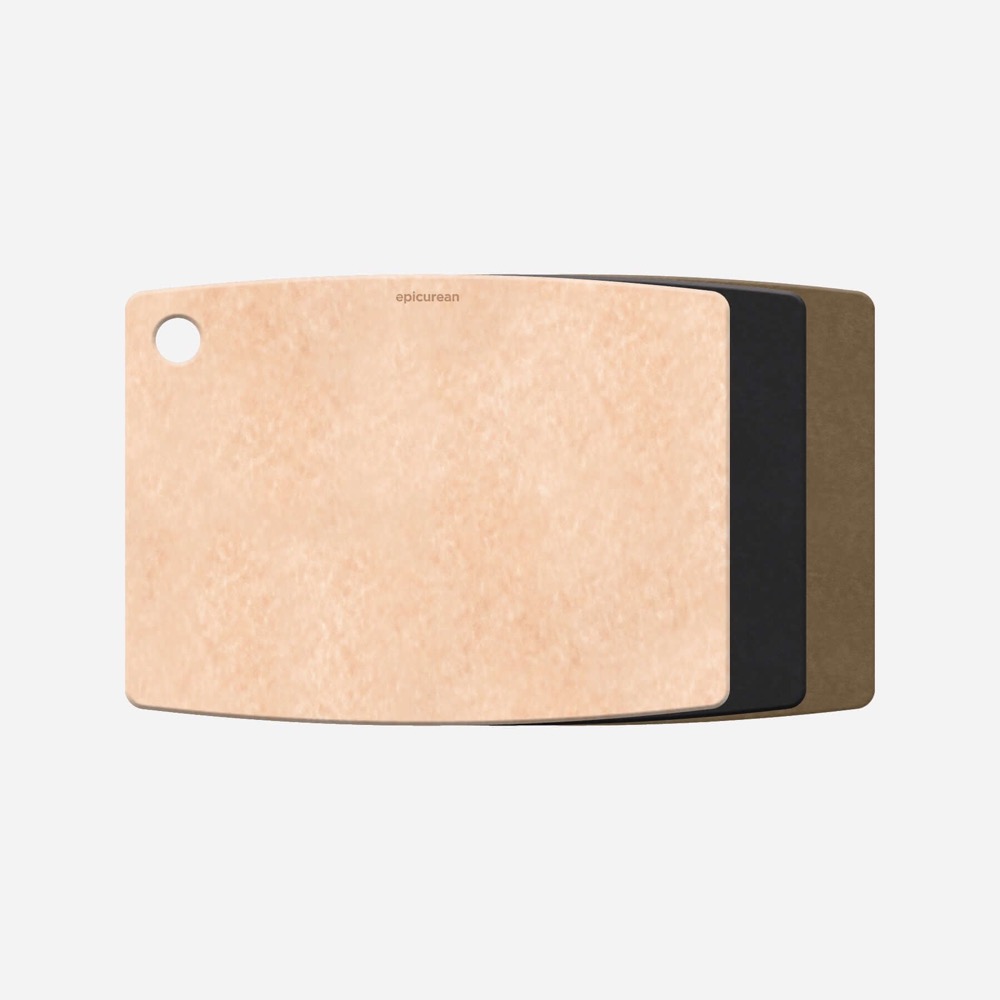
2. Epicurean Kitchen Series — Best Budget
 Best Budget
Made from Richlite — a wood fiber composite originally designed for architectural surfaces. FSC-certified wood fibers bonded with food-safe resin. No BPA, BPS, or phthalates. NSF certified. Dishwasher safe, heat resistant to 350°F, and non-porous (won't absorb odors or stains). Thin profile, lightweight, and available in multiple sizes. The closest thing to a plastic cutting board's convenience without the microplastic contamination.
For anyone currently using a plastic board who wants the easiest possible swap, Epicurean is the answer. It goes in the dishwasher, never needs oiling, and the Richlite material is primarily wood fiber — so it doesn't shed polyethylene or polypropylene particles the way plastic does. Not quite as knife-friendly as solid wood, but the convenience makes it the most realistic upgrade for most home cooks.
Owners love that it is dishwasher-safe with zero warping (tested 2,000-plus cycles), non-porous, and does not absorb odors or stains. Reviewers keep them for years of daily use and like the thin, light, low-maintenance design. The honest downside cooks argue about most is knives: the hard composite surface is fine for average home use and honing, but knife enthusiasts find it tough on knife edges and steer their high-end Japanese blades to end-grain wood instead. It can also feel hard and loud under the blade compared with wood.
Plastic-board convenience — dishwasher safe, no oiling, non-porous — without the microplastics that plastic boards shed into food.
Why it's safe: Made of wood fibers bonded with a food-safe resin (no BPA, BPS, or phthalates) and NSF certified — it does not shed polyethylene or polypropylene microplastics like a plastic board.
Check Today’s Price on Amazon →Amazon prices change daily — tap to see today's price and any active discount.
- Free delivery & returns for Prime members
- Sold & shipped by Amazon
- Thousands of verified reviews
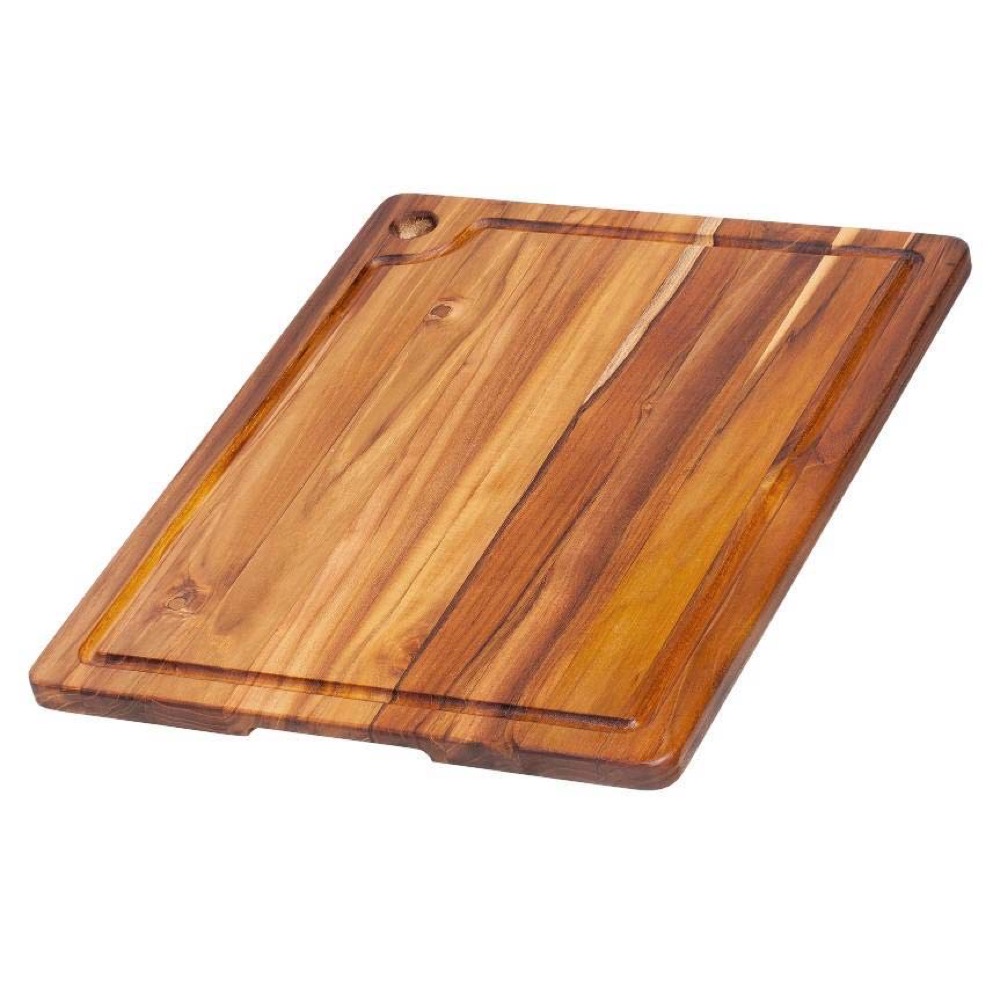
3. Teakhaus by Proteak Edge Grain — Best Teak
 Best Teak
FSC-certified teak, sustainably harvested from managed plantations. Edge grain construction with a juice groove for containing liquids from meat and fruit. Teak is naturally rich in silica and oils, making it highly moisture-resistant and naturally antimicrobial. Requires less oiling than maple. Won't warp or crack as easily in humid or dry environments. The juice groove adds practical value for raw meat prep.
Teak's natural oil content gives it a real advantage over other hardwoods in moisture resistance — where a maple board needs regular oiling to prevent cracking, teak is more forgiving. The FSC certification means the wood comes from responsibly managed plantations, not old-growth forests, and the juice groove makes it particularly practical for meat prep.
America's Test Kitchen recommended it, and owners praise how the high-oil teak stays smooth and resists staining and odor with minimal care. Reviewers oil it occasionally and report low wear on knife edges. The honest downsides: teak's mineral content can be slightly tougher on fine knife edges than maple, one owner gouged the surface the day after buying, and it costs about as much as a maple board. As with any wood board, skipping oiling after washing invites cracking.
Naturally oil-rich teak shrugs off moisture and contains meat juices in its groove — less maintenance than any other solid-wood board here.
Why it's safe: One hundred percent solid teak with a food-safe finish — no plastic, no laminating adhesives in the cutting surface, so nothing sheds microplastics into food.
Check Today’s Price on Amazon →Amazon prices change daily — tap to see today's price and any active discount.
- Free delivery & returns for Prime members
- Sold & shipped by Amazon
- Thousands of verified reviews
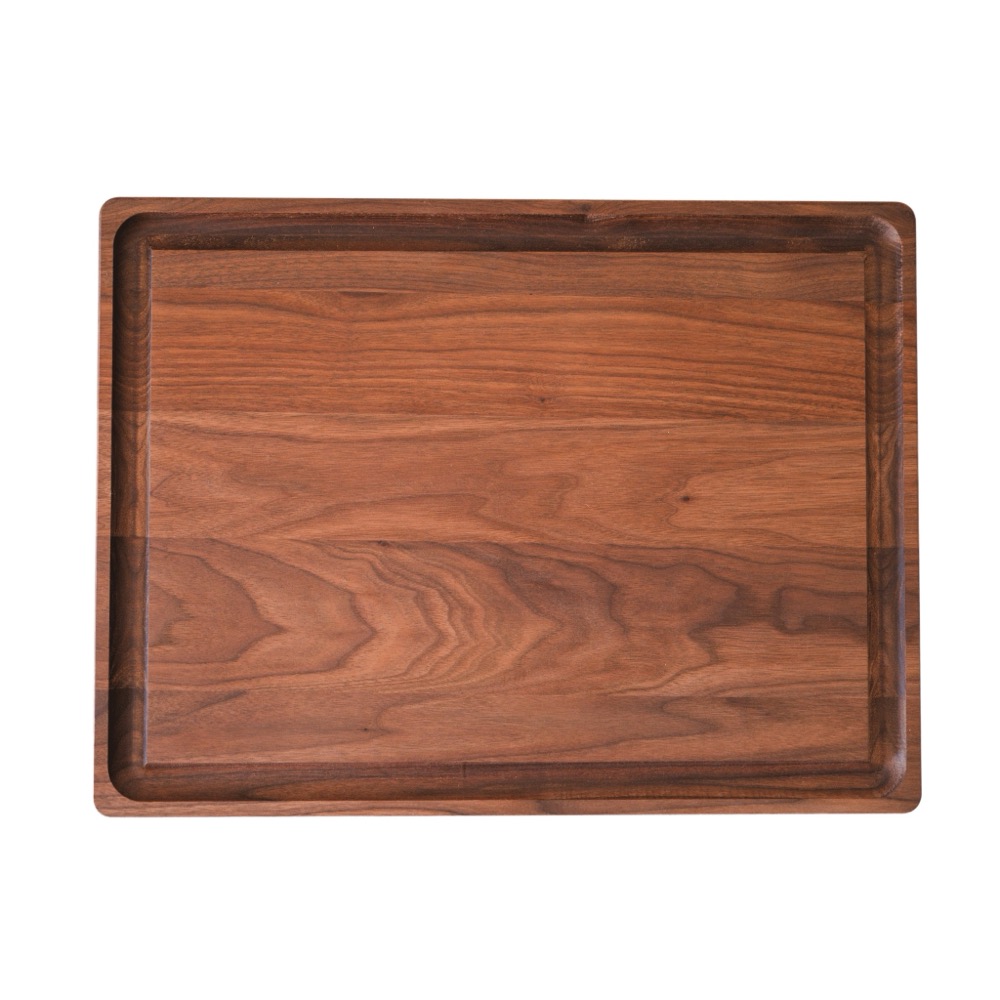
4. Virginia Boys Kitchens Walnut — Best for Presentation
 Best Presentation
American walnut, handcrafted in small batches, with a rich dark grain pattern that looks stunning on a table. Finished with food-safe mineral oil and beeswax. Doubles as a cheese board, charcuterie board, or serving platter. Walnut is a closed-grain wood that resists moisture absorption. Softer than maple (Janka rating 1,010), which means it's exceptionally gentle on knife edges but may show cut marks more readily.
Walnut is the most visually striking cutting board wood, with deep tones and natural grain variation that no two boards share. Virginia Boys keeps production small-batch and domestic, using sustainably sourced American walnut, and the board works as both a prep surface and a serving piece — set it on the table with bread, cheese, or charcuterie and it becomes the centerpiece.
Owners praise the walnut look, the juice groove that catches liquids, and the made-in-USA hardwood quality. Reviewers season it and use it for carving and prep. The honest downsides: the board ships raw and must be oiled before first use, which some buyers dislike, and quality control draws complaints, including unsanded corners and grooves that cause splinters, rough spots, and reports of warping. It needs regular oiling and sanding to keep from splitting, so it is not a set-and-forget board.
Prep on it, then carry it straight to the table — a handcrafted hardwood board good-looking enough to serve on.
Why it's safe: Solid American walnut sealed with food-safe mineral oil and beeswax — no plastic and no synthetic coating, so it never sheds microplastics into food.
Check Today’s Price on Amazon →Amazon prices change daily — tap to see today's price and any active discount.
- Free delivery & returns for Prime members
- Sold & shipped by Amazon
- Thousands of verified reviews
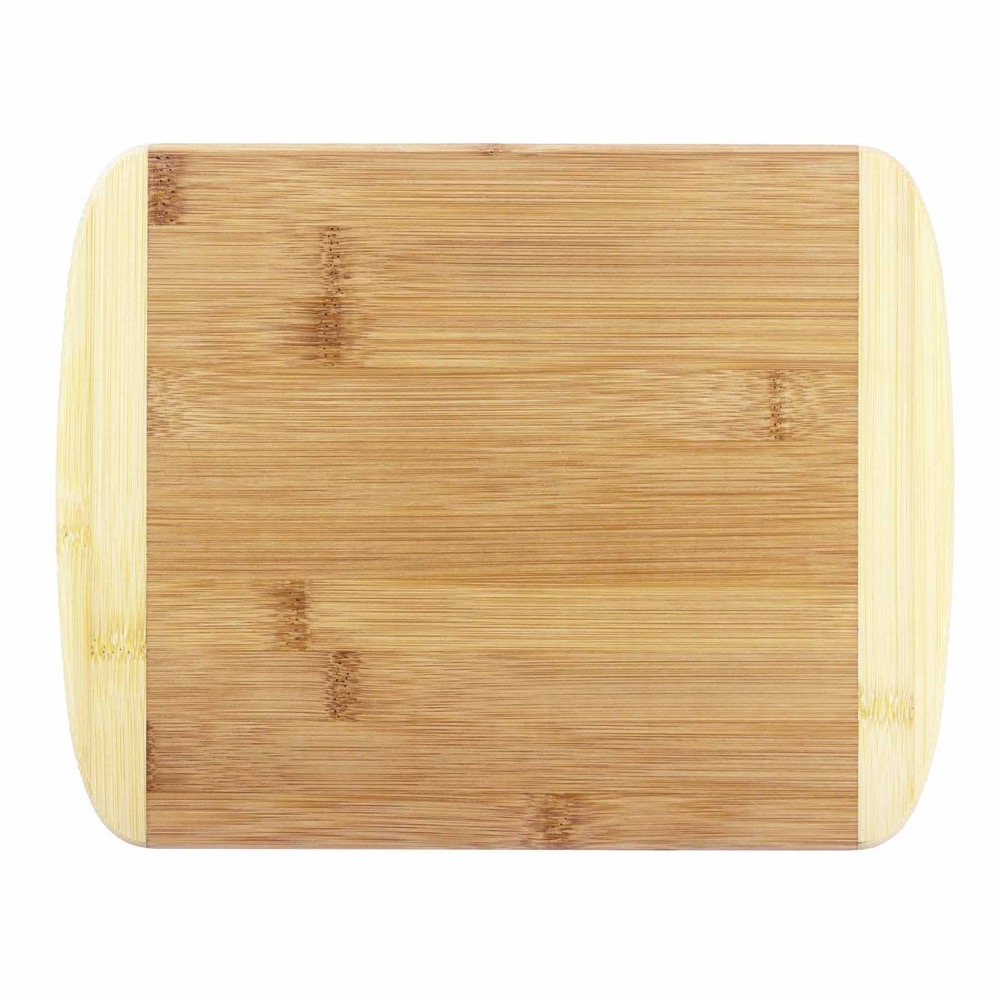
5. Totally Bamboo Kauai — Best Bamboo
 Best Bamboo
Organic Moso bamboo, one of the fastest-growing plants on earth (up to 3 feet per day). Formaldehyde-free adhesive — a critical distinction from cheaper bamboo boards. Lightweight (roughly 40% lighter than a comparable maple board), naturally water-resistant, and more sustainable than traditional hardwoods. Bamboo's natural hardness makes it very durable, though it can be tougher on knife edges than softer woods.
This is the most affordable entry point into non-toxic cutting boards. The formaldehyde-free adhesive is the key detail — many budget bamboo boards use urea-formaldehyde glue that can off-gas over time. Bamboo is harder than most hardwoods (Janka rating around 1,380), so it's very durable but may dull knives slightly faster; for light to moderate use, that trade-off is worth the price and sustainability benefits.
Long-time owners report a decade of use with no split, warp, or crack, and buyers like the low price, light weight, and formaldehyde-free certification. Reviewers use them daily for produce and general prep. The honest downsides are real: complaints about cracking, splitting, splintering, and smell show up on Amazon, some boards bend and curve within a week, and several buyers call them thin. Bamboo is also harder than maple, so it dulls knives faster; hand-wash, dry flat, and oil monthly or it can warp.
The lowest-cost way out of plastic — lightweight, fast-growing bamboo with a glue that won't off-gas formaldehyde.
Why it's safe: Solid bamboo laminated with a verified formaldehyde-free, food-safe adhesive — no plastic surface, so it doesn't shed polyethylene or polypropylene microplastics into food.
Check Today’s Price on Amazon →Amazon prices change daily — tap to see today's price and any active discount.
- Free delivery & returns for Prime members
- Sold & shipped by Amazon
- Thousands of verified reviews
6. Freshware Wood Cutting Boards — Best Value Set
 Best Value Set
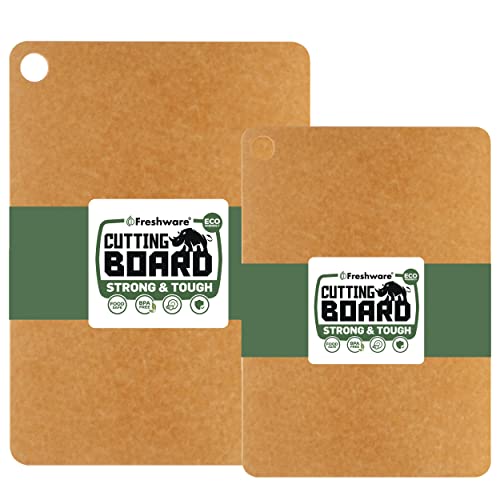
A two-piece set of natural wood cutting boards in two sizes — a 12" x 9" medium for everyday prep and a 15" x 11.25" large for bigger jobs and carving. As solid wood, they shed no microplastic particles the way a polyethylene board does. The listing notes the boards are dishwasher safe, though hand washing and an occasional coat of food-grade mineral oil will keep any wood board looking its best and prevent cracking.
Because these are real wood rather than plastic, there is no polyethylene surface to gouge and no microplastic contamination with each cut. Having two boards is also practical — keep one for raw meat and one for produce to avoid cross-contamination. It's an easy, low-cost way to get plastic boards out of the kitchen entirely.
Owners like them as a cheap set that, after conditioning with mineral oil, is sturdy and light enough to move around, and fine for heavy chopping. The honest downsides are common at this price: several buyers report boards arriving cracked or breaking as they unpack them, rough surfaces and sharp splinters after use, and juice grooves too shallow and unfinished to be pleasant to clean. Treat it as an inexpensive starter set, not an heirloom.
A practical two-board wood set — one medium, one large — so you can keep raw meat and produce on separate real-wood surfaces.
Why it's safe: Solid natural wood, so there is no plastic surface to shed microplastics into your food — unlike the polyethylene boards this set replaces.
Check Today’s Price on Amazon →Amazon prices change daily — tap to see today's price and any active discount.
- Free delivery & returns for Prime members
- Sold & shipped by Amazon
- Thousands of verified reviews
Want the Full Home Protection Guide?
Your cutting board is one plastic touchpoint among dozens in a typical kitchen. The next one worth checking is the drawer of disposable food bags — see are Ziploc bags safe for the peer-reviewed shedding and PFAS data. The Complete Plasticproof Guide covers every room — kitchen, nursery, bathroom, bedroom — with 80+ product recommendations backed by 47+ studies.
The honest verdict
Do plastic cutting boards release microplastics? Yes — the 2023 research showed that chopping shaves millions of plastic particles a year off a board and into your food, with worn, softer boards shedding the most. That part is not in doubt, and the visible grooves on any old plastic board make it easy to believe. But the same study's toxicity test found no acute harm to cells, so the accurate takeaway is measured concern, not alarm.
The response writes itself. This is one of the cheapest, most permanent plastic swaps available: retire the scratched-up plastic board, put a solid wood or bamboo one on the counter, and the exposure is simply gone — for a decade or two, from a single purchase. You don't have to be certain the particles are harmful to decide that a board which sheds none is the better one to chop on.
Make the one swap that ends the question
Wood and bamboo boards shed zero microplastics, last for years, and cost about what a decent plastic board does. See the boards we recommend.
Frequently Asked Questions
Yes. A 2023 study in Environmental Science & Technology found that chopping food on plastic cutting boards abrades the surface and sheds microplastic particles directly into the food. The researchers estimated a single polypropylene board could release roughly 14 to 71 million particles a year, and a polyethylene board around 79 million, depending on chopping style, force, and how worn the board is.
The 2023 study estimated roughly 14 to 71 million polypropylene microplastic particles per year, or about 79 million for a polyethylene board. The exact number varies widely with how hard and often you chop, the board's material, and its age. The visible knife grooves that build up on an old plastic board are direct evidence of material being shaved off.
The health risk isn't yet fully known. When the 2023 researchers exposed mouse cells to the released microplastics, they saw no significant effect on cell death or viability over 72 hours — reassuring, but not conclusive. A short-term cell test can't capture long-term or whole-body effects, and microplastics are increasingly detected in human blood and tissue. Because a wood board removes the exposure entirely at low cost, switching is a sensible precaution rather than a cause for panic.
Solid wood. Hardwoods like maple, walnut, and teak, plus properly made bamboo, contain no plastic, so they can't shed polyethylene or polypropylene into food no matter how much you chop. Wood also has natural antimicrobial properties, and a well-maintained board lasts 10 to 20 years — usually cheaper over time than replacing a scratched plastic board every year or two.
No. Solid wood and bamboo boards are made entirely from plant material and contain no plastic, so there's nothing to shed as microplastics. The only caveat is cheap bamboo boards assembled with urea-formaldehyde glue, a separate off-gassing concern; choosing a board that specifies a formaldehyde-free, food-safe adhesive avoids it. For microplastics specifically, any solid wood or bamboo board is a clean upgrade over plastic.
No need to panic, but the deeply grooved, scratched-up boards are worth retiring first, since a worn surface sheds the most particles. The practical move is to switch to a solid wood or bamboo board for daily prep, especially for raw fruits and vegetables you eat without cooking. It's a one-time purchase that lasts for years and removes the exposure for good.
Sources
- Yadav H, Khan MRH, Quadir M, et al. "Cutting Boards: An Overlooked Source of Microplastics in Human Food?" Environmental Science & Technology, 2023, 57(22), 8225–8235. North Dakota State University.
- American Chemical Society. Press summary: chopping on plastic cutting boards can release tens of millions of microplastic particles per year; cell-viability testing showed no significant toxicity over 72 hours. 2023.
- Leslie HA, van Velzen MJM, Brandsma SH, et al. "Discovery and quantification of plastic particle pollution in human blood." Environment International, 2022.
- Cox KD, Covernton GA, Davies HL, et al. "Human Consumption of Microplastics." Environmental Science & Technology, 2019.
- US FDA. "Microplastics and Nanoplastics in Foods." fda.gov.