Lunch boxes seem harmless. You pack food in them, close the lid, and send your kid to school. But if that container is plastic — even "BPA-free" plastic — it's leaching chemicals into the food inside it. Every single day. Not every alternative is equal either — see how silicone stacks up against plastic food containers before you decide what to switch to, and for grown-up options our guide to the best non-toxic lunch containers for adults ranks the glass and stainless picks.
This isn't hypothetical. A 2024 study in Environmental Science & Technology found that BPA-free replacement chemicals like BPS, BPF, and BPAF exhibit hormonal activity comparable to the BPA they replaced. Heat accelerates the process. That warm pasta you packed? The sandwich sitting in a hot backpack for four hours? Both are absorbing chemicals from the container walls.
The fix is straightforward: switch to stainless steel, glass, or food-grade silicone. These materials are inert — they don't react with food, don't leach chemicals at any temperature, and last years longer than plastic. Here are the best options for every use case and budget.
Compare all 7 picks
Every pick side by side — tap a name to jump to the full review, or check today's price.
| Pick | Rating | Why it wins | |
|---|---|---|---|
 Best OverallPlanetBox Rover Lunch Box |
— | 304 Stainless5 Compartments |
Check price → |
 Best BudgetLunchBots Cinco Stainless Steel |
— | 18/8 Stainless5 Compartments |
Check price → |
 Best for ToddlersPlanetBox Shuttle |
4.8out of 5 | 304 Stainless2 Compartments |
Check price → |
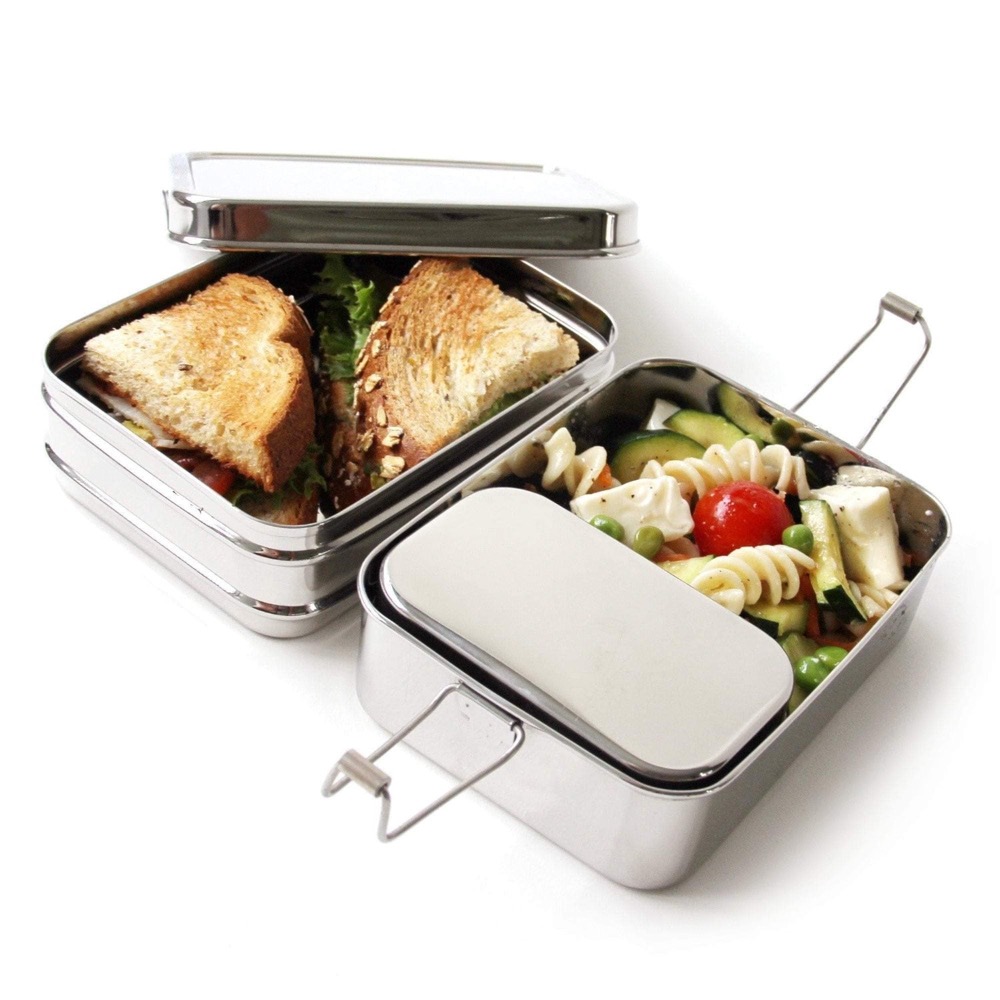 Best for AdultsECOlunchbox Three-in-One Classic |
— | Food-Grade Stainless3 Nesting Containers |
Check price → |
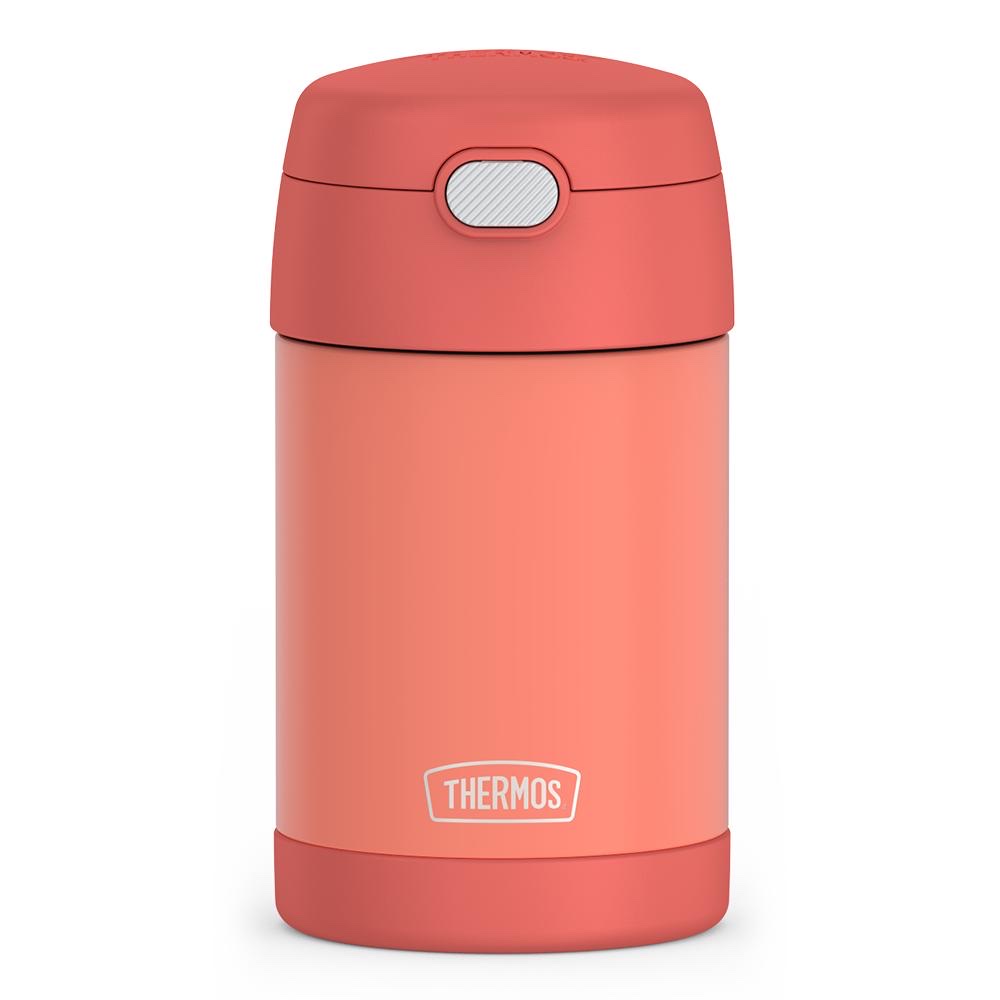 Best for Warm FoodThermos Funtainer Food Jar (12 oz) |
— | Stainless InteriorVacuum Insulated |
Check price → |
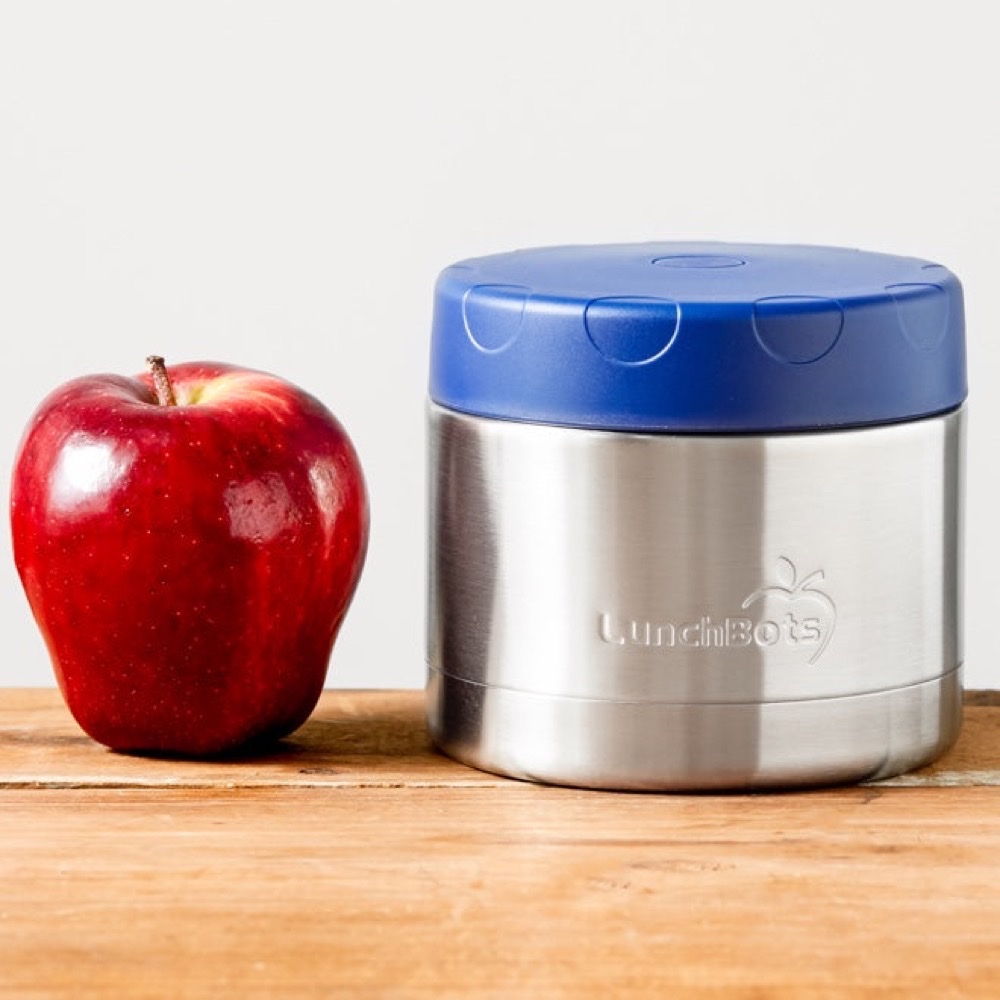 Best Zero-Plastic InsulatedLunchBots Thermal Insulated Container (12 oz) |
— | All-Stainless LidTriple-Wall |
Check price → |
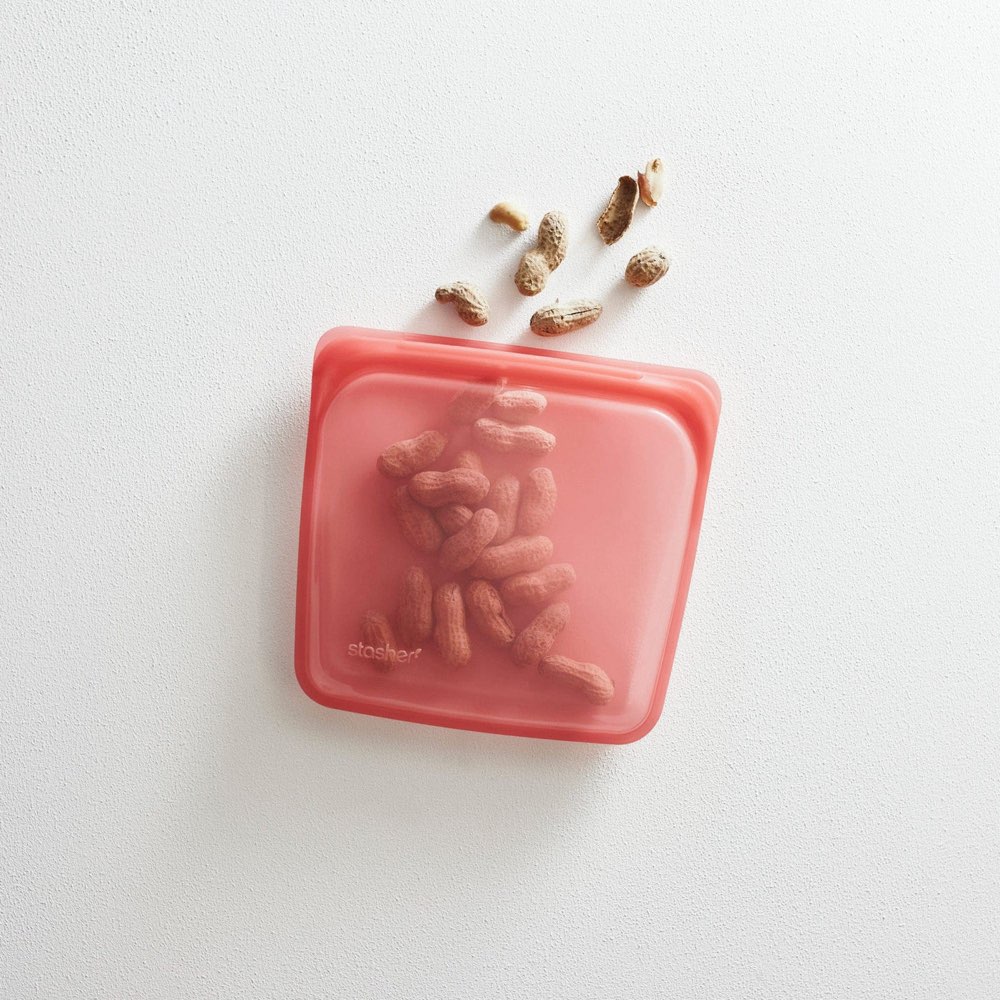 Best Silicone OptionStasher Reusable Silicone Sandwich Bag |
— | Platinum SiliconePinch-Lock Seal |
Check price → |
Why Plastic Lunch Boxes Are a Problem
Three factors make lunch boxes a particularly high-risk plastic exposure:
- Heat exposure. Lunch boxes sit in cars, backpacks, and lockers — often reaching 90-110°F. Chemical leaching from plastic accelerates exponentially with temperature. A 2020 study in Food Additives & Contaminants found that plastic containers at 100°F leached 2-5x more chemicals than at room temperature.
- Acidic and fatty foods. Tomato sauce, citrus fruits, cheese, and oils are particularly effective at pulling chemicals from plastic. If you're packing pasta with tomato sauce in a plastic container, the leaching rate is significantly higher than with dry, room-temperature foods.
- Repeated use and wear. Plastic lunch boxes get scratched, stained, and worn. Each scratch exposes fresh material and increases the surface area for leaching. Unlike glass or steel, plastic degrades with use — it gets worse over time, not better.
Most plastic lunch boxes are now labeled "BPA-free." But BPA was replaced with structurally similar chemicals — BPS, BPF, BPAF — that research increasingly shows are equally or more problematic. A 2024 meta-analysis found BPS disrupts thyroid hormone signaling at lower concentrations than BPA. "BPA-free" is a marketing claim, not a safety guarantee.
Best Stainless Steel Lunch Boxes
Stainless steel (18/8 or 304 grade) is the gold standard for food-safe containers. It's completely non-reactive, doesn't leach anything at any temperature, and survives years of daily use — including being dropped by a five-year-old. Here are the best options.
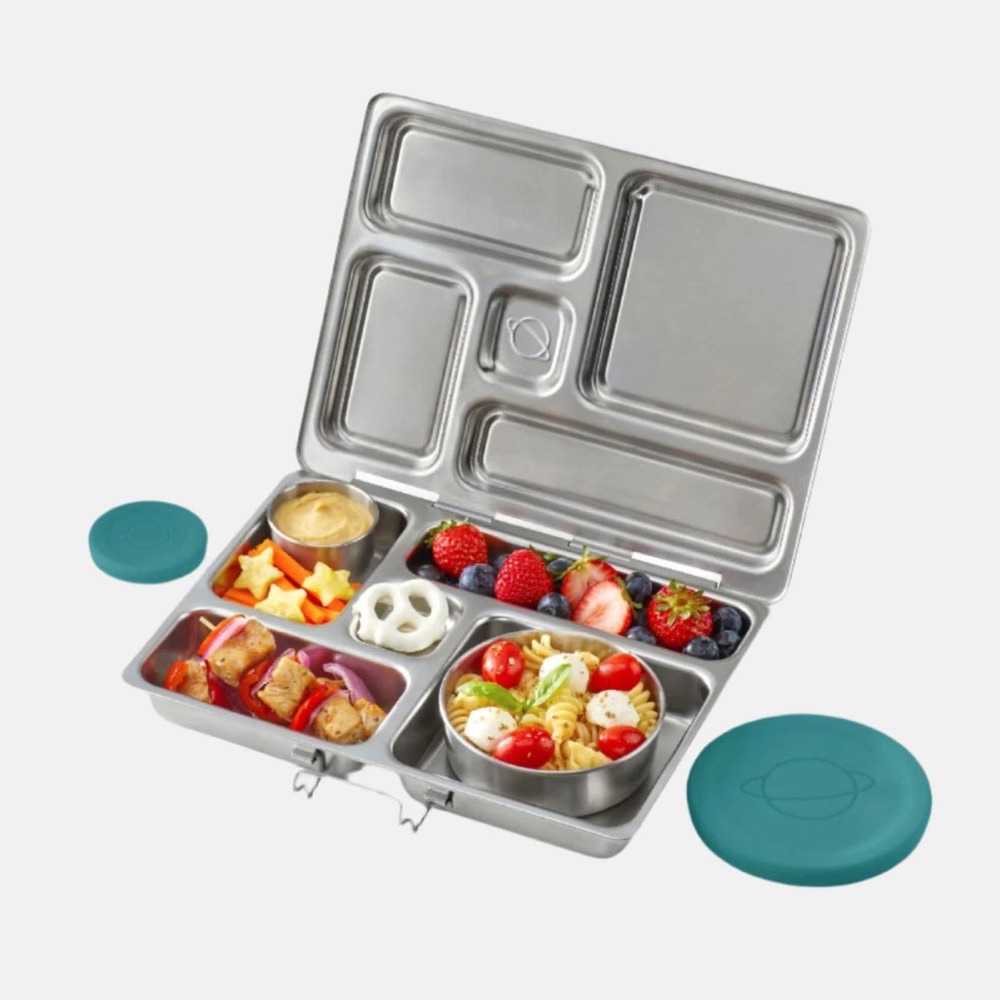
Best Overall: PlanetBox Rover
Best Overall
Five built-in compartments mean no separate containers to lose. 304 stainless steel, dishwasher safe. The magnetic closure is easy for kids ages 4+ to operate independently. Includes two silicone dippers for dressings and dips. Weighs 1.6 lbs empty. Made to last through elementary school and beyond — many parents report 5+ years of daily use. One of the most reviewed and recommended plastic-free lunch boxes available.
Owners treat this stainless bento as a buy-it-for-life box, with one saying it "has been holding up like a champ, and looks as good as the day I got it despite a 4 year-old dropping it and banging it around daily" and another "My kids have had this lunchbox for 10 years, and we're never going back," praising the no-plastic dishwasher cleanup. The honest downsides: it is heavy, with reviewers reporting "even a 5-year-old complaining about having to carry it," the latches can fail within a year (replacements are sold), and the small dipper sauce seals are easy to lose.
One tray, five compartments, zero plastic touching food — pack a balanced lunch without a pile of separate containers to wash and lose.
Why it's safe: The tray is food-grade 304 (18/8) stainless steel — completely inert, with no BPA, BPS, or plastic liner that could leach into food at any temperature.
Check Today’s Price on Amazon →Amazon prices change daily — tap to see today's price and any active discount.
- Free delivery & returns for Prime members
- Sold & shipped by Amazon
- Thousands of verified reviews
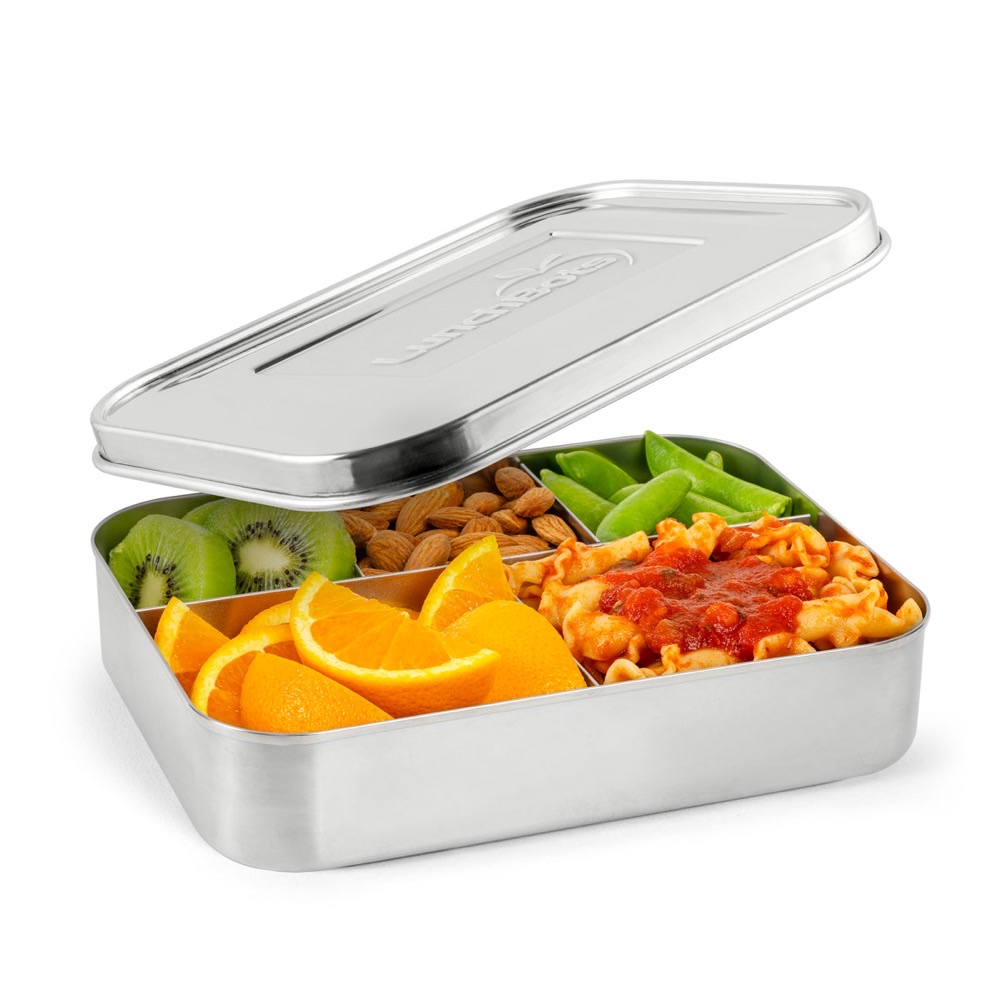
Best Budget: LunchBots Cinco
Best Budget
Five sections in a single tray — great for bento-style lunches. All stainless steel construction, no plastic anywhere. Snap-lock lid keeps food separated and secure. Weighs 1.2 lbs. More affordable than PlanetBox with similar functionality. The snap closure is slightly harder for very young children (ages 3-4) but fine for kindergarten age and up. Excellent first plastic-free lunch box.
Owners love the day-to-day simplicity, saying "Absolutely love this lunch box! Has made making lunch much easier, fun and exciting," and praise the indestructible finish: "There is no paint to chip off, no designs to fade and no plastic to break," a buy-once box. The honest downsides: it is not leak-proof, so the maker says pack dry foods only, and "if you turn the container sideways, it definitely does leak," and the single press-on lid can pop open in transit, with one parent returning it because it "would open and spill all of her lunch before lunch time."
A full five-compartment bento for noticeably less than the premium picks — the easiest way to switch a kid off plastic without overspending.
Why it's safe: Built entirely from 18/8 stainless steel with no plastic anywhere in the food zone, so nothing can leach — even with acidic foods like tomato sauce.
Check Today’s Price on Amazon →Amazon prices change daily — tap to see today's price and any active discount.
- Free delivery & returns for Prime members
- Sold & shipped by Amazon
- Thousands of verified reviews
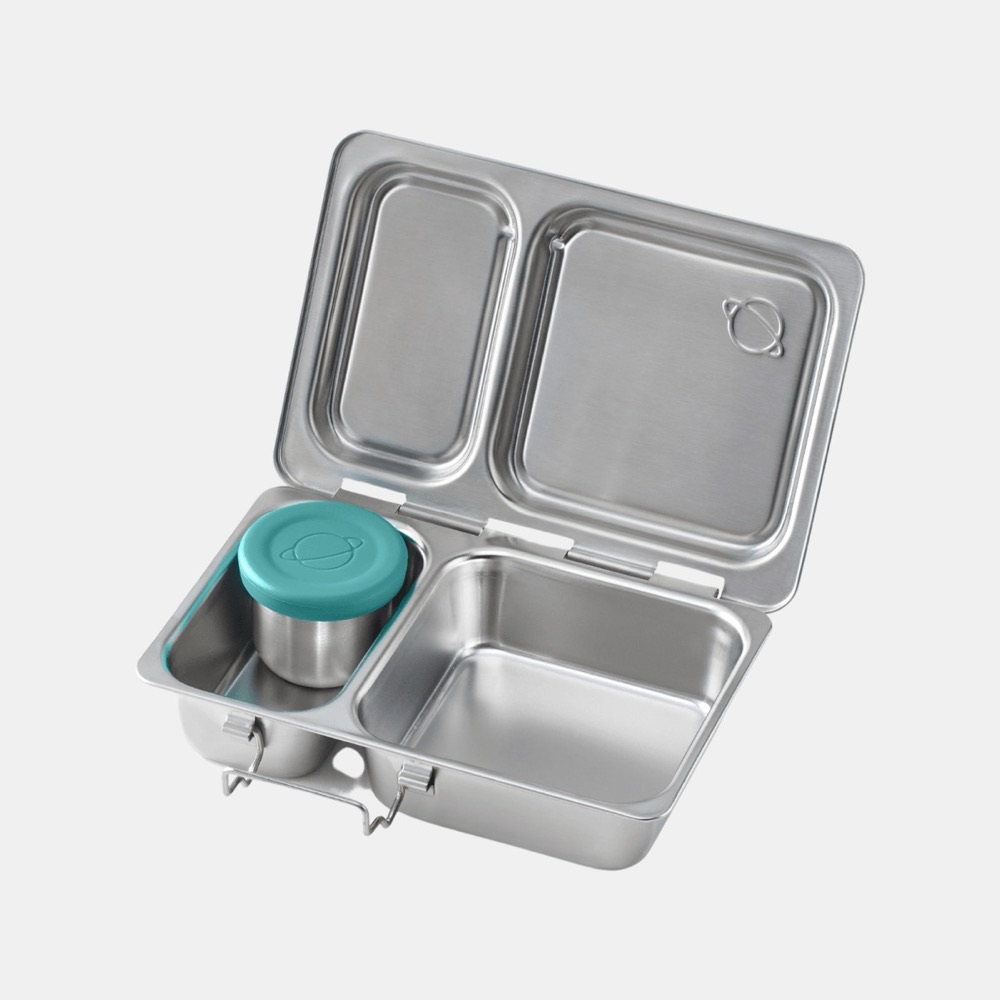
Best for Toddlers: PlanetBox Shuttle
Best for Toddlers
Two compartments — one large, one small. Designed for smaller appetites and little hands. At just 11 oz, it's the lightest stainless steel option on this list. The magnetic closure is the easiest for young children to operate. Includes one silicone dipper. Perfect for daycare and preschool. Grows with your child as a snack container once they move to a larger lunch box.
The smallest PlanetBox earns the same durability praise, with owners reporting "no noticeable dents, scratches, and not a single rust spot in sight" after months, plus plastic-free, dishwasher-safe, well-organized compartments. The honest downsides: it is too small for many, with "the main concern is figuring out how to pack more than a large snack in there," the lid does not fold underneath so it "takes up a lot of room on a desk or lunch table," and the carrying case barely fits a normal ice pack, which nudges you toward the paid PlanetBox one.
Sized for small appetites and light enough for a toddler to carry — with a magnetic lid a three-year-old can actually open on their own.
Why it's safe: The tray is food-grade 304 stainless steel with no plastic food contact, so there's nothing for a teething toddler to chip or for chemicals to leach from.
Check Today’s Price on Amazon →Amazon prices change daily — tap to see today's price and any active discount.
- Free delivery & returns for Prime members
- Sold & shipped by Amazon
- Thousands of verified reviews
Best for Adults: ECOlunchbox Three-in-One
Best for Adults
Three nesting containers — a large oval, a medium rectangular "snacker," and a small round cup. All food-grade stainless steel. The nesting design is compact for commuters and fits easily in a work bag. Larger capacity than the kids' options. No silicone gaskets — just clean stainless steel. Note: not leak-proof (no gaskets), so not ideal for soups or saucy dishes. Best for dry or semi-dry foods.
Owners find this nesting stainless bento sturdier and longer-lived than plastic, reporting 6 to 8 years of daily use "still going strong" and calling it "way more sturdy than the plastic versions," and they love it for plastic-free simplicity and being "super easy to dry after washing it." The honest downsides: the manufacturer itself labels it "Not Leak-Proof," since it has no gaskets, so a buyer who returned it said "the Amazon summary should be updated" to make that clear, and it runs small, with one reviewer noting "a small sandwich barely fit.
Adult-sized capacity that nests down to almost nothing in your bag — three separate containers for a main, a side, and a snack.
Why it's safe: Every container is food-grade stainless steel with no plastic and no silicone gaskets in the food zone — the simplest, most inert setup you can carry.
Check Today’s Price on Amazon →Amazon prices change daily — tap to see today's price and any active discount.
- Free delivery & returns for Prime members
- Sold & shipped by Amazon
- Thousands of verified reviews
"Stainless steel doesn't absorb odors, doesn't stain from tomato sauce, and doesn't degrade with use. A well-made stainless steel lunch box lasts 10+ years — making the upfront cost significantly cheaper per year than replacing plastic containers every 6-12 months."
Best for Warm Food: Insulated Stainless Steel
Standard stainless steel lunch boxes don't insulate. If you're packing soups, stews, oatmeal, or anything that needs to stay warm (or cold), you need a vacuum-insulated container.
Best for Warm Food
Vacuum-insulated stainless steel interior — keeps food hot for 5 hours or cold for 7 hours. Wide mouth for easy eating and cleaning. The lid has a built-in spoon holder (though the spoon itself is plastic — replace with a stainless steel spoon). Available in dozens of colors and designs. The most popular insulated food container for school lunches. The stainless steel interior means no chemical leaching, even with hot soup.
One labeling note first: the Funtainer food jar is sold at 10 and 16 ounces, so verify the size before buying. Owners praise it as genuinely leakproof and kid-tough, one that "will often out-last your school packing years," and with proper preheating it holds temperature, keeping food "warm/hot after approximately 4-5 hours at school." The honest downsides: real-world heat retention is inconsistent, with one tester finding food after five hours "only slightly warmer than room temperature," the lid gasket can dislodge into the container, and some units "smelled funny when new.
Send hot soup, pasta, or oatmeal to school or work and have it still warm at lunch — no microwave, no plastic touching the food.
Why it's safe: Food only ever touches the stainless steel interior — unlike plastic, stainless does not leach more chemicals as the contents heat up, which is exactly when leaching matters most.
Check Today’s Price on Amazon →Amazon prices change daily — tap to see today's price and any active discount.
- Free delivery & returns for Prime members
- Sold & shipped by Amazon
- Thousands of verified reviews
Best Zero-Plastic Insulated
Premium vacuum-insulated stainless steel — keeps food hot 6+ hours. Triple-walled insulation outperforms the Thermos Funtainer in independent tests. The lid is entirely stainless steel and silicone — no plastic contact with food. Wider mouth than the Funtainer makes it easier to eat from directly. Higher price point, but the all-stainless interior justifies it for families committed to zero plastic contact.
This insulated container's top praise is that it is truly leakproof, safe to toss in a bag "without worry of accidental spills," with a wide mouth that is easy to eat from and solid all-day cold performance, earning one reviewer a 4.5 out of 5. The honest downside clusters on hot food: it fades faster than the label implies, with one owner finding that "after four hours, the temperature of the food was warm, certainly not piping hot," so a realistic hot hold is about five hours rather than the claimed six.
Keeps a hot lunch hot past 6 hours and is the rare insulated jar where not even the lid lets plastic touch your food.
Why it's safe: Both the interior and the lid are stainless steel and silicone — there is no plastic anywhere in the food zone, so nothing can leach into hot or acidic contents.
Check Today’s Price on Amazon →Amazon prices change daily — tap to see today's price and any active discount.
- Free delivery & returns for Prime members
- Sold & shipped by Amazon
- Thousands of verified reviews
Pro tip: Pre-heat the insulated container by filling it with boiling water for 5 minutes before adding food. This extends heat retention by 1-2 hours. The same works for cold — pre-chill with ice water.
Best Silicone Option: Stasher and Zip Top
Food-grade silicone is a strong third option — lighter than steel, flexible, and safe at normal food temperatures. It doesn't contain BPA, phthalates, or other endocrine disruptors found in plastic.
Best Silicone Option
Platinum food-grade silicone — the highest purity available. Pinch-lock closure keeps food fresh without plastic zippers. Dishwasher, microwave, and freezer safe. Self-sealing with no removable parts. Great for sandwiches, snacks, and cut fruit. Can also be used for sous vide cooking. Not ideal for liquids unless stored upright. The most affordable entry point for replacing plastic sandwich bags entirely.
Owners keep coming back to the airtight seal and freezer performance, and many say the same thing about disposables: "I'm never buying a Ziploc bag again," reporting that after years "They've held up perfectly, and I've never noticed any weird taste from storing food." The honest downsides: odor and stain retention is real, with one user keeping "a bag I stored garlic in that is begging" to be de-smelled, the "tough-to-clean seams" dry slowly and can hold moisture, and the pinch seal can be fiddly to open.
Replace a box of disposable plastic baggies with one bag you wash and reuse for years — sandwiches, snacks, cut fruit, even sous vide.
Why it's safe: Made from platinum-cured food-grade silicone, not plastic — so it contains no BPA, BPS, or phthalates and won't shed microplastics into fatty or acidic foods.
Check Today’s Price on Amazon →Amazon prices change daily — tap to see today's price and any active discount.
- Free delivery & returns for Prime members
- Sold & shipped by Amazon
- Thousands of verified reviews
The Complete Lunch Setup (Zero Plastic)
Here's our recommended setup for a fully plastic-free school lunch — optimized for a kid in elementary school:
- Main container: PlanetBox Rover ($54.95) or LunchBots Cinco ($39.99) for dry/room-temp foods
- Hot food: Thermos Funtainer ($17.99) or LunchBots Thermal ($29.99) for soups, pasta, oatmeal
- Snack bags: Stasher bags ($12.99 each) to replace plastic baggies
- Utensils: A stainless steel spork or fork/spoon set ($6-10 on Amazon)
- Water bottle: Klean Kanteen Kid Classic ($19.95) or Hydro Flask Kids ($29.95)
Total setup cost: $100-$150. Sounds like a lot compared to a $15 plastic set. But the steel components last 5-10 years. A plastic lunch box that gets replaced annually costs $75-$150 over the same period — and exposes your child to chemicals the entire time.
Want the Full Room-by-Room Protection Guide?
The Complete Plasticproof Guide covers every room — kitchen, nursery, bathroom, bedroom — with the full research and complete swap list. 47+ peer-reviewed studies, 80+ product recommendations.
What to Avoid
Stop Plastic containers labeled "microwave safe"
"Microwave safe" means the container won't melt or warp — it says nothing about chemical leaching. In fact, microwaving accelerates leaching. A 2023 study in Environmental Science & Technology found that microwaving plastic food containers released billions of microplastic and nanoplastic particles per square centimeter of container surface.
Stop Plastic wrap and sandwich bags
PVC-based plastic wrap (like Saran) contains phthalate plasticizers. Polyethylene bags (like Ziploc) are less concerning but still shed microplastics, especially when in contact with fatty or acidic foods. Stasher bags and beeswax wraps are direct replacements.
Stop Bamboo fiber containers with melamine binders
Some "eco-friendly" bamboo lunch boxes use melamine resin as a binder. Melamine is a plastic that leaches formaldehyde at elevated temperatures. If a bamboo container feels hard and rigid like plastic, check the materials list — it likely contains melamine. True bamboo is only safe when used as a cutting surface, not as a formed container.
Frequently Asked Questions
Plastic lunch boxes — even those labeled BPA-free — can leach endocrine-disrupting chemicals into food, especially when exposed to heat. A 2024 study in Environmental Science & Technology found that BPA-free replacement chemicals (BPS, BPF, BPAF) exhibit similar hormonal activity to BPA. Warm food accelerates leaching significantly. Stainless steel lunch boxes like the PlanetBox Rover ($54.95) or LunchBots Cinco ($39.99) are inert, durable alternatives that eliminate chemical leaching entirely.
Stainless steel (18/8 or 304 grade) is the safest lunch box material. It is completely non-reactive with food, does not leach chemicals at any temperature, resists corrosion, and is virtually indestructible. Borosilicate glass is equally safe but heavier and breakable. Food-grade silicone is a good third option — it is heat-stable up to 400°F and does not leach plastic particles, though some studies have found trace cyclic siloxane release at very high temperatures. For everyday lunch use, stainless steel offers the best combination of safety, durability, and practicality.
Standard single-wall stainless steel lunch boxes do not insulate — food reaches ambient temperature within 1-2 hours. For warm food, you need a vacuum-insulated stainless steel container like the Thermos Funtainer (12oz, $17.99) or LunchBots Thermal (12oz, $29.99). These maintain food temperature for 5-7 hours. For cold items, an insulated lunch bag with a stainless steel ice pack works well. The key advantage of stainless steel is that it is safe at any temperature — unlike plastic, which leaches more chemicals as food warms.
Most stainless steel lunch boxes are dishwasher safe (top rack recommended). For hand washing, use warm water and dish soap — stainless steel does not harbor bacteria the way scratched plastic does. For stubborn stains or odors, make a paste of baking soda and water, apply it to the interior, let sit for 15 minutes, then rinse. Unlike plastic containers that absorb tomato sauce stains and food odors permanently, stainless steel is non-porous and cleans completely every time.
Food-grade silicone lunch boxes are significantly safer than plastic. Silicone is a synthetic polymer made from silicon (a natural element), not petroleum. It does not contain BPA, phthalates, or other endocrine disruptors found in plastic. A 2024 review in Food Additives & Contaminants found that silicone can release trace amounts of cyclic siloxanes (D4, D5) at temperatures above 300°F, but at normal lunch temperatures (below 180°F), leaching is negligible. Stasher bags and Zip Top containers are two well-regarded food-grade silicone options.
For toddlers, the best plastic-free lunch box is the PlanetBox Shuttle ($39.95) — it is stainless steel, has two compartments (one large, one small), lightweight at just 11oz, and the magnetic closure is easy for small hands to operate. For a more affordable option, the LunchBots Duo ($24.99) offers two compartments in durable stainless steel with a simple snap closure. Both are dishwasher safe and virtually indestructible. Pair with a Thermos Funtainer ($17.99) for warm soups or oatmeal.
Sources
- Yang CZ, et al. "Most Plastic Products Release Estrogenic Chemicals: A Potential Health Problem That Can Be Solved." Environmental Health Perspectives, 2011.
- Rochester JR, Bolden AL. "Bisphenol S and F: A Systematic Review and Comparison of the Hormonal Activity of Bisphenol A Substitutes." Environmental Health Perspectives, 2015.
- Liu J, et al. "Thyroid-disrupting effects of BPS at environmentally relevant doses." Environmental Science & Technology, 2024.
- Hussain N, et al. "Microplastics and nanoplastics released from plastic food containers during microwave heating." Environmental Science & Technology, 2023.
- Muncke J, et al. "Impacts of food contact chemicals on human health: a consensus statement." Environmental Health, 2020.
- Geyer R, et al. "Production, use, and fate of all plastics ever made." Science Advances, 2017.
- Campanale C, et al. "A Detailed Review Study on Potential Effects of Microplastics and Additives of Concern on Human Health." International Journal of Environmental Research and Public Health, 2020.
- Food Additives & Contaminants. "Migration of siloxanes from silicone kitchenware." Part A, 2024.
Protect Every Room in Your Home
From the kitchen to the nursery to the bedroom — the Complete Plasticproof Guide covers every swap that matters, backed by 47+ studies.