Epic Water Filters

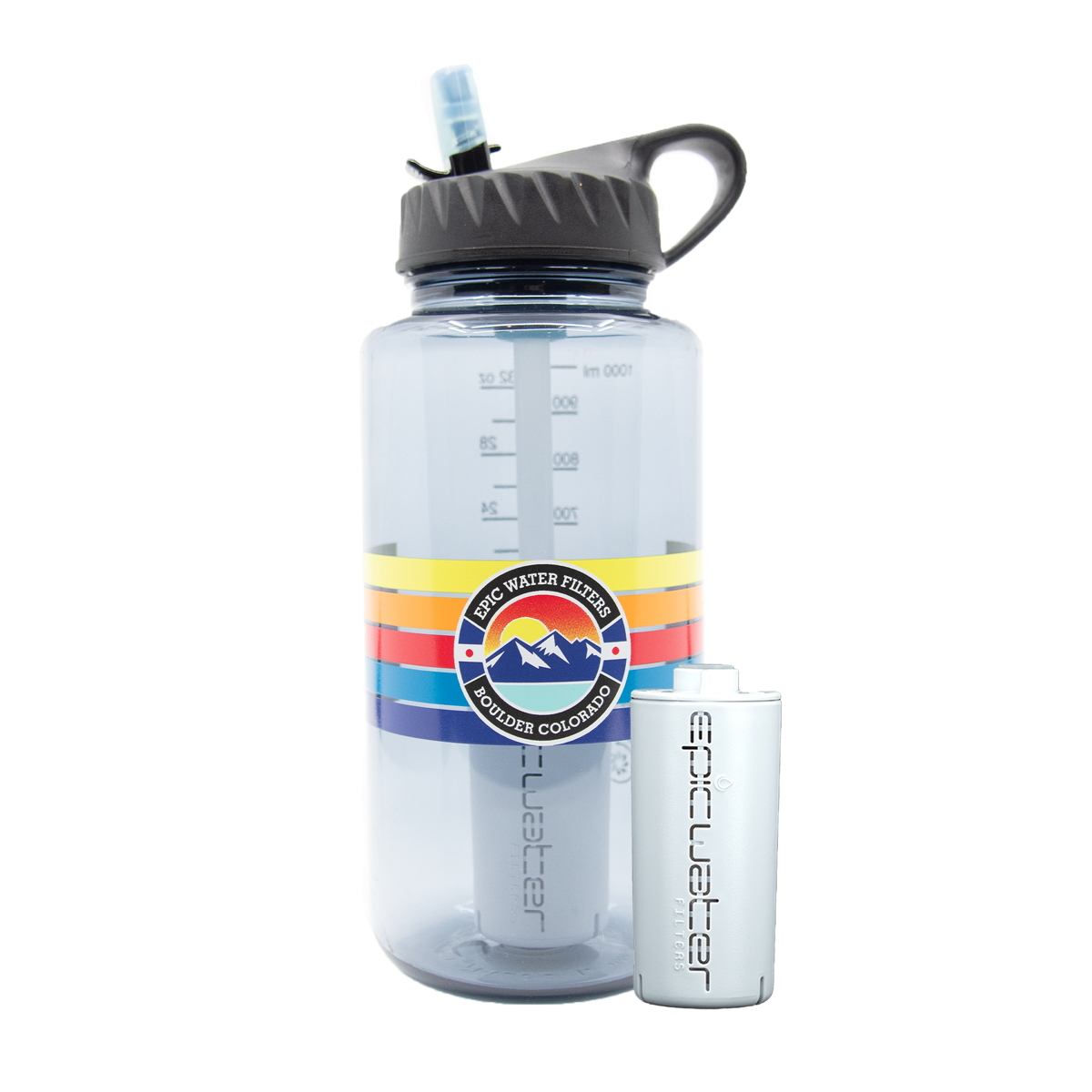
Epic Nalgene OG Water Filtration Bottle (32 oz)

Plasticproof Great $$$Our price tier

Nalgene bottle with Epic’s two-stage filter in the straw, which Epic states is NSF certified to Standard 42 and reduces more than 70 tap-water contaminants — filtered water anywhere there is a sink.

Check price on Amazon
Filters as you drinkAny sink, no waiting.
NSF certified to Standard 42Per Epic.
75-gallon filter lifeReplaces a lot of bottled water.
See exactly how we verify this

As an Amazon Associate I earn from qualifying purchases — at no extra cost to you. We show a "Check price on Amazon" link rather than a number because Amazon prices change often.

Why it's safe for your family

  • The filter sits in the straw, so the water is filtered as you drink rather than before you fill. That is what makes it useful away from home: any kitchen or water fountain becomes drinkable-tasting water without carrying bottled water.
  • Epic states the filter is a two-stage design — an outer nano-fiber layer for particles over an inner carbon fiber block for chemistry — and that it is NSF certified to Standard 42.
  • Epic publishes its own reduction figures for this filter: 99.94 percent for lead, 98 percent for PFAS, 98 percent for chlorine and 92 percent for microplastics, across more than 70 contaminants. Those are the maker’s published test results, which is why we name them as such.
  • The filter is rated for up to 75 gallons, and the Nalgene bottle it sits in is the one people have been failing to break for decades.

Quick specs

Method
Two-stage straw filter: nano-fiber over carbon fiber block
Certified
NSF Standard 42 (Epic’s stated certification)
Published reductions
Lead 99.94 percent, PFAS 98 percent, microplastics 92 percent
Filter life
Up to 75 gallons
Capacity
32 ounces

What to avoid instead

Avoid single-use bottled water, which is what this replaces and what it beats on every measure that matters here — cost, waste, and the plastic the water itself has been sitting in. Bear in mind what this is not: a backcountry filter. It is built for treated tap water, not stream water.

How we verify — and what we don't

Straight answer: we're a research team, not a testing lab. Here's exactly what our rating is based on — and what it isn't — so you can weigh it honestly.

What we check

  • What the product is made of, from the maker's own specs and product listing.
  • Whether any part that touches you or your food uses PTFE, PFAS, plastic, or a coating that can degrade.
  • Peer-reviewed research on how that material behaves when heated, scratched, washed, or worn.
  • Known failure modes — how the product actually breaks down in a real home.

What we don't do

  • We have not chemically tested this specific unit in a lab.
  • We don't take payment to rate a product higher — there is no sponsored placement.
  • We don't show star ratings or "trusted by thousands" counts we can't stand behind.
What gets a product rejected

Anything that adds a known microplastic, PFAS, or off-gassing source — a non-stick coating, a plastic surface against food or skin, vinyl/PVC — is downgraded or cut. We only list what clears that bar.

Don't take our word for it — check the sources yourself Epic Water Filters's product details

Common questions

The bottle is plastic. Why is it on a plastic-reduction site?
Because we would rather say the honest thing than pretend. It is a Tritan bottle, so you are drinking filtered water through plastic. It earns its place by removing a much larger plastic exposure — single-use bottled water — and by being the only way to get this filter into a bottle you can throw in a bag. If you want no plastic at all, use a stainless bottle and filter the water before it goes in.
Can I use it on a hike or abroad?
Only on treated tap water. This is a tap-water filter, not a microbiological purifier: it makes no claim against bacteria, viruses or protozoa. For untreated water in the backcountry, or in places where the water supply is not safe, you need a purifier that says so explicitly.
How hard is it to drink through?
Harder than an open bottle, always — you are pulling water through a filter with your own suction, and it gets slightly harder as the filter loads. That is the trade for filtration at the mouthpiece rather than in the kitchen.
Related reading
Best Filtered Water Bottle
Related reading
Microplastics in Water Bottles

More safe picks

Affiliate disclosure: some links on this page are affiliate links. As an Amazon Associate I earn from qualifying purchases. We earn a small commission from qualifying purchases at no extra cost to you. This does not influence our recommendations — every product is selected based on peer-reviewed research.