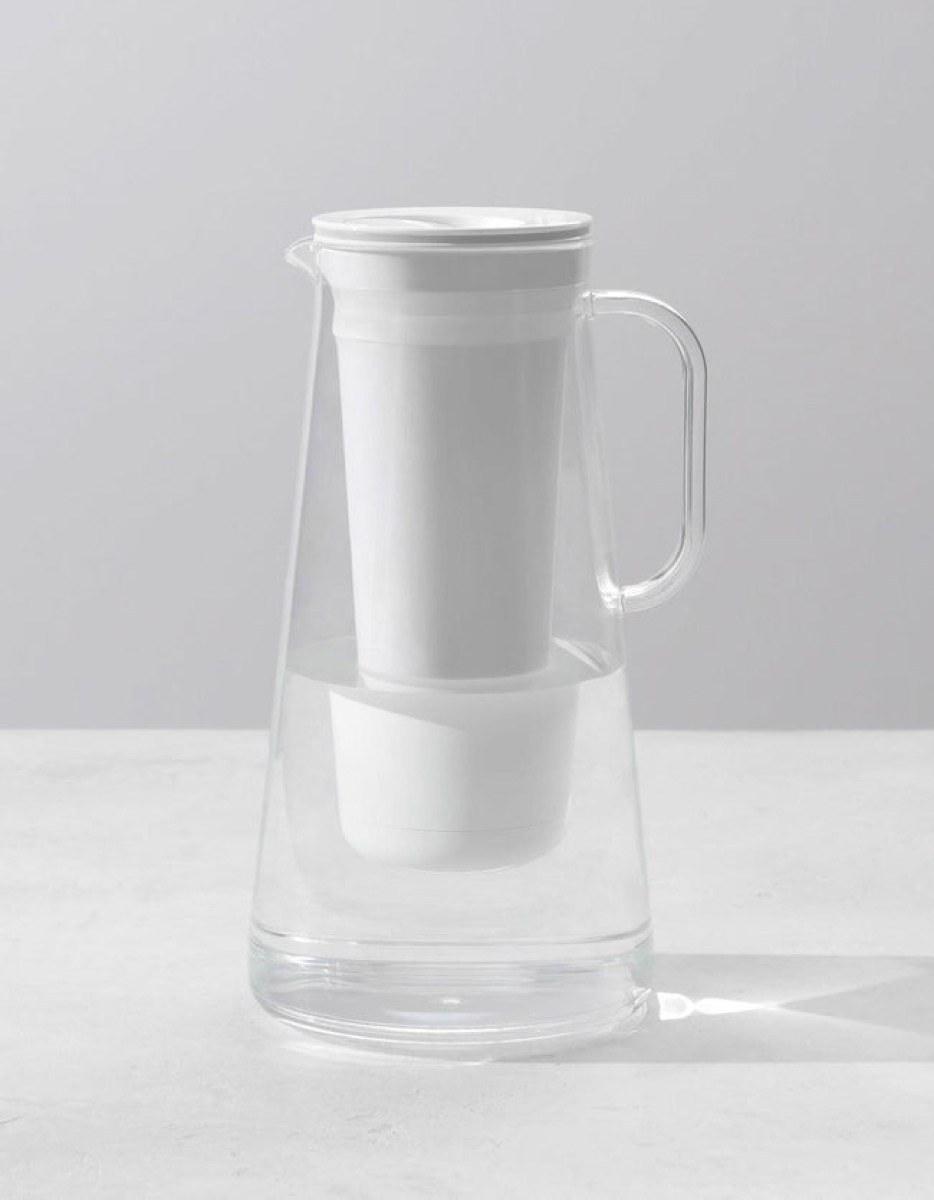
LifeStraw Home Pitcher
Sub-micron pitcher filter (0.2 micron) certified to remove microplastics, lead, chlorine, and bacteria. Best budget pick for renters and small kitchens — no installation needed.
As an Amazon Associate I earn from qualifying purchases — at no extra cost to you. We show a "Check price on Amazon" link rather than a number because Amazon prices change often.
Why it's safe for your family
- Uses a 0.2 micron hollow-fiber membrane, a physical pore size small enough to block bacteria, parasites and microplastic particles rather than relying on adsorption.
- A second stage of activated carbon and ion exchange handles what a membrane cannot — lead, mercury, chlorine, PFAS, herbicides and pesticides.
- LifeStraw states the Home line is tested to NSF/ANSI standards 42, 53 and 401 and to protocols P231 and P473, and reports 99.999% microplastic removal.
- It requires no installation and no power — the same membrane technology as their field filters, in a pitcher for a rental kitchen.
Quick specs
What to avoid instead
This replaces a standard carbon-only pitcher. Those improve taste and reduce chlorine but have no membrane, so they are not a physical barrier to microplastic particles, bacteria or cysts.
How we verify — and what we don't
Straight answer: we're a research team, not a testing lab. Here's exactly what our rating is based on — and what it isn't — so you can weigh it honestly.
What we check
- What the product is made of, from the maker's own specs and product listing.
- Whether any part that touches you or your food uses PTFE, PFAS, plastic, or a coating that can degrade.
- Peer-reviewed research on how that material behaves when heated, scratched, washed, or worn.
- Known failure modes — how the product actually breaks down in a real home.
What we don't do
- We have not chemically tested this specific unit in a lab.
- We don't take payment to rate a product higher — there is no sponsored placement.
- We don't show star ratings or "trusted by thousands" counts we can't stand behind.
Anything that adds a known microplastic, PFAS, or off-gassing source — a non-stick coating, a plastic surface against food or skin, vinyl/PVC — is downgraded or cut. We only list what clears that bar.