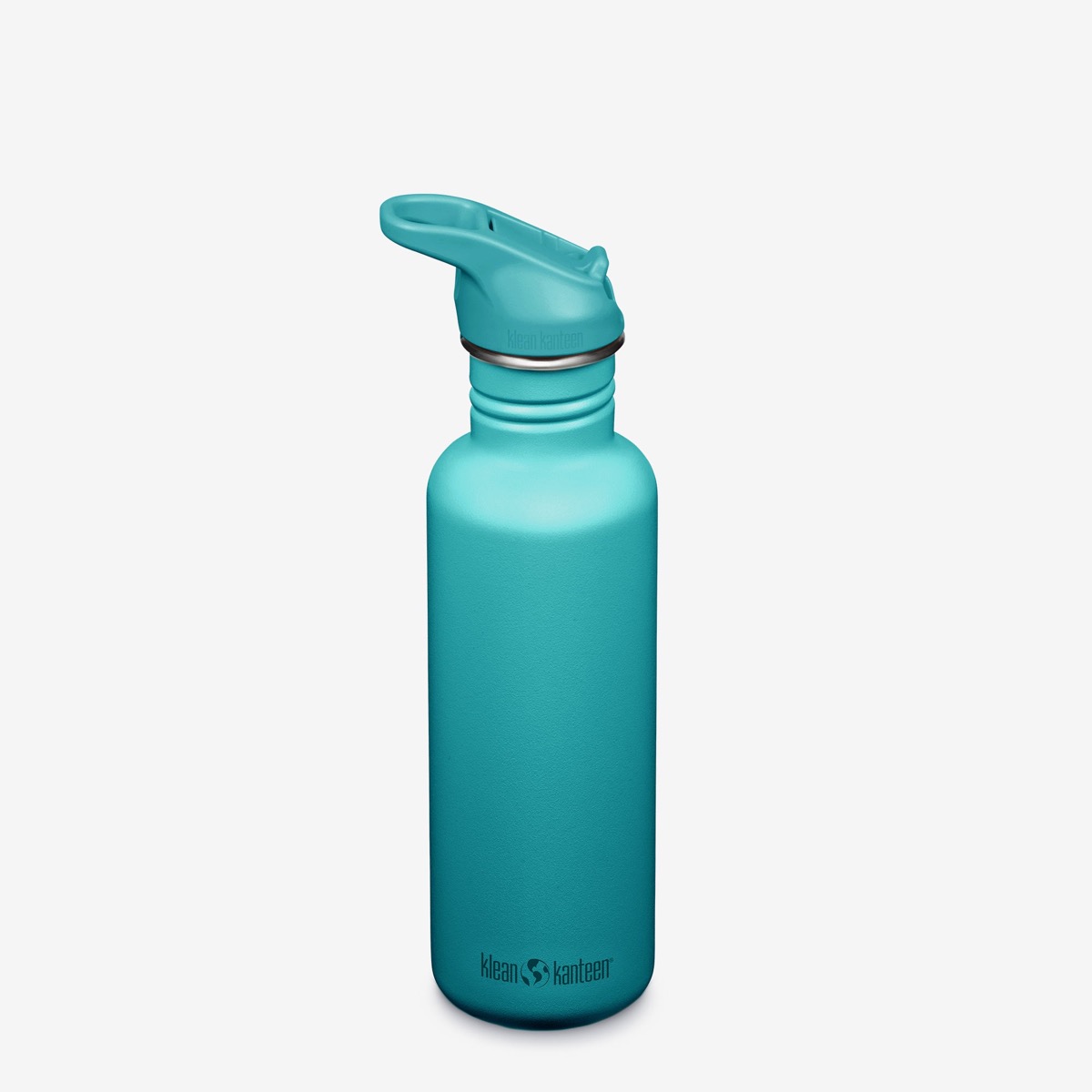
Klean Kanteen Classic 27oz
18/8 food-grade stainless steel interior — no plastic liner, no BPA, no coating that degrades. Research shows plastic bottles can release up to 240,000 microplastic particles per liter. Read more in our water bottle guide.
As an Amazon Associate I earn from qualifying purchases — at no extra cost to you. We show a "Check price on Amazon" link rather than a number because Amazon prices change often.
Why it's safe for your family
- The interior is bare 18/8 stainless steel — there is no plastic liner and no coating on the surface your water touches, so there is nothing that can flake, leach or break down over time.
- Klean Kanteen makes the Classic body from certified 90% post-consumer recycled 18/8 stainless steel, the same food-grade alloy used in commercial kitchens.
- Single-wall construction means one solid piece of steel — no seams, no inner bladder, and no gap where a plastic component could hide.
- The exterior Klean Coat finish is on the outside of the bottle only. It never contacts what you drink.
Is this really plastic-free? Yes — and here's why
A water bottle only leaches if something is dissolved in, coated on, or lining the surface holding your water. This one is a single wall of 18/8 stainless steel with a bare interior — a solid metal alloy, not a polymer. There is no liner to degrade and no coating on the drinking surface to scratch off.
What touches your water: bare food-grade stainless steel. The exterior color finish is applied to the outside only.
Quick specs
What to avoid instead
Single-use and reusable plastic bottles are the swap this replaces. Polyethylene terephthalate (PET) and polycarbonate bottles shed particles into the water they hold, and that shedding increases with heat, age, sunlight and repeated reuse — exactly how a bottle you refill gets treated.
A 2024 Columbia University study using a new laser-imaging method counted roughly 240,000 detectable plastic fragments per liter in common bottled water, around 90% of them nanoplastics small enough to cross into cells and tissue — about 10 to 100 times more particles than earlier methods had found. (source)
How we verify — and what we don't
Straight answer: we're a research team, not a testing lab. Here's exactly what our rating is based on — and what it isn't — so you can weigh it honestly.
What we check
- What the product is made of, from the maker's own specs and product listing.
- Whether any part that touches you or your food uses PTFE, PFAS, plastic, or a coating that can degrade.
- Peer-reviewed research on how that material behaves when heated, scratched, washed, or worn.
- Known failure modes — how the product actually breaks down in a real home.
What we don't do
- We have not chemically tested this specific unit in a lab.
- We don't take payment to rate a product higher — there is no sponsored placement.
- We don't show star ratings or "trusted by thousands" counts we can't stand behind.
Anything that adds a known microplastic, PFAS, or off-gassing source — a non-stick coating, a plastic surface against food or skin, vinyl/PVC — is downgraded or cut. We only list what clears that bar.