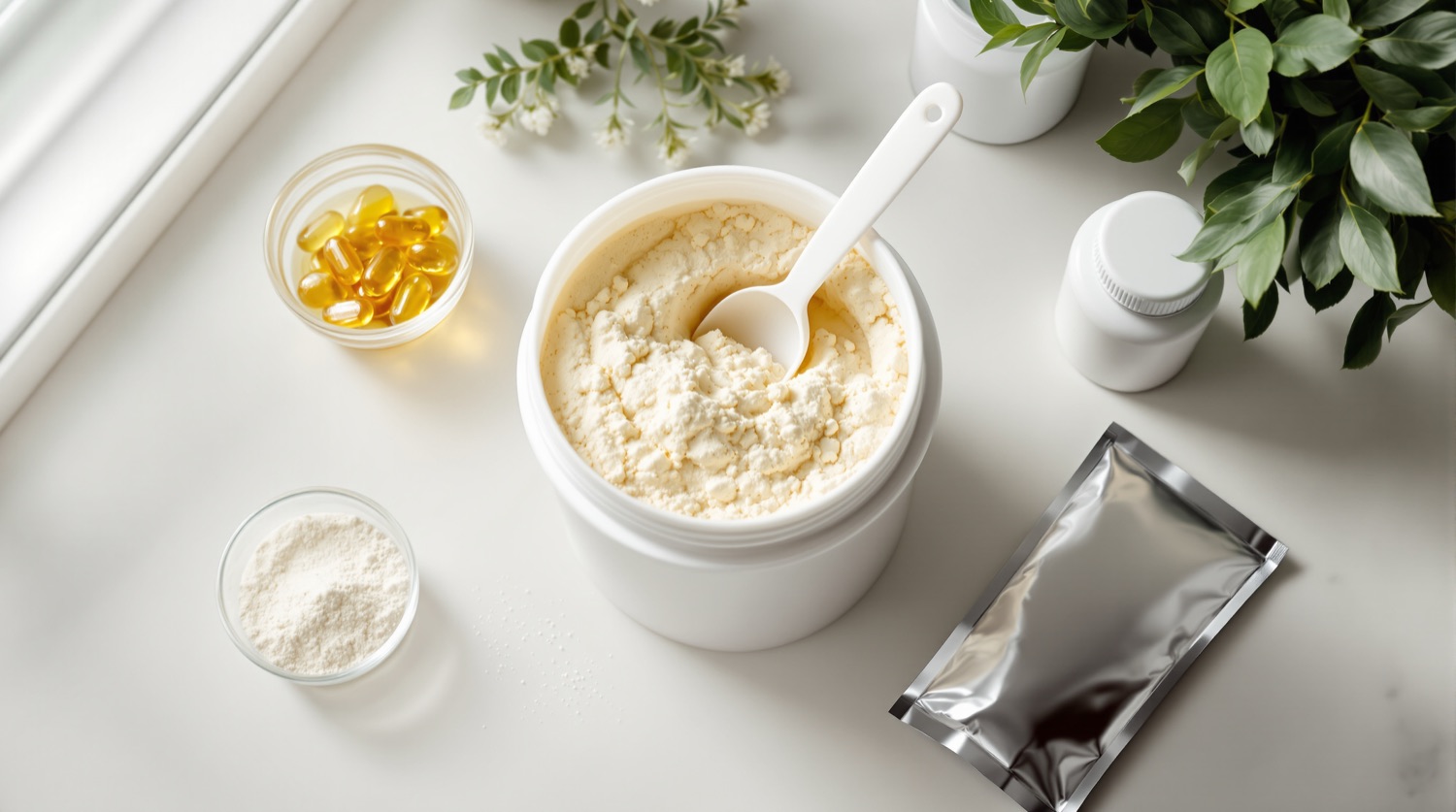
Supplements occupy an odd blind spot. They are the one category of food people buy specifically to be healthier, they are consumed daily for years at a time, and until very recently nobody had looked at whether they carry the same plastic burden as the rest of the grocery store. The products are also unusually processed — milled, extracted, dried, blended, conveyed, encapsulated and sealed — and every one of those steps happens on or inside plastic equipment.
Three peer-reviewed measurements have now been published, covering the three formats most people actually take: protein powder, fiber supplements and omega-3. They were done by different groups, on different continents, with different instruments. They agree. For a focused, plain-language walkthrough of the protein-powder finding — and the shaker and packaging swaps that cut it — see does protein powder have microplastics.
Bottom line: every supplement tested in the published literature so far has contained microplastics, at roughly 6 to 8 particles per daily serving for powders and about 10.6 particles per gram of oil for fish-oil capsules. The contamination tracks the manufacturing, not the ingredient — the same omega-3 oil measured nearly five times cleaner before it was put into a capsule. No study has shown a health effect at these levels, and the honest framing is that a daily scoop adds less plastic than a liter of hot coffee does.
Do Supplements Contain Microplastics?
In every published test, without a single clean sample. That is unusual. Most microplastic surveys of a food category find a spread, with some brands clean and some contaminated. The supplement studies did not find that spread. Chen and colleagues detected particles in all 30 sports protein supplements they analyzed. Panneerselvan and colleagues found fibers and fragments in all nine fiber supplements. Kim and colleagues found them across every omega-3 group they measured, raw oils included.
The particles are also consistent in character. Across all three studies the dominant shapes were fibers and fragments, and the dominant polymers were polyamide, polyethylene, polypropylene and polyethylene terephthalate — nylon, the two commodity plastics used in conveying and packaging film, and the plastic bottles and strapping are made from. A 2026 review in Toxics covering supplements, medicinal herbs, plant-based drinks, honey, infant formula and clinical nutrition products reports the same signature across all of them.
What Three Studies Measured in Supplements
Every figure is taken directly from the paper named in that row — Chen et al. in Environmental Research (2026), Panneerselvan et al. in Environmental Pollution (2024) and Kim et al. in Foods (2024), all cited in full at the foot of this page. Nothing here is estimated.
| Product tested | Samples | Positive | Measured load | Main polymers |
|---|---|---|---|---|
| Sports protein powder | 30 | 2–19 particles per 30 g serving (mean 8 ± 5) | PE, PP, PET | |
| Dietary fiber supplements | 9 | 5.89 ± 2.89 particles per day at the labeled adult dose | Polyamide, polyurethane, PET, PE | |
| Omega-3 — capsule oil (animal) | 14 | 10.6 ± 8.9 particles per gram of oil | PP, PET (83–95%) | |
| Omega-3 — raw oil (animal) | 12 | 2.2 ± 1.7 particles per gram of oil | PP, PET (83–95%) | |
| Omega-3 — capsule oil (plant) | 7 | 3.5 ± 3.9 particles per gram of oil | PP, PET (83–95%) | |
| Omega-3 — raw oil (plant) | 2 | 1.2 ± 1.7 particles per gram of oil | PP, PET (83–95%) |
Where Does the Plastic Come From — the Ingredient or the Factory?
The factory. This is the single most useful thing in the whole body of research, and it comes from the omega-3 study, which was designed to answer exactly this question. Kim and colleagues bought both raw bulk oils and finished capsules, from both fish-derived and plant-derived sources, and ran them through the same micro-Raman analysis. If the plastic were coming in with the raw material — from contaminated ocean water, say — the fish oils would have been dirtier than the plant oils regardless of format.
That is not what happened. The split fell along format, not source. Animal-based oil went from 2.2 particles per gram in bulk to 10.6 once encapsulated. Plant-based oil went from 1.2 to 3.5. The authors' own conclusion, in their words, is that “the main reason for the MP contamination of omega-3 oil is not the source of raw material but the manufacturing and packaging process.”
The fiber study points the same way from a different angle: powder-based products carried more particles than the gummy-based one at the manufacturer's own adult dose. A powder serving is several grams of milled, blended, conveyed and poured material; a gummy is a small molded piece. More processing steps and more mass through the line means more chances to pick up a nylon fiber from a sieve or a conveyor belt.
How Much Plastic Is That, Really?
Worth putting next to numbers you already have. A 2025 Science of the Total Environment survey of 155 beverages on the UK market measured 43 ± 14 particles per liter in hot coffee and 60 ± 21 in hot tea. Against that, one 30 gram protein scoop at the study mean of 8 particles, or a fiber serving at 5.89, is a minor line item.
A Daily Supplement Serving Against Other Measured Sources
Figures from the studies cited at the foot of this page. The supplement rows are per labeled serving; the beverage rows are per liter, which is about four mugs.
| Source | Measured microplastics | Over a year of daily use |
|---|---|---|
| Hot tea, UK market average | 60 ± 21 per liter | — |
| Hot coffee, UK market average | 43 ± 14 per liter | — |
| Fish-oil capsules, 2 g of oil a day | about 21 particles | about 7,700 particles |
| Protein powder, one 30 g scoop | 8 ± 5 particles | about 2,900 particles |
| Fiber supplement, labeled adult dose | 5.89 ± 2.89 particles | about 2,150 particles |
| Soft drinks, UK market average | 17 ± 4 per liter | — |
The two capsule and annual columns are our arithmetic on the studies' own per-gram and per-serving figures, not numbers the papers published. We have labeled them that way on purpose. The beverage figures also carry a useful whole-diet anchor from the same paper: across every drink they measured, the authors estimated total intake at 1.7 microplastic particles per kilogram of body weight per day for women and 1.6 for men.
So the order of operations is clear. If you are going to spend effort anywhere, spend it on what you drink and what your food is packaged in before you spend it on the supplement cabinet. Our ranked guide to the best water filters for microplastics is the single highest-leverage change on this site.
What About the Heavy Metals in Protein Powder?
The 2026 protein study measured those in the same samples, and they are arguably the more concrete finding. Every one of the 30 products contained at least one of arsenic, cadmium, lead or mercury. Plant-derived powders averaged more lead (0.18 mg/kg) and cadmium (0.05 mg/kg) than dairy-derived ones (0.06 and 0.01 respectively), a difference the authors report as statistically significant. One brown rice and cocoa flavored product was a clear outlier at 0.60 mg/kg lead, 0.15 cadmium and 0.30 arsenic.
Their risk modeling put the hazard index — a standard ratio where anything under 1 is considered acceptable — at 0.45 for a 30 gram daily serving and 0.90 at 90 grams a day, driven mainly by arsenic and cadmium. A Monte Carlo simulation of 10,000 scenarios put the 95th percentile at 1.28 under heavy-use conditions. Predicted blood lead increases stayed below 3 micrograms per deciliter throughout. In plain terms: a normal scoop is comfortably inside the margin, three scoops a day of a plant-based powder is where the margin starts to disappear.
Which Supplement Format Measures Lowest?
Only one swap in this whole subject has a direct measurement behind it, and it is the omega-3 one: the same oil, taken as a liquid rather than inside a softgel, measured roughly a fifth of the particles. That is the honest extent of what the evidence supports. It does not say that any particular brand is cleaner than another — no supplement maker publishes microplastic testing, and we are not going to pretend otherwise — and it does not say anything at all about protein or fiber, where no low-measuring format has been identified yet.
Both products below are widely available liquid fish oils, which is the format the data favors. We have listed only specifications that appear on the manufacturer's own label. We could not verify the bottle material for either one from a primary source, so we are not claiming it.
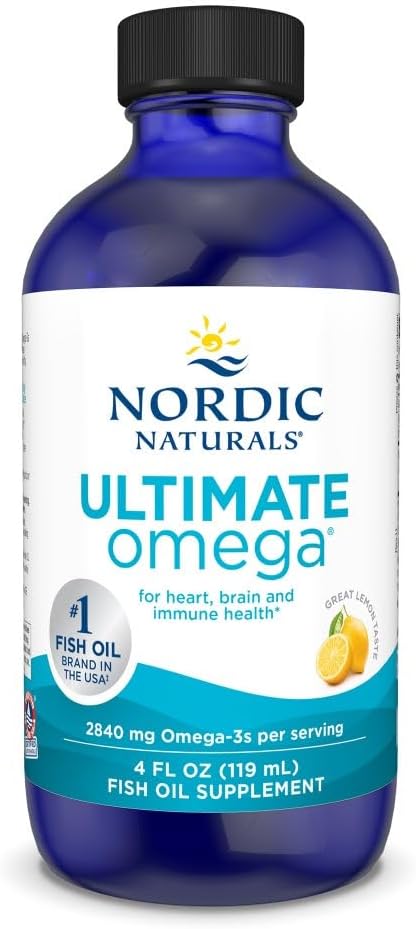 Liquid, Small Bottle
Pros
- Liquid format — no capsule shell in the process
- High dose per teaspoon, so fewer servings to take
- Small bottle size suits a single user
Cons
- No microplastic testing published by the maker
- Bottle material not stated on the listing
- Liquid oil needs refrigerating once opened
The format the data favors, in a size one person can finish.
Why it matters: in the 2024 Foods measurements, the same class of oil carried 2.2 particles per gram in bulk and 10.6 once it had been through encapsulation. The capsule step is where the count climbed.
Check Today’s Price on Amazon →Amazon prices change daily — tap to see today’s price and any current discount.
- Free delivery for Prime members
- Tens of thousands of reviews
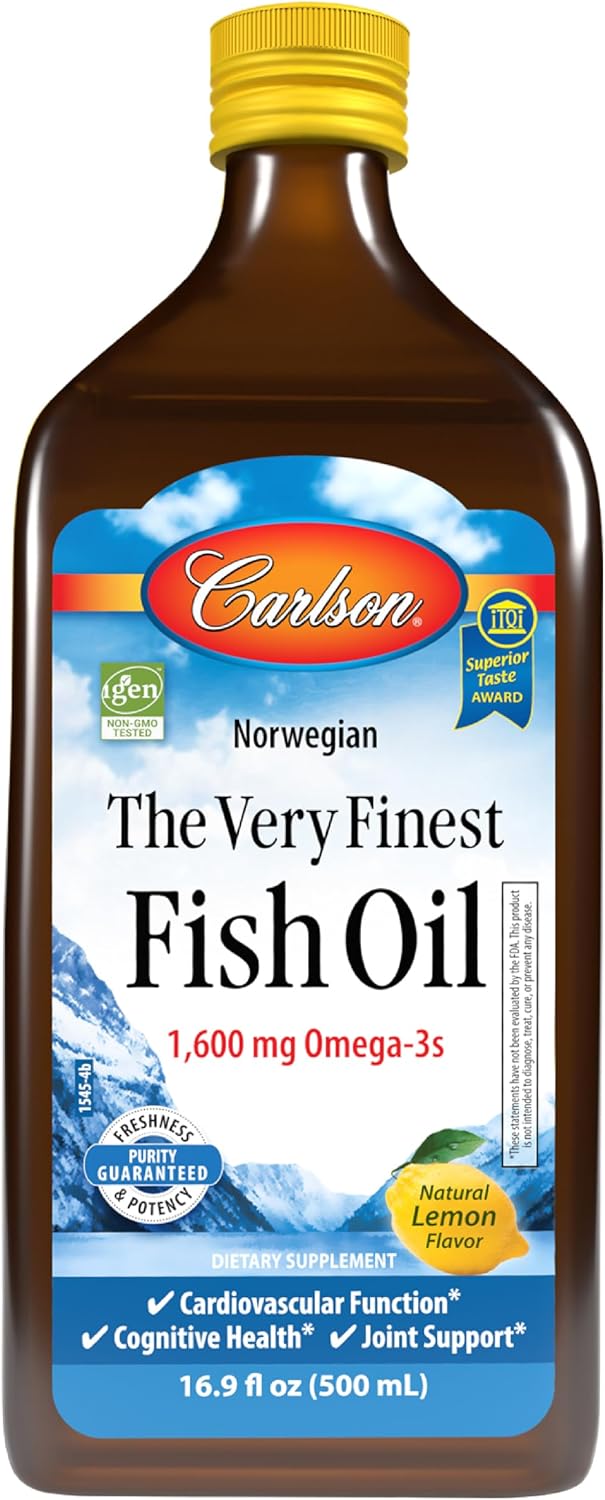 Liquid, Household Size
Pros
- Liquid format — no capsule shell in the process
- Third-party IFOS and IGEN certification
- Household size for more than one person
Cons
- No certification on the market covers microplastics
- Bottle material not stated on the listing
- A large bottle takes longer to finish once opened
Same format swap, sized for a household rather than one person.
Why it matters: the format is the part the evidence speaks to. Nothing about the brand, the fishery or the certification has been measured for plastic by anyone.
Check Today’s Price on Amazon →Amazon prices change daily — tap to see today’s price and any current discount.
- Free delivery for Prime members
- IFOS and IGEN certified
What We Are Not Claiming
None of these studies measured a health outcome, and none of them tested a product bought in the United States. The protein work was done on products sold in China, the fiber work in Australia, the omega-3 work in Korea. Supply chains are global and the manufacturing equipment is much the same everywhere, which is why we think the findings travel — but a reader is entitled to know that no American brand has been tested, and we are not going to imply otherwise.
We are also not claiming a risk. The most recent review of dietary microplastic exposure in athletes, published in Nutrients in 2026, works through the plausible mechanisms — intestinal barrier disruption, microbiota changes, oxidative stress — and then states its own conclusion plainly: these implications “should be interpreted as biologically plausible but unproven,” because direct studies in human populations do not yet exist. That is the correct summary and we are not going to upgrade it. What is measured is the exposure. The consequence is still an open question, and anyone telling you otherwise is ahead of the data.
If you want the fuller picture of what is and is not established about particle exposure in the body, we keep that in how dangerous microplastics actually are and microplastics in the human body.
Frequently Asked Questions
Do dietary supplements contain microplastics?
Every peer-reviewed test published so far has found them. A 2026 Environmental Research study of 30 sports protein supplements detected microplastics in all 30, at 2 to 19 particles per 30 gram serving (mean 8 plus or minus 5). A 2024 Environmental Pollution study of nine over-the-counter dietary fiber supplements found microplastic fibers and fragments in all nine. A 2024 Foods study of omega-3 products found them across raw oils and capsules alike. Three studies, three product categories, zero clean samples.
How many microplastic particles are in a scoop of protein powder?
Between 2 and 19 per 30 gram serving, averaging 8, in the 30 products measured by Chen and colleagues in Environmental Research in 2026. Roughly 40 to 50 percent of the particles were fibers and about 30 percent were fragments, typically 100 to 500 micrometers across, made of polyethylene, polypropylene and polyethylene terephthalate. One scoop a day works out to roughly 2,900 particles a year from that single source.
Do fish-oil capsules have more microplastics than liquid fish oil?
In the one study that measured both, yes, by a wide margin. Kim and colleagues, publishing in Foods in 2024, measured 10.6 microplastic particles per gram in animal-based capsule oil against 2.2 per gram in animal-based raw oil - nearly five times as many. Plant-based products showed the same direction: 3.5 per gram in capsules against 1.2 in raw oil. The authors concluded that the contamination comes from the manufacturing and packaging process, not from the fish or the plant.
Are powder supplements worse than gummies?
In the fiber study, yes. Panneerselvan and colleagues found that powder-based fiber supplements carried more microplastics than the gummy-based product at the manufacturer's own recommended adult dose. The likely reason is dose mass: a powder serving is several grams of material that has been milled, blended, conveyed and poured, while a gummy serving is a small piece that has been molded. More handling and more mass means more opportunities to pick up fibers.
Is the heavy metal content of protein powder a bigger problem than the plastic?
The same 2026 study measured both and modeled the risk. Every one of the 30 protein products contained at least one of arsenic, cadmium, lead or mercury. Plant-derived powders averaged more lead (0.18 mg/kg) and cadmium (0.05 mg/kg) than dairy-derived ones (0.06 and 0.01). The hazard index, driven mainly by arsenic and cadmium, came out at 0.45 for a 30 gram daily serving and 0.90 at 90 grams a day - under the threshold of 1, but not by much at heavy-use levels.
Should I stop taking supplements because of microplastics?
Nothing in this research supports that. No study has measured a health outcome from the particle levels found in supplements, and a 2026 Nutrients review of dietary microplastic exposure in athletes states plainly that the implications are 'biologically plausible but unproven.' What the data does support is choosing the lower-measuring format where one exists - liquid oil over capsules, a whole-food protein source over a daily scoop where that is practical - and spending your attention on the larger exposure routes first.
Sources
- Chen M, Dong R, Lai W. “Heavy metal and Microplastic exposure from sports protein Supplements: Integrated health risk modeling and scenario analysis.” Environmental Research 2026; 295:123988. https://doi.org/10.1016/j.envres.2026.123988 (PubMed PMID 41655677). Source of the 30-sample protein powder counts, the polymer and shape breakdown, and all heavy-metal and hazard-index figures.
- Panneerselvan L, Raghuraman Rengarajan HJ, Kandaiah R, Bhagwat-Russell G, Palanisami T. “Fibrous foes: First report on insidious microplastic contamination in dietary fiber supplements.” Environmental Pollution 2024; 363:125248. https://doi.org/10.1016/j.envpol.2024.125248 (PubMed PMID 39510303). Source of the nine-sample fiber supplement results, the 5.89 particles per day figure and the powder-versus-gummy comparison.
- Kim M, Kim J, Park S, Kim D, Jung J, Cho D. “Determination of Microplastics in Omega-3 Oil Supplements.” Foods 2024; 13(10):1434. https://doi.org/10.3390/foods13101434 (PubMed PMID 38790734). Source of every raw-oil and capsule-oil particle count and of the conclusion that manufacturing and packaging, not the raw material, drives the contamination.
- Kadac-Czapska K, Ośko J, Jażdżewska K, Grembecka M. “Microplastics in Foods Intended for Health Purposes: From Dietary Supplements to Clinical Nutrition Products.” Toxics 2026; 14(6):514. https://doi.org/10.3390/toxics14060514 (PubMed PMID 42347412). Review establishing the shared fiber-and-fragment signature and the polyamide, PE, PP and PET polymer profile across health-purpose foods.
- Meccariello R, Tafuri MG, D’Angelo S. “Dietary Microplastic Exposure in Athletes: Implications for Metabolism, Gut Health, and Performance.” Nutrients 2026; 18:2398. https://doi.org/10.3390/nu18142398 (PubMed PMID 42514468). Source of the “biologically plausible but unproven” assessment quoted above.
- Al-Mansoori M, Harrad S, Abdallah MA-E. “Synthetic microplastics in hot and cold beverages from the UK market: Comprehensive assessment of human exposure via total beverage intake.” Science of the Total Environment 2025; 996:180188. https://doi.org/10.1016/j.scitotenv.2025.180188. Source of the hot coffee, hot tea and soft drink comparison figures and the per-kilogram body weight intake estimate.