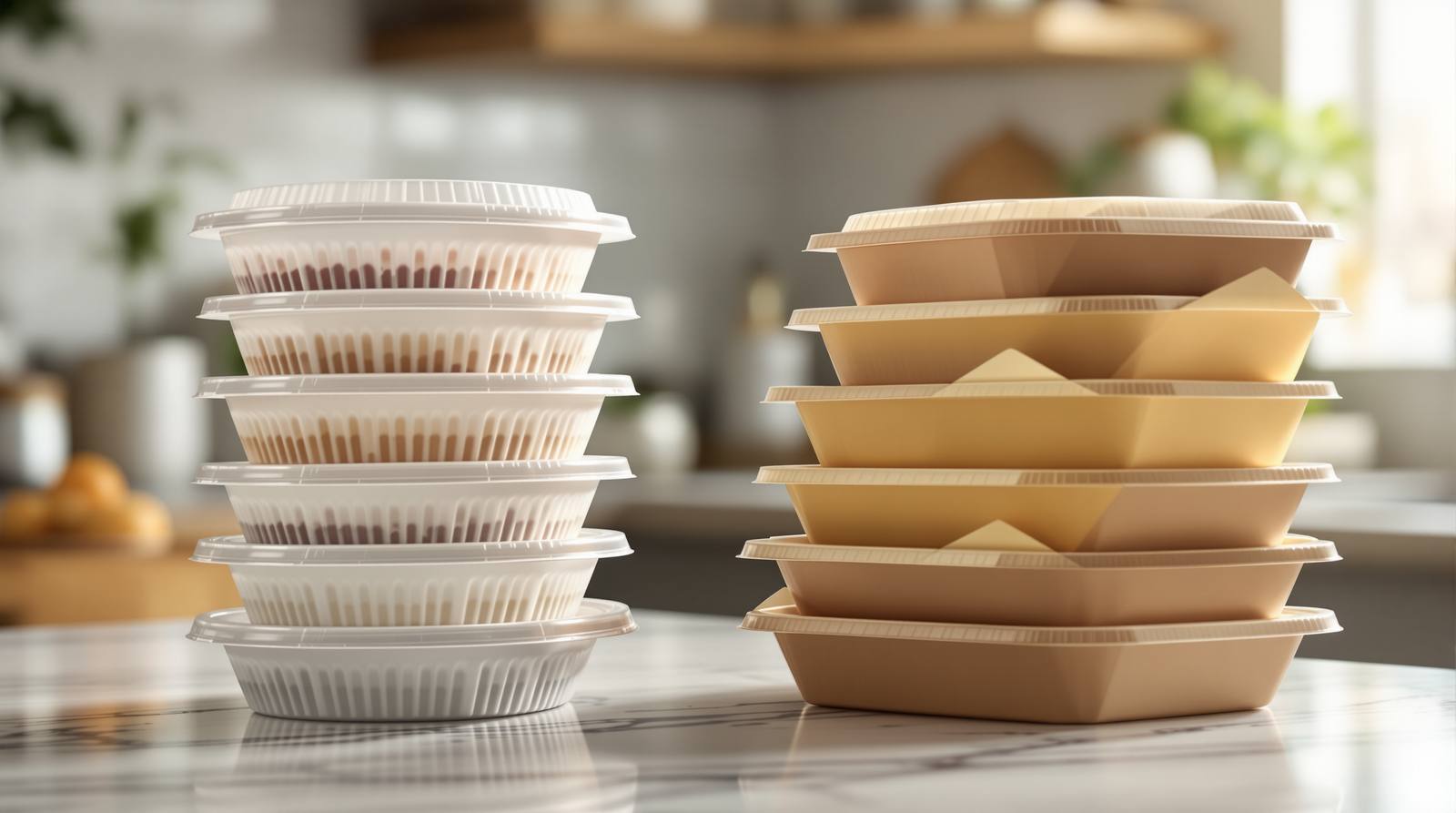
Yes — take-out food containers shed microplastics into the food they hold. A study published in the Journal of Hazardous Materials tested containers made of polypropylene, polystyrene, polyethylene, and PET and found microplastics in every one — between 3 and 29 particles per container, with polystyrene foam shedding the most. The researchers estimated that people who order take-out 4–7 times a week may ingest roughly 12 to 203 microplastic particles per week from the containers alone. Flushing a container after soaking it in hot water released more particles, so a steaming, greasy meal is the worst case. The caveat: the study measured how much plastic is released, not what it does to your body. The reassuring part is that this is one of the easiest sources to remove — transfer your food into glass or steel and the container never touches your meal.
A take-out container looks like inert packaging, but think about what it actually does: it holds hot, oily, sometimes acidic food, pressed against a thin plastic wall, often for the whole car ride home. Then a lot of people put the entire container in the microwave. Heat, grease, and acidity are exactly the conditions that make plastic shed fastest — which is why the humble clamshell has become one of the most-studied sources of dietary microplastics.
Researchers put numbers on it, and the picture is consistent with what we already know about heat and plastic: the hotter the food, the more particles come loose from the container. This guide walks through what the study found, whether the amounts are worth worrying about (the honest answer is calmer than the headlines), and the simple swaps that keep take-out plastic out of your food.
The bottom line up front: every take-out container tested shed microplastics into food — more when the food was hot — and foam polystyrene shed the most. It's a real, measurable source, and unlike many it's easy to fix: transfer takeout into glass or steel, never microwave the container, and filter your drinking water. See our ranking of which foods have the most microplastics, our explainer on microplastics in food packaging, and the room-by-room kitchen plastic detox guide.
Do takeout containers have microplastics?
Yes. A study published in the Journal of Hazardous Materials collected take-out containers made of the four common packaging plastics — polypropylene (PP), polystyrene (PS), polyethylene (PE), and PET — and analyzed what came off their inner surfaces. Every container held microplastics, ranging from about 3 to 29 particles per container. The particles came from two sources: flakes worn off the container's own inner walls and airborne plastic dust that settles in during handling.
The container material mattered. Polystyrene — the white foam clamshells and rigid PS boxes — shed the most, especially where the surface was rough. And the counts rose when researchers flushed a container after soaking it in hot water rather than cold, a preview of what happens when you pour a steaming meal into the box. Those particles end up in whatever you're eating: the food itself, the sauce, the last few bites you scrape from the corner. It's the same mechanism that makes microwaving food in plastic such a bad idea — heat plus a plastic surface equals shedding.
How do takeout containers release microplastics into food?
Two things do the work: friction and heat. The container's inner surface is soft plastic, and simply serving, scraping, and closing the lid abrades tiny flakes loose — which is why rough-surfaced foam sheds more than smooth PET. Then heat accelerates everything: in the study, flushing a container after hot-water immersion released more microplastics than a cold flush, because warmth softens the plastic and loosens its surface.
That's why a takeout box is a worse case than a cold storage tub. The food arrives hot, often oily and acidic — and oil and acid both pull plastic particles and additives out faster than plain water. Add the near-universal habit of microwaving the meal in its container, and you've stacked every shedding condition at once. The good news is the reverse is also true: move the food onto glass or ceramic before it's hot against plastic, and the mechanism has almost nothing to act on.
Which takeout containers are worst — and does microwaving make it worse?
Polystyrene is the one to avoid. Both the rigid black or clear PS boxes and the white foam clamshell shed the most microplastics in the study, and rough or scratched surfaces made it worse. Polypropylene tubs (the #5 containers used for soups, curries, and sides) shed less but still shed; PET and PE fell in between. No common takeout plastic tested clean.
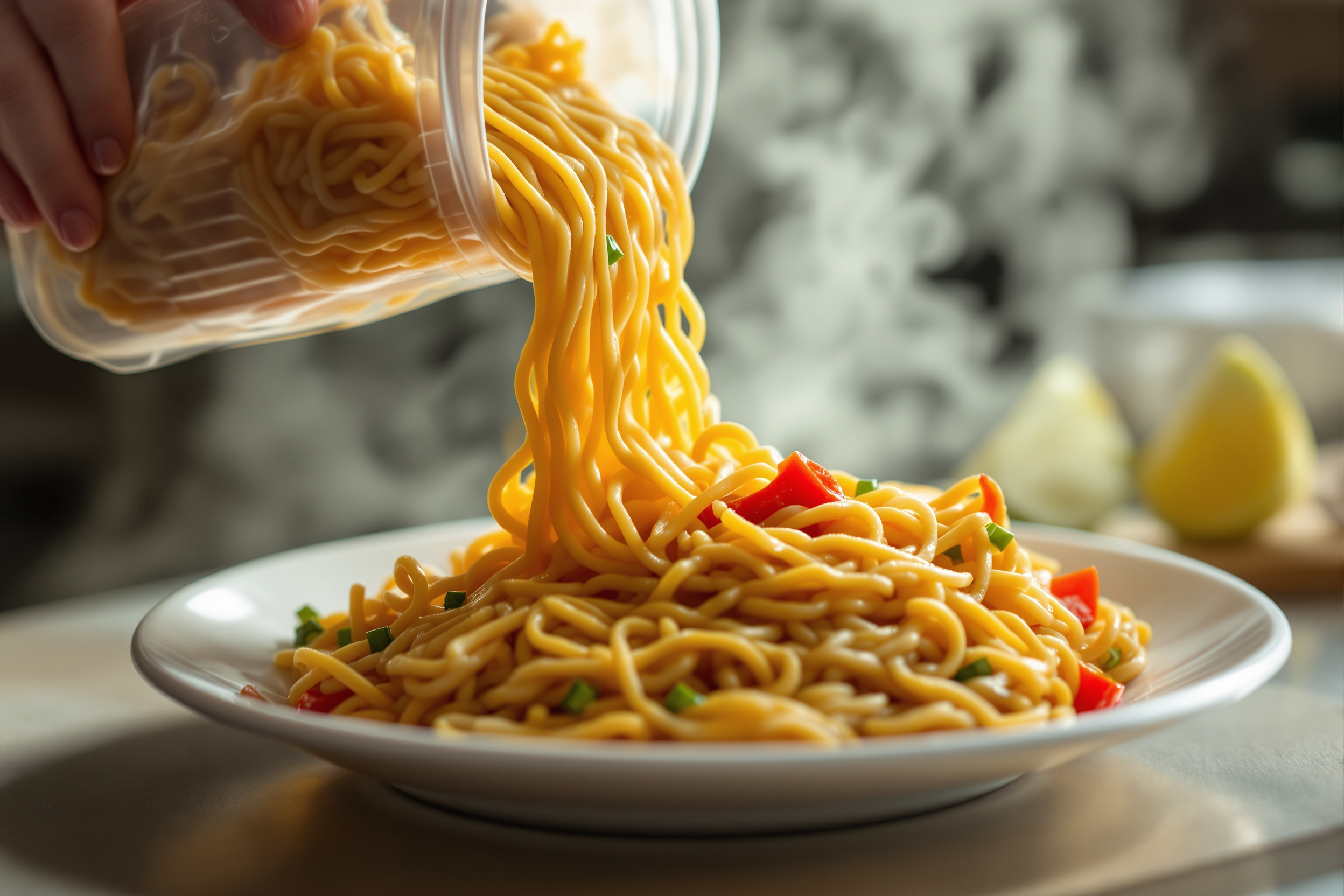
And yes — microwaving the container is the single worst thing you can do with it. Concentrated heat is exactly what drives plastic to shed, so nuking a meal in its takeout box maximizes the release. "Microwave-safe" only means the plastic won't warp or melt; it is not a promise that nothing migrates. The one habit that undoes most of the risk is boring but effective: tip the food onto a plate or into a glass dish first, every time.
"You don't have to give up takeout. You have to stop letting the container be the plate — transfer the food to glass or steel, and never microwave it in the box."
| Container Type | Microplastic Shedding | Notes |
|---|---|---|
| Polystyrene foam clamshell (#6) | Highest | Rough foam surface sheds the most; worst with hot, greasy food — the one to refuse |
| Rigid polystyrene box (#6) | High | Common for cold deli and bakery items; still a top shedder in the study |
| Polypropylene tub (#5) | Moderate | Soups and sides; sheds less than PS but far more when microwaved — never nuke it |
| Glass or stainless container (your own) | None | Inert surface — nothing to shed, and safe to reheat; transfer takeout into it |
Are the microplastics from takeout containers dangerous?
Here's where honesty matters. The particle counts are real, but the study measured how much plastic is released — not what those particles do once you swallow them. On the specific question of harm from container-shed microplastics, the science doesn't have a firm answer yet, and no one should read a health verdict into numbers that weren't designed to give one.
What we do know is broader: microplastics are increasingly detected throughout the human body, and researchers are still working out what that means. Against that backdrop the reasonable stance is proportion, not panic — one takeout dinner won't hurt you. But like the kitchen's other plastic sources, this one is cheap and easy to reduce. You don't have to prove the particles are harmful to decide that eating off a plate instead of out of a foam box is the better default.
You don't need to panic over last night's takeout. But of all the plastic sources in a kitchen, this is one of the simplest to cut: transfer the food onto a plate or into a glass dish, and never microwave the container. That's exactly the kind of high-leverage habit our kitchen plastic detox guide is built around.
How do you avoid microplastics from takeout?
Two moves cover most of it. First, take the plastic out of the meal: as soon as takeout arrives, tip it onto a plate or into a glass or stainless container, and never microwave food in the delivery box. For food you pick up regularly or meal-prep yourself, bring your own glass or steel container — the same fix that solves plastic in food packaging generally.
Second, clean up your drinking water, which is a separate and often larger microplastic source in the same kitchen. A pitcher that carries a specific microplastics claim (ideally NSF/ANSI P473 certification) cuts particle counts sharply; see the best water filter pitchers for microplastics. Between transferring your takeout and filtering your water, you've closed the two biggest gaps. The containers below are the simplest, longest-lasting way to make the transfer effortless.
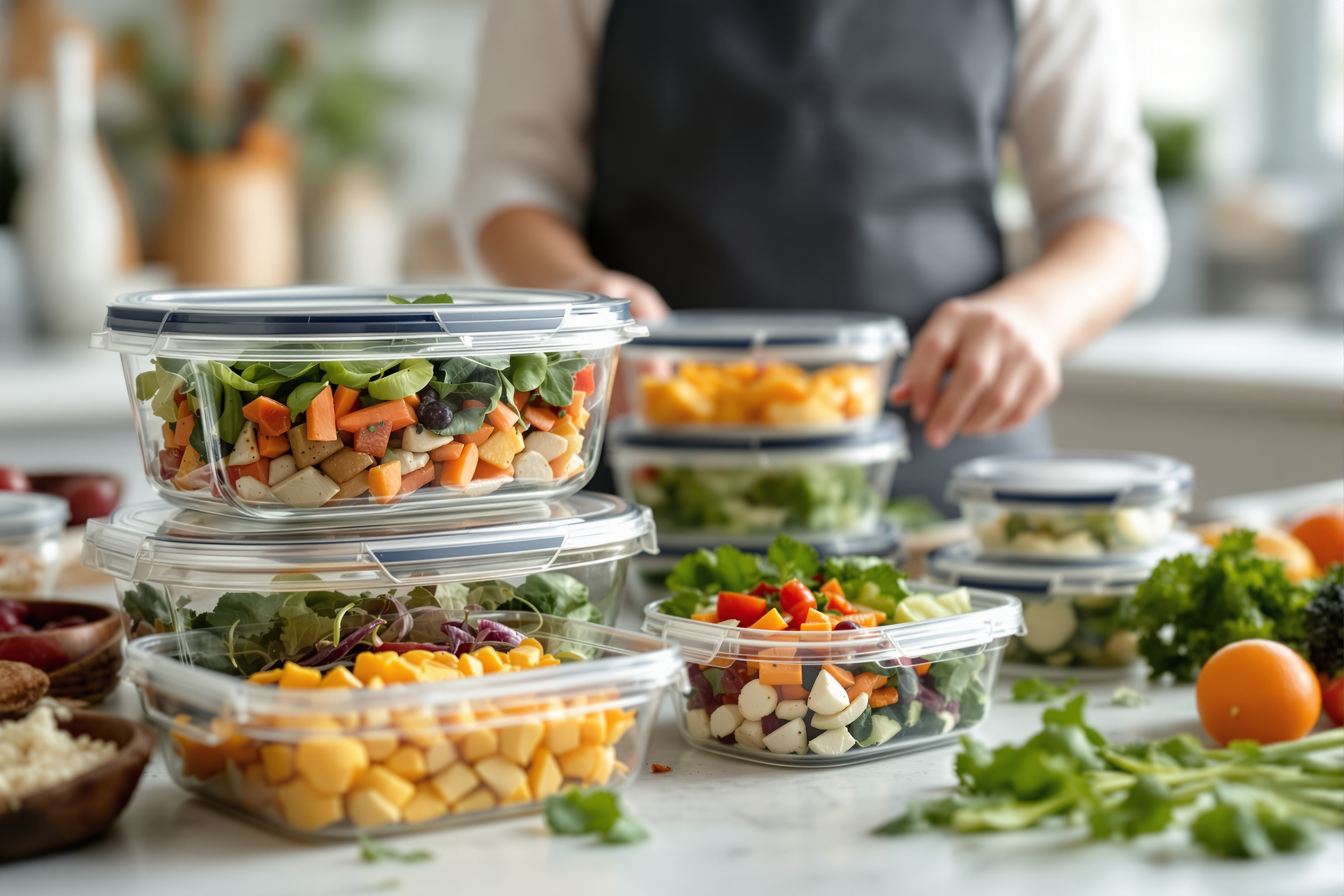
Stop letting the container be the plate
Takeout plastic is one of the easiest microplastic sources to cut. Transfer food into glass or steel, never microwave the box, and filter your water — simple swaps that stick.
The best glass and stainless-steel containers to replace plastic takeout
The fix for a shedding takeout box is somewhere inert to put the food — glass, stainless steel, or pure silicone that reheats safely and never sheds. Every product below is a real, currently-sold model: two glass containers you can reheat with the lid off, two stainless boxes that travel without breaking, and two silicone bags that replace disposable plastic for leftovers. Prices and availability change, so check current listings.
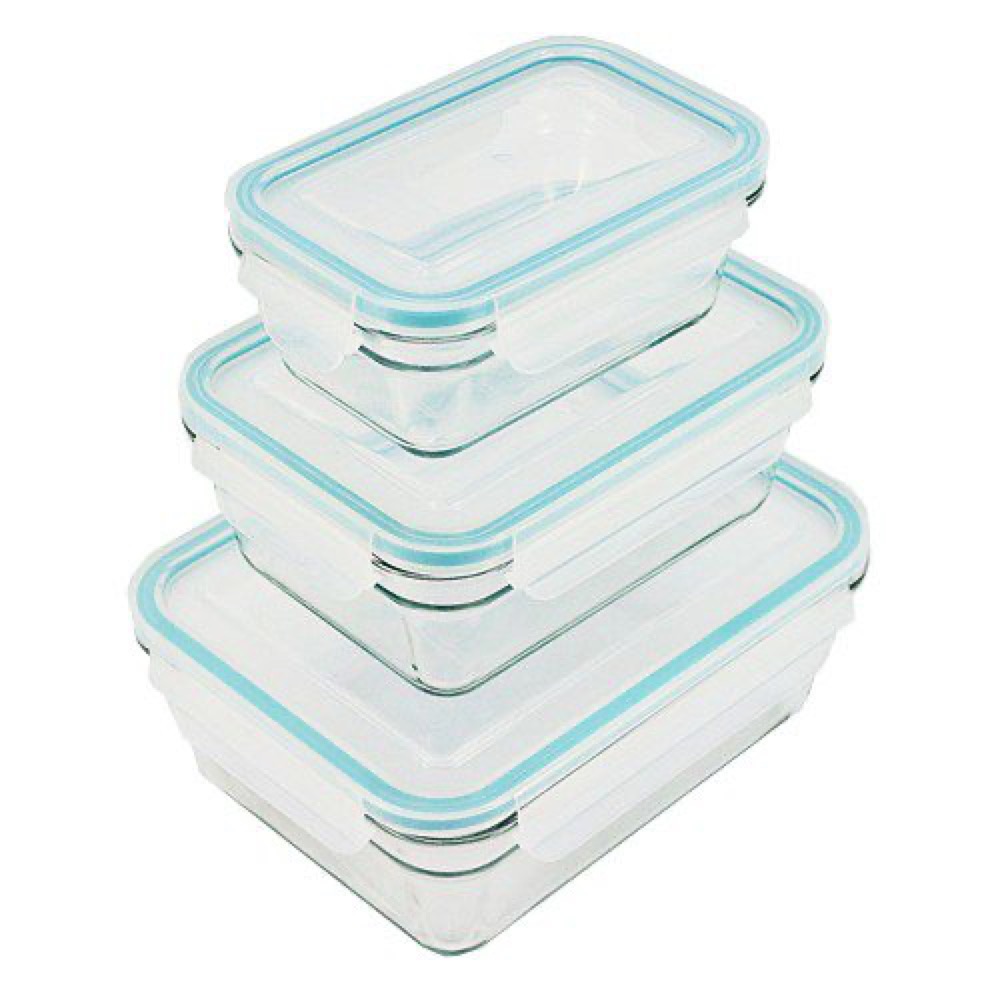
1. Glasslock Oven Safe Container Set (3-Pack) — Best Overall
 Best Overall
Three stackable glass containers in one box — enough to keep by the door so every delivery gets tipped out of its plastic box the moment it arrives.
Why it's safe: Food sits on inert tempered glass, not plastic — so reheating releases nothing. The BPA-free lids seal with a food-grade silicone gasket that only touches the rim.
Check Today's Price on Amazon →Amazon prices change daily — tap to see today's price and any active discount.
- Free delivery & returns for Prime members
- Sold & shipped by Amazon
- Thousands of verified reviews
Why it made the list: At roughly ten dollars per container, this is the most cost-effective way to keep a stack of glass ready for takeout night. The snap-lock lids with silicone gaskets provide genuine leak resistance for soupy curries and saucy noodles, and the glass bodies go straight from fridge to microwave with the lids removed. For the full lineup, see our guide to the best glass food storage containers.
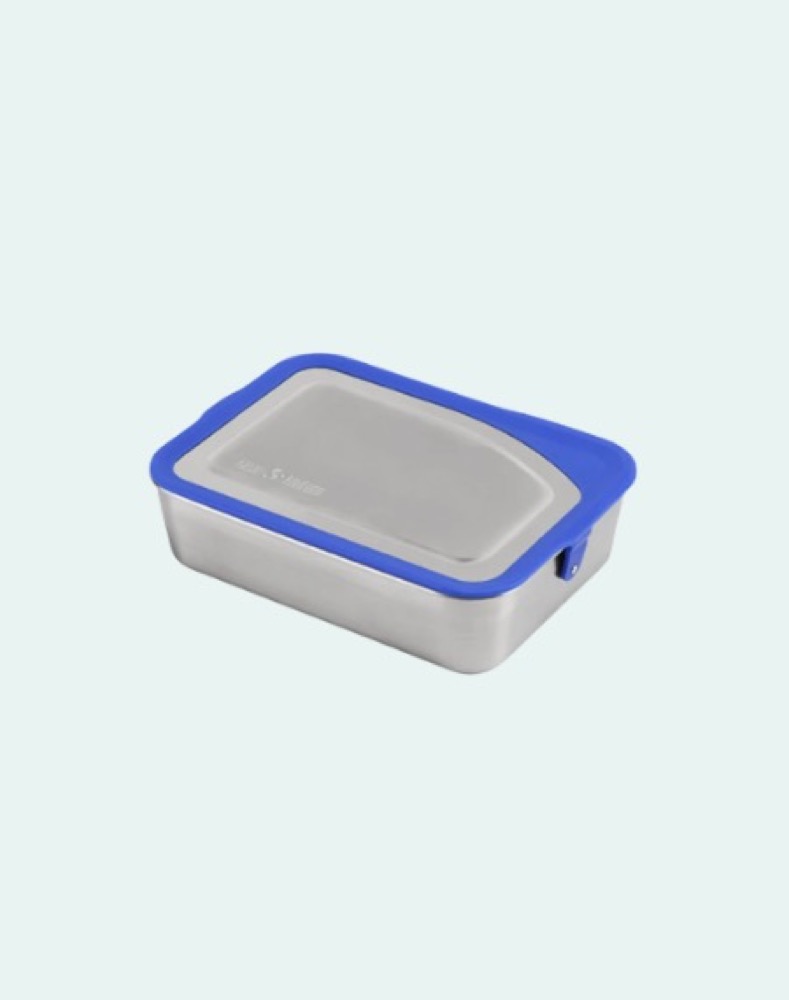
2. Klean Kanteen Meal Box 34oz — Best Stainless
 Best Stainless
Fits a full-size restaurant portion without bulk — and because it's steel, you can hand it across a takeout counter or pack it in a bag without worrying it shatters.
Why it's safe: The body is inert 18/8 stainless steel with no plastic touching food. The lid's leakproof seal comes from a food-grade silicone rim, not a plastic liner that could leach.
Check Today's Price on Amazon →Amazon prices change daily — tap to see today's price and any active discount.
- Free delivery & returns for Prime members
- Sold & shipped by Amazon
- Thousands of verified reviews
Why it made the list: Many stainless containers skew small; the 34oz Meal Box is the one that actually holds an adult meal. It's the pick for people who pick up takeout in person — hand the box over for your entree, or pack it for leftovers — because steel travels without breaking. For more, see our roundup of the best non-toxic lunch containers for adults.
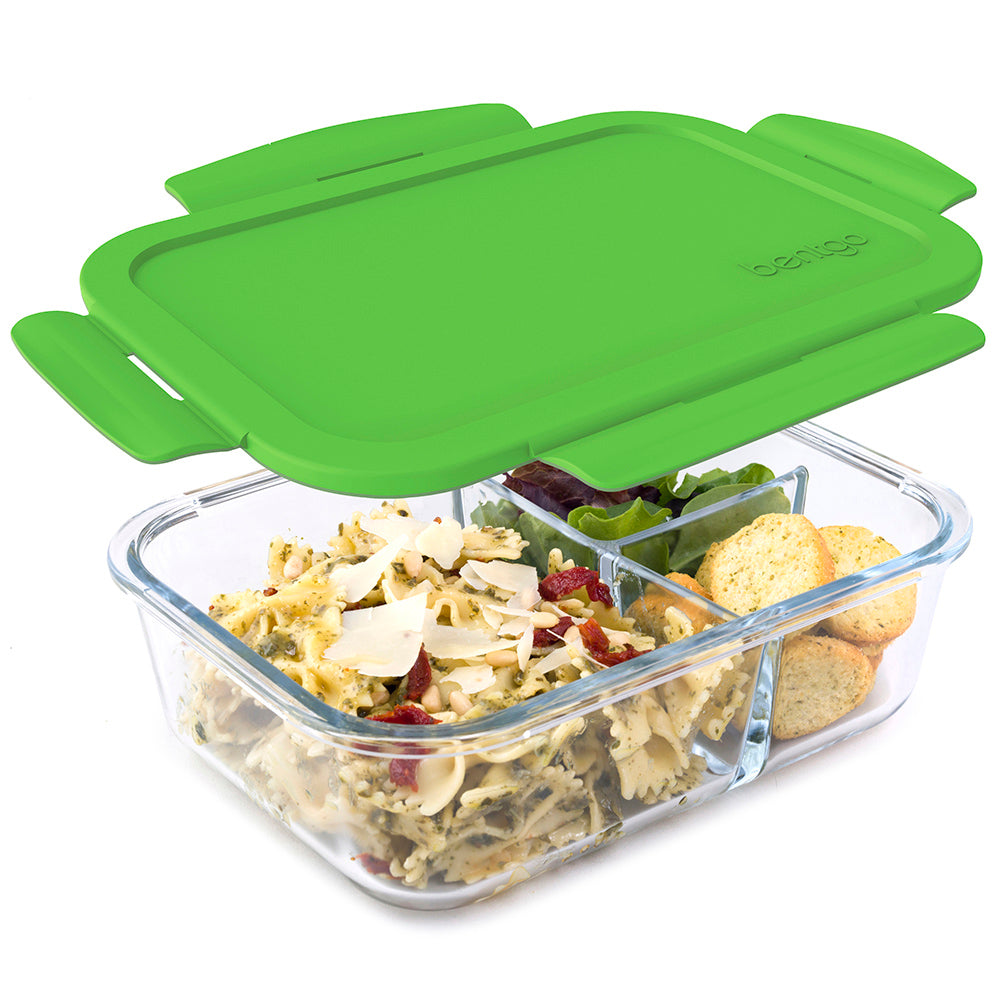
3. Bentgo Glass Lunch Container — Best for Reheating Leftovers
 Best for Reheating Leftovers
Move last night's takeout into it, take the lid off, and microwave straight from the fridge — your reheated meal sits on inert glass, not the plastic that sheds most when heated.
Why it's safe: The food-contact body is borosilicate glass — chemically inert and thermal-shock resistant, so reheating releases nothing into your food. The silicone gasket only seals the rim.
Check Today's Price on Amazon →Amazon prices change daily — tap to see today's price and any active discount.
- Free delivery & returns for Prime members
- Sold & shipped by Amazon
- Thousands of verified reviews
Why it made the list: This solves the single riskiest takeout habit — microwaving the delivery box. Decant leftovers into the Bentgo, reheat the glass with the lid off, and there's zero plastic contact with hot food. The borosilicate won't crack from temperature swings; the only trade-off is weight, since glass is heavier than plastic or steel.
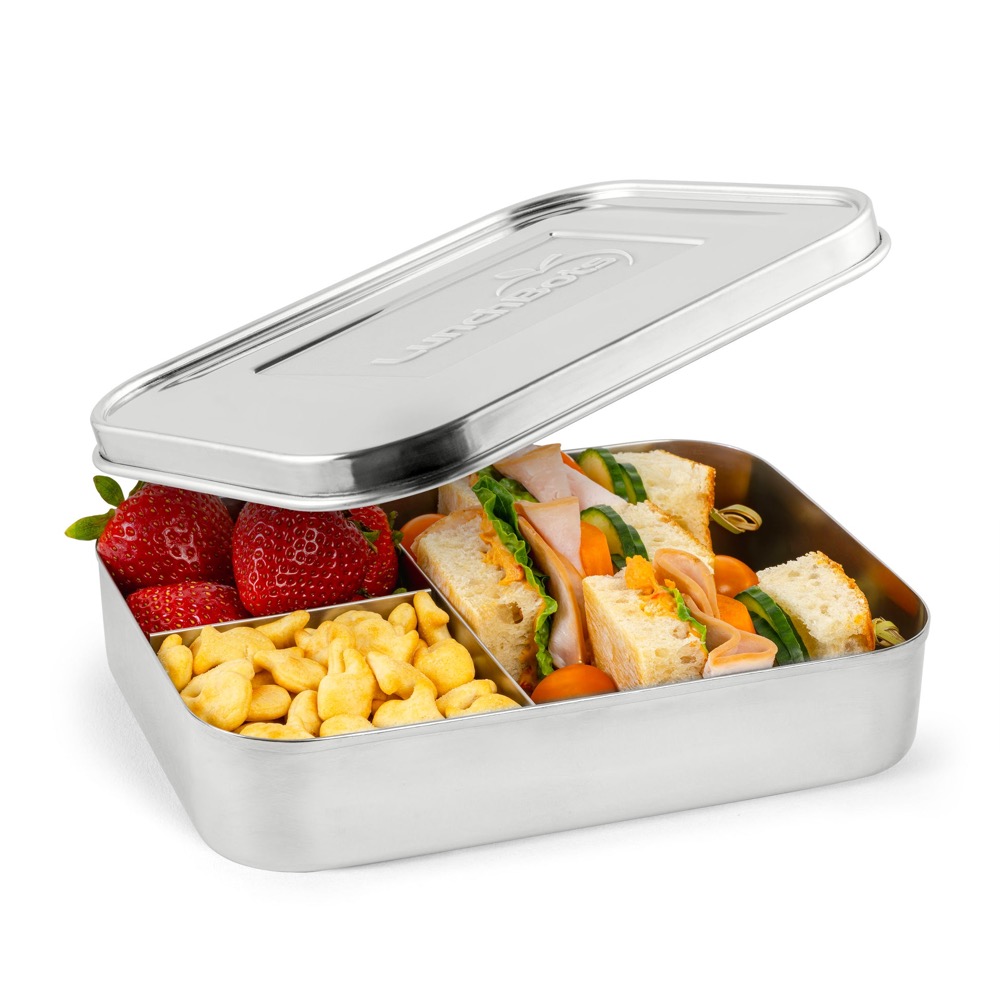
4. LunchBots Large Trio Stainless Steel — Best for Portioned Meals
 Best for Portioned Meals
Keep a rice, a curry, and a side from touching all day — the dividers are part of the steel body, so nothing slides loose in your bag on the commute home.
Why it's safe: Built entirely from food-grade 18/8 stainless steel with no plastic in the food path — BPA-free and phthalate-free by design, with nothing to leach into acidic or fatty takeout.
Check Today's Price on Amazon →Amazon prices change daily — tap to see today's price and any active discount.
- Free delivery & returns for Prime members
- Sold & shipped by Amazon
- Thousands of verified reviews
Why it made the list: Takeout often arrives as several plastic tubs — a main, a rice, a sauce. The Large Trio consolidates all of it into one steel box with welded compartments that keep foods separated without removable dividers. It's not fully leak-proof for soupy items, but for everyday plated meals it's the plastic-free swap for the whole stack.
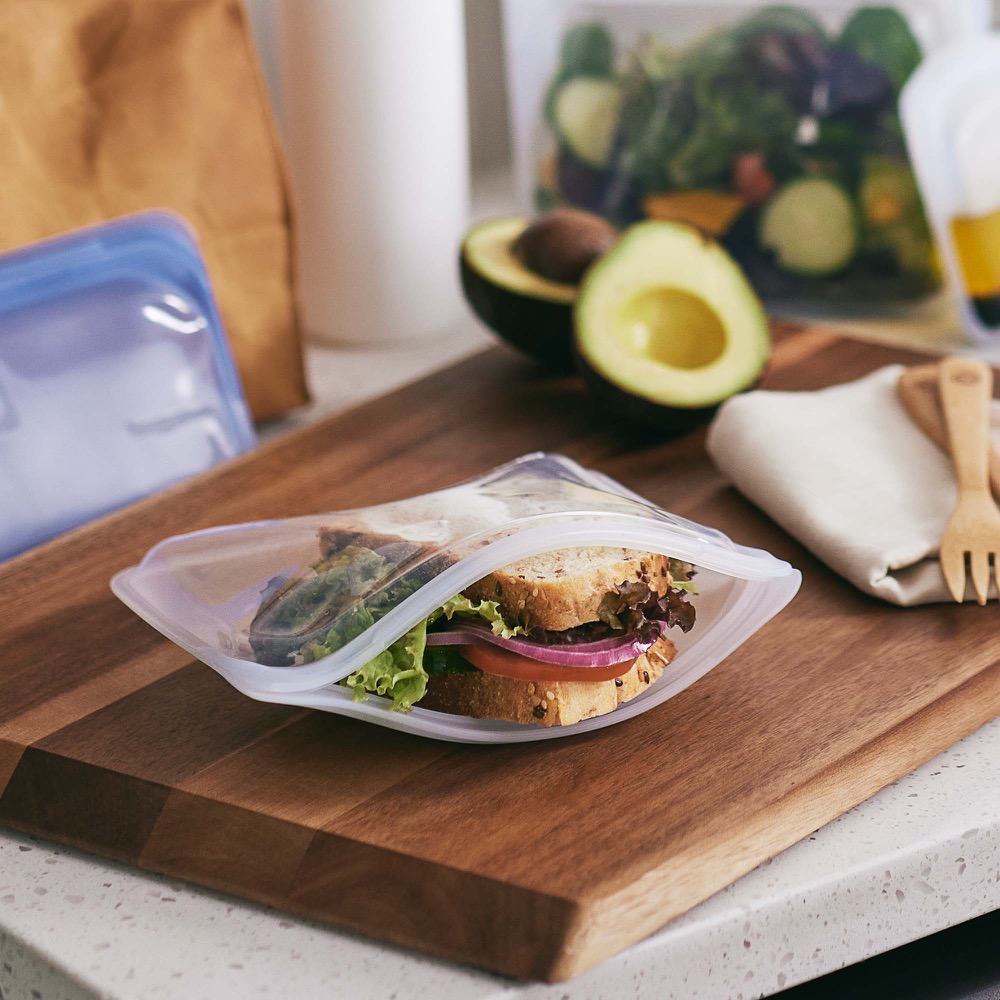
5. Stasher Reusable Silicone Bag Starter Kit — Best Silicone for Leftovers
 Best Silicone for Leftovers
For stashing the half of the meal you didn't finish, freezing extra portions, or anything you would reach for a plastic zip-lock bag, Stasher's platinum-cured silicone is the upgrade — sturdier than any disposable bag and free of the chemicals that migrate from plastic. The patented Pinch-Loc seal is genuinely airtight and leakproof.
It goes from freezer to microwave to a 425°F oven, and it even handles sous vide. The starter kit covers the everyday sizes — sandwich, snack, and stand-up — so you can retire single-use bags in one swap.
Stop storing and reheating leftovers in disposable plastic bags or the takeout tub. Platinum silicone seals just as tight, survives the dishwasher and the microwave, and lasts for years.
Why it's safe: Platinum-cured silicone — the highest-purity, chemically inert grade — with no plastic, PVC, BPA, lead, latex, phthalates, or PFAS.
Check Today's Price on Amazon →Amazon prices change daily — tap to see today's price and any active discount.
- Free delivery & returns for Prime members
- Sold & shipped by Amazon
Why it made the list: Not every leftover needs a rigid box — sometimes you just want to bag half the noodles and freeze them. Stasher's platinum silicone reheats safely, seals airtight, and replaces hundreds of disposable bags over its life. For the full lineup, see our guide to the best silicone food storage bags.
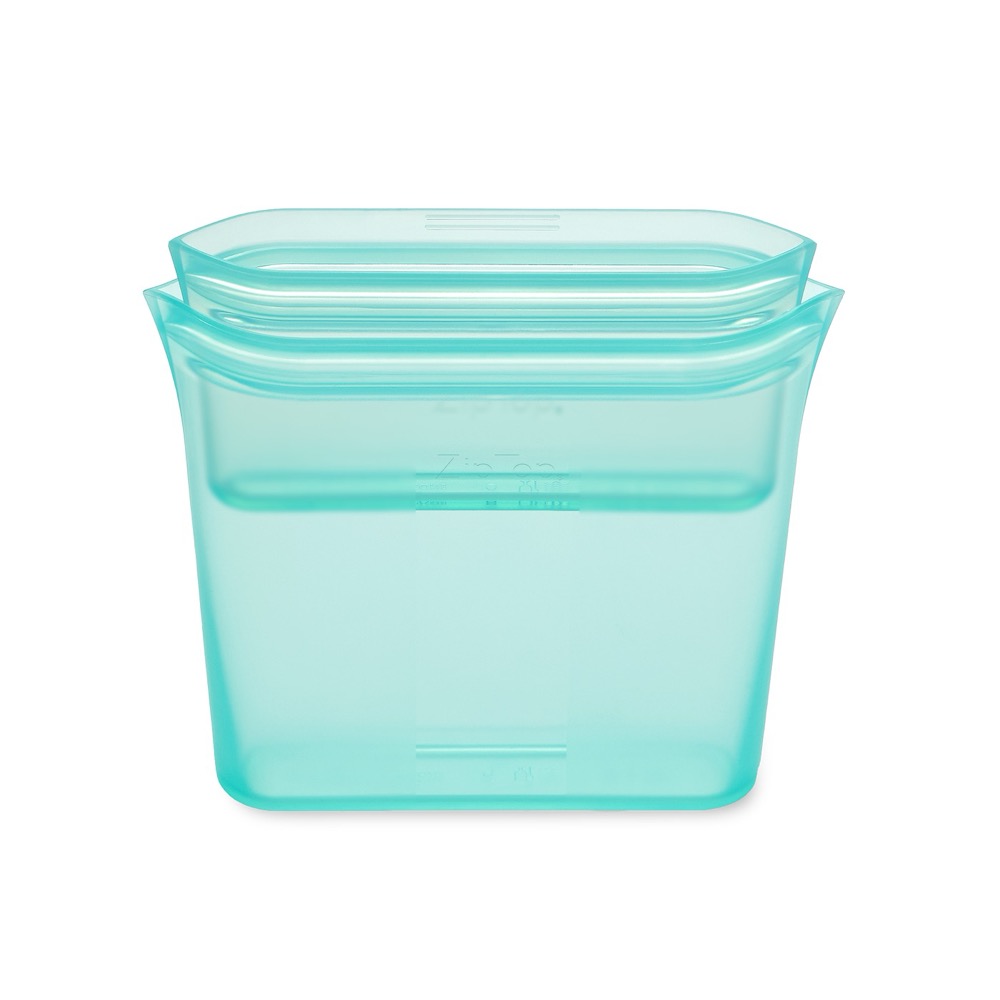
6. Zip Top Reusable Silicone Bags — Best for Snacks & Kids
 Best for Snacks & Kids
Zip Top uses a true silicone zipper — a slide-and-lock mechanism made entirely of food-grade silicone. For anyone who finds a pinch-seal fiddly (especially kids), Zip Top is immediately intuitive: you zip it shut exactly like a plastic bag, except there is no plastic anywhere. It also stands upright without assistance, so it doubles as a mini container for cut fruit, dips, or leftover dumplings.
Kids can open and close it themselves, and it stands open on the counter while you fill it — the closest thing to a plastic zip-lock that contains zero plastic.
Why it's safe: Built from a single piece of 100% platinum food-grade silicone with no plastic slider, BPA, BPS, or phthalates — nothing to leach or shed into food, reusable for years.
Check Today's Price on Amazon →Amazon prices change daily — tap to see today's price and any active discount.
- Free delivery & returns for Prime members
- Made in the USA
- Thousands of verified reviews
Want the Full Home Protection Guide?
Takeout packaging is one plastic touchpoint among dozens in a typical day. The Complete Plasticproof Guide covers every room — kitchen, nursery, bathroom, bedroom — with 80+ product recommendations backed by 47+ studies.
The honest verdict
Do takeout containers have microplastics? Yes — the Journal of Hazardous Materials study found microplastics in every container tested, 3 to 29 particles each, with polystyrene foam shedding the most and hot food releasing more than cold. It estimated that frequent orderers may swallow 12 to 203 particles a week from the packaging alone. That part is real. But the study measured how much plastic is released, not what it does to you — so the accurate takeaway is proportion, not alarm.
What makes takeout different from most plastic worries is how cheap and easy the fix is. You don't have to give up delivery night; you have to stop letting the container be the plate. Tip the food onto a real plate or into a glass or steel dish, never microwave the box, and bring your own container when you meal-prep or pick up. You don't have to prove the particles are harmful to decide that eating off glass, not foam, is simply the better default.
Take plastic out of your takeout
A stack of glass or steel containers and a certified water filter remove the plastic your packaging adds and the plastic your tap carries — simple swaps that stick.
Frequently Asked Questions
Yes. A study in the Journal of Hazardous Materials found microplastics in every take-out food container tested — between 3 and 29 particles per container — across polypropylene, polystyrene, polyethylene, and PET. Polystyrene foam containers with rough surfaces shed the most, and immersing the container in hot water increased the number of particles released into the food.
The Journal of Hazardous Materials study estimated that people who order take-out food 4 to 7 times a week may ingest roughly 12 to 203 microplastic particles per week from the containers alone. That is a rough estimate based on particle counts per container, and it excludes microplastics from the food itself, drinks, and other sources.
It appears to. In the research, flushing a container after immersing it in hot water released more microplastics than flushing it cold. Heat, oil, and acidity all make plastic shed faster, so a steaming-hot, greasy meal sitting in a plastic container is a worse case than a cold salad — and microwaving that container is worse still.
Polystyrene — the white foam clamshell and rigid black or clear PS containers — released the most microplastics in the study, especially when the surface was rough. Polypropylene (the #5 tubs used for soups and sides) shed less but still shed. The safest move is to transfer any takeout out of its container into glass or steel before eating or reheating.
Never microwave food in the takeout container, and transfer hot or greasy meals into a glass or stainless-steel dish as soon as they arrive. For food you pick up or meal-prep yourself, bring your own glass or steel container. Filtering your drinking water handles a separate, larger microplastic source in the same kitchen.
It is the worst thing you can do with it. Microwaving concentrates heat against the plastic and drives shedding far higher than eating cold food out of the same container. Even "microwave-safe" takeout plastic is only rated not to warp or melt — it is not a promise that nothing migrates. Move the food to a glass or ceramic dish first.
Sources
- Du F, Cai H, Zhang Q, Chen Q, Shi H. "Microplastics in take-out food containers." Journal of Hazardous Materials, Vol. 406, 2021, 124589 — found microplastics in every take-out container tested (3–29 particles per container), highest in rough-surfaced polystyrene, with more released after hot-water immersion; estimated 12–203 particles/week for people ordering take-out 4–7 times weekly.
- Cox KD, Covernton GA, Davies HL, et al. "Human Consumption of Microplastics." Environmental Science & Technology, 2019 — on total dietary microplastic intake and the contribution of food packaging.
- Leslie HA, van Velzen MJM, Brandsma SH, et al. "Discovery and quantification of plastic particle pollution in human blood." Environment International, 2022.
- Hussain KA, Romanova S, Okur I, et al. "Assessing the Release of Microplastics and Nanoplastics from Plastic Containers and Reusable Food Pouches." Environmental Science & Technology, 2023 — on how heating plastic food containers dramatically increases particle release.
- US FDA. "Microplastics and Nanoplastics in Foods." fda.gov.