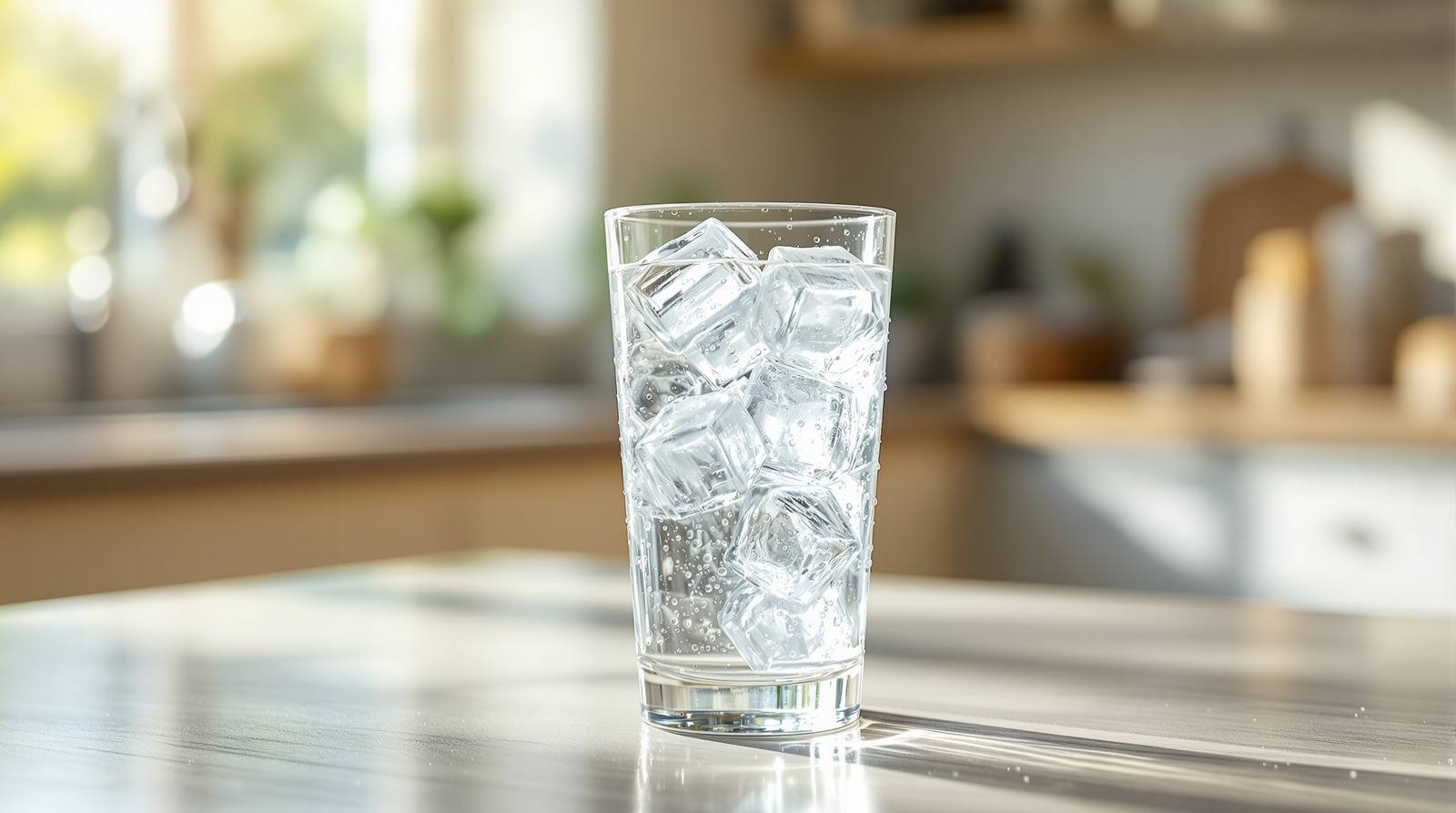
Yes — ice cubes contain microplastics, and they come from the water and the bag, not the freezing. A 2023 study in Environmental Pollution screened the 15 most popular packaged food ice-cube brands in Mexico City and found microplastics in 100% of samples, averaging about 79 particles per liter (roughly 19 to 178 across brands). Fibers made up about 87% of the particles, and polypropylene and polyethylene — the plastic ice bags are made from — were the most common polymers. The caveat that matters: the study counted how many particles are present, not what they do to your health. But here's the good news — because ice is just frozen water, the fix is the easiest of any food: filter your water, freeze it yourself in a stainless or silicone tray, and store it in glass instead of a plastic bag. One filter cleans up your drinking water and your ice at the same time.
Ice seems like it should be the cleanest thing in your glass — there's only one ingredient, and it's water. So where does the plastic come from? Trace the cube backward and two sources appear fast. First, ice is frozen water, so any microplastics already in the source water get locked into the cube. Second, commercial ice is made, augered, and dumped into polyethylene bags on plastic machinery, and every one of those plastic surfaces can shed fibers and fragments into the ice on the way to you.
That's why ice belongs in the same conversation as bottled water, tap water, and soda — it's a water problem wearing a solid disguise. This guide walks through what the study found, what kind of particles turned up, whether the numbers are worth worrying about (the honest answer is calmer than the headline), and the handful of swaps that actually move the needle — starting with the one that matters most.
The bottom line up front: every packaged ice-cube brand tested contained microplastics — mostly fibers — and they trace back to the source water and the plastic bags and machinery, not to anything about ice itself. It's a real, measurable source — but it's also the most fixable, because ice is frozen water: filter the water before you freeze it, use a stainless or silicone tray instead of a plastic one, and store cubes in glass rather than a bag. See also what microplastics do inside the body and the room-by-room kitchen plastic detox guide.
Do ice cubes have microplastics?
Yes. In a 2023 study published in Environmental Pollution ("First evidence of microplastic contamination in ready-to-use packaged food ice cubes"), researchers screened the 15 most popular commercial brands of bagged ice cubes sold in Mexico City and detected microplastics in 100% of the samples. Not one brand tested clean. Concentrations ranged from about 19 particles per liter in the cleanest brand to 178 in the most contaminated, averaging roughly 79 particles per liter.
The particles were dominated by fibers — about 87% of everything found was fibrous, most were colorless, and roughly 63% were smaller than 300 microns. The most common polymers were polypropylene and polyethylene, alongside polyvinyl alcohol, polyamide 6, and cellophane. That mix is a fingerprint: polyethylene is the plastic ice bags are made from, and the abundance of fibers points to the source water and airborne lint in the production room, not to anything intrinsic to ice. It's the same reasoning that runs through the research on microplastics in food packaging.
How do microplastics get into ice cubes?
Two routes, and both matter. The first is the water itself. Ice is nothing but frozen water, so whatever microplastics are already present in the tap or well water get locked inside the cube when it freezes. If your tap water carries microplastics — and most does — your homemade ice inherits every one of them. Freezing doesn't remove particles; it traps them.
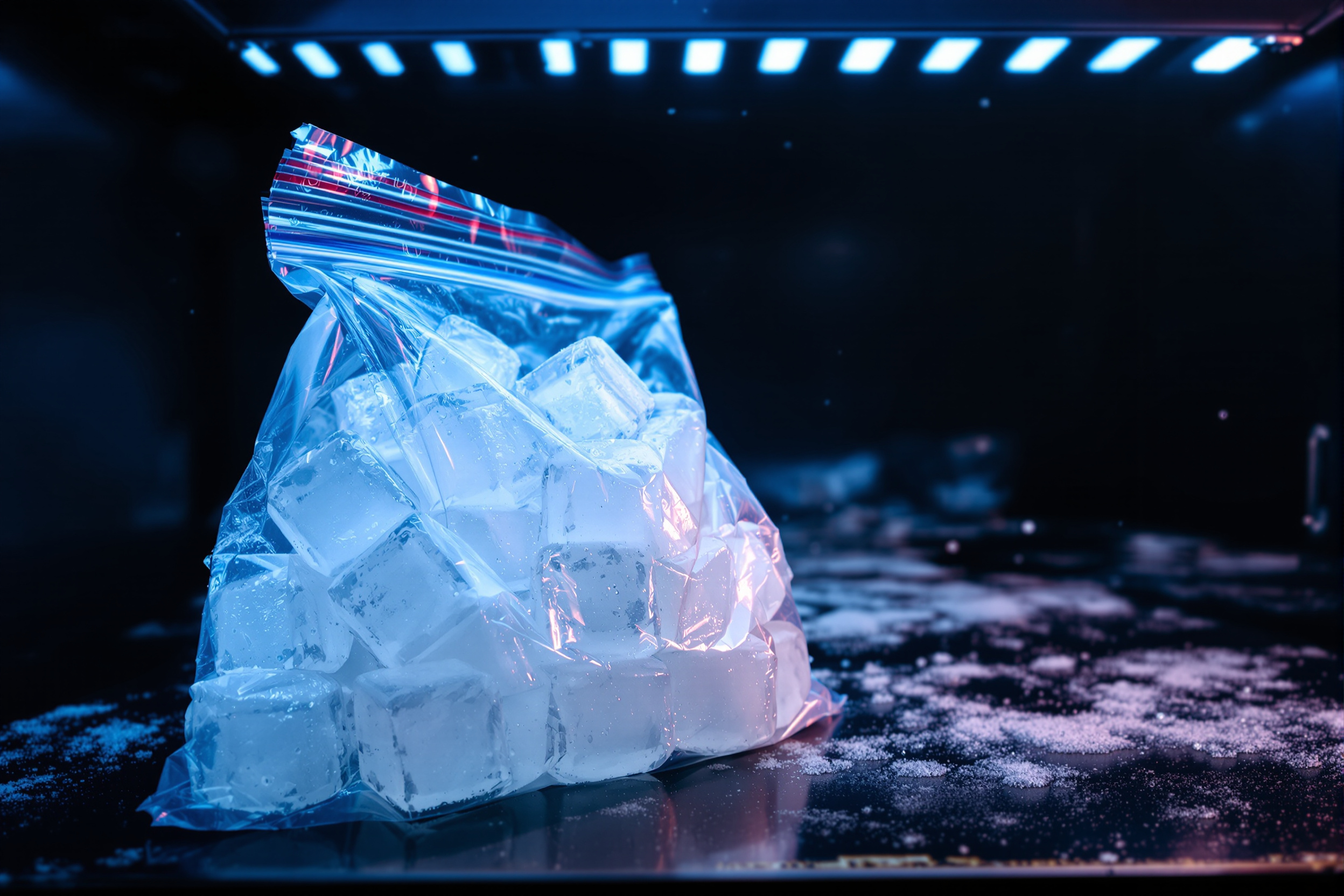
The second route is the plastic the ice touches after it's frozen. Commercial ice is produced on plastic machinery, augered and conveyed across plastic surfaces, then dumped into polyethylene bags for shipping and storage — and polyethylene was one of the two most common polymers the study found, exactly what you'd expect if the bag is a source. Cold, brittle plastic in contact with ice can shed just as heat-softened plastic does, so the bag and the equipment add particles on top of whatever the water carried in. That's why the fix lives in the same place as the fix for how you store the rest of your food: control the water, and keep the ice off plastic.
What kind of microplastics were found in ice cubes?
Mostly fibers — and that detail is the most useful part of the study. About 87% of the particles were fibrous, most were colorless, and the majority were tiny, under 300 microns. By polymer, polypropylene and polyethylene led the list, followed by polyvinyl alcohol, polyamide 6, and cellophane. Fibers like these come from textile lint, clothing, and airborne dust in the processing environment and from the source water; polyethylene is the material of the bag itself.
This is the whole point in miniature: the plastic isn't coming from ice being ice — it's coming from the water it was frozen from and the bag and machinery it passed through. No "premium" or "purified" label on a bag of ice can undo the packaging, which is why the reliable fix is to control the water and skip the bag. The same logic explains why buying a fancier brand of bottled anything rarely moves microplastic counts the way switching the container does.
"Ice is the easiest food to fix. It's frozen water — so the same filter that cleans your drinking water cleans your ice, and freezing your own skips the bag entirely."
| Ice | Microplastic exposure | Why |
|---|---|---|
| Bagged commercial ice | ~19–178 per liter | Made on plastic machinery and stored in a polyethylene bag — the range the 2023 study measured across 15 popular brands, all contaminated |
| Homemade from unfiltered tap water | Depends on your water | Skips the bag and machinery, but freezes in whatever microplastics your tap water already carries |
| Homemade from filtered water, plastic tray | Lower | The filter removes particles from the water first; the only remaining plastic contact is the tray |
| Filtered water, stainless or silicone tray, stored in glass | Lowest you control | Removes the source-water particles, the plastic bag, and the plastic tray all at once — it eliminates every source the study points to |
Are the microplastics in ice cubes dangerous?
Here's where honesty matters. The particle counts are real and carefully measured, but the study measured how much plastic is present — not what those particles do once you swallow them. On the specific question of harm from ice-borne microplastics, the science doesn't have a firm answer, and no one should read a health verdict into numbers that weren't designed to give one.
What we do know is broader: microplastics are increasingly detected throughout the human body, and researchers are still working out the consequences. Against that backdrop the sensible stance is proportion, not panic. The useful takeaway isn't to fear a cold drink — it's that ice is one more reason to filter your drinking water, because that single fix quietly cleans up your ice at the same time.
Don't stop putting ice in your water over a headline. But of all the microplastic sources in a kitchen, ice is the single easiest to fix, because it's frozen water: filter the water, freeze your own in a stainless or silicone tray, and store cubes in glass instead of a bag. That's the same high-leverage thinking behind our kitchen plastic detox guide.
Is bagged ice worse than the ice from your freezer?
By the evidence we have, yes — the 2023 study specifically measured bagged, ready-to-use commercial ice and found it universally contaminated, carrying both the source-water particles and the polyethylene of the bag it ships in. Ice from your own freezer skips the bag and the industrial augering equipment entirely. Whether it's actually cleaner then comes down to one thing: the water you froze. Homemade ice from unfiltered tap water simply freezes in whatever your tap carries, while homemade ice from filtered water removes the particles before they're ever locked in. So the freezer beats the bag — and filtered-then-frozen beats them both.
How do you reduce microplastics from ice cubes?
One idea covers most of it: because ice is frozen water, filtering your water fixes your ice for free. Run your tap water through a certified filter (ideally one rated to NSF/ANSI P473, the microplastics standard) and freeze that — the particles are removed before they can be locked into a cube. It's the rare kitchen swap where a single purchase, a good pitcher filter, cleans up two things you consume every day: your drinking water and your ice. If you want the most thorough removal of all, a reverse osmosis system strips virtually every particle from the water before it ever reaches the tray.
Then close the smaller gaps. Freeze in a stainless steel or silicone ice tray rather than pouring water into a soft plastic one, store the cubes in a glass container or a silicone bag instead of a polyethylene bag, and skip bagged commercial ice, which the study found most contaminated. Between a certified filter and off-plastic freezing and storage, you've removed every source the research identified — and the products below make all of it effortless.
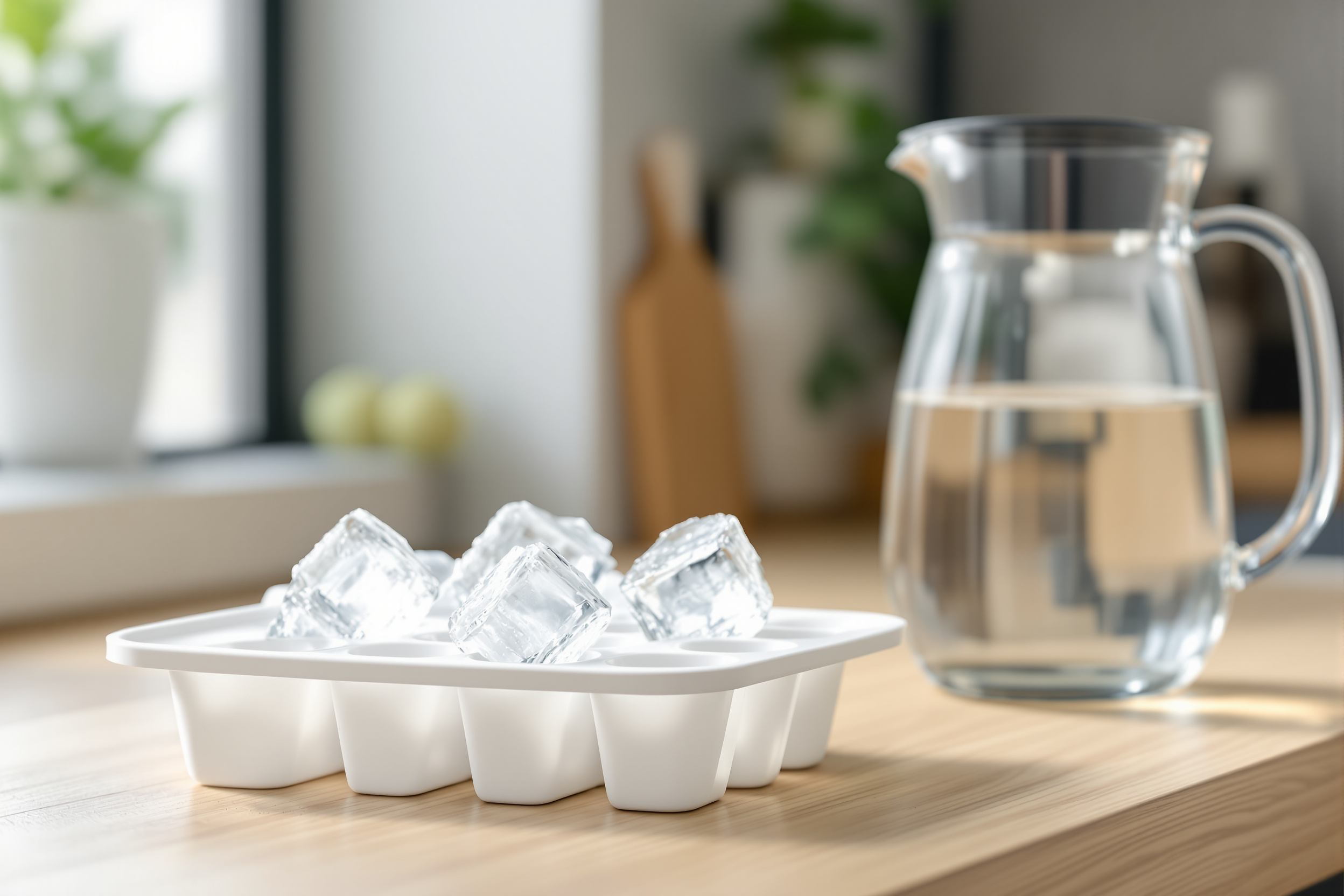
Fix your ice by fixing your water
Ice is frozen water, so one filter cleans up both. Filter the water, freeze your own in a stainless or silicone tray, and store cubes in glass instead of a plastic bag — simple swaps that stick.
The best filters, glass, and silicone to cut the plastic in your ice
Because ice is frozen water, the most useful products are the ones that clean the water before it freezes and keep the ice off plastic afterward — a certified filter to strip microplastics from the water you freeze, glass to store cubes without shedding, and silicone to freeze and stash them in place of a plastic bag. The four pitchers below all filter water; the last two are the off-plastic freezing and storage. Every product is a real, currently-sold model. Prices and availability change, so check current listings.
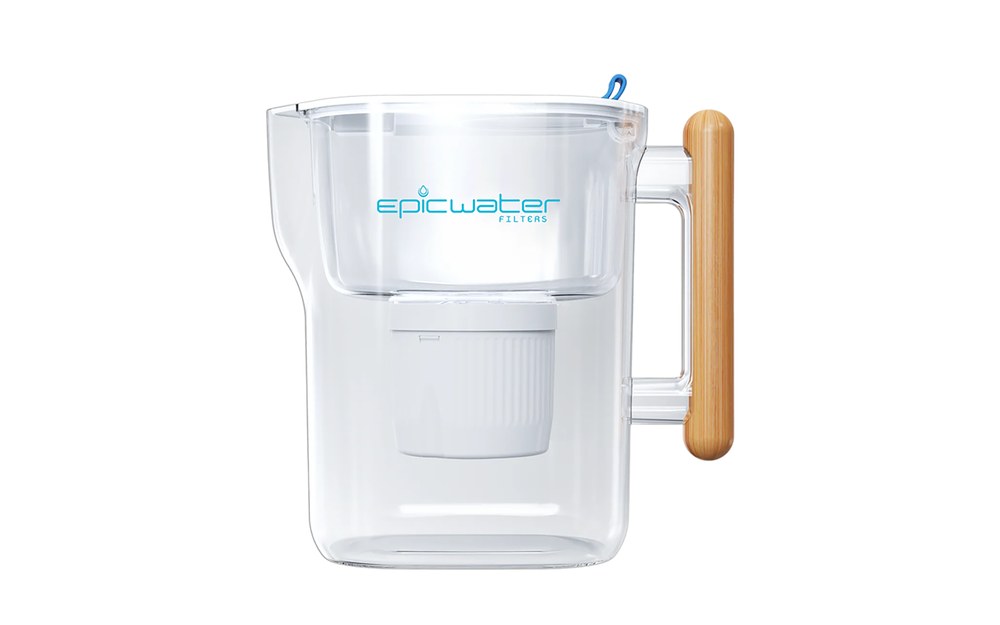
1. Epic Pure Water Filter Pitcher — Best Overall for Microplastics
 Best Overall
Reviewers point to published independent lab data and a filter rated around 150 gallons, far longer than a Brita, as the reasons they trust it, and several describe the slow, deliberate drip as reassuring rather than annoying. The honest downsides: owners report the filtration is genuinely slow and not the pick if you want a glass of water in a hurry, and third-party complaints mention cracked plastic, flip-top lids that stick, and water that spills or leaks from the lid when you pour a full pitcher.
Ice is frozen water, so this one filter cleans up both what you drink and what you freeze — fill your ice trays from the pitcher and every cube starts microplastic-free.
Why it's safe: The hollow fiber membrane physically blocks microplastic particles down to ~1 micron, while the carbon stage handles chlorine, lead, and PFAS — all in a BPA-free Tritan body.
Check Today's Price on Amazon →Amazon prices change daily — tap to see today's price and any active discount.
- Free delivery & returns for Prime members
- Sold & shipped by Amazon
- Thousands of verified reviews
Why it made the list: Since every ice cube is only as clean as the water it froze from, a filter is the single highest-leverage buy for cutting microplastics in ice. The Epic Pure is the clearest choice: its dual-stage design uses a hollow fiber membrane as the primary microplastic barrier, and Epic publishes the independent lab results behind its 99.9% removal claim — so you can fill an ice tray straight from the pitcher and know what came out.
2. Waterdrop Chubby 10-Cup Pitcher — Best Certification (NSF P473)
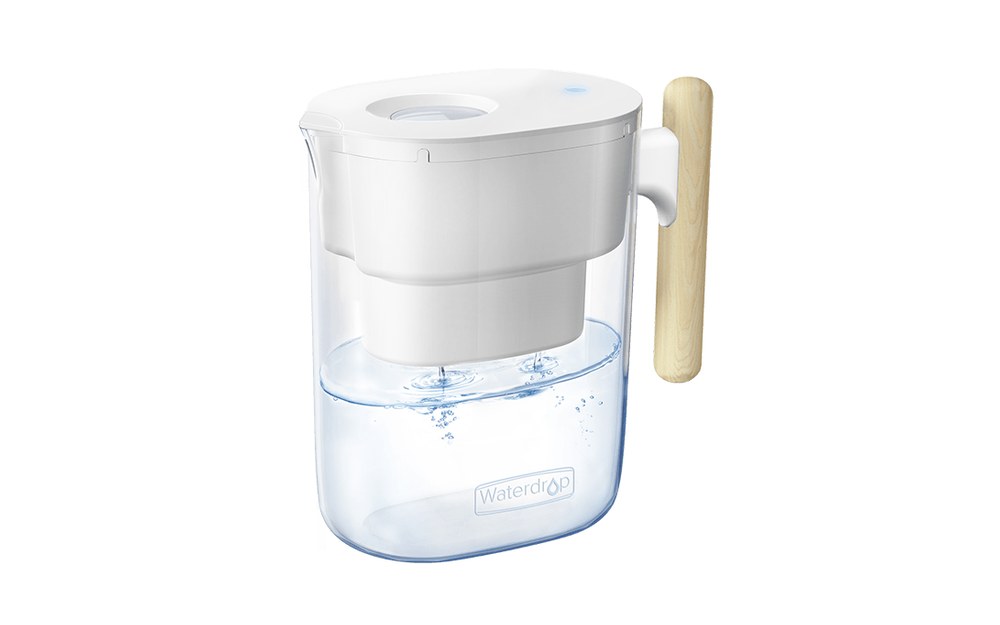 Best Certification
Owners like the look and the long 200-gallon filter life, and roughly 80 percent of reviews land positive, with the common praise being clean-tasting water at a low cost per gallon. The honest gripes: several owners warn the handle can feel loose or strain under a full pitcher, so they lift with two hands; some report the pour spills if you tip too fast; and the change-filter indicator light draws complaints for not lighting or not staying lit.
The only pitcher here that holds the formal NSF P473 microplastic certification, and its 200-gallon filter runs ~4–5 months — the lowest ongoing cost on the list.
Why it's safe: A hollow fiber membrane independently certified to NSF/ANSI P473 blocks microplastics, while the carbon composite tackles chlorine, heavy metals, and PFAS — all in a BPA/BPS-free body.
Check Today's Price on Amazon →Amazon prices change daily — tap to see today's price and any active discount.
- Free delivery & returns for Prime members
- Sold & shipped by Amazon
- Thousands of verified reviews
Why it made the list: If you want the one credential that proves a filter is rated for microplastics before you freeze that water into ice, the Waterdrop Chubby has it: formal NSF/ANSI P473 certification — the exact standard for microplastics — plus the longest filter life on the market at 200 gallons (about 4–5 months for most households). The "filter while you pour" design works just like a familiar counter pitcher, but with a membrane that's actually tested for the particles the ice-cube study found.
3. ZeroWater 10-Cup Pitcher with TDS Meter — Best for Crystal-Clear Ice
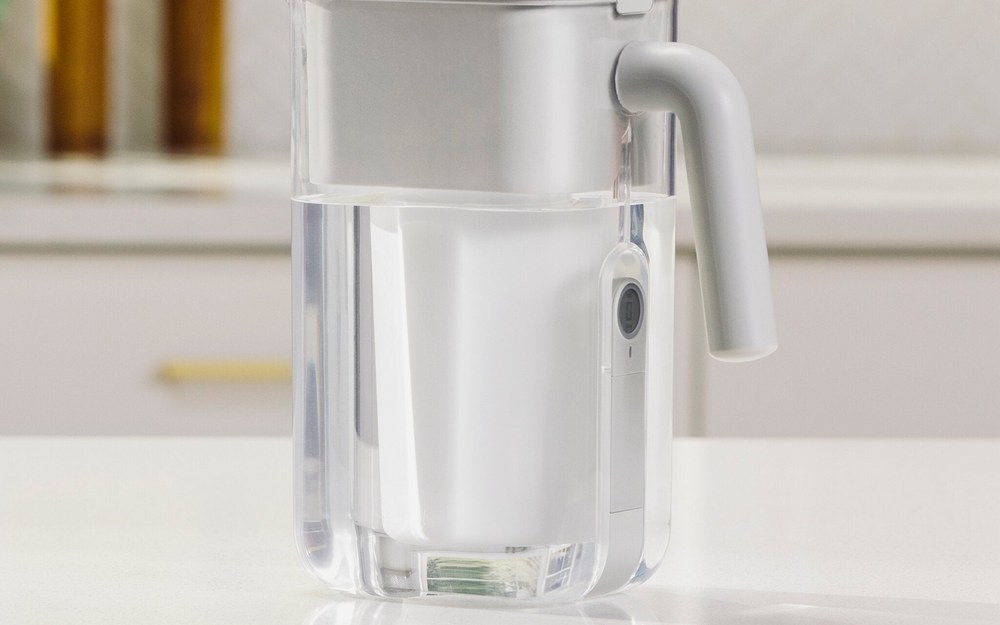 Best for Clear Ice
Owners buy ZeroWater for the included TDS meter and the fact that it reads 000 straight from the tap, and many say nothing else gets water this clean. The honest gripes: the ion-exchange resin can throw off a fishy, sour, or lemony smell as it wears out; filter life is short, tapping out around 15 to 40 gallons, so replacements come often and the cost adds up; and the lid can fall off if you pour too fast or tip it too steeply.
Fill your ice trays from a pitcher that reads 0 ppm and you freeze the cleanest water in the house — the included TDS meter shows the exact moment the filter is spent, so you replace on data, not a guess.
Why it's safe: Five mechanical and ion-exchange stages capture microplastic particles and strip dissolved solids to 0 ppm, and the pitcher is built from BPA-free plastic.
Check Today's Price on Amazon →Amazon prices change daily — tap to see today's price and any active discount.
- Free delivery & returns for Prime members
- Sold & shipped by Amazon
- Thousands of verified reviews
Why it made the list: ZeroWater's 5-stage system is the most comprehensive multi-layer design in the pitcher category — it removes virtually all dissolved solids and captures physical particles including microplastics, so the water going into your ice trays is about as clean as home filtration gets. A side benefit ice-lovers appreciate: water stripped to 0 ppm freezes into clearer, better-tasting cubes. In hard-water areas, replace filters on the TDS reading rather than a fixed schedule.
4. Aquagear Water Filter Pitcher — Best Filter Life
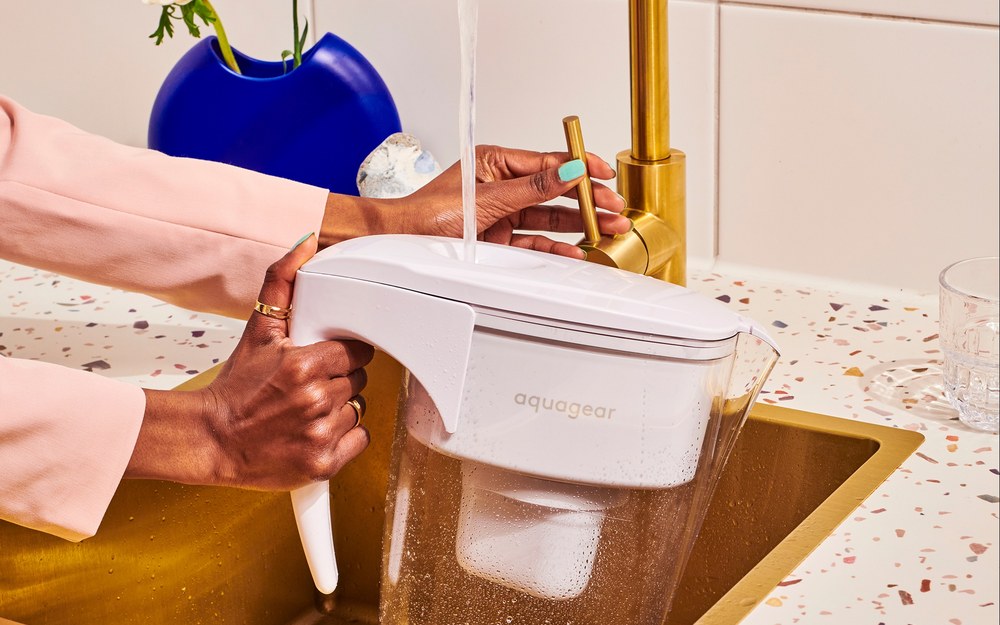 Best Filter Life
Buyers rate Aquagear well for taste and its wide contaminant list, and the company backs it with a strong warranty. The most repeated complaint by far is speed -- reviewers say filtration drags, with some waiting minutes and others reporting close to two hours for a pitcher once the cartridge ages. The honest gripes: filters clog and cannot just be rinsed clean, the lid does not fit well and can pop off when pouring, and the pour-spout cover tends to stick or fall out of place.
Change the filter half as often as most pitchers — 150 gallons per cartridge means fewer replacements even if you're filling ice trays daily all summer.
Why it's safe: A 5-stage filter with a sub-micron membrane stage captures microplastics, lead, fluoride, and chlorine, in a BPA-free body with USA-made filter media.
Check Today's Price on Amazon →Amazon prices change daily — tap to see today's price and any active discount.
- Free delivery & returns for Prime members
- Sold & shipped by Amazon
- Thousands of verified reviews
Why it made the list: If you make a lot of ice — a household that fills trays daily through summer, or runs a countertop ice maker — filter-replacement fatigue is the thing that quietly ends the habit. The Aquagear's 150-gallon cartridge and lifetime-guaranteed body make it the lowest-maintenance way to keep freezing clean water. It uses a 5-stage filter with a sub-micron membrane stage specifically targeting microplastics, heavy metals, and fluoride.
5. Glasslock Oven Safe Container Set (3-Pack) — Best Glass Storage
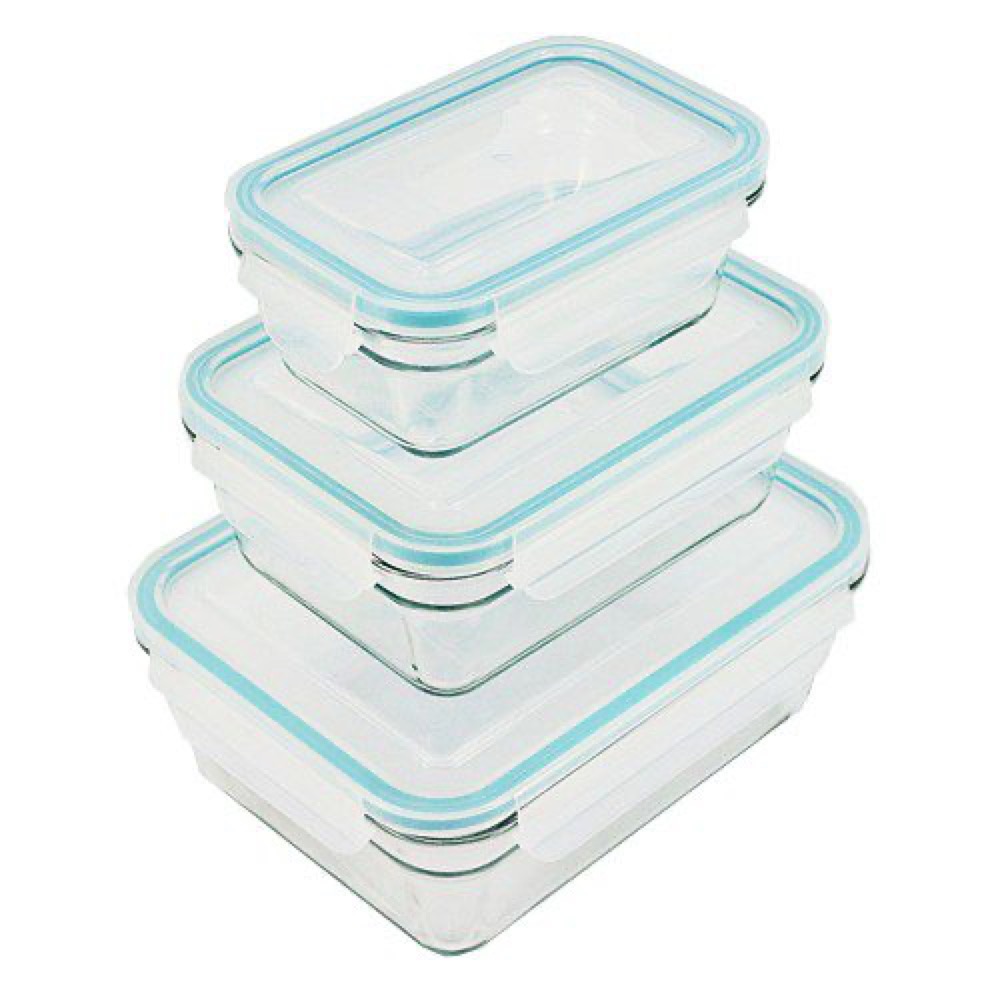 Best Glass Storage
Longtime owners like that the glass bodies are oven-, microwave-, and freezer-safe and that the snap-lock lids seal tight. The honest downsides run through the lids, not the glass: reviewers report cracked lids, snapped locking tabs, and mold building up in the rubber gaskets if they are not dried well. Some buyers also received sets with a locking piece missing, and several flag slow, hard-to-reach customer service when they needed a replacement part.
Pop your filtered-water cubes into a glass container and keep them in the freezer — a plastic-free stash that never sits in a polyethylene bag the way bagged store ice does.
Why it's safe: Ice sits on inert tempered glass, not plastic — so nothing sheds into it in the freezer. The BPA-free lids seal with a food-grade silicone gasket that only touches the rim.
Check Today's Price on Amazon →Amazon prices change daily — tap to see today's price and any active discount.
- Free delivery & returns for Prime members
- Sold & shipped by Amazon
- Thousands of verified reviews
Why it made the list: Once you've frozen clean cubes, storing them in the polyethylene bag store-bought ice comes in would put the plastic right back. At roughly ten dollars per container, Glasslock is the most cost-effective way to keep a freezer stash of ice on glass instead. The snap-lock lids with silicone gaskets seal reliably and the bodies are freezer- and oven-safe. For the full lineup, see our guide to the best glass food storage containers.
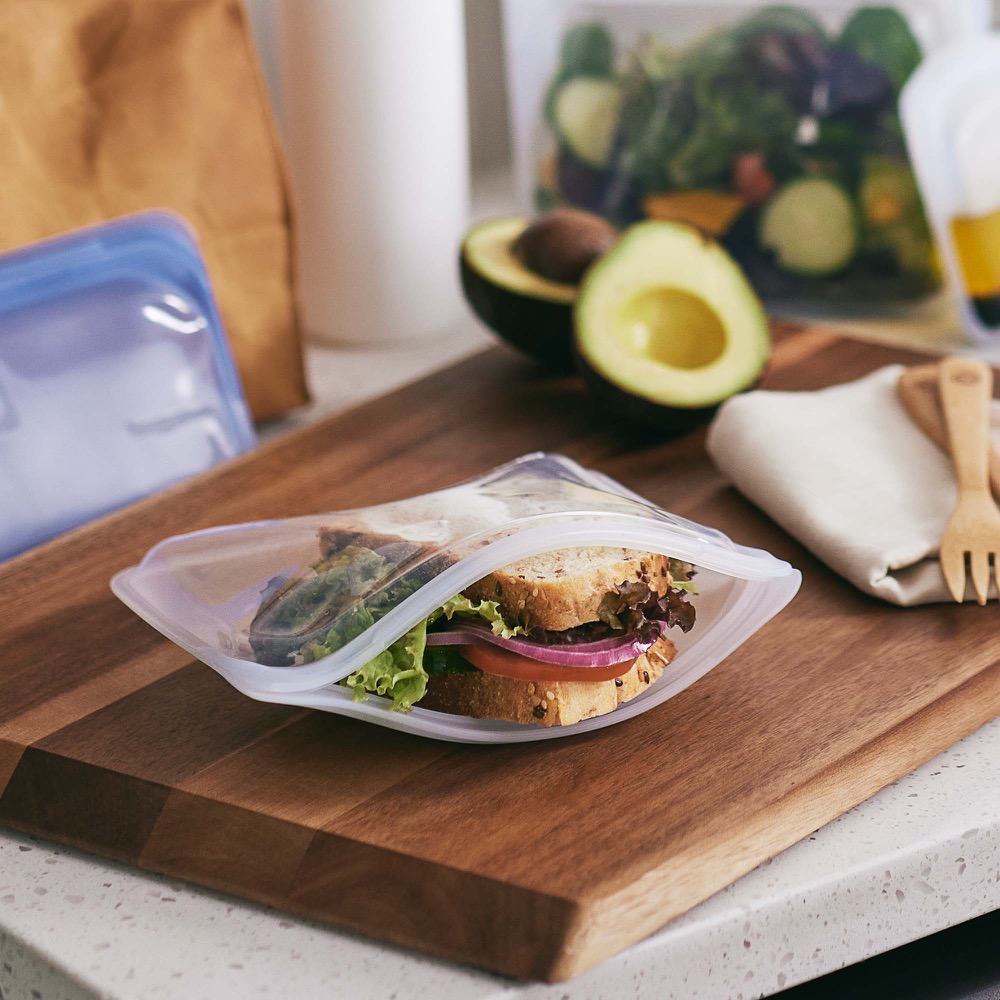
6. Stasher Reusable Silicone Bag Starter Kit — Best Silicone for Freezing
 Best Silicone
For stashing loose cubes, freezing crushed ice for a cooler, making pops, or anything you would reach for a plastic zip-lock or ice bag, Stasher's platinum-cured silicone is the upgrade — sturdier than any disposable bag and free of the chemicals that migrate from plastic. The patented Pinch-Loc seal is genuinely airtight and leakproof.
It goes from freezer to microwave to a 425°F oven, and it even handles sous vide. The starter kit covers the everyday sizes — sandwich, snack, and stand-up — so you can retire single-use bags in one swap.
Owners like that the platinum silicone bags go from freezer to microwave and replace throwaway plastic for years. The honest gripes: smell and stain retention come up often, with reviewers noting garlic and strong odors linger even after washing, and one finding the bag did not fully contain cooking smells in a sous-vide bath; the pinch-lock seal can be fiddly to open and close; and the seams are slow to dry, which can invite mildew if you do not air them out.
Stop storing ice and freezer food in disposable plastic bags. Platinum silicone seals just as tight, survives the dishwasher and the freezer, and lasts for years.
Why it's safe: Platinum-cured silicone — the highest-purity, chemically inert grade — with no plastic, PVC, BPA, lead, latex, phthalates, or PFAS.
Check Today's Price on Amazon →Amazon prices change daily — tap to see today's price and any active discount.
- Free delivery & returns for Prime members
- Sold & shipped by Amazon
Why it made the list: A stash of loose cubes, crushed ice for a cooler, or a batch of pops doesn't need a rigid box — a silicone bag is easier, and it keeps the ice out of the polyethylene bag store-bought ice ships in. Stasher's platinum silicone seals airtight, survives the freezer and dishwasher, and replaces hundreds of disposable bags over its life. For the full lineup, see our guides to the best glass food storage and the best silicone storage bags.
Want the Full Home Protection Guide?
Ice is one plastic touchpoint among dozens in a typical day. The Complete Plasticproof Guide covers every room — kitchen, nursery, bathroom, bedroom — with 80+ product recommendations backed by 47+ studies.
The honest verdict
Do ice cubes have microplastics? Yes — the 2023 Environmental Pollution study found them in 100% of the packaged brands tested, averaging about 79 particles per liter, mostly fibers, with polypropylene and polyethylene the leading polymers. That part is real. But the study measured how much plastic is present, not what it does to you — so the accurate takeaway is proportion, not alarm.
What makes ice the easiest of all these foods to fix is that it's frozen water. The plastic comes from the source water and the bag and machinery — and both are fully in your control at home. Filter the water before you freeze it, use a stainless or silicone tray instead of a soft plastic one, store cubes in glass instead of a polyethylene bag, and skip bagged commercial ice. Do that and you've removed every source the research identified — and the same filter that fixes your ice fixes your drinking water, your coffee, and everything else you make with tap water.
Fix your ice by fixing your water
A certified water filter plus off-plastic freezing remove the microplastics in your source water and the plastic bag your ice would otherwise sit in — the two sources you actually control.
Frequently Asked Questions
Yes. A 2023 study in Environmental Pollution screened the 15 most popular brands of packaged food ice cubes in Mexico City and found microplastics in 100% of samples, averaging about 79 particles per liter and ranging from roughly 19 to 178. Fibers made up about 87% of the particles, and polypropylene and polyethylene were the most common polymers — a fingerprint that points to the source water and the plastic bags and machinery the ice is made and stored in, not the ice itself.
Two ways. First, ice is just frozen water, so whatever microplastics are already in the source water end up locked in the cube. Second, commercial ice is made, augured, and bagged on plastic machinery and stored in polyethylene bags, and those plastic surfaces shed fibers and fragments into the ice. Freezing itself can also make brittle plastic in contact with the water shed more easily, the same way heat does.
Mostly fibers — about 87% of the particles were fibrous, most were colorless, and roughly 63% were smaller than 300 microns. Polypropylene and polyethylene were the most common polymers, alongside polyvinyl alcohol, polyamide 6, and cellophane. Polyethylene is the plastic ice bags are made from, which fits packaging as a major source, and the fibers point to the source water and airborne lint in the production environment.
The study measured how many microplastic particles are present, not what they do to your body — so no one should read a health verdict into the counts. Microplastics are now detected throughout the human body and researchers are still working out what that means. The reasonable stance is proportion, not panic: the useful takeaway is that ice is one more reason to filter your drinking water, because that single fix cleans up the ice too.
Make your own ice from filtered water. Because ice is frozen water, a certified filter (ideally NSF/ANSI P473, the standard for microplastics) removes particles from the water before you freeze it — so the cube starts clean. Freeze it in a stainless or silicone tray rather than pouring warm water into a plastic one, store it in glass or silicone instead of a polyethylene bag, and skip bagged commercial ice, which the study found most contaminated.
It should, and you control the two things that matter. The 2023 study measured packaged, bagged commercial ice, which carries the plastic-bag polyethylene and the production machinery the research points to. Homemade ice made from filtered water and frozen in a stainless or silicone tray skips the bag and the augering equipment entirely, and the filter removes particles from the water first — so it eliminates the sources the study identified rather than freezing them in.
Sources
- Shruti VC, Kutralam-Muniasamy G, Pérez-Guevara F, Roy PD, Elizalde-Martínez I. "First evidence of microplastic contamination in ready-to-use packaged food ice cubes." Environmental Pollution, Vol. 318, Art. 120905, 2023 — screened the 15 most popular commercial packaged ice-cube brands in Mexico City; microplastics in 100% of samples, ranging ~19 to ~178 particles per liter and averaging ~79/L, with fibers ~87% of particles, ~63% smaller than 300 µm, and polypropylene and polyethylene the most common polymers (alongside polyvinyl alcohol, polyamide 6, and cellophane).
- "Occurrence and health risk assessment of microplastics in beverages and ice packs." Scientific Reports (Nature Portfolio), 2025 — assessed microplastic contamination across commercial beverages and ice, corroborating that ready-to-consume cold products carry measurable microplastic loads.
- "Synthetic microplastics in hot and cold beverages from the UK market." Science of the Total Environment, 2025 — measured microplastics across hot and cold beverages and estimated human exposure via total beverage intake, underscoring water-based drinks as a routine dietary source.
- Leslie HA, van Velzen MJM, Brandsma SH, et al. "Discovery and quantification of plastic particle pollution in human blood." Environment International, 2022.
- US FDA. "Microplastics and Nanoplastics in Foods." fda.gov.