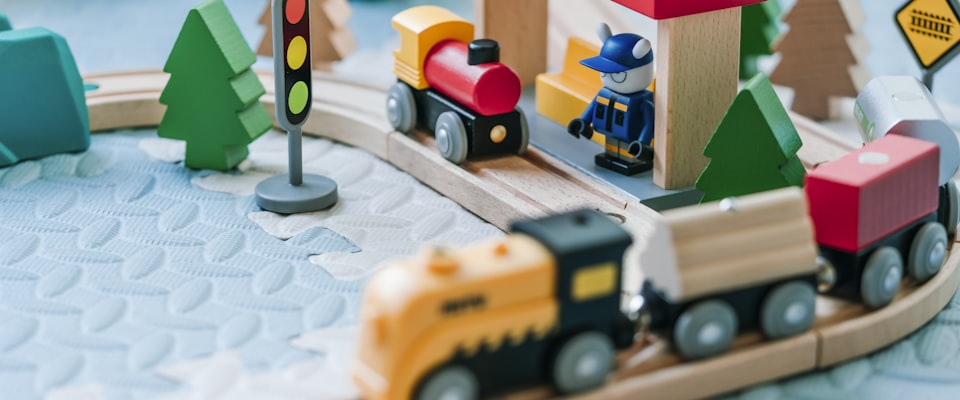
Walk through any toy aisle and you'll notice a pattern: almost everything is plastic. Dolls, building blocks, bath toys, teethers, action figures, play kitchens — all made from various petroleum-derived polymers. This isn't an accident. Plastic is cheap, lightweight, and moldable into any shape. But a growing body of research is revealing what that convenience costs our children's health.
The short answer: plastic toys release microplastic particles and chemical additives during normal play, and children are uniquely vulnerable because they mouth toys constantly, have developing immune and hormonal systems, and have a higher intake-to-body-weight ratio than adults. The good news: safer alternatives exist at every price point.
- Plastic toys release microplastic particles and chemical additives (phthalates, BPA/BPS, flame retardants) during normal play — especially when mouthed, heated, or scratched.
- Children under 3 mouth objects ~80 times per hour, creating a direct ingestion pathway for leached chemicals.
- Safer alternatives — solid wood, natural rubber, organic cotton, and stainless steel — exist at every price point.
- "BPA-free" labels on toys do not guarantee safety; replacement chemicals like BPS show similar endocrine-disrupting effects.
What's Actually in Plastic Toys
A plastic toy isn't just "plastic." It's a polymer base (often PVC, ABS, or polyethylene) combined with dozens of chemical additives that give it color, flexibility, durability, and flame resistance. These additives aren't chemically bonded to the plastic — they leach out over time, accelerated by heat, saliva, and physical wear.
The chemicals of greatest concern in children's toys:
- Phthalates — plasticizers that make rigid PVC soft and flexible. Found in dolls, bath toys, inflatable toys, and teethers. Known endocrine disruptors linked to ADHD, reduced IQ, and reproductive issues (Lancet Child & Adolescent Health, 2025).
- Bisphenols (BPA, BPS, BPF) — used in hard, clear plastics. "BPA-free" products often substitute BPS or BPF, which show similar endocrine-disrupting activity in research (Environmental Health Perspectives, 2023).
- Heavy metals (lead, cadmium, barium, chromium) — used in pigments and stabilizers. A 2025 Brazilian study found lead, chromium, and antimony in plastic toys at levels exceeding both EU and Brazilian safety standards (Science of the Total Environment, 2025).
- Flame retardants — added to meet fire safety regulations. Many are persistent organic pollutants that bioaccumulate in children's bodies.
PVC (polyvinyl chloride, recycling code #3) requires the most chemical additives of any common plastic — up to 60% of a flexible PVC toy's weight can be additives. If a toy feels soft and rubbery but isn't labeled silicone or natural rubber, it's almost certainly PVC. Bath toys, rubber ducks, vinyl dolls, and inflatable toys are the most common PVC items in a child's toy box. Check for recycling code #3 or the word "vinyl" on packaging.
The Microplastic Problem: It's Not Just Chemicals
Beyond chemical leaching, plastic toys physically break down into microplastic and nanoplastic particles during normal use. A 2024 study by Luo et al. demonstrated that standard toy building bricks release nanoparticles and microplastics during assembly and disassembly — the exact way children play with them.
These particles are small enough to cross biological barriers. Research published in 2025 confirmed the presence of microplastics in children's saliva after controlled exposure to plastic toys. Once ingested, microplastic particles have been detected in human blood, lungs, liver, placenta, and — most concerning — brain tissue.
"Chemicals in plastics pose serious and lasting health risks to children from before birth through adulthood, including developmental delays, obesity, asthma, ADHD, and reproductive issues."
— The Lancet Child & Adolescent Health, September 2025
The Highest-Risk Toy Categories
Avoid Bath toys (PVC/vinyl)
Bath toys are the worst combination: soft PVC plastic in warm water with a child who mouths everything. A 2018 Swiss Federal Institute study found up to 75 million bacteria and fungi per square centimeter inside rubber bath ducks. The warm, moist environment accelerates both chemical leaching and microbial growth. Squeeze toys with holes are the worst — they trap water inside, creating a biofilm breeding ground you can't clean.
Avoid Teethers and mouthing toys (plastic)
Any plastic item specifically designed to go in a baby's mouth is a direct chemical exposure pathway. The combination of saliva (slightly acidic), heat, and sustained contact maximizes leaching. The pacifier is the extreme case — it lives in a baby's mouth for hours a day, so if you're replacing plastic teethers, see our guide to the best non-toxic pacifiers for medical-grade silicone and natural-rubber picks that skip the phthalates and BPA. For older children learning to brush, toothbrush bristles become the daily oral plastic source: a standard nylon-bristle brush sheds microplastics directly into the mouth during brushing, which is why our guide to the best microplastic free toothbrush covers plant-bristle options for kids alongside adult picks.
Avoid Soft vinyl dolls and figures
Soft, flexible plastic dolls are typically PVC-based with high phthalate content. Children hug, chew on, and sleep with dolls — extended skin and mouth contact over years of use.
Avoid Cheap imported plastic toys
Toys without clear manufacturer information, safety certifications (EN 71, ASTM F963, CPSIA), or from unknown sellers on marketplace platforms have the highest rates of exceeding chemical safety limits. The 2025 Brazilian study specifically flagged inexpensive imported toys as the most likely to contain hazardous heavy metals above safe thresholds.
Safer Alternatives: What to Buy Instead
Switch Wooden toys — the gold standard
Solid hardwood toys with non-toxic finishes (plant-based oils, water-based paints, beeswax) are the safest mainstream alternative. Wood doesn't leach endocrine disruptors, doesn't shed microplastics, and lasts for generations. The higher upfront cost is offset by dramatically longer durability — a quality wooden toy outlasts dozens of plastic equivalents.
A $15 plastic building block set lasts 1-3 years before cracking, fading, and being thrown away. A $30 Hape wooden block set lasts 10+ years and can be passed down to siblings, cousins, or resold. Over the life of the toy, wood costs less per year of use — and zero in chemical exposure.
Parents keep coming back to the durability — reviewers say the blocks don't chip and the bright, water-based-painted colors hold up to years of building, and many like that block time turns into something the whole family does together. The honest gripes: some parents flag that the pieces are small enough for a 12-month-old to put straight in the mouth, so they treat this as a supervised toy for the youngest kids; and a few report the odd piece arriving with a rougher finish than the rest of the set. A minor one: 50 blocks feels light to buyers who expected a bigger bin.
✓ Ships free with Prime · Free returns · Amazon A-to-z purchase guarantee (on eligible items)
The most repeated praise is that these are solid wood — reviewers stress they're not fake wood or plastic, and several compare them to the sturdy blocks they had as kids. Owners like the 100-piece count for the price and the mix of 4 colors and 9 shapes. The honest downsides: they're slippery on carpet, so towers topple unless kids build on a hard, flat surface; the pieces are small enough that parents of under-2s watch closely even though the box says ages 2+; and Melissa & Doug itself tells you to inspect every block for splinters before first use, which a few buyers did find on arrival.
✓ Ships free with Prime · Free returns · Amazon A-to-z purchase guarantee (on eligible items)
Parents praise the build — reviewers say the blocks stand up to kids playing rough and are firm enough to pass down for generations, and they like the sensory touches (bell, rattle, mirror) worked into the set. The honest notes: detailed complaints are thinner for this specific set, and the ones that surface center on the premium price for a 9-piece set rather than any defect. A few also point out the blocks are best for the 1-to-2 range and get outgrown by older toddlers.
✓ Ships free with Prime · Free returns · Amazon A-to-z purchase guarantee (on eligible items)
Switch Silicone teethers and baby toys
Food-grade silicone is made from silica (sand), not petroleum. It doesn't contain BPA, phthalates, or PVC, and doesn't leach harmful chemicals under normal use conditions including heating and freezing. For any toy that will go directly in a baby's mouth, food-grade silicone is the safest non-wood option.
Parents who bought these describe them as a big hit and group them with the quality, minimalist Montessori toys worth owning, liking the soft food-grade silicone that doubles as a teether. Honest data is thinner here: some parents note their baby was slow to show interest in the rings and took a while to warm up, and a few say they'd choose Mushie's stacking cups over the rings for a younger baby. No safety or durability complaints stood out in what buyers wrote.
✓ Ships free with Prime · Free returns · Amazon A-to-z purchase guarantee (on eligible items)
The standout praise is grip — parents whose babies couldn't manage other teethers say this was the one their little one could actually hold and loved chewing, and they like that the color is embedded in the silicone with no coating to wear off. Lived-with reality: the silicone is a magnet for dust and pet fur, so it needs washing often; babies fling it on the floor constantly ("if only I could keep them from throwing it on the floor"); and the youngest babies sometimes can't hold it for more than a minute until they're a bit older.
✓ Ships free with Prime · Free returns · Amazon A-to-z purchase guarantee (on eligible items)
Switch Safe bath toys (no holes, no PVC)
The key to safe bath toys: solid construction (no holes that trap water and grow mold), non-PVC materials, and easy-to-clean surfaces.
Parents pick these specifically to escape the moldy-bath-toy problem — the appeal is one-piece flexible silicone (or twist-open designs) with no hidden interior where black mold grows, and buyers confirm they're quick to pop open and clean. Honest caveats: detailed reviews are still relatively few, and the trade-offs owners mention are price (they cost more than a bag of classic rubber ducks) and that even an open-to-clean toy needs to be dried so it doesn't sit damp. No mold or safety complaints stood out — which is the whole point of the design.
✓ Ships free with Prime · Free returns · Amazon A-to-z purchase guarantee (on eligible items)
Parents rave about the cute simplicity — reviewers say babies grow attached to these animal teethers and treat them like a favorite, and they marvel at how sturdy such a small toy feels, with the sealed, hole-free build meaning no water gets trapped inside to grow mold. The honest downsides: fresh natural rubber can smell for several days out of the box, so parents air it out before handing it over (most say the smell isn't too bad and fades); and you're paying a premium price for one small, single-piece toy. Because it's latex, it's not the right pick for a child with a latex allergy.
✓ Ships free with Prime · Free returns · Amazon A-to-z purchase guarantee (on eligible items)
Switch Natural rubber toys (for younger children)
Natural rubber (latex from rubber trees) is a plant-based material that's soft, flexible, and safe for mouthing — the natural alternative to PVC for squeeze toys and figurines.
Sophie has been the go-to teether since 1961, and parents love the soft, grippable shape and the squeak that keeps babies engaged. But the honest, widely reported problem is mold: a pediatric dentist famously cut hers open and found the inside coated in black mold, and many parents report the same after water got in through the whistle hole — some noticed a smell first. The fix is strict: never submerge it, keep water out of the hole, and wipe only the surface with a damp cloth. Even the maker calls the mold cases a matter of improper care, so treat this as a surface-clean-only toy, not a bath toy.
✓ Ships free with Prime · Free returns · Amazon A-to-z purchase guarantee (on eligible items)
Owners like that these are a genuine PVC-free alternative — 100% natural rubber, hand-painted with food-grade paint, and sealed with no holes so water can't get trapped and grow mold the way it does in hollow squirt toys. Parents online say babies get attached to the animal shapes and that the little toys feel sturdier than they look. The honest downsides: fresh natural rubber can carry a smell for a few days until it airs out; the per-toy price is high for the size; and, being latex, it's not an option for a child with a latex allergy.
✓ Ships free with Prime · Free returns · Amazon A-to-z purchase guarantee (on eligible items)
What About LEGO and Major Brand Plastic Toys?
Not all plastic toys carry the same risk. Major brands like LEGO use ABS (acrylonitrile butadiene styrene), which is harder, more stable, and contains far fewer additives than PVC. LEGO has also committed to phasing in bio-based and recycled materials.
The risk hierarchy for plastic types in toys:
- Highest risk: PVC (vinyl) — soft, flexible plastic — bath toys, dolls, inflatable toys. Up to 60% chemical additives by weight.
- Medium risk: polycarbonate, polystyrene — some harder toys, cases. May contain bisphenols.
- Lower risk: ABS, polyethylene, polypropylene — LEGO, harder construction toys. Fewer additives, more stable polymer structure.
If you're keeping some plastic toys, prioritize removing PVC items first. The soft, rubbery toys are the ones releasing the most chemicals.
The 5-Step Toy Box Audit
You don't need to throw everything out today. Here's a practical, prioritized approach:
- Remove PVC bath toys immediately. Replace with silicone or wooden alternatives. This is the single highest-exposure item in most homes.
- Replace plastic teethers. Switch to natural rubber (Sophie la Girafe), food-grade silicone (Comotomo), or hardwood teethers. Anything that goes directly in a baby's mouth should be non-plastic.
- Check soft vinyl toys. If it's soft, flexible, and plastic — it's likely PVC. Look for recycling code #3. Remove from the toy rotation, especially for children under 3.
- Upgrade new purchases to wood or silicone. You don't need to replace everything at once. As toys break or are outgrown, replace with natural material alternatives.
- Discard old, degraded plastic toys. Cracked, faded, or discolored plastic is releasing particles at an accelerated rate. If a plastic toy shows visible wear, it's shedding more than a new one.
Get the Complete Plasticproof Guide
Every room, every swap, every product — backed by 47+ peer-reviewed studies. The bedroom, kitchen, nursery, bathroom, and toy box. One guide, all the answers.
Related Products: Complete Toy Box Swap Kit
Here's a curated set of natural alternatives covering the major toy categories — enough to transition a child's core toy rotation away from plastic.
Parents like that the arches arrive larger than expected with vibrant, beautiful colors, and they rate the open-ended, Montessori-style play highly. The honest gripes: reviewers note the arches have a somewhat rough texture (the semicircles and rectangles are smoother), so it's not a glass-smooth finish; and because the pieces are hand-cut from natural wood there's some variation, with a few owners unsure how it will hold up long-term though they say it feels sturdy. The company does send free replacement arches if a piece is damaged, which softens the durability worry.
✓ Ships free with Prime · Free returns · Amazon A-to-z purchase guarantee (on eligible items)
Parents praise the durability — the recycled-HDPE pieces are described as fairly thick, with handles that aren't flimsy and plastic that won't crack, and the textured, milk-jug surface gives it a nice non-slip feel. Reviewers also like the peace of mind of no BPA, phthalates, PVC, or external coatings. The honest gripe that comes up most: the pot lid is small and slippery, so it can be almost impossible to grip and pull off once it's pushed on, which several owners find frustrating on an otherwise well-made set. Beyond the lid, sustained complaints are sparse.
✓ Ships free with Prime · Free returns · Amazon A-to-z purchase guarantee (on eligible items)
Parents praise the finish — reviewers call the paint excellent quality that doesn't chip off easily, and say every piece is beautifully and smoothly shaped with lovely attention to detail. The main honest knock is size: the most common criticism is simply that the pieces are small, which is also why it's rated ages 3+ (a swallowing concern for younger toddlers). And on cuttable wooden play food in general, the velcro that holds the sliceable pieces together can wear out fairly fast with heavy use. Solid wood and non-toxic water-based paint otherwise hold up well.
✓ Ships free with Prime · Free returns · Amazon A-to-z purchase guarantee (on eligible items)
Frequently Asked Questions
Yes. A 2024 study by Luo et al. demonstrated that plastic toy building bricks release nanoparticles and microplastics during normal assembly and disassembly. Regular play activities — snapping, bending, chewing, and dropping — create friction that breaks off microscopic plastic fragments. These particles are small enough to be ingested or inhaled by children during play. Softer plastics like PVC (common in bath toys and dolls) degrade faster and release more particles than harder plastics like ABS.
The primary chemicals of concern are phthalates (plasticizers that make plastic flexible), bisphenols (BPA and its replacements BPS and BPF), lead and cadmium (found in pigments and stabilizers), and PFAS. A 2025 Brazilian study found that many plastic toys contained barium, lead, chromium, and antimony at levels exceeding EU and Brazilian safety standards. These chemicals are endocrine disruptors linked to developmental delays, ADHD, reduced IQ, obesity, and reproductive issues.
Yes. Wooden toys made from sustainably sourced hardwood with non-toxic finishes are significantly safer. Wood doesn't leach endocrine-disrupting chemicals, doesn't shed microplastic particles, and is naturally durable. Look for toys finished with plant-based oils or water-based paints that meet EN 71 or ASTM F963 safety standards. Brands like Hape, PlanToys, Melissa & Doug, and Grimm's specialize in non-toxic wooden toys.
Food-grade silicone is generally considered safer than plastic. Silicone is made from silica (sand), not petroleum, and doesn't contain BPA, phthalates, or PVC. It doesn't leach harmful chemicals under normal use. However, not all silicone is equal — look for 100% food-grade or medical-grade silicone products. Avoid silicone products with strong chemical odors or very low prices, which may indicate filler materials.
In order of impact: (1) Replace mouthed toys first — teethers, bath toys, and anything babies put in their mouths should be wood, food-grade silicone, or natural rubber. (2) Avoid PVC and vinyl toys entirely — check for recycling code #3 or the word "vinyl." (3) Choose wooden or natural material toys for new purchases. (4) Wash hands after playing with plastic toys. (5) Ventilate play areas regularly. (6) Discard old, degraded plastic toys — cracking and discoloration mean accelerated particle release.
Bath toys are among the highest-risk plastic toys. Most are made from PVC that degrades rapidly in warm, humid conditions. A 2018 Swiss study found up to 75 million bacteria and fungi per square centimeter inside rubber bath ducks. The warm water accelerates chemical leaching while children mouth these toys. Safer alternatives include solid silicone bath toys (no holes), wooden bath boats, and stainless steel cups for water play.
Sources
- Luo Y, et al. "Leaching of nanoparticles and microplastics from plastic toy building bricks during play." Environmental Science & Technology, 2024.
- "Plastics, chemicals, and the health of children." The Lancet Child & Adolescent Health, September 2025.
- Hahladakis JN, et al. "An overview of chemical additives present in plastics: Migration, release, fate and environmental impact during their use, disposal and recycling." Journal of Hazardous Materials, 2018.
- Zimmermann L, et al. "Benchmarking the in Vitro Toxicity and Chemical Composition of Plastic Consumer Products." Environmental Science & Technology, 2019.
- Lemos LS, et al. "Hazardous chemical elements in plastic toys." Science of the Total Environment, 2025.
- Ragusa A, et al. "Plasticenta: First evidence of microplastics in human placenta." Environment International, 2021.
- Zhang J, et al. "Microplastics in infant feces." Environmental Science & Technology Letters, 2021.
- Hamlin HJ, et al. "Comparative assessment of BPA alternatives." Environmental Health Perspectives, 2023.
- Hembach L, et al. "Contamination of rubber bath toys with bacteria and fungi." Biofilms and Microbiomes (Swiss Federal Institute), 2018.
- U.S. EPA. "Exposure Factors Handbook: Mouthing Behavior in Young Children." 2011.
- EARTHDAY.ORG. "Babies vs. Plastics: Updated Report." November 2024.
Protect Every Room in Your Home
From the toy box to the kitchen to the bedroom — the Complete Plasticproof Guide covers every swap that matters, backed by 47+ studies.