The average elementary school child eats lunch from the same container five days a week, nine months a year — roughly 180 meals annually. If that container is plastic, those are 180 microplastic exposure events. And unlike adult exposure, children can't choose to change their containers. They depend on parents to make the decision.
The case for switching is straightforward. A 2023 study found that polypropylene containers released up to 4.22 million microplastic particles and 2.1 billion nanoplastics per use cycle under normal conditions. Children's smaller body mass means the per-kilogram exposure is proportionally higher than for adults. Their still-developing organ systems — immune, endocrine, neurological — are also considered more vulnerable to chemical disruption than adult systems.
The good news: the best plastic-free lunch boxes are genuinely better products. They're more durable, easier to clean, don't absorb smells, and don't stain. The sticker price is higher, but they last years — often the entire K–12 run — versus cheap plastic boxes that need replacing annually.
Compare all 6 picks
Every pick side by side — tap a name to jump to the full review, or check today's price.
| Pick | Rating | Why it wins | |
|---|---|---|---|
 Best OverallPlanetBox Rover Complete Lunch Kit |
4.6out of 5 | 18/8 stainless steelZero plastic food contact |
Check price → |
| 4.4out of 5 | 18/8 stainless steelNo plastic touches food |
Check price → | |
 Best Leak-ProofECOlunchbox Three-in-One Stainless Steel Bento Set |
4.9out of 5 | Food-grade stainless steelZero plastic food contact |
Check price → |
 Best MinimalistBambaw Stainless Steel Lunch Box (Clasp Lid) |
— | 304 stainless steelNo plastic food contact |
Check price → |
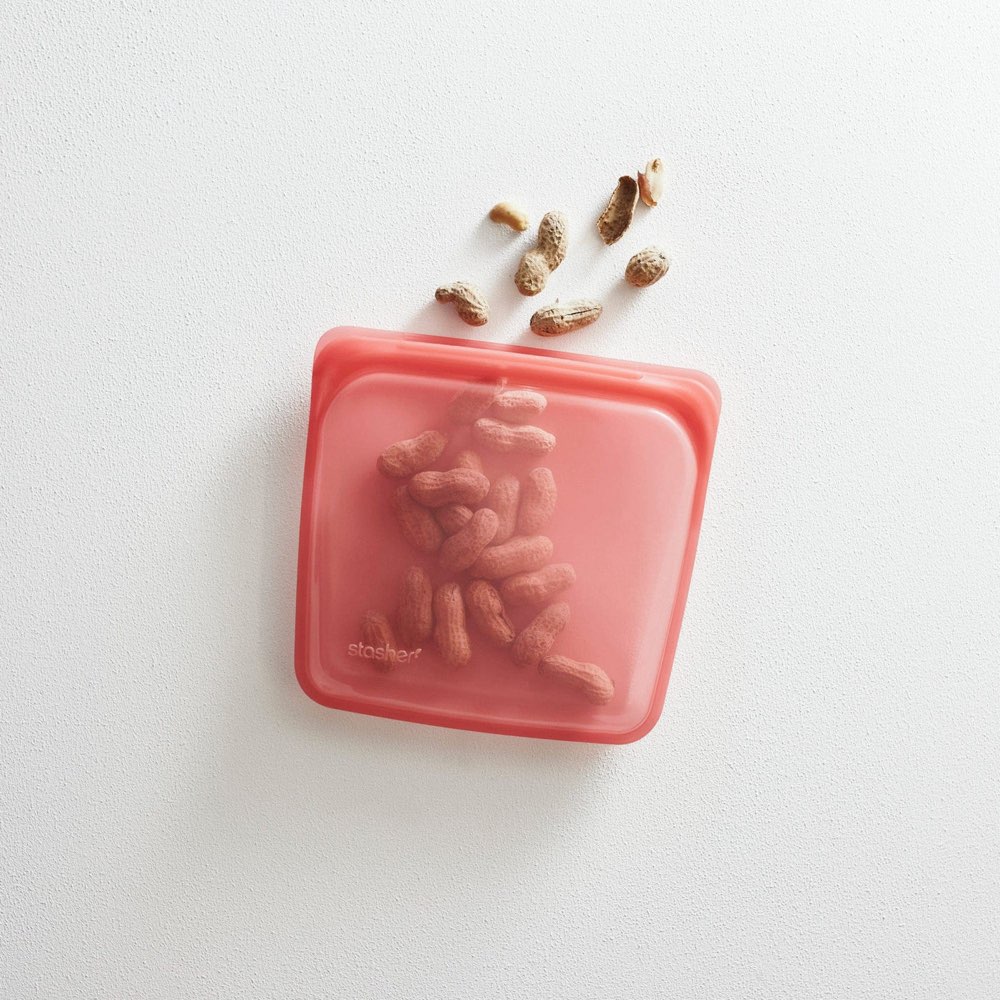 Best for ToddlersStasher Reusable Silicone Storage Bags (Snack + Sandwich) |
4.9out of 5 | Platinum siliconeNo BPA, BPS, BPF or lead |
Check price → |
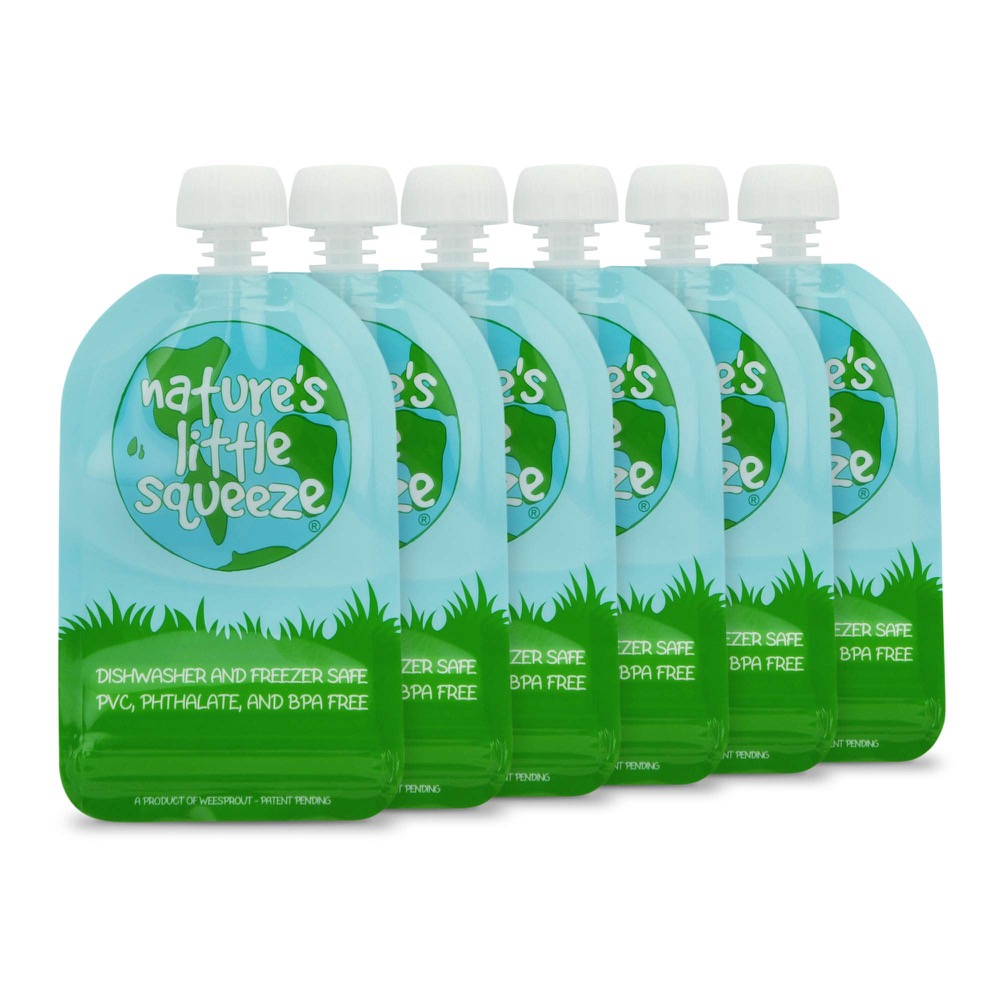 Best for PureesWeeSprout Reusable Food Pouches (Multi-Pack) |
— | Food-grade siliconeBPA, PVC & phthalate-free |
Check price → |
Why Plastic Lunch Boxes Are a Microplastic Risk
Not all plastic exposure is equal, and it's worth understanding exactly why lunch boxes are a meaningful concern rather than just ambient plastic contact.
The scratch problem. Plastic lunch boxes are subject to constant mechanical stress: being tossed in backpacks, stacked in cubbies, washed in dishwashers, and opened by small hands with surprising force. Every scratch on the interior surface creates a higher-surface-area area where microplastics shed more easily. A new polypropylene box may release relatively few particles — a box that's been used for a year of school is a different story. Research on plastic cutting boards found that a single plastic cutting board can shed up to 79 million microplastic particles per year under normal use; lunch box interiors face similar abrasion patterns.
The temperature problem. Warm food accelerates plastic leaching. When a child packs hot leftover pasta, still-warm grains, or food that was heated before packing, the temperature differential inside a sealed plastic container drives chemical transfer. The 2023 microplastics study specifically found elevated particle counts when containers were exposed to moderate heat — well below microwave temperatures.
The acidic food problem. Citrus, tomato-based foods, fruit juices, and yogurt are all acidic — and acidic foods accelerate leaching from most plastics. Children's lunches are full of acidic foods. An apple slice, a yogurt pouch, a box of orange juice poured into a plastic cup — all contribute.
Children's lower body mass means higher per-kilogram exposure relative to adults. Developing neurological, endocrine, and immune systems are considered more sensitive to chemical disruption. This is the population where precautionary action is most justified.
To understand more about why this matters for children's health specifically, see our guides on microplastics in baby food and the Plasticproof nursery guide.
What Makes a Good Plastic-Free Lunch Box
Before diving into specific products, here are the criteria that separate genuinely good options from marketing-driven alternatives:
- Material: Food-grade 18/8 stainless steel (304 grade) is the gold standard — no leaching, no degradation, no odor retention. Borosilicate glass is equally safe but fragile for school-aged children. Food-grade silicone is a legitimate safer-than-plastic option but not as chemically inert as stainless at elevated temperatures.
- No plastic food-contact surfaces: The goal is eliminating plastic contact with food. Some "stainless" lunch boxes use plastic interior trays or dividers — these don't count. True stainless steel bento boxes have all-metal food-contact surfaces.
- Leak-proof design: A lunch box that leaks is a lunch box that gets replaced with a plastic one. Leaked sauces, soups, and dressings are a real school-day problem. Look for silicone gaskets, tight-fitting lids, and leak-tested designs.
- Compartments: Bento-style compartments help parents pack variety without separate containers. Children are also more likely to eat variety when foods don't touch — many kids have strong preferences about food separation.
- Weight: This matters most for young children. A heavy stainless steel box is excellent for a 10-year-old; it's impractical for a 4-year-old carrying a backpack. Lighter silicone options exist for younger children.
- Dishwasher safe: Parent sanity. Look for top-rack dishwasher safety at minimum.
The Best Stainless Steel Lunch Boxes for Kids
1. PlanetBox Rover — Best Overall
Best Overall
Five 18/8 stainless steel compartments with a magnetic lid — the category-defining kids bento box.
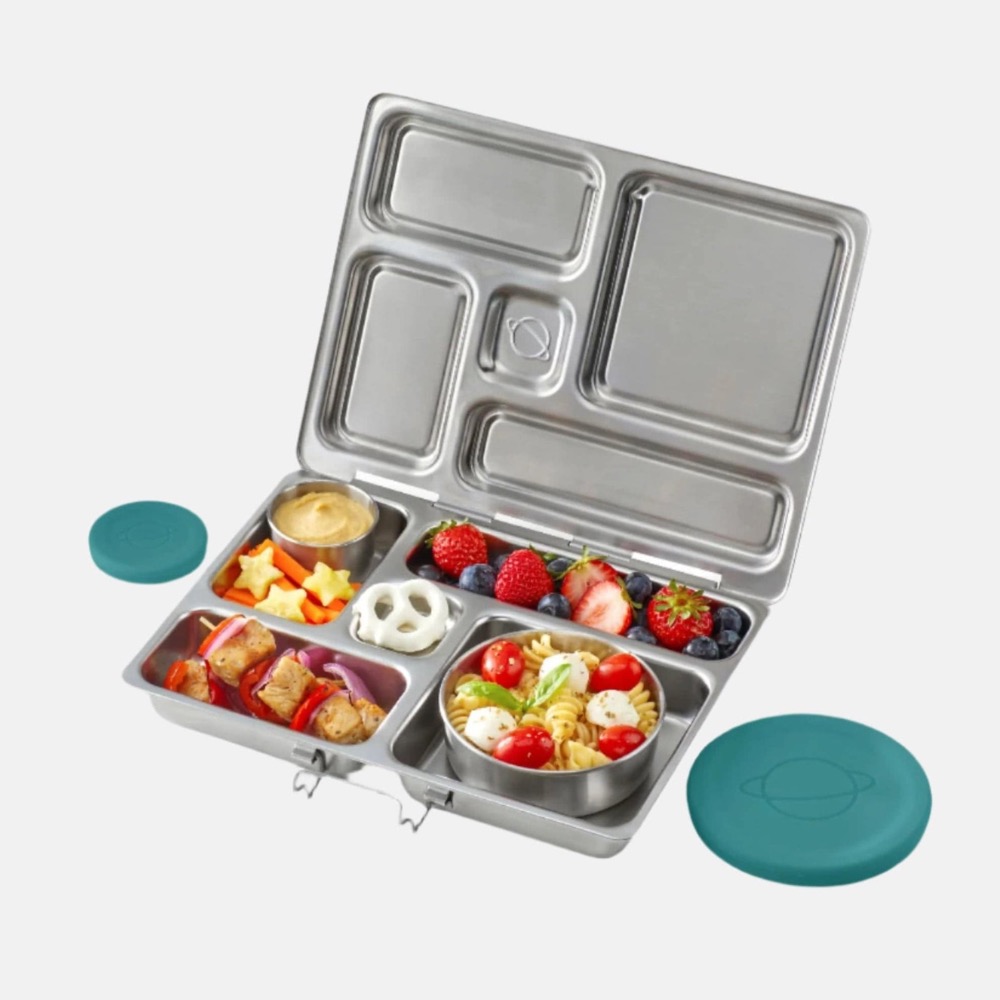
The PlanetBox Rover is the category-defining stainless steel lunch box. A single-piece tray with five compartments — a large main section, two medium sections, and two small sections — fits into a stainless steel case. All food-contact surfaces are 18/8 stainless steel with zero plastic food contact. The lid attaches with magnets, which means no plastic snapping mechanisms to break. Kids can customize with decorative magnet sets, which matters enormously for getting kids excited about the new box rather than demanding the old plastic one back. Two leak-proof Dipper containers are included for sauces and dips.
Parents treat this stainless bento kit as a buy-it-for-life box, with one saying it "has been holding up like a champ, and looks as good as the day I got it despite a 4 year-old dropping it and banging it around daily" and another "My kids have had this lunchbox for 10 years, and we're never going back," and they like the no-plastic dishwasher cleanup and the included carry bag and dippers. The honest downsides: it is heavy, with reviewers reporting "even a 5-year-old complaining about having to carry it," the latches can fail within a year (replacements are sold), and the small dipper seals are easy for a kid to lose.
Pack five separate foods in one all-metal tray your child will actually want to use — and the magnet sets turn the switch away from plastic into their idea, not yours.
Why it's safe: Every food-contact surface is 18/8 (304) stainless steel with no plastic liner, tray, or coating — so nothing can shed microplastics or leach BPA into a warm or acidic lunch.
Check Today’s Price on Amazon →Amazon prices change daily — tap to see today's price and any active discount.
- Ships free with Prime
- Free returns
- A-to-z purchase guarantee
2. LunchBots Bento Cinco — Best Value Stainless
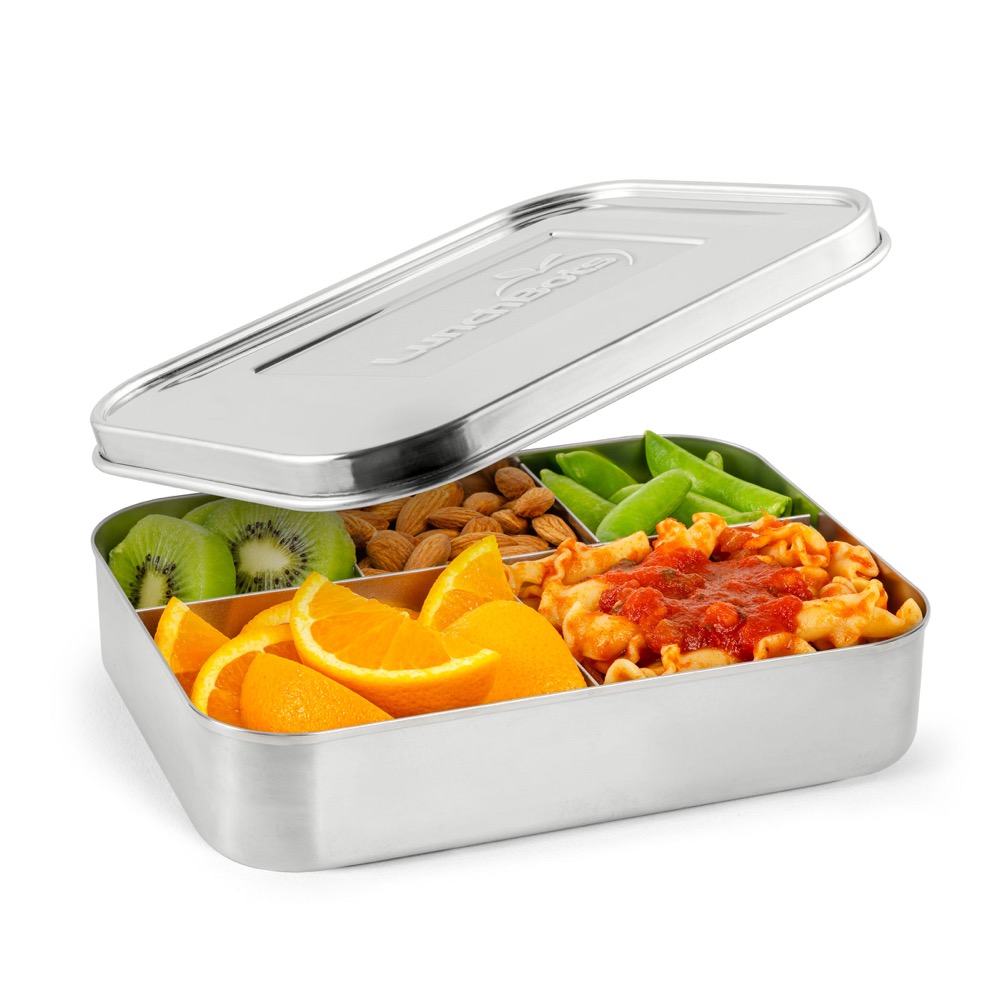 Best Value
Five all-stainless compartments — including the lid — at roughly half the price of a PlanetBox.
LunchBots makes the most straightforward stainless bento box on the market. The Cinco has five compartments in a rectangle format and a 100% stainless steel lid — no plastic touches food anywhere inside. It's lighter than the PlanetBox Rover and meaningfully less expensive, with the trade-off being a less refined design and no magnetic personalization system. An optional snap-on plastic cover is sold separately for color, but it sits on the outside and never contacts food.
Parents love the day-to-day simplicity of this five-section steel box, saying "Absolutely love this lunch box! Has made making lunch much easier, fun and exciting," and praising that "There is no paint to chip off, no designs to fade and no plastic to break." The honest downsides: it is not leak-proof, so the maker says pack dry foods only, and "if you turn the container sideways, it definitely does leak," and the single press-on lid can pop open in a backpack, with one parent returning it because it "would open and spill all of her lunch before lunch time.
Get the same all-metal, five-compartment lunch as the premium boxes for roughly half the money — and a little lighter for younger kids to carry.
Why it's safe: The tray and lid are 18/8 food-grade stainless steel with no plastic liner or coating in the food zone — nothing to scratch, shed microplastics, or leach into your child's lunch.
Check Today’s Price on Amazon →Amazon prices change daily — tap to see today's price and any active discount.
- Ships free with Prime
- Free returns
- A-to-z purchase guarantee
3. ECOlunchbox Three-in-One — Best Nesting Design
Best Leak-Proof
Three stacking stainless containers that each seal on their own — the best wet-food option in metal.
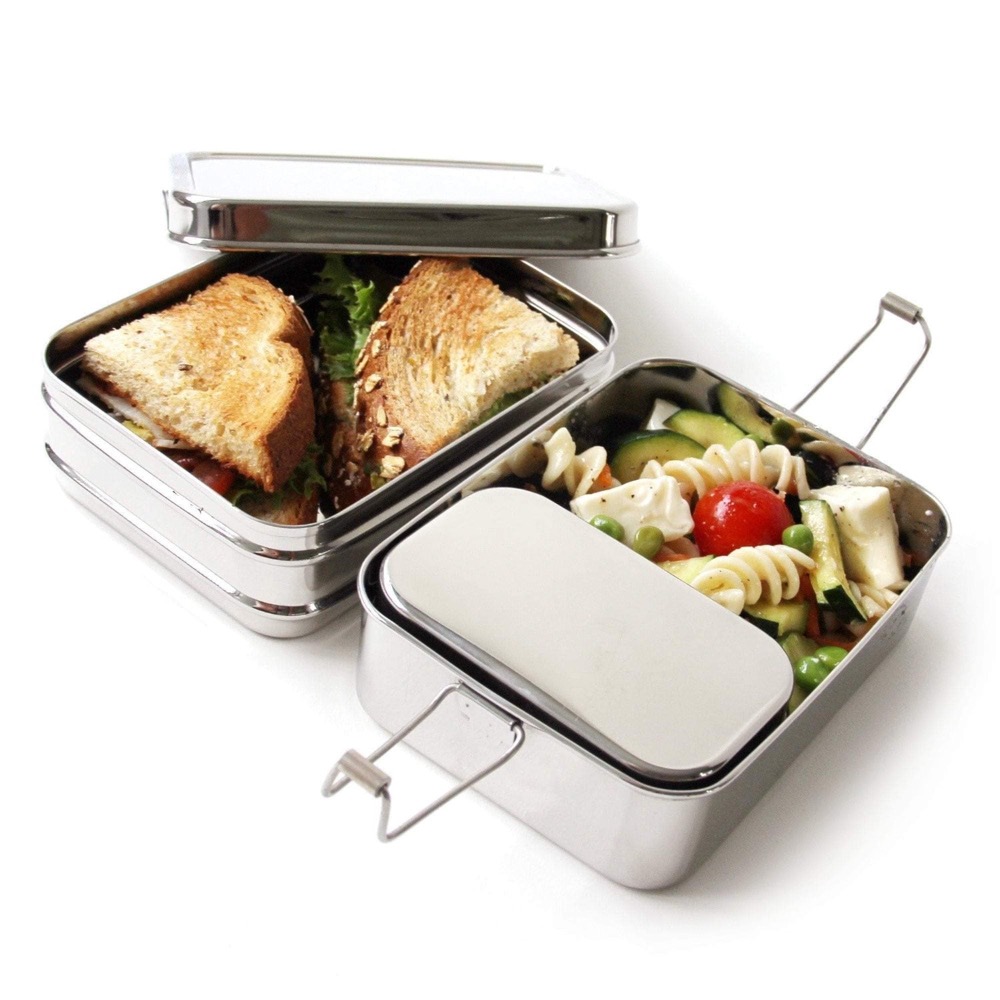
The ECOlunchbox Three-in-One takes a different approach: three separate stainless steel containers that stack together within a larger outer container. This gives flexibility — you can send a main dish in one container, cold snacks in another, and dessert in the third, with each container sealed independently. The leak-resistance is superior to open-tray designs. All surfaces are food-grade stainless steel. Works particularly well for kids who want to eat different foods at different times during the day, not all at once.
Parents find this nesting stainless set sturdier and longer-lived than plastic, reporting 6 to 8 years of daily use "still going strong" and calling it "way more sturdy than the plastic versions," valued for plastic-free simplicity and being "super easy to dry after washing it." The honest downsides: the manufacturer itself labels it "Not Leak-Proof," since it has no gaskets, so a returning buyer said "the Amazon summary should be updated" to make that clear, and it runs small, with "a small sandwich barely fit" a recurring note.
Send saucier, juicier lunches without the dreaded backpack leak — three separate metal containers each close on their own.
Why it's safe: Every container and lid is food-grade stainless steel with no plastic food contact, so acidic fruit and tomato-based foods can't drive any chemical or microplastic transfer.
Check Today’s Price on Amazon →Amazon prices change daily — tap to see today's price and any active discount.
- Ships free with Prime
- Free returns
- A-to-z purchase guarantee
4. Bambaw Stainless Steel Lunch Box — Best Minimalist
Best Minimalist
A clean single-piece 304 stainless box with a leakproof clasp lid — the grown-up-looking pick for older kids.
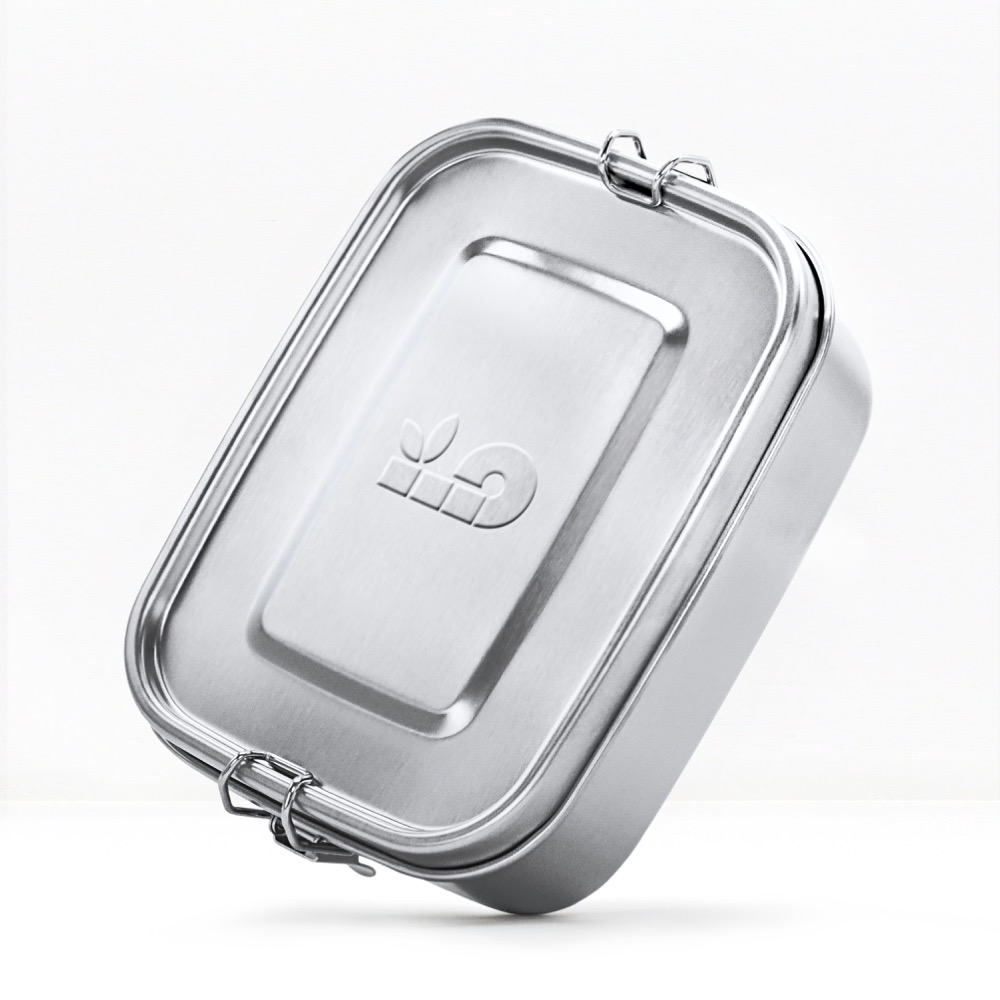
Bambaw's single-piece 304 stainless box is the most adult-feeling design in this list — clean, sophisticated, and without the colorful bento compartments. The clasp lid uses a removable BPA-free silicone seal for genuine leak resistance, and an adjustable divider lets you split it into two sections. Better suited for older kids (7+) and teens who aren't fussed about lots of separate compartments. The stainless steel body has no plastic food contact, and it's typically the most affordable stainless option on this list.
This clasp-and-gasket steel box is described in roundups as sealing well enough to be "leak-proof even with runny salad dressings or soup," with 304 stainless that resists odors and rounded interior corners that are straightforward to hand-wash. Honesty note: independent verified-buyer review data is genuinely sparse, since most hits are the brand's own pages or affiliate roundups, so read this as lower-confidence. The fair, sourced caveats are that it is "best suited to solid or semi-solid meals rather than soups," and runny sauces can migrate under the adjustable divider if the seal is not fully compressed.
Give an older kid a plastic-free box that looks like a grown-up lunch tin — leakproof clasps and an adjustable divider, usually for the lowest price in stainless.
Why it's safe: The box is single-piece 304 food-grade stainless steel with only a removable BPA-free silicone seal — no plastic touches food, so there's nothing to leach or shed.
Check Today’s Price on Amazon →Amazon prices change daily — tap to see today's price and any active discount.
- Ships free with Prime
- Free returns
- A-to-z purchase guarantee
The Best Silicone Lunch Boxes for Kids
Food-grade silicone is a legitimately safer alternative to plastic — it does not shed microplastics in the same way, and high-quality silicone is non-reactive with food under normal conditions. It's not as chemically inert as stainless steel, but it's dramatically better than polypropylene or polyethylene plastic containers. Silicone's advantage is weight and flexibility — key for toddlers and young children. Beyond lunch boxes, the same platinum silicone is used for reusable snack and sandwich pouches; see our guide to the best silicone food storage bags. Packing your own lunch too? Our roundup of the best non-toxic lunch containers for adults covers the glass and stainless options.
5. Stasher Reusable Silicone Bags — Best Flexible Option
Best for Toddlers
Platinum food-grade silicone bags that replace plastic Ziploc-style pouches — the lightest, cheapest entry point.
Stasher bags are the direct replacement for plastic sandwich bags and Ziploc-style pouches — eliminating the most common single-use plastic in a school lunch. Made from platinum food-grade silicone (no BPA, BPS, BPF, latex, or lead). Dishwasher safe, microwave safe, freezer safe. The snack size works for crackers, grapes, and dry snacks; the sandwich size handles sandwiches, wraps, and larger items. Not a traditional lunch box, but the right tool for eliminating everyday plastic bag waste — and the most affordable, lightest entry point for toddlers.
Parents keep coming back to the airtight seal and how they replace disposables for good, with one saying "I'm never buying a Ziploc bag again" and others reporting that after years "They've held up perfectly, and I've never noticed any weird taste," which suits packing snacks and sandwiches for school. The honest downsides: odor and stain retention is real, with a bag stored with garlic "begging" to be de-smelled, the "tough-to-clean seams" dry slowly and can hold moisture or mildew, and the pinch seal can be fiddly for small hands.
Stop buying disposable plastic baggies entirely — these seal, wash, and reseal for years, and weigh almost nothing in a small child's bag.
Why it's safe: Platinum food-grade silicone doesn't shed microplastics the way polyethylene baggies do, and it's free of BPA, BPS, BPF, latex, and lead even when frozen or microwaved.
Check Today’s Price on Amazon →Amazon prices change daily — tap to see today's price and any active discount.
- Ships free with Prime
- Free returns
- A-to-z purchase guarantee
6. WeeSprout Silicone Food Pouch — Best for Toddlers
Best for Purees
Refillable squeeze pouches that replace disposable plastic ones — same squeeze, zero single-use plastic.
For parents still sending purees, yogurt, or applesauce to daycare and nursery, disposable plastic squeeze pouches are one of the highest-microplastic exposure sources for young children. WeeSprout's refillable pouches replace them exactly — same size, same squeeze mechanics. Made from food-grade silicone, free of BPA, PVC, and phthalates, and dishwasher safe (open cap face up). They fill from the bottom, and a multi-pack covers a full week of pouches for toddler snacks.
One labeling note: these popular reusable "food pouches" are BPA-free plastic, not silicone. Parents like that the bottom seal holds, saying "They have never had a leak out of the bottom," that the wide opening makes filling straightforward, and that the brand "read customer complaints and address them." The honest downsides: the zipper channel traps food and can grow mold, with owners reporting "getting mold in the zipper area" and that "the hardest part to clean is right up at the top," needing a small brush, and the company itself says thin liquids "can leak from the pouch.
Cut out the disposable squeeze pouch entirely — fill these with your own purees and yogurt, then wash and reuse instead of throwing plastic away every day.
Why it's safe: Food-grade silicone is free of BPA, PVC, and phthalates and doesn't shed microplastics the way thin disposable plastic pouches do — important for the youngest, most vulnerable eaters.
Check Today’s Price on Amazon →Amazon prices change daily — tap to see today's price and any active discount.
- Ships free with Prime
- Free returns
- A-to-z purchase guarantee
Best for Specific Needs
Best for Toddlers (Ages 2–4): PlanetBox Launch
The PlanetBox Launch is a smaller, lighter version of the Rover designed specifically for toddler portions. Three main compartments, same magnetic closure, same all-stainless construction — just sized for smaller appetites and lighter enough for small children to carry. It's a premium option, but it survives from daycare through kindergarten.
View PlanetBox Launch on Amazon →Best Budget: LunchBots Duo
If a PlanetBox is outside your budget, the LunchBots Duo is the honest recommendation at the lower end. Two-compartment stainless tray, snap lid with no food contact. Smaller and lighter than the Cinco. Not as visually engaging for kids, but fully plastic-free at a genuinely affordable price.
View LunchBots Duo on Amazon →Best for Soups and Hot Foods: Stanley Thermos + Stainless Bento
The PlanetBox Rover is not leak-proof enough for soup or chili — hot wet foods need a separate thermos. The Stanley Classic Thermos (all-stainless interior) keeps food hot for 7+ hours and is a popular pairing with any stainless bento for winter months. See our guide to the best plastic-free food storage containers for more options.
View Stanley Thermos on Amazon →Comparison Table: All Picks at a Glance
| Lunch Box | Material | Compartments | Leak-Proof | Best For | Price |
|---|---|---|---|---|---|
| PlanetBox Rover | 18/8 Stainless | 5 | Partial | Ages 5–12 | $$$ |
| LunchBots Bento Cinco | 18/8 Stainless | 5 | No | Ages 4–12 | $$ |
| ECOlunchbox Three-in-One | 18/8 Stainless | 3 stacked | Yes (each) | Ages 6+ | $$ |
| Bambaw Stainless Steel Box | 304 Stainless | 1–2 | Yes | Ages 7+ | $$ |
| Stasher Silicone Bags | Platinum Silicone | 1 per bag | Yes | Ages 2+ | $ |
| PlanetBox Launch | 18/8 Stainless | 3 | Partial | Ages 2–4 | $$$ |
| LunchBots Duo | 18/8 Stainless | 2 | No | Any age | $$ |
Price tier: $ = budget · $$ = mid-range · $$$ = premium. Tap any product's Amazon button above for today's exact price.
Tips for Getting Kids to Accept the Switch
The biggest obstacle to switching isn't cost — it's child psychology. Kids are attached to the familiar, and a new metal lunch box looks very different from the plastic Frozen lunchbox they've been using. Here's what actually works:
- Let them pick the magnets. The PlanetBox magnet customization system is not just marketing — it's genuinely effective for getting kids excited. Let your child pick a magnet set featuring their current obsession (dinosaurs, space, animals, sports), and suddenly the new lunch box is their choice, not yours.
- Make the first packing a project. Pack the new lunch box together the first time. Let your child decide what goes in which compartment. Ownership reduces resistance significantly.
- Start with one swap. If a full switch feels abrupt, start by replacing just the main food container with a stainless one. Keep the existing bag, the existing snack pouches — just change the box. Integrate over a few weeks.
- Pack the same foods. The lunch box should change, not the menu. Keep the familiar foods in the new container. The food provides continuity while the container changes.
- Acknowledge the weight. Stainless is heavier than plastic. If your child complains, validate it — it is heavier. But frame it: "this one never breaks and keeps your food better." For very young children, lighter silicone options may be more practical.
A cheap plastic lunch box that needs replacing every school year quietly adds up. A quality stainless steel box like the PlanetBox Rover costs more up front but routinely lasts the better part of a decade — so the cost per year works out lower over any multi-year horizon, and it doesn't require explaining to your child why their lunch tasted weird.
Going Plastic-Free in the Kitchen
The lunch box is one piece of the picture. Our complete kitchen detox guide covers every swap — cookware, cutting boards, food storage, and more — ranked by impact and cost.
Frequently Asked Questions
Conventional plastic lunch boxes present two main safety concerns for children. First, microplastic particle release: scratches, washing wear, and temperature changes cause plastic containers to shed microplastic particles directly into food. A 2023 study found polypropylene containers released millions of microplastics per use cycle. Children are considered more vulnerable than adults due to their lower body mass and still-developing organ systems. Second, chemical leaching: many plastics contain BPA, phthalates, or structural analogs that disrupt hormonal signaling in animal studies. BPA-free labeling does not guarantee safety — replacement chemicals have similar mechanisms. The safest choice is stainless steel or borosilicate glass with no plastic food-contact surfaces.
Food-grade stainless steel (18/8 or 304 grade) is the safest lunch box material for children. It releases no microplastics, no BPA or phthalates, is non-reactive with acidic foods, and is essentially indestructible under normal school use. It's also dishwasher safe and does not retain odors or stains. The main tradeoff is weight — stainless lunch boxes are heavier than plastic, which matters for very young children. Borosilicate glass is equally chemically safe but too fragile for school-aged children without silicone sleeves. Food-grade silicone is significantly safer than plastic but not as chemically inert as stainless at elevated temperatures. For school-aged children, a stainless steel bento box is the standard recommendation.
For toddlers (ages 1–3), weight is the primary concern — they cannot carry heavy stainless steel boxes comfortably. The best options are: (1) PlanetBox Launch — a smaller, lighter version of the Rover designed for toddlers, with 3 main compartments and weighing significantly less than full bento boxes. (2) LunchBots Bento Cinco in the smaller 14 oz size. (3) Stasher Silicone Bags — not a full lunch box but excellent for portioning toddler foods without any plastic. Lightweight, dishwasher safe, and leak-resistant for moist foods. For childcare settings that require BPA-free plastic labeling, check whether stainless or silicone is accepted — many facilities have updated policies but some haven't.
Most stainless steel lunch boxes are dishwasher safe, but specifics vary by brand. PlanetBox Rover: the stainless tray is dishwasher safe (top rack recommended); magnets and accessories are hand-wash only. LunchBots: fully dishwasher safe on top rack. ECOlunchbox Three-in-One: dishwasher safe, top rack. For all stainless steel lunch boxes, top rack placement and lower-temperature wash cycles extend the life of silicone gaskets and lid components. Hand-washing takes 30 seconds and significantly extends product lifespan. Note: lids with silicone seals can be washed in the dishwasher, but high heat may degrade the seal over time — this is a minor durability consideration, not a safety issue. The stainless food-contact surface is completely unaffected by dishwasher use.
Sources
- Li D, et al. "Microplastics in food packaging: A review of occurrence, migration and safety." Trends in Food Science & Technology, 2023.
- Zhu Y, et al. "Polypropylene food containers release microplastics and nanoplastics under various conditions." Nature Food, 2023.
- Cholewinska P, et al. "The microbiome, its potential impact on health and exposure to microplastics." International Journal of Molecular Sciences, 2022.
- Fadare OO, et al. "Microplastics from microwaveable containers: Potential exposure and unknown consequences." Science of The Total Environment, 2021.
- Jenner LC, et al. "Detection of microplastics in human lung tissue using micro-FTIR spectroscopy." Science of The Total Environment, 2022.
- Plastic Cutting Boards Study. "Estimating microplastic ingestion from cutting boards." Environmental Science & Technology, 2023.
- Ragusa A, et al. "Plasticenta: First evidence of microplastics in human placenta." Environment International, 2021.