
The kitchen cutting board is one of the most overlooked sources of microplastic contamination in the home. Unlike food packaging, which at least has a barrier between plastic and food, a cutting board is designed to be cut into — repeatedly, aggressively, every single day. Each knife stroke on a polyethylene or polypropylene board carves out micro-fragments that mix directly into whatever is being prepared.
This guide evaluates six non-toxic cutting boards across three criteria: (1) material safety and microplastic risk, (2) durability and knife-friendliness, and (3) whether the price is justified. No brand partnerships, no affiliate ranking games — just what's worth the investment for a healthier kitchen.
Compare all 6 picks
Every pick side by side — tap a name to jump to the full review, or check today's price.
| Pick | Why it wins | |
|---|---|---|
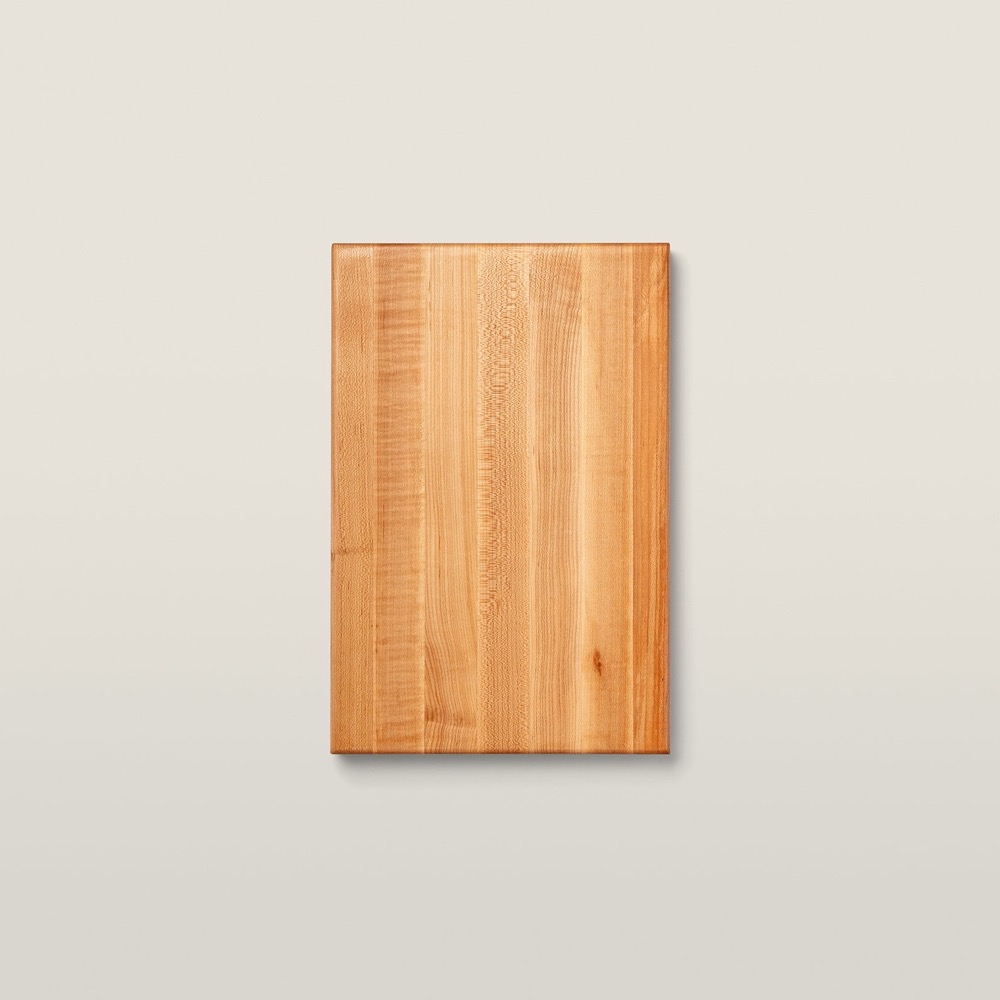 Best OverallJohn Boos Maple Edge Grain Cutting Board |
Solid HardwoodNSF Certified |
Check price → |
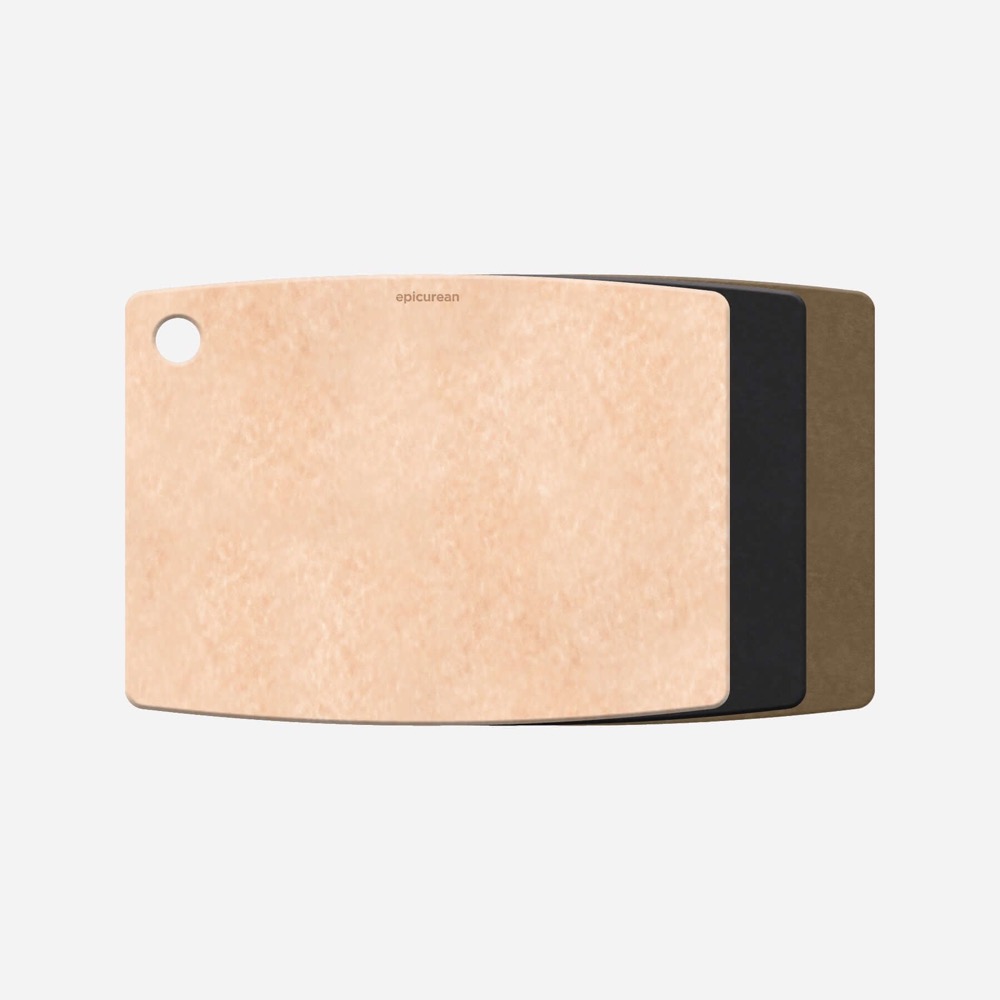 Best BudgetEpicurean Kitchen Series Cutting Board |
No BPA/BPSNSF Certified |
Check price → |
Solid HardwoodFSC Certified |
Check price → | |
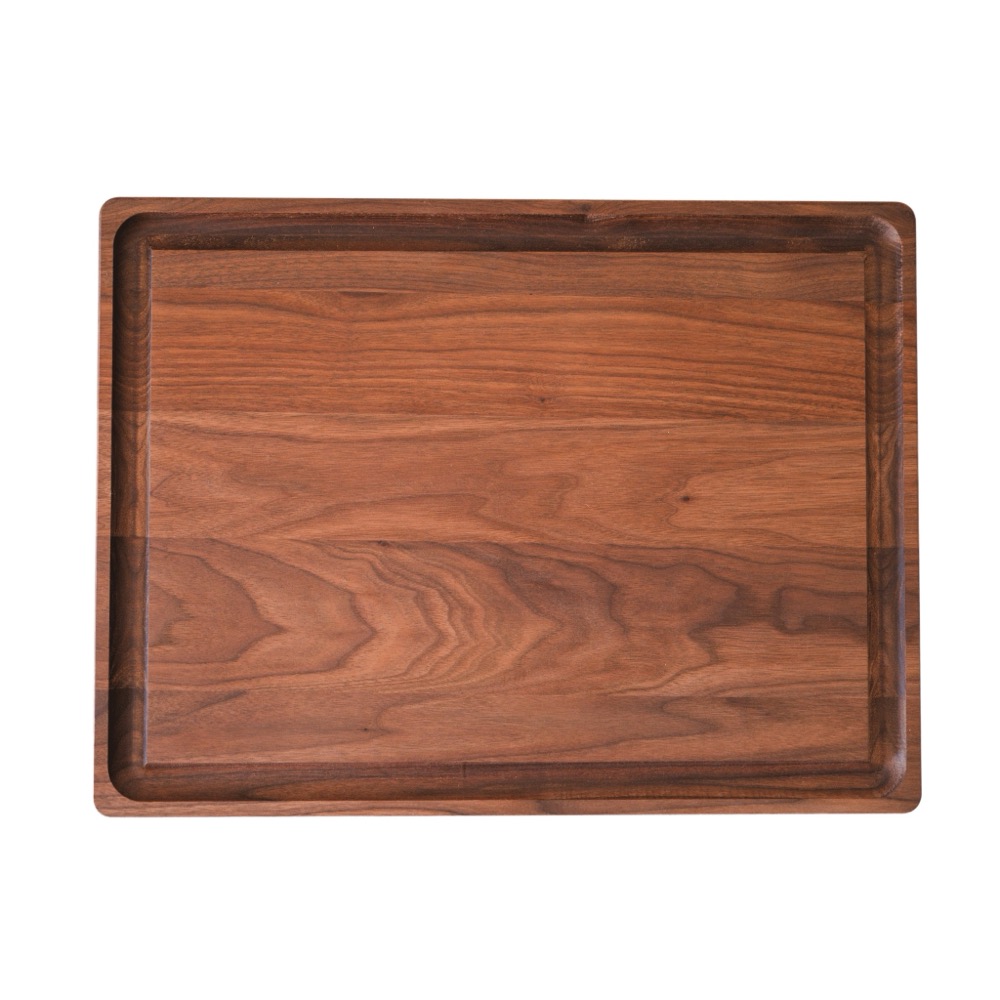 Best PresentationVirginia Boys Kitchens Walnut Cutting Board |
Solid HardwoodHandcrafted in USA |
Check price → |
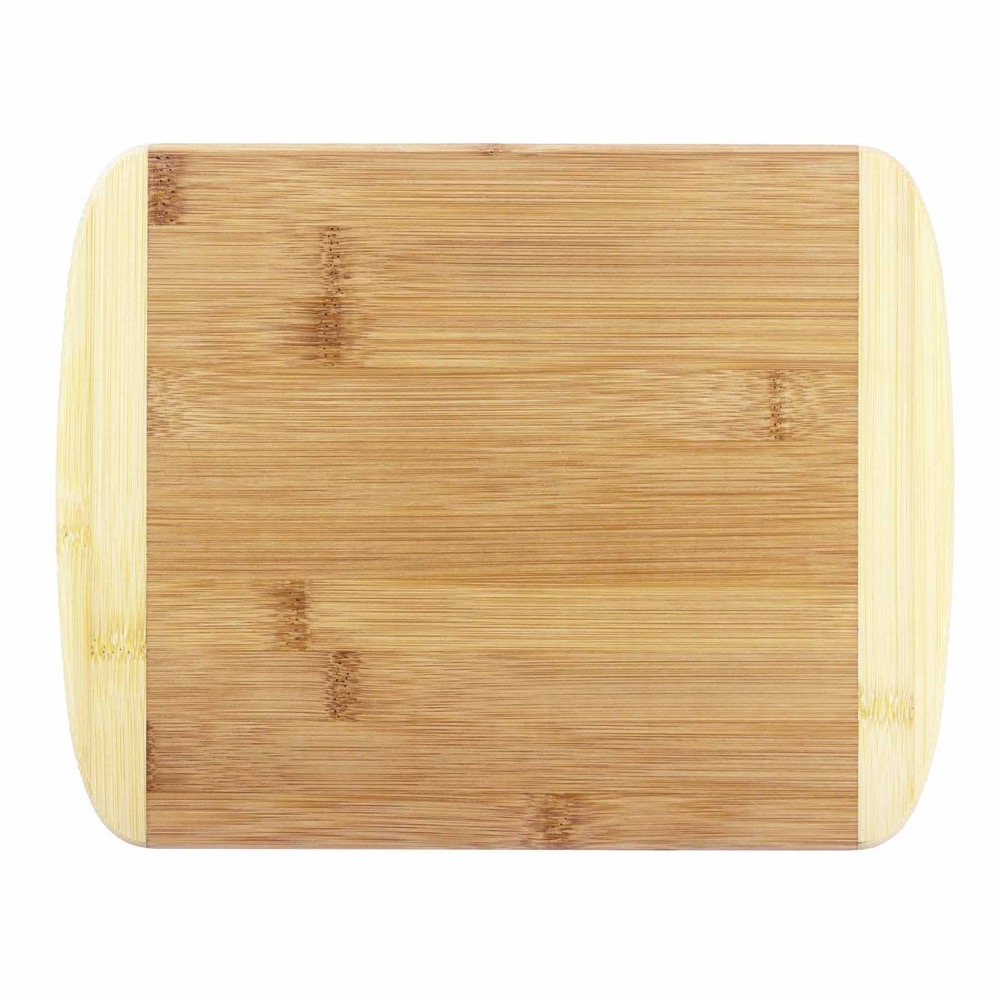 Best BambooTotally Bamboo Kauai Cutting Board |
Formaldehyde-Free GlueOrganic Bamboo |
Check price → |
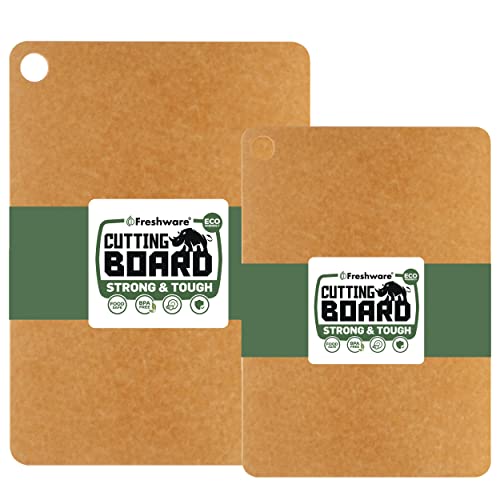 Best Value SetFreshware Wood Cutting Boards |
Natural WoodDishwasher Safe |
Check price → |
Why Plastic Cutting Boards Are a Problem
Plastic cutting boards — typically made from high-density polyethylene (HDPE) or polypropylene (PP) — were originally promoted as more hygienic than wood. That claim has been thoroughly debunked. Research from UC Davis showed that bacteria actually survive better on scarred plastic surfaces than on wood, where they're pulled below the surface and die off naturally.
But the bigger concern is what happens physically every time a knife hits the board. Each cut creates a microscopic gouge, and the material that was in that gouge doesn't disappear — it becomes a microplastic particle sitting on your food. Over months and years of daily use, the cumulative exposure is staggering.
The problem compounds as boards age. A new plastic board sheds relatively few particles, but a well-used board with deep knife scars releases dramatically more with each cut. Most households use the same plastic cutting board for years without replacement — precisely the conditions that maximize microplastic contamination.
This is why switching to a non-toxic cutting board is one of the most impactful changes covered in our kitchen plastic detox guide. Unlike swapping out food containers (which matters too — see our glass food storage guide), a cutting board swap eliminates a source of microplastics that goes directly into food with zero barrier.
What to Look for in a Non-Toxic Cutting Board
Material
- Hardwood (maple, walnut, cherry, teak): The gold standard. Naturally antimicrobial, gentle on knives, and zero microplastic risk. End grain is the most knife-friendly; edge grain is the most common and durable.
- Bamboo: Sustainable and affordable, but harder than most hardwoods. Check that the adhesive is formaldehyde-free.
- Wood fiber composite: Products like Epicurean use wood fibers bonded with food-safe resin. Not purely natural, but no microplastic shedding.
- Rubber wood core (hybrid): Some Japanese boards use a wood core with a thin surface layer. Check what the surface is made of.
Construction
- Edge grain: Wood strips glued side-by-side with the edge facing up. Strong, relatively affordable, and good for most tasks.
- End grain: Wood blocks arranged with the end grain facing up. More expensive but gentler on knives (the blade sinks between fibers rather than cutting across them). Self-healing — knife marks close up.
- Face grain: A single slab or planks with the wide face up. Beautiful for serving but less durable for heavy chopping.
What to Avoid
- Polyethylene or polypropylene boards: The primary source of cutting board microplastics.
- Bamboo boards with formaldehyde-based glue: Some cheap bamboo boards use urea-formaldehyde adhesive. Look for "formaldehyde-free" labeling.
- Boards with non-stick coatings: Some cutting boards have PTFE or silicone coatings. Unnecessary and potentially problematic.
- "Antibacterial" plastic boards: Often treated with triclosan or similar chemicals. The antibacterial claims are dubious and the board still sheds microplastics.
Quick Comparison
| Board | Price | Material | Dishwasher Safe | Knife Friendly | Best For |
|---|---|---|---|---|---|
| John Boos Maple | $$$ | Hard maple | No | Excellent | Overall |
| Epicurean Kitchen | $ | Wood fiber composite | Yes | Good | Budget |
| Teakhaus Proteak | $$ | Teak | No | Excellent | Moisture resistance |
| Virginia Boys Walnut | $$ | American walnut | No | Excellent | Presentation |
| Totally Bamboo Kauai | $ | Organic bamboo | No | Moderate | Budget / lightweight |
| Freshware Wood Set | $ | Natural wood | Yes | Excellent | Value / two-board set |
Price guide: $ budget · $$ mid-range · $$$ premium. Tap any pick below for today's exact Amazon price.
Quick Picks
| Best for | Pick | Why it made the list |
|---|---|---|
| Best overall | John Boos Maple Edge Grain | NSF-certified hard maple, made in USA — the professional kitchen standard for a reason. |
| Best budget | Epicurean Kitchen Series | Wood fiber composite, dishwasher safe, no BPA/BPS — the easiest swap from plastic. |
| Best teak | Teakhaus by Proteak | FSC-certified teak with natural moisture resistance and antimicrobial properties. |
| Best for serving | Virginia Boys Kitchens Walnut | Handcrafted American walnut that doubles as a stunning presentation board. |
| Best bamboo | Totally Bamboo Kauai | Affordable organic bamboo with formaldehyde-free construction. |
| Best value set | Freshware Wood Cutting Boards | Two natural wood boards (medium + large) — a budget-friendly, dishwasher-safe set. |
Our Top Picks
Best Overall: John Boos Maple Edge Grain
Best Overall
Solid North American hard maple in edge grain construction. NSF certified for food contact. Made in Effingham, Illinois since 1887. Available in multiple sizes (the 20x15 is the most versatile). Comes pre-treated with food-safe mineral oil. Hard maple is one of the most durable and knife-friendly wood species — dense enough to resist deep scarring but soft enough not to dull blades. John Boos is the brand used in professional kitchens, culinary schools, and restaurant supply.
Hard maple is the ideal cutting board wood — rated 1,450 on the Janka hardness scale, hard enough to resist excessive scarring but soft enough not to damage blade edges. A well-maintained maple board can last 10–20 years, so the lifetime cost beats replacing a plastic board every year or two — without the microplastic exposure.
Owners keep coming back to how this board holds up, calling it a workhorse that takes years of daily chopping; one long-term tester wrote that a sharp knife "glided across the board's surface" and called it "undeniably a great value," and several note it is thick enough to stay put on the counter. After years it picks up light knife scarring but "looks good with a little wear and tear." The honest downsides: at roughly 12 pounds when oiled it is a heavy, awkward slab to wash and dry, it needs re-oiling about once a month or the wood dries out, and a meaningful share of buyers report warping, split blocks, or cracks along the glue lines even with care.
A surface that actually gets safer with age — the wood fibers swell to close knife marks instead of trapping bacteria and shedding plastic.
Why it's safe: Solid hardwood with no plastic anywhere — nothing can shed polyethylene or polypropylene microplastics into food the way a plastic board does with every cut.
Check Today’s Price on Amazon →Amazon prices change daily — tap to see today's price and any active discount.
- Free delivery & returns for Prime members
- Sold & shipped by Amazon
- Thousands of verified reviews
Best Budget: Epicurean Kitchen Series
Best Budget
Made from Richlite — a wood fiber composite originally designed for architectural surfaces. FSC-certified wood fibers bonded with food-safe resin. No BPA, BPS, or phthalates. NSF certified. Dishwasher safe, heat resistant to 350°F, and non-porous (won't absorb odors or stains). Thin profile, lightweight, and available in multiple sizes. The closest thing to a plastic cutting board's convenience without the microplastic contamination.
For anyone currently using a plastic board who wants the easiest possible swap, Epicurean is the answer. It goes in the dishwasher, never needs oiling, and the Richlite material is primarily wood fiber — so it doesn't shed polyethylene or polypropylene particles the way plastic does. Not quite as knife-friendly as solid wood, but the convenience makes it the most realistic upgrade for most home cooks.
The most-repeated praise is low upkeep: owners like that this wood-fiber composite board is dishwasher safe, resists stains and odors because it is non-porous, and stays light enough to move around the kitchen, so many keep it as the prep board they can toss in the dishwasher instead of hand-oiling a wood block. Buyers with nicer knives push back on the surface, though. The honest downsides: several say the composite is "a little bit harder than wood, which means it's going to be a little bit harder on your knives" and that edges dull faster than on end-grain maple, the thin board can slide unless you anchor it, and a few report it warping.
Plastic-board convenience — dishwasher safe, no oiling, non-porous — without the microplastics that plastic boards shed into food.
Why it's safe: Made of wood fibers bonded with a food-safe resin (no BPA, BPS, or phthalates) and NSF certified — it does not shed polyethylene or polypropylene microplastics like a plastic board.
Check Today’s Price on Amazon →Amazon prices change daily — tap to see today's price and any active discount.
- Free delivery & returns for Prime members
- Sold & shipped by Amazon
- Thousands of verified reviews
Best Teak: Teakhaus by Proteak Edge Grain
 Best Teak
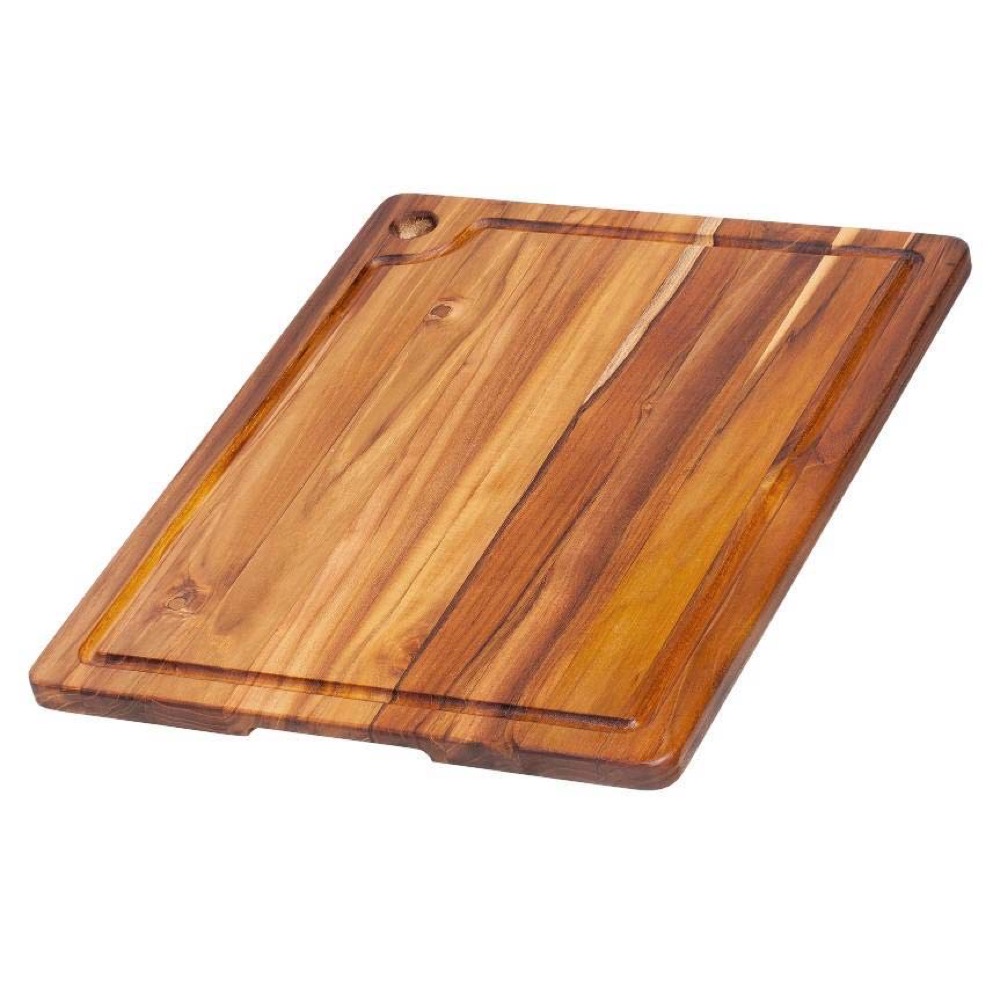
FSC-certified teak, sustainably harvested from managed plantations. Edge grain construction with a juice groove for containing liquids from meat and fruit. Teak is naturally rich in silica and oils, making it highly moisture-resistant and naturally antimicrobial. Requires less oiling than maple. Won't warp or crack as easily in humid or dry environments. The juice groove adds practical value for raw meat prep.
Teak's natural oil content gives it a real advantage over other hardwoods in moisture resistance — where a maple board needs regular oiling to prevent cracking, teak is more forgiving. The FSC certification means the wood comes from responsibly managed plantations, not old-growth forests, and the juice groove makes it particularly practical for meat prep.
The most-repeated praise is longevity and looks: America's Test Kitchen dubbed it "the last cutting board you'll ever need," and owners call it one of the prettiest boards they own, with a warm grain, an inch-and-a-half thickness, and teak's high natural oil content that helps it shrug off stains; one owner reported twelve years of heavy use with the surface still smooth. The honest downsides: it is heavy enough to hurt if you drop it, it sits at a premium price, and like any edge-grain board it can crack or split if you let it dry out instead of keeping it oiled.
Naturally oil-rich teak shrugs off moisture and contains meat juices in its groove — less maintenance than any other solid-wood board here.
Why it's safe: One hundred percent solid teak with a food-safe finish — no plastic, no laminating adhesives in the cutting surface, so nothing sheds microplastics into food.
Check Today’s Price on Amazon →Amazon prices change daily — tap to see today's price and any active discount.
- Free delivery & returns for Prime members
- Sold & shipped by Amazon
- Thousands of verified reviews
Best for Presentation: Virginia Boys Kitchens Walnut
Best Presentation
American walnut, handcrafted in small batches, with a rich dark grain pattern that looks stunning on a table. Finished with food-safe mineral oil and beeswax. Doubles as a cheese board, charcuterie board, or serving platter. Walnut is a closed-grain wood that resists moisture absorption. Softer than maple (Janka rating 1,010), which means it's exceptionally gentle on knife edges but may show cut marks more readily.
Walnut is the most visually striking cutting board wood, with deep tones and natural grain variation that no two boards share. Virginia Boys keeps production small-batch and domestic, using sustainably sourced American walnut, and the board works as both a prep surface and a serving piece — set it on the table with bread, cheese, or charcuterie and it becomes the centerpiece.
Buyers lead with the looks and the origin, calling the walnut "tremendously beautiful," saying it looks expensive on the counter, and liking that it is made in the USA with a juice groove that catches carving runoff; several report a year or more of use with "no cracks, no warping" and note the softer walnut grain is friendly to knife edges. The honest downsides: the board ships unfinished and uncured, so you have to oil and season it before first use and some reviewers admit they missed that in the description, a subset still report the board warping over time, and it needs ongoing oiling to stay flat.
Prep on it, then carry it straight to the table — a handcrafted hardwood board good-looking enough to serve on.
Why it's safe: Solid American walnut sealed with food-safe mineral oil and beeswax — no plastic and no synthetic coating, so it never sheds microplastics into food.
Check Today’s Price on Amazon →Amazon prices change daily — tap to see today's price and any active discount.
- Free delivery & returns for Prime members
- Sold & shipped by Amazon
- Thousands of verified reviews
Best Bamboo: Totally Bamboo Kauai
Best Bamboo
Organic Moso bamboo, one of the fastest-growing plants on earth (up to 3 feet per day). Formaldehyde-free adhesive — a critical distinction from cheaper bamboo boards. Lightweight (roughly 40% lighter than a comparable maple board), naturally water-resistant, and more sustainable than traditional hardwoods. Bamboo's natural hardness makes it very durable, though it can be tougher on knife edges than softer woods.
This is the most affordable entry point into non-toxic cutting boards. The formaldehyde-free adhesive is the key detail — many budget bamboo boards use urea-formaldehyde glue that can off-gas over time. Bamboo is harder than most hardwoods (Janka rating around 1,380), so it's very durable but may dull knives slightly faster; for light to moderate use, that trade-off is worth the price and sustainability benefits.
Owners like the two-tone bamboo look and the balance, with one writing that after a coat of mineral oil "the board looks beautiful and I expect some good years of use out of it," and independent testers found it heavy enough to stay stable but light enough to maneuver and clean, with some long-term owners reporting a decade of use with no splitting. The honest downsides: it does not come pre-oiled, so it can warp, split, or splinter if you skip the oiling or run it through the dishwasher, most of the negative reviews center on exactly that cracking and splintering, and a few buyers say newer boards feel lighter and more porous than older ones.
The lowest-cost way out of plastic — lightweight, fast-growing bamboo with a glue that won't off-gas formaldehyde.
Why it's safe: Solid bamboo laminated with a verified formaldehyde-free, food-safe adhesive — no plastic surface, so it doesn't shed polyethylene or polypropylene microplastics into food.
Check Today’s Price on Amazon →Amazon prices change daily — tap to see today's price and any active discount.
- Free delivery & returns for Prime members
- Sold & shipped by Amazon
- Thousands of verified reviews
Best Value Set: Freshware Wood Cutting Boards
Best Value Set
A two-piece set of natural wood cutting boards in two sizes — a 12" x 9" medium for everyday prep and a 15" x 11.25" large for bigger jobs and carving. As solid wood, they shed no microplastic particles the way a polyethylene board does. The listing notes the boards are dishwasher safe, though hand washing and an occasional coat of food-grade mineral oil will keep any wood board looking its best and prevent cracking.
Because these are real wood rather than plastic, there is no polyethylene surface to gouge and no microplastic contamination with each cut. Having two boards is also practical — keep one for raw meat and one for produce to avoid cross-contamination. It's an easy, low-cost way to get plastic boards out of the kitchen entirely.
This one has thin, muddled review data and a generic listing: despite the name it is a wood-fiber composite, and Freshware sells look-alike bamboo and composite sets under similar names, so treat the product identity as vague. What owners do report is low maintenance: buyers say it is dishwasher safe, heat resistant, and kinder to knives than plastic or glass, and generally sound satisfied with the value of a multi-board set. The honest downsides: some note slight warping after repeated dishwasher cycles, there are occasional reports of surface scratching under heavy knife use, and the boards can feel thin, so do not attach hard durability claims to it.
A practical two-board wood set — one medium, one large — so you can keep raw meat and produce on separate real-wood surfaces.
Why it's safe: Solid natural wood, so there is no plastic surface to shed microplastics into your food — unlike the polyethylene boards this set replaces.
Check Today’s Price on Amazon →Amazon prices change daily — tap to see today's price and any active discount.
- Free delivery & returns for Prime members
- Sold & shipped by Amazon
- Thousands of verified reviews
Materials Guide
Hardwood: Maple, Walnut, and Cherry
Hardwood remains the best overall material for cutting boards from both a safety and performance perspective. Hard maple (sugar maple) is the industry standard — its tight, closed grain resists bacteria penetration and moisture absorption. Walnut is softer and more aesthetically appealing, making it ideal for boards that double as serving pieces. Cherry falls between the two in hardness and develops a beautiful patina over time.
The key with any hardwood board is maintenance. Monthly oiling with food-grade mineral oil prevents cracking and extends the board's life dramatically. A board that is oiled regularly can last decades; one that isn't may crack within a few years. This is the one maintenance trade-off compared to plastic boards — but the payoff is zero microplastic exposure and a surface that's actually more hygienic over time.
Bamboo
Bamboo is technically a grass, not a wood, and it has a significantly lower environmental footprint than hardwood. Moso bamboo reaches harvestable maturity in 3-5 years compared to 30-60 years for hardwood trees. It's naturally water-resistant and antimicrobial.
The trade-off is hardness. Bamboo rates around 1,380 on the Janka scale — comparable to hard maple — but because bamboo fibers are arranged differently than wood grain, they can be harder on knife edges. The other concern is adhesive: bamboo boards are made by laminating strips together, and the glue matters. Always verify formaldehyde-free construction.
Rubber Wood
Rubber wood (Hevea brasiliensis) is harvested from rubber trees at the end of their latex-producing life. It's a sustainable, closed-grain hardwood that is gentle on knives and naturally moisture-resistant. Some cutting boards marketed as "rubber" are actually synthetic — always check whether the material is genuine rubber wood or a polyethylene/polypropylene alternative. Genuine rubber wood boards are a solid mid-range option, typically priced between bamboo and premium hardwoods.
Many cutting boards labeled "food safe," "BPA-free," or even "eco-friendly" are still made from polyethylene (PE) or polypropylene (PP) plastic. "Food safe" means the material won't leach toxic chemicals at detectable levels — it says nothing about microplastic particle shedding. A board can be technically "food safe" while still releasing millions of microplastic particles into your meals. Similarly, "BPA-free" only means the specific chemical bisphenol A is absent; the board is still plastic. Always check the actual material, not just the marketing claims. If it says HDPE, PE, PP, or polyethylene, it's a plastic board regardless of what other labels it carries.
"A well-maintained wood cutting board is one of the only kitchen tools that gets safer with age. The wood fibers swell to close knife marks, while a plastic board only gets more contaminated."
Want the Full Kitchen Detox Guide?
Cutting boards are just one source of microplastics in the kitchen. The Complete Plasticproof Guide covers every room — cookware, storage, appliances, and more — with 80+ product recommendations backed by 47+ studies.
Frequently Asked Questions
No — this is one of the most persistent kitchen myths. Research from UC Davis found that bacteria actually survive better on scarred plastic surfaces than on hardwood. Wood fibers pull bacteria below the surface where they die off and don't multiply. Plastic boards with knife scars are particularly difficult to sanitize because bacteria hide in the grooves.
After each use, wash with hot water and dish soap, then dry immediately. For deep sanitization after raw meat, spray with undiluted white vinegar, let sit 5 minutes, then rinse. For odors, rub with coarse salt and half a lemon. Monthly, apply food-grade mineral oil. Never soak wooden boards or put them in the dishwasher.
A 2023 study in Environmental Science & Technology found up to 79 million microplastic particles per year from normal household use. Each chopping session generates thousands of polyethylene or polypropylene fragments that end up directly in food, with contamination increasing as the board ages.
Both are excellent non-toxic alternatives. Bamboo is more sustainable (grows much faster) but harder, which can dull knives. The key safety concern with bamboo is the adhesive — look for formaldehyde-free glue. Avoid boards with a strong chemical smell.
Natural rubber (from rubber trees) boards are a legitimate non-toxic option — gentle on knives and self-healing. However, most "rubber" boards on the market are actually synthetic polyethylene, which brings back the microplastic problem. Verify the material is genuine rubber wood, not a synthetic substitute.
Plastic boards should be replaced once they develop visible knife scars — typically every 1-2 years. Wood and bamboo boards can last 5-10+ years with proper care. When a wood board develops deep grooves, it can often be sanded and re-oiled rather than replaced. A well-maintained end-grain maple board can last decades.
Epicurean boards are primarily wood fibers bonded with food-safe resin (Richlite). They contain no BPA, BPS, or phthalates and are NSF certified. While not purely wood, they do not shed microplastic particles like polyethylene boards. For people wanting plastic convenience without microplastic contamination, Epicurean is the best compromise available.
More questions buyers ask
Safest Cutting Board: what should I actually look for?
The safest cutting board is one where nothing plastic touches what you eat or drink. On this page that is the John Boos Maple Cutting Board 18×12 — Hard maple is naturally antimicrobial and sheds zero plastic particles. Research shows plastic boards release up to 79 million microplastics per year.
Wood Vs Plastic Cutting Board: what should I actually look for?
"Non-toxic" only means something if you can name the material. The John Boos Maple Cutting Board 18×12 is made from Wood, so there is no coating or soft plastic that can break down into your food. Every pick above is chosen the same way.
Plastic Free Cutting Board: what should I actually look for?
Every cutting board listed here is made without plastic in the parts that touch your food or water — Wood instead. Start with the John Boos Maple Cutting Board 18×12 if you want one answer.
Cutting Board Without Microplastics: what should I actually look for?
Plastic sheds particles as it is heated, scrubbed and aged — it does not have to look damaged to do it. The cutting boards on this page are made from Wood, none of which shed plastic as they wear. The John Boos Maple Cutting Board 18×12 is the pick we would buy first.
Bamboo Vs Plastic Cutting Board: what should I actually look for?
"Non-toxic" only means something if you can name the material. The John Boos Maple Cutting Board 18×12 is made from Wood, so there is no coating or soft plastic that can break down into your food. Every pick above is chosen the same way.
Sources
- Li D, et al. "Microplastics release from the degradation of polypropylene feeding bottles during infant formula preparation." Nature Food, 2020.
- Habib RZ, et al. "Microplastic contamination of chicken meat and fish through plastic cutting boards." Journal of Hazardous Materials, 2022.
- Schneider AK, et al. "Microplastic generation from cutting boards and their potential health impacts." Environmental Science & Technology, 2023.
- Cliver DO. "Cutting Boards in Salmonella Cross-Contamination." Journal of AOAC International, 2006. University of California, Davis.
- Ak NO, Cliver DO, Kaspar CW. "Cutting boards of plastic and wood contaminated experimentally with bacteria." Journal of Food Protection, 1994.
- World Health Organization. "Microplastics in drinking-water." WHO Report, 2019.
- FDA. "Food Contact Substances: Wood and Wood-Based Materials." Code of Federal Regulations Title 21.
- Prata JC, et al. "Environmental exposure to microplastics: An overview on possible human health effects." Science of The Total Environment, 2020.
Protect Every Room in Your Home
From the kitchen to the nursery — the Complete Plasticproof Guide covers every swap that matters, backed by 47+ studies.