
Quick Picks by Category
| Category | Top Pick | Price | Certifications |
|---|---|---|---|
| All-Purpose | Seventh Generation Free & Clear | $ | EPA Safer Choice, EWG B |
| Laundry | Seventh Generation Free & Clear | $$ | EPA Safer Choice, EWG A |
| Concentrate | Branch Basics Concentrate | $$$ | MADE SAFE, fragrance-free |
| Plastic-Free | Blueland Cleaning Tablets | $$ | Leaping Bunny, certified B Corp |
| Dish Soap | Seventh Generation Dish Liquid | $ | EPA Safer Choice |
| Toilet/Bathroom | Ecover Toilet Bowl Cleaner | $ | EPA Safer Choice, biodegradable |
Price guide: $ budget · $$ mid-range · $$$ premium. Tap any pick below for today's exact Amazon price.
Why Conventional Cleaners Are a Problem
The average American home contains 62 synthetic chemicals in cleaning products, according to the Environmental Working Group. Studies by the EPA have found that VOC (volatile organic compound) concentrations inside homes are 2-5× higher than outdoor air — largely from cleaning products, air fresheners, and synthetic fragrances.
Key problems with conventional cleaners:
- Synthetic fragrance — "Fragrance" is a proprietary blend that can contain hundreds of chemicals. Manufacturers are not required to disclose what's in it. Common components include phthalates (endocrine disruptors), synthetic musks (bioaccumulative), and VOCs that trigger asthma and allergic reactions.
- Quaternary ammonium compounds (quats) — Found in most disinfectants and fabric softeners. Linked to respiratory sensitization in healthcare workers and emerging evidence of contribution to antibiotic resistance. Persist in the environment.
- 1,4-Dioxane contamination — A probable carcinogen that forms during ethoxylation of surfactants (a processing step used in many conventional detergents). Not listed as an ingredient because it's a manufacturing byproduct.
- Optical brighteners — Fluorescent compounds added to laundry detergents that absorb UV and re-emit blue light. They don't clean — they make fabrics appear whiter. Absorbed through skin, disrupt estrogen signaling, and are toxic to aquatic organisms.
- Plastic packaging — Most cleaning products come in single-use HDPE or PET plastic that is rarely recycled (recycling rates for cleaning product containers are <30%). These degrade into microplastics in landfill and waterways.
Certifications That Matter
EPA Safer Choice — The most rigorous US certification for cleaning products. Requires every ingredient to be screened for human and environmental safety, including surfactants, preservatives, fragrances, and dyes. Products must meet functional performance requirements. Most credible third-party certification for mainstream cleaning products.
EWG Verified — Environmental Working Group's screening for 12+ categories of concerning ingredients. Transparent ingredient lists required. EWG also maintains a searchable database (EWG's Guide to Healthy Cleaning) where you can look up any product.
MADE SAFE — Screens against 6,500+ known and suspected toxic chemicals. Required for Branch Basics certification. Most comprehensive ingredient screening of any cleaning product label.
Leaping Bunny / Certified B Corp — Not safety certifications per se, but indicate cruelty-free testing and comprehensive social/environmental accountability (Blueland, Method).
The Best Non-Toxic Cleaners by Category
All-Purpose Cleaners
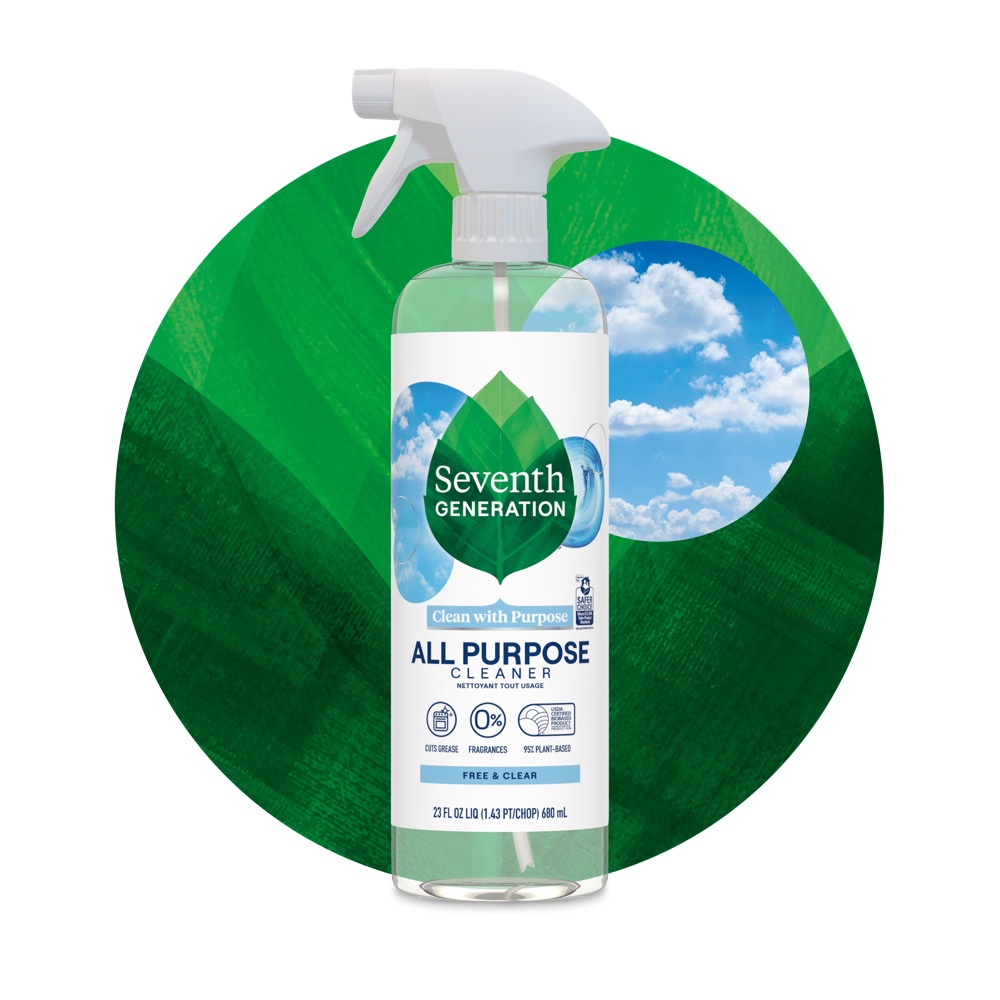 Best All-Purpose
Seventh Generation's Free & Clear All-Purpose cleaner is the benchmark for accessible non-toxic cleaning. EPA Safer Choice certified, fragrance-free, and available at virtually every grocery and drugstore. The plant-based surfactant formula handles grease, grime, and general surface cleaning without synthetic fragrances or chlorine.
It's the best starting point for anyone switching from conventional cleaners — same price as Windex or 409, dramatically cleaner ingredient profile. Works on countertops, stovetops, appliances, and bathroom surfaces. The only caveat: buy the Free & Clear version specifically — the scented versions add synthetic fragrance.
One swap that cleans counters, stovetops, appliances, and bathroom surfaces — at the same price as the conventional spray you're replacing.
Why it's safe: EPA Safer Choice certified and genuinely fragrance-free — plant-based surfactants with no synthetic fragrance, no VOCs, and no chlorine to off-gas into your indoor air.
Check Today’s Price on Amazon →Amazon prices change daily — tap to see today's price and any active discount.
- Free delivery & returns for Prime members
- Sold & shipped by Amazon
- Thousands of verified reviews
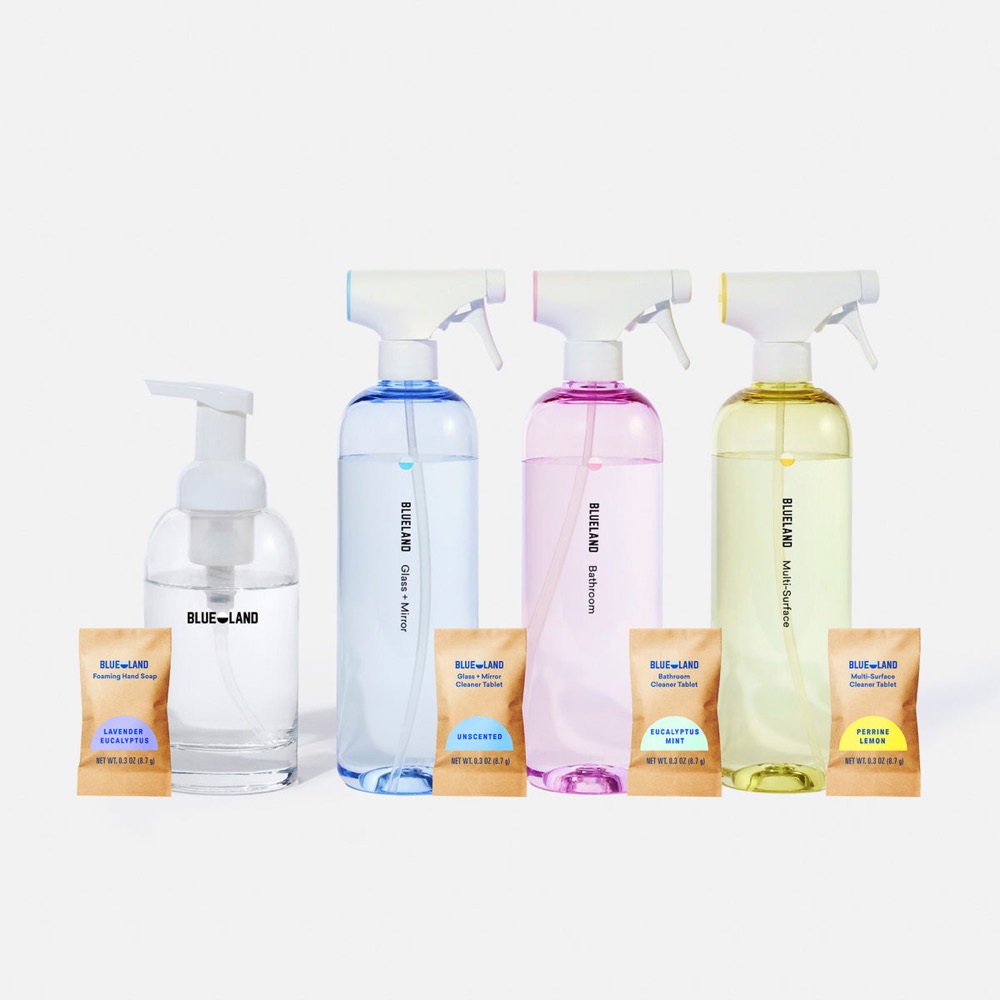 Best Plastic-Free
Blueland's cleaning tablets dissolve in water in your own reusable bottle, eliminating single-use plastic entirely. Drop in a tablet, fill with tap water, shake — done. The tablets ship in small paper packaging with dramatically lower carbon footprint than shipping water-heavy liquid cleaners. After the initial kit, refills cost less than most conventional sprays.
Blueland offers tablets for multi-surface cleaner, bathroom cleaner, glass cleaner, and toilet bowl cleaner — replacing 4+ plastic bottles with one compact refill kit. Certified B Corp and Leaping Bunny, with EWG A ratings across their product line. The best choice for anyone focused on eliminating plastic packaging from their cleaning routine. Choose the Fragrance Free tablets if you want zero added scent.
One compact kit replaces four-plus plastic spray bottles forever — just refill with a tablet and tap water, at a lower long-term cost than conventional sprays.
Why it's safe: EWG A-rated across the line, Certified B Corp and Leaping Bunny — clean, transparent ingredients with no single-use plastic to shed microplastics into waterways.
Check Today’s Price on Amazon →Amazon prices change daily — tap to see today's price and any active discount.
- Free delivery & returns for Prime members
- Sold & shipped by Amazon
- Thousands of verified reviews
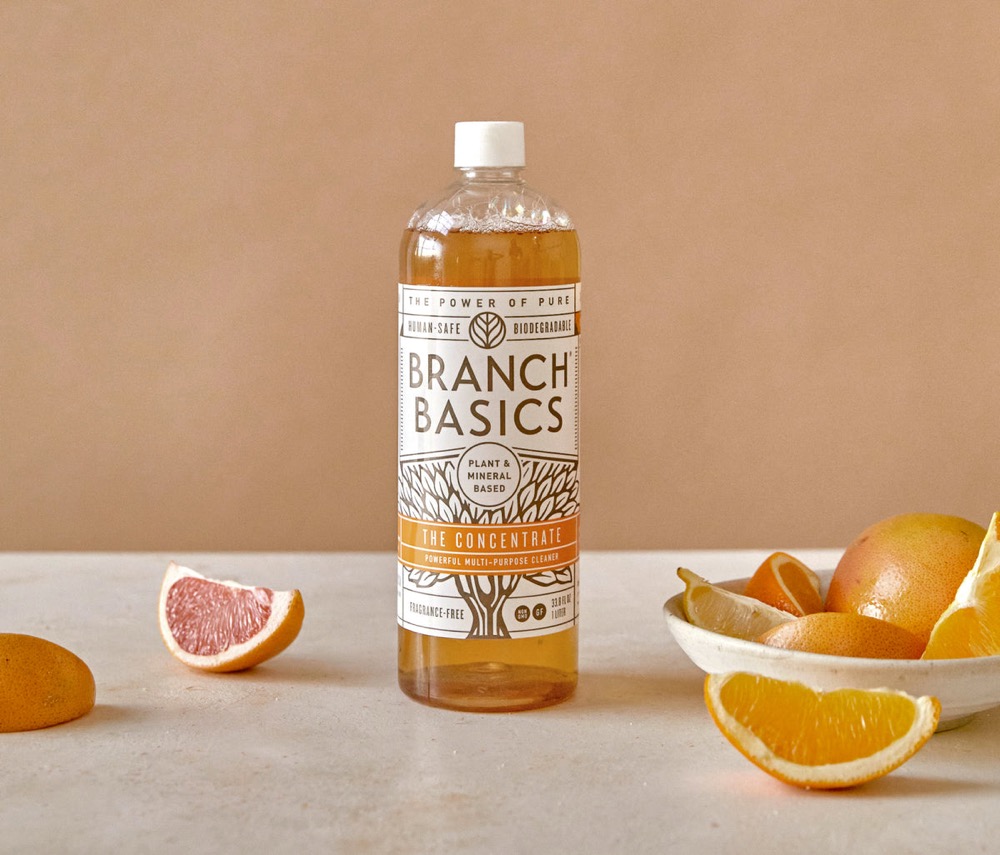 Best Concentrate
Branch Basics has the cleanest ingredient profile of any mainstream cleaning product — MADE SAFE certified, which screens against 6,500+ known toxic chemicals. The formula is a single concentrate that dilutes differently depending on the cleaning task: light cleaning (1:30 dilution), all-purpose (1:10), bathroom (1:5), and laundry booster (undiluted). One bottle replaces 10+ conventional products.
It's not the cheapest upfront, but on a per-use basis it's comparable to conventional cleaners. Created by toxicologists and recommended by doctors for chemically sensitive patients and new parents. The MADE SAFE certification is the most stringent available for cleaning products.
A single bottle dilutes into all-purpose, bathroom, glass, and laundry cleaner — replacing 10+ products and the plastic bottles that come with them.
Why it's safe: MADE SAFE certified — screened against 6,500+ known and suspected toxic chemicals — and truly fragrance-free, with no masking scents or undisclosed parfum.
Check Today’s Price on Amazon →Amazon prices change daily — tap to see today's price and any active discount.
- Free delivery & returns for Prime members
- Sold & shipped by Amazon
- Thousands of verified reviews
Laundry Detergent
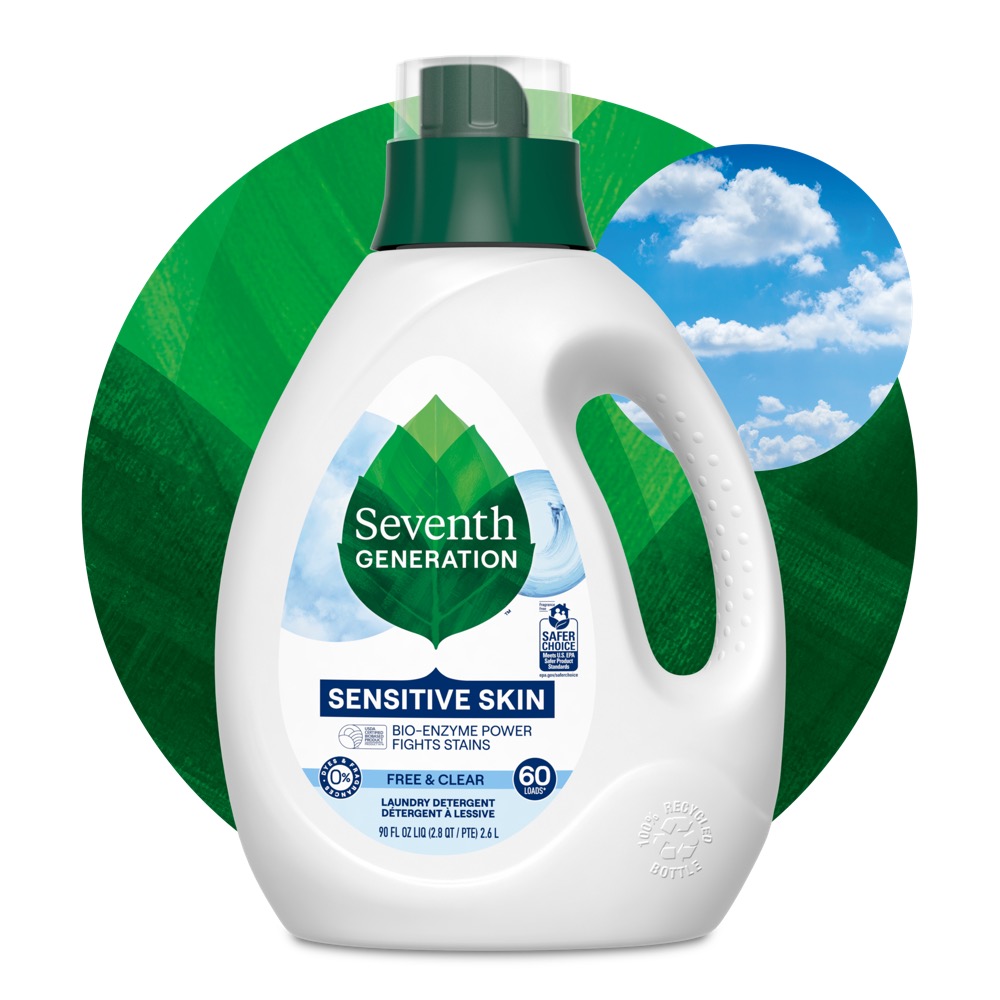 Best Laundry Detergent
The best everyday laundry detergent for families. EPA Safer Choice certified and EWG Grade A — the top safety tier. Free from optical brighteners (which absorb into skin from fabric), synthetic fragrances, and 1,4-dioxane. Works in all water temperatures and HE machines.
Particularly important for baby clothes and bedding — optical brighteners and fragrances in conventional detergents are a significant source of skin contact exposure, especially for infants who spend extended time in direct contact with laundered fabrics. If you want to go plastic-free, Blueland's laundry tablets are the refillable alternative.
Safe enough for baby clothes and bedding — washes everything clean in any water temperature with no fragrance residue left on fabric against skin.
Why it's safe: EPA Safer Choice plus EWG Grade A — no optical brighteners, no synthetic fragrance, and no 1,4-dioxane, the carcinogenic contaminant common in conventional detergents.
Check Today’s Price on Amazon →Amazon prices change daily — tap to see today's price and any active discount.
- Free delivery & returns for Prime members
- Sold & shipped by Amazon
- Thousands of verified reviews
Dish & Bathroom
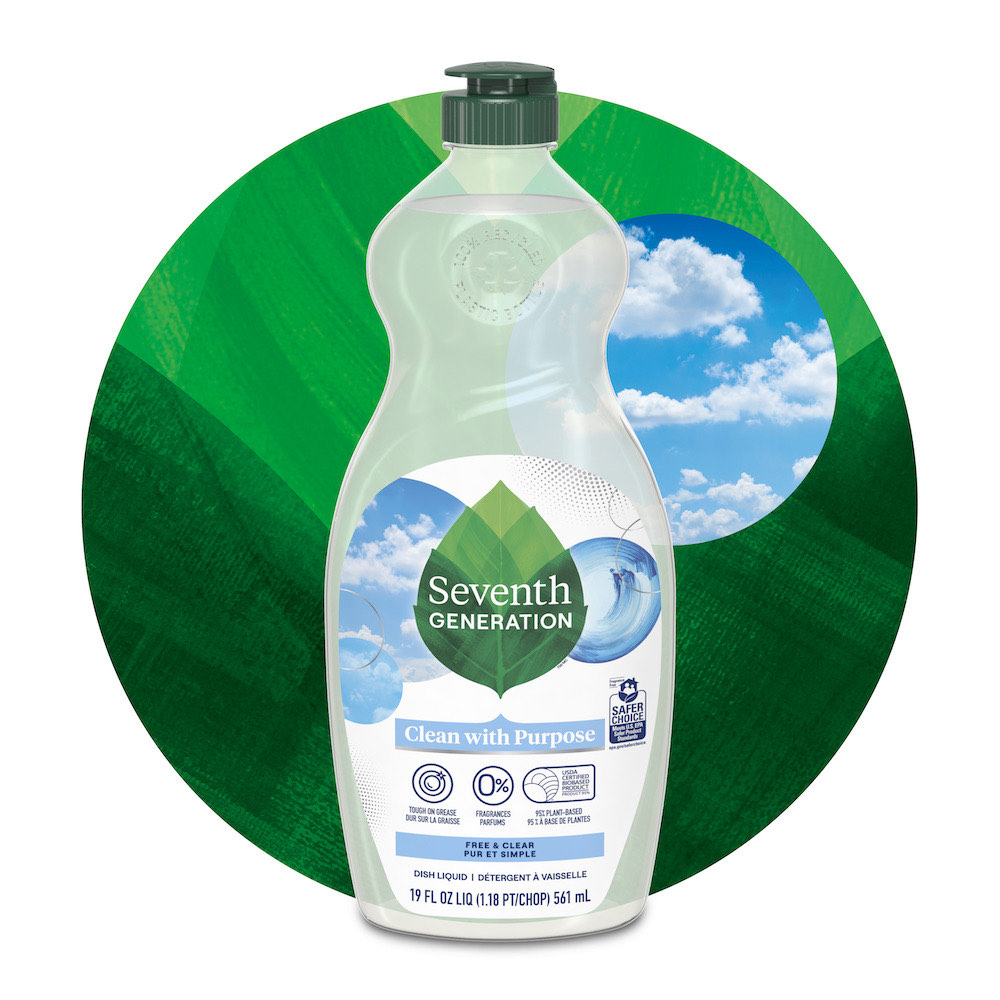 Best Dish Soap
The EPA Safer Choice standard requires dish soaps to be free from 1,4-dioxane, triclosan, synthetic fragrances, and chlorine. Seventh Generation's Free & Clear dish liquid meets all of these — and performs well on greasy dishes. The plant-derived surfactants clean effectively in both hot and cold water.
For handwashing dishes, this is the most direct skin contact cleaning product in your home — choosing fragrance-free, Safer Choice certified is especially important here because you're exposing your hands to the formula for extended periods daily. Buy the Free & Clear version; the scented varieties add synthetic fragrance.
The cleaning product your skin touches most — a strong grease-cutter that works in hot or cold water without fragrance soaking into your hands.
Why it's safe: EPA Safer Choice certified, so it's screened free of 1,4-dioxane, triclosan, synthetic fragrance, and chlorine — plant-derived surfactants only.
Check Today’s Price on Amazon →Amazon prices change daily — tap to see today's price and any active discount.
- Free delivery & returns for Prime members
- Sold & shipped by Amazon
- Thousands of verified reviews
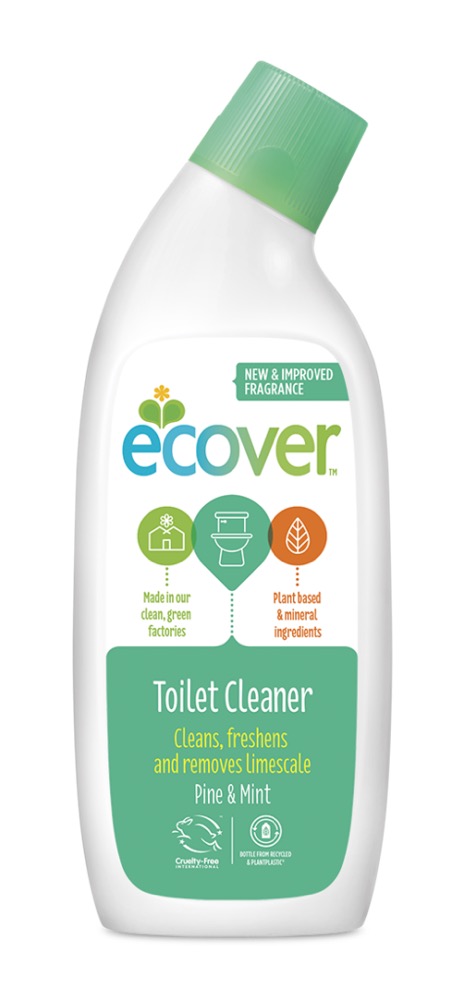 Best Toilet Bowl Cleaner
Conventional toilet bowl cleaners rely on hydrochloric acid or sodium hypochlorite (bleach) — both of which produce toxic fumes in enclosed bathroom spaces. Ecover's plant-based formula uses citric acid and biodegradable surfactants. EPA Safer Choice certified, biodegradable to 98%+ within 28 days.
The pine and mint scent comes from pine essential oil and mint extract rather than synthetic fragrance — a meaningful distinction for bathroom air quality. If you prefer fragrance-free, Seventh Generation also makes an unscented toilet bowl cleaner under the EPA Safer Choice program.
Clean the bowl without locking yourself in a small room full of bleach fumes — the angled neck reaches under the rim and rinses away 98%+ biodegradable.
Why it's safe: EPA Safer Choice certified with no chlorine bleach or hydrochloric acid — so it won't off-gas the chlorinated VOCs that build up in an enclosed bathroom. Scented with pine and mint essential oils, not synthetic fragrance.
Check Today’s Price on Amazon →Amazon prices change daily — tap to see today's price and any active discount.
- Free delivery & returns for Prime members
- Sold & shipped by Amazon
- Thousands of verified reviews
Get the room-by-room plastic detox checklist.
12 swaps that eliminate 80% of daily household chemical exposure — cleaning products, cookware, water, and more. Free, research-backed.
No spam. Unsubscribe anytime.
What to Avoid and Why
Fabric Softener and Dryer Sheets
Both coat fabrics with a thin layer of synthetic chemicals — typically quaternary ammonium compounds ("quats") and synthetic fragrance. These absorb into your skin from clothing and bedding. The EWG gives most fabric softeners an F rating. The plastic-free laundry guide covers safe alternatives: wool dryer balls + a drop of lavender essential oil for scent.
Antibacterial Everything
Triclosan and triclocarban (common antibacterial agents) are endocrine disruptors that persist in the environment and contribute to antibiotic resistance. The FDA banned their use in consumer hand soaps in 2016, but they still appear in some household cleaners. EPA Safer Choice certification excludes them.
Spray Air Fresheners and Plug-Ins
These are almost entirely synthetic fragrance suspended in VOC carriers. They don't remove odors — they mask them while adding chemical load to indoor air. The NRDC found that 86% of air fresheners contain phthalates. Alternatives: open windows, baking soda for odor absorption, and essential-oil diffusers (sparingly).
Bleach-Based Disinfectants
Sodium hypochlorite (bleach) reacts with organic matter to form chloroform and other chlorinated VOCs. In poorly ventilated bathrooms, this matters. For most household disinfection needs, EPA Safer Choice certified plant-based alternatives work adequately. Reserve bleach for specific situations (mold remediation, specific pathogens).